Unicorns Need Governance Too

If you have children under ten years old you’re likely to be familiar with the mythical animal called a unicorn, a horse with a single straight horn projecting from its forehead. Due to its mythical nature, the word is also a euphemism for something that is highly desirable but difficult to obtain, like driving on either Kiambu or Langata road at 7 am on a weekday morning in February and finding zero traffic. That would be a unicorn event. In the financial arena a unicorn is a startup company that is privately owned and is valued at over $1 billion dollars. Examples of such companies that are familiar to this part of the world would be AirBnB and Google before it went public.

But we do have our very own African unicorn. Flutterwave is a Nigerian tech company founded in 2016 by Iyinoluwa Aboyeji, Olugbenga Agboola and Adeleke Adekoya. Although headquartered in San Francisco, its payment infrastructure operations for global merchants are in over 10 African countries including Nigeria, Kenya and South Africa. In 2021, after receiving a Series C private equity investment amounting to $170 million – the first African tech start up to receive such an amount – it achieved the highly coveted unicorn status as it the company was valued at over $1 billion.

Lately though, the company has been in the news for all the wrong reasons breathlessly articulated in a highly detailed investigative piece by Nigerian journalist David Hundeyin published in the West African Weekly on April 12th 2022. In the article, Hundeyin exposes how one of the founders allegedly started up the business while still employed by a large Nigerian bank that was also doing payments business with the company, a not so subtle hint at early stage conflict of interest. Agboola was the head of digital factory and innovation at Access Bank before moving full time into Flutterwave. It goes further to expose how Agboola allegedly allocated more shares to himself as the company’s stature increased. This allegation was corroborated by Aboyeji, one of the other co-founders and initial CEO thus, “When I joined the company, I was told there’s a chief technology officer named Greg, who’s from MIT, whom I’d meet someday. It never happened” in an interview with online magazine Tech Cabal. “After a while, it became clear what had happened. By that time it didn’t matter. We [Aboyeji and third co-founder Adeleke Adekoya] had already signed agreements and I decided to just move on,” Aboyeji concludes. Essentially Aboyeji describes  how Agboola gained more shares at the expense of the  other two founders as the company hurtled towards more private equity financing, which would see any sale of shares transform the founder shareholder into a dollar millionaire. There are also grave accusations against Agboola of alleged sexual harassment of female employees in the firm.

Is there a board of directors at Flutterwave. Yes. It is made up of four board members and one board observer. All male by the way.  The company successfully raised a $250 million Series D round of financing in February this year increasing the company’s valuation to $3 billion and therefore should ideally have a full set of competent non-executive directors providing oversight, insight and foresight on the company’s operations. You want to imagine that an emergency board meeting has been called to deal with this enormous reputational risk to the firm. But it cannot be easy for a board to discuss the conduct of a founder, the individual who is the vision bearer as it were and who has the networks and social capital to keep the business growing. Can such a person be replaced is a question probably dancing in the frontal cortex lobe of the board members, waiting for the brave board member who will voice it out loud. But surely these are just allegations and a person is innocent until proved guilty, is another mental equation playing out. Truth is, such allegations rarely find their way into a court of law and are prosecuted in the court of public opinion.

But a discussion, however untidy and unpleasant, must be had by the board and a high level communication sent out to all key stakeholders being employees, investors and clients letting them know that these allegations are being given due regard at the highest level. As of last week, the only communication in the public domain was an email from Agboola to employees denying some of the allegations and completely ignoring the others. So has the board decided to rally around their “boy” and let this storm pass, or will they show some leadership and tackle the messy allegations? Time will tell.

[email protected]

Twitter: @carolmusyoka

Bankers Duty of Care Just Got Tougher

Earlier this year, my 18 year old daughter received a phone call from a stranger claiming he was calling from Safaricom customer care. He spoke authoritatively but quite rudely, demanding for her Mpesa pin number and other personal details. Being quite fresh out of the school conditioning mental mindset of respect for authority, the young lass fell for the rogue’s demands. Well, he wasn’t quite so successful in his shenanigans as he found the princely sum of Kes 17.40 in her mpesa account and, by good fortune, she had not signed up for the mobile loan program Mshwari and Fuliza of which he also demanded to know what her limits were. She was shaken to the core but managed to get a very understanding genuine Safaricom Care representative who helped her block her account and put in the necessary digital guard rails shortly thereafter. The rogue slithered off to make other calls to her more discerning close relatives whose numbers he, by some dint of nothing other than black magic, had managed to get from her favorites contact list.  

 I was moved to recall this story after receiving a fairly informative newsletter from Anjarwalla & Khanna Advocates, updating clients regarding a landmark ruling against the banking industry that has been given by the Court of Appeal in the United Kingdom.  The newsletter highlights the case  between Fiona Lorraine Phillipp versus Barclays Bank UK PLC. Fiona and her husband fell victim to a fraud in March 2018, transferring their life savings amounting to GBP 700,000, (approximately Kes 105 million) that were held in Barclays Bank, into a foreign account held in the United Arab Emirates (UAE). This was despite a police officer warning Fiona about the potential for fraud but she thought, based on what the fraudster had communicated to her, that she was moving the funds into safety to protect them from fraud. 

 After the funds went into that inglorious sinkhole that is known as “Lord help me what the **** have I done?”, Fiona brought a claim against Barclays Bank for breach of its duty of care in effecting the transfer of funds. Her argument was that there were various features of the payment she made, as well as of her situation, that should have alerted an ordinary prudent bank acting with reasonable skill and care to a possibility of fraudulent activity. The bank should have delayed the transfers and investigated the matter before effecting the transfer. I will save you the legalese behind this argument and fast forward to the fact that the High Court agreed with the bank’s position that it did not owe a duty of care. The bank argued that Fiona and her husband had been so thoroughly deceived that they were lying to the bank about the purpose of the transfers and that even if the bank had exercised reasonable care, she would still have issued instructions for the transfer.   

In other words, this couple were beyond redemption “na shauri yao”! Fiona went to the Court of Appeal, who agreed with her position that an earlier legal precedent called the “Quincecare Duty” applied. The bank had argued that the Quincecare duty was limited to cases in which there is a fraud by an agent acting for the customer as that meant that there was no authorization by the customer for the transfer. Since Fiona had herself authorized the transfer, the duty did not apply. The Court of Appeal disagreed with the lower court, extending the application of the Quincecare duty to find that a relevant duty of care could arise in the case of a customer instructing their bank to make a payment when that customer is the victim of the kind of fraud Fiona had undergone.  

 Should banks in Kenya be worried? Yes, as our legal writers opine that our courts have used UK precedents as “persuasive authority” in Kenyan cases. This makes for a more expensive risk framework for ensuring an even higher transaction monitoring of large value based payments. Furthermore, the Kenyan banking customer needs to be much more amenable to those “annoying calls” from the bank following up to validate of a banking transaction. Your signature on the origination documents is simply not enough. Particularly now that the above mentioned case established that despite receipt of a warning sign from the police, the court still found in her favor. But as bank customers are getting requisite judicial protection, the next battlefront for protection that should give our regulators serious thought is the nefarious group of mobile money transfer fraudsters. That will indeed be a tough nut to crack.  

 [email protected] 

Twitter: @carolmusyoka

The Alpha Lion Business Founder

During a game drive while on a trip to the Masai Mara, we found an old lion resting in the long grass. His face and flanks were pock marked with numerous, aged battle scars and the afternoon sun glinted against his weary brown eyes as he looked disinterestedly at our passing tour van. The tour driver informed us that he had been kicked out of the pride by the female lions who lay about three hundred metres to the west of him having killed an enormous hippo and eaten to their hearts content. There must have been six lionesses there, with numerous cubs that were playfully jumping in and out of the enormous cavity that used to be the hippos stomach, which had now been converted into a play area after the feeding frenzy. The lion, we were told, was biding his time waiting to be admitted to the high table if the lionesses were in a good mood.

That scene reminded me of a family owned business, with the old lion representing the founder of the organization. Lions are known to kill male cubs born into a pride as they represent a threat to the future leadership of the group. Over time I have come across a number of family enterprises where the male founder is so aggressive and intolerant that the children want absolutely nothing to do with the business and prefer to go and make their own mark in the world. As the founder begins to grow old and tired, he realizes that he has failed to grow employees into potential successors and his children have no desire to come and learn the ropes of the business when they are already established in their own respective careers. The founder, whose initial vision drove the success of the company, is often unable to find the magic strategy that will ensure the company continues to thrive in an increasingly competitive and technology driven world. He finds that as he is unable to transform the business in this new world, the business transforms him as it lurches from strategy to strategy just to survive against smaller, nimbler competitors.

A large number of banks I have spoken to grapple with this issue as they have provided loans to family owned enterprises and require the business to take “key man insurance” to protect their exposure in the event the founder dies during the duration of the loan. The banks do not have the time nor energy to help these businesses build the internal capacity that family owned businesses require to ensure leadership continuity in the event the founder dies. The banks can only hope that the founder does not die before the loan is paid but you must remember that hope is not a strategy, therefore requiring the business to insure the life of the “key man” or founder, where the bank is the beneficiary, becomes the default setting.

But taking life cover against the founder of the business is an extremely inward looking and short term way of addressing a bigger problem of succession planning. Look, it’s not the bank’s business to step into every single organization it lends money to and tell them how to run their operations. Educating family owned businesses is a huge investment that may or may not pay off depending on the learning capacity of the founders in the class.

Many years ago in my banking days, we hosted a workshop for family owned business clients of the bank. We brought in an excellent facilitator who helped such businesses set up legal structures for protecting family wealth through generations. In the room were many father/son pairs, with a smattering of father/son/daughter groupings. The frustration of the offspring was palpable in the questions being asked of the facilitator, children who were weary of asking for a seat at the strategy decision making table. Many of the fathers made the right sounds of agreement when the facilitator spoke of the need for expanding the leadership decision making and nodding furiously when the risk of death was raised.  But very few changes were made within those businesses once the workshop was concluded.

Is there a solution to this age old problem? Maybe not a short term one, but there is an opportunity for banks to perhaps provide financial incentives like a staggered interest rate regime that is linked to the governance structures that a family business puts in place to ensure continuity. Of course the major risk will always remain that a wily old lion of a founder will window dress his organization in order to get those incentives. After all, even if you put lipstick on a pig, it remains a pig. But there is an opportunity to use external forces to try and push that governance needle and create sustainable organizations that survive beyond the first generation.

[email protected]

Twitter: @carolmusyoka

Bringing Strangers To Your Company

A young couple deeply in love is involved in a car crash, killing them instantly. They get to heaven and are greeted by Saint Peter who welcomes them into God’s Kingdom. “Wait,” says the man. “We were about to be married, but we died before the ceremony. Is it possible to get a marriage in heaven?”
Saint Peter tells them to wait and he’ll see what he can do. Days later, Saint Peter comes back. “Yoh! It’s been tough,” he said, “but I managed to arrange a ceremony.”
Fantastic,” says the couple, “but can we  also get a prenuptial agreement, just in case?” Saint Peter throws his hands up in the air in frustration and says, “It took me this long to find a pastor up here, do you have any idea how long it’ll take me to find a lawyer?” 

 In case you’ve missed my last couple of weekly columns, I have been focusing on the business equivalent of a prenuptial agreement which is referred to as the shareholder agreement. individuals who chose to do business together should seriously consider getting a good commercial lawyer to craft one. Please note the careful reference to “good commercial lawyer”. The lawyer who represented you and undertook the conveyancing process for that 50 by 100 plot in Kitengela does not automatically become a good commercial lawyer. You want to see evidence, from your proposed legal eagle, of work done in advising businesses in areas of mergers, acquisitions, debt financing, corporate restructuring, joint ventures etc. Such a lawyer will have experience in identifying potential pit falls in doing business and how parties should protect themselves when such pitfalls emerge.  

 One such pitfall is the sale of shares by one shareholder in the business. The shareholder agreement should cover in greater detail than the articles of association how shares should be transferred outside of death of a shareholder. Pre-emptive rights are a standard way of protecting existing shareholders from finding themselves sitting on the table with a Putin doppelganger. A pre-emptive right is the right of first refusal, meaning that if Tom – who owns the company with Mary and Jane – wishes to sell his shares, he has to offer his shares to the two ladies first before he can sell them to Juma. A pre-emptive clause should state that the offer for sale should be on a pro-rata basis, meaning that Mary and Jane are entitled to buy the shares that will maintain the same level of shareholding amongst themselves. So if Tom has 50% of the existing shares, Mary has 30% while Jane has 20%, then Tom’s 50 will be split in the same  30/20 way to the two remaining shareholders.  

 What this does is it protects Mary and Jane from any further dilution of their existing position while maintaining Mary’s superior position over Jane. Mary ends up with 60% while Jane ends up with 40% and Tom walks away into the sunset a very happy camper.  

 Of course, the shareholder agreement should have a defined methodology for determining the value of the shares in the event of a pre-emptive right exercise. This ensures a fight doesn’t break out when Tom chooses a valuation method that prices the shares out of reach for Mary and Jane since Juma, his proposed buyer, has deeper pockets. So let’s say that Mary and Jane cannot or will not buy Tom’s shares. The shareholder agreement will therefore provide for the entry of a third party buyer through an issuance of a notice to existing shareholders, where the pre-emptive right is not taken up. The notice should state who the buyer is, and that the buyer is required to sign a deed of adherence together with a non-compete clause. What the rapidly-depreciating-Russian-ruble does this mean?  Tom wishes to sell his shares to Juma and has entered into a share purchase agreement. Juma has to agree to be bound to the terms of the shareholder agreement that exists between Tom, Mary and Jane. And bound lock, stock and two barrels as Juma cannot cherry pick which terms of the shareholder agreement he wants and doesn’t want.  

 The shareholder agreement will state that the company cannot register Juma as a shareholder until he signs the deed of adherence, which may also provide that Juma will not enter undertake or invest in another  competing business to ensure he doesn’t use the information obtained as a shareholder to benefit a competitor business. That deed of adherence will then be considered as one document together with the existing shareholder agreement.  

 Doing business with other people is like a marriage. It starts off with a honeymoon stage, until the war begins. Be wise. Protect yourself and your investment and get a shareholder agreement in place. 

 [email protected] 

Twitter: @carolmusyoka 

And Then The Fight Started

Over the last couple of weeks I have been covering the critical pact required between partners in a company called the shareholders agreement. It may emerge where two or more individuals have come together to form a company or a new investor puts money into an existing company. The shareholder agreement defines the relationship of all parties from birth (or re-birth) as it were to the point where a shareholder wishes to exit the going concern. As I’ve written before, just like in a marriage, things are always rosy at the start until they are not. A key issue that may arise between shareholders is where one of the shareholders becomes the chief executive officer (CEO) of the company. This is particularly important in the event that the company is family owned and siblings make up the bulk of the shareholding or where a group of friends form and invest into a company together.

Look, it’s never easy being the CEO and reporting to siblings who have historical injustice memories related to your mutual past. There is also the unmentioned pecking order of birth, so an older sibling who is the CEO might take deep umbrage at being asked questions about her performance by her “kid brother”. Or get indignant when her best friend, whose children often have sleep overs at her house, is asking her why the CEO’s decision is going horribly wrong. A possible way to resolve potential disputes would be to first have the CEO as an ex-officio member of the board rather than as a director on the board. What this does is to remove the voting rights that the CEO would have on a board reserved matter, which matters would be defined in the shareholder agreement. These board reserved matters could include disposal of assets over a certain monetary value, acquisition of or investment in another business, entering into strategic alliances or joint ventures with other entities, borrowing by the company or perhaps even contracts which entitle an employee to a commission or profit participation above a certain monetary value. By separating these key issues as board reserved matters, the board is then assured that the CEO cannot make drastic changes to the company without first seeking their approval. Such approval should only be obtained once the board has thoroughly assured itself through data tabled before it, that the decision creates value for the company.

The CEO should also have a properly documented employment contract with terms and conditions that are negotiated with, and approved by, the full board. What this allows the board to do is to have the difficult conversation in the event the CEO is simply not performing or is potentially destroying value in the company. It also prevents the CEO from becoming a hulking shadow over the company’s management without a clear way to remove her short of a Russian style Ukrainian office invasion. By having an employment contract for

the CEO as well as making her an ex-officio member rather than a substantive director of the board, an arm’s length relationship is created which gives comfort to any potential incoming investors that shareholders are ready to run the company as the professional entity it should be rather than the family personal ATM that it can morph into.

At the end of the day, shareholders in a company are human beings subject to the vicissitudes of life. Inserting a dispute resolution clause into the shareholders agreement is of paramount importance to cover the likely event that a major issue emerges in the company amongst the shareholders. The dispute resolution clause could require that parties first get a mediator to conciliate the warring parties and where this fails, then upgrading to the business class section of arbitration could be the next reasonable step. Where a party feels aggrieved by the arbitrator’s decision then moving to the no-holds-barred step of a court process should be the next likely option. By clearly articulating these steps, the shareholder agreement provides a rational and layered process of trying to cool down the temperatures of shareholders who have locked horns while giving cover to those shareholders who may not be party to the dispute.

I cannot say this enough: shareholders are always happy at the beginning of a business. Until they are not. Get into a business knowing that it is guaranteed to have potholes on the journey and prepare for that. A good commercial lawyer should help you craft a decent shareholder agreement. You should ask that lawyer for evidence of commercial law work done in the past before you contract them to write a shareholder agreement for you to avoid premium tears of shock and dismay at a poorly drafted document when things become elephant!

[email protected]

Twitter: @carolmusyoka

The Drag Along Clause in the Prenup

Maria owned a successful dairy products company that had been doing business for the last twenty two years. Her children had been pushing her to let in other investors into the business so that they could reduce their dependence on debt capital. The company had taken loans to enable the rapid expansion that the business had undergone following customer demand for their niche products. Her cousins Tom and Philomena had taken an interest in the business and put in some money in return for a 10% stake each in the company. This money had enabled critical manufacturing machines to be imported and the company was now one of the top producers of lactose free dairy products whose demand was growing in double digits every quarter.

Maria took the opportunity that the external investment provided to transfer another 20% of the company’s shares divided equally amongst her four adult children. As a majority shareholder at 60%, she could still make controlling decisions and count on her children to back her up in the event of a shareholder dispute with Tom and Philomena, fondly referred to as Tomlena by her children. But her decisions were subject to the shareholder agreement that Tomlena had insisted upon before they transferred the cash for their 20% stake. The agreement had included shareholder reserved matters like how much of the profits could be distributed as dividend and when such payment could occur. There was also a requirement that shareholder approval was needed for any company borrowing to ensure that the company did not over extend itself.

But a key clause that her lawyers had strongly advised her to include was a drag along clause. As the business had started getting noticed by potential private equity investors, her lawyer advised that she should put in the clause that would protect her in the event that the minority shareholders decided to block an acquisition of a majority stake by a third party. ‘How would this work?’ she had asked the lawyer. ‘By putting in a drag along clause, you become attractive to a third party buyer as it provides an opportunity for said buyer to get 100% of the company, without painful negotiations with potentially emotional minorities,’ explained the lawyer. Maria would have to ensure that any third party buyer provided the same price, terms and conditions to the minorities that she was receiving.

Maria didn’t like the sound of that. Tomlena had provided capital to the business at a critical time and on very soft loan terms. They had taken a punt that the business strategy to invest in manufacture of niche products would work and that bet had paid off well. Her children had also strong emotional ties to the business as it had educated them and employed some of them. Her lawyer saw the anxiety on her face. ‘Another option could be a tag along clause,’ he suggested. The tag along clause would offer minority shareholders the option but not the obligation to sell to a third party buyer of the majority stake. If Maria managed to negotiate a good price including a deal that had a combination of cash and share swaps with the acquiring party, the minority shareholders could participate in the same deal if they wished to sell their shares. ‘I do have to warn you that many investors do not like these kind of clauses when they find them during due diligence,’ her lawyer cautioned. ‘Institutional buyers do not like to be forced on the negotiating table with parties who do not have controlling interests and are presumed to be weaker from a bargaining standpoint. This might potentially cause a delay or be a deal breaker in the event you do find a buyer.’

Maria was in a quandary. She knew she wanted to eventually sell the business as her children had convinced her to retire early and do a trip around the world. ‘Look, you don’t have to take the difficult road right now,’ the lawyer advised. ‘We can put in a pre-emptive rights clause that gives the existing shareholders the first right of refusal in the event you want to sell. They will have an equal right to purchase your shares proportionate to their shareholding. So if they are unable to buy your shares at the valued price, then you can sell them to the third party buyer. Investors who are willing to deal with minorities would like this as it doesn’t force them to a negotiating table with minorities from the start.’ Maria met separately with her children and with Tomlena. They were all in unanimous agreement that if she sold her shares for good value, they would want out of the business as well. The drag along clause won the day and was inserted into the shareholder agreement. Maria could now focus on building a bigger business and preparing it for an eventual outright sale.

[email protected]

Twitter: @carolmusyoka

Forming a Business Together? Sign a Prenup

A prenuptial agreement (prenup) is a contract made between two people before marrying that establishes rights to property and support in the event of divorce or death. Hollywood actor Tom Cruise, who infamously jumped on Oprah Winfrey’s couch in delirious joy while describing his love for his soon-to-be third wife Katie Holmes, signed a prenuptial agreement with the blushing bride before their marriage in 2006. Katie was to receive $3 million dollars for every year of marriage. One week past their five year anniversary, Katie filed for divorce and amicably walked away with $15 million. Meanwhile Tom Cruise’s second wife Nicole Kidman married country singer Keith Urban in the same year 2006. The Hollywood actress who is reportedly worth $250 million put in a clause in the prenup to protect herself from Urban’s apparent struggles with drug and alcohol. In the event of divorce, Urban would earn $600,000 for every year of marriage but only if he kept his drug addiction under control. According to Rolling Stone magazine, Urban checked himself into a rehabilitation centre months after their wedding and has remained sober since.

In 2017 when the Kenyan Companies Registry went digital and provided online registration for companies, a few lawyers were up in arms, chomping at the bit and frothing at the mouth in a rabid frenzy. The reason for their angst: ordinary wananchi could now register their own companies following clearly articulated steps. The simplified process gave access to anyone who had the patience to navigate an online system a way to submit documentation without the need to read the almost  3 kilogram tome that is the Kenyan Companies Act. Yet the need for a lawyer has never diminished in company related matters, as the formation of a company between two individuals still requires a prenuptial arrangement.

Just like the onset of any marriage, individuals who come together to do business are crazy in love with the idea of joining forces to start off a commercial venture that is anticipated to succeed.  The idea of creating mad profits together is the tantalizing outcome of the business consummation, just like children are the natural outcome of a marriage consummation. It is all peaches and cream between business (and marriage) partners, until it is not. A shareholder’s agreement is the business equivalent of a prenup. A marriage prenup is a post mortem arrangement, envisaging that the marriage will come to an end and providing clarity on how that institution will be buried in dignity with all parties walking away from the cemetery happy. The shareholder’s agreement on the other hand governs how parties will engage during the lifetime of the business. It can cover voting requirements for major decisions like borrowing, dividend distribution or big capital expenditure spend or even how board seats will be allocated according to shareholding. The shareholder’s agreement envisages that the business will remain a going concern and that if one party wishes to realize the value that the company has created by selling their shares, a methodology for selling all or part of that value is defined without killing the goose laying the golden egg as it were.

Clauses such as “first right of refusal” can be put in the shareholder’s agreement so that the original shareholders get a bite of the cherry first and protect them from being forced into a business marriage with a partner not of their choosing. Defining how such an exit will occur is absolutely critical because the last thing shareholders want is to destroy a business that has a wide number of stakeholders such as employees, customers and suppliers all in the name of separation. A key issue that always emerges at the point of voluntary separation is how to value the shareholding. The shareholder’s agreement should therefore provide a mechanism for what methodologies of valuation will be used thus ensuring that there is fairness to all sides. This is better done at the honeymoon stage of the business marriage rather than at the “nil-by-mouth sleeping in separate bedrooms” stage.

Furthermore, the agreement should envisage what would happen in the event the majority shareholder wishes to exit after being wooed by an attractive investor who is really not feeling the vibe of the minority shareholder. “Drag along”” clauses are a useful way of protecting the majority shareholder from a petulant minority shareholder while “tag along” clauses protect the minority shareholder from being left at the mitumba pricing lights. For more details on this, dial star “next Monday on the Nitpicker” hash.

[email protected]

Twitter: @carolmusyoka



Knights At The Round Table Part 2

Last week I started off the story of Maria, a successful owner of a dairy products company where her son Michael was the chief accountant and her daughter Trudy was the head of sales. Her two other adult children were not involved in the business, while the two in the business would be very happy to retire in the next decade and live off the dividends that the company was generating. Michael wanted his mother to set up an advisory board so that she could begin the process of transforming the business from a family owned enterprise into a sustainable business managed and run by non-family professionals.

“A friend of mine is a human resource recruiter and she says finding the kind of expertise we need is not hard,” Michael continued his discussion. Maria cocked her head to the side and gave Michael a baleful stare. “Who told you to start talking to recruiters?” Michael had anticipated this very reaction and was quick to try and allay his mother’s almost neurotic fear of external takeover. “You asked me to find ways to help us create a sustainable business. Isn’t that why you sent me for the MBA program?” he gently responded. “If we were to set this advisory board up, all of us would continue to sit and participate on the board and to be honest, I don’t feel I get the right kind of professional challenge from you and Trudy.” Michael was well aware that family dynamics came to play out in their monthly management meetings and he sometimes viewed the questioning from his older sister Trudy as an indictment on his youth and lack of corporate exposure. He also knew that his mother relied heavily on the external auditor to give her assurance that the books of account were being managed accurately following a bruising tax authority audit two years ago that left them with significant penalties to pay.

He had also tried questioning some of Trudy’s sales strategies that had backfired earlier in the year. Trudy had instituted a deep discount to the large retailers who bought their products, believing that the retailers would pass the price drop on to consumers which should ideally lead to higher sales. Instead the retailers had sold at the same old price, product sales remained flat and the business took a significant revenue hit that month that also affected cash flows in the subsequent month. Trudy had become extremely defensive at the monthly management meeting and their mother had taken on her customary non-alignment policy of not stepping between bickering siblings.

Michael reminded his mother about these dynamics, telling her that sometimes it wouldn’t hurt to have other independent voices in the room that could ask the right questions and bring some external views and experiences that could help them navigate the growth of the business. “We can set one up with a time limit, say two years. If we find that it’s working for us, all we would do is roll over the terms of the advisory board members for another two years. For those that we don’t like, we won’t renew their terms. Or we can get a new set of members altogether,” he exhorted.

Maria bit her tongue and inhaled deeply. She knew that her two children were in the business to help her keep a handle on things, but they had each told her that they had their own aspirations. Her two other children had adamantly refused to join both of the citing that they could not work with their siblings or their mother. Maria had also had a health scare two years ago that had her hospitalized for almost a month. She worried what would happen to all her hard entrepreneurial work if she became completely incapacitated. The likelihood of her children selling to any one of the investor vultures that had been circulating was a clear and present danger.

By putting an advisory board in place, an opportunity lay to begin putting in the building blocks to an organized exit plan. An exit that she could control by bringing in the right voices to help the business grow and hopefully some of those voices could become part of the main board if she went the external investor way. To be rich or to be king, is what Michael had asked of her life goals earlier. In light of her own family dynamics and her health risks, being rich enough to live a quality life with dividends that sustained her through sick and thin might not be a bad option.

“I will give it some serious thought Michael,” she said. Michael knew that his obstinate mother had just made a critical concession. He would wait for a few weeks and then prod again.

[email protected]

Twitter: @carolmusyoka

Knights At The Round Table

Maria started making yoghurt from a small shed on the side of her dairy farm in the late nineties. She didn’t start it by choice, as she had had to  pour hundreds of litres of milk down the drain when her regular milk buyers stopped taking her milk due to a huge oversupply in the market. Swearing never again, she quickly researched how she could convert her raw material into a viable product and discovered yoghurt. Within a few years, she was supplying supermarkets in the capital city and she expanded her product base into other dairy products like cheese, whipped cream and ice-cream. Two of her four children were now helping out in the business, with her eldest daughter Trudy driving sales and her third born son Michael heading the finance department. A few private equity funds had knocked on her door, wishing to invest in her business to help her “scale up”, a term that both petrified and fascinated her simultaneously. Her trusted banker had told her that if she got external investors, they would require a board seat and take some level of control in the management of the business. These “governance manenos” as she often told her children didn’t sit well with her. “Why don’t you start with an advisory board?” Michael asked. “We can get the skills we lack that can help us grow organically while getting used to having external voices weighing in on company matters without ceding control.”

Which knights should sit at Maria’s round table? A key skill Maria would need would be route to consumer, as in how do you get your product from the factory to the customer’s plate. This would require determining which are the optimal distribution channels for a product that has a limited shelf life and one that requires a refrigerated methodology for storage along the distribution path. Should the product be sold at supermarkets, which can throttle the business’ cash flow with their extended payment terms, or should the product be sold at cash and carry retailers like kiosks or bicycle mounted cooler kits? This knight would have to be someone who has worked in the large consumer goods space, preferably edible goods as they would have the experience of running a business at a national level.

Another critical skill would be supply chain management. Consistent and quality supply of raw material from the out growers to managing the warehousing and distribution logistics of a highly perishable refrigerated product is a science not easily purchased at aisle number 5 of your favorite supermarket. It also wouldn’t hurt to have someone with strategic financial skills at the table. Maria’s son, while a good accountant, had not had any experience in driving growth at scale which requires strategic thinking around best sources of capital, whether debt or equity and how to leverage the balance sheet efficiently for that growth to happen.

To be honest, Maria could likely not afford to hire such people in her management team, but would benefit from having those insights at an advisory board level as she and her family considered growing their business beyond the capital city’s borders.

“How would we find such people Michael?” posed Maria. She knew she couldn’t afford them and worried that they would demand a lot of money to sit on her advisory board. “Funny you should ask that,” he said. “At my last MBA class, we discussed this very topic and my lecturer said that there are a lot of people in middle management at multinationals and top tier local corporates looking to grow personally and give back to society. They might be willing to come and sit with us if we put our minds to it.”

This unsettled Maria. Total strangers knowing about her business? Michael could see his mother’s discomfort reflected in her furrowed brow. In his last class, the lecturer had circulated a Harvard Business Review article titled ‘Founder’s Dilemma’ which had really resonated with him. The author, Noam Wasserman, researched hundreds of businesses and concluded that founders grappled with two choices: to be rich or to be king. To be rich meant ceding control to external investors and allowing them to unlock the potential value inherent in the business. To be king meant to never relinquish control and grow organically with a mix of luck thrown in. Michael didn’t want to be trapped in the business forever. He had his own dreams of becoming a movie producer. He wanted to be rich and doing nothing related to accounting. He knew that Trudy his sister felt the same way. But Maria’s kingdom didn’t seem to have an expiry date. Not as long as she was alive. Next week, find out how Michael and Maria found a point of convergence.

[email protected]

Twitter: @carolmusyoka

The Road To Damascus

Last week I signed off by saying that entrepreneurs should think about setting up an advisory board as it may help create a road to Damascus moment. The road to Damascus is an important point in someone’s life where a great change, or reversal, of ideas or beliefs occurs. The idiom has Biblical origins when a stroppy young man Saul, exhibited an irrational exuberance for the persecution of early Christians. As he galloped down the express lane from Jerusalem to Damascus, a bright light appeared and a voice asked Saul why he didn’t have better things to do with his free time other than hunt down early adopters. Having been blinded by the light, his sight was restored three days later powered by a new found love for the very people he had persecuted before. If Paul, aka the artist formerly known as Saul, existed today he probably would have been one of the highest rated influencers of the mass movement known as Christianity. But what kind of questions would a business owner have as they tiptoe down this road to Damascus?

  1. Is the advisory board a legal entity?

No, it is not a legal entity and the members do not have legal responsibilities over your company. The advice provided by members is non-binding to the owners and management of the company and members cannot vote on company related matters such as payment of dividends or appointment of the managing director.

  1. Can my adult children sit on the advisory board?

Yes. If you think about it, it is a good way to introduce your children into the business to understand what the key business drivers are, how the financial reporting is done and how the strategy is formulated and executed. It works well if your children are not interested in working in the business itself, but you want them to have line of sight on what goes on in case anything happens to you. Because, well, you’re not immortal.

  1. Will the advisory board members have to sign director guarantees when I am borrowing from the bank?

No. Unless your bank manager is a quack or you are borrowing from a loan shark who wants everyone and their brother to know that you owe them money. If in doubt, refer to question one.

  1. Should I chair the advisory board if I am already chairperson of the company’s statutory board?

Yes you can, but ideally you should not. Your advisory board should be made up of independent members who are not shareholders and who bring insights that you would want to take you down that road to Damascus we spoke about. The chairperson should be someone who can facilitate intelligent discussions that help illuminate the often lonely journey that an entrepreneur endures as she navigates the business landscape. The chairperson should help design the agenda for the advisory board meetings to ensure that the objectives for which you set it up are achieved. Your chairperson should be able to provoke members to engage you and your management on a challenging discourse about your strategy, as well as your financial and operational performance. The chairperson should be a respected and mature individual who can also help steer a leadership transition in your company in case, well, you are not immortal. And listen, the advisory board chair is in no legal position to lead a coup and kick you out of office. If in doubt, see the answer to question one above.

  1. Can one of my children chair the advisory board?

Yes they can, but ideally they should not. This is particularly important if you are still in active management of the business as the family dynamic will still play out in the board room. Parents struggle to be questioned by their children and children who may be in active management may take umbrage when their siblings ask innocent questions about business performance. The family social dynamic will always play out in a family owned business. Introducing independent chairpersons is a good way to start inculcating neutrality in the way family members engage amongst themselves where the business is concerned. It will also get the children, who potentially are the future shareholders and statutory directors, accustomed to a different kind of business oversight that is distant enough to provide the right kind of unemotional circumspection over the way the company is being run. Also, just in case I haven’t mentioned this, you are not immortal.

As a business owner, you birth and nurture your business into a viable enterprise that employs people, serves customers and presumably pays its taxes adding to the economic growth of this country. Setting up an advisory board is a palatable way to ensure the sustainability of years of your blood sweat and tears. Oh and by the way, you are not immortal.

[email protected]

@carolmusyoka

Echo Chamber in the Family Business

An echo chamber is defined as an environment in which a person encounters only beliefs or opinions that coincide with their own, so that their existing views are reinforced and alternative ideas are not considered.. You must have seen one of those in your work team meetings when the leader is talking with everyone nodding their head furiously at whatever he says and laughing uproariously when he cracks stale jokes about his mother in law. Or maybe you’ve seen it in your family meetings, where a feared matriarch speaks. No one dares to contradict her edicts or opinions because doing so will destabilize the way things are done around here. Peace must be maintained. Even if she’s potentially leading everyone over a cliff into a deep abyss.

The danger of echo chambers is that without differing or dissenting opinions, the occupants of the chamber may fail to see potential danger in the horizon. Talent attrition brushed off as “anyway those guys were useless”, shifts in consumer tastes attributed to “those goods are cheap, our customers will be back” or worse still, family members who are suffering from mental health issues are labelled “just being spoilt”. These are some examples of blind spots that need to be called out by a brave, dissenting voice.


I have been getting a lot of queries recently from entrepreneurs curious about what a board can do for them. Let me start with a basic premise: you do not need to set up a statutory board which is where you appoint directors via the provisions of the Companies Act and have to register them at the Registrar of Companies. You can start the gentler way, which is to set up an advisory board. This is a group of experienced people who have no legal affiliation to your company but who come together to sense check your strategy, your risk framework, your financial performance or your product proposition. They can do all of that or some of that. It’s entirely up to you, the business owner, to define what advice you want from them.

It’s also entirely up to you to determine how many times you want them to meet in a year, what information you want to share with them and what renumeration, if any, you want to pay them. But let me warn you that if you want to get talented individuals who don’t want to feel that their time is being wasted, be prepared to open up your operations for scrutiny, your financials for a thorough review and your strategy for an intensely deep interrogation. You can create professional boundaries by ensuring you have a board charter that outlines what the role and the responsibilities of these advisory directors will be. Included in the board charter can be a non-compete clause which clearly states that an advisory director cannot enter into the same business line as yours, and if she does then this would be grounds for termination of the appointment. You should also include confidentiality clauses to ensure that the information shared remains within the business confines and is not the subject matter of a discussion at a nineteenth hole somewhere on a Limuru golf course. The same should be replicated in an advisory director appointment letter which states the tenure of the directorship, let’s say three years, that may be renewed. It should also state the remuneration (if you want monkeys throw peanuts, so get serious about what you want to give as a sitting allowance) as well as have confidentiality and non-compete clauses, the latter of which should be grounds for termination if breached.

Bats send out ultrasound waves and use their echoes to identify the locations of objects that they can’t see. Which is why the euphemism “Blind as a bat” is quite oxymoronic because though blind, those critters fly around quite efficiently. Your advisory board of directors will be your bats, to help you turn your business echo chamber on its head, helping you identify the potential stumbling blocks that you cannot see: Staff talent that needs to be rewarded better, succession planning that needs to begin happening, product features that are missing shifting market cues or market opportunities that are being left wide open. Give some thought to opening up your business to new voices in 2022, it might bring a road to Damascus moment.

This marks my 500th article in the Business Daily as The Nitpicker for the last 13 years. My many long suffering editors have continued to give me a voice on this respectable forum, and to all of them I want to say Asante Sana!

[email protected]

Twitter: @carolmusyoka

Potato-gate and the meaning of sustainability

I’m a tree and sheep farmer. Now, remember I’m an urbanite undertaking farming as a hobby so of course I need to look a little bit chic if I’m going to the farm because, well, you’d have to be an urbanite female to understand what I’m talking about. So back in 2013 I went to one of Kenya’s favorite shoe chain stores and bought what were trendy gum boots. Not the horrific, industrial strength, Armageddon ready black kind, but a very lovely cheetah print pair. I bought a zebra print as well. This expensive double shoe indulgence was borne of frustration that whenever I liked something and went to get another pair, there would always be stock outs. Or it wouldn’t be there in my size. Fast forward to 2021. I went into that chain’s Yaya, Junction Mall and Cedar Mall Nanyuki branches on various occasions seeking one shoe or another. The type I wanted was either out of stock, or wasn’t available in my size.

I’m clearly a sucker for pain, but the truth is that this chain has good prices and good quality shoes when you eventually find them. I always ask the various store managers why this happens all the time. The constant response is that head office knows and there’s nothing the store manager can do about it. By the way, I have never seen the animal print gum boots ever again so my indulgence was totally vindicated. I remembered this story during last week’s scandal aptly termed by someone as “potato-gate”. KFC, the fried chicken franchise, ran out of chips. Chips! You could not have missed the great hullaballoo surrounding how a multi-national company ran out of chips because they had not received their regular imported supply from Egypt.

What does KFC and this shoe chain (also a multinational by the way), as well as many other companies have in common? A supply chain for their products. Whether you are producing restaurant food or shoes, the underlying product is manufactured with inputs which are either locally sourced, imported or a combination of both. Your supply chain manager works very closely with the sales team as they know the fastest moving items which then require to be stocked up in plenty, with advance raw material purchases made when potential disruptions are anticipated. Such potential disruptions may be caused by a shortage of shipping containers, local political upheaval that may cause logistical challenges or the one in a million chance that a massive tanker will get stuck in the middle of the Suez Canal and cause the greatest shipping industry chaos in recent history. If the products are a hundred percent locally manufactured, then getting the distribution team to monitor which stock keeping units (SKUs) need constant replacement is a basic, kindergarten level performance indicator for the distribution manager of a shoe retail chain.

The bigger issue here is what should the respective local boards (if they do exist) have been doing? Ensuring that these companies are running sustainable businesses. To the board sustainability should mean that not only do the company’s profits allow the business to exist in the longer term, but those profits should be generated responsibly. This would include ensuring that the suppliers of raw materials do not produce exploitatively such as the use of child labor, and are paid fairly for their product or that the environment of the communities in which the business operates is not degraded through emissions. It should also include ensuring that the firm’s own employees are working in a safe environment and are paid fairly. In KFC Kenya’s case unfortunately, the company has been left with a lot of egg and breadcrumbs on its face as a global supply chain crisis has exposed a local company policy of importing basic raw materials like potatoes, in an agriculturally driven economy.

Never waste a crisis is what some pundit said. A sustainable way to get out of this potato salad of a snafu will be to begin the conversations on how this raw material can potentially be grown in a country that has produced European Union standard horticultural crops for decades. If at all it has a local board, a constant nagging discussion in the board meeting should be: What are we doing to get into the hearts (other than in a cholesterol artery clogging way) and minds of the community we operate in, other than just taking their money? How are we leaving Kenya in a better place than when we found it when we entered this market? For the shoe manufacturer’s board, if it exists, please get to walking around your retail stores and try buying your own products. Let me know your (frustrating) experience when you’re done.

[email protected]

Twitter: @carolmusyoka
Insurance Nightmares Part 4

A lawyer and an engineer were fishing in Watamu. The lawyer said, “I’m here because my house burned down, and everything I owned was destroyed by the fire. The insurance company paid for everything.”

“That’s quite a coincidence,” said the engineer. “I’m here because my house and all my belongings were destroyed by a flood, and my insurance company also paid for everything.”

The puzzled lawyer asked, “How do you start a flood?”

In October this year, I wrote three opinion pieces about the insurance industry, signing off at the last one by promising to forever hold my peace. Well, that was not to pass as I did get a few nudges in the rib about how extremely one sided my postulations were.  So I had a couple of very illuminating chats with two industry veterans, who between them have almost 70 years of deep insurance experience. This is the other side of the story that you should know:

Insurance Penetration Can Be Misguiding:

Straight off the bat I had started by talking about how insurance penetration in Kenya was less than the alcohol by volume level contained in your uncle’s favorite bottle of beer. According the latest statistics from the Insurance Regulatory Authority’s 2019 annual report, the insurance penetration in Kenya declined from 2.43% in 2018 to 2.34% in 2019. A reader dropped me an email as soon as I published this statistic and corrected my misguided belief that this was a reflection of product penetration in the citizenry. Truth is, this number reflects the level of total insurance premium as a percentage of the gross domestic product (GDP) of a country and is not a percentage of the insured population. So if GDP grows at a faster rate than the rate at which insurance premiums are being booked then the number will only go south.

You’re In A Pool With A Fool:

Turns out that we are all just a pool of premium payers, a risk pool as it were. And it’s an actuarial game of probabilities. For instance, say we are a hundred thousand people paying for motor vehicle insurance. We are all thrown into a pool and a person called an actuary (the ultimate mathematical genius, the Lionel Messi of insurance, in summary, that guy!) makes a statistical punt on what percentage of us will have accident or theft claims in that year. The problem for the actuary actually, (couldn’t resist that one) is that once you get fraudsters submitting fake claims, then the fraud risk  starts to muddy the pool and that dirt needs to get priced in. Essentially our pool of good risk and bad risk shifts in pricing shape and conditions size depending on which elements form the majority. Hence the whole drama around medical insurance which is fraught with fraud risk as there are enough claim creating characters out there from patients to doctors to hospitals to form a Kenya National Theatre cast. These foolish characters make life very expensive for the rest of us.

Insurers Regularly Get Thrown Under A Bus:

Yes, I had to sit down for this one. Your insurance broker sends you a reminder that your domestic cover for your house and its contents is due for renewal on January 25th. Now we all know the shape of January pockets, as empty as a Nakumatt shelf post receivership. So you tell your broker that you’re broke. He says “I got you” and gets you the insurance cover on the basis that you will pay him the full premium in 60 days, by March 30th.  On May 2nd your house gets flooded somehow, destroying everything and now it’s time to claim. You talk to the broker and he says, “Ermm, the insurance company has refused to pay.” First you try and start a Twitter trend of #InsurersAreThugs but some politico has been caught on camera wrapped around some floozie and your trend falls flat on its face. So you get into a royal hissy fit and stomp your way to the insurance company headquarters where they laugh you out of the building saying, “Ala, you never paid your premium!” You show them the instalment plan you had with your broker, where you slowly but steadily paid in full. Turns out the broker never sent in the payments to the insurance company resulting in the insurance cover getting cancelled but the broker never quite got back to you about that tiny detail.

This situation got so endemic that the insurance regulator had to step in to try and sort out the mess that insurance industry intermediaries had created. But was the regulator successful? For these and other stories tune in here same time next week.

[email protected]

Twitter: @carolmusyoka

 

When Politics Is Bad For Business


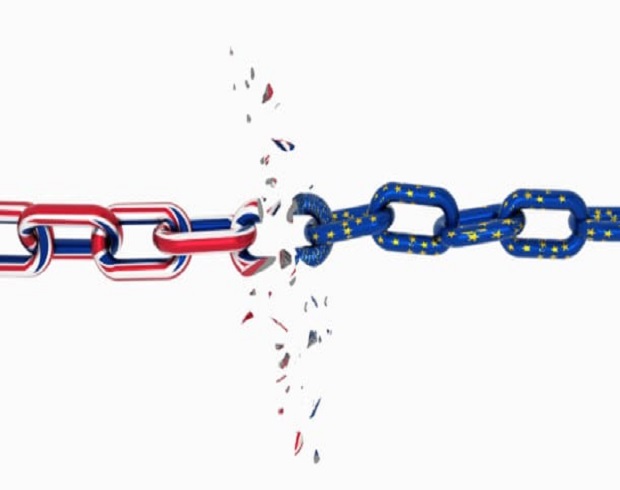
Last Monday I reminisced about a fascinating conversation that I had with Joe [not his real name], a senior executive of a United Kingdom (UK) headquartered, global fast moving consumer good company. Part of our conversation veered in the direction of the impact of Brexit on the retail side of business since I couldn’t understand the September 2021 phenomena of petrol stations running out of fuel in many parts of the UK. The crisis was simple: fuel was in plenty, but there were not enough drivers to drive the fuel tankers needed to deliver the fuel to the petrol stations. Why, you ask? Following Brexit which put massive brakes on the free movement of labor and goods across the English Channel, it turns out that most of the truck drivers, who required Heavy Goods Vehicle (HGV) licenses, were of European descent and now required visas to get into the UK. To add fuel to this fire – corny pun fully intended – a driver required additional safety qualifications to his HGV licence in order to carry chemicals such as petrol.

Now these drivers were not about to fill out long forms asking for information, including the name of the dentist who last did your root canal, and stand at the UK embassy line like the rest of us third world long suffering travellers. So they said “Sod off as us we will happily traverse the more trade friendly and welcoming geography of Europe” thereby creating an enormous logistical shortage for goods movement . According to a BBC article dated 5th October 2021, Boris Johnson’s government said it would offer temporary visas for 5,000 overseas HGV drivers including 300 immediate visas for tanker drivers. Johnson later admitted that only 127 European Union fuel drivers had applied for the scheme forcing the government to bring in about 200 Army and Royal Air Force personnel to help deliver fuel to petrol stations.

However Joe tells me that the crisis didn’t end with just fuel though. One of the top four supermarket chains in the UK has had to move out slow moving goods from their shelves due to the logistical challenges of receiving and storing goods. The supermarket chain had become operationally efficient by perfecting the art of just in time delivery, which eliminated the need to have large warehouses as distribution centres receiving goods from manufacturers, to further distribute to their wide network of stores. By working closely with their logistics partners, the supermarket giant could efficiently anticipate the product needs of each store and ensure the right amount of goods needed on the shelves were delivered on time as stock depletions occurred.

Consequently for this top retailer, it has had to make a critical decision on how to sweat its greatest asset: its shelves. The result is that manufacturers of slower moving goods have lost an outlet for sales and you can imagine the downstream effect on those manufacturers in terms of forced lower production leading to job losses as well as the detrimental impact on the raw material suppliers.

The winners according to Joe are UK bus drivers who, experienced in driving large vehicles, are converting their bus driving licences into HGV licences as the government has fast tracked the process of HGV driver testing, which had significantly slowed down due to Covid-19. In many cases, Joe said that the now scarce drivers had cottoned onto the basic economic premise of demand and supply and were demanding, in many cases, to be paid up to 10% of the value of goods being transported making them receive earnings quite nearly close to UK white collar top executives.

Now could any of this have been anticipated when all the political noise was being made about Brexit? Certainly not by the politicians, who are really not in the business of doing business. But I would hazard a guess that the logistics companies, who knew who made up the bulk of HGV drivers that moved critical goods around the jurisdiction, would have marked this as a flashing crimson red high probability and high impact event in their risk management matrix. The economic fallout from Brexit will remain a global case study on the intersection between politics and business, a lesson not only applicable to developed countries, but even to emerging markets such as ours. Stakeholder mapping the economic impact of political decisions requires a level of single minded granularity to understand the bottom line impact on the average citizen. Only the smart politician can have the intellectual wherewithal to do this.

[email protected]

Twitter: @carolmusyoka

Do Customers Choose a Product or a Brand

I recently met a senior executive of a UK headquartered, global fast moving consumer good (FMCG) company whose experience reminded me why such companies will always lead in driving the emotive part of consumerism. The executive [let’s call him Joe for now] earned his career stripes as a young marketer in South Africa working for another global FMCG company. His most memorable initiative was going into the townships in Johannesburg to observe how consumers used products. The task involved going into actual homes of consumers and watching how they interacted with consumer products throughout the day. The FMCG company that Joe worked for at the time was trying to introduce a global recognized ketchup brand into the South African market but was finding that a locally produced one had greater brand recognition and, subsequently, a large market share.

So Joe gave a number of consumers some cash, which in many cases was equivalent to their annual income, and asked them to go into a supermarket and shop to their heart’s delight. His observations were illuminating. None of the consumers in the experiment went out of their way to try any new or more expensive brands even if they now had the financial freedom to do so. They all stuck to what they were familiar with and instead shopped almost a year’s worth of non-perishable goods. When asked why they didn’t “up-trade” the brand selection, their reaction was unanimous: “This is what I am used to so why try out something different?” Consequently, the outcome of the experiment was that the consumers were sticking to their usual brands of ketchup or tomato sauce. Yet, he also noticed that the same consumers were happy to buy a more expensive brand of margarine from another global FMCG company because that is what they and their parents had used for decades. In their eyes, that margarine was a trusted brand.

Joe and his team then concluded that the only way they could get consumers to try out their brand was if they could get free samples as domestic budgets did not permit customers to try out more expensive brands. They linked up with a popular fast food chain that had several branches in the townships. They gave the restaurant chain their own brand of ketchup to give to every customer who ordered chips in small branded sachets. The consumers were thus introduced to the brand through the fast food chain. Once consumers had taken a liking to the brand, the company later entered into a sale agreement with the fast food chain making sales at the business level and at the consumer level in the supermarket as the consumers had now had the opportunity to engage with the ketchup and appreciate both taste and quality of the brand.

So was it hard to get South Africans to accept global brands when there were many equally good locally produced alternatives, I asked. Joe then schooled me on the emotive part of marketing that his previous job had taught him. During the struggle against apartheid, several multinationals exited the South African market in protest against the policies of the ruling apartheid regime at the time. The result to some extent was positive to the consumer as it gave an opportunity for local manufacturers and financial institutions to step into the vacuum and provide the same goods and services thereby creating deep customer stickiness.

Joe as a marketer turned this view of “outsider brands” on its head by pushing the narrative that the brands had supported “The Struggle” by exiting the market in protest and should therefore be supported rather than ignored as they tried to reenter the post struggle market.

Sitting with Joe was highly educative for me who, as a trained lawyer and banker, only knows customers who shop for services because of a need rather than a want. Making a life career out of a deep understanding of what is top of mind during customer decision points was something I greatly admired in Joe. It also helped me understand that in non-consumer industries, getting to understand client emotions and aspirations is almost a basic foundation from which to build products and services, a foundation that is largely lacking. Back in my banking days over ten years ago, we hired a head of marketing out of an FMCG company and the first thing she taught us was how we sold our products in the most pathetic and non-communicative way. Instead of putting language like “come get a mortgage with us” in our marketing collateral with the fatal assumption that everyone knew what a mortgage was, she challenged and demonstrated that putting up a picture of a house and a hand holding a set of keys would be a better way to state “come get the keys to your house here”. Her point: We needed to tug at the heart, rather than speak to the mind, of our customers. So how are you converting your customer wants into cannot-do-without-my-product?

[email protected]

Twitter: @carolmusyoka


Insurance Nightmares Part 3

Last month I ran a couple of pieces on the insurance industry in Kenya and its low penetration. Well I might as well have asked a bunch of recovering alcoholics to describe their first hundred days of dryness because the amount of vitriol that some readers had about their own experiences warranted me to do what is hopefully a final piece on this clearly prickly topic.

This was JG’s take:

Another reason uptake of insurance products is so low is because of chronic mendacity in the sector. I bought an education policy which I came to learn is utter rubbish. An insider told me it would have been wiser to buy a money market fund as it has a better return, no lock-in period, surrender value etc. But because the broker would make a higher commission, she sold me a bogus product oblivious or inconsiderate of my financial goals. [First off I must admit, I had to google what mendacity means. Let me tell you Maina, JG is on point like a decimal and if you don’t know what it means, let your fingers do the googling for you]

Well, if JG was seated next to me I’d have given him a high five because his broker must have been the sister to another senior insurer who convinced me to take up two endowment policies. He left his insurance company employer shortly after his mendacious [See what I did there?] sales pitch. I called the organization wishing to change the policy and was informed, quite happily I might add, that I’d have to run a 42K marathon five times on a February 29th date with a solar eclipse dancing on horizon before I could even think of cashing in on the policy. We live. We learn.

MG had the following to say:

I have motor insurance policies with one of the “reputable” companies, procured through a very reputable agent. My insurance premiums have been 3% of the value of the motor vehicle, but because these are old vehicles the actual amounts paid were reasonable. Recently I bought a Lexus SUV. The agent increased the risk factor to 3.5%. I drive the car and have no claims history to talk about. The only reason my premium rate has gone up is because I have a more expensive car now. I have opted to self-insure and put the car on Third Party cover.

MG is not one of the infamous Subaru Boys who blast their Sunday afternoons through the tea farms in Limuru as if the devil himself is hanging off their exhaust pipes. He is a well respected senior citizen in his sixties righteously indignant that his decades of making no insurance claims count for nothing. The same kind of nothing that occupies the mind of over lappers on Riverside Drive. What could make a difference to MG is if the insurance company could perhaps provide product add-ons that justify the increased premiums but reward him for the no claims. For instance a free set of tyres after three years of no claims or a top to toe car wash every month with deep interior cleaning. Look I’m just throwing crazy ideas out there, but anything that makes a policy buyer of a very expensive car feel valued would be a benefit.

But it’s not all doom and gloom. RM has been my insurance agent for the last 21 years. Through his policies I have been able to educate my children, build a house and buy a car at a time when I had left gainful employment and had no income to demonstrate to a bank official giving me the “Are you nuts asking for a car loan?” look. My own mother swears by her medical insurance provider. She is happily golfing through her seventies while her provider pays for her annual medical check-ups and the firm has provided her good cover for the last 15 years. I support her faith in the company because they paid for my late father’s medical bills when he was diagnosed and treated for cancer in India back in 2007. This company has singlehandedly kept my faith in medical insurance providers when there is very little faith to grasp onto to.

There are good stories out there, don’t get me wrong. But they are drowned out by the bad stories, the dearth of  product variety as well as the  complicated messaging and contracting process that leads to misunderstanding and mistrust, the twin misses of the insurance industry. Just like mpesa revolutionized the banking industry, we can only hope that a gamechanger will do the same for the insurance industry. That revolution will not be televised.

[email protected]

Twitter: @carolmusyoka

Insurance Nightmares Part 2

Last week, I started the story of Tom and Mary who returned from a short holiday to find their car parked in its usual position but the front was totally wrecked while their domestic manager Juma was missing in action. The security guards filled in the blanks and it turned out that as soon as they had left, Juma had driven the car out of the house, managing to convince the guards at the gate that he had authority to take the car for service. A shady story if ever there was one because the car apparently was being driven so erratically that even a five year old child could tell that Juma had probably only ever sat on the driving seat of his unconsummated Formula 1 dreams. After filing police reports and informing the insurance company of the theft by servant, Tom and Mary waited to see if their comprehensively insured vehicle would at the very least be repaired by their insurers but instead: Nada. Zip. Zilch. Zero. The insurance company said, and I am quoting verbatim the words of the claims manager before whom Tom and Mary sat, “You were careless in leaving your car keys in the kitchen. Even me when I go to shower I always go with my keys into the bathroom.”

In June 2012, the Insurance Regulatory Authority (IRA) undertook a national survey on enterprises perception of insurance in Kenya. The report authored by Oino, Osiemo and Kuloba aimed to determine the perception of insurance within the small and medium enterprises business demographic. No prizes need to be given for what their nine year old findings were. The highest awareness of an insurance product was motor vehicle insurance where 79% of the  survey respondents were aware of the product followed by medical insurance at 76% and theft at 73%. There was a low level of awareness in marine, engineering, aviation, work men’s compensation, agricultural insurance and liability insurance.

I’m willing to bet that the only reason there is a high level of awareness for motor vehicle insurance is because it is a legal requirement to have insurance for any motor vehicle on Kenyan roads. The second highest awareness being medical insurance is obvious: get admitted into a Kenyan private hospital and begin to weep premium tears. Just like motor vehicle insurance, medical insurance is also an area with a significant level of insurance fraud particularly undertaken with the collusion of medical providers themselves. So I get it when the medical insurance providers are fairly cautious in giving the green light to the hospital when a client rocks up bleeding and writhing in pain from a ripped toenail. What I don’t get is when a medical insurance provider submits the lowest bid to an organization, gets the business to insure all the staff and then within ten months of cover being provided, refuses to pay the hospital bill of a patient who has just been admitted into hospital and been diagnosed with a debilitating malady that he had absolutely no clue about. Over and above the trauma of having to deal with the unfortunate discovery, said patient had to deal with medical insurance that was being denied on the grounds that his malaise was a “pre-existing condition”. The only thing that was pre-existing in this situation is the reputation that the medical provider has in the market for being the lowest cost provider during public tenders for medical insurance providers and being the fastest denier of cover when a medical risk materializes.

The third highest rated knowledge in insurance products were those related to theft. This would be a good time to confess that I am the “Mary” in the story. My late father was an insurance investigator and literally force fed my siblings and I the mantra that “No car shall ever be driven nor household goods ever procured without insurance.”  I bought into it. Then I ran up against the gobbledygook of exceptions to the rule of instances of theft where insurance won’t cover and we were left at the altar of shocked indignation by our insurer. I don’t have the magic pill for what the solution is, as one reader who dropped me an email following last week’s piece asked. I just want to throw the issue back into the laps of insurance companies. If we don’t understand your products and we only hear and often experience the bad side of your service, well it’s no wonder that the national penetration continues to decline year on year to 2.34% as at 2019 numbers from a paltry high of 2.75% of population in 2015.

It would be nothing short of pushing a boulder uphill in high heels to get those penetration numbers turning. Time to put on some Jimmy Choo peep toes and get innovating.

[email protected]

Twitter:  @carolmusyoka

Insurance Nightmares Part 1

It was a warm Friday mid-morning as Tom and Mary packed their bags and patiently waited for the taxi that would take them to Wilson airport to catch a flight to the Masai Mara for their weekend getaway. Their trusted domestic manager Juma cheerily waved them goodbye after carefully placing their luggage in the back of the taxi. After a memorable weekend, Tom and Mary returned to Nairobi on Monday evening, finding the house in total darkness. “That’s strange,” Mary said as Juma would usually be in the house making dinner. Their car, which had been left parked in the little alcove next to the front door of the gated community town house, sat at an odd angle with the front door partly open. Tom approached the car carefully, brows furrowed in curiosity at what appeared to be strange circumstances. He gasped out “Oh my God,” before running to the front of the car in visible shock. The car had clearly been in an accident with massive damage to the front bonnet and bumper. Mary opened the door to the house, hoping to find Juma who was the only one who could explain what had happened. Juma was nowhere to be seen. With no Juma to explain and  no car to speak of, the couple hoped that the story would unravel in due course while praying feverishly that there were no injuries that accompanied the badly damaged vehicle.

Insurance is defined as  an arrangement by which a company or the state undertakes to provide a guarantee of compensation for specified loss, damage, illness, or death in return for payment of a specified premium. Insurance is one of the most maligned and misunderstood products that we have. It is like a visit to the dentist for a root canal procedure: It has to be done and you desperately wish you didn’t have to, but the consequences for not doing it are debilitating. But why is this product have such a poor penetration rate in Kenya? According the latest statistics from the Insurance Regulatory Authority’s 2019 annual report, the insurance penetration in Kenya declined from 2.43% in 2018 to 2.34% in 2019. The decline has been as steady as the numbers of physical letters you receive in the post office box (assuming you even have one) from a blink-and-you-miss-it high of 2.75% in 2015 to 2.71% in 2016 and 2.68% in 2017. It would take more than ten opinion pieces to try and unpack what’s going on in the Kenyan insurance industry, but it turns out that we are actually in the top three insurance markets in Africa.

The South Africans by far and away signed up to a different Whatsapp group and, perhaps due to their extremely developed and high value manufacturing and service industry, take up 69% of the written premium market share, followed by Morocco at 6.8%, with Kenya trailing on the podium at third place with 3.3% of Africa’s written premium but ahead of economic giant Nigeria who is fourth place at 2.4%.

What do these numbers potentially indicate? First off, Africans clearly don’t like insurance, don’t understand it and the sun rises and sets every day on our blessed continent without us natives seeing the need to take it up. Our declining penetration rates in Kenya alone is a worrying indication that something is not well understood or working from a customer perspective. And yet, here is the paradox, the same IRA report shows that service providers in that segment are increasing, for instance five insurance brokers, sixteen insurance investigators and 1,859 more insurance agents were registered in 2019. The growth in insurance investigator numbers I can understand as Kenyan insurance fraud is at James Bond Live and Let Die levels. But the higher growth of insurance agents juxtaposed to the declining penetration numbers indicates that either the industry as a whole has completely lost any impetus to innovate or, if such innovation is happening, it’s only visible to a burgeoning agent class.

Did Mary and Tom get a return on their comprehensive insurance investment once the dust settled and was Juma ever found? Come back here next week to find out how Mary plus a few million other unwilling insurance policy holders are gagged and hog tied to their insurance companies in indignant resignation which possibly explains why the rate continues to decline year on year.


Local Retail Giants Give Us Pride

My first trip to Lagos, Nigeria was in 2014, an experience that will forever be etched in my mind as a journey of paradoxical discoveries. I was the guest of an expatriate living in Lagos at the time and we went grocery shopping to a supermarket that specialized in imported foodstuff. The shelves were heaving with European dairy products and all manner of tinned basic goods like tomato paste, tinned pineapple and imported fruit. I asked my host [of Kenyan extraction] if we would be going to a local supermarket and, chuckling, she responded that if it was a Nakumatt equivalent I was looking for, it didn’t exist. “Everything that you’re used to is imported here, even the most basic item like packaged fresh milk.”

This was Nigeria. Africa’s largest sized country by population which at the time was about 176 million. I returned to Kenya with an enormous appreciation for the local retail giants that existed at the time in the form of Nakumatt, Tuskys and the smaller supermarket chains that had a majority of locally produced goods on their shelves juxtaposed with imported equivalent options in some select outlets. Our own homegrown retail giants had spawned a veritable supply chain of local goods that were being manufactured or grown for local consumption. From Kenyan farm to fork. From Kenyan factory floor to our homes. All via the numerous branches that dotted the country and, in Nakumatt’s case, the region. Nakumatt and Tuskys were revenue hot. Until they were not.

Nakumatt’s spectacular collapse in 2017 with over Kes 35 billion in debts owed to banks, employee liabilities, suppliers and other non-banking lendors will remain one of corporate Kenya’s vintage case studies. The Netflix movie that will be made about this debacle will quite likely be titled: “Titanic: The Money Hole that sunk MV Nakumatt”. Its cousin Tuskys suffered from an excruciatingly slow puncture demise after years of courtroom family drama that started in 2013 on the sharing of the spoils amongst shareholders, some of whom were in active management and some of whom weren’t. The former were viewed by the latter to be feeding from the communal family trough for their own individual benefits. An external chief executive officer was brought in, hounded out acrimoniously, brought back in when the commercial bankers cuffed the shareholder ears like the petulant children they were, and then pffft, the internal wrangles slowly brought the company to its knees. That story cannot be told in a Netflix movie, rather it will be a series titled “Game of Thrones Tuskys Edition”.

The upshot of these two spectacular failures is that there were significant operational and governance control failures. In Nakumatt’s case, money leached out, but the eye watering size of the amounts point to a finance team that looked the other way and who had a complete lack of whistle blowing ability because, well who does one whistle blow to when it is the shareholder themselves punching the holes into the ship? In Tuskys case, family members’ ability to do business with the supermarket chain presented significant conflict of interest challenges particularly if there was no way of creating an arms-length policy for that business to be done. Something that could have been cured had there been a policy framework for related party transactions from the beginning. After all, there was a family trough for communal eating and how could all members eat rather than just the ones with long necks?

A friend who heads a retail lobby group reminded a group of us recently that we should never underestimate the sheer amount of entrepreneurial talent that sits in this country and is exemplified throughout our economy in the form of local supermarkets, restaurants and hospitality outlets. The failures of two of the leading retail chains gave the space for other local chains to emerge and fill that space seamlessly. Yes, there may be one significant foreign chain at play, but we have several local options to choose from all of which continue to give a legitimate end market for the local agricultural and manufacturing value chain.

What will separate the boys from the men for these local supermarkets that are slowly becoming large corporate entities as we watch? Starting with a spectacular end in sight “Armageddon: We all crash and burn like those Nakumatt guys” and working backwards to see how that can never happen. A board made up of qualified independent and shareholder directors would be a good start to providing the appropriate risk based oversight independent of active management.

[email protected]

Twitter: @carolmusyoka

Stand Out Professional Program _ October Edition _ Come Learn With Us!

Are you a young professional starting out your career or entrepreneurial journey and are wondering how to navigate your way around?

Join us this October in our premier workshop for The Stand Out Professional Program, a three module seminar that aims to equip and enhance the participants awareness on how to be effective and influential leaders in the current and future workforce.

The Program will help you to:

  • Improve your level of self-awareness
  • Communicate impactfully with peers and managers
  • Uncover your value proposition as a young professional or entrepreneur
  • Expand your potential to grow into impactful leadership roles relevant for the future workforce

Program Dates:

  • Modules 1 & 2: 1st October 2021- In-person
  • Module 3: 6th October 2021- Virtual
  • Finale: 13th October 2021- Virtual

Price:

USD 230 or KES: 25,000/= plus VAT 

Registration Form:

Contact Us:

For further details, please drop us an email at: [email protected] and get ready to be both enthused and educated!

Lights Under The Procurement Table for Kenya Power

“Who let the dogs out?
Who, who, who, who, who?
Who let the dogs out?
Who, who, who, who, who?”

The above lyrics from the song released in the year 2000 by the Baha Men form part of a catchy, dance floor chorus that sticks in one’s mind like a screen saver on permanent loop. They also aptly describe the unrelenting attack currently taking place on the board of directors of the listed utility, Kenya Power (KP).

Mr. Bernard Ngugi, who had been head of procurement by the time he procured the promotion (cheesy pun fully intended) was appointed as KP chief executive officer, in October 2019. Bernard’s lights were turned down low in early August 2021 when his resignation was accepted by the Board and an acting CEO Ms. Rosemary Oduor, appointed to replace him.

Just like night follows a day of resignation, and zebras follow wildebeests, the current Board [which was only appointed in July 2020] suddenly started getting bad press in the media and negative mentions in parliament culminating in the summoning of board members last week to the Ethics and Anti-Corruption Commission to answer to questions of “corrupt” procurement. The chairperson, Ms.Vivienne Yeda, was also summoned last week to the Energy Committee of Parliament to answer to several questions that were so all over the map that Google would have a problem trying to point anyone to find the actual direction that the Committee was heading. From asking for the distinction between an executive director and a non-executive director (something which a parliamentary intern would happily research in all of five minutes), to asking about the details of why Mr. Bernard Ngugi resigned, to the applicable law used by the Board in its refusal to procure meters which had been already approved in a procurement plan and budget, to the implementation status of the human resource structure that had been submitted to the State Corporations Advisory Committee.

Can you procure the key issue that is being hidden in plain sight here, obfuscated by other non-issues such as HR structures and meaningless definitions of directors? Jumping into last week’s attack fray was the secretary general of Kenya Electrical Trades and Allied Workers Union, which represents KP workers, who accused the directors of undermining top management and over reaching on procurement matters. I’m actually quite confused as I have never seen Union officials coming out in defense of non-Union members in the form of senior management. But perhaps I will procure some discernment in due course.

Section 15(1) of the State Corporations Act states that a Board shall be responsible for the proper management of the affairs of a state corporation and shall be accountable for the moneys, the financial business and the management of a state corporation. KP falls within the ambit of the Act as it is controlled by the government who have a majority shareholding of 50.086%. Whereas a Board is not involved in the sausage making part of the procurement process, they are well entitled – as the fiduciary responsibility holders – to give direction on what is to be procured, ask questions on why it should be procured and determine how much the procurement should cost in total through a budgetary process. The board does not get involved in the actual procurement nuts and bolts such as requesting for proposals as that is a management operational function.

When the Board exercises its oversight responsibility, and in this case such responsibility is guaranteed by the State Corporations Act, one starts to wonder why so many noses are being put out of joint. Having listened to the cries of Kenyans who have ceaselessly questioned their high electricity bills, and having scratched the surface and found stock obsolescence and inflated stock purchasing which have to be paid for by hitherto unsuspecting consumers, the new KP Board has drawn a line in the sand and said the days of blindfolded oversight end here. As the late cabinet minister John Michuki aptly said, “When you rattle a snake, be prepared to live with the consequences.” The KP Board has rattled a venomous procurement snake and is currently living the nightmare of dodging its fangs which are emerging disguised in various forms because, after all, the best defense is a strong offense.

The best that we can do, as observers of this nightmare on Kolobot street, is rally behind a Board of directors that is being crucified at the altar of corporate governance and having their individual reputations sullied as a result. It bears noting that people of good integrity will now be highly reluctant to join parastatal boards. But that’s exactly what the venomous snakes want and, in this animal corruption kingdom, more dogs will be let out as we watch.

[email protected]

Twitter@carolmusyoka

Automated Parking, Automated Stress

A few weeks ago, I stopped by a local shopping centre on a Saturday morning to pick up an item from a specialist shop in the building. Now, I don’t particularly like shopping at this centre as it has very poor parking and has singlehandedly and detrimentally altered the traffic patterns in the area. So I wasn’t aware that there was a new virtual sherriff in town. Ten minutes after I had parked outside the building and was perusing the item I wanted to purchase in the shop, I received a text message on my mobile phone telling me “Dear Motorist, KB****Z parked at Ngong Road has not paid for parking. Dial *647# to pay Kes 200.00 within 15 minutes.” Look, I was not on Ngong road. I was however, within spitting distance of it. I was scared out of my random shopping wits and told the shop assistant that Big Brother was watching me. That very bewitched moment. She chuckled and said that it was quite normal to get the text messages. From who, I asked? How did they know my number, I asked? How in heaven’s name did they know where I was, I stammered? She had no idea. I dialed the given number, paid the amount demanded and skedaddled out of the shopping center.

Outside my vehicle, I found a fairly portly gentleman wearing a brightly illuminated waistcoat branded Kenya Revenue Authority (KRA). Turns out that he was the one who had generated the text message on his hand held device as KRA is assisting the Nairobi Metropolitan Services, who are managing the county that houses our glorious capital city, to collect parking revenues. What would happen if I didn’t respond to the text, I asked the tax collector. “Ahh Madam, si unajua lazima mtu atumie system za KRA,” he happily chirped back his response, reminding me that it was impossible to be an adult citizen in this country and not have to pass through the KRA tax collection system. In short, if I chose not to pay, he’d have shrugged his indifferent shoulders and the system would have automatically and very virtually “clamped” my car. The car would show up as having an outstanding parking payment due and this would accrue interest daily to an eye popping amount – I know this because the tax collector’s eyes popped out really large as he animatedly explained the consequences – and I would have to pay this at the point where I interacted with the system, whether it be for filing my annual returns, paying for an importation of a car, paying monthly rental income, yada yada yada. Folks, tax avoiders have been caught a good one!

The amazing part for me was that KRA had simply integrated its parking collection system to the National Transport and Safety Authority (NTSA) system which has details of all vehicle owners. So key in a vehicle registration number and voilá, the telephone number of the registered owner appears and a text message is automatically generated. Why did the message refer to Ngong Road, I asked the guy thereafter? Well, apparently their revenue system had turned the city into zones, so the shopping center where I was happened to be in that zone.

I recalled this experience as I perused my old articles and found one that I had written in September 2010 questioning the (in)efficiency of what was still the Nairobi City Council. Referring to the parking attendants, I said efficiency “…Would require removing all the yellow coated ticketing attendants from the streets and placing automated and efficient parking ticket meters on streets to reduce the bloated headcount.” Eleven years later we are there, albeit in an even more efficient manner as revenue collection is automated and linked to a floating guillotine over the driver’s neck in the name of KRA.

So the latest proposal coming from Nairobi Metropolitan Services (NMS) to reduce traffic in the city by levying a Kes 100/- per hour parking charge is one that will bring premium tears to city drivers. It will be a great revenue generator yes, but as the late American Defense Secretary Donald Rumsfeld was famous for saying, it is the unknown unknowns that should give us sleepless nights. Such a steep rate change will change inadvertently change already erratic Nairobi driver behaviour. How, is the million dollar question. But be warned, don’t ignore the text messages when they come. And if you’ve sold your vehicle to someone else, you want to make sure that their ownership is well registered, otherwise your virtual penalty account over at KRA will grow as large as your ignorant bliss.

[email protected]

Twitter: @carolmusyoka
Serikali Saidia Wanjiku

Last week a friend of mine posted on a group chat a problem she was grappling with. A fundi (repairman) who was doing some tasks at her house had missed two days of work because he had been looking for a specific bag that had been requested by his child’s school for students to use. The bag, costing Kshs 6,000/-, was only available at singular a shop that the school had issued directions to for the purchase. The fundi was therefore hunting high and low for where he could find the recommended bag by the school for a much lower cost despite the fact that he had a good old well-worn metal box  already in existence.

The issue that the fundi was grappling with was anti-competitive behavior perpetuated by the school. Kenya has a good set of laws to protect the consumer starting with the Competition Act whose objective is to promote and protect effective competition in markets as well as prevent misleading market conduct in Kenya. It does this through the Competition Authority of Kenya (CAK), which has undertaken a host of interventions in the market to protect consumers from abuse of buyer power and restrictive trade practices.

CAK regularly publishes an annual report of its activities and two school related interventions that occurred in 2016 are of interest. In the first case Nakuru parents, whose flamingo pink irritation was simmering to a boil, had had enough and, via the Nakuru Residents Association, complained to the CAK that schools in Nakuru were colluding with two uniform shops in the lakeside town. Now for those of you who are parents of children in primary or secondary school, you recognize how often your financially constrained back is against the wall annually when it’s time to buy uniform and text books at the beginning of each academic year. God bless CAK’s socks because they sprang into action, recognizing that this conduct amounted to allocation of customers which is prohibited under section 21 (3)(b) of the Competition Act. CAK undertook investigations and found that the practice was widespread throughout the country and issued public notices in the leading newspapers warning school heads and uniform shops against the behavior.

But a uniform retailer took an even bigger step the following year by writing to the CAK naming two leading uniform shops in our beloved Nairobi city that were colluding with schools to recommend to parents where to buy uniforms. To be honest, for the longest time I only ever purchased from the two named shops, lining up early in the morning like the typical last minute Kenyan waiting to be ushered into the hallowed ground of frenetic, mind numbing annual activity of uniform purchasing.

CAK in this case undertook investigations and engaged the Ministry of Education to develop a policy to deal with anti-competitive concerns about the procurement of uniforms.

However, while a ministry policy driven solution may work with public schools it doesn’t cover the ambit of private schools. So the next example demonstrates where the CAK went on a bare knuckled fight with an anti-competition transgressor in the private schools sector. In July 2018, the authority received a complaint about a private school alleging that the management of the school was making it mandatory for students to obtain laptops for e-learning (remember this was before COVID-19) and had essentially rolled up the costs of the laptop into the overall school fees without giving parents the option to source the laptops themselves.

The CAK issued a cease and desist order premised on the fact that the likely harm of the arrangement on the parents could be irreparable. The order was based on Section 37 of the Competition Act which allows the CAK to issue an interim relief upon belief that an undertaking is engaging or is proposing to engage in conduct that constitutes an infringement of the Act. CAK concluded that tying parents to purchase laptops from the school was not based on any commercial or technical justifications and ordered the school to allow parents to purchase laptops from alternative vendors and suppliers provided the laptops met the school’s specifications. The school was also ordered to unbundle the price of the laptops from the school fees so that parents who opted to get the school issued machines would have an idea of what the actual costs were.

To cut a long story short, on behalf of her fundi my friend has now registered a complaint against the school on the CAK website and I’m hoping to narrate a happy ending to this “serikali saidia” story once the outcome of that complaint emerges. If you are a long suffering parent tired of being forced to buy a singular item from a singular source, please visit www.cak.go.ke website and let your fingers do the talking for you!

[email protected]

Twitter: @carolmusyoka

Destroying Value One Step At A Time

A pastor wanted to rent an apartment for his family, but kept being denied by landlords because he had 8 children. People keep telling him to lie about how many children he had, but being a pastor, he couldn’t lie. One day, however, he decided that enough was enough. He told his wife to take the 7 younger children with her and go to the cemetery. He then took the oldest child to visit a new apartment. They went over the details of the lease with the potential landlord and right before the man signed the papers, the landlord asked him a last question: “Do you have any other kids?” “Oh yes,” answered the pastor. “I have seven others, but they’re at the cemetery with their mother.”

I have been cutting my hair at the same hair salon for the last twenty or so years. The barbers and the salon ownership may have changed over the years, but the same salon premises located in the same building remains upstanding to date. The building, located on a major street in a busy commercial district in our beloved city of Nairobi, was owned by an extremely enterprising lady owner who ensured that her commercial tenants never lacked power or running water by ensuring redundancies in place for those two key utilities. The building hummed successfully, with all floors rented out for the most part and parking was inevitably a fairly scarce commodity.

But alas! Like a good Shakespearean tale, this utopian state of existence has come to a screeching halt. Sometime in the last two years, the building ownership changed when the lady owner sold it to a buyer who had allegedly recently come into funds from winning a huge lawsuit against the government. For reasons best known to the buyer, the management of the building was allegedly handed over to the son.

I drive a pick-up. You can imagine my dismay when I drove up to the gate late in 2019, a gate that I’ve driven up to for the last twenty or so years, and was very politely informed by the guards that pick-up trucks were no longer permitted parking within the building premises. I would have to park outside. I asked why in total befuddlement. “Madam,” the stroppy guard responded – never give a Kenyan guard a little power that he never had before as it will be zealously applied – “hapa tumeambiwa watu wanahama sana. Na hawalipi kodi wanaodaiwa. Kwa hivyo pick-up haziruhuswi vile zinabeba vitu za watu wanaotoroka.” Right. So pick-up trucks were being used to carry office furniture for allegedly escaping tenants. Tenants who were allegedly not paying their rent. Consequently, all pick-up owners were blacklisted and labelled with the official “rent avoider escape mode” moniker. So the guard was not going to let me in. Period. My tenacity and righteous indignation eventually got me in, which is a story for another day but it left a horrific taste in my mouth and even more roiling anger experienced by the salon owner whose numerous clients had fallen victim to this inexplicable edict.

Last Friday, I went for my usual haircut. My car was one of two in a parking lot that used to heave on all sides with tens of parked cars. The previous weekend, my hair cut had to be abandoned midway as there was no water to wash heads, and there was no water because the external water pump was not working because electricity had gone and the fuel of the power generator had run out because the landlord did not see the need to have a back-up generator on standby. Tenants from the upper floors are not allowed to use the lifts over the weekends and if they have given notice to vacate, even from the top of the seven storeyed building, they are then not allowed to use the lift during weekdays.

The building is a pale shell of its existence two years ago. I have watched a singular landlord destroy client value inherited from the previous landlord. Goodwill destroyed. Relationships with decades-old tenants being destroyed. This is happening in a real estate environment where the supply of commercial office space by far outweighs the slowing demand, covid-19 notwithstanding. What is visibly apparent is that any business sense for the landlord family may have been buried in a cemetery years ago. Exhuming the same will require the prayers of a thousand pastors.

[email protected]

Twitter: @carolmusyoka

Communication 101 Keep It Simple Rule

In the Daily Nation of June 17th 2021, the Governor of Kakamega County put out a full page communiqué titled “The Revival of Mumias Sugar Company Limited”. It was a lot of reading. A lot. The only thing that kept me persistently going to the end of the two column publication was abject curiosity at where the mixed messaging that was jumping off the pages was going to land. Firstly we were taken through a fairly convoluted history of the shareholding of Mumias, followed by a historical reminder of the governing legislation in an act that was an undefined acronym – AFFA Act – finally ending with a victorious shout out to the receiver manger (sic) for fighting the good fight, almost finishing the race and, hopefully, keeping the faith! The final sentence was a shot across the MV Kakamega bow: “The County Government of Kakamega will full (sic) support all the efforts that will bring the factory back to operations immediately and shall ignore those that think that this is an opportunity to benefit themselves at the expense of the poor farmers and citizens of Kakamega.”

Let’s start at the beginning. The broad missive struggles with what was Mumias’ status as an incorporated entity by stating “In the year 2001, the company changed status from a public to a private company, through public listing…” Look, you can’t change from a public to a private company through a public listing. That by its very nature is oxymoronic. The writer’s noble intentions to inform emerge later in the sentence which continues “….bringing down the government shareholding to 20% and enabling the farmers and other entities to take a stake in the shareholding through Mumias Outgrowers Company and individually.”

Aha! So the writer was essentially trying to tell us that what used to be a “public” state corporation due to the fact that it was majority owned by the government at 71%, was reduced to being a non-“public” asset when that shareholding was reduced to 20%. And for the writer, the opposite of public is private of course. But then it went through a public listing, where the writer meant that the shares of the company previously owned by the government were put up for sale on the Nairobi Securities Exchange and the company was converted into a public company as its articles now permitted invitations to the public to subscribe for its shares and did not restrict the right of shareholders to transfer those shares. Following conversion into a public company, it then became a publicly listed company when it listed on the NSE.

The communiqué then gets really interesting when the Governor starts to attribute the “public-into-private-into-public” shenanigans as the bane of the company’s woes. It says and I quote: “Unfortunately, and for reasons that are now water under the bridge both Mumias Outgrowers Company and the farmers relinquished their shareholding through the stock exchange resulting into an ineffective shareholding and governance structure that had 71% of the shares held by individuals through the NSE, 20% by the national government and 9% by other private institutions. As a result of this poor governance structure the company rapidly slided (sic) into loss making and became unable to meet its obligations to the farmers and creditors.”

If I was asked to “woman-splain” what our gallant writer was venturing to posit, I would say that the original buyers of the shares at the public listing, being the farmers and the Outgrowers Company, control+alt+deleted their way out of the company and the resultant shareholders were “ineffective”, which “ineffectiveness” led to a poor governance structure. But wait, actually if you read that sentence the terms shareholding and governance structure are almost being used interchangeably because once the shareholding is defined, then that is what is explained as being the poor governance structure that led the company into loss making. Not poor management by its executives. Not questionable oversight by the board of the company that is supposed to be the apex institution guiding the organization.  Just plain old shareholders who held 71% of the company having bought the shares from the first buyers -key stakeholders themselves – who bailed out for reasons that flowed in a river over which the bridge to prosperity was seemingly missing.

I feel the county’s pain in the tragic trajectory that this public-private-public-now-under-receivership asset has taken. The full page advert is a shadow boxing stab in the dark at trying to elucidate the source of Mumias’ woes while telling everyone to stand down and let the receiver manager do their job. Invariably it leaves the reader feeling like the recipient of this message: “Sorry I just saw your text from last night, are you guys still at the restaurant?”

[email protected]

Twitter: @carolmusyoka


Trying To Slay A Dragon Legislatively

Last week, I took hours of time out of my valuable working day to dissect the veritably Sisyphean piece of legislation titled the Certified Managers Bill. You would have to look up my piece last Monday to understand what unbridled legal drafting excitement can attempt to unfurl on Kenya’s working class. So it was with even more utter confoundedness that I poured through the Institute of Directors Bill, 2019. Let’s start with I had never heard of the bill until I read an opinion piece in this paper on June 21st 2021, titled “Why it is critical to regulate how board directors are picked, work.” The article was authored by Duncan Watta, a former chairman of the Institute of Directors, who argued that “Businesses and government institutions will need increasingly stronger corporate governance policies, practices and structures that will inspire the confidence of both local and international investors. One way of achieving this is by having an elaborate system of selecting directors. At present, appointment of directors is left to the whims of appointing authorities, making this important decision arbitrary, random and subject to possible abuse where there is no oversight or accountability.” He goes on to further provide that the Institute of Directors Bill, 2019 will attempt to wash away dodgy director issues in Kenya’s public and private sector.

I poured over the proposed legislative magic bullet with a fine tooth comb to see what was being suggested. To begin with, the bill establishes the Institute of Directors of Kenya to provide for the registration and regulation of their conduct and to issue certificates of registration to its members annually as a form of quality assurance to the public bodies, entities, enterprises and companies on whose boards its members are appointed. It is important to note that an Institute of Directors (IOD) already exists in Kenya having been established in 2004 as an initiative of the Centre for Corporate Governance. According to its website, it was established as a membership organization of practicing and aspiring directors drawn from both the private and public sectors of Kenya’s economy. Through this bill, the same institute is now trying to embed itself as a statutory body that will license and regulate directors.

The bill proposes that directors be required to be members of the Institute by applying for the same and being issued with a certificate of competence that is borne of various trainings and hoops that a potential director must jump through before being certified as licensed to direct. Once so certified, a director may be subject to deregistration and disciplinary procedures if found to have undertaken professional misconduct. The throbbing heart of the bill is tucked away into a tiny little section 25 which states that “A person who is duly registered as a member of the Institute under this Act may be appointed to the Boards of public entities, organs, enterprises and corporations.”

So Mr. Watta’s opinion piece generated quite a bit of confusion for me. On the first part he argues that the issue of poor director selection and appointment is one that cuts across both the public and private sector and there needs to be a body to provide oversight as it is currently undertaken in a whimsical manner that is “arbitrary, random and subject to possible abuse”. He then continues to argue that there needs to be in place a law that provides for how directors of public and private sector institutions that have been involved in massive corruption scandals should be held to account, which solution just like Omo with power foam, he posits can be found in this proposed legislation.

However what the bill proposes is how to convert a private institution into a statutory body that will now be responsible for appointments into government related entities as only its paying and licensed members will be eligible for such appointments. So for anyone wanting to be appointed to a parastatal, they will have to seek registration as a member and keep that registration current as there will be an annual renewal process. Given the fact that directorships are not permanent positions where a director earns their daily bread, it will be interesting to see how an individual will seek to maintain membership in good standing for a director position that may or may not emerge in the fullness of time. Furthermore, as any good recruiter will tell you, talent often never looks for work and is typically head hunted. As the government seeks to shift the composition on quite a number of its critical boards today, trying to tie its hands by straitjacketing the director selection process will be a gargantuan task. I wish the IOD the very best in this endeavour.

[email protected]
Twitter: @carolmusyoka

Jurisdictional Liability for Directors Extends Beyond Kenya’s Boarders (part 2)

Last week I started off the story of how Real People Kenya (RPK) came to the Kenyan capital markets in August 2015 to ostensibly raise capital for on lending to SME clients amounting to Kes 5 billion in a medium term note (or bond). The bond, listed on the Nairobi Securities Exchange was to be raised in three tranches and the first tranche targeting Kes 2 billion, managed to raise Kes 1.6 billion. RPK is a subsidiary of Real People Investment Holdings Ltd (RPIH), a South African company listed on the Johannesburg Stock Exchange.

Kenyan investors, hungry for risk diversification from the usual government bonds and thin pickings on the corporate bond front, invested Kes 1.6 billion in the bond. On 31st March 2021, Kenya’s Capital Markets Authority (CMA) issued a press statement declaring it had taken enforcement action against former board members of RPK as well as current and former board members of RPIH in South Africa for their role in the misapplication of the Kes 1.6 billion bond proceeds.

It turns out that as soon as the Kes 1.6 billion was raised from unsuspecting investors  for use in the Kenyan SME lending market, the funds were instead put on the by-pass to glory and dispatched to the parent in South Africa to repay an intercompany loan. It is important to note that investors of the bond made their decision on the basis of the Information Memorandum prepared by the company and signed off by the directors of the company, noting that CMA regulations require that they undertake personal responsibility for the statements and information contained therein. The use of the funds is a key point of information to enable investors determine the capacity of the borrower to generate the funds both to repay the principle and the interest of the borrowed funds.

According to the CMA press release, RPK immediately started experiencing financial distress once the subordinate capital was sucked out of its balance sheet and was unable to meet its bond obligations. The company was forced to ask investors to extend the dates for redemption of the notes beyond the initial maturity dates. Upon investigation, the CMA found evidence that even before application, approval and issue of the bond had been given, there had been a plan between RPK in Kenya and its parent RPIH in South Africa to remit the proceeds to Johannesburg in settlement of the intercompany loan.

Long story short: CMA woke up and said not on our watch buddies! The regulator issued Notice To Show Cause letters and the scythe cut across directors and senior management of both the Kenyan subsidiary as well as the South African parent up to and including an alternate director of one of the South African board members. Out of the twelve directors who received the notices, seven appeared before a CMA Ad Hoc Committee while five filed a case at the Capital Markets Tribunal. The Ad Hoc Committee determined that there was lack of effective oversight on the part of the RPK board on the application of the MTN proceeds particularly in view of the fact that the June 2015 Information Memorandum for the bond  had clearly stated their use for lending in Kenya.

So what did the Committee conclude? Four out of the seven who appeared were fined various amounts personally and all were disqualified from being a director or key personnel of any issuer, licensed or approved person in the Kenyan capital market. The disqualification will only be lifted once the bond holders recover their money in full together with the accrued interest. No enforcement action was taken against the remaining three out of the seven. It is noteworthy that the steepest individual fine of Kes 5 million was levied against the RPK board chairman at the material time and the chief executive officer of the parent RPIH in South Africa. The group chief finance officer of the parent RPIH and the gentleman who sat as an alternate director on the board of RPK to the group chief executive of the parent RPIH were both fined Kes 2.5 million each. Both of the latter recipients of the penalties were board members of the parent company RPIH.


This ruling was an excellent addition to the corporate governance jurisprudence emerging in Kenya. The CMA essentially found that even if a director of an issuer was not physically present in Kenya (and in this case, even a director of a parent company not situated in the Kenyan jurisdiction and his alternate) they still had a duty of care responsibility to the purchasers of securities they issued in the Kenyan jurisdiction as well as a responsibility not to act negligently in their oversight of the securities issued by the company they oversee whether directly, as the subsidiary or indirectly, as the parent. Most importantly, it is a clear reminder to directors of listed companies that they are held to a very high standard by the regulator with equally high pecuniary and disqualification penalties accruing in the case of breach of fiduciary duty.

[email protected]

Twitter@carolmusyoka

Rewarding Men Who Produce Something

When you see that in order to produce, you need to obtain permission from men who produce nothing – When you see that money is flowing to those who deal, not in goods, but in favors – When you see that men get richer by graft and by pull than by work, and your laws don’t protect you against them, but protect them against you – When you see corruption being rewarded and honesty becoming a self-sacrifice – You may know that your society is doomed.” Ayn Rand – Russian philosopher and writer.

I was recently pointed to the quote above by a friend who was perturbed that from the turn of the century, the Nairobi Securities Exchange (NSE) had only had about fifty two companies listing their equity which grew to sixty one by the time the NSE went public in 2014 and listed itself on the exchange, to the current sixty six companies in 2021. In short, in twenty one years the NSE has only had about fourteen or so companies go public. The question is why? Yet in that time, there has been a marked increase in Kenya Shilling billionaires, a number of whom have done nothing other than been at the right place at the right time, including – if the parliamentary inquiry into the KEMSA COVID-19 related procurements is anything to go by – just walking past the KEMSA doors and “angukia-ing” a tender just like that!

As Kenyans we have become inured to the fact that almost absolutely nothing happens to the perpetrators of the corruption related economic crimes. In Ayn Rand’s words “when you see that men get richer by graft and by pull than by work, and your laws don’t protect you against them, but protect them against you”… it makes one stop and ponder if there is an invisible co-relation between the lack of growth in the capital markets and the growth of graft billionaires who tie up the justice system with adjournments and all manner of technicality cans kicking the case down an unending road.

The truth is, there is a high cost of doing business the legitimate way in this country. Paying your varying taxes on time, complying with the myriad local and national licensing requirements to trade and navigating through a myriad of employment regulations and court jurisprudence that over the years favor the employee over the employer is equally exhausting for many small, medium and large enterprises. Two interesting developments have occurred this year. The first was the attempt by Kenya Revenue Authority (KRA) to introduce the minimum 1% tax on turnover for all companies. This was brought to a screeching temporary halt by the courts in April this year as we await the outcome of any appeals that KRA will make. The second is the current National Hospital Insurance Fund (NHIF) (Amendment) Bill in parliament making it mandatory for employers to match the NHIF contribution paid by their employees.

With the increasing cost of doing business it is small wonder that companies, that are for all intents and purposes excellent candidates for listing on the securities exchange due to their growth potential and significant economic contribution are reluctant to raise their profiles any further than necessary, as the amount of disclosure on legal and financial business aspects make them targets of those “men who produce nothing” as Ayn Rand lyricizes. By flying under the radar of non-disclosure as is required of publicly listed companies, businesses can go about their work without worrying who from the KRA is monitoring their semi-annual results publications in the print media while comparing and contrasting with the tax returns that are being made.

The winners here are the banks, as debt financing has far more attraction for the borrower due to the reduced number of eyes that get to see their financial statements. The losers are the business owners who do not get an opportunity for price discovery that listing provides to enable the equity holders determine the market driven value of their equity, as well as an easier route to realize a gain on their sweat by selling to external shareholders and raising additional alternative capital which in some ways is cheaper and longer term in nature than debt financing.

“When you see corruption being rewarded and honesty becoming a self-sacrifice – You may know that your society is doomed”, Ayn Rand quips. We are not a doomed society yet and I refuse to consign our fate to this negative conclusion. But there is some food for thought in how our regulatory and tax framework in all matters business can reward those that actively produce goods and services for the betterment of our society.

[email protected]

Twitter: @carolmusyoka

The Danger of Cross Border Banking Part 2.

In November last year, I wrote about an interesting Ugandan High Court ruling that had the danger of setting a dangerous financial and economic precedent in the country. Just as a reminder, I wrote that a Ugandan businessman borrowed a series of loans running in the tens of millions of US dollars from a Ugandan subsidiary of a Kenyan bank, part of the borrowing of which was lent by the Kenyan parent bank. It is fairly common throughout the world for local subsidiaries of banks to draw on the strength of the parent bank’s balance sheet simply because of lending limitations of the subsidiary in its jurisdiction.

I also wrote that this kind of lending is not only limited to the private sector. Governments also take on commercial loans from foreign banks in what are known as syndicated loans where a group of banks, some of which may have local presence, provide a loan to the government and appoint one bank as the collection bank. As is wont with some businesses, the Ugandan businessman was unable to service his loans and decided that the best defence was an offence. He sued both the Ugandan subsidiary and the Kenyan parent banks claiming that attempts at collecting the loan repayments were tainted with fraud, further that the Kenyan parent of the bank was not licensed to conduct the business of a financial institution in Uganda by the regulator Bank of Uganda and therefore the loan from the Kenyan parent was illegal from the onset.

Well, the High Court judge in Kampala issued a judgement in October 2020, finding in favor of the businessman’s convoluted argument that the Kenyan parent bank did not have license to conduct business in Uganda thus the loan was invalidly issued, neither did it have authority from Uganda’s banking regulator to appoint its Ugandan subsidiary as the loan collecting agent. Finally he ordered that all the mortgages that had secured the loan be released back to the businessman and that the monies that the bank had recovered from the borrower in trying to enforce payment be reimbursed.

The dangerous precedent that was being set here was that there were millions of dollars of loans in the Ugandan banking system in both private and public sector that ran the danger of being labelled illegal, thereby potentially setting off a series of defaults were the borrowers to be the kind that sipped from the same mischievous cup of balderdash. The Ugandan bank and its Kenyan parent rushed to court to obviously forestall the execution of this judgement with the banking industry on both sides of Lake Victoria vigorously waving cheerleading pompoms. The stay of execution pending appeal was granted.

A three judge bench of the Court of Appeal handed its judgement last week on the 5th of May 2021 with a stinging indictment on the High Court’s erroneous interpretation of contract law and the Civil Procedure Rules that it had relied on to bolster its turbo charged assault on the international banking system. Deputy Chief Justice Buteera schooled the Ugandan businessman on how to come to court with clean hands by saying that “In law it is not possible for a plaintiff to recover by a claim based on the medium of and by aid of an illegal transaction to which he was himself a party.”

The Deputy Chief Justice went further to state that “I know of no law that makes it illegal for a Ugandan citizen or foreigner resident in Uganda to borrow or pay back money borrowed from a foreigner or foreign institution, a bank or any other organization unless the transaction involves the perpetuation of a criminal offence such as terrorism, money laundering, human trafficking or any other offence. The loan agreement tainted with perpetuation of an offence would not be enforced by a Ugandan court.”

In my view the judge stopped short of calling the Ugandan businessman a schoolyard bully who wanted to use the law to claim an illegality of a transaction that he himself had happily signed up to and merrily spent the proceeds therefrom with nary a peep of discomfort. The criminality that is actually in question here was whether the businessman ever had any intention of paying the loan in the first place. We will never know that. But what we do know is that the Ugandan Court of Appeal put paid to the basic tenets of a good investor relations climate: executing the judicial process with speed, righting judicial wrongs that infringe of the foundation of contract law and, most importantly, sending that case back to the commercial division of the Ugandan High Court with instructions that the suit should be expeditiously fixed and heard by another judge. These are some of the very foundations that the ease of doing business in a country are based upon.

[email protected]

Twitter: @carolmusyoka

Bank Risk is Risky Business

Many years ago when I worked as a corporate relationship manager at a bank, I dabbled with the thought of moving to the credit risk department as I had gotten bored of the mundane sales and extremely aggressively numbers targeted business development role. I spoke to the head of credit risk at the bank, asking him if there was an opportunity to make a horizontal career move into what I thought would be a challenging and intellectually stimulating role of assessing borrower risk from a purely analytical, rather than profit motivated, perspective. The head of credit risk cocked his head to one side and gave me a baleful stare. “Why would you want to leave a glamorous, bonus guaranteed position to come to the most reviled section of the bank?” he asked. “I’m bored,” was my only reply. He then proceeded to school me on what credit risk entailed summarizing, “This is the part of the bank that has no glory, and only comes to everyone’s attention when a big transaction goes wrong. And when that happens, the bullets that will come flying leave nothing but dead bodies and broken careers.” Well, that brought my temporary boredom infused, career limiting insanity to a screeching halt.

I was reminded of this interaction when someone forwarded to me a Financial Times (FT) article published on April 25th 2021 reporting how shareholders of the Swiss banking giant Credit Suisse were seeking to remove the board director chairing the risk committee of the board, Andreas Gottschling. This was following what the FT reported as twin scandals of transactions that had gone pear shaped and led to the loss of $4.7 billion from the collapse of family office Archegos Capital and another potential insolvency of their client Lex Greensill that could cost the bank’s clients as much as $3 bn. Consequently, according to the FT article, the bank has been forced to raise $1.9 billion to shore up its capital.

Apart from the fact that these are eye watering numbers to be discussing at the bank’s emergency board meeting that had to have been called, the FT in a typical tongue-in-cheek print media manner reminds readers that the 53 year old Gottschling earned a $1 million annual fee as the chair of the bank’s risk committee, a position he has held since 2018. But why would shareholders be baying for his blood? From the piqued perspective of the shareholders, Gottschling and his committee dropped the ball in determining the amount of risk that the bank was bearing on these transactions and should have raised a red flag if not entirely stopped the transactions from happening. Gottschling apparently sat on several conference calls discussing the Greensill transaction and according to the FT article,

“Ultimately, Gottschling sided with those who thought Greensill was a valuable entrepreneurial client with whom it was worth continuing business, according to people with direct knowledge of the matter.”

Essentially shareholders are saying: there are $1 million annual reasons in your wallet why we expect you to have known better. It is noteworthy that Lara Warner, the chief risk and compliance officer of Credit Suisse was asked to leave in April 2021 following the twin scandals. Balancing risk versus profit within a banking environment is an extreme sport, treacherous at best but monumentally lucrative if that balance is well achieved. There is always a healthy (and in many cases fractious) tension between the business development team and the risk team in all financial institutions because each has a role to play in achieving that balance. They often meet each other on the two sided escalator of driving profits up while keeping lending losses constantly sliding down. Sitting not so pretty on the side lines is the board through its risk committees that have to ensure the right people are on the job and have the backbone to say no to everyone, including the chief executive officer when certain risks outweigh the benefits of doing business. In this jurisdiction where finger pointing is largely left to the banking regulator when a bank gets into trouble, there is merit in observing and learning from what the shareholders of Credit Suisse are doing.

Under our Kenyan Capital Markets Authority (CMA) governance code, members of the audit committee are required to be elected at every annual general meeting of a listed company. In doing this, shareholders are taking ownership of ensuring that the members of the audit committee are qualified to do the job. But for banks, perhaps a higher standard should be held by the CMA that requires the same level of shareholder rigour is applied to members of the credit risk and risk committees. In so doing, listed bank boards will become even more careful selecting watchful directors who can watch the watchers of the business.

[email protected]

Twitter: @carolmusyoka

Corporatize The Family Business

I’ve had a lot of discussions recently with second generation family members who wish to “corporatize” the family business founded by their parents. Having been well educated and widely read and, in some cases, having worked for corporates themselves, they see the danger of not setting up organizational structures that will ensure the business remains sustainable for future generations. In almost all the cases the ageing parents are still active in the business and naturally wary of allowing “outsiders” into key decision making positions that may affect the trajectory of the tightly run organization.

But first things first. The verb corporatize means the process of converting a state organization into an independent commercial company. In many ways, family businesses are like state organizations. Funding comes from the government [founders] and decisions on who gets to run the organization are made by the government [founders] that can control the appointments of the executives and the flow of dividends back into their own coffers, if at all a dividend is declared. Second generation family members are like a privatization commission: Look, let’s sell this company to those who can bring in efficiencies and run this place much better than we can. Why? Because we are simply not interested in running this place anymore and are happy to sit back and receive the dividends off of someone else’s sweat  in some instances, or if we are interested, then we recognize that we don’t have all the answers and perhaps an outsider can help us find the answers [in the form of an independent board of directors] or deliver the solutions [in the form of an independent chief executive officer and senior management].

Last week I wrote about the concept of an advisory board, which is a non-binding and non-legal structure that allows a family to create the semblance of a corporate governance structure, while maintaining family independence. Advisory board members would be subject matter experts and deeply experienced in their areas of expertise, giving the family non-binding but valuable insights on issues such as strategy, risk assessment, internal controls, product and route to market innovation as well as financial performance. Since the advisory board members are not registered as statutory directors in the Companies Registry, they should not bear fiduciary nor legal responsibility for the company.

But how does one deal with a cantankerous founder who would want to remain as “chairman” even on the advisory board? Borrowing from the jurisdiction of the United States corporate governance jurisprudence, it may be useful to appoint a “Lead Director”. This position emerged following the early 21st Century corporate scandals such as Enron and Worldcom in the United States and was found to be an excellent bridge for independent directors where the fairly common role of chief executive officer and chairman were combined. The lead director acts as a liaison between the independent directors and the chair and where it works well, actually takes the lead in formulating the board agenda in collaboration with the chairperson and advises the chairperson on the amount, content and timeliness of information given to the board.

By ensuring a healthy communication flow, the lead director can help the chairperson get comfortable with the concept of receiving external insights and guide advisory board members on what their responsibilities are relating to the role. The family can ensure that the lead director’s letter of appointment clearly expresses his or her role and responsibilities to avoid blurred lines and the danger of overstepping their mandate not to mention pissing off an already wary founder chairperson! It is imperative that the lead director is not an old family friend, someone who may tread gingerly around the chairperson like a cat on a hot tin roof when critical issues need to be discussed or brought to the advisory board’s agenda. However the lead director should be a person of significant gravitas, senior enough to command the chairperson’s, as well as other family members respect as well as having the commensurate business experience as well as emotional intelligence to provide effective leadership, build consensus and facilitate discussions sagaciously.

And maybe, just maybe, the advisory board can gently begin to encourage the founder to relinquish day to day management of the business and move to a more non-executive chairperson role that allows him to have his nose in, but fingers out.

[email protected]

Twitter: @carolmusyoka

Advisory Boards That Work

Fresh out of business school, John answered a job advertisement for an accountant. At the interview with a middle aged man who ran a small business that he had started himself, the interviewer said, “I need someone with an accounting degree, but mainly, I’m looking for someone to do my worrying for me.” “Excuse me?” said John.”I worry about a lot of things,” the interviewer said. “But I don’t want to have to worry about money. Your job will be to take all the money worries off my back.” “I see,” John said. “And how much does the job pay?” “I’ll start you at five hundred thousand shillings a month.” “What? How can such a small business afford a sum like that?” John exclaimed. “That,” the interviewer said, “is your first worry.”

Family business owners are constantly worrying. Worrying about whether they have the right people working for or stealing from them. Worrying about the competition and whether they can afford pricing wars or cheaper alternatives to their products. Worrying about the economy and consumer purchasing power that will affect their customer’s ability to buy their goods and services. Worrying about the Byzantine tax regime that is bound to trip them up if their accountant falls asleep on the job and a more than eager tax authority official with a target to meet identifies the slip up. The last thing on many of their minds is setting up a board of directors made up of non-family members or non-shareholders.

For many business owners, keeping their financial performance and intellectual property confidential is a critical requirement for survival of the fittest in an often cut throat competitive environment. This of course potentially stifles bottom line growth and product innovation where the organization lacks external expertise and thought leadership on the trajectory that a business is taking. Maria identified this when she joined the confectionery manufacturing business that her parents had founded and nurtured for thirty years. She immediately embarked on creating an advisory board made up of herself, her parents and three external and independent resources that were subject matter experts in various fields. The benefit of the advisory board she says, is that it immediately brought a sense of professionalism into the way the business was run.

An agenda had to be created for the meetings, which led Maria and her parents to put some thought into what the objectives and what the best outcomes would be for each meeting. Maria wanted to eliminate the echo chamber that had arisen at the family leadership table as the breadth of creative thought and experience was limited to the family members’ existing capacity. She convinced her parents that they needed to bring in independent resources who had experience in formulating strategy, retail distribution and manufacturing.

Her father’s concern was that the advisory board members would tell him what to do and he had no business taking instructions from strangers. Maria was careful to design the agenda into key discussion areas that the business needed addressed around route to consumer and innovation as well as production efficiencies. She assured her father that the meetings would be structured as round table discussions where the company’s current products and processes would be tabled for a constructive discourse on where best to improve on the same. She also created an advisory board charter that clearly laid out the terms of reference for the members from number of meetings, length of tenure (in this case it was one year to get her father comfortable with the concept initially), areas of focus and responsibilities of members.

As the advisory board members were not registered as directors at the Companies Registry, they did not bear any fiduciary or legal responsibilities which put her father at ease in terms of the information that had to be shared with them and the fears he had that he would be beholden to their decisions. Maria then sought out experienced resources in the chosen fields and used the family’s well respected social capital to convince the resources to accept the role. She was astute enough to ensure that one of the resources was her close to her father’s age with an independent and richly experienced background, who helped to lead the discussions respectfully while skillfully occupying an imaginary chairperson role. The resultant probing and very challenging conversations yielded up an apparent need to move the family business into a more corporate and sustainable culture and Maria succeeded in convincing her parents to eventually transform the advisory board into a longer lasting company board of directors made up of family as well as independent directors.

An advisory board does not require to morph into a legal board of directors if a family business does not wish it to. However, it is an excellent way of putting nervous toes into the frigid waters of the unknown area of governance and testing the practice of knowledge sharing, comprehensive strategy formulation, risk management, financial control and setting up a business for sustainability in the long term.

[email protected]

Twitter: @carolmusyoka

Loans That Thrill

Last week a colleague attended a funeral of a loved in Murang’a, which is outside the Armaggedon battle field that our health authorities have defined as the “Disease Infested One Zone Area (DIOZA)”. But it was not angels of mercy that stood watch over the last frontier over at Del Monte/Blue Posts roadblock on the Thika Super Highway. Instead they found uniformed men who scoffed at the government issued permits that the funeral entourage were carrying allowing them to leave DIOZA and told them the only permits they recognized were those in the form of cash. It gets more interesting: since word had clearly spread that “Escape from DIOZA” permits can be bought on the spot, cars had formed a tail back more than a kilometre long awaiting their turn to pay their escape tax and be on their merry way to undertake whatever social or economic activity they were pursuing.

The speed with which new taxation measures are rolled out in Kenya, whether formal in the form of the controversial minimum tax or informal in the form of DIOZA escape tax, is awe inspiring. Last week, the Executive Board of the International Monetary Fund (IMF) approved a US$ 2.34 billion 3 year term facility that was provided to support the Government’s next phase of COVID-19 response as well as its plan to reduce debt vulnerabilities, safeguard resources to protect vulnerable groups as well as advance weaknesses in some state owned enterprises and strengthen transparency and accountability through the anti-corruption framework.

But the IMF facility caused so much angst on social media that I had to read it myself to see what it was all about. So I did. All 121 pages of the IMF Country Report number 21/72 which is eye watering economic jargon written by economists, interspersed with acronyms that could make a dormant ulcer bleed. Alright, I exaggerate a little. The paper looks like what would be in banking-speak a credit application paper where the bank spends a good amount of time analyzing the borrower’s financial health history as well as the borrower’s projections of the same for the 38 month term of the facility.

Further on in the paper the borrower, through the Cabinet Secretary, National Treasury and Planning together the Central Bank Governor, puts in a Letter of Intent that attaches an almost 30 page document that demonstrates what the borrower wants to achieve in terms of economic policy to ensure that the funds are well spent. One particular admission was of great interest. According to our borrower government, strengthening of  public investment management will be key to securing developmental objectives. The paper reveals that Kenya’s public investment plan includes some 4,000 projects, but many of these have been slow to execute resulting in about $10 billion of committed but undisbursed official development assistance much of it on concessional terms. That would be about four times the IMF facility that has been given to Kenya! The paper further admits that the government had undertaken a public expenditure review which identified 522 dormant projects and potential one-off expenditure savings of about 1.5% of Kenya’s GDP from cancelling at least a third of those dormant projects. Consequently, ineffective use of available project financing hampers service delivery, entails avoidable commitment fees on undisbursed funds, increases our reliance on expensive commercial financing and worsens our public debt vulnerability.

What does this mean in simple Wanjiku-speak: Some folks have been sleeping on the job! There are thousands of projects out here in sun kissed DIOZA and non-DIOZA regions that have concessionary funding which have either not been executed or been partly executed for reasons best known to those charged with the same. The result is that the government is forced to turn to commercial borrowing and its resultant costs to get some of these projects done. It beggars belief that there is no consequential action for non-performance or lack of delivery, but then one is reminded that what doesn’t get measured doesn’t get done.

The same exercise that was undertaken to review the public expenditure can be extended to review these projects and perhaps place them in the hands of able minded Kenyans who can get the job done with the right incentives put in place. While the paper is silent on what areas these projects are in, the mind boggling savings of 1.5% of GDP that emerges from cancelling a third of the 522 dormant projects should be enough to hire an effective team to deliver on the remaining projects. Simplistic much? Perhaps yes, but I know that there are at least a hundred good men and women who can be found to do this work exclusively and with the same zeal that the formal and informal tax collection system in this country is undertaken. Solutions to problems of our own making have to come from ourselves and can be done with the right incentives in place. For now, we contend with 2.34 billion reasons why we must gnash our teeth and adorn sackcloth for the next 3 years.

[email protected]

Twitter: @carolmusyoka

Nairobi Versus Kigali Is This Really an Issue

I recently had a chat with a friend of mine from Rwanda, who was in Nairobi for a work assignment. She had been vaccinated against Covid-19 a few days before her departure and this was after about three calls from the Rwandan government requesting her to go to the vaccination centre. As she is in the banking sector, they are categorized as essential workers hence the calls. Eventually, due to her impending trip to Kenya and constant encouragement from her friends, she went to get the shot. She was highly appreciative of the communication framework that her government had put in place which had listed, by name and telephone number, all the essential workers that needed to get the vaccination and literally hounded them to go and get the shot.

But this is where it gets interesting. She also told me that the Rwandan government went to refugee camps and vaccinated the refugees! It would appear that the thinking in that government is that the refugees represent a soft underbelly of potential large scale community transmission and if left forgotten or unattended to, could end up unravelling a focused attention to stop the rapid transmission of this killer disease amongst the country’s citizenry.

Last week there was an interesting debate on Twitter regarding the potential of Rwanda becoming an East African travel hub once the joint venture between Qatar Airlines and Rwandair begins to bear fruit. One person claimed that a large international NGO had packed up its bags and relocated to Kigali from Nairobi and this was the beginning of Nairobi’s death knell as a regional headquarter for many international organizations. Others spoke about Kigali’s clean, secure neighborhoods and well organized public transport system including the ubiquitous boda boda operators who have clear identification on their yellow visibility jackets plus riding helmets and can be traced to a man in the event of an accident or incident. The fact is Kigali is the cleanest, organized and most secure East African capital city. They have excellent, publicly available internet and, perhaps due to their low population size compared to their East African counterparts, a very effective community grassroots system that ensures the government is communicating to and receiving information from the simplest villager.

On the other hand, the proponents of the Nairobi-will-never-die brigade spoke to the large middle class and bigger economic base in Kenya, together with the diversity of residents and wide offerings in the retail, housing and hospitality industries. At the very minimum, the debate about Kigali taking over as East Africa’s regional economic and travel hub comes down to hardware and software.

The hardware consists of infrastructure in the form of world class commercial and residential properties to house the various offices and thousands of staff that would man the organizations. It would consist of the retail spaces and the retailers that would provide the comfortable trappings for the expatriate residents and the local middle class that would emerge as professionals working in these organizations. It would consist of the hospitality offerings in the form of hotel bed capacity at an international standard for the thousands of business visitors engaging with these organizations as well as a dynamic and diverse restaurant and entertainment scene. It would necessitate a strong private medical industry in the form of good hospitals and medical personnel that could accommodate medical emergencies that might occur in the short term. It would also consist of fast connectivity to multiple global international business hubs for the travelling residents and visitors. Finally, but not exhaustively or conclusively, the hardware would also consist of providing a safe and secure environment within which these organizations and their people can operate effectively within a manageable socio-political space.

On the software side, the people element should be examined. Finding talented, well-educated and diversely experienced local professionals who are in great supply, thus eliminating the need to backfill the staffing cadre with expensive expatriates would be a key consideration. It is one thing to set up an organization and it is a whole other kettle of fish to make it work effectively and cost efficiently through good people. The opening conversation in this piece spoke to the well-oiled machinery that the Rwandan government runs in a country with a population of about 13 million people or a quarter the size of Kenya’s population. I leave it to you to decide, particularly if you have ever visited Rwanda, as to whether the Nairobi versus Kigali regional hub debate is one worth losing sleep over!

[email protected]
Twitter: @carolmusyoka

Founderitis Syndrome

According to Wikipedia, Founder’s Syndrome (also founderitis) is the difficulty faced by organizations, and in particular young companies such as start-ups, where one or more founders maintain disproportionate power and influence following the effective initial establishment of the organization, leading to a wide range of problems.

In this region, we have hundreds of thousands of businesses that have been started by individuals who then go on to include spouses and grown children into the organizations. But the challenge is often a successful transition of business to the second generation, particularly where the founder doesn’t believe that the entity can succeed without their presence and institutional knowledge. There are many businesses that are buried in the cemetery of dead ventures that failed to implement basic governance structures that would ensure sustainability beyond the founder’s death or incapacitation. A quick and dirty route that is often used is to give shareholding to the spouse and children so that ownership in the business is established, but the structures for ensuring continuity such as job descriptions for role holders in the business as well as reporting structures are not put in place. In some cases, having spouses and multiple children in the business can lead to fudged reporting lines for employees with demands and counter-demands ordered that lead to angst and loyalty “fault lines” emerging as some employees interpret the pecking order of the children differently.

A founder, who envisages a legacy beyond just founderitis, can set a clean path to an organization that outlives them. Giving family members job titles, with clear job descriptions and reporting lines would be a good start, accompanied by an organogram that allows internal stakeholders to know on what side their performance bread is buttered on. Setting up an “executive committee” (Exco) of management members, who report to the founder CEO, allows for a corporatized environment if meeting times are set in a calendar with a standard agenda for operational performance reporting duly designed and followed. The Exco meetings should take place in the business premises and not at family dinners to clearly demarcate the informal home environment from the more professional organizational environment and also avoids the tag of a “kitchen cabinet” emerging from other senior non-family employees. The founder should then set up a board of directors which may or may not include family members, bringing in critical external insights on how the business is performing within the general economic environment as well as establishing controls and a solid risk assessment over the business.

If the business reporting at Exco level is robust, then information flowing up to the statutory board of directors should be easier to replicate and getting experienced directors who have exposure to other boards would be an excellent way to professionalize how the board processes are structured. A key risk that many family business owners are constantly wary of is exposing their institutional secrets to outsiders who may reveal the information or, in the worst case, set up competing businesses.

A way to mitigate against this risk is to ensure careful selection of external directors who do have a track record of sitting on other boards or who are not known to be serial entrepreneurs that jump at the opportunity of starting a new business time and again. Inserting a non-compete clause in the board appointment letter as well as non-disclosure confidentiality clause could also ensure that board appointees understand their duty of loyalty to the company. While the founder may chair the board, it would be prudent if an independent chairperson is groomed to take over to ensure that the board sets its own agenda rather than that solely of the founder, particularly in the area of oversight and risk management. A good board process should also be continuity of the board itself and here the role of a nominations committee would be useful in setting board director terms, recruitment and succession planning for independent directors.

In setting up a board made up largely of independent directors, the founder ensures that the longevity of the organization is maintained as good directors should ensure that the business has the right caliber of employees who can run the venture professionally as support to existing family members as well as ensure that succession planning for critical roles is put in place. Good directors will also ensure the establishment of a credible external audit process, and a viable internal audit resource if the size of the business permits so that control of the business is maintained and identified operational risks are continually mitigated. As treasonous as it may be to imagine the death of a founder, in light of all the big retail businesses that we have seen collapse in the Kenyan boulevard of broken dreams lately, it might be useful to start having these discussions at the next family lunch.

[email protected]

Twitter: @carolmusyoka

Curing A Mischief

Last week I started on an analysis of the articles of association of a company limited by guarantee that owns a large hospital in Nairobi. The hospital has been in the media for much of 2020 due to the changes in its executive suite that have caused much angst for the past chief executives as well as the board of management, as the directors collectively call themselves. An interesting change in the articles of association happened mid 2020 when some amendments were made to the terms of directors as well as the election process for the board. Just as reminder, the memorandum of association of a company sets forth the objectives for which the company is created while the articles of association define how the company will be governed.

Collectively, these documents are the constitution of a company by which the Companies Act protects the shareholders by ensuring any activities that the directors and management undertake are strictly within the realm of the constitutive documents. Consequently, changes to these documents are usually a clear indication of curative process, as the shareholders amend clauses that are perhaps not fit for purpose. For instance in this hospital’s case, directors were permitted to hold three consecutive terms of office and would only be allowed back on the board after a year’s cooling off period. The July 2020 amendments changed this to a maximum of two consecutive terms with directors allowed to be re-elected onto the board after a five year cooling off period. One is left to wonder what mischief this was intended to cure and one could hazard a guess that perhaps the same faces were emerging during election time despite the one year thumb-twiddling hiatus.

It gets even more interesting when one examines the amendments that were simultaneously made to the governance process. The old articles of association provided that elections for directors would be held during the annual general meeting and gave an elaborate process for nomination of directors. However the new articles of association now insert a clause creating a “Board of Trustees” whose main object shall be the advancement of medical practice and research, managing the company’s elections, mobilizing resources for the company, coordination of the company’s different organs as well as safeguarding the assets of the company. The trustees are to be governed by a trust deed which shall be approved and registered by the company’s board of management. I have to admit that this is a very curious insertion into the articles of association. The role of the board of trustees sounds pretty much like the role that an ordinary board of directors should be undertaking. It essentially creates a new centre of power that can work either in tandem with or incongruent to the board of management. Why should a new entity be charged with managing the elections of this company and exactly what does “managing elections” mean, particularly when the elaborate process of director nominations was maintained in the new articles of association?

The motivations for this insertion start to get clearer when you read what it takes to be a trustee. The board of management of the company makes recommendations to the company’s members on who should be elected as a trustee. The recommended trustees are required to have been members of the company for at least thirty years and should have demonstrated leadership within the company. “Elementary, my dear Watson” is what Sherlock Holmes would have told his very capable assistant, were Watson to ask what the thinking behind this curious insertion was. A centre of power to “mobilize resources for the company”, “manage elections” and “safeguard the assets” has been created. Further, that exclusive club will be determined by the board of management who will select from amongst old members of the company of at least thirty years standing!

What is surprising is that these amendments were accepted by the shareholders and adopted in mid 2020. It remains to be seen if this will be an Astra Zeneca shot in the arm for an institution that has been plagued by a corporate governance malaise of Covid-19 proportions. What is clear though is that reducing the terms of office for the board of management and tacking on a five year cooling off period can on the face of it appear to be streamlining a director tenure problem. But coming in hot like a sniper’s bullet from a distant hill is the creation of another governance framework that safeguards the “old guard” at the institution. This is where the plastic rubber gloves will meet the surgical road.

[email protected]

Twitter: @carolmusyoka


The Law is an Ass

“The law is an ass.” That opinion was expressed by Mr Bumble in Charles Dickens’ epic classic Oliver Twist, when he learned from Mr Brownlow that, under Victorian law, he was responsible for actions carried out by his wife. ‘If the law supposes that,’ said Mr Bumble, squeezing his hat emphatically in both hands, ‘the law is an ass – an idiot. If that’s the eye of the law, the law is a bachelor; and the worst I wish the law is that his eye may be opened by experience – by experience.’

Company law governs the way companies are run within a legal jurisdiction. At the heart of company law is the premise that shareholders who create a company choose the manner in which they want that company to be governed through the establishment of memorandum and articles of association. The memorandum of association defines the objectives for which the company is being formed, while the articles of association define the manner in which that company will be governed including amongst other things how directors will be elected, annual general meetings will be convened, rights of shareholders etc.

So for a certain very large and prestigious city hospital in Nairobi that has been in the media for all the wrong reasons lately, looking at its articles of association happens to be quite an illuminating exercise. By way of background, the hospital has seen more CEO changes in the last couple of years than the filters on its medical waste incinerators have been replaced. The last CEO who was asked to leave has sued the institution for wrongful dismissal citing the reason for his sacking as due to his questioning of some improper procurement practices driven by some board members. I looked at the articles of association of the institution, which were extensively amended at a special general meeting in July 2020.

In the old articles of association, a fairly laid back culture was legislated around conflict of interest of board members. A member of the board, or a company or firm in which he was a shareholder, director or partner was allowed to contract with the institution for a profit and that contract was not deemed to be voided due to the board member’s relationship with the institution. However the board member was expected to disclose that interest at a board meeting and not expected to vote where that interest was being discussed. However if that member did go ahead and vote, then the vote was not supposed to be counted. It gets even more interesting as that prohibition not to count the conflicted director’s vote could be “suspended or even relaxed” at a general meeting of the company.

The new articles of association seem to have attempted to fix that loophole by expressly forbidding any board member or any firm or company in which he is a shareholder, director or partner to contract with the institution going further to state that such contract shall be voided. This is where it gets interesting though, hence the use of my words “an attempted fix”. In the same breadth, subsection (b) of the curative clause goes ahead to state that no board member shall vote in any contract or arrangement which he is directly or indirectly associated with and his interest must be disclosed and declared by him at the board meeting at which that contract is determined. So on the one hand, the first clause states thou shalt not contract with this institution, while the second clause states well actually, in case you do have a contract then you cannot vote at a board meeting discussing that contract and you must also disclose your interest.

As an avid user of this hospital’s services, I can attest without fear of contradiction that their propensity to heal me of my ailments is far better than their propensity to cure their constitutive documents of board member conflicts of interest. In next week’s column, I’ll delve a little bit deeper into the other corrective attempts that this institution has made in its attempt to remedy itself of its corporate governance malaise. One really gets a sense that the writers of the document shared the Dickensian character’s view that the law is an ass.

[email protected]
Twitter: @carolmusyoka

Oversight, Insight and Foresight

Once upon a time many, many years ago I was an executive director in a bank that had foreign shareholders from different jurisdictions. Consequently, the quarterly board meeting season was a whirlwind week full of back to back board committee meetings starting on Monday, that culminated into the main board meeting typically on the Thursday of the week. Friday would find many of us flat out on our beds in sheer exhaustion, the most tired person being the company secretary who would have had to produce meeting summaries from each committee session that would have to be tabled to the full board. By Thursday morning the company secretary was a strong candidate for taking on a zombie role in the Walking Dead television series. Why were the meetings structured this way? Since a number of the non-executive directors would be flying in from other jurisdictions, it made paradoxical sense to schedule all the board committee meetings and the board meeting back to back to make more efficient and economical use of director time. The paradox in this case was that it led to rushed committee meetings to ensure that one committee session didn’t eat into the time of another that had cross membership of directors. As a result some items on the agenda were skimmed over, which defeated the purpose of committee meetings that are primarily created to undertake a deeper dive into subject matters that could weigh down a main board meeting.

The main beneficiary of this inefficiency was of course the management. By structuring the agenda in a certain way, we could ensure that “difficult” topics were placed towards the end, when discussions would have to be expedited in order for the meeting to be concluded within the allocated time slot. But one of the foreign directors was a fairly astute gentleman who read the committee packs with a hawk’s eye, appearing at meetings with multi-colored page stickers on the pages that he had highlighted sections in felt tip which he would draw everyone’s attention to. When we once attempted to reduce the bulky board packs using more visual charts and less narrative, he vocalized his contempt in a stinging rebuke saying that we were trying to conceal some facts and he did not see the issue in the reams and reams of paper of mind numbing operational detail that had to be produced every quarter. Well that brought a screeching halt to our attempts to de-bulk the pack.

The key role for a good board is to provide oversight, insight and foresight. The oversight role is buttressed by the fiduciary role that board directors play whether in public, private, state owned agencies or not for profit institutions to exercise a duty of care to the organization’s stakeholders over the manner in which the organization is delivering its mandate. The insight role requires board directors to partner with management helping them to perhaps see past the blinkered view management may have of the organization’s business by bringing their own experiences and perspectives from their professional and personal lives as customers. Management benefits from getting a wider horizon on the impact operational decisions may be having and constructive challenge as well as positive builds on decisions being made and executed. The foresight role is one of the most critical, as it requires board directors to keep management on its toes in terms of the strategic future of the organization. Directors have to ensure that management does not get bogged down in the day to day operations of the organization while losing fundamental sight of how the ground is shifting under their feet. Longevity of the institution is a director’s responsibility as management might often focus on short term objectives that meet their annual bonus desires rather than long term objectives that ensure the organization is still standing and relevant in the next decade.

Our board at that time long, long ago was heavily focused on its oversight role. So much so that there was minimal time spent on providing insights nor foresight on where the organization should be headed. The board and committee agendas were designed specifically to fulfil that role and subsequently the institution jogged on the spot for a long time while competitors pivoted and thrived as they broke new frontiers in banking. A board, through a good agenda setting, should always ensure that it strikes a healthy balance between looking in the rear view mirror and steering the vehicle to a successful future. You can never reverse into a glorious future!

[email protected]

Twitter: @carolmusyoka

The Cash Runway

Years ago when I worked in banking, one of my earliest critical lessons completely upended my understanding of cash as an asset. The treasurer of the bank was unhappy with the way that the retail team was monitoring the level of cash sitting in the bank’s network at the cashier tills, in the branch vaults and in the ATMs. The treasurer was rightly pointing at that by having physical cash in excess, the bank was holding a dead asset that could otherwise be appropriately sweated in overnight lending or in short term government securities. The excess cash holding was actually a liability from a revenue generating perspective. The discussion then led to a debate about which branches had high cash deposit and withdrawal customer trends and what kind of daily monitoring was ongoing that would ensure the bank was not leaving money on the table as it were.

As I sat in the parking lot at my daughter’s school last week, I watched one of the school’s handymen going about his business fixing a pipe coming out of the kitchen. I recalled a vicious debate on a parent’s WhatsApp group at the onset of the pandemic when some parents were angry at the school’s partial reduction of school fees as it moved towards providing an online platform for the continued education of its students. In those parents’ view, the school fees should have been significantly whittled down since the children were not physically present at the school premises. Discussions between parent representatives and the school had revealed that the school had fixed costs like salaries, loan repayments and building maintenance that continued to accrue even where the students were not present.

But a few belligerent parents were not convinced, partly I presume because they were already suffering reduced incomes themselves and were in survival mode just like many organizations were. The school by this time had made the painful decision, like many other businesses, to drastically reduce salaries of staff with the non-teaching staff like the maintenance guys and bus drivers having to take massive cuts as their labor was not required on a day to day basis. For many parents, the pandemic brought to fore the fact that their school fees payments was what kept the business of the school afloat, where that business went beyond just the teacher-child interaction in class and extended to all the non-teaching staff, the facilities, the buses and everything else within the school universe. The popular buzz word in many organizations at the beginning of the pandemic became “runway”: Do we have enough runway to keep this organization afloat for the unforeseeable future? In other words, does the organization have enough cash, and for how long could the monthly cash burn last with significantly reduced revenue?

What the pandemic did was lift up the skirts and reveal the spindly cash flow legs of many a business. The cash conversion cycle was tight, with revenues being gobbled up quickly in payment of suppliers and salaries, leaving little wiggle room for free cash to be set aside in reserves for a rainy day, or as in this case, a pandemic and its debilitating lock down measures. Years ago, a banking colleague humorously told us a story of a visit she made to a well-known advertising agency where she had a difficult discussion with the founder, telling him that he could not read an income statement and  know the difference between revenue and profit. The founder constantly took money out of the business to plough into personal pursuits and the organization was suffering from huge cash flow difficulties. Within a year of that discussion, the agency folded up and the founder went into his next business venture: politics.

Cash reserves for many businesses are an aspiration given rising costs, competition and thin profit margins.  Just like in the banking industry, idle cash is a liability and is best applied sweating it out either in finished goods or along the service value chain to generate more revenue. But as the Covid-19 pandemic has shown us, having cash reserves is a necessity particularly when it comes to the core of our businesses which is employee welfare. The social contract between employer and employee has been severely tested in the last year particularly as business owners face the diabolical conundrum of whether to lay off or slash wages of employees so as to ensure a longer business survival runway, or keep the employees with no pay reductions and pray that things will take a turn for the better in a very precarious and unforeseeable future. Top of our minds should be our look back reputation: what will employees and suppliers remember us for in years to come when they look back at the pandemic years?

[email protected]

Twitter: @carolmusyoka

Changing Systems Always Meets Resistance

In my early years as a relationship manager in banking, which was about two decades ago, our foreign owned bank had the great honor of introducing a new cash management system to a parastatal that had thousands of casual laborers. The problem that the parastatal was trying to resolve was one of paying the casual workers on a weekly basis which required tens of weary cashiers, millions of shillings in cash and a nightmare of a reconciliation system. Our solution was to outsource this to a security firm that we partnered with who would place the wages in a sealed envelope with a small gap that enabled the recipient to confirm the amount, cashiers who were independent of the organization and thus free from being compromised and an immediate reconciliation of the total wages paid vis a vis the payroll that we were being given. On paper it was a beautiful solution. However, on the ground things became very elephant very quickly!

The sun shone brightly on the morning of the first day of the new system roll out. The laborers lined up as usual in the yard outside a corrugated roofed building where the payroll was usually handed out. There were also random strangers milling about the yard whose presence we didn’t initially take notice of. Once the laborers who were first in line got over the shock of seeing new cashiers in the security company’s uniform handing them the easily verifiable pay envelopes against their national identification cards, they walked out of the building and quickly spread the word that there was a new payment system. Murmurings then spread throughout the yard, but we were blissfully unaware of what the undercurrents were. Within a couple of hours, the payments were done and the yard had thinned out to the random strangers who were the poisonous gangrene in the system that needed to be cut off, and it was not going to be an easy excision.

The parastatal had a slew of ghost workers on the payroll and the internally managed payment system provided the perfect opportunity to pay these “workers” whose dues were being collected by the random strangers that were working in cahoots with the previous internal cashiers. As the new cashiers required national identification cards against which they would release the wage packets to the worker listed on the payroll, we found that at the end of the day there were a few hundred wage packages that were not collected. And that is when the rain started to beat us. The following week, pay day arrived and the sun shone just as brightly. However a maelstrom was brewing and our bank was about to get into the eye of a horrible storm. As the laborers peacefully lined up and waited their turn, a few rabble rousers who had been turned away by the cashiers as they did not have the national identity cards to verify themselves started shouting that the new payment system was rigged. They then began claiming very loudly that the organization had been sold to “mzungus” who were there to make changes and fire the very casual workers that were being paid. Word quickly got to the managing director that a riot was about to ensue and he rushed over to the yard to meet angry workers, spittle flying from their mouths as they hurled verbal invectives at him. The new cashiers were petrified and cowered in their caged hall as some of the workers had started to try and pull apart the security wire mesh that separated them from the mob. To cut a long and sordid story short, the managing director literally broke open one of the boxes that had the wage packets and screamed at the cashiers to ensure that everyone was paid. By the time we got there having received a furious tongue lashing from the executive himself, it was absolute mayhem but our partner security company had held its ground and only paid those who were able to identify themselves appropriately. This was despite the managing director’s orders to just go ahead and pay whoever as he was well aware of the political implications of the “sold to mzungus” claim that the rabble rousers were fomenting which could have implications on his job.

When the dust settled that evening, the ghost worker numbers and the savings that the new ghost busting system had generated helped to calm the executive down. Once it was communicated very loudly that the outsourced payment system was there to stay, the trouble makers slunk away into a thieving oblivion and we all lived happily ever after. I came away from that painful experience much wiser to the fact that in an organizational change, the resisters to new ways of working shout the loudest and the longest while throwing sand in the eyes of the executive management and the board like pathetic school yard bullies. Having the wisdom to see through red herrings like worker strike threats and persistent system “outages” is vital, in tandem with the gumption to plough past the noise and see the changes through.

[email protected]

Twitter: @carolmusyoka

Shylocks Come In All Guises

Many years ago as a rookie banker, a colleague of mine found us a get rich quick scheme that would help circumnavigate bank policy that prevented employees from doing any business outside of the bank. The colleague knew “a guy” who lent out money to individuals in dire need of help and “the guy’s” customer demands were growing faster than he could capitalize his business. My colleague approached a number of us in the bank to provide short term loans in exchange for some serious interest returns, ranging in the lower double digits. We did. Boy did we make good money! After three months, our loan was repaid together with the interest and, in keeping with the greedy nature of the human being, we asked “the guy” to place even more funds in his very enterprising venture. Remember we were bankers and knew the benefits of short term risks, which risks were being mitigated firstly by the acknowledgement of our debt in the form of “certificates” and the liquidation of the same in a fairly short ninety day period. Furthermore, or so we consoled ourselves, our bank was not into retail lending so there was really no conflict of interest. Finally, it was not “doing active business per se” as per the policy, as there was no restriction on where one could passively invest their funds.

Well, as with all such get-rich-quick schemes, there wasn’t such a happy ending. “The guy” now had a veritable source of easy money and got a little fast and loose on his lending policies meaning that repayment from his borrowers wasn’t being tracked as well as it should have been. The first sign of distress was when a repayment date for our loans came and passed with no funds being sighted, followed by a polite request to allow us “investors” to roll over the principal and interest. Being trained bankers, we saw trouble with a capital T for train-smash loading. We made it out of that fiasco with the skin of our teeth barely intact and a realization that we were actually shylocks in nice suits funding a knee-cap busting,  no guiding policies, catch-me-if-you-can shylock.

Many years later at another bank I worked in, the Human Resources (HR) department became concerned when their reception was getting filled with tough looking “guys” who were coming to demand repayment for loans to the bank’s employees that were not returning their calls. The problem was so endemic that the bank had to create a special program that allowed the numerous employees to breach their debt service ratio (where not more than 30% of an employee’s salary should be going to service bank loans) and get extra loans to pay off the shylocks. The purpose of the debt service ratio is to ensure that the borrower has enough disposable income to have a decent living free from the very real distress of having throat choking and bank induced liabilities that can affect their psychological wellbeing. But this is where it got interesting. Upon a quick review by HR of who the cheques to pay off the loans were being made to, since the bank was not foolish enough to release the funds directly to the delinquent employees, a number of the cheques were being made to other bank employees! As the Swahili wahenga aptly postulated, “Kikulacho ki nguoni mwako” or simply put: the enemy is always within.

This was a tough call for HR. Remember, their most difficult employee lifestyle challenges by this time were the odd baby mamas or cast-away wives that would show up at the reception presenting court issued garnishee orders for child support on a male employee’s salary. There was no policy per se about bank employees conducting the business of shylocking or, for that matter, farming those services out to their colleagues! Anyway, there was no happy ending to this debacle. Once the shylocks were paid off and the HR reception finally got some natural light, quite a number of the delinquent employees simply went back to other shylocks and borrowed some more now that their shylock debt slate was clean. As the English wahenga also aptly postulated, “You can take a donkey to the river, but you can’t make it drink”. Borrow wisely this year and, if you’re in the business of investing, apply wisdom for the same!

[email protected]

Twitter: @carolmusyoka

You Want to Borrow, Try Running a Bank

I had the honor and privilege of working with the late Ali Mufuruki, a Tanzanian gentleman of entrepreneurial distinction who had made his mark within the region as a brilliant board director and consummate chairman. Ali did not suffer fools gladly and hated to see contributors at board meetings – be they management or other board directors – waffle about a point that could succinctly be made in one sentence particularly where that one sentence required the contributor to start with “I own up to the fact that…” He had an amazing capacity to store random data about random industries in random African countries and I watched him churn out performance numbers about a particular industry in South Africa during a discussion on how that industry was performing in Tanzania. This was after the management of the company had attempted to tell the board why it was not going to be possible to do one thing or the other. That discussion was shut down thereafter with a pithy remark from Ali, “Go and do your homework before you come back to tell us how we can’t do something!”

But my favorite memory of Ali was in our work together as faculty in a corporate governance program for board chairmen in the East African region. Having been a board chairman himself of many institutions within both the public and private sector, he had a treasure trove of experiences in dealing with government and multinational corporates as shareholders and gave wonderful counsel on how to navigate the minefield that invariably arises when shareholder interests are not aligned. His most memorable experience as a board chair that he liked to draw on was as the inaugural chairman for Air Tanzania’s joint venture with South African Airways in 2002. The airline eventually folded in 2007 due to various reasons which were in the public media glare. But Ali, with his typical dry wit, opined to the class thus: “Everybody had an opinion about what was going wrong with the airline even a fisherman in Mwanza, who had never boarded an airplane, talked loudly about what the board and management were doing wrong!”

I was reminded about this statement last week after I wrote in last Monday’s opinion piece about how the Kenyan banking industry was taking serious income statement flak for the bad loan performance arising from the Covid-19 pandemic’s effect on the economy. A social media commentator thought that my misplaced praise for the role the banking industry was taking in absorbing the economic downturn was bizarre at best, and sarcastically asked why we should be congratulating banks for taking extra provisions even as the corona repayment waivers come to an end and the entire interest waiver falls due.
Let me start by confessing that I am a dyed in the wool (former) banker. As a former banker, I am used to vilification by the general population who hates how banks make billions of shillings in profit on the back of poor service in some cases, erroneous debits to accounts that take months to be refunded, inexplicable bank charges and customer service agents who bounce client issues around the bank longer than a Wimbledon men’s tennis final match.

Those stories get shouted from the rooftops louder than the stories of growth of small businesses that got a loan to finance purchase of raw materials that helped scale up the business, or working capital that helped bridge cash flows between when goods were sold and when the buyers would pay. Or banks that lent to schools to help them add classrooms and laboratories or dormitories which provided a better learning environment and academic excellence for the students enrolled there. But more importantly, is a large group of banking industry arm chair observers who forget or obstinately choose to ignore that banks use customer deposits to lend to customers. They ignore the fact that banks have a regulatory responsibility to use those deposits judiciously which responsibility is buttressed by the amount of capital that a bank is required to hold so as to leverage on the use of those deposits and, consequently, the loans that the bank can make.

All the bank charges that are levied on customer deposits and transactions plus the interest earned on the loans net of costs add to the bank’s bottom line profit. But it is those same profits against which provisions for bad loans are made. The customer deposits remain untouched because, and-please-read-this-slowly, they belong to the customer. The bank must at all times give the impression, real and perceived, that it is balancing its acceptance of deposits and lending of loans responsibly while taking the hit on its income when the latter doesn’t go so well. So yes, repayment waivers must come to an end as all good parties do because the party room cleanup has to start. And sadly everyone has to roll up their sleeves, including the unfortunate borrowers, and get dirty doing it.

[email protected]
Twitter: @carolmusyoka

Banks Get No Sympathy in the Pandemic

In 2001, I was part of the team in a bank that won the mandate to be the lead transaction adviser for Safaricom’s first foray into the debt capital markets. The brand new mobile telephony company was looking to raise what at the time was an eye watering Kes 4 billion medium term note to fund its capital expenditure program for equipment that would help it grow its subscriber base. The transaction was fraught with all the typical drama of a corporate finance deal at the time, from a reluctant credit approval chain that wanted to see guarantees from the more reliable Vodafone parent in order for the bank to underwrite the transaction to rambunctious book builders in the name of stockbrokers who were all jostling to be part of a landmark deal which needed the deep balance sheets of the few large institutional investors in Kenya at the time. One particular stock broker, whose ego was only dwarfed by the size of the Windsor knot on his necktie, talked a big talk and ended crawling a puny walk as he delivered only about 20 per cent of what he had said his firm would raise. As the team grappled with a looming transaction close and shaky potential investors, the quietest but most senior stockbroker delivered hundreds of millions of shillings without much flourish and the champagne was eventually unleashed, glasses raised to toast the success of a highly nerve wracking assignment.

The team leader, my boss at the time, was John Ngumi who went on to stamp an indelible mark on the face of corporate finance within the region. As we closed the files on the transaction and the dust had settled on the myriad congratulatory emails up and down the bank’s international chain of approvers, John chuckled and told the team “Success has many fathers, but failure is an orphan.”

I remembered this very apt statement last week as the tier one banks began to publish their quarter three results in the media. On June 1st 2020, I wrote on this column that banks were the unglorified heroes in the pandemic period as they offered lifelines to thousands of businesses and individuals whose loan repayment capacity had been compromised by the economic effects of the lockdown and closure of industries such as hospitality and recreation. I wrote that the loan restructuring in some cases and potential classification to doubtful in other cases would take a hit on the income statements which we would start to see in the coming months. The numbers that were published last week saw a double digit drop in the profit after tax results for a number of the tier one banks driven largely in part by the increase in loan loss provisions.

But here is the interesting thing. I didn’t see any social media chatter evincing concern for the toll that the pandemic was taking on bank profitability. No chatter from the usual group of politicians who spewed bile during the great interest rate capping debate in 2016 saying that banks needed to be tamed through a social experiment in the form of a reverse profit share via lower interest to borrowers. No acknowledgement that the businesses and individuals, who had borrowed to finance their dreams and aspirations, were now relying heavily on the strength of the balance sheets of the very banks that made those dreams and aspirations a reality. The banks are now facing significant strain not only on their profitability but, in some cases, a strain on their regulatory ratios particularly around capital as their retained earnings start to take a hit. Retained earnings, I hasten to add, that came about after years of profitable lending and have been maintained on the bank balance sheets to buttress the institutions during a crisis of the proportion that we are currently enduring.

The Central Bank is quite likely on the edge of its seat watching these financial results keenly and working overtime to ensure that the banks have the bench strength to withstand a sustained attack on their core capital including putting dividend restrictions in the short to medium term.  So I look back at my former boss’s words and paraphrase them thus in the current banking industry circumstances: success has many bashers but failure is indeed an orphan.

[email protected]

Twitter: @carolmusyoka


The Dangers of Cross Border Banking

Our neighbors in Uganda have recently provided some very interesting judicial pronouncements that have created clammy hands of fear into the Kenyan banking industry that lies eastward across the Victorian pond. In the most recent case, a Ugandan businessman borrowed a series of loans running in the tens of millions of US dollars from a Ugandan subsidiary of a Kenyan bank, part of the borrowing of which was lent by the Kenyan parent bank. It is fairly common throughout the world for local subsidiaries of banks to draw on the strength of the parent bank’s balance sheet simply because of lending limitations of the subsidiary in its jurisdiction. A bank has legal lending limits that are linked to its capital base therefore it may ask the parent to take on a loan that would breach the subsidiary’s statutory lending limits. Typically these loans would be in foreign currency and would be assessed at the parent bank’s credit committee level. The local subsidiary bank then becomes a collection agent for the principal and interest payments and remits the same to the parent bank.

This kind of lending is not only limited to the private sector. Governments also take on commercial loans from foreign banks in what are known as syndicated loans where a group of banks, some of which may have local presence, provide a loan to the government and appoint one bank as the collection bank. The collecting bank, acting as a collection agent, will receive the loan repayment from the government and then remit the same to the various lenders in the syndicate. Due to the significant size of the loans, more often than not the loans will be placed on the parent bank’s balance sheet as they have the financial liquidity to provide the funds as well as the capital strength to support loans of that size from a single borrower lending limit perspective. Back in the Ugandan case, the Ugandan businessman fell into deep trouble and couldn’t service his loans. After scrambling about unsuccessfully trying to find another lender who could take over the loans from the Kenyan subsidiary and the Kenyan parent banks, he and his lawyers came up with a brain wave of Donald Trump proportions: Sue the banks claiming that attempts at collecting the loan repayments were tainted with fraud and, wait for it, that the Kenyan parent of the bank was not licensed to conduct the business of a financial institution in Uganda by the regulator Bank of Uganda, and therefore the loan from the Kenyan parent was illegal from the onset. Moreover, the law suit also claimed that the Kenyan parent bank required explicit authority from the regulator to appoint its Ugandan subsidiary as an agent to collect the loan repayments.

A pretty bizarre argument given the fact that at the point where the loan was approved and disbursed, the Ugandan businessman quite likely smacked his lips in pure glee, popped a bottle of champagne and proceeded to withdraw the money with no qualms about the licensing capacity of the source of funds.

The judge presiding over the case took no prisoners in his 7th October 2020 judgement and issued a stupefying ruling that beggars belief. He ruled that indeed the Kenyan parent bank did not have the legal license to conduct business in Uganda and therefore the loan was invalidly issued, secondly he ruled that the Kenyan bank did not have authority from the regulator to appoint its Ugandan subsidiary as a collecting agent and then he ordered that all the properties that had been mortgaged as securities by the businessman be released back to him forthwith. Further, the judge ordered that all the monies that the bank had recovered from the borrower in the course of trying to enforce payment be reimbursed.

The judgement sent the Ugandan banking association into a tearful tizzy, with its Kenyan counterpart holding up tissues in support. It put into grave danger a whole series of loans that Kenyan and South African banks with Ugandan subsidiaries had provided, but also inadvertently called into question syndicated commercial loans that had been given to the Government of Uganda by local and foreign institutions. The Bank of Uganda (BoU) Governor issued a statement a week later on 14th October 2020, essentially taking the high court judge to school on what the definition of a foreign bank conducting business in the Ugandan jurisdiction was as per the relevant law, as well as what that same law defined as an agent bank, both of which the high court judge had misinterpreted. The Governor also explained what the BoU’s regulatory reach was as far as foreign banks that were undertaking lending or non-deposit taking activity in Uganda. In simple words: Judge, get a life!

Anyway, the Ugandan subsidiary and the Kenyan parent bank rushed to court  to get a stay of execution on the high court judge’s order pending appeal, which was mercifully given. In the stay of execution judgement dated 2nd November 2020, the judge gave a zinger of a parting shot: “Before I take leave of this matter, I was flabbergasted by one of the parties sending emissaries to me with financial proposals in order to influence my decision. This is disgusting to say the least.” Well, I leave it to you to guess who might be the party so unnamed.

[email protected]

Twitter: @carolmusyoka

Corona Success Stories

Last week I took a friend of mine furniture shopping on Mombasa Road. My uncle used to own a furniture manufacturing and retail store a few years ago and in 2014 he told me that at that time, there were about 40 furniture outlets on Mombasa Road, between Nyayo Stadium and City Cabanas alone! That Nairobi could develop a specialty retail furniture zone by default, rather than by county government design continues to be a strong testimony to the tenacious, entrepreneurial spirit that drives this third world economy. Anyway, back to our furniture shopping jaunt. We got to the first store on a cold, drizzling morning and were met with the ubiquitous thermo-gun and hand sanitizer. This particular store had hundreds of square feet of well laid out space, divided into multiple sections that tastefully displayed the furniture as it would appear in a living room or bed room to give customers a sense of what it would look like in their houses. Not the mish-mash of furniture pieces placed side by side on every walkable space in the store as we later found in some of the other stores. I got to talking to the sales girl and she said that they had been having brisk business since Covid-19 hit our shores. Turns out that many people, who are now spending more daylight hours at home, have seen the ratchet condition of their furnishings and have sought upgrades during this period.

We went to a total of seven furniture stores with varying degrees of seriousness in their product displays and in their customer service approach. The stores that were well appointed in terms of design and layout consistently had the same story: significant sales during Covid-19 times and, in one case, total stock outs of bedroom and living room furniture by July this year. Who’d have thought that furniture and plant sales (as my roadside plant sellers have told me) would have soared during a pandemic?

I was challenged to relate this story by my 17 year old daughter who often finds me scratching my head looking for a topic to write for this weekly column. In her view, the past several months have awakened her realization to the privilege that exists in society where a few have access to various non-essential items while the majority struggle to purchase essential goods and services. From her mid-adolescent lens, private schools today have all been equalized to the same level in that their key selling proposition is no longer the boundless options of extra-curricular activities that augmented their academic offerings. From my daughter’s perspective, as an exam candidate in her final year, her main need is access to teachers and a robust revision of past papers process and this need is essentially replicated across the exam candidate universe. “So what is the point of all those sport and arts facilities that some of the private schools have today?” she asked me. “Well, Covid-19 is not here to stay and these facilities offer various options for talented students who want to explore their gifts outside of academics,” I responded. But she had made a point, which was repeated to me by another friend who had decided to pull her child out of the remote learning process at a private school. This particular friend made the conscious decision that paying all that school fees money, albeit slightly discounted due to Covid-19, was not worth the diminished experience that her child was getting since the academic aspects were just average in offering compared to the opportunity lost for the extra-curricular activities that had attracted her to the school in the first place.

I’ve said this here before and I’ll say this again. The remote learning experience that many private schools have had to provide should give school owners the opportunity to consider creating two delivery models for academic learning. A well rounded academic and extra-curricular in-person experience at a higher cost as the school facilities will be utilized, as well as a remote learning experience for those that simply want access to good teachers and a sound academic ethos and track record. This in turn should create a good opportunity for providing access to good education for less privileged children in rural areas where the benefactors are willing to donate computers, electricity and wi-fi access. In this way, perhaps we can extend the benefits of our urban, corporate based, income earning privilege in a more sustainable manner.

[email protected]

Twitter: @carolmusyoka

When is it time to corporatize your family business

At one of my recent corporate governance classes, a participant wondered out loud why large retailers that were family owned were not regulated by the government. His question arose after we had undertaken a case study on what is now becoming an unfortunately familiar situation of mammoth retailers collapsing with significant supplier payments outstanding. The knock on effect of such a collapse is always fraught with dire economic effects on the supply chain of both processed and unprocessed goods, the manufacturers and growers of the same, their cash flows and overall financial stability thereafter especially where such a mammoth retailer has turnover in the billions of Kenya shillings.

Truth is, you can’t expect the government to register your company, give you the license to operate a business and then regulate the management of the millions of companies and sole proprietorships that fuel Kenya’s economy. It would require hundreds of thousands of civil servants to do that. Where the government does step in is when a business decides to seek capital from the public in the form of equity or debt, at which point approval of such an issue will be required from the Capital Markets Authority whose role is to ensure that the public is well informed about the issuer not only at the point of issuing the equity or debt instrument, but for the years following such issue by requiring publication of the financials of the issuer and tracking of their financial performance.

A recent report issued by the Retail Trade Association of Kenya (RETRAK), titled Kenya Retail Industry Outlook Survey 2020, was quite illuminating. RETRAK boasts of a membership of up to 600 businesses made up of supermarkets, restaurants and specialty stores such as mobile phone shops, clothes and furniture shops amongst others. The report provides the outcomes of a survey undertaken by members in June 2020 where 28% of the respondents said that the greatest barrier to trade was weak corporate governance structures especially in family owned businesses.

You know the drill: an entrepreneur starts a business with one branch, the business grows based on customer popularity, more branches are opened and family members are recruited (or forced) into the business primarily out of trust rather than professional qualifications and before you can say Bob’s your uncle, the business has multiple branches and the family owners are stretched to capacity and, in some cases, to their level of incompetence. Spouses and adult children are now running an enterprise with hundreds of employees, multiple suppliers, complex supply chains and even more complex financing structures. More often than not, the founder is unwilling to bring in outside professionals to run the business as that would entail letting out “family secrets”. The result is that family tensions spill over into the business and the rest is history.

A good start would be to design job descriptions for the various roles in the business. From the chief executive officer, chief finance officer, supply chain manager etc, which would then help the founder and the role holder to have clarity on what their specific functions are and, perhaps, allow them to see where there are individual skills gaps that need to be addressed. Doing this in tandem with a well designed organization chart allows role holders to see their reporting structure which helps avoid tensions that accrue when one family member feels undermined where decisions are made without their input. Setting up regular business meetings outside of the family’s dining table and in a more formal office set up, with an agenda and a performance dashboard on the various work functions is also a good way to infuse some professionalism into the business as well as awareness and accountability on what the various role holders are doing.

And for the love of God and country, it would be advisable to avoid the jua kali route of writing the job description yourself and bringing in a human resource professional (of which there are several available) to do this task as it allows independence and the right amount of challenge in ensuring the job description is one that is benchmarked with what is out in the market. While this is not a panacea to weak governance it is a good start to helping the business prepare for the professionalization of key organizational roles critical to the organization as it begins to scale and make an impact on the wider (and often unsuspecting) economy.

[email protected]
Twitter: @carolmusyoka


When is it time to leave a Board

Habida joined the board of the Burnley Policy Institute (BPI) as an independent non-executive director. BPI, a non-governmental organization, was created to provide well-funded academic research in agricultural best practices to influence government agricultural policy. Habida was asked to join the audit committee of the board due to her accounting background. At one of the committee meetings she attended, Anthony, the BPI finance manager, tabled the quarterly accounts and Habida noted that the US Dollar current account was sitting flush with cash. “Why don’t we place these funds into a fixed deposit instead of letting them lie idle in the current account?” she posed to Anthony. Anthony didn’t miss a heartbeat. “These are funds that we received from a donor and our donors are very strict that their funds need to be utilized strictly for programmatic activities and not to be placed in deposits to earn interest.” Habida was taken aback at the missed opportunity to leverage on sweating a liquid asset, but understood that a donor-funded organization like BPI had to abide by the rules set by those who gave it critical funding.

Two quarterly meetings later, Anthony tabled the accounts and Habida noted that there was significant growth in the “interest earned” section of the income statement. As the discussion on the accounts wore on, she asked Anthony why this line item had grown. Anthony, always quick on the take, didn’t miss a heartbeat. “That is interest earned from some deposits that we placed at XYZ Bank.” Habida quickly glanced at Mary, the chair of the audit committee. Mary didn’t notice that Habida was nonplussed at Anthony’s response and waved at him to continue his presentation. “I’m sorry Mary, but I am a little confused,” Habida interjected. “A few months ago, Anthony here said that donors do not allow us to place funds in fixed deposits as we are supposed to put their funds into programmatic activities. So what is the source of these deposits at XYZ Bank since all our revenue is donor sourced?” This time, Anthony missed several heartbeats. Eventually he managed to croak out a fairly lame explanation about how the source of these deposits was from a donor that had not placed any restrictions. But Habida smelled blood in the water and followed through on her piranha instincts, asking Anthony what the deposit placement policy was, who approved which banks the deposits would be placed in and what were the actual interest rates paid.

Mary, noting Anthony’s obvious discomfort, turned to Angela, BPI’s executive director who had been quietly observing the heated exchange. Angela sighed loudly and leaned back on her chair. “Honestly, I don’t understand accounting and, quite frankly, I have never understood what Anthony does so I just leave him alone.” Habida took note of Angela’s laissez faire attitude and made a mental note to have a private word with Mary, the audit committee chair as well as the chairman of the board later.  She worried about the inconsistencies in Anthony’s answers which, in her experience, spoke to the possibility that Anthony may have been placing the institution’s funds in banks that were willing to “reward” him for such placements and these were not necessarily the most stable of financial institutions. A few months later, Habida resigned from the BPI board when it became apparent that there seemed to be no clear direction from the board chair as to how to handle a potential financial scandal in the making, in an institution where the chief executive had no qualms announcing to her head of finance that her ignorance of his work meant that she was happy to leave him alone. This is a one hundred per cent true story that happened here in Kenya, and one I have used several times when I am teaching corporate governance to directors. I use this story in the context of when should someone leave a board that they are sitting on? This story usually generates heated debate, as some students feel that Habida should have stayed on to try and fix the problem while others feel that the problem is insurmountable and Habida made the right decision to leave. As some pescatarian wonk once quoted, a fish rots from the head. The lack of a sense of urgency by the executive director to deal with a potentially rogue finance manager together with the board chair’s relaxed attitude about the executive director’s capacity to manage the finance manager made Habida extremely nervous and she worried about her own reputation as a director. About a year after Habida’s resignation from the board, Angela was forced to resign when a senior member of her team executed a bloodless coup after leading two staff strikes protesting against her incompetence. And BPI lived happily ever after. I think.

[email protected]

Twitter: @carolmusyoka

UFAA Is Not Keeping My Mula

My mother is an avid bourse investor and ensured that she infected her offspring with the same bug. She became interested in the stock exchange after receiving advice from one of her former bosses in the bank where she worked until retirement. The gentleman held all his investments in liquid assets primarily consisting of equities, making it completely easy for his family to liquidate upon his untimely death. Each time a counter in which she is invested holds an AGM where a dividend is approved by shareholders, she marks her calendar so that she can go to the post office to pick up the dividend cheque shortly thereafter. She keeps track of all the AGMs and dividend announcements for the counters in which she is invested and even goes to the offices of shares registrars to follow up on cheques that haven’t been mailed in. In summary she is super-efficient. I am the total opposite.  At the end of last month, August 2020, I got a letter from a registrar that I had several unclaimed dividends. The letter, dated 10th July 2020, said that “the issuer is in the process of preparing to surrender your unclaimed dividends to the Unclaimed Financial Assets Authority (UFAA)  by 1st November 2020 in line with existing regulations. You are therefore requested to make efforts to claim your dividends as soon as reasonably possible. Should we not hear from you by 16th September 2020, we shall proceed to prepare the final reports for submission to UFAA”. Accompanying this letter was a request to send in a whole bunch of items to validate my true identity short of the menu for my Christmas Day lunch. In typical Kenyan style I decided to action said letter on 15th September, the day before the deadline. By this time, a few other letters had come from a different registrar also alerting me that I had unclaimed dividends on other counters. When it rains it pours.

The beauty is that accompanying my unclaimed dividend letters were forms to opt in to the mpesa option. You see the share registrars have opted not to waste this covid crisis and requested shareholders that due to the covid 19 pandemic and various Government of Kenya directives to minimize its spread, shareholders should opt in to claim outstanding and future dividends either via mpesa or through a bank transfer. I submitted all my documents and signed the mpesa opt in form with much flourish.

The registrars came through for me and within 24 to 48 hours of my submission I had the funds in my account. Carol Musyoka 1 – Unclaimed Financial Assets Authority – 0. I had to scratch my head as to how those dividends had been unclaimed in the first place and I figured out that they had probably been mailed via registered mail and since we go to the post office perhaps once a month, the two week registered mail notification had lapsed and been returned to sender without my ever knowing that I had a dividend cheque. Now if my mother knew this story she’d probably give me a tongue lashing on my pathetic investment management ethos as she is supposed to have trained me well. But I know I’m not alone in this hence the reason why the UFAA is holding billions of shillings in unclaimed dividends belonging to thousands of investors who, like me, do not keenly follow up dividend payments nor visit the post office regularly. There are also many shareholders who have passed away which brings in further complications as the dividends now form part of their estate.

There is a lot of work to be done to move individual non-corporate shareholders to the electronic bank transfers or mobile money dividend payment option which may take years to accomplish. The easy part is for new buyers of shares who should be required to automatically sign up for this option upon purchase. The harder part is for the legacy shareholders, some of whom still hold share certificates rather than electronic share accounts at the Central Depository and Settlement Corporation, who have to be individually contacted and nudged to move to the 21st century for those that are still alive today. The unintended winner in all of this administrative investing nightmare is the UFAA who will continue to hold the funds in trust for the blissfully ignorant masses.

[email protected]

Twitter: @carolmusyoka

Working From Home Is The New Rich

“Please unmute your speaker?” is now the quintessential statement in our virtual working space today. After enduring hours of meetings on various virtual meeting platforms over the last six months, I have to admit that I am now accustomed to the two dimensional nature of business engagement but not necessarily enamored by it. Physical meetings allow one to pick up on non-verbal cues emanating from body language, which can indicate whether a person is unhappy or disagreeable with the subject matter of the conversation. For someone who is leading the discussion or chairing the meeting, physicality enables you to recognize a general mood in the room, intangible as it may be, and allows you to surface undercurrents that may be simmering just from observing the facial expressions of meeting participants and their reactions to statements being made.

I struggle with our meeting environment today where participants choose to switch off cameras and one is not sure whether the participant is present and engaged or not, only to be surprised when said participant pipes in during the meeting with an important point after being the silent listener for some time. Or stays silent for the entire meeting and is the first to say “goodbye” when the meeting is declared ended. But my greatest realization, in the last six covid-19 infused months, has been that the luxury of working from home is the new class system. The haves and the have nots are now those whose work allows them to work from home versus those that have to commute in public transport and go to an office where social distancing is a concept. Or those that work in a factory where the concept of putting on masks for eight straight hours over and above protective glasses and shields is extremely difficult. The white collar worker reigns supreme in these covid-19 times, even more so when said worker is at managerial level and does not have to come to the office where the paper pushers working off their desktop computers continue to toil away as the nature of their work does not allow them to work from home.

An article about the future of the office in the September 12th edition of The Economist magazine was very illuminating. The article cites a number of research studies that have been undertaken, a recent one being of five large European countries where only 50% of workers spend every day in the office and concludes that the drop in office attendance is related to reduced capacity due to social distancing rules that require office attendance by rotation as well as limitations on boarding lifts for buildings above five floors. But let’s call a spade a spade, for those of us that had ever considered having our employees working from home but struggled with how to implement it while ensuring productivity levels are maintained, we have been forced to do it rapidly as we try to think how to make the current work space a safe environment for workers if they ever come back to the office. Productivity was always the elephant in the room during working from home considerations, as we grappled with how would we know if the employee is working, sort of like a teacher monitoring a student in a classroom. Yet these are adults, who have a job to do and an output to produce and be judged on, whether such output was delivered between midnight and 5 a.m. or during the regular 8 am to 5 p.m. shift.

The same article in The Economist further cites a study in 2015 by Nicholas Bloom of Stanford University who looked at Chinese call-centre workers. They found that those who worked from home were more productive as they processed more calls. One third of the increase was due to having a quieter environment while the rest of the increase was attributed to people working more hours. Now this is the best part for any employer, Bloom’s study found that sick days for employees actually plummeted! This study was done five years ago and is prescient of the current Covid-19 environment. My experience is that productivity has increased from employees working from home in part because of the elimination of a daily energy sapping morning commute and in part because the lack of a structured working time allows employees to put in their work when their body clocks are at their optimal best. My conclusion in all of this: working from home is the newfound epitome of wealth.

[email protected]
Twitter: @carolmusyoka


Domestic Governance

The African Legal Network (ALN) regularly sends out well informed and educative legal updates, and recently sent one relating to a topical decision made by the Employment and Labor Relations Court. The ALN update highlighted the case of a lady we shall refer to as Catherine, who sued her employer for unlawful termination. The employer, who walks and talks amongst us had been paying Catherine the astonishing monthly sum of KES 3,000 from February 2015 until December 2016. It appears that in December 2016, Catherine realized that she was the victim of a gross injustice on the salary scale as the legal minimum wage for a house help at the time was Kes 10,107. She did what any reasonable and recently awakened individual would do: asked for a pay raise. Her employer, who walks and talks amongst us was not trying to be legally compliant and likely figured that unsuspecting Kenyans like Catherine were in greater supplier than there was demand. The employer unceremoniously terminated the employment.

But whatever had led Catherine to wake up to the fact that she was being exploited, clearly continued to guide her on that illuminating journey and she found her way to court to try and cure the grievance. The presiding judge, Nduma Nderi, remedied the injustice by holding that the termination of Catherine’s employment was without cause and that her employer did not follow fair procedure. Frankly speaking, by the time I was getting to the part about what the good judge’s decision was, I was still reeling from the eye watering amount of peanuts that Catherine’s employer purported to pay her in this day and age. But the judge was not finished with his dispensation of justice, which is where we need to wake up and pay attention. Justice Nderi held that an employer must give an employee, including a househelp, one month’s notice before terminating an employment contract, pay all applicable benefits and provide the employee with a certificate of service. I shared the legal update with a number of my friends and it was quite interesting that a number of them responded to me asking the exact same question: What happens if the employee leaves of their own volition, shouldn’t they also have the same requirement to give notice?

I would imagine that the answer is yes, since an employment contract is a two way agreement and the notice of termination aspects in most contracts is a requirement for all the contracting parties. So if your employee goes absent without a trace, they will have breached their requirement to give notice and should not be in a position to claim for this, especially since they have terminated the contract abruptly without so much as an “It’s been real working for you, but I have to go now.” But what this case brought to mind is that in as much as I write about corporate governance, there is a basic domestic governance that should prevail in all our homes where we have employed people to help us with the work around the house, the garden or to provide security. In Nderi’s judgement, he found that the employer who as I have said before, walks and talks amongst us, had failed to register the house help with the National Social Security Fund and the National Hospital Insurance Fund. He awarded Catherine a total of Kes 270,964 including interest from the time of judgement and ordered that she be issued with a certificate of service within 30 days.

We cannot sit in our air conditioned and carpeted offices – well maybe that has been replaced by our dining tables in these Covid-19 times – and work for organizations claiming that we are part of managing a compliant system when our domestic situations warrant divine intervention. We should expect, quite reasonably I must add, that the same rules that we demand of our own employers should be applied to our domestic staff. A clean and safe working environment, decent working hours, lawful remuneration and the legally required statutory contributions for pension and medical needs. It beggars belief that we can shout from the rooftops that our needs as employees are not being met, when we as domestic employers are treating our workers unfairly. Governance, just like charity, begins at home.

[email protected]
Twitter: @carolmusyoka

Business Management is Learnt Not Inherited

On a lazy Saturday afternoon in mid-2019, I pulled up to the gate of a commercial building in the Yaya area of Nairobi. I had an appointment with my barber, a twice monthly sacred event for those who partake in such indulgences. There were two guards at the closed gate who immediately began conferring with each other in a fairly agitated manner. I cocked my head to one side, wondering why the usual guard wasn’t walking out to undertake the vehicle security inspection as usual. After several interminable minutes, one guard walked to my car and said “Hii gari hairuhuswi kuingia, utaweka nje.” So there was the answer, my car was not allowed entry into a building that I had been driving to for the last seventeen years and I was being asked to park outside. With as much patience as I could muster, I politely asked why. The guard, nervously shifting from one foot to another, answered that pick-ups were no longer allowed to enter the building environs.

I then understood his nervousness when my barber, who had been purchasing something at the kiosk outside the gate began yelling at the guard that I was his long term customer and I should be allowed in. Turns out that the guard had been stopping anyone in a vehicle which looked like it could remotely carry cargo from parking in the building’s environs. As my barber let it rip, the owner of the salon pulled up behind me fortuitously, and also began explaining that I was a long term customer whose mode of transport, a pick-up, should not be discriminated against. Ok, she used far more colorful language but turns out that there was a back story behind this little snafu. Fifteen minutes later, several phone calls and an enraged salon owner, apoplectic barber and other rattled salon staff found me seated on the barber’s chair getting down to the business that had gotten me there in the first place.

Once he calmed down, my barber told me that the building had recently changed ownership hands. The new owner, a very wealthy entrepreneur, had ceded management of the building to his son. The previous owner had been very engaging with her tenants, ensuring that the building management ran very smoothly, so smoothly that the salon owner had even taken up extra space to put up a spa. The building had a high tenant occupation, particularly due to its proximity to the Yaya mall and it was always a challenge to get parking due to a high visitor frequency. However, the new owner’s son had come with a big stick. A very big stick that led to some tenants opting to leave and one such tenant had called in a truck, packed up their office furniture and slunk away into oblivion, causing the owner’s son to ban any vehicle that looked like it could carry furniture, including – in the guard’s definition – my pick-up. Fast forward to last Monday, when I went for my usual barber service at 2:00 pm and I was shocked to find the parking completely empty save for two cars, a parking that had the capacity for at least 50 cars. I asked what was happening, as this was fairly unusual. One salon employee said that people were now working from home and therefore the footfall in the building had significantly reduced. But on further interrogation, the employee admitted that the tenancy in the building had significantly whittled down in the time that the new ownership had taken over. The new owner’s son was not maintaining the building well, was rude to tenants and even had to be begged to fuel the generator whenever power went out, something I had witnessed for myself during one visit.

Covid-19 will hurt many businesses, especially commercial building occupancies as companies downsize due to reduced operations and the increasing attractiveness of employees working from home. As others have opined before me, this dark season will simply accelerate the death of businesses that were already struggling before, treating customers badly or not adopting newer technologies. Demonstratively, as in my story above, someone was handed a thriving commercial building at a time when the commercial building stock in Nairobi was at an all-time high and the oversupply was causing rental prices to drop. High handedness in treating his customers, the tenants, led a number to vote with their wallets at a time when his product has minimal uniqueness and significant competition in terms of the home work space. It is painful to watch this slow puncture of some businesses develop.

[email protected]

Twitter: @carolmusyoka

Does Age Really Matter

Robert Winship Woodruff was born in 1889 and at the age of 33 years became the CEO of the Coca Cola Company in 1923. According to a Harvard Business School (HBS) case study by Lorsch, Khurana and Sanchez titled the Board of Directors at The Coca Cola Company, it was Woodruff who began shaping the fledgling soft drink enterprise and its franchise system into what was to become the world’s most widely recognized brand.

Like any visionary entrepreneur, Woodruff set about his business as the new CEO with a ruthless focus on market share growth and standardization of the product. However, in order to undertake this gargantuan task, Woodruff needed to have full control of the board. On his board were representatives from the company’s main sugar suppliers as well as the company’s leading advertising agency. The HBS paper outlined Woodruff’s leadership style: “His board meetings were brief; he didn’t want to hear from anybody. They were there to serve his agenda. From Woodruff’s perspective, there was no one to sweet talk because all of the owners of large institutional chunks of Coca Cola stock were under Woodruff’s thumb. Woodruff not only controlled the board of Coca Cola, but in effect he really controlled the boards of the institutions that controlled the Coca Cola stock.”

In 1955, at the age of 66 years, Woodruff retired as CEO but created the powerful Finance Committee of the board which he chaired. As chairman, he controlled the budget of the company and held a veto over all decisions of the company’s CEOs. The chief financial officers of the company were required to report directly to him, rather than the CEO, and he would approve any expenses above $5,000. He eventually retired from the finance committee in 1981 and retired from the board in 1984 at the age of 95, when the company was in the safe pair of hands of Roberto Goizueta, who by this time was the chairman and CEO. One of Goizueta’s first tasks was to create a maximum retirement age of 71 for directors of the Coca Cola board, which he described to someone as looking very close to a geriatric ward. According to the HBS paper, Goizueta felt that “Directors over 71 had to retire not just to save embarrassment on Wall Street, but because of the very real threat of legal liability in the event the company’s directors were shown to be incapable of hearing and understanding the matters they were voting on.”

Now the truth is that modern medicine and lifestyle changes have ensured that a person at the age of 70 is still in a good mental and physical state to perform the rigours of board membership. This was considered in the revamped Companies Act 2015 where the age limit of 70 for directors of companies was removed. Previously, under the 1948 Companies Act, a director of a company who had reached the age of 70 was required to be approved at every subsequent annual general meeting to continue to serve on the board. The Capital Markets Authority in the same year 2015, issued the Code of Corporate Governance Practices for Issuers of Securities to the Public (the Code) which was quite a thorough update of governance laws for Kenya. In what was a clear example of the left hand not knowing what the right hand was doing, the Code maintained the age limit for directors of issuers, by recommending an age limit of 70 years for board members which limit had been removed in the Companies Act 2015. However, according to the Code, shareholders at an annual general meeting may vote to retain a board member who has attained the age of 70. The recommendation in the Code is more loosely worded than the old Companies Act which required re-election at every AGM by special notice, following attainment of 70 years. The loose wording of the Code can be interpreted to mean that once shareholders approve of the director’s continued service after the age of 70, he or she does not need to keep coming back every year for subsequent approval. And the director can serve and serve and serve, just like Woodruff, to the grand old age of 94.

But before you panic, there are checks and balances that boards of listed companies put in place to ensure this doesn’t happen. Defined terms for directors which provide for a set number of years ensures that the director’s capacity to serve again can be interrogated when that term ends. In addition, maximum number of terms is a standard board protocol. The difficult part though, is when said director is a key shareholder such that director terms of service do not apply to them. At that point, all Woodruff-esque bets are off!

[email protected]

Twitter: @carolmusyoka

Can Adults Ever Learn

On the cold, crisp morning of January 28th 1986, the space shuttle Challenger launched on a space mission from the Kennedy Space Center in Florida, USA blasting through the sky to get out of earth’s orbit. 73 short seconds later, the shuttle exploded in the air and crashed into the frigid waters of the Atlantic Ocean below, killing all occupants. On board the craft were seven crew members, two of whom had caused significant public interest in the flight, Christa McAuliffe, a high school teacher and Ronald McNair, one of the first African American astronauts to go to space. Three years of investigation by the National Aeronautical Space Agency (NASA) concluded that the accident was caused when rubbers seals on the solid rocket boosters shrunk in the pre-launch cold weather thereby allowing hot gases to escape which then ignited the external fuel tanks. Fun fact: Morton Thiokol, the manufacturers of the rubber seal, had categorically stated that they had never tested the seals in sub-zero temperatures and advised NASA engineers of the same warning that they could not validly attest to the efficacy of the seals in the prevailing temperatures on the launch date.

But many external factors played in the background of the final and fatal launch decision. NASA faced financial and political pressure as the US Congress had demonstrated reluctance to approve more funding in a citizen vote deficient space program. There were already existing tensions and communication problems between the engineers at NASA, their external contractors like Morton Thiekol and their higher ups within the NASA chain whose motives on the “go to launch” decision were based on pure institutional survival and commercial instincts. In essence it was a disaster waiting to happen. Seventeen years later, the institutional tensions had not been resolved, resulting in a second space shuttle, Columbia, disintegrating into pieces on its re-entry into earth’s atmosphere. A piece of foam the size of a suitcase had broken off the external tank of the shuttle 81 seconds after launch from the Kennedy Space Center and is suspected to have created a six to ten inch hole in the left wing of the shuttle. This hole allowed hot gases to enter the wing during Columbia’s re-entry causing an explosion and the shuttle’s destruction.

In the second shuttle disaster, foam breaking off had become a normalized risk during shuttle launches and NASA ground personnel were well aware of the damage that had occurred during the launch. The investigation into the accident determined that the Director of Mission Control was quoted as saying, “ You know there is nothing we can do about damage to the thermal protection system. If it has been damaged, it’s probably better not to know. I think the crew would rather not know. Don’t you think it would be better for them to have a happy, successful flight and die unexpectedly during entry than to stay on orbit, knowing that there was nothing to be done, until the air ran out?”

The current situation in many organizations and governments globally, that are grappling with what decisions to make during this pandemic, are very much like the situation in the NASA control room during the two shuttle disasters. Go ahead and relaunch business with all the attendant public health risks in the case of organizations or allow citizens to get seriously sick and die due to their ignorance in not taking precautions by masking up and staying home voluntarily in the case of governments.

The pandemic has brought to fore a diabolical and ethical decision making conundrum that will haunt all of us in many cases because institutional weaknesses that had been swept under the rug have now been laid bare. From poor public health infrastructure to deep seated institutionalized corruption that has made a mockery of government attempts at enforcement initiatives. From poorly devised supply chain systems that rely on external single sourcing to reliance on a specific, high yielding customer segmentation and singular delivery channels. Our past has caught up with us and our leadership skills over the next eighteen months will largely be premised on our ability to learn from these mistakes and ensure we have sufficient institutional trauma to both study and embed the lessons on what should never happen again.

[email protected]

Twitter: @carolmusyoka

Wirecard Bites The Dust

In the midst of this whole Covid-19 brouhaha, it’s good to know that there is business as usual still being undertaken in uncovering corporate malfeasance. This year’s mega scandal emerged in Germany, when the blue chip company Wirecard’s CEO was arrested last month on suspicion of accounting fraud and market manipulation. Wirecard is a German payments services provider with offices across the world providing mobile payments, e-commerce, digitization and finance technology. Its clients included large multinational insurance companies, airlines and public transport utilities. In an August 2019 press release to the Business Insider magazine, Wirecard reported half year revenues of € 1.2 billion in revenues compared to € 882 million in half year 2018 and a 50% increase in earnings after tax of € 237 million over the same period in 2018. The company also claimed in the press release that transaction volume processed via its platform grew 37.5% to €77.3 billion in the first half of 2019 compared to €56.2 billion over the same period in 2018.

But all these numbers had already started to raise doubts after a January 2019 expose by the Financial Times (FT), a globally recognized and well respected British business newspaper, based on whistleblower reports. The FT reported on 30th January 2019 that a presentation had been made to Wirecard executives, including the CEO Markus Braun, on a string of suspicious transactions using forged and backdated contracts that led to falsification of accounts and money laundering. The whistleblower was concerned that no action had been taken against the perpetrator of the acts undertaken by Eco Kurniawan who was responsible for the payment group’s accounting in the Asia Pacific region. Wirecard took great umbrage at the FT’s reporting and sued the newspaper for unethical reporting and market manipulation as the company’s share price took a plunge on the German Stock Exchange.

Responding to the market’s reaction, the company asked KPMG, one of the Big Four global auditors, to undertake an independent audit of the firm’s Asian operations and was quick to announce in March 2019 that the audit firm had not found any discrepancies in the audit and that it would not restate its accounts for the years between 2016 and 2018. However an article by Reuters in April 2019, revealed that the independent investigation by KPMG into Wirecard had concluded that the company did not provide sufficient documentation to address all the allegations of accounting irregularities made by the FT, who continued to stand by their view that Wirecard had booked half of its worldwide revenues and much of its profits from three obscure third party acquiring partners.

In June 2020, it all went pear shaped for the CEO Markus Braun. After the delayed announcement of Wirecard’s 2019 results three times since their expected release in March 2020, the FT reported that Ernst and Young, Wirecard’s auditors, had warned that € 1.9 billion was missing from the company’s accounts. The auditors told the company that there were indications that a trustee of the company’s bank accounts had attempted “to deceive the auditor” and may have provided “spurious cash balances.” Consequently, the auditor was unable to release the much awaited 2019 financial results to the company’s board and management.

Late last month, Markus Braun was arrested on suspicion of inflating the company’s balance sheet and revenues to make it stronger and more attractive for investors and customers. He was released after his bail was set at €5 million. Another gleaming company and CEO’s reputations have bitten the dust. The academic beauty of this case is that it has followed the same trajectory of many other large ignominious corporate scandals like Enron in the United States and Satyam in India: phenomenal financial growth that leaves investors dizzy in the share price appreciation and promise of even more profits all at the expense of murky internal controls and risk management. The common thread is a leadership that more often than not gets high on its own supply having been recognized on multiple stages for having innovative and trailblazing expertise, which is ordinarily a façade that is difficult to maintain in the long run. As the disgraced Satyam CEO Ramalinga Raju aptly quoted, following his fall from disgrace after confession that nearly $ 1 billion dollars in cash was missing from the company’s balance sheet, “It was like riding a tiger, not knowing how to get off without being eaten.” How many boards are sitting ringside at a circus, watching a tiger riding CEO string them along?

[email protected]
Twitter: @carolmusyoka

Corona Times are Tough

Last week I attended an excellent webinar on personal finance management in the time of corona, hosted by one of the local banks. I was surprised to find a large attendance, with at least 1,200 attendees at its peak, which spoke to the relevance of the topic in the current environment. The key message that came through from many of the speakers was slow down your expenditure and measure your personal runway to ensure you don’t run out of space to keep yourself afloat. One speaker was very specific: if something doesn’t generate cash for you, and is not related to food or shelter, this is not the time to be thinking of buying it. Most late afternoons, I have now taken to walking for exercise down the beautiful paved footpaths of the recently expanded Ngong road. In the approximately three kilometer stretch between the Junction and Prestige Malls, there are tens of used car yards packed with luxury and mainstream cars awaiting new owners but what I often see are solitary security guards and, in a few cases, the odd hopeful salesman waiting to catch that elusive lucky break. At the risk of using a pathetically small statistical sample, my uneducated conclusion is that folks are already making decisions around unnecessary expenditure in the form of vehicular purchases.

The same Webinar speaker warned attendees against starting and investing their savings in businesses based on a whim without having done the requisite research and feasibility studies on the product or service so desired to be sold. Which led me to ponder over what the hundreds of thousands of Kenyans who have lost their jobs in the last three months must be doing, some trapped in the major cities of Nairobi and Mombasa without the chance to go to their upcountry homes to lay low and take economic cover. I have opined about the resilience of the Kenyan entrepreneur since we were first hit with the Covid-19 scare in March this year. On May 18th 2020, I noted information from the Kenyan Companies Registry that from an average of about 700 private company registrations of per week prior to Covid-19, registrations dipped to about 480 when the government announced the partial lockdown in March and were now ticking up to about 550 per week. Business names, which represent sole proprietorships, moved from an average of about 1,400 per week to a low of about 800 and is now ticking up to about 1,000 sole proprietorship registrations per week.

Progressively, in the week ending June 19th 2020, business names registered were 2,206, a slight increase from the 1,953 registered in the previous week. In that same period, there were 1,141 private companies registered, also a slight increase from the 1,027 registered in the previous week. As you can see, this is a notable increase from the May 2020 numbers I had reported In the same period in June 2019, there were 1,039 business names and 818 private companies registered with no Covid-19 in sight. Without interviewing the owners of the capital behind these registrations, one can only take an uneducated guess as to what is driving the significantly increased number of business registrations per week especially since we haven’t seen any external interventions in the form of angel investors suddenly floating into the Kenyan entrepreneurial space. There is clearly an upsurge of interest in opening businesses and, noting the absence of concrete evidence, it is likely that these are previously employed persons who are moving into the entrepreneurial space.

Other anecdotal evidence is found in the number of private car owners now selling fruits and vegetables from the boot of their cars on various roads in Nairobi’s suburbs. Either your traditional mama mboga got a vehicular upgrade in the last three months, or car owning citizens, who are working from home, have found a better way to spend their unsupervised office hours making an extra shilling or two. Whatever the case, the resilience of the Kenyan spirit has never been so evident. The challenge is now to ensure the continued commitment to the ease of doing business that our government has demonstrated, not only in the registration of businesses but in finding ways in which these fledgling entrepreneurs can create a marketplace devoid of baffling tax encumbrances and byzantine county administrative licences.

[email protected]
Twitter: @carolmusyoka

Board and CEO Separation is a Painful Divorce Part V

Last year, I spent a lot of air time on this column commenting on the South African Peter Moyo vs Old Mutual highly publicized wrangle that provided a classic corporate governance case study on director conflict of interest, management of board conflicts and the resultant crisis communication.
Just as a reminder, on 24th May 2019 the board of Old Mutual Limited released a statement to the Johannesburg Stock Exchange that it was suspending the CEO, Peter Moyo. A few weeks later, another statement was released that Peter Moyo’s employment was being terminated. The reason given was concerns that had emerged relating to a conflict of interest in a company in which Peter Moyo was the chairman and in which Old Mutual was a shareholder. Moyo took the company to court suing for wrongful termination thus seeking reinstatement, damages to his reputation and asking the court to declare the Old Mutual board of directors as delinquent. In July 2019, Judge Brian Mashile ordered for his temporary reinstatement as CEO, but the company refused to let him into his former Old Mutual offices, leading Moyo to sue further for contempt of court.

As the case dragged on through the rest of the year, I predicted in December 2019 that the case would be settled out of court due to the high octane nature of the accusations and counter accusations that were best quietly adjudicated in the leather bound armchairs of a country club confines. Well I’m here to tell you that I have had to eat my words. For now.

On January 14th 2020, the South African High Court upheld an appeal by Old Mutual against the reinstatement of Peter Moyo as CEO and then two months later on March 17th 2020, the court dismissed Moyo’s application to prohibit the company from hiring a permanent CEO. However, Moyo’s streak of bad luck didn’t end there. A short week later, the Supreme Court of Appeal dismissed, with costs, his application for leave to appeal the January judgement that overturned the temporary reinstatement. The appeal court Justices Wallis and Eksteen said that Moyo’s intended appeal had no reasonable prospects of success and that there had been no constitutional interference with Moyo’s right to work, dignity or self-worth and that he was not entitled, as a matter of constitutional law, to employment at a particular employer.

While uncorking champagne bottles in celebration, the Old Mutual board hit the send button on the email to the “Next CEO Recruiters” while the company’s share price ticked upward on the Johannesburg Stock Exchange. As Moyo licks his wounds and seeks other creative ways to approach the constitutional court, if his feisty lawyers are to be believed, he has to be mulling to himself on whether there was some level of egotistic braggadocio that drove him to reject the settlement discussions that had initially taken place upon his termination last year.

However that is neither here nor there. It was the Moyo vs. the Board and the latter won. The window to seek a more gentlemanly out of court settlement has significantly diminished now that both a full bench of the High Court as well as the Supreme Court of Appeal have thrown out his case. It is impressive to see the wheels of justice spinning so fast and herein lies an excellent illustration of why a functioning judiciary is a critical cornerstone of an enabling business environment. But there is still the pending issue of Moyo’s suit for reputational damages amounting to R250 million (Kes 1.53 billion) and the delinquency of the 13 member board of directors. According to Rehana Cassim, a senior lecturer in company law at the University of South Africa, to be declared delinquent, a director must be guilty of serious misconduct. There must be a gross abuse of the director’s position, gross negligence, willful misconduct or a breach of trust. Cassim goes further to say that a delinquency order, under South African company law, will ban a person from being a director for at least seven years or even a lifetime in very serious cases. Such a director’s name is put on a public register of disqualified directors which carries a stigma and reputational damage.

For Moyo, the reinstatement battle has been lost but the war against Old Mutual and its board of directors is still to be won. It will be a bruising and costly fight, especially for the side that doesn’t have deep corporate pockets. I’m not placing any bets on who will win this time.

[email protected]
Twitter: @carolmusyoka

Banks Are The Unlikely Heroes Today

Many years ago, I was invited by a friend to have dinner at her other friend’s house. We sat around the table, acquainting ourselves with each other while breaking bread and drinking wine as civilized folks do. My friend casually mentioned that I worked at a certain bank (hereinafter referred to as Bank X) and the host stopped mid-pour, the bottle of wine still in the air hovering precariously over an unfilled glass. “I hate Bank X, I hate them, I hate them,” she shrilled, getting more agitated with each virulent proclamation. To be honest, I wasn’t in the least bit interested why she hated Bank X as, in my seasoned experience, this was a fairly common reaction. I just wanted to tuck into the delicious food that was cooling down fast and rejoin the beguiling conversation I had been having with the person seated next to me. I had come to relax on a Friday evening, not to fight a war that I was never going to win armed with nothing but my disarming smile and a dinner fork. But my host railed on and on about her unsolicited Bank X experience until one of the other guests reminded her that perhaps this was not the place and time to get upset and maybe she should just kick it down a notch.

A decade later, Jude Njomo, the member of parliament from Kiambu who sponsored the interest rate capping law in 2016, shot to fame as the people’s savior from what was perceived as a wicked banking industry. Following the resultant credit shrinkage from the banks, who were now forced to provide the same interest rate to borrowers regardless of their risk rating, he was quoted by the Sunday Nation on March 4th 2018 as saying “The credit squeeze to SMEs is a deliberate effort by commercial banks to sabotage the economy so that the government may influence Parliament to remove the interest rate caps.” I often opined on this column that the same people who regarded banks as nefarious in their reluctance to give loans were the same ones who wouldn’t loan their own shillings to a wayward neighbor that needed working capital to run his kiosk. I further opined that the very money people were lusting for to be given at low interest rates for loans was their very own money that they had deposited in the banking industry. The oxymoronic nature of that fact was lost to quite a number sadly.

But that’s neither here nor there. In the last two months, the same banking industry has come to the rescue in the tune of hundreds of billions of loans that have had to be restructured due to the economic downturn that has affected millions of borrowers. From the individual employee whose salary has been cut or who has been made redundant, to the hotels and travel agencies that have had to close their doors as business has completely dried up. Hundreds of thousands of individuals and businesses have applied to have the terms of their loans extended and monthly payments reduced so as to fit within the shoestring budget of a rapidly diminished cash flow projection. The banks have finally become our benefactors and our saviors. Who would have ever thought they would see the day?

The greater concern is whether the banking industry has the requisite bench strength to withstand what is sure to come. Higher provisioning for bad loans, made worse by the recently applied and much stricter IFRS accounting standards are sure to make a dent on profitability and put a strain on retained earnings and erode capital somewhat. Stress on banking liquidity ratios will also take a toll. The ultimate loser will be the shareholders, some of whom were already grumbling on social media last week when a number of banking institutions publicly declared that they would not be paying dividends for the 2019 financial year, dividends that the grumbling shareholders had already budgeted for in their own personal cash flow projections. This step by the banks is a defensive strategy to batten down the hatches and conserve cash for the balance sheet onslaught that is sure to come from the loan restructurings.

The banking industry is often the bellwether for the economic health of a country. The second quarter ending June 2020 results, which we won’t see published until late August will be the first indication of how much blood is in the water. We will then know that reopening most sectors of the economy is not a nice to have, it is a critical must have. That should surely make for interesting dinner conversation over the next few months.

Farm To Fork The Backstory

A husband and wife were dining at a 5-star restaurant. When their food arrived, the husband said: “Our food has arrived! Let’s eat!” His wife reminded him: “Honey, you always say your prayers at home before your dinner!” Her husband replied: “That’s at home, my dear. Here the chef knows how to cook…”

Towards the tail end of last month, the National Emergency Response Committee on Coronavirus approved and issued a set of guidelines for the partial reopening of restaurants and eateries following a directive by the President on the same. Watching from the sidelines of an organization that runs a restaurant, it has been amazing to see the various iterations that the guidelines have been through in the short two weeks since the initial announcement which has caused massive confusion and costs to restaurant owners.

An even more illuminating discourse began on Kenyan social media on the demerits of opening up eating establishments with folks loudly wondering, in misplaced righteous indignation, whether the government really knew what it was doing. I reached out to a chief executive of a chain of restaurants to get the back story on why the government would select the restaurant industry for relaxation of lockdown restrictions and he opened my eyes on the invisible-to-the-naked-social-media-eye value chain that exists from farm to fork. He gave me an example of a long standing supplier of pre-cut potato chips to the restaurant. The lady, who shall go by the name of Mary for purposes of this piece, has been supplying potatoes to restaurants for the last twenty years. Mary started off by buying potatoes in bulk at Nairobi’s wholesale vegetable mart, Wakulima Market, and her entrepreneurial skills were borne as she realized that she could undertake backward integration by planting the potatoes herself. Twenty years later, she has over 300 acres in Naivasha, undertaking large scale rotational vegetable production using pivot irrigation. She transports her potato harvests to her processing plant in Nairobi where she peels and cuts the potatoes into chips for sale to various restaurant chains. She hires hundreds of casual laborers during harvest time and last month, in April, had to plough back 300 acres of potatoes into the soil as compost. Mary had to make this painful decision for two reasons: firstly, she couldn’t get the casual laborers to help in the harvest due to travel constraints following travel restrictions, as the laborers only came into Naivasha during harvest time and secondly, the demand for chips had dried up significantly following the reduction of sales in most restaurants. At about two tonnes per acre, those are 600 tonnes of potatoes that were reduced to compost at the turn of a plough!

The CEO then gave me insights into the milk industry. Between hearty servings of tea and coffee, milk products are also used in the restaurant industry in the form of cheese for burgers, pizzas and salads as well as ice-cream and yoghurt. His particular chain of restaurants typically used 400 litres of milk a day, and his larger competitor, with 62 branches, used about 105 litres a day per branch making for a total of 6,510 litres daily. This is not counting the additional milk required for the daily ice cream and yoghurt consumption. So if just two restaurant chains are seeing a drop of almost 7,000 litres of milk daily, imagine the impact on the dairy farmers whose cows continue to produce milk daily with nowhere other than the drain to pour out the milk to. You see, the retail milk market does not have the capacity to absorb all this extra product as there’s only so much milk the individual can consume at home.

Restaurants are not just made up of the formal dine-in varieties, but also include the informal mabati structured vibandas where many blue collar workers also partake their daily meals. These add to the thousands of dining establishments that need meat, potatoes, tomatoes, onions and other myriad raw ingredients which make up the food value chain that ends up at the end of the proverbial fork. The negative economic contagion on farmers countrywide means that the COVID-19 impact is far reaching beyond the urban lockdowns and curfews that we see with the naked eye. So before one postulates yet another insipid conspiracy about which fat cat manufacturer the government is protecting by trying to reopen the restaurant industry, do the potato math. As James Carville expressed during the Bill Clinton 1992 presidential campaign, “It’s the economy, stupid!”

[email protected]
Twitter: @carolmusyoka

It’s the Economy Stupid

“It’s the economy, stupid!” was the epochal catch phrase for Bill Clinton’s 1992 United States presidential campaign against President George H.W. Bush. The expression was conceived by James Carville, one of Clinton’s campaign strategists and was hung up as a sign at the campaign headquarters as part of the key messages that the campaign team would harp against Bush’s performance in his first and only term as president, a term that had been marked by an economic recession. The looming covid-19 instigated global recession, with far reaching implications for our own emerging Kenyan economy, provides a dastardly moral conundrum for governments today. From decisions about total versus partial lockdowns to decisions about which sectors of the economy should be opened by when are hard decisions to make as the consequences are debilitating to both human health as well as human economic well being concurrently.

Having sat on many discussions about how to force institutions to review academic fees, I have realized that we are now being forced to take into account what exactly it is we have been paying for all this time. In the time of our blissful pre-Covid existence, many of us paid school fees without ever trying to take cognizance of the inputs that went into arriving at the fees that were charged to us. But in the current times where we are analyzing our expenditure with a fine-tooth comb, we are now forced to determine what is a must-have and what is a nice-to-have in our daily lives.

The costs of school fees include the critical component of staff salaries. By asking schools to shave off the costs in light of the current situation, largely due to the fact that parents are now taking over responsibility for the oversight of lessons, it can be viewed to be a justifiable ask. But looking at it from the schools’ point of view, the fixed cost of salaries still need to be paid. The uncommunicated representation from schools not reducing the fees is “Listen here, we need you to help us pay these salaries as these are human beings we are talking about”. Is that conscionable? Do we have to pay for people whose work has made the life of our children easier as we sit in our workplaces earning our daily bread?

As a silent observer on the multiple conversations taking place on fee reductions, I realize that many of us have taken a one-dimensional view of what we have been paying for. Why do we look at the school environment as only involving the teachers? There are multiple other players involved who ensure that the learning cogs are oiled for the smooth running of the institution. From cleaners to cooks and security guards to administrative staff. The question we should be asking as parents is: are we responsible for the unseen background folks who are a critical part of the overall learning environment? An analogy can be drawn to a diner at a restaurant who orders a hamburger and only eats the meat patty, then when given the bill asks the waiter to remove the price of the hamburger bun because he did not eat it. But the hamburger was priced based on the total cost of the food inputs, as well as the staff who prepared it, the electricity, water etc. that are all required to produce the meal.

The sad fact of the current situation is that schools are now under fire for not reducing fees, but still have a significant fixed cost base to manage despite the fact that their principal product offering of academic learning has been greatly compromised. A number have taken loans to finance capital expenditure to build classrooms and other infrastructure to provide the very environment that attracts fee paying parents and there are non-academic staff salaries to be paid. So the current proposed legislation in parliament to require employers not to terminate employee contracts and not to force employees to accept variations on the contracts with regards to salary reductions is something that should give every parent pause. These proposals, if they become law, will impact absolutely everyone not only in their personal capacity as employees at their work places, but also as fee paying individuals for their beloved offspring.

At the end of the day what our legislators must keep in mind as they push their proposals is that taking a one-dimensional view of termination of employee contracts has significant ramifications for everyone. Including themselves. It is also imperative for parents to realize that what they have been paying for all this time is a wholesome learning environment rather than just teachers alone. Which makes the premise of home schooling even more attractive, assuming one has the luxury of time and patience to dedicate oneself to becoming the primary academic provider.

[email protected]
Twitter: @carolmusyoka

Board and CEO separation is a painful divorce Part 4

The unfolding South African Peter Moyo vs Old Mutual case is beautiful for the lessons it provides boards and executives simultaneously on various aspects including director conflict of interest, conflict management within a board and, most importantly, crisis management and communication. It is the latter aspect that I want to focus on today. By way of quick summary, on 24th May 2019 the board of Old Mutual Limited released a statement to the Johannesburg Stock Exchange that it was suspending the CEO, Peter Moyo. A few weeks later, another statement was released that Peter Moyo’s employment was being terminated. The reason given was concerns that had emerged relating to a conflict of interest in a company in which Peter Moyo was the chairman and in which Old Mutual was a shareholder. Needless to say the you-know-what hit the fan and Moyo hired a lawyer to sue the company, its board of directors and pretty much anyone who looked at him the wrong way. Both Moyo and his lawyer took to the airwaves and painted a picture of an innocent victim of board injustice, dragging the board chairman, Trevor Manuel into the fray as one already having his own conflicts.

The lesson in crisis management communication is this: take control of the narrative early and quickly. In Moyo’s case, both he and his lawyer took whatever opportunities were availed by television and radio stations to provide sound-bytes and long interviews telling his side of the story. Old Mutual limited itself to press statements with footnotes directing enquiries to the Head of Investor Relations and the Head of Communications. Curious. A bit stand offish, no? But this was likely after the advice of the 10th Battalion of Lawyer Generals who must have said that the board and its chairman cannot be seen to be engaging in the public domain, particularly since Moyo had swiftly taken them to court. When the court issued a reinstatement order on July 30th 2019, Moyo promptly went to work on 31st July, with television cameras conveniently located at the Old Mutual headquarters building entrance. The cameras recorded Moyo’s unsuccessful attempt to go to his offices and the polite rebuffing as his access cards didn’t work and he couldn’t go past the client meeting rooms. Drama fit for a Mexican telenovela.

It is however important to note that Old Mutual and the 10th Battalion were doing a phenomenal job of giving their side of the story. On their company website. If you want to learn the art of being open and transparent about a crisis of magnificent proportions, please visit that website. There is a whole section dedicated to giving a synopsis of the events from the beginning and the materials related to the court case. One colorful and artfully designed communication piece titled the “Peter Moyo Case Factsheet” provides a play by play response to every single assertion that Moyo has made against the company and its board.

Many more dry, impassive and robotic press statements later, the Old Mutual chairman finally put a human face to the board’s side of the story and speak to the public in September 2019 at a press conference and several other carefully orchestrated media interviews. Unfortunately he stepped into every executive’s nightmare: a gaffe landmine. Trevor Manuel, the board chairman said “If you take a board imbued with the responsibility and accountability and you get that overturned by a single individual who happens to wear a robe, I think you have a bit of a difficulty.” Eric Mabuza, Moyo’s lawyer took to the press with much relish at this gaffe, claiming that Manuel was essentially dismissing the entire judiciary since they all wear robes.

To his credit, Manuel owned the statement and apologized unreservedly for the comment a few days later. “It was never my intention to show disrespect to the learned judge or his judgement. I accept that my language was wholly inappropriate…..and sincerely regret the manner in which I did so. My respect for the judiciary is unshaken and rooted in our sound legal process where all voices are heard with remedies available to address differences of legal position.” Kudos to the lawyer who drafted this penitential masterpiece.

There will be no winners or losers when this case ends, is my prediction. This case will have to be settled out of court, out of the glare of the cameras and judges and the verbal fisticuffs that the protagonists have been undertaking outside of the courts. An out of court settlement that will allow both sides to save face is an imperative outcome of this convoluted discourse. It will let this matter slide into the annals of board mishaps and permit both sides to lick their wounds and move forward. After all CEOs, more often than not, never leave with empty hands.

[email protected]

Twitter: @carolmusyoka


Board and CEO separation is a painful divorce Part III

So the South African whodunnit saga of Peter Moyo versus the board of insurance giant Old Mutual continues to play out as I’ve opined about here before. In what is becoming one of Africa’s most spectacular corporate governance case studies, the embattled CEO Peter Moyo was fired from his job in May 2019 as the board cited major conflict of interest concerns that had emerged. Peter responded by accusing the board chairman of his own conflict of interest issues and thereafter the cookie crumbled with accusations and counter accusations. At the end, Peter Moyo went to court and, on July 30th 2019, was reinstated as the CEO by Judge Brian Mashile.

As expected, Moyo was barred entry into his offices much to his chagrin, and Old Mutual were happy to continue with business as usual since they had appointed an acting CEO upon Moyo’s firing. Between July 30th and now, both sides have dug in their heels on their position, with Moyo’s lawyer shouting loudly to anyone who is listening that the board are, and continue to be, in contempt of court. In particular, the appointment of an acting CEO was viewed by the lawyer as a direct infringement of the court order to reinstate Moyo. This is a very interesting argument as anyone in the corporate world knows an organization cannot operate without a head, even if in an acting capacity, since stakeholders such as shareholders, regulators and employees need to see an accountable officer in place  as this is where the managerial buck stops.

After a prolonged silence, which gave Moyo and his lawyers the leeway to take control the public narrative on the story, the board spoke out. The chairman, former finance minister Trevor Manuel, held a televised media interview mid-September 2019 and went to great lengths to articulate the circumstances giving rise to Moyo’s malfeasance which led to his firing. As with all such stories, the underlying issue is what Moyo wants to be paid. At the point of his May dismissal, the board directed that he be paid 4 million rand  (Kshs 27 million) in lieu of six months’ notice. However Moyo’s court filings indicate that he is claiming 230 million rand (Kshs 1.6 billion) for alleged breach of contract and a further 20 million rand (Ksh 138 million) for harm to his dignity, esteem and self-worth as Old Mutual had falsely portrayed him as unethical and dishonest, he said.

After a noticeable hit on the share price since the spat became public, shareholders have now come out in public to voice their concerns and call for reason. The  state owned Public Investment Corporation, which is Africa’s largest asset manager with over 2.1 trillion rand (Kshs 14 trillion) under management, is the largest investor in Old Mutual and has requested the board to resolve the matter out of court. Other institutional investors with significant shareholding have also weighed in, split between getting an out of court settlement and going the distance with the court process. The key issue for those going for the court process is that the eyewatering settlement Moyo is asking for is particularly excessive in a society like South Africa’s that significant large social inequalities.

Moyo’s take-no-prisoners-stance comes from the fact that his reputation is shot and this is his last opportunity for a payout that should cushion him through his early forced retirement. The chairman has also come under fire for his blustering description of Judge Mashile’s reinstatement order. “If you take a board imbued with the responsibility and accountability and you get that overturned by a single individual who happens to wear a robe, I think you have a bit of a difficulty,” was his description of the ruling. He subsequently came under fire for what Moyo’s lawyers have said was an insult on the entire judiciary who also wear robes. Manuel subsequently apologized and withdrew the statement.

Board fights bring out the ugly side of human nature, particularly when protagonists fight in the public media glare. There are, and can be, no winners in this case despite whatever court outcomes emerge. What is certain is that board director relationships will be strained, investors will get jittery, regulators will apply pressure for resolution and employees will be destabilized by the fight for power. Meanwhile corporate governance educators will continue to scratch their heads and ask: what could the board have done differently to prevent this messy outcome?

[email protected]

Twitter: @carolmusyoka

Is your company simple, transparent and honest

On an early evening last week, I wearily drove home after a long day and found a neighboring boy riding his bicycle in the car park. As I reversed into my parking, I saw him to the left of my car, sitting on his bicycle and waiting for me to move my car so that he could get back to his solo cycle game. As soon as I parked my car, he rode ahead and flipped me a birdie. That 10 year old baby faced scallywag flipped me a birdie! In case you don’t know what that is, you need to google it. They don’t call us Black Mothers for nothing. I turned on my handbrake and burst out of my car seething with rage. Today was not the day for being disrespected. Tomorrow was not looking good either. I strode up to the boy and asked him why he flipped me the birdie. He didn’t miss a beat, “I didn’t show you that finger, I showed you this finger,” as he lifted up his index finger. “So you don’t deny that you communicated a finger to me, eh?” Was my furious response. The kid needs a lawyer to advise him about self-incrimination. Let’s just say that he won’t be doing that again soon to me or any adult in that compound. At least that’s what I hope.

Safaricom’s recent launch of the Simple, Honest and Transparent brand promise was a huge relief to many customers, myself included. I can’t remember how many times I have bought data bundles only to have them expire simply because I didn’t note the successful purchase message I received which stated the expiry date. Worse still, I don’t recall getting a reminder that the bundle was about to expire anyway. So a virtual product, with no biological attributes that could make it degradable, inedible or unusable was set to expire poof! Just like that. Buying voice and data bundles was also a nightmare as there were choices of minutes, tariffs, gigabytes and all manner of icecream flavors for what is really a vanilla product. But it’s all been simplified and expiry dates removed. The bigger question that the new brand promise evokes is: was the company not simple, honest and transparent before?

Not being simple or transparent I totally understand. It’s almost par for the course for many businesses. Many company products are anything but simple: ask banks and insurance companies. Many organizational services are anything but transparent: ask hospitals running up bills for surgical patients or patients at   Intensive Care Units. Not being honest? Well, that tends to raise more than just eyebrows. It means we used to promise you one thing, but actually delivered something else. We broke our customer promise.

Are there other companies out there that are not simple, honest and transparent? Hundreds, probably thousands. Which is why consumer protection activists find a space to play in the judicial system. As does a regulator like the Competition Authority of Kenya which has the legal consumer protection mandate to investigate complaints related to false or misleading representations, unconscionable conduct as well as supply of unsafe, defective and unsuitable goods. As should the boards of the companies that provide these products and services. What Safaricom has essentially done is to get us to turn the spotlight onto our own organizations with three little words about everything we do. Are we simple in the way we give pricing information to clients and deliver our products to the market? Are we honest about all the promise we are making to customers and not leaving them to pay massive excess charges when they claim insurance after a risk has crystallized? And are we transparent about all the charges we are billing without leaving surprises at the end when the client gets the actual bill? The young scallywag of a neighbor flipped me a birdie and changed his mind about which finger salute he was giving me when he encountered the incensed, livid recipient. His dishonesty was borne of self-preservation. Is self-preservation the motivation for companies that promise one thing to the customer but deliver something else? Food for thought at your next board meeting.

[email protected]

Twitter: @carolmusyoka


Eliud Kipchoge broke more than a record

The morning of Saturday 12th October 2019 will forever be etched in many Kenyan minds. Eliud Kipchoge made history by coming in a sub-two hour marathon clocking 1:59:40. The ultimate part was watching  him come down the last 100 metres, his legs powerfully striding towards the finish line and his face a blend of studied concentration, then total relaxation and utter joy when he realized he would come in with milliseconds to spare. I’ve rewound that clip countless times, Eliud’s power salute to the crowd on his right, thrusting out his index finger in salutation to an unseen supporter, followed by his victory signage: two fingers beneath his eyes telling the crowd “Watch this…I got this”.

Around about the umpteenth time of watching and rewinding, I realized something I hadn’t noticed before. In the last 500 metres, his pacemakers fell behind to let him run to his glorious victory and fame and then ran behind while yelling, clapping and generally providing a euphoric rearguard as he came pounding down the pike. Their unabashed joy and selfless pride as he crossed the finish line was as emotional as it was inspiring.  This was not about them, it was about him. It was about the role that they played to get him to deliver on the challenge. His victory was 100% their victory too.

I then played back excerpts of the race again. I watched all 1:59:40 of it. I had particularly enjoyed how seamlessly the transitions that the rotating team of seven pacemakers had undertaken in their Y formation. There was not a single trip up. No one was huffing and puffing while getting in step for the grueling 2 minute 50 second average pace per kilometer. No one elbowed the other to get into their laser beam designated space. It was like watching a ballet performance. Precise positioning designed to be delivered in a seamless choreography. I’m not a huge fan of sports, but I occasionally enjoy watching team sports like football, that are designed to ensure that wins arise from multiple player efforts rather than lone star performances. Running is a solo sport so watching 41 individuals rally around a lone star of a solo sport just to help him make a solo achievement was amazing.

I then reflected on what part I’ve played in my past life as a corporate employee to help make my boss look good. Having had fantastic bosses for the most part and, thankfully, a few intellectually plus emotional intelligence challenged bosses, it ended up being a long reflection. The great bosses I have had would no doubt have the rest of the team cheering behind as the individual continued to soar in the organization, largely due to our own individual performances that, collectively counted, helped them deliver and exceed expectations.

The one-on-one sessions with these bosses where there was motivation, encouragement and a lot of mentoring really helped me grow. In my first banking job, I needed a lot of that because I was completely clueless about how banking worked, how to credit assess borrowers, how to make sales pitches to corporate clients or how to structure complex trade facilities that were in multiple currencies. Both my boss at the time, and her boss at the time, took time to sit me down, explain the processes while accompanying me to critical clients to help provide the senior leadership presence required for client decisions to be made. As a result, I excelled at my work and this in turn helped my bosses achieve their team targets as they provided the same support to other team members.  If these bosses chose to run a corporate banking marathon, I’d sign up 200% to be on their pacemaker team!

My bad bosses. Well. Thankfully they were very few. Interesting enough, this reflection made me realize that they had one management strategy in common: divide and rule. In getting their team members to constantly bicker and perpetuate a silo mentality, they seemed to relish the backstabbing and the constant currying of favors by some team members. They gave their time sparingly, dishing it out as if it were the last drops of water to a lost group of stragglers in the middle of the Sahara desert. If the team members were in Kipchoge’s team, they’d be randomly arranged in shapeless formation and trip each other up deliberately while elbowing aside the main man. The marathon would be completed eventually, but the race would not be won. To Eliud Kipchoge and his band of pace making warriors: Congratulations! Even though Eliud was the main event, his pace makers profile were elevated at a global level as part of Team Victory. Well done.

[email protected]

Twitter: @carolmusyoka

Conflict on the Board; Lead Director Needed

In case you missed the press and a couple of my opinion pieces in the recent past, the South African insurance giant Old Mutual suspended and then fired its Chief Executive Officer, Peter Moyo, on 17th June 2019. There were a lot of crossed wires dangling from the untidy termination, as the Board accused the CEO of conflict of interest, which he countered with a counter claim that the Chairman of the Board, former South African Finance Minister Trevor Manuel, also had major conflicts of interest with the organization during his chairmanship. Several bloodied noses and one board director resignation later, the Board has fired Moyo despite a court injunction reinstating him to office and we are all waiting and watching with bated breath.

We will never know what kind of discussions have gone on and continue to be had in the Old Mutual board room. One thing for sure is, of the two protagonists in the case, one remains at home twiddling his thumbs while the other continues to hold his chairmanship seat. But could a chairman who has been accused of conflict of interest by a CEO reasonably lead a board in any discussions that touch on the status of that CEO, up to and including the CEO’s termination? This is not to say that the allegations against the chairman are true, but the ensuing crisis is not the place for brinksmanship on the part of part of the chairman of a very public and very large institution. In the United States corporate governance practice, the role of CEO and chairperson is often held by one entity. Following the financial crisis of 2008, this practice came under great scrutiny by shareholder activists who felt that the dual role played led to failure of a number of the large financial institutions that collapsed or were affected. The role and merits of the ‘Lead Director’ came under greater focus as a critical tool for unlocking potential deadlocks created by a chair/CEO whose management leadership was under scrutiny.

Lead Directors emerged in the late eighties in the United States as a way to bring balance to a board led by a dual chair/CEO. The Lead Director would be selected from the cohort of independent directors  and would be involved in setting the agenda, chairing executive sessions and helping to shape board room dynamics. In some cases, the Lead Director is designated as the vice chairman of the board. Anthony Goodman, in an April 2011 Financial Times article, writes that “the Senior Independent Director, formalized in UK corporate governance practice in 2003, was created as a counterweight to concerns about over-mighty board chairmen. So, the tendency towards building empires obviously does not begin and end in the CEO’s office.”

Clearly, the recognition that a super-chairman can emerge in some boardroom situations does not rest entirely in the United States and the British recognized this danger when they created a similar role. Back at Old Mutual, a company whose annual report establishes a commitment to good corporate governance, the role of Lead Director seems to exist. Looking at their latest annual report for the year 2018, a Mr. G Palser holds the role of acting Lead Independent Director. In the current crisis situation, assuming that he was still on the board in that position, the board would be looking at him to provide sagacious leadership and drive the discussions around the CEO’s termination as well as the communications surrounding the highly publicized Chairman’s conflict.

The Lead Director in this situation would have to assume that leadership, but would require a noble chairman to yield that leadership to him. Where such nobility is lacking, it would then require a strong cohort of both non-executive and independent non-executive directors to demand that the leadership is yielded to him. It is noteworthy, however, that on their website, Mr. Palser is no longer a director, nor do any of the independent directors have the designation of Lead Independent Director.

If the board is fragmented, deep schisms are bound to transpire. The resignation of Nombulelo Pinky Moholi from the Old Mutual board in mid-September 2019 can only be viewed in light of these schisms. Ms. Moholi, a previous CEO of the South African telephone giant Telkom, and director of Woolworths and Anglo American Platinum said she resigned for personal reasons. Unless a tell-all book is written by an insider, it is difficult to know what the current board dynamic at Old Mutual looks like at the present moment, but if ever there was a time for individual board director wisdom and courage for the Old Mutual directors it is now. Particularly since Peter Moyo has sued to have them declared as “delinquent directors”.

[email protected]

Twitter: @carolmusyoka

Information is a Two Sided Coin

“Alarm as 388 Kenyan firms dissolved in 6 months” was the heading of an article in the Standard Newspaper on Saturday, 21st September 2019. The article went into great details of the month on month dissolution by the Registrar of Companies in 2019. “This month alone, the Registrar of Companies has dissolved 95 companies while 100 were dissolved in July and 90 in May. March saw 103 firms struck off the register, marking the highest attrition of private firms in a single month so far this year. While reasons for dissolution are varied and range from companies ceasing operations to those relocating or reorganizing their shareholding, the high attrition rate over the past six months is remarkable.”

Well, the heading worked as the article circulated via Whatsapp groups, raising alarm about the “deteriorating economic state” of the country. So I thought I’d help the writer square that alarmist circle for a standard minute. In the government financial year starting in July 2017 and ending in June 2018 (FY2018), there were a total of 557 applications for dissolution of companies. These applications come from the companies (shareholders) and are completely voluntary. In the financial year ending June 2019 (FY2019), there were a total of 508 applications. The article was spot on in saying that “the reasons range from companies ceasing operations to those relocating or reorganizing their shareholding”. It is simply, the ordinary course of business. Should that be a cause for alarm? Actually, this should be read in the same vein as the number of companies that were registered during the same period. In FY2018, the Registrar of Companies registered 46,364 companies. Using basic arithmetic as well as very simplistic thinking, the net number of companies that came into existence then would be 45,807 if you deduct those that were registered from those that were dissolved. I call it simplistic thinking because there is no data available at the Companies Registry that can determine whether the potential economic impact of the newly registered companies more than makes up for the loss of the dissolved ones.

What is manifestly clear though is that 46,364 potential economic vehicles were created during that period. Closer home, in FY2019 there were 41,094 companies registered. Again, using the same formula, it can be argued that the net companies that came into existence were 40,586 if you deduct the 508 dissolved companies.

The truth of the matter is that the Registrar of Companies registers on average about 700 limited liability companies a week. There also appears to be some discerning amount of external faith in the Kenyan economy that warrant foreign registrations locally. The number of foreign companies that were registered in the two financial years in question were 191 and 190 respectively. How about companies limited by guarantee? This is a vehicle often used by non-profit organizations that seek a legal personality outside of the typical NGO registration. These companies don’t have share capital or shareholders, rather they have members who act as guarantors. In FY2018 there were 352 such registrations, while in FY2019 there were 387 companies limited by guarantee that were granted registration.

The more interesting statistic is the registrations of sole proprietorships which come under the Registration of Business Names (RBN) Act. In FY2018, there were 65,712 sole proprietorship businesses registered. In FY2019, there were 60,554. Registration under the RBN Act is one of the quickest ways of setting up a business for the ordinary Kenyan citizen wishing to start trading and doesn’t require as much legal documentation to incorporate as a company does. It is the registration of choice for many of the small scale businesses such as barber shops, bars, restaurants, kiosks, traders, shop owners and the hundreds of small and medium sized enterprises that oil the economic engine of this country. They are the suppliers to county and central governments, the ones whose goods line local supermarket shelves and the ones who run the vibandas in the urban markets where white collar workers like to eat their lunch.

There is no doubt that there are companies in this country that are undergoing difficulties as we read about the numerous retrenchments of staff and corporate bankruptcies in the media. But that data, which is difficult to get consolidated from any one source, is reported specifically as and when it comes into the public domain. Assuming that companies that voluntarily apply for dissolution are red flags waving in the streets of death and despondency would be as fatuous as assuming that all people dying from fever like symptoms are plagued by Ebola. There are two sides to every story and, based on the numbers above, perhaps the heading should have been “SME growth is alarmingly healthy as there are 81 times more companies registered than are being dissolved!”

[email protected]

Twitter: @carolmusyoka


Communication Challenges for Managers

I fear I have to opine once again on the topic of job interviews as the nature of my work requires that I sit through interminable hours of the same.

Some time ago I sat as a member of an interview panel for a senior management position. One thing struck me as odd: most of the candidates used acronyms incessantly during their presentations. Now I am not talking about standard acronyms that are widely understood such as CEO (chief executive officer) or FYI (for your information). I’m talking about institutional specific acronyms that only someone who worked with the interviewee, more so in their specific department, would understand. “I was in charge of the SPC within which a key deliverable was BPIS” is an example of a sentence delivered with much aplomb by a prospective candidate to a confused audience. Another candidate waxed lyrical about “The merits of GLAS in the reduction of MANEX” and two of us panelists scribbled notes to each other wondering if the other knew exactly what was being said.

The result? Poor scores on those specific questions. I’m like a dog with a bone on the improper use of acronyms by professionals. It becomes a standard language of communication that prevents many individuals from articulating themselves clearly outside of their day to day, business as usual activities. As a board member I see this very often in the presentation of board packs that have been lifted word from word from internal management reports meant for internal management audiences. The acronyms therein are lingua franca for employees, but complete Greek to board directors who only come into the organization for quarterly board and committee meetings.

Reading a board pack in advance then becomes a 3000 metre steeple chase event, each acronym providing a comprehension hurdle to jump over the metres of pages that one has to read before a board meeting. Anyway, back to the interview room. As panelists we had an extensive discussion about the appropriate way an interviewee should make a power point presentation that was part of the interview process. Should they sit or should they stand? The majority view was that an interviewee should stand, as it provided the opportunity for us to see how the individual comported themselves. We never told the candidates this, expecting that they would decide how best to present themselves. Majority stood. A few sat. Those that sat performed dismally in that segment of the interview primarily because it is very difficult to make a presentation and keep swiveling on one’s four legged seat between the screen behind you and the audience in front of you.

As audience members, we ended up communicating with the side profile of the seated candidates, which position also yielded a critical communication fail: complete lack of eye contact with some of the interviewers as the candidate could not physically see panelists seated along the same side of the table. But standing also produced its own interesting revelations. One male candidate had not buttoned the top of his shirt nor was his tie pulled up tight. He left a very untidy impression. One lady, who had chosen to wear a clinging, knee length dress with a low neckline decided to sit for the first part of her presentation. She then stood up for the second part, but her dress didn’t follow the natural laws of gravity and lovingly bunched itself snugly around her hips so that it rode up quite high above her knees.

It provided titillating conversation after the interview for the male panelists, who could – to a man – determine at which point of the presentation they stopped paying any attention to the words coming out of her mouth much to the amusement of the female panelists. Lesson here for ladies attending interviews is to be mindful of what they are wearing to an interview and how the fabric moves and shifts as one sits or stands. Like any good athlete or musician, practicing for interviews is imperative and getting a friend to video record one as they answer questions or make a presentation is an excellent way of catching one’s idiosyncrasies, nervous tics and unintended body language. Following up on how one performed during an interview, where possible even if one is successful, also provides an excellent feedback loop for constant self-improvement.

[email protected]

Twitter: @carolmusyoka

How to Train Yourself Into Proserity

During a recent visit to a neighbouring East African country, a colleague recollected his nerve jangling experience as the company secretary for a parastatal. As with all parastatals, the board of directors is made up of appointments emanating from the line ministry. Depending on what the line minister ate for breakfast that morning, recommendations on board director appointments can be anywhere from sensibly appropriate to downright bizarre. In the case of this parastatal, which for purposes of this piece we shall call EACB, a number of the directors fell into the latter category, top of which was Director Mary.

Mary sent an email to the company secretary, attaching a brochure for a training event that was to be held in the United States. The training was on sustainable mining practices in the 21st century. The company secretary scratched his thinning hair. The parastatal was in the agricultural industry and therefore the subject matter of the proposed training was completely irrelevant. But as he scrolled down the screen, his fingers nearly slipped off the mouse in shock. The cost of the training was an eye watering US$68,000 for one participant, and this was before flights and accommodation. The entire training budget for directors that financial year was the princely amount of $32,000. He stood up and took a walk around the building, just to compose himself and the staccato fire of thoughts that were ricocheting around his mind.

When he got back to his desk, he consulted the CEO of the organization who was as dumbfounded as him when she heard not only the cost, but also the irrelevance. She supported his view that they should decline the request. The company secretary then sent a polite email to Mary telling her that it was not possible to send her for that training due to the cost being above budget, as well as irrelevance of the course to the institution. Mary fired off a series of emails back to the company secretary, using many less than flattering choice words that described him as incompetent and petty. By this time, word had reached the company secretary that Mary was angling for a position as a permanent secretary to the ministry in charge of mining. The purpose of the course was to give her a leg up in demonstrating that she had the professional qualifications to do the role. Having got support from the board chairman, the company secretary stuck to her guns. At the next board meeting, once the opening protocols had been dispensed with, Mary fired the first salvo: “The company secretary is inept and should be fired for disrespecting a director.” The chairman, who was clearly a card carrying member of the I-got-your-back club, stepped in and managed to nip that inane discussion in the bud.

A few months later, Mary was indeed appointed to the mining ministry and she stepped off the parastatal board. Within nine months of her senior ministry appointment, she was fired. For wanton, brazen corruption. The end.

We got to talking with this company secretary about his experience as he described the difference between private and public sector corporate governance. “Public sector directors have a sense of entitlement in this country,” he mused. “They view the resources of the parastatal as being theirs to use.” As he was now in the private sector, he marveled at how the directors of his current board were focused on ensuring that the organization’s mandate was delivered in as cost efficient and profitable a manner as possible. “Why do you think that is the case?” I probed. “Pedigree,” was his singular response. According to the company secretary, the pedigree of who was selecting the public sector directors as well as the pedigree of those selected determined the outcome of what would happen to the organizations on whose boards these individuals would sit. Pedigree in this case went outside of biological breeding. It was a function of education, motivation, exposure and the ubiquitous and, quite frankly, over mentioned quality of integrity. Perhaps because of the proximity of the shareholder to the board of directors, poor director selections can be dealt with swiftly and unapologetically. Let me hasten to add, in most cases. However in the public sector, the shareholder is represented by a multiplicity of interests, is amorphous, shifts and changes according to the political wind blowing on that day and, finally, can be prevailed upon to tolerate mediocrity in the boardroom by using the very same multiplicity of interests. Which then opens up an interesting subject for debate: should public sector directors be appointed or should they apply for the roles competitively? More on this next week.

[email protected]

Twitter: @carolmusyoka

German Engineering Required In The Board Room

The Germans produce excellent cars. They have also produced a very interesting corporate governance system that was the subject of great scrutiny during the Volkswagen emissions scandal of 2015. In case you mysteriously missed the “Dieselgate Scandal”, Volkswagen was accused of installing software on its US based cars to produce fake results, during environmental regulator tests, on the illegal amount of nitrous oxide being emitted by its diesel cars which could lead to premature death due to respiratory diseases occasioned by smog.

So corporate governance experts weighed in on the scandal, saying that it was a matter of when, and not if, it could happen. German company law provides for a two tier board system. First is a supervisory board whose composition is fairly regimented under a system of co-determination or “Mitbestimmung”. The co-determination system requires at least a third of the board of directors consist of employee representatives if there are less than 2,000 employees and, where employees are more than 2,000,  then half of the board is required to be made up of employee representatives. If the company has less than 500 employees, then there is no requirement for employee representation on the board. The second tier of oversight is a management board which is made up of executives. For companies that have over 2,000 employees, one of the management board members must be a staff director or “Arbeitsdirektor” who represents the employees.

In the case of VW by the time the 2015 scandal was rolling by, the unions and labor representatives occupied half of the supervisory board seats, and took up three out of five of the executive committee seats. Of the remaining seats, according to a September 24th 2015 New York Times article  by James Stewart, two seats are appointed by the German State Lower Saxony where VW is headquartered, three of the seats are held by the founding Piech and Porsche families, two other seats are held by the Qatar Sovereign Fund which owns 17% of the shareholding and one seat is held by a management representative. How in the name of bratwurst  does this affect corporate governance you might ask? A board is only as good as its directors, and if its directors are singularly there to push an agenda, then that agenda is what will prevail at the expense of everything else. Hence the need to balance out a board by having a good number of independent directors who provide the voice of “other stakeholders” including minority shareholders. In the VW case, between the union and labor representatives as well as the two state government representatives, there was always a need to ensure that employees stayed employed. Period. The company was also driven by its Chairman’s need to become the number one automobile producer in the world, which it achieved  in 2014. According to the New York Times article, Ferdinand Porsche, the chairman, directed a successful turnaround at Audi before taking over the leadership at the overall VW group in 1993. The articles continues to state that VW employed nearly 600,000 people in 2014 to produce 10 million vehicles compared to the second largest automobile producer Toyota who employed 340,000 to produce just under nine million vehicles.

So if you think about it, from a basic efficiency ratio perspective, one VW employee produces 16.7 cars compared to a Toyota employee who produces 26.5 cars, almost ten more cars than his German counterpart. Do you think any push for efficiency and wide ranging automation will garner support at a union and labor representative populated board? Another curious construct of the VW board at the time, was the election of Piech’s wife Ursula to the board in 2012. Ursula, a former kindergarten teacher, had been his children’s governess before ascending to the new wife job description. But the Porsche and Piech family members who owned over half the voting shares and vote them as a bloc under a family agreement, were not going to be overruled by small voices at an AGM.

So an employee dominated board, with a strong and powerful family dynasty representation on the same board, were never going to listen to any concerns that may have filtered up about the risks that the highly touted new diesel engines were carrying. Nor was this board the one to ask “what is the legal fix?” at the board meeting where it was announced that the cars were never going to pass the American Environmental Protection Agency emission rules. Sell cars, remain number global one and keep everyone happy and employed was the mantra. Needless to say Piech was forced to step down as chairman, as was the chief executive officer Martin Winterkorn following Dieselgate and VW has been forced to pay almost $25 billion in penalties.

[email protected]

Twitter: @carolmusyoka


How To Get Rid of A Board African Style

I recently ran into an acquaintance from a neighbouring East African state who regaled me with stories of that country’s own public sector corporate governance shenanigans that are not too far removed from our very own. For purposes of this story, we will call him Matiku. Matiku, and others not herein named, were board members of a parastatal that provided oversight on players within an important industry and key economic driver of this special country. With barely two months  remaining to the end of their first three year term, the line Minister announced that he was dismissing the entire board.

Now if you know how the public sector works in these East African parts, a board director appointment to a parastatal is typically done by the line minister under whom the parastatal falls while the board chair is often appointed by the President. The board was rightfully indignant, after all there had been no malfeasance nor whiff of scandal regarding its role prior to the offending letters from the Minister. Furthermore, with two months remaining to the end of their terms, it beggared belief that the minister would be chomping so hard at the bit that he couldn’t wait for their term to expire in a mere sixty days. But the mother of all umbrages had been taken by the board Chairman. What the heck did the Minister think he was purporting to do by dismissing him, a whole presidential appointee?

So the Chairman did what any good chairman would do. He sought audience with his appointing authority because, if he had done anything wrong, he wanted to hear it straight from the horse’s mouth. The meeting with the President went well. Very well actually. To begin with, the President had no issues with the board. In fact, he told the Chairman, the Minister had reached out to him earlier and asked him to fire the Chairman, but when asked why, the Minister couldn’t give a good answer. So the announcement of the entire board’s firing came as a surprise to him.  “Call a press conference and tell the media that the only person who can fire you is the President. The Minister has no such authority,” were the sagacious words of the President.

Which is exactly what the good Chairman did.  As some folks like to say, the lightning that was about to strike started doing pushups in readiness. The media went to town with the story, highlighting the spunk of the ordinary mortal of a chairman to dare thumb a whole Minister in the eye. The Permanent Secretary at the line ministry then called the Chairman saying “Please ask the board to ignore the dismissal that was undertaken in a mistaken chest thumping, egotistical manner,” or something along those lines. Within 48 hours of the Chairman’s meeting with the President, Matiku and his colleagues were back in office. But the vindicatory lightning was not done striking. At the end of the two months, the entire board was reappointed for a three year term by the Minister, who quite likely had received a tongue lashing from his boss.

At an event to welcome back the board, the line Minister stood up to give a speech. “My friends, congratulations on your reappointment. I know you are unhappy with what I did the other day, but I was just doing it to test you.” Matiku’s shoulders shook mirthfully by the time he got to this point in the story. “We had to pin the Chairman down to his seat as he was about to stand up and accost the Minister,” Matiku humorously recounted. But why did the Minister take such a brazen step of firing a board if there was nothing negative on record, I asked Matiku. His brow furrowed in deep thought. “We don’t know. Even if he wanted to appoint his own friends to the board, he could have just waited two months and done it as our terms were coming to an end.” While Matiku and his board colleagues try to decipher the “mystery of the Minister who couldn’t wait for sixty days”, it is noteworthy that the political structures that govern board appointments in the public sector often do suffer from the folly of human ego. It goes without saying that if appointments were based on meritocracy and not political expediency and largesse, the Minister in this case would not have played a bad poker hand. More importantly, the key take away from this story is that even at the best of times, an East African President does use an often vilified media to do his dirty work for him!

[email protected]

Twitter: @carolmusyoka

Board and CEO separation is a painful divorce

This week’s corporate governance exemplar stems from our brothers down south in Johannesburg. The insurance titan Old Mutual is in a bit of a tizzy after its board, on 24th May 2019, announced the suspension of the Old Mutual CEO, Mr. Peter Moyo. In the wintry three weeks between the suspension and the subsequent termination of employment announcement on 17th June 2019, it would appear that the Board was trying to engage in a mutually acceptable separation agreement which talks collapsed spectacularly and culminated in the CEO’s termination of employment. Folks: Good CEOs don’t get fired, their exits are negotiated in a way that ensures that face is saved by the protagonists on the table who are the Board on the one hand and the CEO on the other. By the time a CEO is getting fired,  head office is ablaze and the fire extinguishers are broken. Or communication has simply broken down. In Moyo’s case, the Board’s announcement last Tuesday and the hot-on-its-heels  ensuing response from Moyo blew the lid on the minefield that the Board had been navigating with regard to conflict of interest, a perennial corporate governance bug bear.

“Mr. Moyo’s conflicting interest in the NMT group of companies was declared upon his employment and was governed by a specific protocol to regulate the conflict of interest in addition to the general obligations flowing form his employment contract. During the latter half of 2018, the Old Mutual Related Party Transaction Committee (RPTC), a committee of independent OML Board members, requested a report on Mr Moyo’s related party transactions, and confirmation that the terms of his employment contract had been adhered to. During this process, various concerns emerged relating to Mr Moyo’s conduct in relation to his conflicting interest. One of the concerns raised involved two declarations of ordinary dividends by NMT Capital during 2018 totalling R115m. the resultant benefit to Mr. Moyo and his own personal NMT

investment company was R30.6m. These dividends were declared in breach of Old Mutual’s rights as preference shareholder since arrear preference dividends were unpaid at the time and, at the time of the second dividend declaration, the preference share capital was redeemable. The preference share capital remains unpaid. Mr Moyo chaired the board meeting of NMT Capital at which the second ordinary dividend of R105m was declared.”

So what has the Board done here? Imputed wrong doing on the part of Mr. Moyo and make it appear like he acted alone. In fact, they say as much when the statement continues; “The Board has not been provided with an acceptable explanation why, in clear contravention of the relevant preference share agreement with Old Mutual as well as Mr Moyo’s employment obligations, ordinary dividends were declared whilst debt to Old Mutual was outstanding.”

Well, Peter Moyo didn’t take this lying down. He came out fighting, setting the scene for a Mohammed Ali-esque  rumble in the jungle with his own statement on the same day. “The SENS statement released by Old Mutual today contains assertions that at best are incomplete and at worst misleading,” was his opening salvo. He then explained the context of the relationship that was now playing center stage. “Both Old Mutual and Peter Moyo are shareholders in a company called NMT Capital. The NMT/Old Mutual relationship originated in 2005 and was acknowledged when Peter Moyo joined Old Mutual. A separate protocol was signed by both parties to regulate any potential conflicts.” In simpler words, we were in bed together in one house, and got in bed together at a new house. We knew this may raise eyebrows and cause some distress so we signed a protocol to guide us, as man cannot live on bread alone. Especially not if he’s living in two houses.

Moyo continues, “It is quite correct that NMT Capital declared dividends of R115million last year. Old Mutual received R23million (20%) of these dividends, in line with their shareholding. Old Mutual was also paid an additional R20 million in preference dividends. The meeting that Peter Moyo chaired resolved to pay an ordinary dividend of R105million to the ordinary shareholders (Old Mutual 20%, Moyo 26.66 amongst others). In addition the same meeting resolved to pay an addition R37million to Old Mutual. This included the preference dividend. At all times, Old Mutual had a separate director on the NMT board. Importantly he voted for all these dividends. It is therefore difficult to understand any conflict when Old Mutual were party to these decisions through this director’s representation of Old Mutual’s interest and his voting for both sets of dividends.”

I’m not sure how said Old Mutual director who sat at said NMT meeting that declared those dividends slept that night. He was put squarely in the middle of the fight by Moyo’s statement which said: Hey, we made this decision together bro, so you can’t throw me under the bus! This case brings out, in a beautifully pedagogical nature, the interplay between human personality and the treacherous conflict of interest dynamic within a board. The situation is playing out now and we watch and wait with bated breath at what the outcome will be, particularly since Moyo concluded with the inevitable “see you in court!”

[email protected]

Twitter: @carolmusyoka

Tax Evasion Generates Personal Liability

Well, the running commentaries on the recently read budget will keep us busy for the next few weeks. I will say one thing: it is very aggressive. For aggressive expenditure to occur, there has to be, commensurately, an aggressive revenue collection. Directors of private and public companies need to be alive to the fact that it is not only the Companies Act 2015 that provides strict liability for individual directors for statutory breaches. The taxman has always been waiting in the wings, ready to hold directors liable for tax evasion. Originally Section 116 of the Income Tax Act, Cap 470 provided that where an offence under the act had been committed by a corporate body of persons, every person who at the time of the commission of the offence was a director, general, manager, secretary, or other similar officer of the body corporate, or was acting or purporting to act in that capacity, shall also be guilty of the offence unless he proves that the offence was committed without his consent or knowledge and he exercised all the diligence to prevent the commission of the offence that he ought to have exercised having regard to the nature of his functions in that capacity and in all the circumstances.

Whoa! What a mouthful of a sentence! All those words to simply say: “Boss, if you’re a director or senior officer of a company and that company commits a tax offence, you are also personally guilty of the offence unless you can demonstrate that you were blissfully ignorant and that you were smart enough to try and stop said offence from taking place if your position warranted you knowing that it was going on.”

Someone woke up and realized this was a fairly easy pill to swallow so they designed an amendment to kick the heat up a notch. Particularly in light of the fact that Kenyans love to form companies for all manner of businesses and appoint their friends as directors or proxies. So section 116 was repealed by Act 29 of 2015 and replaced with Section 18 within Act 29 that deals with liability for tax payable by a company.  Because misery loves company and karma is a five letter word related to a female dog, Section 18 brings the company’s shareholders into the tax offence garden party. Section 18(1) states that subject to subsection (2) where an arrangement has been entered into by any director, general manager, company secretary [see what they did there? They clarified the word secretary by narrowing it down to the company secretary] or other senior officer or controlling member of the company with the intention or effect of rendering a company unable to satisfy a current or future tax liability under a tax law, every person who was a director or controlling member of the company when the arrangement was entered into shall be jointly and severally liable for the tax liability of the company.

Hold my glass for a minute. Apart from clarifying that it’s not just ANY secretary on the hook here, the law now provides that it is a controlling shareholder who is also on the hook for arrangements that prevent both current and future tax liabilities being met. A controlling shareholder is regarded as one who beneficially holds directly or indirectly, either alone or together with a related person or persons, 50% or more of the voting rights, rights to the capital or rights to the dividend. So what happens in subsection (2)? This is where an escape hatch from personal liability is provided. The above mentioned persons shall not be liable if they did not derive a financial or other benefit from the arrangement to evade tax. Well that should be easy to prove, right? Don’t get too excited yet. Above mentioned persons also have to have notified both the company and Kenya Revenue Authority (KRA) that they were opposed to the arrangement once they became aware of it.

I think by now you’re getting the gist of KRA’s mandate over you as a non-executive director, executive director, general manager or company secretary of a Kenyan company. Previously you were allowed to plead ignorance as your defence. But the 2015 amendment doesn’t entertain your ignorance of the offences, rather it places on you the dual responsibility of showing that you not only didn’t benefit financially, but that you also went out of your way to send something more formal than a Whatsapp message to that recalcitrant CEO saying that you were NOT trying to be part of the tax evasion scam. With a copy to KRA stat!

Mull on that this week, as you watch our friends at Times Tower go on overdrive this year.

[email protected]

Twitter: @carolmusyoka

Board Dilemmas

Once upon a time in a land far, far away there lived a man named John who worked as the Operations Director at Vocando. Vocando was an influential think tank funded by international donors who supported its mission to help the land that was far, far away develop sustainable social policies and all that NGO mumbo jumbo. The chief executive officer, Juliana, was an experienced administrator who had recently been hired to steer Vocando back on track after a few years of ineffective mandate delivery.

John, understandably, was not happy with the Vocando board’s decision to hire Juliana when he had viewed himself as the only credible candidate for the job. He had vocalized this loudly to anyone within earshot once the announcement of Juliana’s appointment was made. Within the first six months of Juliana’s tenure, an anonymous letter was sent to the chairman of the board. the letter claimed that Juliana was incompetent and had been hiring relatives into the organization. The chairperson gave short shrift to the letter, casually mentioning receipt of it to the board and not giving it any further airtime.

Three months later, John called the board chairman and said that staff were about to go on strike. “Whaaat?” was the explosive response from the chairman. “What do they want to go on strike about?” Apparently the staff were unhappy with the leadership and felt that it needed to be changed according to John. The chairman called an emergency board meeting and asked Juliana to explain what was going on. Juliana explained that she had no idea what John was talking about as no one had approached her about a strike. In fact, she mused, it was odd that John would approach the chairman directly about the purported strike, rather than come to her first. Not surprisingly, many of the directors agreed with her view and asked that Juliana should have a meeting with the staff and try to get to the bottom of the alleged strike.

The alleged strike fizzled out. But within a month, a second anonymous letter was sent to all the board directors stating that Juliana was incompetent and that Vocando was headed towards anarchy and total staff despondency if she carried on in the role. Another emergency board meeting was called in the air conditioned board room, on the fifth floor of  a tall building, in the capital city of the land far, far away. Juliana was not invited to join the meeting. By this time, most of the directors were exasperated at the escalating tone of the anonymous letters. “We can’t keep meeting like this every time this coward sends these letters,” said one director. The chairman took the view that perhaps it was time to evaluate Juliana’s actual competence as a chief executive.

“But we know who is sending these letters,” said another director, “it’s John and we have to determine if we need to think about his continued stay here.”

The chairman was loathe to open up that can of worms. John was a very effective operations director, but had come out weakly in the interviews for the chief executive role due to a demonstrably poor appreciation of critical stakeholder management at a chief executive level. The board hemmed and hawed about the relationship between the two individuals and eventually left the meeting completely undecided about what steps to take. A few months later, Juliana resigned and John was appointed to the chief executive role.

This painful chronicle of Vocando’s travails in a land far, far away is based on a true story. The board was in a difficult situation and evenly split on whose side to take in this titanic personality clash between the chief executive and the operations director who was undermining her tenure.  The fact that it had come down to taking sides was a failure of the chairman in guiding the board to take a holistic rather than a partisan view of the situation from inception. John’s initial unsuccessful application for the role merited some discussion at the board, especially with regards to how the potential minefields that the incoming chief executive might encounter would be navigated. The chief executive’s eventual resignation remains a stinging indictment on the capacity of the board, led by its chairman, in its fiduciary role of providing effective oversight on the organization. Leadership wrangles require to be faced head on and without fear or favor. It takes a board with unceasing gumption to do this.

[email protected]

Twitter: @carolmusyoka

Public Sector Has Corporate Governance Challenges Too

John asked his wife, “Where do you want to go for our anniversary?”
She said, “Somewhere I have never been!”
He told her, “How about the kitchen?”

And then the fight started.

The 2011 court case titled “Republic versus the Attorney General and two others ex-parte Consumers Federation of Kenya (COFEK)”  brought to fore the volatility of power dynamics in the triangular axis between the board of a parastatal, the chief executive officer (CEO) and the parent ministry. In that case, the Director General of the Communications Commission of Kenya or CCK (now renamed to the Communications Authority) was appointed to his office for a three year term with effect from July 2008 to expire in July 2011.

Following two and a half years of the ubiquitous board and management two step tango, the end of the Director General’s term loomed. In December 2010, an appropriate six months before the expiry of the employment contract, he wrote to the Chairman asking for renewal of his appointment for a further term. However, the Board was not trying to get back on the dance floor with the gentleman and in March 2011, the Chairman of the Board wrote to the parent Ministry, specifically to the Minister of Information and Communication, to advise against the Director General’s renewal of contract. And then the fight started.

In a gazette notice dated 20th July 2011, the Minister reappointed the Director General against the wishes of the Board. COFEK, in keeping with its public interest mandate, went ahead to challenge the appointment in the above mentioned suit with a key question for determination being whether the Minister’s action was abuse of power. A key point of departure between public and private sector governance is that depending on the instrument that was used to create the parastatal – an act of parliament, legal notice or company incorporation – the appointment of directors is often the sole preserve of the line minister, while the appointment of the chairperson, in some instruments, is left to the President.

Due to drafting oversight on the part of legislative drafters, the appointment of the CEO of some parastatals is left to the Minister yet the board is the entity charged with oversight and responsibility over the institution’s financial and operational mandates. As the CEO of a parastatal is the accounting officer for the finances and operations of the institution, it is beyond governance comprehension how anybody other than the board of that institution – who have fiduciary responsibilities drawn from their oversight role – can be responsible for the appointment and removal of that officer.

The Court in the CCK case reviewed the relevant administrative framework that guides the governance of parastatals including a circular issued by the Head of Public Service, dated 23rd November 2010, where the Board was made the appointing authority in the appointment of the chief executive officer of a state corporation. The Court also looked at the State Corporations (Performance Contracting) Regulations 2004, which also gave the board of a state corporation the responsibility of recruiting all staff including the chief executive officer.

The Court then concluded that the Minister was required to exercise administrative power reasonably, rationally and within the confines of the law. Thus the power to appoint a Director General should follow a decision of the Board and only in exceptional circumstances should the Minister go against the decision of the Board and share his reasons in writing. In such a situation, the Minister still has to refer the issue back to the Board for a decision and, in the current circumstances, he had failed to do so. The Minister was therefore found to have acted unreasonably and therefore unlawfully.

From a governance perspective, it is imperative to note that the unholy trinity is susceptible to the vagaries of humanity. A board can go rogue. A CEO can go rogue. A Cabinet Secretary can go rogue. In the above example, if the Board had gone rogue and was trying to remove an effective CEO while the Minister was trying to correct such wrong, then a travesty was committed and a precedent set. However, if the Minister was rogue and in cahoots with the CEO, then justice was served. Whether there are enough checks and balances to ensure that the wrongs of one of the three are corrected is a matter of jurisprudential application.  It is noteworthy, though, that a court will only be limited to the procedural application of the appointments, rather than any underlying governance rot that an institution may be enduring. Such rot is invariably a matter for shareholders to handle.

[email protected]

Twitter: @carolmusyoka

Criminal Liability For Directors

Being a company director is hard. Scratch that. Being a company director in Kenya, is extremely hard. And nothing brought that point painfully home more so than the press release issued by the Director of Criminal Investigation George Kinoti a week ago. In the document dated 25th February 2019, the Director released the names of one hundred and seven companies and their directors, on the premise that “the underlisted companies and their directors are believed to be connected with or have information which will assist in ongoing investigations into fraudulent [sic] construction of Arror and Kimwarer multipurpose dams valued at Kshs 63 billion…”

Both mainstream and social media took to the list with much glee, as the list of directors read like a who’s who in the Kenyan corporate scene. Criminal culpability was being imputed for executive actions taken in what seems to be the extraordinary course of business. Note my use of the word “executive”. While the story is still being unraveled, what is slowly coming out is that goods and services were procured in the name of the construction of the dams. Said goods and services were provided by companies who had executive officers that execute decisions and boards that provide oversight and accountability for the acts or omissions of those executives.


The accounting officer in a company is the chief executive officer (CEO). He or she is responsible for all the decisions and actions that the company undertakes. However, the board is ultimately accountable for those decisions and actions. Since the board is not involved in the day to day actions and are meeting on a minimum of a quarterly basis, it is not unfair to assume that they are in the dark about what cheques are being signed by the management accountant in finance at 3 p.m. this afternoon. Boards rely heavily on management to follow approved policies and procedures, the internal auditor to provide real time assurance of controls and the annual external audit process to verify that the business is under overall effective control. Failure of the board to provide effective oversight is supposed to be met with retribution from shareholders whose interests the board represents.


But this is where it gets interesting. Enter stage left the Director of Criminal Investigations. In the same press release, he continues to aver that the companies and directors were “..paid to offer various services. They should avail the following documents (i) quotations (ii) invoices (iii) delivery notes amongst other relevant documents.” It goes without saying that feverish phone calls were quickly made by directors to CEOs asking them – with varying degrees of consternation – what the heck was going on and what documents are these that were being referred to? Board directors wouldn’t have the first clue where to find these documents, but management should and would. Which then begs the question why the Director didn’t just address his press release to the companies and their CEOs?


A strong message was being sent in that press release. The social capital card was in play, you know, the one that relies on embarrassment and peer pressure to yield up results. It would be a herculean task to directly link a non-executive director to the provision of goods and services of a company unless they signed the invoice in their own blood. But dragging their names in public would mean that they could likely sing like proverbial canaries if required or they would help to apply the necessary pressure on recalcitrant management to produce what was needed. ASAP. Sadly, the names of directors included a number who had resigned from those companies years ago, thus whose names were unnecessarily being published.


One critical lesson here is that anyone who resigns from a director role must ensure that not only is that resignation accepted and acknowledged, but that the company secretary on record files and updates the company’s records at the Companies Registry. There is a dangerous precedent being set here in dragging non-executive directors from the board room and into the fifth floor accountant’s office. Board room conversations in this country will now have to have an operational risk agenda item: who are we doing business with and what kind of trouble can it bring us? Banks have already been forced to do it with the anti-money laundering breaches and prohibitive regulatory fines following the National Youth Service corruption investigations last year.  I guess even tile and towel importers will now have to do the same.


[email protected]

Twitter: @carolmusyoka


Data Makes For Big Innovation

Earlier this month, this newspaper led with a headline that Safaricom’s Fuliza product lent Kshs 6.2 billion in its first month after launch. In case you’re one of those laggards that hasn’t entered the mpesa universe yet, Fuliza was launched by Safaricom in January 2019. Its objective is to help the mpesa user avoid that embarrassing “oh-no” moment when goods or services that she wishes to purchase are literally in hand but the funds to pay are not. I signed up for the product following an SMS blitz by Safaricom as soon as it was launched for no other reason than to just stop the confounded messages coming through. Two weeks later I stood at the supermarket till purchasing items via Mpesa. Lord help me because I came up short, Kshs 434.74 to be precise. Usually I would give a sheepish grin to both the cashier and to the visibly irritated customers behind me and mumble something about “please let me withdraw from my bank” and have to wait several nail biting, interminable minutes as my bank’s mobile app chooses to be slow on that day at that moment. But the Mpesa app immediately prompted me to Fuliza – which, by the way, means “continue” in Swahili. In seconds I had been allowed to overdraw my Mpesa by that amount, the transaction was completed, I got an update that I was charged the princely amount of Kshs 4.35 for the overdraft facility and I now owed Kshs 439.09 due in 30 days. Most importantly, the fellows standing in line behind me never knew that I had run out of funds. At all. The next day I withdrew funds from my bank into Mpesa. Again I got a message in a split second, the outstanding amount had been automatically deducted from my funds. And my available limit was back to the Kshs 12,000 that I had automatically been awarded when I signed up.


Fuliza is a testimony to those two words you see being bandied about miscellaneously: “big data”. Big data are extremely large data sets that may be analysed to reveal patters, trends and associations relating to human behavior and interactions. CBA Bank, the creators of the first Mpesa based lending product Mshwari, used mpesa usage data to feed into their credit algorithm that calculated how credit worthy the loan applicants were. It soon became apparent that about 58% of mpesa transactions failed where the user was sending money to another beneficiary. But about 85% of the same transactions would be repeated within two days, that is, payment to the same beneficiary because funds were now available. It doesn’t take a rocket scientist to see that the data was speaking to a funding gap that would be eliminated within 48 hours as cash came in. In banking-speak this is what an overdraft does: provide a short term cash bridge pending arrival of funds. In the example above, my overdraft interest rate was 1% for a 30 day facility.


If you were to ask the over 400,000 customers that are using Fuliza daily as to what the annualized interest rate (12%) is, they’d tell you that they didn’t care. I certainly didn’t at the point where I was standing at the till with a basket of goods already packed and carefully perched on the counter ready for my hasty exit. Actually neither do the millions of Mshwari customers who are ready to pay a flat fee of 7.5% for a 30 day loan (again, if you annualized that you would get 90%). The Fuliza product currently endures a default rate of less than 1%. So for every 100 shillings that are lent out, less than 1 shilling is lost. The automatic limit that I received of Kshs 12,000 was done without my asking and without my knowledge. The bank just used my data to generate a very important product for me.


To the Kenyan legislature, the lesson here is this: a little bit of research would have led you to see how you could force banks to use the reams of data that they have about their customers to provide a better and differentiated pricing which would have achieved the goal of lowering the cost of loans. Instead, the largely uninformed interest cap route taken has ended up drying credit supply. What these mobile loan applications are telling parliamentarians is that at the end of the day, the retail client is indifferent to the price. He just wants to “fuliza” his life!


[email protected]

Twitter: @carolmusyoka


Leadership Is An Art Form

Many moons ago, I worked as a senior relationship manager within the corporate banking division of a major bank in the country. I had done corporate banking for a while by then and pretty much knew the nuts and bolts of finding structured working capital solutions for private and public sector institutions. As luck would have it, I took over my boss’s role as he was leaving to take on a different position elsewhere within the group. At our handover lunch, he imparted his words of wisdom which I carry with me to this day. “Carol, you’re about to take over a very high performing team. These guys have been your peers for a long time. You cannot manage them the way I have managed all of you. You’ve always known me as the boss, so taking directions from me was easy. With these guys, you are going to have to collaborate and influence, rather than command and control.”


I led this team because my former boss took the time to explain to me that I was about to take over the reins of a high performing team who should be allowed to do what they did best, leaving me to juggle the various stakeholders that needed to be managed to enable the team to perform well. I got to thinking about this when I saw some idle chatter at a forum talking about how the CEO of our biggest power utility needed to be an engineer. Why? Because only an engineer could run an institution that distributed power.


The same fallacious argument can be applied to an airline needing to be headed by a pilot, or a hospital needing to be headed by a doctor. Apart from being very insular, such an argument fails to take into account that leading an organization is less about one’s technical skills and more about one’s leadership capabilities. Which is why we end up with very many CEOs and heads of institutions who have been promoted to their precise level of incompetency and who have triumphantly led those institutions down a cataclysmic rabbit hole.


A CEO’s primary jobs are to know how to manage both internal and external stakeholders as well as to get the right people to do the right job. Regarding the latter, he needs to ask them the right questions to know if they are doing the right thing. Too many rights, right? Puns aside a classic example would be the retiring head of Absa Group Limited (formerly known as Barclays Africa Group) Maria Ramos after ten years at the helm. Ms. Ramos joined Absa/Barclays as the Group Chief Executive in March 2009 from her previous role as Group Chief Executive of Transnet Limited. Transnet is the South African state owned freight transport and logistics service provider. Prior to that she served as the Director General  of the South African National Treasury.


She had no executive experience in the banking industry and led the bank through very difficult transitions first with the consolidation of all the Barclays entities in Africa into one legal South African registered group, followed by the grinding divorce of the group entity from its London based parent. At her time of joining, the marriage between the Barclays and Absa in 2005 had not been well consummated leading to two very different cultures, disparate centres of power and all the ugliness that follows what the acquiring party (Barclays) called an acquisition of 56%, while the acquired party (Absa) called it a merger of equals.

Having taken over from the very dyed-in-the-red-wool Absa stalwart Steve Booysen, one of Ms. Ramos’ first tasks was to establish a team of executives that would deliver on integrating the two entities so as to derive from the synergies that were heralded at the time of the acquisition four years earlier. She also had to navigate the minefield of a growing black management cadre following the successful implementation of Black Economic Empowerment (BEE) initiatives in a traditionally white, male dominated institution. Her negotiation skills were exemplified when Barclays PLC agreed to a billion dollar divorce settlement which is to pay for investments required in technology, rebranding and other separation related expenses.


The point is this, Maria Ramos remained as the head of one of the top four banks in South Africa (and quite likely Africa as a whole), for ten years not based on her banking credentials, but on her capacity to lead a very complex institution during very complex situations. So at the next board interview for a CEO, you as a director need to ask yourself whether the person seated in front of you can lead or even build a high performing team. Not whether they have the engineering credentials of the guy on the ground.


[email protected]

Twitter: @carolmusyoka


CEO New Year Resolutions

New Year Resolutions From A Chief Executive Officer


I can’t believe the end of 2018 is nigh. It’s been a good year, at least far better than 2017 which I daresay we achieved budget by the grace of nothing but terrorizing staff. On my fiftieth birthday this year I promised myself that I would be more intentional about my goals so here are my 2019 resolutions.


Resolution 1

I will engage youthful customers. My marketing team keeps harping at me about how I am completely out of touch with that segment of our customer base. Of course I’m out of touch, those ingrates don’t have the spending power that our older customers have. Can you believe that marketing made me attend some allegedly popular Sauti something concert so that I could watch how the youth engage with products? I hated it. Loud, brash, packed like dengu in a bowl and no one seemed to have a concept of personal space. I think I prefer to observe these fellows on their social media turf. It’s more hygienic anyway.


Resolution 2

I will learn more about social media. My seventeen and sixteen year old daughters cannot get their noses out of their phones and burst out into laughter when I said that my Facebook account was proof that I knew social media. After threatening to cut off the wifi subscription for the house if she didn’t introduce me to what was considered cool social media, the older one showed me what I figure must be her ‘safest’ friend on Instagram. The pictures people put on their feeds or is it stories are cringeworthy. She showed me one of the feeds from the boys in her class. I need to have a long conversation with the principal of her school. How in heaven’s name can underage boys proudly post pictures of themselves smoking and drinking on a public forum? And these are the boys in class with my girls? I need to talk to my wife about home schooling. Maybe she should retire early since she’s always complaining about her job and teach our children from home. I asked daughter number two to show me her Snapchat account so I could join and learn. All I got back was a “You’ve got to be kidding me DAD, that’s gross”.


Resolution 3

Maybe I need to rethink resolution 2. Wife would never quit her job.


Resolution 4

I will have monthly meetings with my direct reports. Look I hate team meetings. All that people do in those sessions is whine about why they are not delivering on their targets. I prefer to meet my direct reports one on one so that I can really give them an unfiltered piece of my mind while in the privacy of my office. But my board chairman is getting concerned that my team seems to be disjointed and pulling in different directions based on his razor sharp observations. I think I’ll have people dial into an online conference number so we don’t all have to be in a room together at the same time and they don’t feed off of each other’s negative vibes.


Resolution 5

Scratch resolution 4. Who does the chairman think he is? I know how to get the best from my people and having team meetings is not the panacea. Divide and rule is how I’ve run this joint and it’s worked quite well for me since I became king of this castle.


Resolution 6

I need to work on my retirement plan. I need to start and finish building a house in Vipingo Ridge at the coast. I have no intention of building a house in the village, how will my peers ever get to see it unless they come there? Which we know that they will never come to that rural backwater. Vipingo has class, it has pedigree, it brings vacationers who always “ohhh and ahhh” when they see the homes there. That means that I need at least two more good bonuses. That means I need to cut off the fat found in the costs of running this place so that I can drive up the profit for the next two years. Let me look at those headcount numbers once again….


That’s it. No one said that they have to be ten resolutions. These will serve me just fine for now. It’s time to run this place like a boss!


[email protected]

Twitter: @carolmusyoka

Gikomba on steroids Part 2

Last week I began the first of a two part series on how Gikomba market is the exemplification of Kenya’s entrepreneurial spirit. The only time the word “poverty” should be used in the same sentence as Gikomba is that there is a significant poverty of infrastructure conversely met by a wealth of gumption and fortitude within the trading community there.  After going through the furnishings section of the market, we made our way past hundreds of second hand clothing stalls to the fish market. The vehicle we were travelling in inched its way down to the fish market, with both sides of the muddy road teeming with second hand clothing stalls. Other traders, who were not fortunate to have the “formal” wood and iron sheet stalls, displayed their wares on plastic sheets by the roadside leaving only enough space for one vehicle and thousands of pedestrians to navigate their way.


We smelt the fish market before we saw it. Mary (not her real name) our fish trader came up to guide us to where to park. The piquant aroma of deep fried fish imbued the air as we walked to Mary’s corner. She tells us that the fish market was built in 1964 by the Nairobi City Council with only 24 stalls. Today it houses over a thousand fish traders who have occupied every single inch of space inside and outside the market. We see tilapia, nile perch and cat fish in both cooked and uncooked forms piled high on rickety wooden display frames. Fish is openly fried in deep metal karais on charcoal stoves with one trader loudly cautioning us “chunga mafuta, hapa hakuna insurance.” Once we sat down inside a stall that Mary has sub-let, she brings us up to speed on the current issues in the fish market. “I have been in the business for 17 years. It’s a good business, but in the last four years our market has been flooded by Chinese fish.” She has brought two samples of Kenyan tilapia and the Chinese variant. “You see this one?” she thrusts the darker, smaller version at our faces. “This is the Chinese tilapia. It goes for Kshs 150/- while the Kenyan one goes for Kshs 450/-. But you know what, cheap is expensive!”


Mary uttered a snort of derision and continued. “Tell me how my fish cannot stay more than two days without spoiling, yet the Chinese fish in the market right now comes here in boxes marked with an expiry date of 2020. What kind of  chemicals do they put in fish that makes them expire in two years?” She however recognizes that the government ban on imported fish which had been issued a few days earlier, will go a long way in restoring the Kenyan fishing industry value chain that was starting to be destroyed. Mary is rabidly nationalistic and says with the right infrastructural support, the local fish industry can cater to local demand. We attacked our lunch with much relish, washing it down with nothing but hope as it was very apparent that bathroom facilities would be an interesting experience that we were not ready to deal with.


From the fish market we moved to “Kachonga” an area in Shauri Moyo that is close to Gikomba. Here over six hundred wood carvers from Kenya and a few from Congo sit in iron sheet covered and wood framed stalls sculpting wood figurines for the tourist market. The same script prevails here: a poverty of infrastructure but an abundance of business zeal. We hopped, skipped and jumped around the muddy puddles, where again the traders covered their raw wood materials with plastic paper. Their cheery disposition belied their infrastructural woes but just like the Gikomba traders, the sculptors have self-organized into a trading community complete with a permanent structure of a showroom where orders can be placed. Across the markets we walked in, we saw nothing but innovation, strength of character and a doggone determination to do business under very difficult circumstances.


These markets are cash economies, with the whole working capital cycle represented there. Raw material suppliers, value addition conversion into manufactured goods and then the ultimate customers all in one region. It is an area ripe for trade finance innovation from the financial sector that has traditionally looked at more formally structured businesses that operate within concrete walls and tiled roofs. But all that would need to be backstopped by infrastructural support from the county government that would enable the traders to house their wares securely, operate in a sanitary environment and permit delivery of goods and services (including fire engines for the now ubiquitous Gikomba fires) via an all-weather road network. Creating such a conducive environment ultimately yields the added benefits of an attractive wider taxation bracket.


[email protected]

Twitter: @carolmusyoka

Gikomba on Steroids

Lying due east of Nairobi’s central business district is the vibrant Gikomba market, fondly referred to by Nairobi’s urban youth as G-Mall. On Google maps it is an amorphously shaped region with a distinct southern boundary buttressed by the Nairobi River that weaves sluggishly past what is described as East Africa’s largest open air market. Google also provides interesting insights about this marketplace. Peak shopping times are from 11 am to 3 pm and people spend between 45 minutes to two hours there. An old friend and unrelenting champion for Kenyan small and medium sized entrepreneurs invited me to join her for a visit to Gikomba last week. The last time I had visited Gikomba was when I was a student at University of Nairobi, and we would go there to shop for second hand clothes.


Not much has changed in the last 20 years. Gikomba is a kaleidoscope of smells, textures, indoor and outdoor retail experiences and thousands of people jostling for space. Traders have self-organized themselves into the raw material section for wood, upholstery for furniture, finished furnishings, fish and vegetables, clothing, hardware, you name it, they’ve got it. Sort of like a Nakumatt on raw but incredible steroids. Our first pit stop was at the timber section. To get there we had to weave through a narrow alleyway in between buildings, dodging men carrying plywood sheets on their shoulders as they hissed to clear the pathway ahead of them.


There were lots of young men who seemingly idled to the side, but who I later came to discover are a key cog in the selling protocol of the timber section. These young men are brokers who “bring” customers to the timber traders and are rewarded Kshs 3/- per foot of timber that is sold to the converted customers. I asked one of the traders where they were sourcing wood from in light of the logging ban. He shrugged his shoulders and said Malawi, Congo and South Sudan. Business, just like nature, abhors a vacuum.


It had rained the night before, so we gingerly made our way through the muddy paths in between the timber sheds as bits of flying wood chips from lathing and planing machines filled the air and our faces. Every inch of space is covered by exposed towers of timber or upholstery sponge stocks. I’m told that the exposure to rain makes the sponges get wet and moldy and, since they are eventually covered by upholstery, buyers of furniture would never know that their couches contain potentially harmful agents. When family members are perpetually sick it is difficult to pinpoint that the problematic source actually stems from the furniture.


Eventually we got to a group of timber selling sheds that are on a sliver of land between commercial buildings and the Nairobi River. There is space wide enough for a single motor vehicle to slither through as the mud roads are slick with the previous night’s precipitation. Njuguna is the seasoned trader who blandly answers our questions about the area, as my colleague purchases wood. He points to the building under construction directly opposite us. “That is the result of the last fire that happened in Gikomba. The shops downstairs caught fire and the people in the flats above died from the toxic fumes that resulted as the stocks burnt. Those people were not burnt to death. They died from smoke inhalation.” It is easy to see why fire engines could never and will never get through to stave off fire emergencies. There are simply no paved roads. He points to the next building where the third and fourth floor are blackened with soot and covered with mabati sheets. The lower floors are still occupied. “That is where we buy electricity for our machines.”


Njuguna has a machine “ ya kupiga randa” which in plain English is for smoothening the timber planks using an electric plane. He pays Kshs 500/- daily to the building owner who has installed a genuine electricity meter in Njuguna’s shed to measure the daily usage. This scene is replicated down the entire street. Building owners who double up as electricity distributors because business, just like nature, abhors a vacuum.


The pulsating business environment that is Gikomba market is a cash economy that turns over hundreds of millions of shillings daily. Business thrives in spite of lack of infrastructural support such as roads, public toilets or permanent sheds to cover traders and their wares as well as. You cannot refer to SMEs in Kenya without picturing a Gikomba trader whose resilience and determination to thrive under incredibly difficult circumstances is unfathomable. Next week I will cover our tour of the fish market and “Kachonga” the home of Nairobi’s wood sculptors.


[email protected]

Twitter: @carolmusyoka

Artificial Intelligence In The Boardroom

“Algorithm appointed board director” was the title of an article on the BBC News website on 16th May 2014.  “Artificial intelligence gets a seat in the boardroom” was a similar headline three years later on 17th May 2017 on the Nikkei Asian Review news website. Both articles were referring to a computer algorithm called Vital that had been “appointed” to the board of directors of a Hong Kong venture capital firm known as Deep Knowledge Ventures. Citing the Nikkei Asian Review article, “Dmitry Kaminskiy, managing partner of Deep Knowledge Ventures (DKV), believes that the fund would have gone under without Vital because it would have invested in “overhyped projects.” Vital helped the board to make more logical decisions, he said.”


By using an algorithm that could sift through masses of data on past investments, the company was able to narrow down on what the least risky investments were in the biotech space that they were playing in. The article continues, “DKV started as a traditional biotechnology fund, with a team of advisers and analysts using traditional methods for trend analysis and due diligence. But the biotech sector has a very high failure rate, with around 96% of drugs not successfully completing clinical trials. DKV then acquired a team of specialists in the analysis of big data – large data sets that can be analyzed by computers to reveal patterns. The team created Vital, the first artificial intelligence system for biotech investment analysis, enabling the fund to identify more than 50 parameters that were critical for assessing risk factors. Kaminsky said: ‘ As we analyzed more and more companies, we were failing to identify those patterns and factors that made a company likely to achieve success. But surprisingly, as we began to analyze thousands of companies, we discovered certain parameters that were good at predicting the risk of failure.’ ”


The primary role of a director is twofold: a monitoring and oversight role of past decisions made by management and a forward looking role to oversee formation and execution of strategy. In the DKV example cited above, the role of the algorithm was to help the venture capital board make the right investment decisions. Using big data, the algorithm was able to narrow down which specific drug research areas were yielding better outcomes and provided support to the board on which drug companies to invest in.


How could this translate to other non-investing type of companies? It is easy to draw a parallel to the banking industry for example where bank boards have to review and approve lending decisions based on analysis that has been done by a credit manager. While smaller loans have already moved to algorithm based decision making (Mshwari is a good example), the bigger and more complex loans still require human analysis largely due to a poor use of big data within the banking industry. Not sharing historical lending data, which can be easily done on a no-name basis to protect client confidentiality, prevents the banking industry from building a critical database that can be used to provide granular risk patterns for different market and industry segments.


While it can be argued that the information is being shared at a credit reference bureau level, what remains to be seen is how this information can be consolidated, analyzed and churned back to the banks to use for determination of probability of repayment. But credit risk analysis which is largely technical, is mainly a management undertaking, and brought to the board for approval. Having AI sort out that decision at management level would significantly reduce the work of the credit committee of the board. One can further argue that AI can also review the entire lending book of the bank, assess the current and potential portfolio at risk, and determine what amount of provisioning is required, as is currently demanded by the new international accounting standards. Which would then eliminate the need for numerous risk analysts within bank management.


AI could also potentially review the financial reports produced by management (if not produce the reports themselves) for accuracy. We could go very far with this argument, which is that if machines are able to do a lot more of the monitoring role that management undertakes and reports to the bank’s board, then technically, a lot of the work of the bank board can be reduced to oversight on the formulation and execution of strategy and the more human role of oversight of  key stakeholder engagement such as employees, customers and regulators. The DKV example is really a hyped version of a management decision making tool that is being elevated to board use. But it does spur some thinking for both directors and management on how daily operating decisions can be moved to more accurate algorithm driven processes.


[email protected]

Twitter: @carolmusyoka


The Ugly Side of Disruption

Towards the tail end of June 2018 I took a Taxify cab to Jomo Kenyatta International Airport and the driver mentioned that he was working undercover as there was a prevailing strike, yet again, by drivers of both Uber and Taxify. The strike had arisen due to alleged poor pricing policies between the ride hailing tech companies and the drivers who delivered the tech company product while carrying the financial and operational risks.  “So why are you striking again,” I asked the driver. He told me that the last strike had ended up with a memorandum of understanding (MoU) being made between government officials, the ride hailing companies and the union of the cab owners. The aim was that a framework would be designed that captured what the official per kilometer charge was, which would be used as a benchmark for pricing across the ride hailing companies. This would then provide a transparent mechanism for determining how to share out the deep discounts that the ride hailing companies were giving to customers which were allegedly being borne by the drivers whose costs remained flat regardless of any discounts being given. The MoU had never made it to the light of day.


If you were tracking the news at that time in June 2018, you’d have read that Taxify and Uber non striking drivers were being stopped, passengers violently being pulled out and, in some extreme cases, oil was being thrown into the vehicle’s interiors to make further use impossible. The irony of the violence was lost on the cab drivers who, in February 2016, were having their own vehicles burnt by the mainstream taxi drivers that had been disrupted by the active take up of Uber by customers, relieved to be paying half the prices and getting a convenient service at the click of a button. The disruptors had met ugly and violent resistance from the disrupted and were now turning that violence onto themselves.

Anyway, I boarded a flight to Johannesburg and went straight to my hotel. The next morning, I called an Uber cab to pick me up from my hotel in the Sandton area. The driver showed up, and promptly asked me to put my bags in the boot of the car and to sit in the front passenger seat. Why, I asked. “Uber and Taxify drivers are on strike. I am not supposed to be picking up any passengers.” Now my full Kenyan-ness checked in. What if we got stopped and I got pulled out? What would happen to my laptop? Had I backed up my data? We were headed to Maboneng Precinct in downtown Johannesburg’s central business district (CBD) and that, I can assure you, is not a visit to the Vatican City. Owethu the driver watched all these questions play out in my mind and gently guided me into the car. “Madam, don’t worry, my car is a Kia Sorento. Uber cars are usually Toyotas. You will just look like my wife,” he chuckled and shut the door.


He then called a colleague to ask what the situation was in the CBD. It was safe for now was the terse response, all that the striking drivers were doing was to lean into the cars of offending drivers and grab their phones with the ride hailing app. No passengers were being attacked. Owethu removed the phone with the app from its dashboard holder and slipped it into his pocket while I slipped my passport and credit card wallet into my back pocket as each of us concealed our critical items.


We made it to our destination safely but it became manifestly clear that the problem I had left in Kenya was not an isolated problem. It appeared that the ride hailing companies had a different penetration strategy for Africa which did not prioritize partnering with their drivers. What was also manifestly clear is that technology now permitted the communication of mass action across borders. The drivers in Nairobi and Johannesburg were striking simultaneously for the exact same reason: a better share of the proceeds from each trip and upfront engagement regarding discounts and incentives given to customers but whose impact was solely borne by the drivers. The exploitative nature of the ride hailing product is the ugly side of the disruptive technology. As I heard someone mention recently, the aim of this technology was never to grow wealth for the drivers but was to lay the foundation for an eventual driverless ride hailing experience. If this theory is true, then the African market requires some deeper strategic thinking. The disruptors are willing to fight for their rights. Sadly, the customer at the end of the day will become the victim of these wars either via higher prices or simply no ride hailing services at all.


[email protected]

Twitter: @carolmusyoka


An Untidy Attempt to Recover Lost Funds

While the wailing and gnashing of teeth that followed the signing of the Finance Bill 2018 into law was going on, another little jab was punched at the banking industry. Our collective national attention was drawn to the brouhaha around the 16% VAT on fuel products and its detrimental effects on the cost of living but tucked away in the Finance Act, was a tiny little section that made changes to Section 31 of the Banking Act. Section 31 generally falls under the part of the Banking Act that relates to information and reporting requirements. The amendment, numbered Section 31A (1), reads, “a bank or financial institution licensed under this Act shall, in respect of all accounts operated at the institution, maintain a register containing particulars of the next of kin of all customers operating such accounts and shall update this register on an annual basis.”


So what was the mischief that the parliamentarians were trying to cure when they had that clause inserted? The Unclaimed Financial Assets (UFA) Act that created the Unclaimed Financial Assets Authority (UFAA) has created a cash rich institution that maintains billions of shillings in unclaimed liquid assets that arise from abandoned bank and SACCO deposits, insurance funds, mobile money funds, listed company shares and unclaimed dividends to name a few. In their fairly transparent and data rich website, the UFAA has published its past financial statements and I pulled up the most recent publication which is for the financial year ending June 2017. As at that date, the Authority held in its own name Kshs 8.5 billion in assets received from banks, Saccos, insurance companies etc. and held in trust listed shares valued at Kshs 16.4 billion following notification from other holders such as listed companies. The shares were being held in trust pending transfer of title to the Authority.


The UFA Act is an easy to read piece of legislation that is duly prescriptive on when a presumption of asset abandonment occurs. In the case of bank accounts, there is a presumption that the owner of the account has “abandoned” the funds if there has been no communication from the account holder in five years. The assumption being made by this amendment is that requiring banks to keep a record of next of kin will trigger an alert to the next of kin about dormant funds lying in a bank account, which might prevent them being swept into UFAA.


Folks, banks are bound by the common law principles of confidentiality as well as statutory requirements relating to non-disclosure of information in the same part of the Banking Act that they are trying to amend. Further north of the newly inserted section lies its cousin Section 31 (2) of the Banking Act which clearly states, inter alia, that “except as provided in this Act, no person shall disclose or publish any information which comes into his possession as a result of the performance of his duties or responsibilities under this Act and, if he does so he shall be deemed to have contravened the provisions of this Act”. The Act later provides exceptions to the rule, which include provision of information to the Central Bank, to credit reference bureaus, to the Kenya Deposit Insurance Corporation , fiscal and tax agencies, fraud investigative agencies and generally any entity whose business it is to have critical information about an account holder. At no point are next of kin (and that word in Kenya is often used quite loosely) envisaged as being of statutory importance for the breach of confidentiality rule to apply.


So here is why there are two fatal flaws in the drafting of the next of kin rule. Firstly, it is virtually impossible to hand over to any Johnny-and Janey-come-lately funds held in a bank account outside the context of a succession framework. The law of succession assumes such funds to be part of the deceased’s estate and can only be distributed within a testate or intestate framework. Secondly, as earlier stated, both common law principles as well as express legislation require banks to maintain confidentiality of their clients, which requirement is presumed, by common law, to extend beyond the death of the client and is therefore not extinguished by their untimely demise.


The upshot? You the owner of a bank account in Kenya will now be bombarded by your bank every year from here on to provide details of your next of kin because if you don’t, your bank is liable to pay Kshs 1 million in fines for default for each account. And did you notice that the wording of the law did not differentiate between individual and business customers? Just grin and bear it. As we’ve been conditioned to say in this beloved country: bora uhai!


carol.musyoka@gmail .com


Twitter: @carolmusyoka


Voting is the easy way out of consensus building

Democracy is two wolves and a lamb voting on what to have for lunch. Benjamin Franklin (1706-1790) American Statesman.


Being a board chairperson is hard. One has to pay rapt attention throughout the meeting rather than zone in and out mentally as some directors are wont to do. One has to speak last so as not to influence the discussions. One has to read the board pack thoroughly and discuss the agenda beforehand with the chief executive officer (CEO) and the company secretary to ensure that there is an understanding of what the desired meeting outcomes are. One has to have quiet but courageous conversations with errant directors or worse, an errant CEO. But what has to be one of the hardest roles of the chairperson is to facilitate board meetings adroitly, allowing everyone to be heard while keeping control of time and most importantly summarizing views from around the table to arrive at a cogent and cohesive outcome where decisions have to be made following extensive debate.


Emotional intelligence is a critical if not imperative skill for any chairperson. The chairperson has to be fully aware of the dynamics in the board room, the various motives driving director views and navigate potential minefields skillfully so as not to appear partisan. Such non-partisanship is often demonstrated by allowing all sides of a debate to be heard and to steer the group towards consensus. That’s much easier said than done. In an article from the American facilitation firm Leadership Strategies who have worked with hundreds of groups, group disagreements can be categorized into three.


The first type of  disagreement is where the protagonists have not clearly heard and understood the other’s alternative and reasons for supporting the alternative. They call this Level 1: They are not hearing each other. The second type of disagreement is where they have heard and understood, but they have had different experiences or hold different values that result in preferring one alternative to the other. This is Level 2: They have different values or experiences. The last type is where the disagreement is based on personality, past history with one another or other factors that have nothing to do with the alternatives. This is Level 3: Outside factors.


While the other directors might bury their noses in their smartphones during a heated debate, or just look longingly outside the window praying that this meeting can come to a glorious end before the dastardly traffic starts to build up, the chairperson has to determine in an internal dialogue with themselves whether this debate is one that can be concluded during the meeting.


Are the protagonists debating due to Level 1 or Level 2 differences or is there a deeper manifestation of an external and unrelated fight that is inadvertently playing out in this boardroom? Is a consensus even possible on this side of the moving sun? Three options are available at this anxious point: try and build consensus (highly unlikely if it’s a Level 3 disagreement), bring the matter to a vote (highly divisive) or postpone the matter to a yet to be determined point in the future.


If you have had the pleasure of watching seasoned chairpersons in action, option two which is to bring the matter to a vote is rarely, if ever, used. When a matter is brought to a vote, the issue essentially introducers winners and losers. While the minority opinion may have been aired, reducing the matter to a vote leaves that opinion nakedly hanging in the air, exposed and unrequited. It does not foster future unanimity of purpose which is critical for functional board effectiveness. It should therefore be used extremely cautiously, where the chairperson has exhausted all efforts to try and build consensus amongst the protagonists and the urgency of the matter at hand means that the decision cannot be postponed.


Option three, to postpone the decision, is used by sagacious chairpersons. They can detect that the hardness of position by the protagonists, despite the clear evidence of a potential consensus, is likely underpinned by external factors. They use the time to understand what the underlying issue driving those external factors is, and broker a handshake in private for purposes of the decision that needs to be made. This is paramount for board effectiveness as it ensures that all parties concerned are now alive to the differences and the chairperson and CEO are aware of how future disputes should be addressed before they flare up in the board room. Voting, to paraphrase Benjamin Franklin, leaves the minority akin to being the majority’s lunch. In a board room, it should therefore rarely be used.


Carol.musyoka@gmail

Twitter: @carolmusyoka

Budgeting for Dummies

A professor was giving a big test one day to his students. He handed out all of the tests and went back to his desk to wait. Once the test was over the students all handed the tests back in. The professor noticed that one of the students had attached a $100 bill to his test with a note saying “A dollar per point.” The next class the professor handed the graded tests back out. This student got back his test, his test grade, and $64 change.


For once in a long time, Kenyans have been collectively tested on their financial knowledge, and the score is not looking good. The annual reading of the national budget, which traditionally happens in June of every year, is a mundane affair with the ordinary mwananchi hardly bothered by the events in Parliament. But corporate Kenya pays keen attention for any changes in taxation rates will trigger internal discussions on how that impacts on the pricing of products, and how much of that can be absorbed or has to be passed through to the consumer without hurting sales, the elusive “sweet spot”. The ordinary mwananchi only wakes up to smell the government budget roses when she goes to purchase goods and realizes that her total basket has become more expensive.


The  16% VAT on fuel products was initially introduced in 2013 but given a 3 year grace period for implementation. Using the now familiar process, Treasury carried on the VAT exemption in the Finance Bill 2016 for a further two years. The can was kicked down the road with the full appreciation that said road would come to a dead end after the election cycle. Because, you know, one doesn’t bite the hand that, you know.  The rolling can came to a shuddering halt on September 1st 2018 when the exemption officially came to an end. Legislators hemmed and hawed about how the Kenya Revenue Authority (KRA) was giving instructions for application of the 16% rate when they had personally removed that nefarious clause via an amendment to the Finance Bill 2018 that was awaiting a presidential signature into law.


But KRA are no fools, having worn the cloak of legal authority from their reading of the original Finance Act 2013 which provided a 3 year exemption on application of the tax, which exemption expired in 2016, was further delayed in the 2016 Finance Act to September 1st 2018. The 2013 and 2016 Finance Acts are law and therefore have been and still are in effect until subsequent law makes any changes to them. Directions were given: Apply the new rate with immediate effect.


How we thought that kicking the now weather beaten VAT exemption can down the road for another two years would be panacea to what ails our budgeting process beats me. Folks, we have a Kes 558 billion deficit. Expected revenues in FY2018/19 are Kes 1,997 billion against a budgeted expenditure of Kes 2,556 billion. VAT is expected to contribute at least 24% or about a quarter to the total revenue. The only way a discussion can be had about reducing fuel related VAT to 8% or kicking the can down the road for an illusionary two more years is if we are willing to discuss chopping off some of the Kes 2.5 trillion expenditure. But that would take time and significant resources to try and unpack where the fat in our recurrent expenditure can be trimmed. Using a zero based budgeting approach, for instance, would be a good start. With this method, the budget begins from a zero base and every single function within an organization is analyzed not only for its line item needs, but what those cost.


The budget would start from ground zero, rather than an increase or decrease from the previous year. This would provide the much needed granularity in the analysis of what makes up the government’s recurrent expenditure, that is currently budgeted at Kshs 1.1 trillion, and how much of it actually requires to be spent or budgeted for based on its impact on service provision to the ordinary mwananchi. Initially an excruciatingly painful exercise for finance and accounting officers in an organization, it helps to weed out historical inefficiencies in the cost budgeting process.


Today the ordinary mwananchi would say: “kimeumana” (things are tough). Whether it was in 2020 as the MPs were purporting to introduce, or now, the VAT exemption on fuel had to happen. Because we have bitten the apple from the tree of unchecked expenditure and, dammit, that fruit tastes good. So let’s stop our wailing and gnashing of teeth. It’s getting old. We need to ask harder questions about where our taxes are going to, because boy have we been schooled about tax management!


[email protected]


Twitter: @carolmusyoka

Facts versus Emotion Where Interest Rates Are Discussed

A fact is a piece of data subject to objective, independent and sometimes scientific verification. For example, the geographical coordinates for the house of Kenya’s Parliament are 1°17′24″S 36°49′12″E. That is a fact. The Banking Amendment Act (2016), better known as the interest rate capping law, that Parliament passed has been fairly ineffective. That is a feeling, my feeling to be precise. Furthermore, what characterized its drafting, accelerated legislative approval and subsequent conversion into law in August 2016 was largely based on feelings.

Last month, the Central Bank Governor, Dr. Patrick Njoroge, appeared before the Finance, Planning and Trade Committee of Parliament where the subject of the proposed repeal of the interest rates capping law came up. The feedback from members of the Committee was as expected. Beginning with the originator of the law, Mr. Jude Njomo, the media quoted him as saying, “We know banks are not lending to SMEs because that is what they promised to do when we were enacting the law. They are now working as cartels on that promise as they did with high interest rates.” (Feelings!)

Mr Njomo breathlessly continued according to the same media reports – words in parentheses are mine for emphasis: “According to our Constitution, Central Bank Governor and Treasury have no power or mandate to amend laws. (Major Fact!) That is the prerogative of parliamentarians and therefore, the rest who are speaking (on the repeal), are just making noises that will change nothing.” (Major Feelings!)

The intersection between facts and feelings makes the difference between a good piece of legislation that is informed by and designed with credible data at hand and a bad one that is informed by and designed with peurile emotional reaction. Treating feelings as facts, which underpin the creation of legislation that has a far reaching macro-economic impact, is fraught with danger. In March 2018, the Central Bank of Kenya (CBK) launched a report titled “The Impact of Interest Rate Capping on the Kenyan Economy”. The 37-page draft report is a must read for anyone interested in the back story of how the banks have been enjoying a fairly good performance run and is replete with tables and graphs demonstrating data over the last five years on bank interest rate spreads, return on assets and return on equity with a comparison to other countries’ experiences. (A whole bunch of facts!)

The first part of the report does a good job of laying the groundwork to demonstrate that indeed the banks did need to have a courageous conversation with an accountability partner about the relatively generous returns they were enjoying compared to their African and global peers. The second part of the report goes into more detailed facts about the actual impact of interest rate controls in multiple jurisdictions and then provides empirical evidence from a number of surveys done in Kenya on the tightening credit standards in banks and subsequent shrinking of credit extension to borrowers.

Of great concern however, is that in playing its role as a creator of legislation, Parliament has inadvertently usurped the role of CBK as the body charged with formulation and implementation of monetary policy in Kenya. The interest rate capping law directed that the Central Bank Rate (CBR) be the index against which deposits and loans are priced. The CBR is a monetary policy tool used to increase or decrease demand in the economy; a lower rate means it wants to stimulate the economy by lowering prices while a higher rate means it wants reduced lending through higher prices, perhaps due to high inflation and an overheating economy. Monetary policy tools help to drive demand but do not drive supply which is what the interest capping law is trying to achieve dually.
By tying CBR to the lending and deposit rates, Parliament has tied CBK into a veritable knot. If it raises the CBR so that the pricing can get to a level that allows banks to price for the credit risk appropriately, it impacts on the overall monetary policy by raising prices upwards. If it lowers the CBR to jumpstart the economy through signaling lower rates it simply tightens the credit market even further as banks are even more constrained to provide the appropriate cover for the credit risk.
The moral of this story is that while legislative drafting for any economic matters may be motivated by feelings, they must be informed by reams of fact. After all, fact and feelings are like oil and water; they don’t mix too well.
[email protected]

Twitter: @carolmusyoka