When Things are Elephant!

Last Friday, with three other friends, we set off on a drive through the Aberdare National Park, entering its south-western Mutubio gate off the Njabini-Ol Kalou road. The objective was to have a leisurely game drive and come out on the north-eastern side of the stunning park in Nyeri en route to Nanyuki.

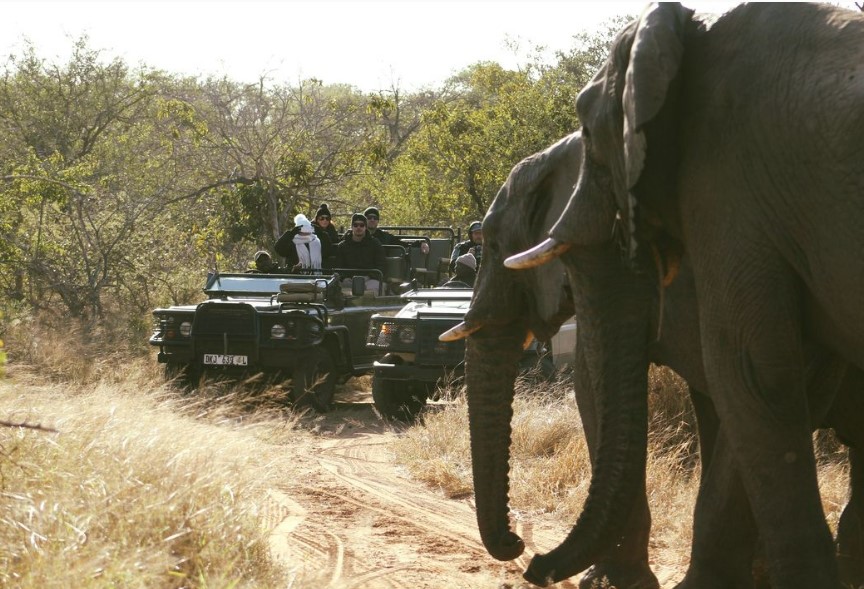
At about 5 pm we concluded our tour, breathless with awe at the stupendous views that the mountain range offered on that rare, sunny day. Google maps estimated that it would take about an hour and a half to drive the sixty kilometres to Nyeri on the extremely narrow murram road peppered with tight hairpin turns throughout. Coming round one  bend, we found a bull elephant. All six tons of him, in no hurry. On the left side of the road was a steep embankment leading down the mountain range we were on. On the right hand side was a steep embankment leading up the mountain range we were on. The murram route was carved out of the mountain and there was only one path for enormous pachyderms and smaller human mammals to travel. On the road less travelled.

In mid-December 2007, I had sat amongst other bank executives in a board room facing the biggest human resource crisis we had ever had. Staff were marooned in Eldoret town as machete wielding gangs went from pre-marked house to house in some estates looking for specific victims. Other staff were also trapped at a hotel in Kericho where they had gone to hide as a similar issue engulfed the town. If ever there was a time for making decisions on the fly, it was those painful days in December 2007 at the height of the post-election violence. We were damned if we made the dangerous decision to extract the staff. We were damned if we didn’t make a decision.

Similarly, a decision had to be made about whether to pass the elephant or not. It was rapidly growing dark and he kept turning back as if to let us know that he knew we were there. Often, he would stop and pull bamboo shoots to eat, mocking our growing anxiety as we worried what would happen if he chose to go back where he had come from, with only our tin can on wheels covering us and nowhere to maneuver. It had started drizzling by now, the roads were slippery and all phone signals had disappeared.

Four individuals in a car in  various stages of grief. Denial. Anxiety. Bargaining. Depression. Acceptance. One individual at the front was the brave one. In denial. “This car is turbo charged. We can zoom past the elephant and make it.” This insanely bold view was completely countered by one individual seated at the back. Swinging between anxiety and depression. “We cannot go near that elephant, it will kill us. Let’s drive back to Naivasha.” However the round trip back to Naivasha, Gilgil, Nyahururu, Mweiga to Nanyuki would be a good three hours in total darkness. The third individual, also seated in the front, was the moderate one. In full acceptance mode. This individual played the role of spotter, looking out for other elephants in case they were a herd and taking videos of the scene in case our trampled bodies were found later and our worthless story needed to be told. “The elephant has to get off the road at some point, just chill you guys,” they chided.

The fourth individual sat at the back. Saying absolutely nothing and quite likely in catatonic shock. Bargaining perhaps with God on how to gain entry past the pearly gates in repentance for their past sins. There was no specific leader in this situational leadership scenario but a decision needed to be made based on the three options being voiced. Night was fast drawing in and the park gates had long closed by this time. Fly past the elephant and hope that it wouldn’t perceive a motor vehicle approaching it at top speed as a threat, or turn back and take the long route, with all its attendant dangers of night driving particularly through the park?

Like in many crises, sometimes a decision just makes itself. After ninety heart rending minutes of walking ahead of us, the elephant turned back and stared straight at us. Then it started to walk towards us. We hit reverse gear and got stuck in some mud trying to do a three point turn. Then the bull ambled up a steep embankment it had unsuccessfully tried climbing a few minutes earlier and disappeared silently into the thicket. Which of these four individuals would you have been in that scenario? The leadership lesson here for us was this: Sometimes not making a decision, is a decision in and of itself.

[email protected]

Twitter/X: @CarolMusyoka
To Tip Or Not To Tip

A tip is defined as a bonus, a little extra, a bit extra, a present, a gift, a reward or an inducement.  About 25 years ago I lived in the United States (USA) for two years. In those days, if you went to a restaurant where you dined in, the unspoken role was that you left a tip of at least 10% of the bill. At that time, wait staff at restaurants were paid below the minimum wage at the time which was about $5.50 an hour, and that they were expected to make up the difference in tips. The result was that you would typically get really friendly waitstaff who were knowledgeable about the menu, quick to serve and who would ensure that your dining experience was pleasant.

Last month a work assignment had me back in the USA and we were eating out most evenings. I got schooled a good one at the university of character development. Tipping is no longer unspoken. It is blatant, in your face and, in some cases, forcefully added onto your bill. At one restaurant where three of us were eating, the bill for the food came to $108. Added to the bill was a gratuity of 18% or $19.44 and a food tax of $9.18 coming to a grand total of $136.62. At the bottom of the bill was a “Tip Guide” that stated 20% = $23.44, 22% = $25 and 25% = $29.30. I smiled. What was the point of the tip guide, if the restaurant had already decided, arbitrarily I might add, on how much tip to include in the bill? Our waitress at this restaurant had been flat, taking our orders perfunctorily and with a plastic smile that was dropped as soon as she turned on her heel to go to the kitchen.

Look, I have no issues tipping for good service. But I like to feel that it is a voluntary exercise, one that I do to thank and reward someone for exceptional service which I do often. Everywhere we went, the bottom of the menus and the food bills had tipping guides, with the minimum being 18% and the highest being 25%. You had an option to pay higher than the guide, at your own discretion. At one hotel room I stayed at, I found a sticker on the mirror with a bar code for guests to scan in order to tip the housekeeping team. This I thought was quite a useful gesture to appreciate the unseen service providers who kept our rooms clean daily. But I had to do some research on how the tipping culture had evolved. It turns out that it has statutory origins. Under USA federal law, the minimum wage for employees who also earn tips is $2.13 an hour while those who don’t earn tips should earn $7.25.

Quite simply, the US had legislatively shifted the onus of paying employees in bars and restaurants to consumers rather than to the establishment owners.  Each consumptive interaction in these establishments is a real time performance review of the staff, which concludes with a financially defined and payable rating. The beneficiaries of this arrangement are the establishment owners, as they are assured of self-motivated good service delivery from their waitstaff and bartenders.  It is a strange tripartite contract where the consumers become part of the remuneration contract.

I dined with a Kenyan professional who had gone to school and then worked in the US for the last twenty years. As I wrinkled my nose at yet another bill that turned up with a recommended tip for the waiter, she laughed and said that as a student in Boston, she had worked at a high end restaurant at the city’s ocean front. At one particular Mother’s Day lunch, she had made $700 in tips alone. “Service with a smile” she said, chuckling. She had quickly learnt how to raise her service game by attending to the needs of diners quickly, being genuinely friendly and, she said with a wink, always praise the children to the mothers even if they are veritable brats!

As an East African native, this 18-25% tipping thing is a tough one to swallow especially when a restaurant takes the liberty of making payment of gratuity mandatory by including it in the bill. It left a bad taste in my mouth because we were made to specifically pay for sub-par service. It has also redefined my perception of what genuinely good service means. It is the one that comes from someone who wants to serve well because they care, rather than the one who has to serve well to survive.

[email protected]

Twitter: @carolmusyoka

Government Response to Protecting Our Diaspora

A couple of weeks ago, I wrote about how Indians have been diaspora workers since the 19th century and it was only a century later that the Indian government decided to put in the guard rails to protect migrant workers. The Emigration Act, 1983 provides a regulatory framework for emigration of Indian workers for contractual overseas employment by seeking to safeguard their interests and ensure their welfare. I then probed our own Kenyan government policy, questioning whether there was a cohesive, deliberate and strategic approach to this valuable human capital asset that addresses our youth bulge.

I didn’t figure that the folks at the social media renamed Republic of Taxmenistan head office were reading. They were. The good (and now immediate former) Principal Secretary Labor and Skills Department, Mr Geoffrey Kaituko reached out to educate me on exactly what efforts the government was making towards Kenyan emigration. First off the bat is the requisite strategy. This has been articulated in a Global Labor Market Strategy 2023-2027 document. It is a very well researched piece of work that first maps the employment and dire unemployment state of the nation. It then clearly articulates what the Kenyan labor brand is distilled into nine key points around good education, good internet, language proficiency, ideal geographic location, professionalism, entrepreneurship, vocational skills, a well trained workforce and religious diversity.

It then maps the areas globally that attract immigrant labor and self-assesses the challenges faced by the government in providing a coordinated approach to funneling the supply side in Kenya to the global demand side focusing on twelve countries in Africa, North America, Europe and the Gulf States with details as to what their human capital needs are. It’s actually a pretty good analysis of the scope of the problem.

The bridal accompaniment to the bride groom’s strategy is a National Policy on Labor Migration 2023. This is essentially a road map to which government agencies need to work together to provide a cohesive solution. Once you get past the ten million acronyms that can fill a Qatar Airways Boeing 777 flight to Doha, you get an understanding of why this has been quite a difficult task to achieve. First off, I now got to understand the hue and cry behind the passport delays, and why secret messages were flying around of which passport office in which county could deliver faster than the other. The Department of Immigration plays a central role in allowing migrant workers to get the first document that will enable them to even be considered. The National Employment Authority (NEA) is a second critical institution as it undertakes the licensing of private employment agencies. If you want to know whether the company your sending your application to is legitimate, there is a portal on the NEA’s website to check. In a television interview the good Principal Secretary confirmed that there are 599 licensed agents.

I sauntered over to the website to see who these agencies were. The website provides a link to a Kenya Migrant Workers (KMW) page with all these details. I clicked on the link and my laptop went berserk. A huge warning sign popped up telling me that the site may be impersonating the real KMW page to steal my personal or financial information and that I should skedaddle the heck out of there. I did. So let’s just say that if you’re willing to wear a digital coat of armour, you can try looking for the agencies yourself.

Other notable players are Ministry of Foreign Affairs which protects migrants workers firstly by creating Bilateral Labor Agreements with the Kingdom of Saudi Arabia, Qatar and the United Arab Emirates. It has also signed one for healthcare professionals with the United Kingdom. The reason why the PowerPoint strategy deck I mentioned above had the 12 countries identified is because the government is in negotiations with at least 11 of them for bilateral labor agreements. Good people, things seem to be moving on the surface.

Finally the strategy and the national policy give birth to the Labor Migration Management Bill 2023 which has been tabled before Cabinet. It is a pretty decent attempt to bring order to Kenyan migration.  A key element of the draft bill is a statutory approach to registration, monitoring and deregistration of employment agencies. There is also a detailed pre-departure procedure for foreign employment aimed at protecting the workers from jumping into the unknown.

In addition, the Bill provides for a Kenyan Migrant Workers Welfare Fund to provide protection and assistance to workers such as medical benefits, invalidity, funeral grants, repatriation of workers dead or alive, help fund legal disputes amongst other things. Very noble objectives. If they are executed. We wait and watch with bated breath, Titanic deck chair reshuffling notwithstanding.

[email protected]

The Danger of a Single Nigerian Story

Chimamanda Ngozi Adichie is a critically acclaimed Nigerian author who gave a stirring TED talk titled “The Danger of a Single Story”. In that highly recommended talk, Chimamanda provokes the western fallacy that Africans live in a dark jungle, swinging on trees and devoid of modern creature comforts. She also turns the spotlight onto herself and how she had also fallen into the trap of making uninformed and high handed assumptions about “poor” people in her own country. I have to admit that I had also created a single story about Nigeria and its people based on the media narrative of corruption and perpetual political upheaval.

I recently visited Lagos for the third time. The city of Lagos is Africa’s most populous urban area and is estimated to have 26 million people in a country of over 220 million. The sheer volume of human and vehicular traffic make Nairobi’s traffic look like the trickle out of a Nairobi County water tap. It has had its fair share of target crime challenges some of which I believe are exaggerated in order to maintain a thriving private security business. On this trip however, I interacted heavily with local professionals and entrepreneurs who proudly took our group out to world class restaurants and clubs where bottles of Dom Perignon champagne are bought by the crate and ubiquitously consumed like Ketepa tea.

The highlight of the visit was a trip to the Lagos Free Zone (LFZ) which is a two hour maddening drive, 60 kilometres east of bustling Lagos. LFZ is a classic example of a public-private partnership creating a free trade zone for foreign investors on African shores. As you approach the 2,100 acres of the LFZ, the first thing you see are multiple building cranes around acres of oil storage tanks. Dangote Refinery and Petrochemical Company owned by a warm blooded son of the Nigerian soil, Aliko Dangote, stands tall as a towering exemplar of native African entrepreneurship. While Nigeria has four state owned refineries, their decrepit state due to years of mismanagement means that the oil producing nation has to export most of their crude oil while importing about 80% of refined petroleum products.

Dangote’s US$19 billion private investment of equity and debt targeted to producing refined petroleum products, petrochemicals and fertilizers has generated great excitement at a macroeconomic level. The Central Bank of Nigeria’s Governor Godwin Emefiele is quoted as claiming that Dangote’s refinery will save the country over $26 billion in foreign exchange as the products will now be purchased in a depreciation weary local currency. The Nigerian government undertook a public private partnership with a Singaporean conglomerate Tolaram to provide a $2.5 billion investment in the LFZ that includes housing, medical facilities, roads, a police and fire station as well as power and water supply to this island of industrial activity. Tolaram also undertook the project development, capital raise and construction of Lekki Port, Nigeria’s first deep sea port adjacent to the LFZ, which is jointly owned with the Nigerian Port Authority and the Lagos State Government. The port received its first ship in April this year.

Other than the refinery, the LFZ is a well-designed industrial zone and a manufacturing base to multinationals such as Colgate Palmolive and Kelloggs. The financial incentives to put up a manufacturing concern in the LFZ are evidence of a government that is throwing the whole kit and caboodle at the investment attraction door. Companies are given 100% exemption from federal and state taxes and levies, while being allowed to remit 100% of their profits and dividends free from withholding tax. Companies are allowed 100% foreign ownership with no limit on the number of expatriates that they can bring in to work. There are no import duties applicable on goods imported from outside the country to be used in the manufacturing and up to 100% of the finished goods can be “exported” into Nigeria after payment of appropriate duties.

Our political elite waxes lyrical about Singapore, Singapore and, in case you missed it, Singapore as the posterchild of economic turnarounds. The Nigerians have taken it a notch higher by bringing Singaporean commercial expertise into their country to help them build a world class trading zone that has the potential to be a game changer in converting the single story we have built about Nigeria’s economic history. More importantly, perhaps we can change our political benchmarking tours to south east Asia and head to our very own western Africa shores to see homegrown billionaires and Singaporeans investing in Africa.

[email protected]

Twitter: @carolmusyoka

Sights and Sounds of Kinshasa

I recently visited Kinshasa in the Democratic Republic of Congo (DRC) for the first time and came back with a deeply profound appreciation of Kenya, Uganda, Tanzania and Rwanda’s commitment to East African integration. One can pick up their national identity card and download an interstate pass from E-Citizen (save for our unwilling Tanzanian neighbours) and leave the same day to do whatever business takes us there.

I submitted my passport to the DRC Embassy in Nairobi a fortnight before my travel after paying US $50 for a single entry visa. A multiple entry one will set you back US$400. The airline ground staff at Jomo Kenyatta International Airport, who are visibly alive to the spirit of the East African Community (EAC)  told me I didn’t need a visa as I boarded. That all I needed was my national identity card. That was nothing but a fantasy as the immigration officials at Kinshasa’s N’Djili International Airport were quick to ask for the visa. Upon being asked (in smattering Swahili) whether Kenyans could use their national IDs to come to DRC, a resounding no followed quickly. So much for DRC’s entry into the EAC which does not require visa travel for its members.

You either speak French or Lingala which is the local language widely spoken in the city. If you don’t, then from the moment of arrival it is animated finger pointing, attempts at trying to “Frenchenize” English words and dumbing down one’s speech in a very useless attempt to communicate. All pointless to be honest.

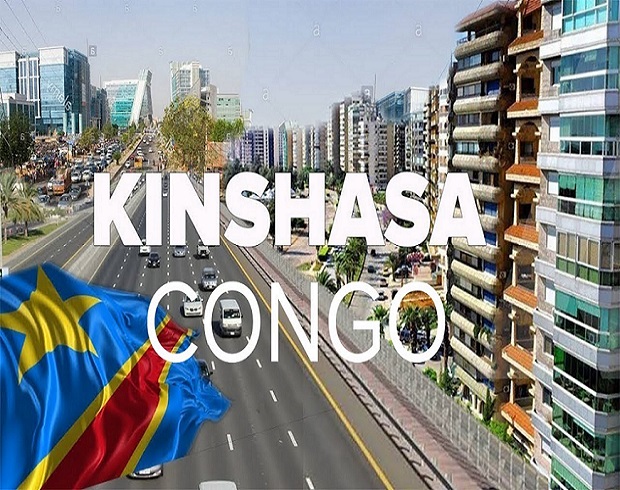
Driving to the Kinshasa’s central business district from the airport is an extreme sport. Every form of matter assaults your visual, auditory and nasal senses. From the heaving masses of pedestrians, to the uncollected garbage that lines the streets clogging up drains built in Leopoldian times. Weather beaten and battered yellow taxi cabs (equivalent to our matatus), many of them which had doors hanging by a thread and seats made up of wooden benches, crisscrossed the wide boulevards, a number crossing the barriers separating choked arteries to confidently drive on the side of oncoming vehicles, may the rest of you godless drivers be damned. Then just like magic, the madness ends once you enter the leafy suburbs of Gombe, where many offices, embassies and residences for the well-heeled Kinshasa residents are located. Here the cars are newer, the streets cleaner and the pedestrians fewer and less rowdy.

Kinshasa is a city of dissonant disparities. Champagne swigging wealth surrounded by abject poverty that is jarring to behold. But a population that would make any hustler movement proud as every corner is surrounded by a micro retail business selling airtime, plants, fruit and vegetables and other consumables. A visit to the Avenue Du Commerce is a good way to get the pulse of the city’s trade DNA. The area is where Nairobi’s Luthuli Avenue meets Gikomba, Grogan and Tom Mboya Street. Everything from electronics to hardware goods to mitumba to beauty products to vehicle spare parts competes for space in heaving roadside stalls and compacted brick and mortar stores. Staying in a hotel and eating out at restaurants is hideously expensive as everything is imported. Everything. From the milk in the tea to the fruit and vegetables that land on your table. Despite being situated next to the mighty Congo River and enjoying seasonally regular rainfall, agriculture is not a mainstay in a country that enjoys 80 million hectares of arable land.

Although Kenyans have been coming in droves in search of business opportunities, it becomes quickly apparent that one needs to have a local partner to help navigate the language barrier, the socio-political undertones and the unbelievably (and somewhat deliberately) complicated miasma of taxation laws.

Taxation is often used to raise government revenues in an ad hoc manner, depending on the urgency of the government’s need at the time. I met with a chief executive officer of a multinational that had just decided to shut down their operations in DRC. The government had raised the price of excise duty stamps by a multiple of eight, against the company’s projections for a simple doubling of the price of the stamps as a worst case scenario. This would mean that their products would simply become extremely expensive amongst other non-mitigable risks that the operation was facing including alleged tax bills running into the millions of dollars that emerged out of a magician’s hat. The CEO mused that two other multinationals had pulled out of the market recently as well, due to the hostile taxation environment.

DRC provides exciting business opportunities for the hustler native of Kenya. But one should go with their eyes wide open. Oh and polish up your French, you’re going to need it mon amie!

[email protected]

Twitter: @carolmusyoka
Networking With Purpose

Several engineer professors got on a plane to go to a conference. The pilot came back to tell them their students are the ones who designed and built the plane they are sitting on. All but one of the professors jumped up and started to run off the plane. When they noticed one professor stayed in his seat, they asked him why. He replied, “If my students built this plane, then I know for a fact that the plane will not even start.”

I am adjunct faculty at a private university in Nairobi and a few weeks ago I bumped into a former student of mine at the school. Let’s call him Juma for now and he has given permission for this story to be told. I got to know Juma a few years ago as he attended one of the corporate governance programs that I teach on and about a year later he was on another program for senior leadership that I was also teaching on. So last week I teased him that he was now due for a frequent flyer card from the university at the rate he was going. His response was totally illuminating.

Juma signs up for short executive education courses for two primary reasons: firstly, as someone who didn’t attend university, he is committed to widening his education as much as possible at any given opportunity. Secondly, Juma’s network now spans the African continent and North America due to the courses he has undertaken that have participants from these regions. He actively cultivates relationships with classmates, which relationships have opened doors and access to contacts that he needs in his multinational regional role.

“I didn’t go to university Carol,” he told me. “But that was not going to stop me from getting whatever job I wanted. You see, I take networking very seriously. If I see a CEO that I want to talk to even on a plane, I will upgrade my ticket to business class just so that I can get an opportunity to “bump” into him.” He said this without guile and disingenuity. “Juma, exactly what do you mean you’ve upgraded your ticket? How?” I asked, as curiosity got the better of me.

“I was at JKIA checking into a flight to London. I saw the CEO of X Bank on the business class line next to me and he was checking into the same flight. I asked the counter staff if there was a business class seat available and she said yes. So I whipped out my credit card and went to pay for an upgrade,” Juma replied matter-of-factly. “You see, I’ve always wanted to talk to the guy and when you are in business class, there is already a financial filter that business class has done for you. There is a natural tendency to be relaxed once up in the air. I even once paid for an upgrade to First Class on Emirates in Dubai when I saw a senior government official was on that flight as well. It has paid off very well,” he mused.

Whether you agree with Juma or not, he has a very effective strategy for getting ahead in his world. Sitting in business or first class for the length of a flight is enough to give you uninterrupted face time with someone who would never give you the time of day on the ground. And the price of that time for Juma is the thousand or so dollars it takes to get upgraded! What I do like about him is that when he is in class is fully attentive and 100% present. After fourteen years of working with executives in different training rooms across Africa, I can safely conclude that there is a marked difference between how an executive whose institution is paying for them and how an executive who is paying for themselves shows up in class.

The former often gets interrupted by calls, switches between paying attention in class and checking their email or Whatsapp regularly and sometimes jumps into Zoom meetings during classes. Such an executive is being trained on someone else’s dime and therefore has less skin in the game. However. the executive paying for themselves knows the value of every single minute of class time, as they are paying for it and therefore disconnects from the office completely to get the most bang out of a painfully paid buck.

If these executives were engineer trainees, which one do you want to build the plane for you?

[email protected]

Twitter: @carolmusyoka

Sights and Sounds of Chennai Again

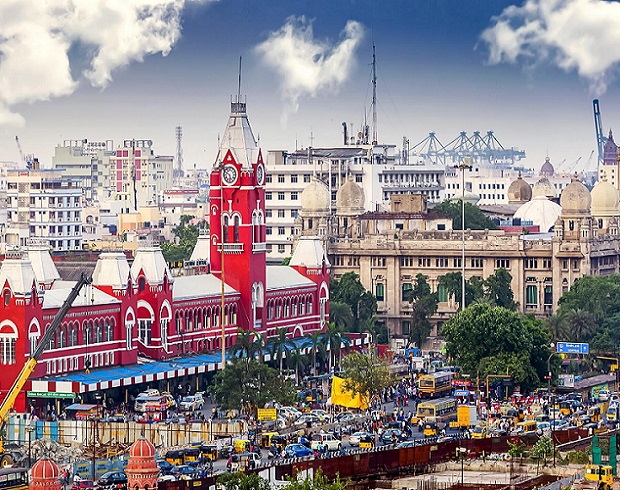
I recently went on a visit to Chennai, in India’s south eastern coastal state of Tamil Nadu. This is a city I have travelled to a number of times and I never cease to marvel at how the city of eleven and a half million people continues to keep its motorized traffic moving. Buses, private cars, thousands of tuktuks and motorcycles fill the streets where, as my travelling companion aptly summarized, lanes are simply a suggestion. In the five days of moving around, we never found a single motorcycle accident where sporadically helmeted riders of both genders zip around the vehicular obstacle course with some carrying entire families. For a population that is generally friendly and very helpful in personal interactions, there is a complete attitude change once they get on top of or behind the wheel of their chosen motorized options. An inexplicable aggression sets in, drivers and riders alike unapologetically claiming their space in the invisible lanes while miraculously managing to avoid colliding into each other.

We chose to use tuktuks to move around, as they are the easiest to find and the cheapest mode of transport. Tuktuk drivers and motorcyclists had their phones perched precariously above the steering bars, with no apparent fears of phone snatchers. It took a while for us to get comfortable using our phones in the tuktuks as we were Kenyan conditioned to keep such devices far from the reach of our own notorious phone snatchers. The penny dropped on the relative safety when we observed that women wore gold everywhere. And I mean everywhere. As gold is a cherished store of value in India, we observed that even female fruit vendors on the streets wore gold necklaces and earrings and were comfortably going about their business without any concerns about petty criminals relieving them of their possessions.

Having found myself in the city also known as Madras, I took advantage of one of India’s proudest offerings: medical facilities. The hospital I chose to go to is one of India’s leading private facilities where cutting edge medical technology such as robotic surgery has been pioneered. This is not a puff piece about the depth of my wallet. On the contrary,  it is the price of medical access that is mind boggling. To access best in class doctors and surgeons whose professional acronyms next to their names can fill a Tata truck, the consultation charge is a flat cost of INR 1,500 or KES 2,250. No matter which surgeon it is. No matter how long he or she has been in practice.

I chose to do an elective procedure under the hands of a specialist whose very appearance would likely have him arrested and thrown into sartorial jail by a Kenyan medical board. Inside his tight little office where the walls were lined with happy birthday banners and Christmas tinsel, he had a box of chocolates and toffees on the floor that he asked me to help myself to. He had a shock of long unruly hair whose uncombed loose curls bounded unencumbered down the nape of his neck. His shirt was open halfway down his chest, revealing a thick gold chain struggling for recognition between his greying chest hairs. But his bohemian, Croc-sandal-wearing appearance, belied a sharp mind and mastery of his subject matter while his warm, gentle eyes were the last thing I saw before drifting into anaesthetic slumber. I wanted him to be my family doctor for life.

Look, this is a business newspaper and the last thing I need is a rap on my knuckles from my editor about gushing over my doc crush. But it must be said that there is a reason why many Kenyans continue to flock to India for medical treatment. My procedure cost a quarter of what I would have paid for it in Kenya including theatre and specialist consultation charges.

The Kenyan medical fraternity have tried to throw a few obstacles in the path of those Kenyans seeking treatment in India, for instance the requirement to have a release letter from a Kenyan doctor as a prerequisite to getting the Indian medical visa. I can see why they would want to protect their own turf and unfettered feeding trough. Chinua Achebe proverbially stated, in his epic tome Things Fall Apart, “Eneke the bird says that since men have learned to shoot without missing, he has learned to fly without perching.” Kenyans will continue to (pun intended) flock to India in the droves, for as long as the price of best in class medical access remains within the reach of their cost weary pockets. Let me brace for the backlash impact sure to be received from my Kenyan medical friends!

[email protected]

Twitter: @carolmusyoka
Guiding The Entrepreneur To The Top of the Mountain

So an unintended but good outcome of the Covid 19 downtime was that I joined up with a group of like-minded suckers for pain who get together once a month in the name of hiking.  Over the last two years we have literally gone up frigid mountains and gone down into the hellish and scorched earth depths of dry valleys in the never ending search for adventure in the great outdoors. Our ruddy cheeks have savored the cold spray of freshwater waterfalls nestled deep in mountain forests, where getting to the glorious view requires slipping and sliding on treacherous muddy paths often jealously guarded by furious safari ants. Magical Kenya, most reassuringly, never disappoints. Consequently, more often than not many of the hikes begin with a quiet session on personal existentialism, with each of us asking ourselves what in heavens name got one out of bed four hours past the midnight witching hour to expose oneself to the brutal geographic and climatic elements.

I remembered this monthly self-flagellation in another conversation with a fairly successful entrepreneur. The man remarked that a running joke amongst many of his friends was that once revenue crosses the billion shilling mark, a good businessman had to start investing in mîgûnda (undeveloped properties) so as to keep his business risks diversified.  And this is why setting up a board, no matter how small is a critical growth path for a sustainable business. If you are in the habit of tabling your strategic initiatives in front of your board, a good set of directors will always ask the most basic question: Why? Why that area of business? Why that particular industry? Why purchase that specific piece of equipment? Why that geographical area for your next round of expansion? In the process of answering that question, an entrepreneur might start to second guess himself if the strategic initiative is incentivized by an emotional gut feel rather than a cool, calculated and research based move.

Many entrepreneurs will tell you that they started their businesses on gut feels, without the wind assistance or the annoying, straitjacketed doubts of a risk averse board of directors. The very thought of having someone question your motives when they have never been with you down in the entrepreneurial hell hole of Suguta valley makes their stomach churn. Our most recent hike was an attempt to hike to Mackinder Valley up in Mount Kenya. This is supposed to be a five to six hour hike and best started early in the morning so that you get to the viewpoint before the clouds roll in around 11 a.m. Having hiked over the last two years, some with almost catastrophic consequences, we have learnt to go with a minimum of two guides for difficult hikes. This allows us to split into groups if someone or some people need to abort the hike for whatever reason. About an hour to the target, with the rocky bluff in view, I personally couldn’t take the conditions any more. We were in a group of nine and two of us decided to throw in the towel. I had been badly afflicted by altitude sickness which apart from infusing my head with a pounding headache, had also infused my mind with an irrational anger. I had to get off the mountain immediately. There were two options, wait on the sidelines and let the majority of the group go ahead to the target point, or split the group, taking one guide and immediately begin descending which is what two of us did. `An entrepreneur’s board provides the same kind of quiet and guided assurance, helping him to scale new heights while pointing out potential pitfalls. It also provides a helping hand as the entrepreneur decides to descend the mountain after going through business difficulties, again providing a welcomed hand holding as he navigates angry creditors and, quite often, a deeply bruised ego.

A good board might be convinced by the entrepreneur to buy that mûgûnda but they will guide him to use his shareholder dividends from the business, rather than diverting operating cash flows that should be used for the company’s working capital needs. Sometimes entrepreneurs also suffer from altitude sickness and get high on their own supply of business success.  Getting a sensible board is a good helpful hand to help one descend to the zone where the business is manageable and the risks are often assessed and  quantified.

[email protected]

Twitter: @carolmusyoka

Website: www.carolmusyoka.com


Local Retail Giants Give Us Pride

My first trip to Lagos, Nigeria was in 2014, an experience that will forever be etched in my mind as a journey of paradoxical discoveries. I was the guest of an expatriate living in Lagos at the time and we went grocery shopping to a supermarket that specialized in imported foodstuff. The shelves were heaving with European dairy products and all manner of tinned basic goods like tomato paste, tinned pineapple and imported fruit. I asked my host [of Kenyan extraction] if we would be going to a local supermarket and, chuckling, she responded that if it was a Nakumatt equivalent I was looking for, it didn’t exist. “Everything that you’re used to is imported here, even the most basic item like packaged fresh milk.”

This was Nigeria. Africa’s largest sized country by population which at the time was about 176 million. I returned to Kenya with an enormous appreciation for the local retail giants that existed at the time in the form of Nakumatt, Tuskys and the smaller supermarket chains that had a majority of locally produced goods on their shelves juxtaposed with imported equivalent options in some select outlets. Our own homegrown retail giants had spawned a veritable supply chain of local goods that were being manufactured or grown for local consumption. From Kenyan farm to fork. From Kenyan factory floor to our homes. All via the numerous branches that dotted the country and, in Nakumatt’s case, the region. Nakumatt and Tuskys were revenue hot. Until they were not.

Nakumatt’s spectacular collapse in 2017 with over Kes 35 billion in debts owed to banks, employee liabilities, suppliers and other non-banking lendors will remain one of corporate Kenya’s vintage case studies. The Netflix movie that will be made about this debacle will quite likely be titled: “Titanic: The Money Hole that sunk MV Nakumatt”. Its cousin Tuskys suffered from an excruciatingly slow puncture demise after years of courtroom family drama that started in 2013 on the sharing of the spoils amongst shareholders, some of whom were in active management and some of whom weren’t. The former were viewed by the latter to be feeding from the communal family trough for their own individual benefits. An external chief executive officer was brought in, hounded out acrimoniously, brought back in when the commercial bankers cuffed the shareholder ears like the petulant children they were, and then pffft, the internal wrangles slowly brought the company to its knees. That story cannot be told in a Netflix movie, rather it will be a series titled “Game of Thrones Tuskys Edition”.

The upshot of these two spectacular failures is that there were significant operational and governance control failures. In Nakumatt’s case, money leached out, but the eye watering size of the amounts point to a finance team that looked the other way and who had a complete lack of whistle blowing ability because, well who does one whistle blow to when it is the shareholder themselves punching the holes into the ship? In Tuskys case, family members’ ability to do business with the supermarket chain presented significant conflict of interest challenges particularly if there was no way of creating an arms-length policy for that business to be done. Something that could have been cured had there been a policy framework for related party transactions from the beginning. After all, there was a family trough for communal eating and how could all members eat rather than just the ones with long necks?

A friend who heads a retail lobby group reminded a group of us recently that we should never underestimate the sheer amount of entrepreneurial talent that sits in this country and is exemplified throughout our economy in the form of local supermarkets, restaurants and hospitality outlets. The failures of two of the leading retail chains gave the space for other local chains to emerge and fill that space seamlessly. Yes, there may be one significant foreign chain at play, but we have several local options to choose from all of which continue to give a legitimate end market for the local agricultural and manufacturing value chain.

What will separate the boys from the men for these local supermarkets that are slowly becoming large corporate entities as we watch? Starting with a spectacular end in sight “Armageddon: We all crash and burn like those Nakumatt guys” and working backwards to see how that can never happen. A board made up of qualified independent and shareholder directors would be a good start to providing the appropriate risk based oversight independent of active management.

[email protected]

Twitter: @carolmusyoka

Nairobi Versus Kigali Is This Really an Issue

I recently had a chat with a friend of mine from Rwanda, who was in Nairobi for a work assignment. She had been vaccinated against Covid-19 a few days before her departure and this was after about three calls from the Rwandan government requesting her to go to the vaccination centre. As she is in the banking sector, they are categorized as essential workers hence the calls. Eventually, due to her impending trip to Kenya and constant encouragement from her friends, she went to get the shot. She was highly appreciative of the communication framework that her government had put in place which had listed, by name and telephone number, all the essential workers that needed to get the vaccination and literally hounded them to go and get the shot.

But this is where it gets interesting. She also told me that the Rwandan government went to refugee camps and vaccinated the refugees! It would appear that the thinking in that government is that the refugees represent a soft underbelly of potential large scale community transmission and if left forgotten or unattended to, could end up unravelling a focused attention to stop the rapid transmission of this killer disease amongst the country’s citizenry.

Last week there was an interesting debate on Twitter regarding the potential of Rwanda becoming an East African travel hub once the joint venture between Qatar Airlines and Rwandair begins to bear fruit. One person claimed that a large international NGO had packed up its bags and relocated to Kigali from Nairobi and this was the beginning of Nairobi’s death knell as a regional headquarter for many international organizations. Others spoke about Kigali’s clean, secure neighborhoods and well organized public transport system including the ubiquitous boda boda operators who have clear identification on their yellow visibility jackets plus riding helmets and can be traced to a man in the event of an accident or incident. The fact is Kigali is the cleanest, organized and most secure East African capital city. They have excellent, publicly available internet and, perhaps due to their low population size compared to their East African counterparts, a very effective community grassroots system that ensures the government is communicating to and receiving information from the simplest villager.

On the other hand, the proponents of the Nairobi-will-never-die brigade spoke to the large middle class and bigger economic base in Kenya, together with the diversity of residents and wide offerings in the retail, housing and hospitality industries. At the very minimum, the debate about Kigali taking over as East Africa’s regional economic and travel hub comes down to hardware and software.

The hardware consists of infrastructure in the form of world class commercial and residential properties to house the various offices and thousands of staff that would man the organizations. It would consist of the retail spaces and the retailers that would provide the comfortable trappings for the expatriate residents and the local middle class that would emerge as professionals working in these organizations. It would consist of the hospitality offerings in the form of hotel bed capacity at an international standard for the thousands of business visitors engaging with these organizations as well as a dynamic and diverse restaurant and entertainment scene. It would necessitate a strong private medical industry in the form of good hospitals and medical personnel that could accommodate medical emergencies that might occur in the short term. It would also consist of fast connectivity to multiple global international business hubs for the travelling residents and visitors. Finally, but not exhaustively or conclusively, the hardware would also consist of providing a safe and secure environment within which these organizations and their people can operate effectively within a manageable socio-political space.

On the software side, the people element should be examined. Finding talented, well-educated and diversely experienced local professionals who are in great supply, thus eliminating the need to backfill the staffing cadre with expensive expatriates would be a key consideration. It is one thing to set up an organization and it is a whole other kettle of fish to make it work effectively and cost efficiently through good people. The opening conversation in this piece spoke to the well-oiled machinery that the Rwandan government runs in a country with a population of about 13 million people or a quarter the size of Kenya’s population. I leave it to you to decide, particularly if you have ever visited Rwanda, as to whether the Nairobi versus Kigali regional hub debate is one worth losing sleep over!

[email protected]
Twitter: @carolmusyoka

Rogue Culture

Many years ago, I was a law student at University of Nairobi’s Parklands Law Campus. Situated about four kilometres north of Nairobi’s central business district, the humdrum state of the campus was removed from the cacophony of noise and sheer volume of students at its mother university home ground. But that did not prevent the culture of entitlement and attention seeking that defined the youthful exuberance of public university students. Meal times at the dining hall, particularly at lunch time were an extreme sport as students would gather at the metal grilled locked doors by 11:45 am demanding to be let in by vigorously shaking the grills and yelling at the weary kitchen staff to open the doors forthwith. That daily show was fondly referred to as the “Opening Ceremony” or “OC” for short. For those of us who didn’t have the testosterone charged limbs that were required to tear through the doors once opened, waiting to see what scraps were left once the student locusts had blazed through the lunch offering was invariably our destiny and often we had to walk across to a mabati kiosk on Wambugu Lane that served delicious hot meals on rickety wooden tables and benches. But that emperor’s meal was only possible when the customarily thin student pockets permitted.

In our second year of university, the school organized for a “bench marking” visit to the University of Dar es Salaam’s Law School. We arrived at the Namanga border post in the late afternoon and crossed the Kenyan side with no issues. However the Tanzanian officials found fault with some documentation and refused us entry meaning we had to sleep on the bus the whole night while the issue was being sorted. Many of those on the bus began exchanging words with the dour faced Tanzanians, words that were largely fueled by a suspicious liquid that would quite likely propel a jet engine if required which had been consumed in great quantities out of a large, plastic jerrican. A change of guard the next morning as well as reasonable interventions from our officials (and the fact that the loud mouths consequently blacked out into a merciful silence) eventually permitted us to enter Tanzania. We arrived in Dar es Salaam close to midnight, exhausted and starving and were shown to the students’ dormitories which had beds and mattresses with no beddings. Now we had been informed to carry our own sheets and blankets, but quite a few colleagues had skipped that part of the memo in their haste to pack their combustible liquid snacks. So they simply cut open the mattress covers at the top and slid their weary bodies into the space between the mattress foam and the cover and promptly went to sleep. First thing in the morning found the Kenyans at the university dining hall undertaking an “OC” much to the collective horror and utter indignation of the nonplussed Tanzanian university staff. To cut a long story short, the Tanzanians were only too pleased to see the back of the blue University of Nairobi bus when we departed a few days later.

This display of roguish deportment from my colleagues stayed with me for a long time. Of course most have gone on to become respectable and responsible members of the legal fraternity. But that inherent capacity for boorish behaviour continues to be exemplified in the way we Kenyans overlap in traffic causing massive gridlocks that beggar belief just because we view our personal entitlement to get there before everyone else as being our inalienable right. The same entitlement drives our political class to hold rallies that make a mockery of the public health initiatives to minimize crowds because it is their inalienable right to speak to the people on the ground no matter what the cost. We see it in some worker unions that demand to be paid a full salary even when the organization is suffering detrimentally from the effects of reduced revenue due to the debilitating effects of the Covid pandemic because it is the inalienable right of the workers to receive full pay no matter what the circumstances.

The source of our collective sense of entitlement invariably breeds a rogue culture where we throw our toys out of the cot when we do not get what we want. Sadly, we cannot legislate cultural norms as they can only develop from a shared national psyche and value system. In the meantime, perhaps we can all meet at the “OC” to get some inspiration!

[email protected]

Twitter: @carolmusyoka

Rwanda’s Investor Focused Company Laws

Two weeks ago, I had the pleasure of making another visit to the beautiful Rwandan capital, Kigali for a client governance training assignment. On arrival at the airport, we were required to line up at the immigration hall for an interview by white coated, mask wearing Ministry of health officials. When it was my turn, I found a tall gentleman – and that’s where my description of him ends as all I could see were his eyes – who held a tablet and introduced himself as a representative from the Ministry of Health. He then undertook a very polite interview, asking questions about my health and whether I had been to China recently as he feverishly tapped my responses into the tablet. He informed me that there was a camera behind him recording my temperature, but I couldn’t see it. But this is Rwanda and I didn’t doubt him for a minute. 6 short questions later and I was on my merry way to join the immigration queue. For once there was no requirement to show the yellow fever certificate.

I was accompanied on the trip by a colleague who was visiting the country for the first time. She marveled at the fact that there were paved pedestrian sidewalks everywhere but, more importantly, only human beings used the same as the bodabodas were mashed up in the sluggish evening traffic with us contrary to what we are used to here in the beloved +254. Our driver interjected at this point, saying that if a bodaboda driver dared to drive on the sidewalk he would get heavily penalized. He pointed out something we had not observed. Each bodaboda driver and passenger helmet was stamped with a unique identifying number, which had to be printed on the driver’s jacket and bike as well. The bodaboda had a GPS locator on it as well for easy traceability, so that if the bodaboda driver did something to a passenger and took off, one would only have to call the cooperative (they all have to be members of a cooperative) and just by keying in the time and location of the incident, the driver could be identified.

The strict approach to law and order in Rwanda is also reflected in their new 2018 Law Governing Companies, which is designed to protect shareholders and imposes a fairly high standard of duty for company Directors. It is noteworthy that the law is written in English, French and Kinyarwanda for ease of reference by all citizens. The duties towards making sound business decisions is well articulated in the solvency related Article 148, which requires Directors not to enter into a transaction that has an unreasonable risk of causing the company to fail the solvency test. It goes further to require Directors not to agree to the company incurring obligations unless they have reasonable grounds to believe that the company has the capacity to perform those obligations.

In simple language, it is now law that the government does not expect Directors to be doing business which they know has significant risk of tanking the company.

The law gets even better when it comes to the potential of briefcase tenderpreneurs trying to do business in that jurisdiction. Article 297 of the Rwandan Companies law provides that amongst others, a Director or manager of a company who is found with books of accounts with no entry posted in it, accounts that are written in a language that is not prescribed by law or incomplete books of accounts that do not show profit or loss is liable to imprisonment upon conviction for a term of between six months to two years and a fine of between RWF 200,000 to 3 million (Kshs 21,000 – 315,000). Oh, and by the way, the same article makes a Director of a company that is in commercial recovery who omits to declare that the company is in commercial recovery and there are terms existing for settlement of claims under the same law equally liable. Mercifully, the Rwandan judge has the discretion to give only one of the jail or fine penalties.

Rwandans have never been here to play. They take both their citizen health and business matters very seriously, over and above the cleanliness and social order that is glaringly apparent in Kigali’s streets. Clearly we don’t have to look far to get inspiration in this our beloved +254.

[email protected]
Twitter: @carolmusyoka

Medical Tourism on Steroids Part 2

Two years ago, I wrote in this column about a visit I had just made to a private hospital in New Delhi, India. “Medical Tourism on Steroids” is what I called it. Said hospital charged $180 for a full body checkup which included consultations with a physician, cardiologist, gynaecologists (for ladies), mammograms, ultrasounds, ECG tests, blood work testing everything your work weary, calorie consuming body has endured in the recent past etc. Early this year, I chose to visit their mother hospital in Chennai. They have a snazzy, air conditioned and carpeted Platinum Health Lounge which does the same checkup for the eye watering amount of $500. Please apply sarcasm font as you read that amount as I’ve paid half that for the same kind of blood work only here in our leafy, tree lined capital city. The interesting part was each doctor I encountered was very familiar with Kenya, rattling of a whole host of names from the political elite (so much for client confidentiality) as being their regular patients.

We took the cheapest transport to the hospital, tuk tuks, driven in part by barefoot drivers, all of whom preferred to tuck either their left or right legs under their backsides as they zipped in and out of the frenetic traffic. The tuk tuks are all personalized to reflect the driver’s preferences, some had pictures of their preferred deities while our favorite guy had a mini-herb gardens growing on his dashboard. The hospital arranged our transfer from the airport and made the patient on boarding fairly easy. But the ease of booking the checkups was made even easier by the online visa application.

Two years ago, one had to go to the Indian High Commission in downtown Nairobi and produce a letter from a Kenyan doctor justifying why going to India for medical treatment was necessary. This time, everything was done online, with a visa produced within 48 hours of application. Clearly demand for medical visas had warranted a smoother and less document demanding process. The Platinum Lounge was located in an annex 200 metres from the main hospital and the building housed different floors with all the medical equipment that one required for specialized testing thereby negating the need to go to the extremely busy main hospital.

The interesting thing that I observed on this particular trip, as I’ve made quite a number to this location, is that the hospital’s financial model has morphed to accommodate the different financial capacities of their patients. In the past, the pricing was flat and everyone paid the same amount for in-patient hospital services. Today, one pays according to the bed choice. A patient in the general ward, a patient in a shared private room and a patient in a singular private room will pay different amounts, with the latter paying an escalated amount in tandem with the perception that their choice of privacy is reflective of their wallet capacity. This is where the costs of this particular Indian hospital started to look alarmingly like its Kenyan counterparts, albeit still cheaper from a specialist doctor perspective.

My conclusion is that the Indian hospital in question had finally cottoned on to the fact that the foreign demand for its services would not be muted if it raised its prices as patients sought and continued to seek highly experienced and technologically superior medical services. Add to that the fact that the hotel and serviced apartments costs are way cheaper than their Kenyan equivalents and you have the perfect conditions for the booming $9 billion medical tourism industry, according to a CNN Health report. According to that report India was ranked the third most popular destination for medical tourism in 2015, registering 234,000 medical visas that year. By 2017, the report states that the number of arrivals had more than doubled to 495,056.

No surprises as to which African countries registered in the top ten: Nigeria, Kenya and Tanzania, with Kenya being the top African country sending medical tourists in 2017. Based on social media chatter about the quality of private healthcare in Kenya currently, what with misdiagnosis, unnecessary admissions and deliberate delays in discharge, I can only imagine that the number of Kenyan medical tourists will only grow.

Here lies the paradox: instead of driving for a better public health system, and a more robust oversight of medical practitioners, many of our political elite are making their way to pay thousands of rupees for medical treatment. Because in Kenya, we always find private solutions to public problems. It’s a full time job being a Kenyan, someone once tweeted.

[email protected]

Twitter: @carolmusyoka

Sights and Sounds of Kigali

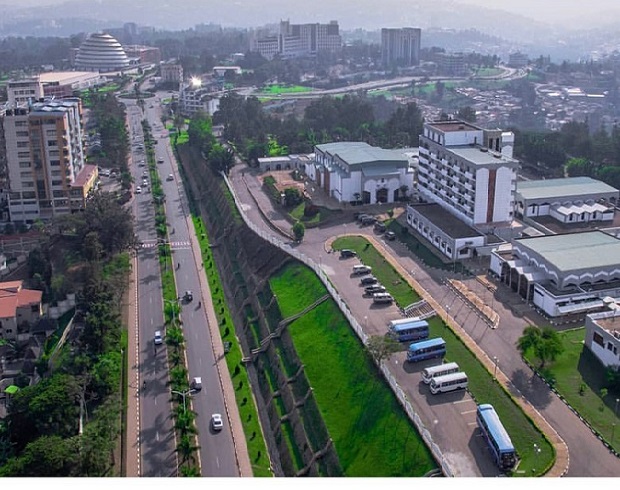
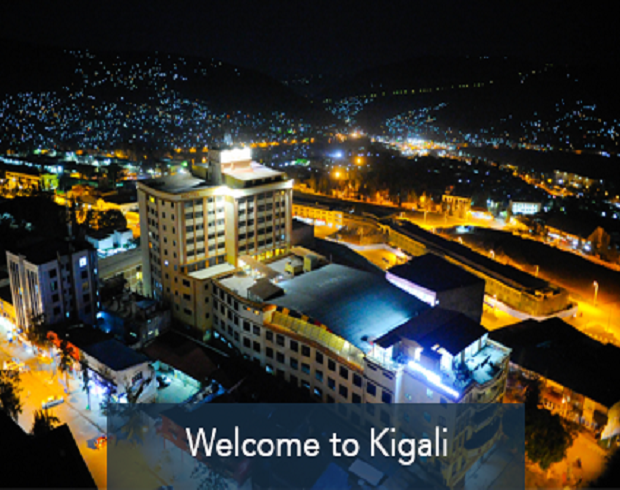
I spent the early part of last week on a work assignment that has taken me on an annual trip to Kigali for the last five years. However this year I was struck with the significantly high number of new buildings that were sprouting out of every corner of the central business district.

First let me give the ubiquitous credit that Kigali deserves. You can eat off the pristine streets. Literally. I took an early morning walk, before the sun’s rays had even slipped out of bed. I was assured that the city was extremely safe even in the dwindling darkness. The streets were deathly quiet while ornamental bottle palms rose ramrod straight along the medians, standing guard over the brightly lit roads. Every so often, I would randomly find solitary armed guards standing at ease on a street corner providing undisguised assurance. Despite being completely alone in the breaking dawn, I never once considered that I might be unsafe.

In the course of walking along the streets, the sheen fell off the luster of what looked like a rapidly growing commercial real estate sector. Several new buildings, many of which had startlingly beautiful architecture I might add, stood empty past the first floor. By the end of my walk I was struck at how many such buildings I had walked past. I asked some locals what the back story was later in the day. It turns out that part of the city’s strategic master plan was to zone certain areas as commercial. This zoning came with a land utilization plan, which required that any building with less than one floor would have to have an additional minimum of four floors above it. Where the building owner was unable to undertake this development, he would have to sell the property to someone else who purportedly could.

The result, of course, is an overstock of commercial real estate in Kigali simply because there are not as many viable off takers for office space as was imagined. In a defensive play, the City of Kigali this year passed a rule that businesses could not be based in residential areas. The objective, obviously, is to drive these tenants into the central business district and provide much needed respite from the stress induced heart attacks that low occupancy, coupled with oversupply causes to the highly leveraged property developers.

This cannot go on for too long though. At some point the banking industry will stop giving loans to developers, a number of whom are foreign, due to the repayment lag that is certainly developing on the real estate segment of their loan portfolios. If credit in that sector begins to become tight, then developers will have to either use cash to build – which requires excessively deep pockets – or they may have to borrow from other jurisdictions, which brings in greater risks such as currency fluctuations. The City of Kigali fathers will have to relax or pretend not to notice the property owners who are not acceding to the zoning laws requiring storied buildings.

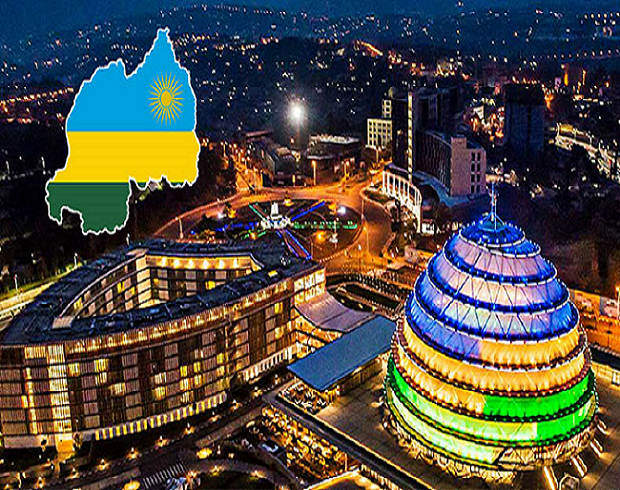
One thing the Rwandese are getting right is the international conference business. With the traditional hut inspired architectural masterpiece that is the Rwandan Convention Centre, as well as the singular government focus to drive conference tourism, Kigali has certainly established itself as a premier conference destination. When this assignment took me there last year, we landed at the airport only to find the immigration queues literally starting on the tarmac of the airport, before getting into the terminal building. A KLM jumbo jet had landed just before us and over 300 passengers were inching their way to about eight immigration counters. All this because that particular week was a big agricultural conference. It took about two and a half maddening hours to get past immigration only to get to the hotel and discover that the government had commandeered our rooms (which we were told is not uncommon) to give them to conference participants of their choice. We were politely “moved” to other hotels, while my colleague was dispatched to a dive somewhere in the outskirts of the city, which made for entertaining anecdotes from a furious colleague who had mentally prepared to stay at the 5 star hotel that we were originally booked in.

I do have to applaud the Rwandans for providing electronic immigration gates at the airport for their nationals. The gates are unmanned and only require the nationals to scan their passports. The same service is commendably provided to expatriates working in the country, who can register for the service in advance making for faster processing of resident passengers. If you have never visited Rwanda, give it some consideration. It’s a rare part of black Africa that is visibly trying to get things right.

[email protected]

Twitter: @carolmusyoka

More Sights and Sounds of Cape Town

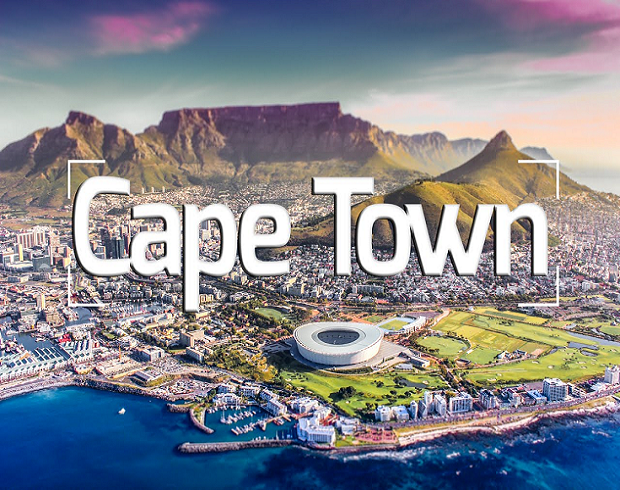
South Africa is a country of multiple paradoxes, brought about in large part by its diverse racial and socio-economic history. Unlike its cousin Johannesburg to the north west, Cape Town has a centuries old history as it was established as a convenient pit stop for the seafaring Dutch traders who were en route to the Far East to trade in spices. On my second visit there this past Easter, I took the time to revel in the predictable and well-trodden touristy excursions.  But this time I chose to experience them through the lens of a visitor from an East African country, more specifically a Kenyan lens.


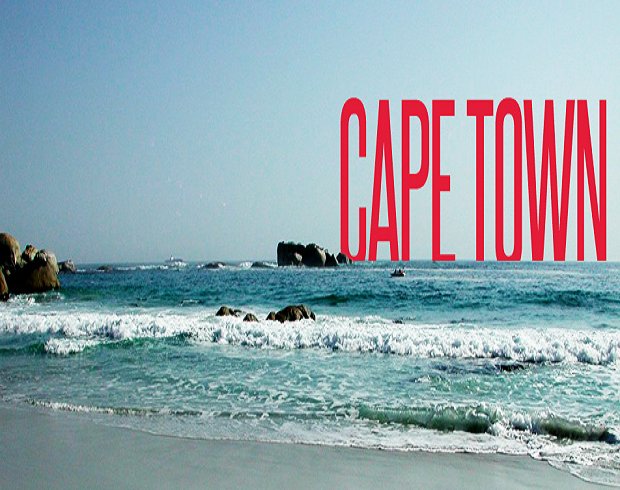
You see, in this beloved sun kissed country of ours, historical partiality has ensured that access to the sea front along the coast line is reserved for the favored few land and hotel owners. One can only see the beautiful beaches in the North and South Coast by entering one of the hotels, visiting a beach front private property or gaining access to the slivers of public beaches that would appear to have been begrudgingly provided to stifle the potential noise of the pedestrian proletariat.  As we weaved our way south, out of the city towards Cape Point, we drove along a road that neatly divided the beach to the right which broke the crashing Atlantic sea waves and beautiful, expensive residences and shopping districts to the left. The beach and the sea have been democratized to enable everyone to enjoy what is a public utility. There were public parks along the way, the most notable one being Moui Point, with playgrounds, benches and public sculptures while ordinary citizens cycled or jogged along the made for purpose paths.


Our driver Ali had lived in Cape Town for the last twelve years. He is originally from Bukavu in eastern Congo. It only took a few minutes of him listening to our Kenglish before he cottoned on that he could speak to us in fluent Swahili, creating an instant bond. His guided tour was thereafter centred on showing us the million dollar homes of the people who have transformed Cape Town into a playground of the globally sourced rich and sometimes famous. The moneyed suburbs of Clifton and Camps Bay were nestled on the foothills of the stunning 12 Apostles mountain range. At the base of Camps Bay peninsula was a public beach where we found mainly colored families barbecuing up a storm in the name of Sunday lunch, each in their own little space but taking scenic advantage of the Atlantic vista in front of them and the public facilities that the Western Cape provincial government had provided for them.


We snaked further south, driving along the stunning ocean drive which cuts a meandering path along the jutting rocky mountain range that makes up much of the Western Cape coastal line. As we crested yet another cliff, a breathtaking settlement appeared down in a valley, bordered by a rock filled beach that provided a natural breakwater to the giant waves that crashed around them.

“That’s Llandudno town down there,” Ali said in hushed tones. The houses were enormous architectural masterpieces and skillfully built into the rocky foundations that made up much of the area. “Only celebrities and rich people live there. There are no schools and no shops there. Nothing that can attract the ordinary person,” snorted Ali.  I had to scribble down the odd name of the town as we zipped past a signpost with the Welsh name. According to Wikipedia the last census in 2011 revealed that the population is largely 86.9% white, 10.3% black and then the rest. Memo to self: devolution comes in all shapes and sizes.


The Western Cape is home to the South African wine industry and its tourist sites such as Table Mountain, Robben Island where Nelson Mandela spent most of his imprisoned years as well as the Cape of Good Hope ensures that there is a steady stream of tourists all year round. But it is the large African diaspora that lives and works in this very cosmopolitan city that draws on its nectar like attraction to economic promise. As I wrote earlier in the year about Mtwapa’s multi-tribal substrata that ensures non-violent episodes during each Kenyan election cycle, Cape Town similarly remains removed from the occasional xenophobic incursions that flare up in South Africa. “Why is that?” I asked Ali. “The people here are very mixed,” was his quick response. “There’s lots of coloreds here, more than the blacks so no fighting.” As Cape Town to the south and Mtwapa, on Kenya’s coastline demonstrate, the more you mix up a population from a racial and tribal perspective the more tolerance you find. That’s some food for thought.


[email protected]

Twitter: @carolmusyoka

Sights and Sounds of Mtwapa

Nestled on the southernmost tip of Kilifi County, Mtwapa is a bustling kaleidoscope of cultures, economies and social systems. The Mombasa-Malindi highway splits the town into an east side and west side, with various activities happening along the kilometer long central business district. Dust devils constantly swirl around the unpaved sidewalks that front various commercial and residential buildings squeezed side by side. The population is extremely diverse from a cultural perspective, with a significant number of retired foreigners residing there. Business owners as well as workers come from the hinterland, which is confirmed by the various bus company offices dotting the town offering express buses headed all the way to Western Kenya directly from Mtwapa.


If you’re visiting Mtwapa, you are strongly encouraged to toss any sanctimonious morality crown you may be wearing into a dustbin as soon as you cross the Mtwapa creek bridge. The first thing that hits you is that there is a bar – or the more urbanized term “lounge” – at every corner. During the day, the desolate tables belie the heaving weight of the alcoholic and carnal aspirations of the previous evening’s revelers. The second stark discovery is that there are as many chemists as there are buildings in the town. I walked into two different chemists that were within 10 metres of each other. “What is your unique selling proposition that makes you stand out?” I asked as I couldn’t understand how any business could remain prosperous with such intensity of competition. Veronica, the owner of one of the chemists, was very forthcoming. “I came here from Bamburi where it was very slow. I’ve been in business for ten years and my customers are different from that chemist over there,” she pointed to the one directly across the street. “Each of us have our own customers, and the business is enough for all of us.” Jacob, her competing neighbor to the left, pretty much said the same thing. For both chemists, their fastest moving consumable items were condoms, the morning after pill and Viagra. Veronica chuckled as she reflected on this, “Huku ni Sodom na Gomorrah!


Further down the street is an open air vegetable market. I sat with Mary, who is the chairlady of the traders welfare society. The market is fairly cool, despite being out in the open due to the various trees lined up on one side. About 153 traders pay Kshs 500 a month to the owner of the land as “rent” and pay a further Kshs 500 a month to the Kilifi county government as license fees. Mary is slightly bitter as they were moved from their previous location on the main high street due to what was going to be a road expansion. As it was public land, they did not need to pay any rent and therefore had lower overheads. Their economic situation was further compounded by the opening of two large brand supermarkets within 300 metres of each other. The supermarkets now provide fresh vegetables and pre-cut sliced fresh fruit such as pineapple and melon, which were the mainstay of the vegetable traders. Consequently foot fall has significantly reduced and there is no particular  unique attraction to bring shoppers to the open air market. County government innovation is greatly required here, to help the traders build permanent stalls that provide various fresh ingredients and street food that would enable a memorable shopping experience for the vibrant town population. Mary shrugs her shoulders in the typical Kenyan resignation and acceptance of her lot in life. “Many women here are not sleeping at night worrying about how they will pay school fees and feed their children. I sleep at 11 pm and leave the house by 4 am in order to get to the Kongowea wholesale market before the good produce is sold out,” she explained in Swahili. She didn’t want any government handouts, just a fair trading environment in what was becoming an increasingly difficult way to do business.


Mtwapa is a town of stark contrasts and varying populations that ebb and flow during its 24 hour economic life cycle. The bars are desolate by day and vibrant at night, creating an intricate web of symbiotic business such as taxis and tuk tuks, late night street food sellers, recreational drugs and short term lodging options. The most outstanding social element of this town however emanates from the lack of a morality lens: various election cycles have blown over a peaceful and non-judgmental population. In Mtwapa everyone is accepted at face value and not skin color or tribal pedigree. There’s no time for that election tension nonsense out there: life is too short and must be lived within 24 hours a day.


[email protected]

Twitter: @carolmusyoka

Sights and Sounds of a Techno Dar es Salaam

I was visiting some friends in Dar es Salaam last weekend and we were driving around the city looking for a place to have a late lunch.


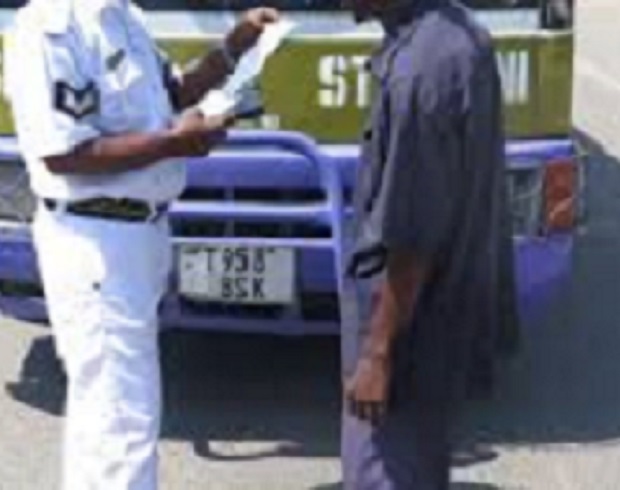
We came to a set of lights where there was a road to our left, which my friend wanted to turn into. The road was designed with a slip way to allow for easy traffic flow for cars wishing to turn left, but there was also a zebra crossing right before the end of the turn. My friend hesitated a little, as the lights were red and she was wondering if she could make the left turn since there was no oncoming traffic. Seated by the side of the road were a male and female traffic officer. The 5 pm sun was smoldering hot as it languidly set in the west and the traffic officers were clearly marking time under the shade of a scrawny tree waiting to clock off. My friend and I both turned at the same time to look at the police officers as she wondered out loud whether she could make the turn. The female officer began laughing and whispered something to her male colleague, who simply shrugged his shoulders.


She stood up slowly, stretched her arms and then ambled to the car. “Madam, umefanya makosa,” she mirthlessly informed the driver of her error. “Failure to observe zebra,” (sic) she said as she pointed where to park on the side of the road. But what happened next is what amazed this Kenyan passenger. My friend removed her driving licence and walked to the traffic officer. She was invited to take a seat on the makeshift bench under the scrawny tree and the traffic officer proceeded to type furiously into a hand held device. 15 humid minutes later, my friend came back to the car carrying a little slip of paper the size of a credit card receipt. She started the car and we drove off.


“So what was the verdict?” I asked, making the very Kenyan assumption that a kangaroo court had been held as was atypical in both Tanzania and Kenya where any traffic stop occurs. “I have been given a ticket and seven days to pay it via mpesa” was the matter-of-fact reply. It’s just as well that I was the passenger doing nothing more than spectating when such East African shattering news was being relayed as calmly as if one was picking ticks off a dog’s back. My friend who has lived for many years in Kenya quickly realized that her nonchalance was misplaced. “Oh, yeah. Things have changed in the new regime. Traffic cops have to give you a ticket which states your offence and then you can pay it via mpesa within 7 days. They have to charge you there and then if you commit a traffic offence.”


I grabbed the ticket and took a snapshot immediately for the sake of posterity. The little slip of paper had the name of the driver and her licence details, car model, registration number of the car, the details of the owner of the car (may I add that it was a car hire and the car hire company’s name was recorded on the slip since the machine is connected real time to the vehicle registration registry) and the name and identity number of the traffic officer. The puny little document packed quite an information punch as the traffic offence that was committed was clearly stated, “Failure to observe a pedestrian zebra crossing Section 65”, as well as the mobile number of the hand held machine, location of the offence and various payment methods at banks or via mpesa.


My friend paid the fine the next day, as we headed to the airport. By this time I had observed how Dar drivers religiously stopped at zebra crossings and traffic lights even on a Sunday. I was informed that due to the numerous traffic cameras around the city, offending drivers who did not pay their fines could easily be traced. Law enforcement has changed the behaviour of Dar drivers. More importantly, even though I couldn’t get the information on time, it looked like the traffic officers had a daily financial target to meet which would then motivate them to issue tickets like candy at a toddler party thus enforcing the law zealously. If you’ve ever driven on Tanzanian roads in the past, you will recall that their traffic cops’ ability to extract “chai” made our boys-in-azure-blue look like wilted tea bags. That has changed. Significantly. If the Tanzanians can do it, so-help-the-corruption-tin-gods, so can we.


[email protected]


Twitter: @carolmusyoka

Sights and Sounds of New Delhi

Incredible India. That is the marketing slogan that great country uses on its advertising campaigns on international media such as CNN. You can’t describe India to anyone in less than a few hours or several precious newspaper paragraphs but I can summarize my recent January visit to the city of New Delhi thus: it is incredibly populated, incredibly progressive, incredibly diverse and incredibly cold during the winter.

The National Capital Territory of Delhi has a population of almost 22 million people. That’s at least 4 million more than the giant metropolis of Mumbai. Inevitably, Delhi has one of the highest pollution rates in the world.

In the district in which we were staying, very few of the roads have marked lanes and even where the lanes are marked, drivers do not maintainlane discipline. The driving rules are fairly simple: find your space, own it even if it means coming to within a bacteria’s finger width between you and the next car, and just keep on moving. Consequently, the roadside kerbs are about a foot high to avoid the universal temptation to over-lap and lane climbers. While there is fairly good network of highways (which in Kenyan-speak would be termed as super highways since anything bigger than two lanes warrants an entry into the Kenyan mega project hall of fame), Delhi motor cycle riders – many of whom carry the same DNA as their Nairobi counterparts – have absolutely no issue riding into the darkness of a highway underpass facing oncoming traffic. With no headlights!

Delhi’s stomach churning traffic heaves in unsynchronized waves of pollution generating saloon cars, buses, trucks, motorcycles and taxis. In all that madness we never encountered a single accident, nor found anyone shaking their fists or flipping birdies at each other.

Anil, our designated taxi driver, drove a gas propelled Maruti. We asked him to take us to a mall and he zipped around for twenty minutes before coming to a triumphant halt in front of a sterile building, faceless except for a solitary staircase that rolls its steel tongue out to greet us.
Up another staircase and we then stumbled upon multiple shops selling fabric, suits that are stitched in 24 hours, jewelry, scarves, handbags, and beautifully hand-woven rugs. Around us were Africans of various extractions in multiple stages of retail nirvana as they did mental conversions of the prices. Kapur,a 25-year-old fast talking salesman, latched himself to us and never left our side until we had made several purchases of various goods. He speaks token Swahili, randomly interspersing his sentences with “kabisa” “asante”, “sawa sawa” and“kwaheri” which was enough to tell us that he’s had multiple East African clients cross his slick salesman’s path.

Back at the hotel, our retail therapy curbed only by the dread of facing the inscrutable faces of the Customs officials at Jomo Kenyatta International Airport upon our return, we found a very chatty waiter Amir as we ordered dinner. The next day was his off day and he happily told us how he was going to spend the day catching up on Netflix and Amazon Prime shows. Say what now? “Yes madam. Internet is very cheap in India, I only pay 900 Indian rupees a month for wifi at home.” For Kshs 1,440 a month, Amir our waiter had high speed internet in his house. It goes without saying that in the 21st century access to internet, just like access to water, is life.

Cheap internet democratizes information by ensuring that it is accessible to a far wider population reach and provides a fantastic opportunity for local content producers to find markets for both entertainment and educational content. One observation I made in India is that due to its sheer size, a lot of content on television was local as there were multiple news channels as well as movie and entertainment channels in Hindi and local dialects. Anil our taxi driver had his phone on his dashboard most times, tuned interchangeably between local music videos and local movie channels. And yes, before you judge Anil, ceaseless traffic warrants distracting entertainment. The bigger opportunity I saw was how low cost internet can generate a whole vertical supply chain just from local content provision because at the end of the day, your ordinary mwananchi relates faster to stories that narrate his own reality. You don’t have to look far: Nollywood and Bollywood are live examples.

[email protected]

Twitter: @carolmusyoka

A Bulgarian’s Unlikely Success Story in South Africa

I recently went to South Africa on a work assignment and was met at Johannesburg’s Oliver Tambo Airport by a gentleman called George for the transfer to my hotel.George is a Bulgarian who came to South Africa in 1994 aged twenty-eight years with just $500 dollars in his pocket. He had just left the army after being tired of the growing sense of helplessness and poverty in a struggling economy following the collapse of the Soviet Eastern Bloc at the tail end of the last decade. He landed at Johannesburg’s airport and asked the first taxi driver to take him to the cheapest hotel he knew. That hotel ended up being in Hillbrow, a rough, crime ridden Johannesburg suburb where his was the only white face for miles around. Armed with his $500 and ten or so words of English which included “cheap hotel” he walked around the neighborhood and bought a map so that he could get a lay of the land, as he wanted to figure out what he could do to earn a living. After walking for several blocks that took him beyond the confines of the dangerous Hillbrow zone, he found a butcher’s shop owned by a Serbian. Speaking Russian, which was a secondary language for former Eastern Bloc countries, George was able to find that therewere other Bulgarians who were working as food delivery riders for Nandos.

“I only knew two things: the map of Johannesburg and how to ride a motorcycle,” he said with a chuckle as he proceeded to tell me how he found that his country mates, ten in number, all lived in one house and welcomed him with open arms. They told him that all he had to do was buy a motorcycle and they would introduce him to the owner of the Nandos restaurant so that he could get a job as a delivery guy, which didn’t require much English. He spent his few remaining dollars to buy a second hand motorcycle and began working. After a few yearshe moved to work at another Bulgarian’s coffee shop, who eventually sold the restaurant to him which he ran successfully and subsequently sold in 2002.

A random chat he had with an acquaintance led him to discover that hotels in Johannesburg’s commercial district of Sandton were looking for clean, executive vehicles to transfer their guests to the airport. He bought a Mercedes Benz, “I incentivized the concierges in the hotels to call me whenever a guest wanted to go to the airport,” he said. George now has over 30 luxury vehicles and, according to him, he’s made a lot of money from the transport business as he has a few blue chip South African companies on retainer to transfer their executives.

“What are your key lessons?” I asked him as we approached my hotel. He looked straight ahead, lost in deep thought and I almost thought he hadn’t heard my question. Sighing loudly he answered after about a minute. “I’ve never taken my family on holiday ever,” he said. The intensity of the business has never permitted him to take a day off. “To get one really good and responsible driver, I have to endure almost fifty recruits,” he said. George speaks good English now and his two children are playing competitive tennis, with his eldest son representing South Africa at junior global tennis meets. But he is well aware that the tenuous socio-economic threads that bind the rainbow nation can easily become undone. His family fell victim to armed robbers at their home a few years ago. “I want my children to finish school and then will see where to go from here,” he summarized as we pulled up at the entrance to my hotel.

George’s story is one of sheer gumption, hard work and the power of drawing on traditional social networks to grow himself into a successful business owner. But that growth, as he ruefully ruminates, has come at great personal cost to the quality of life with his family, children in particular as they only have a few more years before they move on to university. Time, particularly quality family time, is a precious commodity that absolutely no money can buy was my conclusion as I stepped out of that interesting discourse.

[email protected]

Twitter: @carolmusyoka

Sights and Sounds of Zanzibar

About three years ago, we chose to spend part of the December holidays as tourists in Zanzibar. It was still at the time when the travel advisories against Kenya were in full effect following the Westgate terrorist assault. We flew into Zanzibar’s Kisauni airport, where, quite blissfully, there was a separate immigration counter for East African Community(EAC) citizens, contrary to the Dar es Salaam Julius Nyerere International Airport’s legacy of treating all arriving visitors as one heaving block of unwelcome travellers.

It took about an hour to drive to our destination in the northern part of the island, where we were going to stay at a villa belonging to a South African owner. We did however get pulled over twice on the otherwise uneventful journey. The first time was by the Zanzibar tourist police who wanted to check the “papers” of our van. The “papers” were found to be in good order and we were happily waved along.The next incident was not so easy. Two regular policemen wearing the full white Zanzibari police uniform, buttons agonizingly stretched across their corpulent bellies, asked Kiba our driver for his driving license, PSV license and rate card in that order after taking a long, languorous look at the license stickers on the windscreen and finding no fault. Of course, Kiba couldn’t produce a rate card since the van belonged to the villa’s owner, so he was told that the policemen would keep his driving license until he could find it. The cops were quite pragmatic and told Kiba to take down their mobile numbers and give it to any cop who might stop us ahead so that they could explain that they were in possession of the license.

After a few minutes, one cop asked Kiba to step out of the vehicle for a “conversation”. Money changed hands, the driving license was released and we were dispatched on our merry way. Total time taken for the transaction: 15 glorious minutes of our precious holiday. Kiba was visibly embarrassed and bristling with anger at the capricious display of greed in front of his visitors. We chuckled and consoled his morose spirit with the fact that we were coming from a country where our own Kenyan traffic cops would make his Zanzibari traffic cops look like omena at a Nile Perch beauty parade.

View of Stone Town, Zanzibar
Image from http://theseyyida-zanzibar.com/

Zanzibar is a beautiful island with a heritage quite similar to Lamu. Arab, African and Indian influences have melted into a traditional, conservative Islamic culture. Stone Town, which is the main city on the island is a tourist haven with several narrow winding streets dotted by the ubiquitous curio hustlers cajoling you to visit their shops that have the same kikoys, African traditional masks, paintings and batiks. I spoke to one boutique owner, marveling at how they were lucky to still have tourists in Zanzibar, as our villa owner had told us that they enjoyed bookings eleven out of twelve months in a year. She was not as bullish, however.

She told us that most of the tourists to Zanzibar were typically on a Kenya-Tanzania-Zanzibar circuit and the events in Kenya had significantly impacted the numbers coming through to Zanzibar at that time in 2014. This conversation was replicated two months ago when I was on a working visit to Kigali, shortly after the August 8th 2017 elections here in Nairobi. The general manager at the hotel I was staying at was lamenting at the impact the Kenyan elections were having on visitors to a city some 1,200 kilometres south west of Nairobi. He said the exact same thing as the Zanzibari boutique owner. A large number of tourists to Rwanda were usually partaking in a circuit that started in Kenya. Cancellations to Kenya therefore meant that the whole circuit, including Rwanda would be cancelled.


Image from https://www.neverendingfootsteps.com

That our fortunes (and our sticky-fingered traffic cops) are intertwined within the East African Community is an unassailable fact. The intangible but very apparent influence that Kenya has on the region’s economy should give some pause to the proponents of the monetary (and doubtful political) union for the EAC.Our seeming inability to arrive at a mutually agreeable political solution is one that is of our own Kenyan making, and should never be exposed to the wider, unsuspecting regional citizenry. Or perhaps the opposite is true: a regional constituency might require a very different big picture thinking at the political level, making Kenyan tribal issues the non-issues that they need to eventually become.

[email protected]

Twitter: @carolmusyoka

Sights and Sounds of Kigali’s Finest

[vc_row][vc_column width=”2/3″][vc_column_text]Last Tuesday I flew to Kigali on the early evening flight and landed into a warm, balmy city. As we deplaned and walked to the terminal, I saw a long line of passengers walking from across the tarmac having just disembarked from a KLM flight. I hightailed it down the escalators in the terminal building as I knew the lines at immigration would be insane. They ended up being insane. But I didn’t mind as it gave me time to observe the immigration hall inside the Kigali International Airport. The modern hall is purpose built, with high ceilings and an almost clinical white décor. Illumination from the bright lights bounced off the sterile white walls and onto the clean-shaven, smart and well-spoken immigration officers. They sat on high stools and were easily accessible due to the absence of the ubiquitous thick glass barrier found in many immigration counters.


Image from www.rwandagorillassafari.com

To the far right of the immigration hall were two channels of passage with a large welcoming sign above that said “E-Gates Nationals Only”. There were clear instructions pasted on the side on how to use the 21st century contraption: Walk to the reader, scan the bio data page of your passport, wait for the beep to signify transaction complete and voila, heaven’s gates would open and you, Citizen Rwanda will gladly step back home. I stood and stared for a long time as the only other airport I had seen this was London’s Heathrow. The only pity was that the bulk of the passengers from the two flights were non-Rwandese and so I only observed two citizens triumphantly sail through.

I was picked up by an extremely chatty driver named Tresor, who spoke fluent Swahili as he was born in Bujumbura where he said Swahili is more widely spoken due to proximity to, and large trade with, the DRC. Since I couldn’t get a word in edgewise past his excitable monologue I sat back to listen but I noticed a glowing orb in the far distance as we drove past the gates of the airport. It was a beautiful sight against the clear night sky and something that I had certainly never seen in my past Kigali visits. I parked that question for later. Tresor had much to say about how the city was now full of Chinese who had come to build infrastructure in Rwanda. I puckered my brow in reflection as I had observed massive buildings being put up in Sandton, Johannesburg by Chinese as well as critical arterial roads in Kampala not to mention our very own Kenyan railway and highways. Historians will more likely document the not so subtle Chinese infiltration of Africa, when the effects of this economic colonization shall be obvious. Within 15 minutes my curiosity about the glowing orb was assuaged as we approached the Kigali Convention Centre (KCC).

The Kigali Convention Centre
Image from http://www.newtimes.co.rw

In my past visits to this beautiful, serene city, I had driven past the construction of the $300 million KCC without paying much attention to the distinct spherical framework of the emerging building. The Rwandese government has constructed an iconic building that will become to Kigali what the Sydney Opera House, London’s Tower Bridge and Nairobi’s KICC have done in terms of being globally recognized city trade marks. Its curved silhouette, whose inspiration is the traditional Rwandese hut, is sheathed with luminous lighting that projects the ethereal glow I saw all the way from the airport. With a capacity for up to 5,000 delegates, the KCC has been built with the aim of making Kigali the premier conference destination site in the region. Together with the refurbished airport and a growing number of new hotels, the Rwandan government aims to use meetings and conferences as a key growth pillar for the economy. Next to the conference centre is a brand spanking new 292- room Radisson Blu Convention Centre Hotel which was opened just in time for the World Economic Forum in Africa (WEF) meeting in May 2016. I don’t think it was accidental that Kigali was chosen as the location for this annual meeting as the conference theme, Connecting Africa’s Resources Through Digital Transformation, was undertaken against a backdrop of free high speed wifi in most of the hotels and 4G free wifi provided in the public transport system.
Actually a Rwandese acquaintance reminisced with us the following day about the rapid growth of 5 star hotels in Rwanda. He spoke with bemusement as he recollected how the Kigali Marriott Hotel had been under construction for a long time and had literally been completed and furnished a month to the WEF conference. The government organizers were keen to ensure that WEF delegates had access to 5 star accommodations and couldn’t understand why the Marriott management was not ready to avail the premises for this momentous event. “The hotel is not up to global Marriott standards in its current form,” was the alleged response from the owners, “We need another three months before we can open the hotel.”

The government promptly bussed in experienced hotel staff from Kenya and Uganda, slapped a new banner at the front of the hotel calling it “Century Hotel” and sewed the same name on top of the Marriot name on the staff uniforms. By the time WEF delegates landed in May, the hotel was open for (temporary) business faster than you could say kusema na kutenda. Of course this is anecdotal but is illustrative of the can-do attitude that’s widely prevalent within Rwandese government circles.

A benchmarking visit to Rwanda is critical to any African that wants to see what urban planning, good road infrastructure (I didn’t feel or see a single pothole as I crisscrossed the city), extremely clean streets and excellent security looks like. On one of the nights we went out for dinner, we found women walking completely alone at half past nine, brazenly carrying handbags and visibly comfortable about personal well being. To paraphrase the Kenyan author Binyavanga Wainaina: One day we shall write about this place.

[email protected]
Twitter: @carolmusyoka[/vc_column_text][/vc_column][vc_column width=”1/3″][/vc_column][/vc_row]

Sights and Sounds of Cape Town

[vc_row][vc_column width=”2/3″][vc_column_text]Nestled between the hulking, sepia toned Table Mountain and the deep, blue, frigid waters of the Atlantic Ocean lies the city of Cape Town, South Africa. It is the administrative capital of the Western Cape Province, and the seat of South Africa’s Parliament. Capetonians, as the residents proudly refer to themselves, have a rich and centuries old co-existing heritage of race and religion with Christians, Jews and Muslims represented across the black, white and colored populations of the city. “The reason everything works in the city is because the Democratic Alliance Party runs the Western Cape government,” were the smug words of my female taxi driver Kellie, who at 8 months pregnant, drove fast and furious to the airport through the palm tree lined boulevards that crisscrossed the beautiful city.

I had just completed a whistle-stop maiden trip to one of the most beautiful coastal cities in Africa, second only in my limited world view, to Tunis. I genuinely cannot remember a single city that I have visited on this continent with teeming hordes of tourists arriving in busloads into the hotels and archetypal tourist spots like the Table Mountain Cable Car ride or the V&A Waterfront. Large groups from India, China, Japan stuck out prominently armed with cameras and light winter coats relentlessly taking pictures and chattering up a storm on the open top double decker buses that ferried tourists in a scheduled circuit around the city that allowed one to hop on and hop off the bus at the tourist spot of their choice.

V&A Waterfront, Cape Town
Photo from: http://www.holidaybug.co.za/

There is a heavy but subtle police presence to secure tourists and very little open crime in the streets. Opulence is well represented with Lamborghini and McLaren showrooms for the local partakers of sublime automotive fantasies while tasteful mansions dot the exclusive sea facing neighborhoods higher up towards the mountain.

But there are stark reminders of South Africa’s developing nation status as you pass the mabati shacks of Cape Town’s fastest growing township, Khayelitsha, that stands unabashedly next to the city’s main highway artery, the N2. The unapologetic vestiges of poverty conjure up mixed emotions as a notable number of the shacks bear the unmistakable middle class markers of a DSTV satellite dish and an old but clearly functional car parked in the front. “Some of these guys come own property where they come from in the Eastern Cape,” Kelly the cab driver told me. “They’re not all poor, they just like the township life.”


Photo from: http://www.sharkquests.com

I took the ubiquitous Table Mountain tour. The road leading up to the Table Mountain Aerial Cableway is a long, winding and twisted drive up the very steep base of the mountain. The month of May is the point where winter starts nibbling at the feet of the Western Cape and for about a kilometer before the cableway station, cars were parked along on the side of the road. Our driver informed us that those were cars of local residents who came to hike up and down the mountain over the weekend. Apparently during warmer weather the parked cars would be lined up for more than 3 kilometers! The aerial cableway was built in 1929 and has ferried over 24 million passengers since. A ride up to the mountain is not for the faint hearted as those little glass and steel bubbles move at 10 meters per second and you are suspended on a steep vertical incline as you climb 704 metres. Once you are spat out of the cable car at the summit which is 1067 metres above sea level, you emerge to find fairly fast free wi-fi for visitors as well as wheel chair friendly paths and accessibility to a self service restaurant and clean toilet facilities.

No female worth her favorite high heels can avoid a visit to a mall, so in keeping true to my gender’s requirement for occasional retail therapy, I made a rather cursory jaunt to Canal Walk which is apparently the third largest mall in Africa, with over 1.5 million square feet of retail space and 400 shops to pique a shopaholic’s interest. The mall owners have created a space where mid range stores like Adidas and Top Shop are co-located with low value offerings such as Shoe City and Ackermans.

Canal Walk Mall, Cape Town
Photo from: http://www.travel2capetown.com

And if you are so inclined, the absolutely cheap knock offs are sold in a discreet corridor aptly named Market Street where the shops look like something out of an Indian bazaar but, due to their hidden location, they do not detract from the high end look within the rest of the mall. Essentially the mall has shops that cater to all pockets and was full of shoppers, although this is a fairly common occurrence in many South African malls. This phenomenon is largely driven by the easy access to credit through bank credit cards or shop store credit cards. South Africans have some of the highest individual indebtedness on the continents with about 75% of monthly income spent on debt service according to different internet sources. In a February 2013 article on the Business Day Live online newspaper, a survey by the global payments technology company Visa reported that most middle class South Africans spent an average amount of ZAR 7,283 (Kshs 46,611 in today’s terms) to pay off debt each month. The survey was completed by 2000 people aged 18 to 65 of all races and across middle and higher income categories with half of the participants indicating that they would never be financially free. Meanwhile 68% of the other half said they would only achieve this after the age of 50. Two clear lessons emerged for me from this trip: First, if a county government wants to truly benchmark how to run a well-oiled tourism machine in Africa, Cape Town is a good start. Secondly, if you want your Kenyan mall to have multitudes of shoppers and not just sightseers, the role of consumer credit is tightly linked to the purchasing power of mall visitors.

[email protected]
Twitter: @carolmusyoka[/vc_column_text][/vc_column][vc_column width=”1/3″][/vc_column][/vc_row]

Gentrification in Johannesburg

[vc_row][vc_column width=”2/3″][vc_column_text]A few weeks ago, a work assignment took me on a tour of the Maboneng Precinct in Johannesburg’s Central Business District (CBD). Now if you are a frequent traveller to Johannesburg, it is quite likely that there is little, if anything, that will take you into the city’s CBD which features tall, imposing skyscrapers grounded in streets teeming with bustling retail spaces and some rough thoroughfares that even locals fear venturing into. Most visitors tend to focus on the more glitzy shopping districts of Rosebank and Sandton rather than the dated and down market offerings to be found in the CBD, which has notoriety for high criminal incidence. To get to Maboneng, we drove past the financial district that has the distinct campuses of two of South Africa’s big four banks: Standard Bank and Absa. The two banks have multiple towers in close proximity that are linked via underground tunnels and air bridges which reduce the need to walk the streets. Getting off the ramp from the highway we entered streets that had clear evidence of time decay: broken windows, graffiti walls and heaps of uncollected garbage. The shops were kindred spirits to Nairobi’s Kirinyaga road with automobile industry players like “Camara Car Parts” and “Onyechi Auto Repair” dotting the scene nestled next to “Al Hakim Super Store” that seemed to sell just about anything, “Omega Fire Ministry” which hinted at the promise of spiritual redemption and “Cash For Scrap” that had an equally compelling promise for disposers of scrap metal. Meanwhile the city’s skyscrapers cast long shadows less than 400 meters away.

After making a few wrong turns here and there, we arrived on a street that was straight out of a European capital’s photo album. Chairs and tables filled the streets in front of cafés and restaurants offering multiple gastronomic delights. There was the fashionable Patta Patta restaurant owned by a fairly young South African gentleman called Ziggy, which had eclectic non matching chairs, burlap lampshades and brick cladded shelves that created a very warm and inviting atmosphere to taste local South African fare. Further down were more artisanal coffee shops and specialist bakeries co-located with architectural offices and electrical engineering consultants making for a very interesting mix of businesses and synergies. This was the heart of the Maboneng Precinct.

According to the official Gauteng Province website, “Maboneng” is a Sotho word meaning “place of light”. In 2008, a developer called Jonathan Liebmann bought old construction offices and warehouses dating from the 1900s and, in collaboration with an architect, he transformed the industrial space into a cultural oasis that is now Arts on Main, which is one of Maboneng’s two main building complexes. The building houses various studios which displays beautiful arts and crafts created by local South African artists. One studio was a testimony to social responsibility using creative rather than financial means. With an arresting title of “I was shot in Jo’burg”, the studio is the brainchild of South African architect Bernard Viljoen who converts Johannesburg’s street children into prolific photographers. His program started in 2009, when he picked 15 children from Twilight Children’s Shelter in the less than stellar Hillbrow neighborhood of Johannesburg. He gave them disposable cameras and met them once a week on a Monday afternoon for a workshop. Bernard says, “We learnt how to search for beauty, composition and interesting subject matter where we thought there were none.” In December 2009, they had their first exhibition at the Arts on Main and it was a runaway success. Bernard says, “the kids mingled and chatted and explained their work like they have been doing this for their whole lives. They had a voice. I wanted to create an evening these children will never forget for as long as they live. It was a great success.”

Having walked the few streets of the Precinct, I was struck by the power of gentrification, and its ability to convert previously unattractive and uninhabitable spaces to premier retail real estate in the space of a few years. Every Sunday, the Precinct hosts “Market on Main” where fresh produce, baked goods, indigenous plants, books, art and fashion are all showcased. It launched in January 2011 and has morphed into a compelling weekend destination for the Johannesburg residents as one can find Ethiopian, Moroccan, Chinese, Italian and Indian food for sale as well as local South African delicacies.

This is not pointless rambling. What I saw in Maboneng is something that is inspiringly easy to replicate. From the roller skating youth that throng the car park adjacent to Aga Khan Walk, to the countless artists and designers that showcase their wares in the rather elite confines of the annual Christmas Craft Fair Nairobi has the capacity to showcase its food and culture in an organized, cheap and vibrant manner that can provide depth to the limited public offerings in the city. A drive past the roundabout near ILRI in Uthiru’s shopping centre will reveal an amazing use of public space every Sunday. Someone was inspired to provide a bouncing castle and other forms of children’s entertainment on Sunday afternoons, resulting in an efficient and cheap use of a public space that elicits delightful use by the residents of Uthiru. Parents, children and young couples sit on the grass and make active use of the space provided, which is simply a roundabout on Naivasha road that has unkempt grass but is transformed into a public utility by an enterprising entertainer. From rough neighborhoods on Nairobi’s Quarry Road to Industrial Area there are lots of opportunities to transform streets into public entertainment spaces that can showcase our inimitable Kenyan culture. We need to deepen our perception beyond giving youth loans to do businesses and look at art and culture as a credible source of compelling youth engagement as it provides an outlet for self expression as well as a non academic based source of gainful self employment.

Food for thought on this Labor Day holiday.

[email protected]
Twitter: @carolmusyoka[/vc_column_text][/vc_column][vc_column width=”1/3″][/vc_column][/vc_row]

Sights and Sounds of Turkey

A work related trip to Turkey recently got me to make my maiden voyage on Turkish Airlines. The narrow bodied 737-800, with a passenger capacity of anywhere between 151 to 189 passengers depending on its configuration, was packed to the rafters and every single seat was occupied for the six hour flight to Istanbul. The flight left bang on time at 10:25 a.m. filled with a motley group of passengers. Somewhere in the middle sat a group of female Kenyan traders, with the ubiquitous well worn scarf wrapped around seasoned shoulders. At the back of the plane was a group of young Kenyan males, quite obviously going for a sports related trip given the loud, raucous laughter filled with competitive promise that occasionally punctuated the air.

As a card-carrying member of the Kenya Airways (KQ) fan club, I couldn’t help but compare the service on the two airlines. KQ beats them on food hands down despite a Turkish-steward-dressed-in-chef-uniform perambulating about and offering more promise than fact during the flight. However, I have to admit that individual passenger screens providing at least 40 choices in each of the three genres of drama, comedy and action made for an unbeatable in-flight entertainment service.


Image from http://ichef.bbci.co.uk

The Turkish Government owns 49.12% of Turkish Airlines while the rest is free floating on the Istanbul Stock Exchange. With about 277 planes ranging from Airbus, Boeing and Embraer, the profit-making airline is the fourth largest carrier in the world flying to 218 international destinations. It has faced challenges like most airlines and posted losses in 1987 and 1988 due to high payments on its new Airbus A310s. It also suffered in the global aviation crisis following the Gulf War in the nineties and didn’t break even until 1994. The airline also underwent some stress during the SARS outbreak that forced it to suspend flights to several Asian destinations. However in the last three years 2012, 2013 and 2014 the airline turned over $8.2 bn, $9.8 bn and $11 bn respectively yielding a net profit after tax of $657m, $357m and $845m during the same period. It enjoys relatively good profits and very healthy and positive cash flows.

But it’s not difficult to see why. Turkish Airlines is a key partner in the Turkish government’s tourism initiatives, which started when the new government in 1983 chose the airline to be its primary ambassador and committed to maintaining a modern fleet with high security. Data from the Turkish government shows an average growth rate of above 5% in tourism per year with 36.84 million visitors in 2014. Turkey happens to be the sixth most popular tourist destination in the United Nations World Tourism Organization’s ranking. It relies on its cultural and historical heritage along with sea tourism. It has also been helped recently by the depreciation of its local currency – the lira- against the US dollar and Euro which has therefore made it an attractive destination for visitors from those regions.

We landed in Istanbul in the early evening and as I was travelling to Izmir, the third largest city in Turkey, I had to go through immigration. Long lines awaited me with about 22 counters reserved for non-Turks and another 8 reserved for Turkish passport holders. I must admit I let out a quiet snort of derision as I gleefully stood in the same tortuous line with British, American and EU passport holders. No privileged access here. We were all in it to win it.


Image from http://www.trazeetravel.com

Istanbul’s Ataturk airport is actually not visitor friendly and it’s quite a schlep to the domestic terminal with poor signage and mostly non-English speaking airport staff. I barely had time to grab something to eat before I heard the last boarding call for my flight to Izmir. As it was a domestic flight I was expecting it to be an Embraer or another Boeing 737 at least. However the transfer bus pulled up in front of a Boeing 777 -300 ER with a passenger capacity of 349. The reason for the use of the wide-bodied equipment quickly became apparent. The 42-minute flight was packed to gunwales to Izmir, a town 331 kilometres south west of Istanbul that sits along the coastline of the Aegean sea. Izmir has a rich history with at least 4000 years of urban civilization and is proximate to the ancient city of Ephesus- remember John the apostle’s letter to the Ephesians? Most of the passengers were tourists, many who were of oriental extraction.

There is newness to Izmir, certainly not the crowded old city feeling that I recall from my Istanbul trip 15 years ago. The streets are wide, 3 lane highways on a each side and my cab driver drove like he was possessed with and conceived by Lucifer’s spawn. Having had a seamless check in process into the hotel and feeling slightly peckish, I took the lift to the 8th floor sky bar and was immediately taken by the wide vista of twinkling lights on the hillsides of Izmir. Immediately below me was a city square, it was 10 pm on a Saturday night and there were many people walking, rollerblading and cycling on a sea fronting promenade, the centre of which is the Republic Square. It looked safe, appealing and attractive as it was brightly lit and secure. On the other side of the square, was a police car parked seemingly carelessly on the road, insouciance oozing out of every screw holding its authority together. Its red and blue lights flashed brilliantly to mark its territory. Republic Square was safe for its users.


Image from http://www.trazeetravel.com

The Turkish government uses the national airline as a fundamental tool of tourism, which is a key economic driver. Security is present and very visible to residents and visitors of Turkish cities. It is apparent even to the untrained eye that the government plays a key and supportive role in the way business is done in the country. More on Turkish government support of Turkish business next week.

[email protected]
Twitter: @carolmusyoka

Sights and Sounds of Poland

A few weeks ago, I was the guest of the Government of Poland at the European Economic Congress held in the southeastern Polish industrial city of Katowice. I arrived on a cold and blustery spring mid morning into Warsaw’s Chopin International Airport. Surprise number one: the world-renowned composer and piano virtuoso Francois Frédéric François Chopin was actually born in 1810 as Fryderyk Franciszek Chopin in Warsaw and became a musical child prodigy before moving to Paris at the age of 18. Poland, his country of birth never forgot him and has awarded him the national honor of naming its gateway into the country after him. (Eleven years after receiving the Nobel Peace Prize in 2004, there is no visible memorial that Wangari Maathai originated in Kenya. None whatsoever)

City of Katowice
City of Katowice
Image from https://upload.wikimedia.org

I must say that I was ecstatic when I bumped into a former work colleague who had undertaken his university studies in Poland and was also part of the entourage. It meant that I had a familiar guide who, I erroneously thought, would help me navigate 100% polish speaking territory. Surprise number two: I didn’t need a Kenyan polish speaking guide to move around. All the signs in the airport were in both Polish and English. Now, in this part of the sun kissed African world, mention Poland and it immediately conjures up images of a grey, undisputed card carrying member of the former Soviet driven Eastern bloc. But Poland’s long and tortuous road to becoming a jewel in Europe’s crown began over 40 years ago. And it is this journey that convinced me that many African countries have hope for economic transformation within a single generation.

In the 1970s, Edward Gierek, the First Secretary of the Polish United Workers’ Party racked up an unsustainable debt to the West. Coupled with an unproductive and centrally planned economy, the country was unable to handle the debt payments leading into an economic crisis. Basic goods started disappearing from store shelves. As one fairly young speaker at the Congress stated when he heard an African contributor lamenting about poor economic policies in his country, “In Poland in the eighties, if one found people standing in a line, one would join the queue and only find out what was being sold at the end of the queue. We have now transformed into the 6th largest GDP in the European Union. You can do it as Africans too!” The African contributor slunk back into his seat quietly.

Anyway, back to Poland’s interesting history. By the 1980s, the economic crisis had grown spurring multiple protests. An independent trade union known as Solidarność (or Solidarity in English) became the main force behind the protests with many workers as well as intellectuals joining it. At its height the trade union had well over 10 million members. In the face of social opposition and a deepening economic crisis, the troubled communists began the famous Round Table Talks that resulted in the first democratic elections in the Eastern Bloc taking place in 1989 in Poland.

Warsaw at night
Image from http://viahansadmc.com

If you are a purveyor of conspiracy theories, you would greatly enjoy a book by Gordon Thomas called “Gideon’s Spies: The Secret History of the Mossad.” In the fairly well written book, the writer reveals a number of Mossad operations and discoveries, a key one of which is who ordered the miraculously bungled assassination attempt of Pope John Paul II, himself of Polish descent. According to Thomas, Mehmet Ali Ağca – the Turkish assassin who shot the Pope in May 1981 – was actually recruited and funded by the Soviet Union, as the Pope’s influential office was thought to spur the influence and efficacy of the Solidarity movement on the world stage.

But I digress. In the 1990s, a free market replaced the centrally planned economy, privatization of state entities was embarked upon and the Warsaw Stock Exchange was launched. Surprise number three: While Poland joined the European Union in 2004, it still remains outside of the monetary union and operates its own currency, the Zloty, meaning that the cost of living is much lower than other countries in the Eurozone and they are therefore able to place themselves as an attractive destination due to competitive labor costs.

Consequently, Poland enjoys the benefits of European Union such as access to a single market with no trade (or physical) barriers as well as access to EU funding. Poland has a population similar to Kenya’s at 38.5 million people, 60% who live in cities and 50% who are under the age of 38. 16 million are professionally active and the government ensured that English is now a mandatory subject in primary and high school leading to a population that attracts world class companies looking to set up strategic businesses such as IBM, LG, Procter & Gamble, Siemens and Samsung Electronics to name a few. It’s ability to attract the highest level of foreign direct investment in Central Europe as well as its large and rapidly developing domestic market meant that it was the only EU country that did not experience a single quarter of GDP decline at the height of the 2008 global financial crisis.


Image from https://i.gocollette.com

The Poles were quick to admit that while they were slow to the “doing business with Africa” party, they were in it to win it particularly in the agri-business field. At the Congress, every nook and cranny was filled with cafés giving out specialized coffee drinks. The Polish are enormous coffee drinkers and one Café owner had expressed interest to a Kenyan colleague in sourcing good coffee beans. Patryk, my Polish handler, noted with some humor that he had never seen so many black Polish speakers gathered in one room. Clearly the Polish policy of granting university scholarships in the eighties and nineties was reaping rewards. The Poles want to do business in Africa but, as one of the Kenyan panelists advised them, they need to get high-level Polish government dignitaries to be the face of this agenda. Africa is ready.

[email protected]

Twitter: @carolmusyoka

Sights and Sounds of Nigeria Part II

“The clock did not invent man,” are the opening and apologetic words of my Nigerian host as the function began 45 minutes late, which I was later informed was rather early for Lagos functions. I was giving the keynote speech at an annual client workshop and book launch for a firm of Lagos advocates and had sat at the edge of the high table to enable easy access to the podium. I wonder how we are starting the function when all the other seats at the high table remained unoccupied. It turns out that I had made the ultimate faux pas (I learnt much later as I read a hilarious 1960s book titled “How to be a Nigerian” by Peter Enahoro) that required me to be ‘called’ to the high table. The workshop started with the Master of Ceremony announcing the Chairman of the function, who was then called to the high table with much flourish and accompanying applause. I sat there like the proverbial deer caught in the headlights as seven other names of senior dignitaries were called to the high table with my name cited last but I already preempted my journey to the high table by sitting there –albeit sheepishly – in the first place.

My host’s eight-year-old son came up to me at the end of the function and innocently asked, “Are you a phonics instructor?” I looked quizzically at his mother as I didn’t understand the question. In between loud guffaws, she bemusedly explained that my accent was refreshing and my elocution clear, two features of his English phonics instructor in school whose role was to get her Nigerian students to articulate themselves as phonetically clear as possible. God bless his cotton socks, I must say I was rather chuffed for the rest of the day.

As I started off saying last week, I was in Nigeria last month for 3 days and had the good fortune to have a local guide, Oti. On the second day, Oti took me to a market and as we drove, he kept me informed of the local vibe from politics to religion. It was the week of the presidential primaries from the two largest parties, PDP that had the incumbent Goodluck Johnson running unopposed and the opposition party APC. Leke, my waiter at breakfast had already expressed his preference for Major General Buhari, who was running against Atiku Abubakar.

“I will vote for Buhari because even if he has stolen money, he has kept his money here in Naija and I can benefit from employment of his companies. That Abubakar is corrupt – he takes his money to Dubai and South Africa.” Leke’s resigned acceptance that corruption money should stay at home rather than abroad is atypical of our African submission to this problem. Oti agrees with Leke’s views as we sit idly stuck in stationary traffic. It can take up to two hours to move 5 kilometres in this city and quite often, drivers fall asleep waiting behind the wheel as the cloying heat and humidity together with the hum of multiple vehicle engines lull one to a mind numbing stupor. “Buhari is in his seventies,” Oti muses, “but he is still an attractive candidate because he is known to be anti-corruption. Can you believe that he took a loan to buy his farm?!” This last question is said with much shock from someone who thinks all former civil servants are stinking rich from the benefits of their jobs. Apparently it is Buhari’s fourth attempt at the presidency, but the ne’er-do-gooders want him to fail so that corruption thrives.

We get to the market and a moneychanger walks up to us. Oti feels we can trust him and we begin our negotiations right outside one of the fabric stalls. I’m trying to change $300 into Naira and fall into the classic trap of being distracted by loud passersby and the quick-fingered moneychanger gave us only $180 Naira equivalent. The moneychanger and the loud passersby vanished into the numerous stalls in the market. Oti was mortified, he couldn’t believe we had been conned. “Nkt, 419-oh!” Said the bemused owner of the stall in front of which we had been transacting. I was annoyed with myself as all my instincts had been against changing money outside of the numerous forex bureaus that we had passed between the hotel and the market. Oti, on the other hand, was sure that they had used black magic as we had both been intensely counting the naira as the moneychanger swiftly made the exchange. I chalked it to experience and shrugged my shoulders, resigned to my fate. Oti, meanwhile, bristled in righteous indignation and lamented for an hour thereafter about how such folks gave Nigerians a bad name. He wanted us to go to the local police station, but the thought of spending 3 hours writing statements on a crime that wouldn’t be resolved in the blistering heat and humidity was not my idea of a day well spent.

I try not to focus too much on how Oti drives with one foot on the accelerator, the other on the brake and his left hand on the horn. But I get the sense that one requires spiritual guidance to deal with the notorious Lagos traffic as I left the southern suburbs of Ikoyi at 10:30 p.m. later that night and it took us one hour and 15 minutes to get to the northern suburb of Ikeja, a journey of 18 kms of 3 lane – sometimes 4 lane – highways that were bumper to bumper at that late hour.

On my departure I meet a classic hustler willing to push my trolley for a fee. I tell him that where I’m from women didn’t give money to men, that in fact the reverse was true. The hustler is full of African wisdom, “M’am some fingers are taller than others.” I shake my head in wonderment. These Nigerians are quite the lyricists!

[email protected]
Twitter: @carolmusyoka

Sights and Sounds of Nigeria

It was with great joy that I am happy to pronounce the completion of 21 days of self quarantine which enables me to publish this piece without the requisite eyebrow raising episodes that I endured whenever I dared to say: “I’m going to Lagos for a workshop” last month. I was actually quite disappointed that fellow Kenyans lay on the same judgmental status on Ebola-free-status-Nigeria-as-declared-by-the-World-Health-Organization as the British and American do with travel-advisories-against-bomb-ridden-Kenya but that was a 2014 bee in my bonnet. It’s a new year now.

I flew our national carrier and as much as friends take the mickey out of me for my constant and lavish praise on Kenya Airways, it begs taking note of the fact that there are probably only 4 large airlines worth international salt on a continent of 53 countries and KQ is one of them. In a country like ours that has very few things to be proud of lately, KQ’s pride of place amongst international airlines is one I brag about incessantly. The Boeing 737-800 flight was flown by an all female crew superbly led by Captain Ruth Karauri, a petite and fairly young pilot whose captain role excited several male passengers that formed a long line of fawning fans behind me as my request for the obligatory “Young, female pilot because KQ rocks!” selfie at the end of the journey was happily fulfilled.
It was my second visit to the sun kissed Lagos, a city that I absolutely love for its insatiable spirit of entrepreneurism, boundless enthusiasm and the palpable zest for life that clings on in the choking exhaust fumes and dust polluted air.

Over dinner, my hosts were quick to bring me up to speed on the local vibe. My host’s wife chuckled as she told me about the typical Nigeria’s view of Ebola, “Ebola is not my portion” is the standard response of the God fearing Nigerian, “I rebuke it!” She tells me that spirituality is very high in Nigerian culture; God will protect the Nigerian from all that is evil, which is why their churches are big business. “The ordinary Nigerian’s life has become so debased that all they think about is how God can protect them from insecurity, poverty and terrorist attacks,” she adds. I blink my eyes in surprise. She’s talking about the ordinary Kenyan’s life and doesn’t know it. “Corruption mscheeeeew,” she spits the words out as if they taste like the bitter vegetables that make up the delicious Egusi soup we are consuming, “It is everywhere. From the police on the roads to the staff at the airport, to civil servants in the government.” I smiled as I recalled arriving at the airport and walking towards the car that had come to pick me up. The guard by the kerb gave me a sunny smile worth a million Naira as he pointed out what was quite obvious to me as my ride, “Hallo ma’m how was your trip?” That question asked with a suggestive lilt at the end that presupposed a tip for asking about my wellbeing. “Welcome to Nah-jeria” was the last thing I heard before hurriedly slamming the door on his expectant face. I didn’t have the naira to thank him for the sunny welcome but I appreciated his concern anyway.

Oti, my local and very knowledgeable guide for the duration of my stay, took over the narration of the Lagos vibe the next day as he drove me to the market. I had tucked the Business Day newspaper under my arm as I finished breakfast so that I could discuss the day’s headlines with him. “Legislators spend 682.7 billion Naira (approximately Kshs 341 billion) to pass 104 bills since 2011. A woeful scorecard says the newspaper at a time when the parties were going into primaries in preparation for February 2015 general election. The analysis, it cost 5.73 billion (Kshs 2.8 billion) per bill in this legislature i.e. the running costs of the production for the legislature.” Oti doesn’t think the current government, nor the legislators will come back. He says that there is widespread belief that the government will be voted out, assuming that there is no rigging. The corruption and insecurity are too much, Oti says. I admire his burning African optimism for change. The back page of the newspaper has a commentary by Mazi Sam Ohuabunwa titled “How many more must be killed before we declare a state of emergency over Nigeria?” Mazi’s beef: Some legislators wanted the state of emergency in 3 northern states to be lifted when insurgents have ruled for the last 18 months. He believes the country is in a civil war. How can you declare an emergency over a state and leave all the governors and political structures intact he asks and cites President Kenyatta firing of ole Lenku’s and Kimaiyo as an example for Goodluck to follow. I choked over my fried plantains as I read that last part. Kenya is now cited by a Nigerian commentator as a beacon for “how to manage insecurity”. Right.

It is rather uncanny how our fortunes as Kenyans are inextricably linked to those of our Nigerian brothers. We both have an almost sullen resignation about the cards that life has dealt us with regards to the twin monsters of corruption and insecurity. We both suffer from questionable legislators that purport to fulfill the mandate that they tricked from us with our unsuspecting votes and we both turn to spiritual seed planters to nourish our grief stricken souls as well as fill us with their opiate of hope in a rapidly deteriorating life. But we both wake up every morning determined to see the day through and hope against hope that each new government will make a difference. We both deserve the Nobel Hope Prize if there’s ever one.

More next week about the sights and sounds of Nigeria including my 419-oh experience!

[email protected]
Twitter: @carolmusyoka

Sights and Sounds of Juba

Last week a work assignment took me on my virgin trip to Juba in South Sudan. The trip got off to a less than stellar start when we ran into headwinds at the boarding gate at Jomo Kenyatta International Airport (JKIA). Two of my colleagues had forgotten to carry their yellow fever certificates and were asked to stand aside while “Juba” was consulted. My prayerful third colleague and I, who had both happened to travel to Nigeria in May this year, were told we were lucky. “If you have been to Nigeria in the last sixty days the Juba authorities will not allow you into the country,” was the professionally polite statement from the ground staff. Alright, so this could not have been informed to our travel agent at the point where the ticket was being issued? Memo to self and to anyone else: do not plan for any trips to Juba and Lagos within the same quarter. My colleague’s prayers were answered and “Juba” responded with “Yes, they may proceed without yellow fever certificates.”

When one lands at Juba, one can be forgiven for thinking you are at a United Nations airfield. Numerous World Food Program planes and helicopters are parked at the airport and there’s a heavy presence of United Nations Mission In South Sudan (UNMISS) uniformed personnel. Upon deplaning, a masked attendant in a white coat pointed us to a tent before which is a plastic water tank with some filmy water to be used to wash one’s hands. With dripping hands we were then guided into a tent with gloved, masked attendants taking temperatures with guns as Red Cross staff from Japan monitored them intensely. Ebola readiness is very apparent and the form that we had filled on the plane was quickly marked with our temperatures. That form was the only medical item that generated any interest from the airport officials. It seems the yellow fever urgency at JKIA was a storm in a teacup. Ebola had taken its place. We finally entered into a low-slung building that had seen more war than peace and maintained an ambient internal temperature of at least 35 degrees Celsius in its poorly ventilated confines. An attractive, brand new terminal building lies in its last stages of completion adjacent to the old terminal. The silence around the incomplete building signifies that there has been a pause in its construction.

We stood in line to get visas. It would take at least 3 pages to write what the process of obtaining a business visa at Juba International Airport entails. Suffice it to say that we watched the Kenya Airways plane that had brought us get cleaned, refueled, boarded by outbound passengers and take off into the azure South Sudanese skies before we finally received our passports back. We pushed our way through heaving masses of people awaiting luggage that is belched out of a scanner fed from a conveyor straight from the airside tarmac. It’s impossible to differentiate between arriving passengers and the hoi polloi.

John, our driver, meets us in a mercifully cool Toyota Land Cruiser, a car that is as common in Juba as a Mercedes in Frankfurt or a Probox in Eastleigh. Juba, he points out, is an ode to East African unity. Somalis own most of the petrol stations while a great number of hotels are owned by Eritreans. Most of the food is imported from Uganda while most of the skilled labor in the banking, hotel and construction industries is Kenyan. As we drive through Juba town we see a lot of hotels under construction, I stopped counting at 10. Kenya’s UAP Insurance is putting up what looks like the tallest building in the city while CFC Stanbic, Equity, Co-operative and KCB Banks take their pride of place in the city’s financial directory.

The main line of business for many of the banks is trade finance and foreign currency trades. Due to a weak judicial system, lending is generally not widespread due to the risk of unenforceable judgment debts and realization of securities. As a result, the businesses in South Sudan do not benefit from the opportunity of working capital and capital expenditure facilities that can generate rapid economic growth and employment.

We drive across the Nile on a steel reinforced bridge that allows single file access each way. The banks of the river teem with old mango trees that seem to grow wild. We drive out for at least 35 kilometres and note that there is almost no agricultural activity on what are very clearly fertile lands adjacent to a perennial fresh water source in the Nile. That Juba can become fully self-sustaining in food production is apparent to the untrained eye.

With oil proceeds at an unhealthy 98% of total government revenues, President Salva Kiir cannot be comfortable about the country’s exposure to the oil extraction industry. Income tax rates are low, with the highest tax band at 20% and very little actual tax collection. Robustness is also required around the power sector as there is minimal power production from the national electricity provider South Sudan Electricity Company which takes 468 days to install a meter at a client site, according to the World Bank Group publication “Doing Business in South Sudan.” Even if the electric meter is installed, there remains the issue of receiving electricity and therefore the bulk of homes and businesses in Juba run on diesel generators, which make any manufacturing process very expensive to run.

It is obvious that once the LAPSSET corridors open, a lot of opportunities will arise for even more trade between the two countries. But, even more importantly, skilled labor is very scarce and it would do well for the Government of South Sudan to enter into labor agreements with its neighbors to import professionals with the sole view of up-skilling its own citizenry for future posterity. Teachers and medical personnel would be a great start.

[email protected]
Twitter @carolmusyoka

Sights and sounds of Tanzania

A few days ago I had the good fortune of having a work assignment in Dar es Salaam. We deplaned from our national carrier Kenya Airways, which had departed 3 minutes earlier than scheduled making for an impressive on time arrival contrary to its much-maligned reputation. Waiting for us, just past the air bridge, we found three plastic gloved ladies standing next to an Ebola screening poster. Lo and behold, they were not waving a magic temperature wand like their Kigali counterparts despite the starkly present ebola visual aid reminders. The polite ladies were only interested in seeing our pale and well-worn yellow fever certificates. It was as if the certificates would magically illustrate whatever tortuous journey each passenger had endured in the last three months. As we descended into the bowels of the immigration hall, we found two long wooden counters with little cubbyholes in which immigration forms sat askew. A sign very clearly indicated: ” Tanzanians and residents don’t need to fill out these forms”. Righto, the rest of us non-entities blithely filled ours out and stood in line. Because Tanzania is a member of the Coalition of the Unwilling, there was no separate line for East African Community residents, but I’m tired of singing this song. I frankly think that in the immigration hall at Jomo Kenyatta International Airport we should put a sign that says EAC and COMESA citizens EXCEPT Tanzanians. Oh I forget that Tanzania is not a member of COMESA. Anyway I got to a grim faced immigration official who didn’t even crack a smile at my killer of a charming grin. “Vipi kaka?” I try the local lingo. He mumbles something in response and thrusts the blue immigration form back at me ……”Tia sahihi” (Append your signature). At least he’s speaking Swahili to me.

As I exit the arrivals terminal I see a brand spanking new building named “VIP Terminal 2”. Joshua, my taxi driver, says I should have used it since I have a diplomatic passport. I look confused. It turns out that he mistook my powder blue colored East African passport for a diplomatic one. I quickly set his disabused notions right. But the surprises don’t end there. Driving out of the airport, I see a huge construction project in the airport vicinity. I ask Joshua what it is.
“Nkt…..tunajenga terminal 3 na barabara hatuna. Mwenye kuturoga akafa. Kama angekuwa hai tungeenda kumuomba msamaha.” (We are building terminal 3 yet we don’t have roads. Whoever has bewitched us has died. If he were alive we would have gone to beg him for forgiveness) I almost fell out of the taxi laughing. I loved Joshua’s righteous indignation as it made him a true East African citizen. What I particularly found interesting was that the Tanzanian government, which ran the national carrier Air Tanzania aground, would have the temerity to build another terminal with no national carrier to provide the requisite passenger flows. Anger at the misplaced priorities of our national governments can galvanize the East African citizenry into a Coalition of the Indignant.

We got on the highway headed to the Dar CBD. Within minutes Joshua quickly got off the road as a Nissan pathfinder with the letters “MP” emblazoned on the sides and a loud siren whooshed by. I’m just about to get peeved that Tanzanian members of parliament drive cars with sirens, when I see 3 Four Wheelers following in quick succession following. Turns out that it was a military honcho who was being given way. I exclaim utter Kenyan shock, why should we move off the road for a military honcho? Joshua response: we have respect here for military folks, but if a citizen wants to get to airport fast he or she just needs to call the police and pay 200,000 TZ shillings (Kes 11,000) to get a police motorcycle escort. Pardon? Joshua said he had done it several times when he had guests who were running late and needed to get to the Dar airport despite the legendary Dar traffic jams. There is a reason why we are the East African Community that goes beyond common borders and common colonial histories. Our cultures are not dissimilar and, sadly, white elephant infrastructure projects, pompous officials with a need to declare their nuisance presence on the roads and an inability to adequately prepare for with a medical crisis like Ebola are par for the course amongst the East African Community members.
Having said that, it bears noting that the rate of economic growth in this part of the world is exciting to external investors. A number of the people that I was on the flight with from Nairobi ended up staying at the same hotel as I. The Serena group of hotels has successfully taken a plum place as the hotel of choice for the East African business traveller and I never cease to marvel at the number of Kenyans I always find at any of the Serena properties in Kampala, Kigali and Dar. The Dar Serena was full this particular week, with all kinds of business people from various countries around the world and I found a number of Kenyan businessmen closing opportunities in the retail and energy sectors. There were also a number of training activities happening at the hotel driven by Kenyan organizations. Much as the Tanzanians are anecdotally wary of the Kenyan capitalist onslaught, it is apparent to the uneducated eye that removing trade and labor barriers is the last mile for an already burgeoning cross border relationship. After all, we are already joined at the hip in our mutual distrust of Serikali!

[email protected]
Twitter: @carolmusyoka

Sights and Sounds of Kigali

Last Thursday afternoon I walked gingerly through Jomo Kenyatta International Airport (JKIA) always on the lookout for anyone coughing or looking like they had the sweats. I was en route to Kigali on my favorite, proudly Kenyan airline that had picked Gate 4 as the departure gate which is quite a schlep across the building if one favors a quick shot of cappuccino at the Java located at Gate 14. But the long walk gave me time to observe the airport through the narrow lens of the Ebola paranoia that has beset the media, the country and the world.

Departing passengers mixed freely with transiting passengers and there were no signs of overkill that I have observed in Hong Kong and China where people walk openly with face masks adorned due to some perceived disease they fear receiving or spreading (which I believe is post-SARS paranoia). I still hadn’t seen any sign of medical staff or a port health team in the entire time that I had walked across the expanse of the airport from Gate 14 to Gate 4. (On an entirely different note, if you ever have to take a flight from Gate 3 and below pray to your chosen deity for help as those gates are in the very bowels of the airport where no light ever penetrates and the few remaining ceiling boards look like they were used as dartboards by very bored airport staff.) All in all, a pretty relaxed atmosphere throughout the airport.

We landed in Kigali a few minutes to six p.m. local time. I had noted that one of our female ministers was on the flight with us so I expected to find Kenyan embassy staff waiting for her at the bottom of the plane. Alas, it was not so. Together with her bodyguard they got on the bus like everyone else to be transported to the main terminal. I have to admit, I was rather chuffed at this equalization of passengers. My smugness was short lived because waiting at the terminal was a tall, swarthy Rwandese man with officialdom stamped all over his grim face. I didn’t look back. I figured that was the Cabinet Secretary’s welcoming committee. I promptly forgot about her as I traipsed down the stairs to the immigration hall. At the bottom of the stairs stood two medical staff who were politely pointing to the side where forms were stacked on various tables for incoming passengers to fill. The form was a basic one pager that asked everything short of which my political party of choice was back at home. The medics were firm, but polite. You would not get past them without the form. I had failed to write the telephone number of the Serena Hotel where I would be staying. “Madame, you must write the telephone number,” the lady dressed in white scrubs said to me. I shrugged my shoulders and responded that not only didn’t I have the telephone number, but there couldn’t be that many Serena Hotels in Kigali that they would have a problem finding me if need be. She told me to stand straight and pointed a plastic temperature-reading gun at me. “Ahh, madam you’re fine!” She declared. I almost slumped to the ground in relief.

I got to the immigration desk. The immigration officer reached out for my passport in a gloved hand. I raised my eyebrow in suspicion and a gentleman who was standing next to the immigration officer noted my concern. “Madam we are just taking precautions,” he said. I chuckled, telling both of them how I was very impressed with the very apparent Ebola checks. “But you’re coming from Kenya, even there they are tough!” The immigration officer said. “Umm, why do you think so?” I asked. “I saw it myself on Citizen TV news,” he responded. It wasn’t lost on me that local Rwandans thousands of kilometers away were watching our television station. The gentleman who was standing on the side clearly differed and shook his head gently. “I was in Kenya last week to check on the steps you are taking to screen passengers from Ebola countries because our government wants to be sure that passengers in planes coming from Kenya have already been screened.” He stopped abruptly, as if he had said too much. “But you are still screening passengers,” I said. He smiled. “We only gave Kenya a 50% pass mark, that is why we are still screening your passengers.”

I particularly love visiting the city of Kigali, which is clean, orderly and extremely safe. Driving through the numbered streets on our way to the hotel, Francois the driver pointed out a slum that was precariously perched on the slopes of a hill. “Serikali itatoa hizo nyumba na ihamishe watu pande ingine,” he explained the government’s initiatives to move people away from the slums out of town so that the land would be used for better buildings. Francois, like many Swahili speaking Rwandans, was born out of the country and returned to Rwanda to help build his country. He hastily pulled to the side of the road when two motorcycle outriders with the words Military Police emblazoned on their backs zoomed past, followed by several four wheel drive cars at high speeds that left our car rocking in their wake. Our cabinet secretary had arrived in Kigali in the style to which she was accustomed. A fleeting thought went through my mind: was she subjected to the plastic temperature gun in the quiet confines on the VIP receiving room? I wouldn’t have been surprised. Rwanda’s tight controls over external threats be they rebels from Eastern DRC or an unseen enemy in the name of Ebola is illustrative of what an African government that takes care of its citizens can do. Sending their medics to test the Kenyan Ebola controls at JKIA was a good example that Kenya is not viewed as that all knowing omnipresent big brother that we tend to believe we are!

[email protected]
Twitter: @carolmusyoka


Sights and Sounds of Botswana

Earlier this month, I had the pleasure of travelling to Botswana. We took off on KQ710, departing ten minutes earlier than scheduled on a spacious and well-appointed Embraer 190 that was about half filled with passengers.

I grabbed an empty seat on the emergency aisle door quite chuffed that there was no one next to me. My joy was short lived when a portly, six-foot tall gentleman came and plonked himself heavily by my side. He greeted me politely and I resumed my reading. As the plane was just about to take off he held his hands in front of him and slowly curled his fingers into a tightly held fist. If I didn’t know better it looked like he was holding an imaginary flight console. As the plane gathered speed on the runway he closed his eyes tightly and leaned back in his chair all the while clenching his fists and pulling back on the imaginary joystick. The fellow in the next aisle who was clearly of poor breeding openly gawked at the unfolding drama, wide eyed and shocked at what was clearly a (hulk of a) man fighting his fear of flying. I tried not to look at Hulk from the corner of my eye but couldn’t avoid hearing the suppressed howl that escaped his dry lips as the plane shuddered its way into the air. As the plane clambered towards its optimal cruising altitude he slumped into his chair and mercifully passed out.

As the plane started its descent into Gaborone, I looked out of the window to see a very dry sun-scorched earth filled with different hues of brown, red and beige while peppered with sporadic bursts of scrubs and bushes. The proximity to the Kalahari desert, which occupies at least 70% of the country, was apparent even from the air. We landed at Sir Seretse Khama International Airport, an institution roughly the size of Kisumu’s international airport with no duty free shops and only one coffee shop serving the entire airport’s thirsty population.

Thabo my taxi driver happily pointed out the sights and sounds of Gaborone as we drive to my hotel. “People don’t sleep hungry in Botswana,” he tells me, “The government takes care of you. You know, the Botswana Pula is stronger than the South African rand, eh?” This last question is stated with the authority and pride of one who sees only South African goods in the supermarket shelves. “We import everything from South Africa, even milk! But our money is stronger than theirs!”

An interesting history contrives the foundation of the country of Botswana. Sandwiched between Angola and Zambia to the north, Zimbabwe to the East, Namibia to the West and South Africa in the south, the largely desert filled area of Bechuanaland remained largely ignored by the colonial powers during the sunset years of the 19th century. In 1895, three chiefs of the area known as Bechuanaland, sailed to Britain to ask the British to make their area a protectorate. Khama II, Sebele I and Bathoen I were concerned about the growing influence of the Portuguese, the Germans in the north and southwest and Cecil Rhodes’ annexation of Zimbabwe to the northeast. The Batswana proudly claim that it is this act of joint collaboration between the ruling chiefs that set the scene for the relative political stability, unified identity and distaste for infighting of the Batswana people to this very day.

By the time of Botswana’s independence in 1966, it was one of the poorest nations in Sub-Saharan Africa. There was only 12 kilometres of tarmac in a country the size of France, twenty two university graduates, two secondary schools with eighty secondary school graduates and no university.

Botswana’s fortunes turned in 1967 with the discovery of diamonds. One Mutswana said as he related their history to me, “Botswana would never have been granted independence if those diamonds were discovered before independence.” His eyes danced with mirth but his tone was deadly serious. Copper and nickel were also discovered which propelled the country from a cattle rearing economy to a modern one. A disciplined culture of saving and investment that was first put in place by the first president Sir Seretse Khama and embedded by his successor, Sir Ketumile Masire ensured that the country enjoyed the world’s highest rate of per capita income growth, a good 7.7% per annum between 1965 and the year 2000. While Botswana is Africa’s 13th largest economy, its low population of about 2 million puts it at the top of the African GDP per capita league table at $ 9,398 compared to Kenya’s $977.

60% of the government’s revenues are from diamond mining which also makes up 70% of the country’s exports. As they expect diamond revenues to fall by the year 2022, the government is now turning its focus to the country’s enormous coal deposits, estimated at 202 billion tonnes.

But a drive through the wide two lane carriageways that crisscross the city demonstrate Botswana’s weak underbelly: an almost unhealthy reliance on the South African economy. There are many shopping malls in the very South African style of one storey strip malls with the ubiquitous South African retail outlets of Woolworths, Mr. Price, Pick and Pay or Choppies supermarkets, Ocean Basket sea food restaurant etc. The supermarket shelves are lined with South African goods including milk, maize flour, vegetables and fruits which make their food prices (and invariably inflation indexes) inextricably linked to South African fortunes. A large amount of their electricity is also imported from South Africa’s Eskom.

I can’t help but reflect on the political dangers posed by such a heavy reliance on another country’s economy. Other than the fact that the Pula is pegged to the South African Rand, it is apparent to the uneducated eye that any economic upheaval endured by its relatively stable southerly neighbor can lead to social upheaval in Botswana. It is not difficult to see how an interfering neighbor can opt to make a play for the strong mineral resources of its relatively weaker neighbor by tightening the value chain that keeps the population well fed and homes and businesses well lit. For the first time in my adult life I know start to understand the Tanzanian reluctance for many things Kenyan. It can lead to an uglier can of worms being opened up in future: political domination.

[email protected]
Twitter:@carolmusyoka

Sights and sounds of Kampala

I landed at Uganda’s Entebbe Airport at 8 p.m. last Sunday expecting to find a country winding down a restful weekend. However, the 38 kilometres from Entebbe to Kampala are peppered with little shopping centers from Baita to Kajansi, filled with the ubiquitous African styled one storey shop heaving with plastic utensils, plantains, sufurias, tomatoes and toys hanging on the wide open doors. There were several barber shops still open for brisk business as the clock inched to 9 p.m. The cloying, heavy smell of mchomo (local parlance for nyama choma) filled the air as we drove past most of the townships emanating from bars that were bursting at the seams with patrons. I marveled at the bustling nocturnal social life and Frank the driver clicked in exasperation “Ugandans like to booze, they can booze until they drop then they wake up tomorrow to continue.” The way he said it with such disgust and finality it brooked no response. We drove at a stately speed of 80 km per hour, every now and then being overtaken by drivers who seem to have the devil himself hanging onto their exhaust pipes as they weaved in and out of oncoming traffic at breathless speeds. There’s clearly no regard for flashing headlights from infuriated drivers, they seem to take it in their strides.

The single lane traffic started to thicken as the twinkling lights of Kampala sparkled a few kilometres ahead of us. I ask Frank where we are, he responds “Lufin.” “Pardon?” “Lufin, Madam.” ‘What kind of name is that? “ I ask quizzically. “It’s that thing that you put on houses, there is a factory around here that makes it, so this area is called after the factory.” I gather that Frank isn’t much of a tour guide so I slip back into my silent observations as I then notice the big red sign stating “Roofing Ltd” on top of a factory building on the side of the road.

We shortly found ourselves at a junction of four roads snaking away from a central roundabout called Kibuye atop of which sat a menacing truck of police who are apparently stationed there 24 hours. The surrounding area reminds one of Eastleigh, numerous traders fill the roadsides selling their wares on top of plastic covered stands lit by lanterns. The time is a few minutes past nine but it could have been high noon for all the shoppers that flitted in between the makeshift stores, a stone’s throw away from the gleaming edifice of the Nakumatt Katwe building, which is appropriately closed for business. I look up and see a building with a half finished name blinking in red “Xing Xing Furnit—“ and turn to ask Frank about the presence of Chinese in Kampala. “We don’t call them Chinese, here we call them investors,” was his terse response. Frank, it was turning out, was not much of a talker.

The next morning, The Daily Monitor, one of Uganda’s leading circulation newspapers, published a letter to the editor that reflected self-deprecating criticism that was quite refreshing. Titled “Stop Blaming China” the writer, an African male, posits: ” I’m surprised that many Ugandans especially on social media are blaming China for executing two Ugandans convicted of drug trafficking. Uganda has also outlawed homosexuality and other crimes. Why then should we assume that it is only our laws that should work and those of the Chinese against drug carriers should be selectively applied in favor of Ugandans?”

This was not my first trip to Kampala, but it was one that I viewed with a different set of lenses. I saw a lot of similarity to Kenya in terms of a robust SME sector that turns the necessary cogs of the economy, but I also saw the same afflictions striding the newspapers like a runaway horse: Tribal clashes in Hoima leave villagers dead. Or the more typical “corruption at NSSF”. The best one was the raging debate on how parliamentarians were uneducated, sleepy, individuals who added zero value to the life of the average Ugandan. One could switch to the news channel of either East African country and find the same news items bombarding the airwaves. Our problems, I summarized, were not uniquely Kenyan. My new lenses helped me draw the conclusion that Kenyan solutions, if ever found, therefore, would be as gladly embraced across the border as our financial (KCB, CBA, NIC, Equity etc) and retail (Uchumi and Nakumatt) institutions have been.

Having concluded my business on Wednesday, I left my hotel at 4 p.m. to catch an 8 p.m. flight. Kampala traffic is, in many ways, almost worse than Nairobi’s traffic but this time it is compounded by the insane boda boda cyclists who rule the roost in the middle of the central business district. Only the bodaboda driver has a helmet, while his exposed passengers hang on for dear life with the certainty of doom etched on their ashen faces. The boda bodas zip in between cars, buses and lorries, unashamedly scraping the sides of vehicles in their irrational quest to use the path of least resistance.

We arrive at the lush and magnificently green Entebbe town, where the shores of Lake Victoria gently lap at the manicured landscapes atypical to the area. Entebbe has transformed over the last few years into a resort town, with a growing population of hotels catering to business and conference tourism. A spanking new Lake Victoria Mall beckons to shoppers with the large signs of Nakumatt and KFC signaling Entebbe’s entry into retail relevance. Large billboards emblazoned with Fang Fang Hotel and Fang Fang Restaurant are a stark reminder of the new eastern investor infiltration of untapped markets.

From a bustling SME sector, tribal issues and unsuitable parliamentary representatives, the Kenyan in me felt like I could totally relate to my Ugandan brothers and sisters. I left Uganda feeling much like a Liverpool FC fan: “You will never walk alone!”

[email protected]
Twitter: @carolmusyoka

Sights and sounds of Lagos

“The problem with Nigeria is corruption. You see that Civic Centre we drove past? You saw all those boats floating next to it? They belong to so-and-so and he works for the government. Can you believe he built that building with his “salary”? The last sentence was virtually spat out in disgust by Adebayo, the driver who was acquainting me with the sights and sounds of Lagos last week. Adebayo had been driving in Lagos for several years and had no illusions as to what destiny held in store for him. In his view, Nigeria was a giant that had been ruined to a large extent by the multi headed hydra of corruption. “You see now most Nigerians want to work for the government. Why?” He started answering the question even before I had opened my mouth. “Because it pays to work in the government. They make money those people. They buy boats and houses. How many houses can you eat? Eh?” I started to respond, but thought twice as it was clearly a rhetorical question. “Eh? Madame Caro these government officials are not good people.” He shrugged his shoulders in despair and resolute acceptance. And he never uttered another word until we reached our destination.

I had landed in Nigeria three days before, excited at the prospect of visiting Africa’s largest economy for the first time ever. Multitudes of swinging palm trees and plantain laden banana trees dotted the landscape below the airplane as we came in to land at Murtala Mohamed International Airport in Lagos. They say that first impressions are hard to change and nowhere more so than taxiing to the terminal from the runway. A skeletal frame of an old airplane lay forlornly on a grassy knoll by the side of the runway, its rusted nose, missing cockpit and weather worn fuselage reminding me of a half eaten tilapia. The terminal building looked exactly like its 1978 vintage, with terrazzo flooring and peeling wooden cubicles for the immigration officials. My bags sputtered out of one of the only two luggage carousels in the arrivals hall, the conveyor belt creaking like it was about to come to a shuddering halt at any minute. It was hard to believe that the same belts would carry washing machines and all manner of electrical appliances purchased by well-heeled Nigerians in London which is only a 5-hour flight away from Lagos and the shopping destination of choice. But that would be the beginning of many paradoxes that exist in the beautiful country.

Speeding through the mainland towards Ikoyi Island, we passed hundreds of yellow Volkswagen Kombis or “danfos” ferrying millions of passengers across a city that has close to sixteen million bus trips made daily in the city. The Kombis were all unified in looks by their peeling paint and rusting bodies caked with dust and grime. They were driven with surprising respect and a semblance of order, at least that is what it seemed like to this matatu-jaded eye. The odd red Tata buses would ply across the mainland as well, in a bus transit system run by the City government. The first paradox was the sight of a slum built in one of the lagoons that traversed the vast city. Mabati walled structures that appeared to be floating in the water congregated into a water-based community on stilts that were not too far off from the massive 10,000 feet plus edifices that the Nigerian elite have built in the name of residences. The steady hum of a generator would become consistent background noise at the residential building I was staying at, as regular electricity supply is negligible. An estimated 60 million Nigerians own power generators – compared to an estimated 6 million connected to the national grid – and spend approximately $13.3 billion (Kshs 1.1 trillion) to fuel them annually. The paradox here is that there are more Nigerians using self-generated power than those using the official source, which in and of itself is hardly reliable in the first place. Yet in all of this is a city and country bubbling with a latent energy, highly entrepreneurial spirit and warm friendly people that have propelled the country to become the leading economy in the continent. It is not difficult to see why. Despite the obvious anger and frustration at the seemingly endless corruption within rank and file government luminaries, the Nigerians appear to forge ahead and drive their own growth regardless of the insurmountable challenges thrown in their paths and the minimal infrastructural support provided to various sectors of the economy by the federal government. The almost doubling of the Nigerian GDP last month, catapulted the country to the top of the African heap on the back of updated information on the telecoms, SMEs, banking and film making industries as key contributors to the Nigerian economy.

As we drove through the Lagos streets, I wanted to console Adebayo that Nigerians did not walk alone, but he seemed inconsolable. Kenya has also created a generation of citizens who aspire to work for the (central and county) government for no other reason than it is a sure-fire way to get rich. This counterintuitive aspiration has been fuelled by years of corruption that has become institutionalized and is almost a bragging right of every administration since 1978. But we can and we must ignore the civil service elite as a source of inspiration for economic empowerment. We can and we must grow our own productive units whether in small and medium retail trade, in film, in music, in transport, agriculture and livestock production amongst others. The Nigerian economy has demonstrated that you can drive your own growth outside of oil revenues and in spite of lackluster government intervention: African solutions to African problems, some say. Nigeria provides a beacon of hope that economies can be fuelled by nothing but the sheer force of a self-driven population.

[email protected]
Twitter: @carolmusyoka

Lamido Sanusi travails

He is described by Wikipedia as a career banker, ranking Fulani nobleman and a respected Islamic scholar. An offshoot publication of the Financial Times, The Banker has awarded him with the Central Bank Governor of the year and Central Bank Governor of Africa in 2011. TIME magazine also listed him in its TIMES 100 list of most influential people of 2011.

Welcome to the illustrious world of Lamido Sanusi, the immediate former Central Bank Governor of Nigeria. Appointed by the late President Yar’Adua in June 2009, he is credited with bringing much needed sanity into the spiraling recklessness of many local Nigerian banks. Within two months of his appointment, he had dismissed eight CEOs of Nigerian banks and initiated prosecutions against 16 high ranking banking officials for charges related to fraud, lending to fake companies, giving loans to companies that they had a personal interest in and conspiring with stockbrokers to boost share prices. Having taken a leading position in placing Nigeria as a frontier market for foreign investors looking for high returns in a relatively calculated risk environment, he was also at the forefront of balancing the stability of the Naira against the valuable oil export revenue and a voracious import appetite of a growing consumptive economy.

He was therefore well within his mandate when he wrote to President Goodluck Jonathan sometime in December 2013, expressing concern that $20 billion in oil revenues had not been remitted by the state oil company to the government between January 2012 and July 2013. The letter, which was allegedly leaked to former President Obasanjo, provided much needed ammunition in the growing warfare against Goodluck’s bid for a second term next year. Goodluck proceeded to suspend his Central Bank Governor who had a few months left to the expiry of his term in mid 2014 citing that Sanusi’s tenure had been characterized by various acts of financial recklessness that were inconsistent with the administration’s vision of a Central Bank propelled by the core values of focused economic management. Go tell it to the birds; the financial markets read it for what it was, a high level nipping in the bud.

Goodluck could have waited out the four or so remaining months of Sanusi’s tenure, especially since Sanusi had publicly stated in 2013 that he had no intention of seeking a second term following its expiry in 2014. However, Sanusi’s credibility, stature and recognition at a national and international level would make any further “revelations” or “concerns” by the Central Bank Governor fatal wounds to his re-election campaign. Of course, the fact that the President suspended the Governor without consulting the Senate whose full approval is required before removal of a Central Bank Governor fell right in with the Big Man Syndrome sweeping many African states lately.

Whether the Nigerian senate will assert its authority is anyone’s guess. But a world-renowned central banker has had his wings clipped unnecessarily for political expediency. It sounds straight out of a – pick an African country of your choice – political playbook. Back at this ranch, our executive is running a supremacy war with a board over at the East African Portland Cement, the latter which has rejected attempts by the Government – read President – to appoint a new chairman who will take care of the Government’s interests. The judiciary is also engaged in a chest thumping war of edicts against the senate in the jaw dropping episode that is the now-he’s-governor-now-he’s-not Wambora saga. In the court of public opinion, anyone who watched Wambora on television when he appeared to defend himself against the five counts that gave rise to the impeachment proceedings would be hard pressed to support the man. He had absolutely no apologies to make when he brazenly displayed ignorance of the globally recognized management maxim “The buck stops here”. Everyone around him made mistakes and he was a saint. In fact Embu residents would regress into cavemen and bush hunters if he was removed from office as he was the solution to their woes from his lofty perch as “Governor-who-doesn’t-get-his-hands-dirty-but-knows-what-the-panacea-needed-is. “

To the remaining governors who watched the unfolding wing clipping with clenched teeth and gastrointestinal cramping, the next step was to come out fighting. They knew that those meddling senators would come for them next. It didn’t matter that Wambora’s removal was as a result of substantive findings of gross incompetence and abuse of office. They would fight about the procedure of removing him rather than the substance of the charges against him. In so doing, they have sent a very strong message to us voters: eating, mediocrity and incompetence in that order of importance are what they celebrate and execute in their governorships. A virtually unheard of Kenyan citizen called Martin Wambora has, through his sheer managerial incompetence, managed to create a constitutional crisis pitting the legislative arm of government against the judicial arm in the cross fire of ignored court orders, and pitted the legislative arm of the government against the executive arm in the fight for supremacy of senate (legislative) versus governors (executive).

In all of this, I’d like to believe that the ultimate manager of this business called Kenya is watching hawk eyed at the unfolding mess in his front yard. The elephants are fighting each other tooth and nail and the grass – read citizens – is getting trampled on and completely forgotten about. The citizens have children to feed, clothe, house and educate. These priorities are running the clear and present danger of being completely forgotten about if the elephants are not reined in soon. Come 2017, the voter will cast his lot with either a promise of a rosy future or the memory of a depressed past. Following broken promises in 2002, 2007 and now 2013 it doesn’t look like hanging one’s political reelection hat on any promise will make sense. Having said that, it bears witnessing that at least our manager doesn’t have to account for 20 missing billions of oil revenue dollars. Yet.

[email protected]
Twitter: @carolmusyoka

Chinese in Africa II

A wolf devised a plan to dress in a sheepskin to prey upon a flock. Mingling with the sheep he fooled the sheep and the shepherd too, and was penned in for the night. That night the shepherd wanted some mutton for his table and, mistaking the wolf for a sheep, promptly dispatched him with a knife there and then – Aesop’s Fables.

A friend of mine posted this on her Facebook page last week:

“I am in this hotel in Lilongwe and honestly, I could be somewhere in China. Everything and I mean everything is Chinese. The staff, right from the watchman at the gate, the receptionists, the bartender are Chinese! All the gym equipment instructions are in Chinese! The computers at the business centre have Chinese as the language! The only restaurant is Chinese. This is too much! I am now very skeptical of Chinese presence in Africa. Instead of assimilating, they are here to own us… I guess in the case of Kenya, they are unable to do this because we have a strong Civil Society, a strong private sector and most of all, a strong people that will not take this kind of crap!”

Feisty and fighting words some might say, but words driven out of concern that what appears to be foreign direct investment into Malawi – an African republic- may be a camouflaged form of economic and social colonialism. There is nothing wrong with foreigners coming to invest in our economies. It is theoretically supposed to generate income for locals in the form of employment and ancillary business opportunities through the chain of suppliers for the investing organization. As an emerging – I am loathe to use the archaic term Third World – market, we throw open our doors to anyone who wishes to invest and help grow our economy. The flip side of the deal is that we provide the labor and raw materials needed for an entity that takes a risk to invest its capital in an environment of political turmoil, now-you-see-it-now-you-don’t economic growth and whimsical government policies for both domestic and foreign investors. It has to be a win-win scenario for all parties concerned and the receiving country has to be in a better position by having transfer of knowledge embedded in the citizenry by the time the foreign entity is leaving.

Last month, I happened to visit Chennai, India accompanying a family member on a medical excursion. The Indians – with the benefit of clear and present danger intuition– require anyone on a medical visa including their travel companions to register at the Department of Immigration in the city that one is visiting. So I sashayed over to the DOI in Chennai, a squat building that was as colorless outside as it was drab inside. I joined a long line of “visitors” to India all of us helpless spectators in the highly entertaining soap opera of “please-stamp-my-passport-or-else-I-will-get-arrested.” I promptly forgot that I had carried a paperback novel to keep me occupied during the two or so hours that I had to wait to get attended to as I shamelessly eavesdropped on the conversations in front of me. Ahead of me was a Japanese middle-aged man who raised the immigration officials’ eyebrows as he was earning two salaries, one in Japan and one in Chennai for whatever it is he was undertaking in India. He was followed by a German widower whose late wife was Indian and had never left India since settling there ten years ago and acquiring permanent residency. He wanted to make an urgent trip to his home country Germany and was advised to apply for an exit visa to enable him return to India without an entry visa. A Chinese lady was next and the immigration official tore apart the financial accounts for her “restaurant” saying he didn’t understand how she could be making consistent losses and still operating. She was given an A4 sized page list of documents she needed to provide before she could be granted an extension of her visa. The list went on and on but I arrived at one conclusion: the Indian authorities kept a pretty tight lid on foreigners doing business in their country. While foreigners were welcome, it was on the terms of their Indian hosts and there was no special treatment given to the Sudanese, Germans, British, Indonesians or Americans that walked the well-trodden visa path beside me.

Our unemployment rates in Kenya, and many countries in Africa as a whole are more than 50% of the population. We have a high supply of labor due to population growth as well as more women getting into the workforce. Conversely we have a low demand for labor due to slow economic growth in many countries. While welcoming foreign direct investment on the one hand, we should vigorously protect and jealously guard against infiltration of immigrants who do not provide intellectual or physical labor that cannot be locally provided. For every non-skilled immigrant that insinuates their way into our economy, that is one less African who will lack employment, one less family that will lack financial stability and one less wage that will not be taxed to raise revenue for the Exchequer.

This is by no means meant to be an attack on a group of people seeking new frontiers for investment. If anything, they should be feted, given the red carpet and handed the keys to the capital city on a silver platter. Actually, this is a wake up call to our own immigration officials that a shortsighted decision to give out blanket work permits has a long-term negative impact for their own children and grandchildren’s ability to get employment. I always thought that the wolf in sheep’s clothing was the stealthy interloper. But the farmer, who dispatches the wolf to the next world mistaking it for a sheep actually has the last laugh. Our immigration departments are the farmers that should vigorously and assiduously protect their flocks.

[email protected]
Twitter: @carolmusyoka

JKIA

Of Devil’s Armpits and International Airports.

In November 2011, CNN published its list titled “10 of the world’s most hated airports.” Our very own Jomo Kenyatta International Airport (JKIA) came in loud and proud at number 6, having been drubbed by London’s Heathrow, the Los Angeles International Airport and Paris’ Charles de Gaulle who came in third, second and first respectively. This is what the CNN report had to say:

“Saddled with a 1958 blueprint designed for 2.5 million passengers, JKIA receives close to twice that many. Hence the airport’s 2005, Three Phase, US$100 million expansion project which has seen long delays (something about the rain) and has been spinning its tires somewhere in Phase Two for the last few years. For now, that means business as usual: cramped spaces; long lines; inadequate seating; frequent power outages; tiny washrooms hiding up several flights of stairs; shabby duty free shops; overpriced food outlets; and business class lounges worthy of a shelter in mid-city Los Angeles. Sure, it’s a breeze compared to Lagos. But it could be so much better.”
To some, the mere fact that we even got cited as a global airport worth mentioning would perhaps provide some twisted sense of pride that we feature –notoriously I might add- on global indices. However, you just have to walk inside the main terminal past the 14 or so departure and arrival gates to know that the CNN reporter wasn’t giving short shrift to the state of the airport in their analysis. If anything they simply ran out of space to paint the complete picture. Luckily I have the luxury of a little more space.
The duty free shops are nothing but stuffy, untidily designed retail spaces that almost all sell the exact same items, which are displayed in the exact same way. Potential customers are engulfed by piles of unidentifiable stock that is packed to the rafters on thin display shelves jutting out against glass and aluminium framed shop walls thus providing a classic scene for a claustrophobe’s worst nightmare.
Passengers with long transit times curl prostrate on the ground, desperately trying to catch a few winks of sleep on the hard, terrazzo floors as arriving passengers gingerly pick their way over slumbering bodies to make their way to the immigration counters. The washrooms have to have been designed with petite, sprightly monkeys in mind, as those are the only mammals that can possibly navigate with regular ease the bizarre staircases and two feet wide cubicles that make up the lavatories. To the Kenya Airport Authority’s credit though, they have made an attempt to keeping them clean. So on my Lavatory Standard measure of cleanliness I’ll give JKIA three out of five stars – where one star equates to “the devil’s armpit” and five stars equate to “worthy of worship”.
Ladies and Gentlemen of the cabinet in the government: The government can’t manage the airport, build four lane highways, create a port in Lamu and whatever other grandiose targets we have for our aggressive vision 2030. We lack the capacity to do it and should concession it out to experienced and profit motivated airport operators who can run it like the business that it is. Kenya is no longer a piddling, little rural backwater represented as a blip on the former-colonies-we-used-to-have map in Buckingham Palace. Kenya is a vibrant growing economy, has the geographical benefit of being strategically located mid point of the African continent and has a reasonably well-educated citizenry that would make a good labor force for foreign direct investment. Sadly, the first impression a visitor gets on arriving at JKIA is one that is quite evidently at great odds with the rest of the infrastructural development going on in the country. Last week, I had the pleasure of transiting through Mumbai’s Chhatrapati Shivaji International Airport. I passed through it last in June 2006 and it was ghastly to transit through as it ranked head to head with JKIA in terms of decrepit facilities. [On my Lavatory Standard, it definitely was a one star then] Turns out that a few months earlier in February, a consortium of three companies trading as Mumbai International Airport Limited was appointed to carry out the modernization of Mumbai Airport.
And modernize they did. Last week, I walked through spaciously wide boulevards of shopping space done in an open plan design, with French and American fashion houses retailing the latest in perfumery and clothes. There was a food court with KFC, Pizza Hut and local fast food and coffee shops as well as the British high street retailer WHSmith with a little outlet tucked into a corner. You cannot be blamed for thinking you were in a European airport. This transformation occurred in the last five years. The immigration officer who gave me a toothy smile as he stamped my passport informed me that they handle at least 8,000 passengers during the day and another 12,000 passengers at night.
The airport has five operating terminals spread over an operational area of 1,450 acres (5.9 km2) and is India’s and South Asia’s largest and most important airline hub; it handled more than 29.9 million passengers in 2010–2011. While this may be almost 6 times JKIA’s passenger traffic of 5.6 million in 2010, our economic growth prospects make such numbers quite attainable as does our vision to firmly stamp our position regional business hub. [On another note, 1,450 acres for an airport should make anyone in greater Syokimau nervous right about now] I do have to admit though that the Lavatory Standard for the Mumbai airport has only moved two notches to 3 stars. They really do need to get the cleaners to do their job instead of staring blankly at the bathroom walls in abject boredom.
We have to do something about our airport if we plan to be an economy to reckon with. It’s dreadfully archaic. The good news is it’s at least better than Lagos and Kinshasa if my colleagues are to be believed!

[email protected]
Twitter: @carolmusyoka