Revenue Allocation For Who

Deep in the windswept volcanic plains of the majestic Laikipia county lies a few acres of land on which I rear sheep and goats or shoats as they are collectively termed. My neighbors are primarily subsistence farmers, although a few immigrant fellow city slickers have recently taken up farming residency in the area. Having grown my shoat flock slowly but consistently in the last few months, I decided to put up a more permanent structure for the animals and hired the services of an architect to design something for me. Being the consummate professional, he advised that we needed to submit the structural drawings to the county government to get approvals.

After muttering under my “Kenyan-accustomed-to-shortcuts” breath that I didn’t see why the county government needed to approve a small livestock structure, I submitted to the rules and waited. I received a very nicely packaged bill for rates, arrears for those rates and penalties from the Laikipia County Revenue Board. I did a double take. I’m sorry, what now? This was agricultural land, about forty rocky and black cotton soil filled kilometres from the nearest town, being Nanyuki. My rudimentary understanding of rates is that they are fees levied by a county government for provision of services such as sewage, roads, lighting, garbage collection, water and whatever other quality of modern life comforts that its citizens are supposed to enjoy.

I sputtered in indignant rage. “What do you mean, I have to pay rates? This is farm land, nowhere near the municipality!” The architect was adamant. We would not get our approvals unless the rates, arrears and penalties were paid. I started to do some research and discovered that mine was not a unique position. Since county governments in Kenya are tired of being cash strapped due to the perennial revenue allocation kerfuffle with the national government, they have resorted to finding ways and means of raising their own revenue.

Charging rates, which is well within their ambit, has become the latest way of generating income to fund their existence. So what if majority of communities outside a town are rural? They are breathing county air and are purportedly enjoying county services. Or are they? The Kenya National Bureau of Statistics has been doing God’s data work for decades. In a 2022 Laikipia County Statistical Abstract, which is the most recent specific data research I could find about my blessed adopted county,  total revenue for the county was Kes 5.9 billion, of which 70% or Kes 4.1 billion came from the national government. Land rates made up about 7% in the 2022/23 financial year accounting for about Kes 74 million out of total county sourced revenues of Kes 997 million. I can see why they would lick their chops at the thought of increasing revenue from rates. My farm is in the administrative unit known as Laikipia East. With a population of 109,063 or 34,161 households, I was amazed to find that the KNBS data claims that 56% or 19,334 households have access to piped water while 23% or a paltry 7,933 of households have sewer access. The assumption I am making here is that these services are enjoyed by those close to Nanyuki town and certainly not my community which the same statistical report describes as having rainfall in the range of 500 to 700mm a year with soils that don’t drain well and high evaporation rates. We. Need. Water.

The nearest water scheme to my farm, Tigithi Water serves a mere 718 households, of which none of my neighbors are part of. Our village roads are part murram and mostly black cotton cattle tracks that convert into World Rally Championship grade competitive sections the minute 2mm of out of the 500-700mm of annual rainfall appears. Sewer? What’s that? Pit latrines are the order of the day in my rural neighborhood. But we have now been folded into the wealth generating ambit of rate payers. Look, I can probably rub together a couple of coins and find the funds to pay, quibbling aside. But many of my neighbors cannot. Plus they are not even getting the public amenities that they are purportedly being charged for.

The impact of this hit to rural households will take a while to be felt as you will only feel it when you go to get services related to your land like building approvals, sale transfers or property sub divisions. But if you do have a little patch of land sitting upcountry somewhere and you’re thinking you are safe, you are not. This revenue collection system has been rolled out by other counties as well. Years of starvation from county revenue allocation is now biting us where it hurts most. Maybe this might be what slows down the land purchasing frenzy Kenyans are famous for.

Click ME for the Latest Nitpicker Podcast Episode

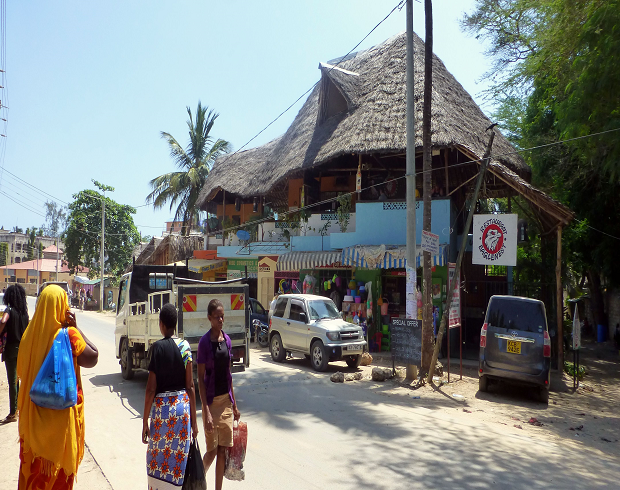
Sights and Sounds of Mtwapa

Nestled on the southernmost tip of Kilifi County, Mtwapa is a bustling kaleidoscope of cultures, economies and social systems. The Mombasa-Malindi highway splits the town into an east side and west side, with various activities happening along the kilometer long central business district. Dust devils constantly swirl around the unpaved sidewalks that front various commercial and residential buildings squeezed side by side. The population is extremely diverse from a cultural perspective, with a significant number of retired foreigners residing there. Business owners as well as workers come from the hinterland, which is confirmed by the various bus company offices dotting the town offering express buses headed all the way to Western Kenya directly from Mtwapa.


If you’re visiting Mtwapa, you are strongly encouraged to toss any sanctimonious morality crown you may be wearing into a dustbin as soon as you cross the Mtwapa creek bridge. The first thing that hits you is that there is a bar – or the more urbanized term “lounge” – at every corner. During the day, the desolate tables belie the heaving weight of the alcoholic and carnal aspirations of the previous evening’s revelers. The second stark discovery is that there are as many chemists as there are buildings in the town. I walked into two different chemists that were within 10 metres of each other. “What is your unique selling proposition that makes you stand out?” I asked as I couldn’t understand how any business could remain prosperous with such intensity of competition. Veronica, the owner of one of the chemists, was very forthcoming. “I came here from Bamburi where it was very slow. I’ve been in business for ten years and my customers are different from that chemist over there,” she pointed to the one directly across the street. “Each of us have our own customers, and the business is enough for all of us.” Jacob, her competing neighbor to the left, pretty much said the same thing. For both chemists, their fastest moving consumable items were condoms, the morning after pill and Viagra. Veronica chuckled as she reflected on this, “Huku ni Sodom na Gomorrah!


Further down the street is an open air vegetable market. I sat with Mary, who is the chairlady of the traders welfare society. The market is fairly cool, despite being out in the open due to the various trees lined up on one side. About 153 traders pay Kshs 500 a month to the owner of the land as “rent” and pay a further Kshs 500 a month to the Kilifi county government as license fees. Mary is slightly bitter as they were moved from their previous location on the main high street due to what was going to be a road expansion. As it was public land, they did not need to pay any rent and therefore had lower overheads. Their economic situation was further compounded by the opening of two large brand supermarkets within 300 metres of each other. The supermarkets now provide fresh vegetables and pre-cut sliced fresh fruit such as pineapple and melon, which were the mainstay of the vegetable traders. Consequently foot fall has significantly reduced and there is no particular  unique attraction to bring shoppers to the open air market. County government innovation is greatly required here, to help the traders build permanent stalls that provide various fresh ingredients and street food that would enable a memorable shopping experience for the vibrant town population. Mary shrugs her shoulders in the typical Kenyan resignation and acceptance of her lot in life. “Many women here are not sleeping at night worrying about how they will pay school fees and feed their children. I sleep at 11 pm and leave the house by 4 am in order to get to the Kongowea wholesale market before the good produce is sold out,” she explained in Swahili. She didn’t want any government handouts, just a fair trading environment in what was becoming an increasingly difficult way to do business.


Mtwapa is a town of stark contrasts and varying populations that ebb and flow during its 24 hour economic life cycle. The bars are desolate by day and vibrant at night, creating an intricate web of symbiotic business such as taxis and tuk tuks, late night street food sellers, recreational drugs and short term lodging options. The most outstanding social element of this town however emanates from the lack of a morality lens: various election cycles have blown over a peaceful and non-judgmental population. In Mtwapa everyone is accepted at face value and not skin color or tribal pedigree. There’s no time for that election tension nonsense out there: life is too short and must be lived within 24 hours a day.


[email protected]

Twitter: @carolmusyoka

Devolution, piracy and banking meet in Mombasa

[vc_row][vc_column width=”2/3″][vc_column_text]I spent the better part of last week down in Mombasa and arrived at three conclusions: firstly, devolution works. Secondly, banking, as we know it in Kenya will have to change or it will die. Thirdly, the ghosts of the Indian Ocean piracy rackets roam freely in Mombasa’s environs.

My visit to Mombasa was primarily to see the market and the distribution of a particular fast moving consumer good (FMCG) that I will hereafter refer to as product X. Since devolution shifted a hitherto unknown sum of money to the coastal counties, there was more money in circulation, as county governments became direct buyers of goods and services within counties. Of course the providers of those goods and services then have more cash with which to hire employees or buy supplies both of which activities means that funds are moving further down the food chain. Employees, for example, now have cash with which to pay rent, buy food and clothing items as well as not-so- discretionary items like airtime. Suppliers of biros, wheelbarrows or condom dispensers to the county governments have to purchase them from a wholesaler, or perhaps a supermarket and more funds go into the system. You catch my drift, I’m sure. Anyway, movement of product X (and many other FMCGs) has grown in the last two years since devolution occurred simply because there’s more cash in circulation. Now how that cash gets into circulation is another story, whether it is through a legitimate procurement or inflated “tenderpreneurship”. The upside is that Nairobi’s position as a primary market becomes increasingly diluted and greater revenue diversification occurs for the manufacturer. In short, it is not only members of county assemblies (MCAs) that have benefitted from devolution funds. Legitimate private businesses have found 46 wider markets within which to focus on. Devolution, from a business perspective, must stay. It is also noteworthy that the movement of product X has moved deeper into the coastal interior following the tourism downturn. As many of the hotels have been closed and the staff laid off, there has been an urban to rural migration that has led to demand for “urban” goods deeper in the coast interior. Distributors have therefore had to reconfigure their distribution routes to follow the market demand.

Which leads me to my second conclusion: the ever growing disruption of banking as we know it. Tracking the coastal distribution of this product in the last 8 weeks, the team found that cash payments had moved from 75% in the beginning of September 2015 to 37% by the beginning of November. Conversely, mobile payments on the Mpesa and Equitel platforms have moved from 17% to 54% in the same 8-week period. The reason? The core distributor had chosen to absorb the mobile payment charges as these were found to be eating into the razor thin margins of the downstream retailers, hence their resistance to using the Mpesa and Equitel payment platforms. If you have ever paid someone using your mobile phone and they tell you the now ubiquitous peculiar Kenyan lingo “na utume ya kutoa” you will know what I am talking about. During the same period, payments using the banking system remained flat at 8%. In short, retail business in the economy has been and will continue to be quick on the uptake for mobile payments as its incredibly safer due to zero cash handling and leaves an electronic trail that can be used to build an indelible, legitimate cash flow history for future borrowing needs. The obvious evolution will be for the absorption of the mobile payments cost further and further up the value chain, ending up at the manufacturer. With these costs absorbed as distribution costs, mobile payment systems will become the primary methodology for movement of money in the FMCG space and the winners will be the banks sitting on the Mpesa float accounts, currently numbering not less than ten as well as Equity Bank.

Finally, to my third conclusion: Driving through Nyali, specifically Links Road that has morphed into the commercial superhighway of a formerly quiet, upmarket neighborhood, one is shocked by the concrete jungle that has emerged. An architectural travesty has arisen, with tall, dull colored buildings juxtaposed with short, squat faceless structures that have numerous “For Sale/To Rent” signs hanging forlornly on their shiny fences. Anecdotal evidence points to proceeds of Somali piracy being used to put up the buildings. It is a clear case of “if you build they are not guaranteed to come.” There are even more empty apartment blocks in Shanzu, standing tall amongst the many boarded up beach hotels and curio shops that have called it quits during Kenya’s devastating tourism downturn.

Real estate continues to provide the fastest way to launder large cash based criminal proceeds. Buying land, then the building materials and labor costs are all cash intensive initiatives that gladly suck liquidity out of the hiding place at the bottom of the criminal’s mattress. Buying finished buildings is even faster. But the music stopped playing on the piracy routes, almost exactly at the same time as the terrorist attacks stepped up in Kenya leading to the economic downturn at the coast. It’s important to note that I am not saying all the buildings that have come up were funded via illegal proceeds, but those that were just added to the grief of the legitimately funded buildings: No tenants.
Which gets me thinking about why the same is not happening in Nairobi. Why does the commercial and residential building stock continue to grow? Outside of insurance type corporates flush with liquidity, and Chinese contractors importing cheap borrowed funds from their banks, who or what is fuelling additional building stock using cash rather than borrowing? It bears noting that overpriced wheelbarrows, biros and hospital gates continue to gain traction and if our the music ever stops playing in the corruption concert, the specter of empty buildings standing forlornly in Nairobi’s mid to upmarket addresses will undoubtedly follow.

[email protected]
Twitter @carolmusyoka[/vc_column_text][/vc_column][vc_column width=”1/3″][/vc_column][/vc_row]

Right of Reply from SMEs

[vc_row][vc_column width=”2/3″][vc_column_text]Last week I wrote the true story of Moraa, an enterprising furniture manufacturer that just wanted her government to help her grow her business locally as well as find new export markets. What I didn’t expect was that I would be opening the floodgates to responses from other readers who suffer from a similar angst as Moraa. For instance JGM penned:

“I have made a lot of noise from way back about these investor conferences which we spend a lot of money to hold yet we do not do the same for our own local investors. We do not invite them to county meetings to discuss how to grow together. Instead you have all manner of government agencies harassing them. You wonder what the definition of an investor is. Like hawkers, they don’t have to be arrested and their merchandise confiscated. Just charge them the levy they were supposed to pay and tell them to leave unauthorized space. But recognize they put up their own little money hoping to get a return. That is an investor. In fact the average hawker is one of the most intelligent forms of an investor, as he has to factor in a risk most other businesses don’t: deliberate government crackdown! If these county guys would call us we have roundtables and meetings and agree on a common agenda, we would gladly pay them more levies for them to deliver service.”

JGM does have a point. Hawkers are investors. They may be at the bottom of the food chain, but they are business people trying to make an honest living. It would be far more innovative to treat them as potential growth enterprises than to beat them down daily and view them as the nuisance they are perceived to be. KM is a young man who I once employed and he left as he was bitten by the entrepreneurial bug. At less than 30 years old, he and a friend set up a microcredit agency about five years ago. He exemplifies the face of the Kenyan hustler as he writes: “Carol, I’m so happy you wrote this morning’s article. The SME is struggling to get access; we are harassed by KRA at each and every turn. Literally Nairobi County camps at either of my two branches and there is always a new licence or ‘fee’ I have not paid! Maybe we should create a lobby for SME’s? I have several horror stories.” But clearly not enough horror stories to make him want to close shop because he is passionate about his business. For now he’s all about maintaining his entrepreneurial sanity.

Meanwhile, back at the Murang’a County ranch, KG sent me this missive: “Dear Carol, I am involved in the small-scale production of juice in Murang’a County with all intentions of scaling up. My frustrations can be summed up as follows:
I have been having the runaround with KEBS for the last four months and not because my product failed but just trying to get the certificate after paying Kshs 5800/=. KRA would want me to pay excise duty on the juice but they have 17 requirements for me to fulfill before they grant me a licence. Some are reasonable and straightforward but let me highlight a few of what I consider ridiculous (maybe they need to put on sneakers and see the work we are doing)
• Valid security bond for the protection of excise duty
NEMA certification
• Letter from the county government showing the factory is in a designated industrial zone.
• Licence fee of Kshs 50,000 for me to pay taxes!
My business is an SME for heavens sake! In view of the above what am I to do? Operate under the radar thus stifling my growth? Or do I remain small?
Kindly share some of this issues with the wider public and perhaps some sense may start prevailing.”

As Jeff Koinange aptly puts it, “You can’t make this stuff up!” Good people: these are real Kenyans who have ideas and capital and are willing to pay taxes if that will enable them to grow their businesses, employ more people as well as create a supply chain that grows with them and strengthens the economy. Please note that not a single one of them has requested for money in the now ubiquitous ‘naomba serikali’ fashion. MW writing from the heart of Nairobi’s hustler district sent in his two cents: “Hi Carol! Thanks for hitting the nail on the head on how to grow this economy in today’s Business Daily! I am a small offset printer on Kirinyaga road and I often wonder what those who run this country think about us small business people. It is obvious that these businesses employ the majority of Kenyans. If you cross beyond Moi Avenue the population increases in quanta and so do the daily transactions, albeit in small denominations! The government needs to do little things like making life bearable for the Jua Kali Mechanics by building them sheds, provide water, toilets, and perhaps organize them into co-operatives that could buy modern tools so that their work can graduate to industrial standards. My point is these top shots have no idea what Kenya is all about. They just think about foreign investors! If we are having problems investing in our own country how will foreigners fare?” I wanted to give MW a hi-five as he summarized every SME owner’s frustrations: if the locals cannot succeed in doing business at home, what makes the government think that a foreigner will fare better?
To their credit, two different chaps from the Export Processing Zone sent me lengthy emails to disabuse me of the notion that they are unhelpful. Both were eager to meet with Moraa and provide some assistance. I linked up Moraa with them promptly. Kenyans just want a hassle free local business environment through which they will build their enterprise on the back of their own capital and sweat. Government can do it.

[email protected]
Twitter: @carolmusyoka[/vc_column_text][/vc_column][vc_column width=”1/3″][/vc_column][/vc_row]