The Gulf Sneezed, We All Caught The Cold

On Saturday, February 28th, a friend of mine was transiting through Abu Dhabi via Etihad Airways en route home to Nairobi from a work-related trip in Malaysia. As she relaxed and sipped on a much needed cup of coffee, mentally preparing herself for a six hour transit session, Operation Eric Fury was launched. The United Arab Emirates was unwittingly dragged into a war and its entire airspace was closed immediately. My friend’s status changed from traveller to statistic, trapped in Abu Dhabi with tens of thousands of other travellers.

Air travel has always been the great connector, until war reminds us that geography is destiny and missiles don’t care about frequent flyer miles. When the first Gulf War started in 1991 codenamed Operation Desert Storm, Emirates airline was barely six years old, a plucky upstart with a handful of aircraft and ambitions bigger than its fleet. Qatar Airways didn’t even exist yet, it would only launch in 1994. Essentially, the Gulf as an aviation hub was not even in its embryonic stage and in those days London, Frankfurt and Paris still ruled as the transit hubs of choice for global travel. During Desert Storm, the impact on aviation was significant but contained. Western carriers rerouted around Iraq and Kuwait, insurance premiums skyrocketed, and nervous passengers avoided the region altogether.

Fast forward to 2026, and the Gulf is no longer a regional sideshow, it’s the main stage. Emirates, Qatar Airways, and Etihad have transformed Dubai, Doha, and Abu Dhabi into the beating heart of global aviation. In the year 2024, Doha, Qatar’s Hamad International welcomed 52.7 million passengers. In the same year, the emirate of Dubai’s international airport handled 92.3 million passengers, which was more than the population of Germany. The emirate of Abu Dhabi’s airport managed 29.4 million passengers in 2024 cementing the UAE’s collective dominance at 121.7 million passengers and the 3 airports at about 174 million passengers annually.

Bearing in mind that comparison is the thief of joy, one must put these numbers into an African perspective.  Nairobi’s Jomo Kenyatta International is on record as having 8.93 million passengers annually while Addis Ababa’s Bole airport had 12 million passengers in the same period. Respectable regionally, but a rounding error compared to Gulf giants.

So, when Iran unleashed missiles aimed at Qatar and the UAE, it wasn’t just a regional fever, it triggered a global aviation cardiac arrest. Airspace closures in Doha and Dubai brought transit traffic to a standstill. Flights from Sydney to London, Mumbai to New York, Nairobi to Paris, all suddenly stranded or rerouted. The Gulf hubs that once symbolized seamless connectivity became chaotic scenes of grounded aircraft and thousands of stranded passengers. Business continuity planning and crisis management scenarios went into full effect. Three years ago, I was transiting through Dubai and the airport had been shut down due to a rare desert phenomenon called rain generated flooding. All the passenger handling airport staff, to a man, fled the scene leaving screaming passengers frustrated, despondent and in various stages of grief as we came to terms with the fact that we had pretty much been abandoned. I cannot imagine what Dubai looked like on February 28th, actually scratch that, I can. It was probably close to a rugby pitch, with haunting tunes of stranded globalization playing on the speakers.

In 1991, governments mostly advised citizens to avoid the Gulf. Evacuations were limited, and airlines bore the brunt of passenger management. In 2026, governments have had to act like emergency travel agencies. India airlifted thousands of stranded citizens from Dubai. European governments scrambled to reroute nationals stuck in Doha while hotels in Dubai and Doha were requisitioned by their governments to house passengers. It was less about “customer service” and more about “disaster relief.”

The lesson? Global aviation has become dangerously dependent on a handful of Middle Eastern hubs. All the European premier football club sponsorships, as well as Formula One, cricket and other high eyeball sports sponsorships have paid off. Emirates, Qatar and Etihad are now top-of-mind airlines for the global traveller. When missiles fly, the ripple effect is not just regional, it’s planetary. Passengers in Johannesburg, Singapore, or São Paulo who had planned to transit through the Middle East have found themselves stranded in those cities because Tehran decided to lob hardware at Doha.

Air travel, once the symbol of globalization, is now the hostage of geopolitics. And while governments today are far more proactive in rescuing stranded travellers than they were in 1991, the fact remains: when the Gulf sneezes, the world catches a cold. My friend eventually got a flight out of Abu Dhabi last Thursday and landed safely in Nairobi, six days after her original date of travel. Operation Desert Storm showed us that war could inconvenience aviation. Operation Epic Fury is showing us that war can paralyze it.  And peace, like legroom, is never guaranteed.

X: @carolmusyoka

The Nitpicker Podcast

Road Discipline as Personal Governance

Eleven years ago, a client invited me to provide training to their Rwandan board of directors at an offsite location. I landed in the beautiful city of Kigali and went by road to the gorilla trekking resort town of Gisenyi. Nestled on the shores of Lake Kivu, Gisenyi lies 154 kilometres northwest of Rwanda’s capital and is a bustling border town and gateway into the DRC through Goma on its lakeside flanks. Due to the myriad hills that dot the volcanic landscape of the region, the drive takes twice the time it should, at least three hours of meandering through rural villages on a relatively good two-lane tarmac road. About an hour to approaching the town, a passenger tossed out a plastic bottle of water from the backseat of the vehicle that was in front of us.


Seated in front of the vehicle I was riding in, I watched as our driver became visibly agitated. Pulling over to the side of the road, he said to me, “Look at this idiot just throwing rubbish on the road!” He got out of the vehicle and picked up the offending piece of trash, threw it into the boot of our car and we proceeded on the journey. If you are a Kenyan that has ever visited Rwanda, you know how astonishingly clean and disciplined that country is. It is every single thing that Kenya is not. Yeah yeah, I know that comparisons are the thief of joy and all that motivational talk blarney, but my fellow Kenyans, only God can help us now.


Umuganda, a traditional Rwandan practice of community work or community service, was officially reintroduced by President Paul Kagame as a part of his administration’s efforts to promote reconciliation, environmental cleanliness and community solidarity. Under Kagame’s leadership, Umuganda has become a monthly event where citizens participate in various community service activities on the last Saturday of each month, a key one being cleaning the environment around one’s neighborhood. The initiative aims to foster a sense of community and collective responsibility among the Rwandan population, contributing to the country’s post-genocide reconstruction and development efforts.

What I like about the practice is that in his wisdom, Paul Kagame looked for the least expensive and most equalizing event that would get citizens out on the street undertaking a unifying activity. More importantly, he connected the dots that by creating discipline around cleanliness you started to get the citizenry unconsciously eschewing chaos. Now across the Rwandan border, due northeast lies a country heaving with 50 million citizens most of whom couldn’t describe what a public garbage bin even looks like. For the incredibly undisciplined driving citizenry of that same country, clearly marked road lanes are a suggestion. A dotted white aberration designed by road builders to break the black monotony of tarmac.


Now when you introduce these single lane natives to a dual carriageway, you blow their collectively simple minds. A good example is the newly built Kenol to Marua highway that extends past the end of the multi lane Thika Highway northbound to Nyeri. No one educated the driving masses past the town of Kenol that the left lane is for slow moving traffic. Neither were they consulted. There are multiple signs that dot the highway reminding drivers to keep left unless overtaking, but in the usual Kenyan mindset, those signs are meant for the other guy, surely not me. So, what is supposed to be a smooth drive is often curtailed by a veritable halfwit who drives on the right lane at exactly the same speed as the slow-moving truck correctly situate on the left lane. And sees absolutely no problem with the long line of incensed drivers tail backed in his rear-view mirror.

The more interesting drivers are those residents of the numerous villages along the highway who were not consulted about the road design. Consequently, in days past they were able to simply drive the hundred or so metres to Mama Gathoni’s shop to drop off a bag of beans enroute to Sagana to do some banking. The dual carriageway means that they now have to drive at least 3 kilometres to get to the U turn that will bring them back to Mama Gathoni’s shop. But that is too much, surely. It’s just easier to make the sign of the cross and drive against oncoming traffic on a national highway, smiling at irate drivers the whole time. If you introduce us natives to a newfangled road, like the road to Singapore for instance, you must be ready to educate us on how to use it. After all, we were not consulted.

X: @carolmusyoka

The Nitpicker Podcast

Communication 202

Last week’s article regarding a communication snafu seems to have triggered a few readers who, like me, get irked by poor communication. Take Tom, who shared his experience and was happy for me to publish the same here:

“I’ve just read today’s article and wow, you nailed it. The advent of the internet and social media (short message services included) has completely changed how we communicate and not always for the better. “Sospeter’s” case is a perfect example. But honestly, there’s an even worse form I see often in the corporate world, especially from junior colleagues. It usually looks like this:

Dear Tom,
Please note the below.

And “the below” turns out to be a long email thread with multiple attachments, sometimes even parallel threads, with no summary and no indication of what action is required. For those of us who prefer crisp, clear communication, it is really frustrating!”

The least important and most unpleasant task for Tom’s insanely busy day job is trying to decipher and unravel long, unwieldy emails from juniors trying to a) Cover their backsides, b) Seek assistance to enable them to cover their future backsides or c) Giddily illuminate a very exposed colleague’s backside.

But first, let me put on my mature professional hat here and say that we must extend grace to junior colleagues. To be honest, I don’t know that anyone teaches new hires how to write emails. They get a desktop or laptop computer, an email address, a chair and a desk and are asked to start working. There is likely a presumption that a new employee’s form two English class session on how to write a formal letter covered how to have basic business communication etiquette.

Consequently, many employees are set up to fail through an omission in induction. On behalf of Tom, here are a few bits of completely unsolicited advice for young employees.

  1. Subject Heading Is Not A Suggestion: The purpose of the subject is to allow your recipient to know fairly quickly what your email is about. We can’t be using “Purchase of new laptops” as the subject heading for a client issue that has blown up in your face because you were too lazy to start a new email thread and just hit reply to the last correspondence we shared. Three things are likely to happen when your recipient sees your email. Firstly, they will skip over it as the topic has been discussed to the Nth degree already. Secondly, they are even more bored out of their skull from receiving incessant emails from you, so they have set a filter in their email program to push your emails to the “Reopen in January 2026” email folder. Thirdly, since you have insisted on using all caps to write all your subject headings and in email etiquette, using all caps is equivalent to shouting, seeing PURCHASE OF NEW LAPTOPS once again will only irk your recipient, who is looking to have a peaceful day.
  2. One Swipe – That’s It: Your email should not extend beyond one swipe if being read on a mobile device. No one has time to read a dissertation on what the issue is. Your subject heading already said “Unhappy Client: Erroneous Interest Calculation”. The body of your email then states the name of the client, the issue, when it arose and your proposed resolution. Details such as the miscalculations can be attached and a reference made to the attachment. If your recipient has to scroll down more than once, you’ve lost them. Why? Because they’re reading your email, having found 100+ other emails in their inboxes and they have to decide which ones require action now, and which ones are for sweeping into the “Reopen in January 2026” folder. Help your recipient to help you by making your email easy to understand and action.
  3. Reply All – At Your Peril: I once worked in an organization that requested IT Help Desk disable this setting entirely. Why? Because someone from Human Resources would send an update regarding the annual staff retreat. Jane from Client Services would reply to all and ask, “Where is it going to be?” when the blasted location was on line 5 of the email. HR would then reply all to the reply all since they were not sure whether Jane was uniquely email blind or everyone else didn’t quite get it either. Jane would then reply all to the reply all to the reply all and say “thank you” when she only meant for HR to get it. 1800 emails and a catatonic email server later, the CEO of the organization picked up the phone and asked, on behalf of every bored skull in the organization, to ban Jane’s reply all privileges, in fact, heck, ban reply all for everyone while they were at it. The benefit of this reply-all war was that, consequently, every email writer had to be very deliberate about who was in their recipient list before deciding to include them.

Have a communicative week ahead, my friends!


X: @carolmusyoka

Nitpicker podcast

Communication 101

Social media has turned communication into truncated sound, video and word bytes. I recently received a direct message (DM) on LinkedIn from a complete stranger and had no idea how to respond. I then remembered that I often use this column to educate, inform and on the occasional chance, entertain. The complete stranger, let’s call him Sospeter for now, may have skipped the class on how to effectively communicate, so I pray he reads this column to get some lessons. Sospeter’s message said: “Hey Carol. Please have a look at my profile and advise.”

First off, who is Sospeter? I have no clue. Secondly, why has he chosen me, out of the 1.1 billion LinkedIn users worldwide? I also have no clue. Thirdly, why does he want me to look at his profile? You guessed it, I have no clue. Fourthly, where is his profile? Well, I suppose he wanted me to stop what I was doing, double click on his picture and then fall into the social media rabbit hole of doom scrolling a stranger’s profile. Fifthly, what advice was he seeking from me? Insert loud sigh here: I. Do. Not. Know.

For those that might be the only visitors in Jerusalem, LinkedIn is a social media networking platform for professionals. It primarily focuses on connecting business professionals and facilitating career development. Consequently, it is a great way of engaging in a professional manner as there is no room for career limiting insults or garbage spewing radicals who hide behind faceless pseudonyms. Users post their online resumes, connect with other professionals, apply for job openings posted by employers and even post or share articles to promote thought leadership.

Like most social media platforms today, LinkedIn does not come with a user manual. You just have to navigate your way around there, treading carefully to ensure that you don’t trip over an embarassing miscommunication landmine in the very public view of your current and future employer. I find the engagements on the LinkedIn platform much healthier than on the artist formerly known as Twitter, because users are more careful in how they engage as they are showcasing their thought process in a very exposed and attributable manner.

As I woke up on the generous side of bed this morning, I decided to click on Sospeter’s profile. He is a regional manager in an East African organization and a degree holder from a top university in Kenya. He’s not a freshly minted graduate, since his profile shows his first job started in 2005. That should put him in his early to mid forties in terms of age range. He’s been around the sun often enough to know a thing or two about a thing or two. But maybe not the effective communication thing. So I will rewrite Sospeter’s message for him, to help him slide into the “DMs” of other LinkedIn users effectively. Here :

Hey Carol, I hope you are keeping well. [A basic attempt to care about how I am doing, Sospeter, will be appreciated] I follow you on LinkedIn as I enjoy your regular posts about quantum mechanics, particularly your views on wave particle duality. [Ok I have absolutely no clue what that is, but ChatGPT says it’s very tough. The point is, Sospeter you should demonstrate you know or care a little about what I profess to do.] I am reaching out to you as I see that you are going to speak at the Quantum Mechanics Annual Conference in Geneva later this year. [Context is imperative Sospeter, so that I can know why you chose me out of the 1.1 billion LinkedIn Users and, by this time, my curiosity will be piqued]. I wish to attend the conference and would love your advice on how I can frame my profile in a manner that will get me invited into the exclusive event. [Sospeter, this helps me to know what the aim of your random request for a profile review is.] Please find the profile attached for your ease of reference [You see how I don’t have to hunt all over the regional map for it Sospeter?] I thank you in advance for your kind attention. [ A little gratitude and buttering me up won’t hurt Sospeter, particularly since I don’t know you from a jar of jam.] Regards, Sospeter.

Chat GPT says that LinkedIn plays a crucial role in the modern professional landscape, making it an essential tool for anyone looking to advance their career or build a professional brand. To all the Sospeters out there, please use it as the professional tool it is, and not the roadside socializing app you think it might be.

X:@carolmusyoka

Nitpicker Podcast


Shout Out to Shoat Farmers

I recently arrived at the Jomo Kenyatta International Airport and stood by the luggage carousel to wait for my bags to emerge from the terminal’s bowels. As is the norm, many other passengers stood near the carousel as well. The bags began to be ejected and I noticed that the ladies were struggling to lift their bags off the carousel as it is bordered by a high protective rim to keep the bags from spilling onto the ground. Not a single man attempted to help them. I challenged two gentlemen who were standing next to me as I leaned forward to help one lady, asking them how they could stand by and watch two ladies struggle to lift the bags. Needless to say, the two gentlemen stepped up to the plate immediately, and promptly assisted all the subsequent female attempts to get luggage from the carousel.

I am not trying to evoke a gender war, because I have also seen women walk past travelling mothers trying to balance a child on their hip, pushing a pram, carrying heavy jacket and two carry on bags. In that case I stopped to help the visibly frazzled mother who was trying to fold and give the pram to the airline staff at the point of boarding the flight.  We all seem to be blissfully immersed in ourselves, not noticing the person beside us that may need 10 seconds of assistance to hold or lift something.

Let me tell you what else needs heavy lifting in this country: farming, shoat farming to be more specific.

If you’ve ever flirted with the idea of rural romanticism—think misty hills, bleating goats, and you in muddy gumboots looking indomitable—allow me to gently burst your rosy bubble. Rearing shoats (sheep and goats) in Kenya isn’t some rustic ode to Mother Nature. It’s a maddening dance with disease, market chaos and enough red tape to gift-wrap Parliament.

Let’s start with the goats. These little four-legged anarchists possess the uncanny ability to break through fences designed by NASA engineers. They nibble at everything from plastics,  your recently planted pine tree seedlings upto and including your will to live. They then have the audacity to develop bloat and demand veterinary intervention that costs more than your last electricity bill.

Sheep, on the other hand, are walking soap operas. Prone to every illness imaginable from foot rot to parasites so prolific they could stage a national election, they require the emotional and financial investment of a small army. Parasites like Haemonchus contortus (roundworm) affect nearly 70% of small ruminants if not treated routinely. Roundworms should actually have their own constituency and allowed to vote given their prevalence. Consequently, a shoat farmer has to regularly deworm their flock and keep switching up the brand to avoid the animals developing resistance.

Let’s talk numbers. According to the Kenya National Bureau of Statistics livestock census, Kenya has over 27 million goats and 17 million sheep as of 2024. But here’s the kicker: over 60% of smallholder farmers still rear indigenous breeds that struggle with disease resistance and low productivity. Indigenous breeds such as Galla goats and Red Maasai sheep are sturdy but offer lower meat and milk yields. Feed costs have risen by an average of 40% over the past five years, and vet services—if you can even find a licensed practitioner—can eat up 20–30% of livestock revenue annually.

Despite it all, there are many pockets of triumph. A few savvy farmers have turned to improved breeds, strategic feeding and modern shelters with roofs that don’t cave in during the April rains. There are hundreds of self-produced, amateur YouTube videos teaching farmers how to build shelters, what to feed their animals and how to care for them. I have to give a shout-out to my Ugandan and Zimbabwean farmer colleagues who have extensive content in this regard and from whom I have learnt a whole lot. Other shoat breeders run farmer groups via Whatsapp with a lot of information freely shared on those forums and invite farmers to come to their farms to learn.

So if you’re considering entering the livestock arena, do it with eyes wide open and boots firmly laced. There are no heroes in capes waiting to help you lift the weight of your ignorance. The real heroes are the gritty farmers who keep showing up despite the madness and the wannabe farmers who dive into the livestock arena ignorant but armed with optimism, stubbornness and a prayer!

The Nitpicker Podcast

Comprehension Is An Art Not A Science

The dictionary definition of the word comprehension is “the ability to understand something.” It is also defined as the setting of questions on a set text to test understanding, as a school exercise.” You must surely remember that part of your high school English studies. Where you would be given a passage to read and then a set of questions would be asked to determine whether you could figure out that an adolescent Tom hastily emerging with adolescent Mary from a bush would certainly end up with a Tom-let nine months later.

Last week I posted on LinkedIn a request on behalf of a friend looking for an accountant. It went something like this:

“A friend of mine in the legal services industry is looking for an accountant. This person must be a full CPA (K) and have a minimum of 5 years working as an accountant in a commercially driven private sector organization. Not the NGO sector, not government or parastatals. Private sector only please.
A couple of polite and very humble requests based on what I have seen someone else who made a similar post go through:
a) Please DM me if you KNOW such a person. Please do NOT DM me if you ARE that person. My friend wants referrals, not the actual job seeker.
b) Please refer someone you have WORKED with and can therefore vouch for their work ethic and standards. Please do NOT refer your relatives, friends, neighbours, chama mates, local village cattle dip outgoing treasurer etc. If that person has held 5 accounting jobs in two years…well…..don’t bother sending their profile.”

For purposes of those not on social media, DM means direct message. DMs are also a slow, torturous and very excruciating way to die slowly from reading sometimes inane and outright ridiculous privately sent communications on a public platform. Within an hour of posting the message, it quickly became apparent to me that many of us see what we want to see. In this particular case, a number read the first sentence and came to a screeching halt at the first fullstop. The words “looking for an accountant” was all that was needed. Consequently, the direct message inbox was flooded with ‘I am the one your friend is looking for’ messages.

Having sifted through those, the next set of responses to deal with were the ones who, at the very least, got to the first qualifier of recommending people that they know. Many of these just tagged their friends who had accountant qualifications. Not the ones who had the specific work experience requested, just an accounting qualification would suffice. Then of course, a call to employment action would be incomplete without the “my brother/sister/friend is an accountant” messages also filtering through.

Eventually the readers who quite likely scored an A ratings in their English comprehension exam emerged from within the communications clutter. These readers had professionally worked with the desired accountants, stated where and when such engagement had occurred and recommended their colleagues accordingly. These were about ten per cent of the total volume of responses received.

I know it’s a tough job market and you’re probably saying that people are just “shooting their shot” and trying for jobs regardless of the outcome. One reader, a senior accountant based on their self description, strolled into the comments and wondered out loud, “When I see a lot of demands, I smell a rat. But that’s just me.” Which comment has triggered today’s column. Yes, one should indeed smell a rat. It’s a frustrated, exhausted employer of a rat. The employer on whose behalf I posted the message has seen enough recruitment candidates who look good on paper, interview brilliantly and then proceed to be an utter train smash of an employee when hired to do the job. That employer knows that getting a candidate who has been endorsed by someone who has worked with them is likely to be a step above doing an open call for candidates who are a mix of good, bad and downright unemployable. That rat of an employer has experienced employees with an incompetence that beggars belief and an immeasurable scarcity of integrity.

It takes an inordinate amount of an employer’s time to deal with staffing issues. Time that the employer could have spent on thinking about the business, getting new customers, serving existing customers well and generally being a productive human. Every hour spent working through an errant employee’s issue is valuable time lost that can never be recovered. So yes, the two demands for knowing and working with the recommended candidate may be eyebrow-raising, but a simple comprehension of the last few paragraphs here will explain their genesis.

The Nitpicker Podcast

Revenue Allocation For Who

Deep in the windswept volcanic plains of the majestic Laikipia county lies a few acres of land on which I rear sheep and goats or shoats as they are collectively termed. My neighbors are primarily subsistence farmers, although a few immigrant fellow city slickers have recently taken up farming residency in the area. Having grown my shoat flock slowly but consistently in the last few months, I decided to put up a more permanent structure for the animals and hired the services of an architect to design something for me. Being the consummate professional, he advised that we needed to submit the structural drawings to the county government to get approvals.

After muttering under my “Kenyan-accustomed-to-shortcuts” breath that I didn’t see why the county government needed to approve a small livestock structure, I submitted to the rules and waited. I received a very nicely packaged bill for rates, arrears for those rates and penalties from the Laikipia County Revenue Board. I did a double take. I’m sorry, what now? This was agricultural land, about forty rocky and black cotton soil filled kilometres from the nearest town, being Nanyuki. My rudimentary understanding of rates is that they are fees levied by a county government for provision of services such as sewage, roads, lighting, garbage collection, water and whatever other quality of modern life comforts that its citizens are supposed to enjoy.

I sputtered in indignant rage. “What do you mean, I have to pay rates? This is farm land, nowhere near the municipality!” The architect was adamant. We would not get our approvals unless the rates, arrears and penalties were paid. I started to do some research and discovered that mine was not a unique position. Since county governments in Kenya are tired of being cash strapped due to the perennial revenue allocation kerfuffle with the national government, they have resorted to finding ways and means of raising their own revenue.

Charging rates, which is well within their ambit, has become the latest way of generating income to fund their existence. So what if majority of communities outside a town are rural? They are breathing county air and are purportedly enjoying county services. Or are they? The Kenya National Bureau of Statistics has been doing God’s data work for decades. In a 2022 Laikipia County Statistical Abstract, which is the most recent specific data research I could find about my blessed adopted county,  total revenue for the county was Kes 5.9 billion, of which 70% or Kes 4.1 billion came from the national government. Land rates made up about 7% in the 2022/23 financial year accounting for about Kes 74 million out of total county sourced revenues of Kes 997 million. I can see why they would lick their chops at the thought of increasing revenue from rates. My farm is in the administrative unit known as Laikipia East. With a population of 109,063 or 34,161 households, I was amazed to find that the KNBS data claims that 56% or 19,334 households have access to piped water while 23% or a paltry 7,933 of households have sewer access. The assumption I am making here is that these services are enjoyed by those close to Nanyuki town and certainly not my community which the same statistical report describes as having rainfall in the range of 500 to 700mm a year with soils that don’t drain well and high evaporation rates. We. Need. Water.

The nearest water scheme to my farm, Tigithi Water serves a mere 718 households, of which none of my neighbors are part of. Our village roads are part murram and mostly black cotton cattle tracks that convert into World Rally Championship grade competitive sections the minute 2mm of out of the 500-700mm of annual rainfall appears. Sewer? What’s that? Pit latrines are the order of the day in my rural neighborhood. But we have now been folded into the wealth generating ambit of rate payers. Look, I can probably rub together a couple of coins and find the funds to pay, quibbling aside. But many of my neighbors cannot. Plus they are not even getting the public amenities that they are purportedly being charged for.

The impact of this hit to rural households will take a while to be felt as you will only feel it when you go to get services related to your land like building approvals, sale transfers or property sub divisions. But if you do have a little patch of land sitting upcountry somewhere and you’re thinking you are safe, you are not. This revenue collection system has been rolled out by other counties as well. Years of starvation from county revenue allocation is now biting us where it hurts most. Maybe this might be what slows down the land purchasing frenzy Kenyans are famous for.

Click ME for the Latest Nitpicker Podcast Episode

Are Interviews An Effective Process

Kevin went for a job interview, and the interviewer said they were looking for somebody who is responsible.

Kevin said, “I’m your guy!” The interviewer asked why.

“Well, at my old job, if something went wrong, something went missing, or somebody got hurt, they always said I was responsible.”

In my professional working life over the last 25 years, I have sat in on countless interviews. In a handful , I was the person being interviewed but for the most part I have been sitting across the table as an interviewer. An interview is an excruciatingly short and painful attempt at deciding if an employer will enter into a contractual relationship with someone who could end up being a resounding success or an unmitigated disaster of an employee. The prophetic powers of deduction, foresight and clairvoyance all come to play in the one hour that is allegedly needed to determine if a candidate is the right fit.

An effective interview technique is silence. After asking a question, the interviewer goes completely silent, not even proferring the conversational crutches that encourage discourse such as “mmm-hmmm” or the occasional head nod or a penetrating eye gaze that denotes interest and engagement.  Nature abhors a vacuum and interviewees abhor silence, so they typically fill the silence with talk. And talk. And more talk. In the process of this excessive verbal dysentery, an interviewee will reveal a lot about themselves, some of which might be extraordinarily revealing and much of which will be utterly useless.

Due to natural social pressures to keep dialogues going, many people do not know when to keep quiet or to allow silence to sit naturally in the conversational space. Keep three things in mind: Be present. Be still. Breathe. What does being present mean? It means being aware of the effect that you have on the interview panel. Are they engaged, meaning are they having a two way conversation with you? Are they disengaged and looking outside the window as you speak or doodling on a writing pad? Or, God forbid, displaying the worst form of disengagement by languidly scrolling on their phone? There are numerous non-verbal cues that demonstrate disengagement such as looking at one’s watch, tapping fingers on the table or seeing an interviewer’s eyes glaze over and become fixated on a spider web at the far wall.

If you are asked a question, please don’t assume that you have an abiding contract with time. Keep the answer short and to the point. If you’re still answering the question five minutes later, you’re either addressing the Soil Analysis Scientists Annual Conference or you’re leading your audience to catatonic boredom.

Five minutes sounds extremely short, right? Put your phone in front of you, turn on the clock app and do a countdown of 5 minutes. Do absolutely nothing. It will seem interminable. Now turn on the television or radio and start the timer again. If it’s an interesting show, you may not even notice the time go by. If it happens to be a boring show or speaker, I implore you to plough through all five minutes. All 300 seconds of it without the luxury of pressing a mute button or switching channels. Now ask yourself, when someone listens to me speak, does it sound like  300 savagely agonizing seconds or does time pass by so fast that the audience doesn’t even notice?

The best interviews are the ones that become a conversation. The interviewer follows up an answer with an anecdote or past experience they themselves have had and the session turns into a long but revealing conversation about the candidate’s experience based on the interviewer’s viewpoints thrown in. The worst interviews are the ones I have done on virtual platforms like Teams or Zoom which do not give the candidate the benefit of picking up on non-verbal cues. Candidates drone on and on, despite the fact that the confounded device they are using has a clock right at the top or the bottom of the screen. Which leads to the second step I raised before. Be still. When an interviewer asks a question, take a mental step back. Repeat the question in your mind. Form a framework for your response. Take the third step, which is to breathe. Then answer the question. The interviewers are there for you, they have set aside time just to speak to you. So they will indulge you in your requirement to be still, breathe and then answer. Especially if it means they will get a response inside of five minutes. Finally, always remember that silence is used as a trick by both interviewers and criminal interrogators to make you blab incessantly. Don’t fall for it.

X: @carolmusyoka
The Nitpicker Podcast

From Farming Travails To Farming Victory

I am a shoat farmer. Sheep and goats are collectively farmed as shoats. Following the drought of a few years ago, I learnt the hard way that to be a successful shoat farmer you need to be food secure for at least a year. What this means is that you should have food storage for your animals to keep you covered for the periods where they cannot get enough food from grazing out in the fields. So I bought a 1.5 acre field of ready-to-harvest-maize last year and chewed  character development for a week of Sundays thereafter as I learnt the hard way about what it would take to convert that maize into a long term food bank.

Last September, I wrote the following about that harvesting experience:

“Casual laborers were hired and they took an entire day to harvest cut the maize stalks. The full day rate for local casual labor culture requires the employer to provide tea and a scone at 10 a.m. and a meal at lunchtime. If you don’t provide the meal, well, you’ll struggle to get another crew the next day. Contrary to the popular view that labor supply outstrips demand, in my little village in Laikipia you have to give a 48 hour notice to find a crew as there are quite a number of my fellow Nairobi residents doing large scale farming around the area.

Then it got interesting. The harvested maize needed to be transported to my farm and I would have to hire a lorry. The only one available was a decrepit, dilapidated truck that was literally held together by screws of hope and strings of prayer. David, the truck owner, was a cantankerous, foul mouthed diabetic who had no time for the laborers’ requirements for tea and lunch breaks. Due to the condition of the truck, David would drive painstakingly slow, ambling along the 5 kilometre distance with a repurposed dry maize cob as the gear stick holder. He complained every single minute for the two days it took to load the field of maize, transport it and unload it at the farm. On the second day, he pulled my sunburnt hand to the shade of a tree and told me that I was motivating my laborers the wrong way.

According to him, since the laborers were being paid a daily wage, they would take their time to load up the truck. Next time, he growled, I should pay them per truck that was loaded and I would see a change in their efficiency. Once the maize was offloaded, it had to be chopped by a thresher and poured into a pit to prepare it as silage. The thresher was powered by the engine of a tractor and the maize was manually fed into it by two laborers. Three others stood at the thresher exit to distribute and compact the chopped product in the pit . This took another three days. The thresher operator pulled my other sunburnt arm under the shade of a tree and told me that the laborers were moving too slowly for his liking. In future, I should  thresh the maize as it was being harvested and pour the chopped product straight into a tipper truck. The truck would then come and tip the product straight into the silage pit. This would cut both labor and transport costs significantly. Thresher operator was basically validating what cantankerous David had said.”

Because my patience and my telephone farming pockets had been worn thin, this year I decided to listen to the advice given. After planting my own acre of maize, we found a one size fits all resource. This friendly gentleman  – let’s call him Gabriel – comes with his own laborers who cut the maize, feed the stalks through a thresher that has an overhead chute straight into the back of a tipper lorry that then transports the cut silage straight to the storage site where it is compressed using Gabriel’s tractors. Do you see how the entire process fits into one sentence? It cost me 39% of what last year’s experience cost and was executed in one day. I want to tell Cantankerous David and Thresher Operator that they were one hundred percent correct, I appreciate their generous advice and won’t be needing their labor intensive services again.

Meanwhile Gabriel has to be booked way in advance, as his order book is populated by other Laikipia farmers who saw the commercial light a long time ago. Are you a telephone farmer fed up with local labor shenanigans? Do your research assidously, the solutions are right there on the ground.

X:@carolmusyoka

YouTube: The Nitpicker Podcast

The Long Road to Online Freedom

A few months ago, I needed to get something done on the Government of Kenya’s E-Citizen portal. A few clicks here, some double clicks there, and an M-Pesa payment or two later, and the deed was done—all at, please pardon the cliché, the click of a button. I was reminded of the tortuous route that government agencies had to navigate to get here.

Many years ago, I sat on the board of one of the pioneer government agencies to get on board E-Citizen. Every single ball was thrown at us as to why we could never go electronic, and we were not ready to confront the contorted face of resistance so brazenly. We were called by the Government Digital Payments team to a meeting to explain why our organization was stalling.

Some mid-level managers from the operations team, as well as the irascible head of IT, sat across the table from the Principal Secretary of the Ministry, some of the board directors, and the Digital Payments team. Upon being challenged as to why they were stalling, one manager proceeded to sneer and shouted—yes, actually shouted—at the Digital Payments team, saying that online processing could never work. We were taken aback, as there was absolutely no fear or trepidation in her voice. Manual processing—and its attendant inefficiencies—was here to stay whether we liked it or not. The head of IT, who it was apparent couldn’t differentiate an emaciated French fry from a microchip, at least had the temerity to look worried, most likely because his incompetence was split wide open for all to see. He meekly agreed with the shouting manager, all the while his eyes darting around faster than a cornered rat looking for an escape.

We didn’t need a genius to tell us what was going on. We were looking directly at the faces of the historically famous Giriama freedom fighter Mekatilili wa Menza and her resistance warriors. We finished the meeting with some irreducible minimums drawn in the sand. A few weeks later, the pilot project for online processing hit a snag, and customers could not make payments to complete their service requests. The CEO went to the operations team, determined not to leave the shop floor until the root cause had been identified.

A step-by-step analysis of the servers revealed that the simplest tool of resistance had been effected. The main server through which payments were being processed was not powered on. Upon deeper investigation, including lifting the power cable and hand-holding it to the power source, the team discovered that someone had removed the power plug from the electric socket. After all, no weapon formed against the resistance was going to prosper! Why the server room was not a securely locked and restricted area in the first place was the million-dollar question asked of the artificially intelligent IT lead.

Today, E-Citizen boasts over 16,000 services from more than one hundred government ministries, counties, departments, and agencies. For each service, there are untold stories of the blood, sweat, and tears of the teams who worked crazy hours to get the operating system stable enough to process transactions in real time. Others sat for hours to understand the granularity behind government processes and translate that into the software code that enables online processing of that service and its subsequent payment.

For our entity, we moved from annual cash collections of KES 300 million to about KES 1.2 billion within three years of switching to E-Citizen. This quadrupling of collections was not without many more of the Mekatilili battles because, as we learned, a bureaucratic inefficiency is often directly correlated to a personal financial inefficiency for someone along the value chain. In October 2024, the National Treasury Cabinet Secretary John Mbadi revealed that by the end of the financial year in June 2023, the government had collected KES 26.4 billion from E-Citizen. However, this number almost quadrupled to KES 127 billion by June 2024 once the government moved to a single payment number and added thousands more services.

The financial benefits are eye-watering. But what’s seldom told are the painful battles that were internally fought to get the government to that level of efficiency over the last decade. I doff my hat to the indefatigable digital players who fought the resistance!

X:@carolmusyoka

The Nitpicker Podcast

Character Development From Farming

Joram (not his real name), my next-door neighbor at my Laikipia County farm, is the primary source of my miseducation in character development.  A retired civil servant, Joram previously spent his days at the local shopping centre doing what some thirsty retirees do. A few months ago, his adult son decided to provide positive choices on where Joram should spend his time by building him an animal pen. Joram Junior, a full time resident of a neighboring county, then purchased 10 goats and 30 chickens to ostensibly keep Senior busy.

What Junior had not factored into his calculations is that the livestock needed steady supply of food. Joram, being of an elderly disposition, has no time to take his new business assets out and about to look for pasture, nor is he inclined to buy poultry feed. So the livestock did what any animal would do under the circumstances. They looked west of the porous fence and found my farm, where my livestock were living in perceived food nirvana. Up until last week, my sheep and goats found themselves knocking heads with the neighbor’s goats as they ate and, on top of that, the chickens would fly into the goat pen and luxuriously pick out  the maize kernels from the mixed feed in the troughs. Meanwhile,  Joram is innocently playing the “I am both too elderly to be chastised and too tired to look for food for my livestock ” game and a visit to the local chief’s camp to arbitrate this neighborly dispute is in the offing. That’s if I don’t slaughter those confounded chickens first for a month of roast chicken dinners.

I share this story not for the sake of evoking sympathy, but because livestock farming has a number of primary ingredients for success, the largest being food security. If you cannot provide a consistent and safe source of food for your animals all year round, you will shed premium tears. Consequently, commercial livestock farmers vertically integrate by growing feed crops such as sunflower, sorghum, maize silage, napier grass amongst others to provide the required level of nutrients required to successfully increase the yield of animal byproducts such as meat, eggs and milk.

The domestic livestock farmer who keeps a few sheep and goats, one cow for milk and a few hens for eggs may have a different view on long term sustainable animal feeds. He has more things to worry about like eking out a living from the small farm for him and his family. In my farming corner of Laikipia, quite a number of my neighbors are doing large scale commercial farming. The only reason I know this is because when looking for casual laborers, we have to give a crew at least 48 hours’ notice. Demand for casual labor is fairly high, which then impacts the labor pricing, which then impacts the ability of the subsistence farmer to get extra hands on deck to help in planting, weeding and harvesting of their own crops or looking after their animals. With free primary education and a strong local administrative policy of ensuring all children go to school, subsistence farmers also lose out on the previous practices of using free child labor.

My neighbor Joram could do with some help. Someone to shepherd his goats that keep jumping the fence into my farm to eat the pasture for my animals. Someone to find feed for the chickens. Joram Junior didn’t think of that when purchasing the live assets for his retired and very tired father to maintain. An individual’s issue has now become a community problem.

My farm worker shrugged his shoulders when I purported to bring the individuality of my city upbringing into the solution. “Madame hatuwezi chinja hizo kuku,” was his weary response to my suggestions of slaughtering the trespassers. He is right though. It is just not the neighbourly thing to do upcountry, where a sense of community appropriately reigns supreme in the last bastion of African cultural living. Consequently, I have now been forced to finance an unbudgeted-for fence high enough to keep both the chickens and the goats out. Two days ago, one hen escaped, flying high over the new fence to seek the unfettered nourishment that it had become accustomed to. This time, my exasperated worker plucked out the one flying feather that enables the trespasser to get aerial lift. Reports reaching my desk are that the trespassing hen is now grounded on its side of the fence, and likely has advised colleagues about the danger of working that lift feather. Meanwhile, my character development forges shakily ahead.

[email protected]

The Nitpicker Podcast

The Horticultural Bill as a Savior

When a hyena wants to eat its children, it accuses them of smelling like goats, goes an African proverb. At least that’s what went through my mind as I read through the Horticultural Crops Authority Bill 2024, that was tabled in Parliament last month.

First off, like its tax payer resource hungry cousin the Livestock Bill 2024, it seeks to create yet another parastatal called the Horticultural Crops Authority (HCA) with a full board, management and staff. So I moseyed on down the street and visited the Ministry of Agriculture and Livestock Development website to see how in heaven’s name we had not solved for the crucial crisis of agricultural crop oversight in Kenya’s legal history. I found that an Agriculture and Food Authority (AFA), had been created back in 2013.

The AFA is the former Horticultural Crops Directorate which was the former Horticultural Crops Development Authority established in 1967. According to its website, “the focus of the Directorate at inception was mainly the smallholder farmers who had the potential to utilize their own labour, as the production processes were labour intensive, with a view to getting high return for their limited land.” The AFA has a full compliance department that amongst other roles, administers and promotes the Horticulture Crops Regulation 2020 to the horticulture stakeholders to ensure compliance in production, processing, marketing, grading, storage, collection, transportation and traceability of scheduled crops. In addition, the department ensures the registration and licensing of industry players.

But let’s park the duplication of efforts aside here, after all I did mention that folks over at that ministry have a serious penchant for creating fiefdoms at the taxpayer’s expense. Why should you care about this Bill? Under section 4 of the Bill, it will apply to any horticultural produce grown, processed or marketed in Kenya and any farm whether privately or communally held. Under section 6 of the Bill, it states that the newly minted -plastic covers still on the just delivered leather swivel chairs – Horticultural Crops Authority will have the power to regulate growers and dealers of horticultural crops. The Bill then goes ahead to define, in excruciatingly detailed terms, which fruits, herbs and spices, vegetables, medicinal plants and flowers fall under its regulation. From avocadoes, bananas, plantains to mangoes, melons and pawpaws. From basil, thyme and rosemary to moringa, stinging nettle and amaranth. From cabbage, cauliflower and broccoli, to green maize, kale or sukuma wiki, spinach and tomatoes. All these, amongst many others, fall within the ambit of the HCA which, under Section 24, requires commercial growers of these crops to be registered, for free as an added bonus, with their respective county governments.

The drafters of the Bill mysteriously do not define who a commercial grower is, but they do state that a grower is a person who cultivates horticultural crops including a smallholder farmer. If you or your relatives are currently sweating the family land assets for crop production, you are likely to fall within this ambit, assuming that commercial growing means growing any of the above mentioned crops for sale. Another eye brow raising section 27 of the Bill requires a grower of horticultural produce shall use inputs from a registered source. Please note, it states a grower, not a commercial grower thereby casting the net over everyone who grows the crops therein described.

If you apply the same level of keenness as a mover of a deputy presidential impeachment motion being grilled on a hot Senate seat, you will note that the Bill does introduce the role of County Governments into the horticulture value chain, which I can imagine could have been done by amending the existing legal framework. But if they applied that efficiency, then there wouldn’t be an opportunity to issue licenses to exporters of horticultural produce and products, as well as importers and export processors of the same.

In summary, a read of the 42 pages of the HCA Bill leaves one to conclude that someone wants to monitor a lucrative fruit, vegetable, flower and herbs industry by ensuring every yet-to-be-defined commercial grower is registered “for free” whether they are large or small scale. What happens after “free registration” is where the goat likely meets the hyena. The same someone also wants to create a parallel licensing regime to that of the AFA, because the principal role of governments worldwide is to make doing business as difficult as possible for citizens trying to make an honest living.  And finally, the requirement for all growers to purchase inputs from registered sources makes one start to wonder why adopt a prescriptive approach to where hundreds of thousands of farmers buy their inputs?


[email protected]


The Livestock Bill As A Savior Part 2


The road to hell is paved with good intentions – Saint Bernard,  12th Century Abbot of Clairvaux, France.


Last week I started a two part series on the good news emerging out of the Livestock Bill 2024. As an extremely small time livestock farmer, I had been challenged to go and read the Bill myself instead of listening to the raging rumor mill about it. If you’re not a livestock farmer, you may want to turn to the next page as these details are about as scintillating as watching streaks of wet paint dry on a national assembly gate.

Section 4 of the Bill provides four guiding principles for its creation and lays a tantalizing framework for what the reader should expect. Firstly the Bill is guided by effective, efficient and sustainable utilization of the livestock resource base to improve livelihoods, nutrition, food security and economic development. Secondly, the Bill is guided by the need to promote an innovative, commercially oriented and modern livestock sector for global competitiveness through adoption of best practices. By now, you’re getting the gist. Good things are coming. The third guiding principle is quite a mouthful, the sustenance of biodiversity and genetic diversity in livestock resources while ensuring sound environmental management for sustainability. Finally the fourth one is where farmers whip out the champagne, because the Bill is guided by the need to provide returns on investment to livestock producers and commercial focus for livestock enterprise.

So I wet my beak and started line checking to see how this was to play out. Section 6 of the Bill cites the role of the national government in the livestock sector. 18 clauses of what the Cabinet Secretary responsible for livestock SHALL do. Essentially it is the job description of all livestock ministers since Kenya’s independence including developing strategies for conservation of   rangelands to ensuring livestock food reserves and water harvesting for livestock. The Bill then says what the role of the County governments are with regards to livestock. Because all politics and headaches are local, you the farmer want to read the eight cited responsibilities which are quite comprehensive and beneficial. One such responsibility is to facilitate credit insurance for the livestock farmer which today is something that is more difficult to find than a scandal free county governor.

Another county government responsibility according to the Bill is to provide livestock extension services along the entire livestock value chain. This is where someone comes to your farm to advise on your nutrition, breeding, health and general welfare of your flock. The best one is where county governments are required to construct markets and value addition infrastructure for livestock and their products. It is also important at this juncture to state that under Section 7 (g) the county government is expected to collect all livestock data and send it to the national government. This is probably what set off the rumor mill that the government was going to tax each head of livestock. On the contrary, they just want to do a census for planning purposes. After all they are supposed to provide a strategic national reserve for livestock feed. Supposed to.

By now you have to be seeing the Livestock Canaan being described here. But wait, I did point out last week that seven existing and glorious state agencies were reborn under the Livestock Bill. The four guiding principles cited above are then brought to life through the seven already existing agencies carved off to exclusively sit in the livestock docket having previously just been chilling out somewhere in the parent ministry.

I am extending grace as I say this, because nowhere else did I find the fulfilment of the 4 guiding principles particularly the one that promised a return on investment to the livestock producer. I did however find, tucked away in the early pages a section saying what the cabinet secretary and his team MAY do to help the livestock farmer. Under Section 6 (3) they may mobilize resources and provide incentives like grants to farmer associations, they may link small scale farmers with off takers, processors and post harvest storage providers.

In summary, according to the Bill, commercial animal breeders you need to get registered and licensed. Commercial animal feed importers and manufacturers, you need to get licensed. Beekeepers, you’ve been told to look out for regulations coming to a theatre near you. The seven glorious state agencies, you now have a new accounting officer to report to at the ministry, otherwise continue operating as you were before. Livestock farmers, a job description for the livestock ministry has been documented. They shall do some things and they may do some things. All the best to you!

[email protected]

X: @carolmusyoka

The Livestock Bill As A Savior Part 1


In early August this year, a senior official at the Ministry of Agriculture and Livestock Development waxed lyrical on Twitter/X about the alpha  life changing to omega mind blowing effects of the Livestock Bill 2024 that had recently been tabled in parliament. Like any small scale livestock farmer, I had heard the alarming rumors about the bill. From we were going to pay for every head of livestock that we owned, to we would be required to get our animals to sit for Grade 6 assessment tests before we dared to sell them. My curiosity was thus piqued when I saw the senior official tweet on X after the Bill was withdrawn from parliament for lack of public participation.

Well, I reached out on X to the senior official asking if the rumours about paying for each livestock head were true. Or rather, I reached out to the person handling his account as important fellows never quite handle the accounts themselves. He or She or They didn’t respond. After a not-so-gentle nudge, He or She or They responded. “Hi Carol, thanks for the concern, I plead with all our good farmers to read the bill, and help in relaying factual information about it and correcting where others misinform the public. We are rolling out a robust public participation soon to address all the concerns.”

In other words, stop yapping around this X goat pen and go get your facts straight.

Well I did.

I have read the 83 pages of the Livestock Bill from its bland green colored cover to cover. And over the next couple of weeks I am going to bore you with the exquisitely fascinating details. So either tether yourself to a fence post as you read or keep Johnny walking.

First the good news. At no point is our benevolent government coming after our sheep, goats, pigs, cows, chickens or camels. The bees however, may not be so lucky. The second piece of good news is that the Bill seeks to protect our livestock and pets in that it strives to regulate the animal feed manufacturing sector by licensing feed manufacturers. A friend of mine who keeps dogs was recently shocked when his vet told him that his sickly dog was slowly being poisoned by the factory manufactured dog feed. It turned out that the vet had many clients whose dogs had died from eating the aflatoxin laden feed. Imagine this story replicated at a larger scale from all the dog owners who had purchased that feed from a mainstream shop. Farmers can find their flocks wiped out from an unscrupulous feed manufacturer who is better suited to dine with rats in the darkest corner of Kamiti.

But back to the good news in the Bill.

The Bill provides for the creation of seven, yes seven, state agencies in the area of livestock. At least that’s what it looks like on the face of it. The truth of the matter is that the Bill is just shifting deck chairs on the Titanic. The seven agencies are simply a hybrid mix of existing ones. Some had previously been created by executive order during the Kibaki administration rather than through a discrete act of parliament. Try saying this example quickly with 2 cubes of ice in your mouth: Kenya Tsetse and Trypanosomiasis Eradication Council. Another is the Kenya Leather Development Authority that identifies as a Council currently but will magically transform into an Authority by the power vested in the Bill. Or the Livestock Inputs and Products Regulatory Authority that is set to become the artist formerly known as the National Livestock Development and Promotion Service.

Others are agencies that are being carved off the Veterinary Surgeons and Veterinary Para-Professionals Act, an existing act of parliament, whose section 39 (2) (c to e) had created the  Kenya Livestock Research Institute, Kenya Veterinary Vaccines Institute and the Kenya Animal Genetic Resource Centre. These three agencies are now being moved to fall within the purview of the state department of livestock under this Bill.

Our nannies over in Washington, who are constantly wringing their hands at our profligacy, have asked us in no uncertain terms to reduce the number of state agencies that are a drain on our national resources. Each agency has a management team, offices, staff, a board of directors and a whole slew of suppliers quaffing their way through the budget wastage trough. Many of these agencies can be departments within one large livestock state agency. But that would be too efficient, right? Plus why would anyone in their right mind voluntarily remove their power to whimsically appoint board members and have unfettered influence over organizational budgets?

More on this delightful piece of fiefdom building legislation next week.

[email protected]

X: @carolmusyoka

Travails Of A Novice Farmer Part 2

Last week, I shared a few insights about the PhD thesis I was paying for at the University of side hustle life. Based on the multiple emails I received from readers, it would appear that there are many long suffering city dwelling farmers like me who have burnt both their savings and egos at the rural side hustle stake. The best email was from a reader who succinctly summarized thus: Farming is really hard work and the fastest way to become a millionaire from a billionaire is to become a farmer.

For those thinking of indulging in this ultimate insanity, here are a few more learnings to help you make an informed decision.

Lesson one: locals are not necessarily always rooting for your success. Even if you’re an expatriate who has purchased a farm in the area. Your permanent staff should come from any other part of the country than the one your farm is at. A minimum travel time of 3 hours to the employee’s home provides the distance necessary to ensure that he has no local ties that might influence how things operate on your farm. A local permanent worker will see your farm as an extension of his home and your assets as an extension of his assets. You see, you will be robbed. Constantly. So use expatriates as your permanent workers and use local labor for casual work such as harvesting or weeding.

Lesson two: If you are rearing animals, you need the services of a local vet. Just like children, animals fall sick at the oddest of times and from the most unlikely of causes. Recently an angry swarm of bees landed on my farm and attacked my sheep and goats. Our vet, a lovely lady who mobilizes very quickly on her motorcycle, had to rush over to the farm to inject the animals with an antihistamine as they reacted very badly to the bee stings. A few weeks later a sheep started bloating rapidly and died within two days. Daktari came over and performed a post mortem that revealed that the sheep had swallowed a bee that wreaked internal havoc on the poor animal. And yes, I had to pay for the post mortem too! Consequently, training staff on how to carry out basic animal health practices like bimonthly deworming, spraying against ticks, injecting against coughs that may develop into bigger pulmonary issues amongst other interventions is critical if you want your animals to remain healthy without breaking the bank on vet fees.

Lesson three: Cheap is expensive. Just because animals don’t use forks and knives as they eat does not mean they shouldn’t get quality feeds. I had invested, like every budding farmer, in some fowl that was good at foraging for its own food. In trying to grow the flock, I started buying feeds from a shop in Nanyuki town. For the first 2 years I had that flock, not a single egg was laid by the females. When I shared this story with another farmer, they took a minute to pick themselves off the floor from where they were rolling in laughter. Animal feeds are one of this country’s biggest scam. It turns out that many feed manufacturers mill maize cobs that have zero nutritive value and then mix that with some maize meal and pack it into sacks. When I started buying proper animal feeds from a shop in Nanyuki town that is the authorized distributor of feeds manufactured by mainstream millers, my fowl started dropping eggs like 50 bob notes at a pre-election political rally. The bigger concern for anyone buying animal feeds, including dog owners, is the level of aflatoxin in the feeds which is fatal for animals. Don’t keep animals if you’re not prepared to either buy feeds from a legitimate manufacturer or formulate the feeds yourself.

Lesson four: You’re on your own in this venture. Today you can get insurance for your mobile phone and even for your clothes, cups and sufurias in case they get burnt in a domestic fire. But you will struggle to find any insurance for your livestock despite feeding, housing and medicating those assets. Good livestock is about good genetics, thus you have to buy good stock typically from a breeding farm several rivers away from your farm. These live assets are transported to your farm on the wheels of faith and live on your farm covered by the feverish words of daily supplication to a higher deity.  As I concluded last week, if you’re thinking of farming, ask. Ask again. And when you’re done asking, ask once more to save yourself some school fees.

[email protected]


Travails of A Novice Farmer

Like many other Kenyans, I do a little bit of sheep and goat farming somewhere deep in the bowels of Laikipia County. That singularly expensive hobby – because it would be personal madness to call it a business venture – has generated enough lessons to make up for a full PhD thesis. In July this year, I stood and watched over the harvesting of 1.5 acres of maize that I had purchased which I intended to use as silage. Being the first time that I was ever doing this, I intended to observe the entire process.

Silage is grass or other green fodder that is compacted and stored in airtight conditions so as to be used later to feed animals in dry seasons. The 2023 drought had taught me the painful lesson of always having ample food storage as we had been reduced to buying bales of hay for Kshs 500 per bale, against the usual price of Kshs 150. My few animals were operating a bale daily so go figure. Furthermore, finding that 500 bob bale was like looking for a 50 cent coin bearing Jomo Kenyatta’s image, simply hard to find.

Casual laborers were hired and they took an entire day to harvest and cut the  maize stalks. The full day rate for local casual labor culture requires the employer to provide tea and a scone at 10 a.m. and a meal at lunchtime. If you don’t provide the meal, well, you’ll struggle to get another crew the next day. Contrary to the popular view that labor supply outstrips demand, in my little village in Laikipia you have to give a 48 hour notice to find a crew as there are quite a number of my fellow Nairobi residents doing large scale farming around the area.

Then it got interesting. The harvested maize needed to be transported to my farm and I would have to hire a lorry. The only one available was a decrepit, dilapidated truck that was literally held together by screws of hope and strings of prayer. David, the truck owner, was a cantankerous, foul mouthed diabetic who had no time for the laborers’ requirements for tea and lunch breaks. Due to the condition of the truck, David would drive painstakingly slow, ambling along the 5 kilometre distance with a repurposed dry maize cob as the gear stick holder. He complained every single minute for the two days it took to load the field of maize, transport it and unload it at the farm. On the second day, he pulled my sunburnt hand to the shade of a tree and told me that I was motivating my laborers the wrong way.

According to him, since the laborers were being paid a daily wage, they would take their time to load up the truck. Next time, he growled, I should pay them per truck that was loaded and I would see a change in their efficiency. I pursed my lips and nodded as if in deep thought. How much of this was his own angst at missed opportunities for other work and how much of this was genuine advice?

I was about to find out. Once the maize was offloaded, it had to be chopped by a thresher and poured into a pit to prepare it as silage. The thresher was powered by the engine of a tractor and the maize was manually fed into it by two laborers. Three others stood at the thresher exit to distribute and compact the chopped product in the pit . This took another three days. The thresher operator pulled my other sunburnt arm under the shade of a tree and told me that the laborers were moving too slowly for his liking. In future, I should  thresh the maize as it was being harvested and pour the chopped product straight into a tipper truck. The truck would then come and tip the product straight into the silage pit. This would cut both labor and transport costs significantly. Thresher operator was basically validating what cantankerous David had said.

The two gentlemen were generous with their experience-borne advice as they watched a novice city farmer get financially burnt at the altar of ignorance. As a friend recently told me, I shouldn’t count those extraneous payments as a loss, rather, I should consider them as school fees paid in the university of side hustle life. If you’re thinking of farming, ask. Ask again. And when you’re done asking, ask once more to save yourself some school fees.

[email protected] 

Twitter/X: @CarolMusyoka


Communicating With Impact _ August 2024 Edition _ Come Learn With Us!

If you get tired of confused looks when you finish your presentation, we can help with that.

Communicating With Impact is a two and a half day program for middle and senior level executives who want to reinforce their presence and impact in the boardroom and at the workplace. We will help you build on your self-awareness and develop effective interpersonal communication and presentation skills to make a substantial difference in your leadership role.

Please watch the one and a half minute video to get a good idea of why you or somebody you know should sign up for the upcoming August 2024 edition (August 1st, 2nd & 6th).

In our unwavering dedication to ensure that the program meets expectations and delivers invaluable insights, you will have the opportunity to engage with a diverse group of peers, industry experts, panelists, and the lead facilitator – Carol Musyoka.

Our charges are: Kes 75,000/= plus VAT per person.

Our venue is: The Fairview Nairobi Hotel.

Sign up today via: https://www.carolmusyoka.com/communicating-with-impact/ and get ready for a complete change of perspective!

Collective Hiring and Collective Firing

When I was in high school, a national school for girls, the late President Moi came to visit. As was the norm in those days, he came armed with “goodies” which included money for ice cream that was to be served during meals for a week or so. The dining hall was arranged in tables of ten according to our respective “houses”. One lunchtime that week, we found two tubs of ice cream on our house table which was for day scholars. Being clever by half, we rationalized that since the boarders had had ice cream the night before, we were being given two tubs to make up for the one we had missed. Consequently, we wolfed down the ice cream quickly, before eating the githeri that was being served that day. We knew our game was up when the kitchen staff agitatedly began looking for the missing tub, wringing their hands with worry as there was a table that had missed their portion. I have to admit I was the one who “encouraged” my table mates that we should eat the ice cream first before the delectable gastronomical delight that was the weevil filled githeri lunch. I had realized that if the extra tub was a mistake, it would be difficult to recall something already curdling in our youthful stomachs. My table mates were very angry with me and I was blamed squarely for the punishment which consisted of cleaning several sacks of rice after class.

Last Thursday, we all collectively gasped as the entire Cabinet was dismissed. Okay, let me rephrase that. We all collectively (insert your emotion of choice here) danced, cried, celebrated or regretted as the entire Cabinet was dismissed. One Cabinet Secretary had been on the beach promising beach buggies to an unanimated group of onlookers, when he saw his dreams washed away with the Kilifi tides. Another Cabinet Secretary, who had been under online pressure to release the list of those accompanying the Kenyan Olympic team, saw his dreams melt like butter on a freshly baked Parisienne croissant. Kenyans took to social media to gleefully remind themselves why hubris and corruption are the oil with which public anger is lubricated.

Out of a total of 22 Cabinet Secretaries, about half of them have been in the public domain and not necessarily being handed bunches of white chrysanthemums and pink roses for a sterling performance. They were loud. They were proud. They had been vociferous in their contempt for public criticism of their performance . And yet there was the  other half who were quietly going about doing their work, some quite likely doing better than others.

It is highly unlikely that all of the Cabinet Secretaries were as proud and corrupt as the public perception has been. We can split  cabinet hairs into 22 different iterations of how Kenya Limited’s executive committee (exco) showed up to work. Proud and corrupt. Not proud but corrupt. Loud and proud. Not proud and not corrupt. Etcetera, etcetera.

There are so many lessons here for all of us in corporate Kenya, the key one being the age old cliché that we are only as strong as our weakest link .

A United Kingdom House Of Commons Briefing Paper defines collective responsibility thus:

“Collective responsibility is a fundamental convention of the British constitution, whereby the Government is collectively accountable to Parliament for its actions, decisions and policies. Decisions made by the Cabinet are binding on all members of the Government. This means that if a minister disagrees with a government policy, he or she must still publicly support it. A minister is able to express their views and disagree privately, but once a decision has been made by the Cabinet, it is binding on all members of the Government.”

No matter how hard the quiet half of the Cabinet worked, what grabbed the attention were those who were making unnecessary noise and not delivering. Unfortunately for the quiet ones, the baby got thrown out with the bath water. Consequently the entire team will always be collectively known as “The ones that got fired on a Thursday afternoon.” The collective firing should certainly bring a better work ethic for the next group of Kenya Limited’s Exco and braver conversations around the Cabinet board table when one of them is publicly messing up. While collective responsibility means Secretaries have to put on a brave face and pretend to support a ridiculous decision or corrupt practices, this unprecedented collective firing has been a necessary game changer on how the next Cabinet should show up behind closed doors. Don’t eat the stolen ice-cream folks, just hog tie and gag that colleague with the bad ideas!

[email protected]

Twitter/X: @carolmusyoka



Gaslighting to Submission

The Merriam-Webster Dictionary defines gaslighting as the psychological manipulation of a person usually over an extended period of time that causes the victim to question the validity of their own thoughts, perception of reality, or memories and typically leads to confusion, loss of confidence and self-esteem, uncertainty of one’s emotional or mental stability and a dependency on the perpetrator.

The dictionary continues to explain that the term gaslighting originated from the title of a 1938 play and the movies based on that play, the plots of which involve a man attempting to make his wife believe that she is going insane. His mysterious activities in the attic cause the house’s gas lights to dim, but he insists to his wife that the lights are not dimming and that she can’t trust her own perceptions.

I ended my column last Monday by saying that following the Gen Z protests the previous week, corporate leaders need Gen Z mentors to help them get a real time understanding of their current and future customers. Then things became hotter last Tuesday and Thursday. Gas flame hot. Conversations on various social media platforms became emotive, passionate and even incendiary. Two debates on two different groups that I am a member of stood out for me. The first, a neighborhood group, had two members of parliament (MPs) who voted yes and were specifically called out for this. One MP hugged a mute tree and remained as silent as a Manchester United fan at a Premier League Recent Winner’s Whatsapp group as the group chatter went on and on about how tone deaf the political class were choosing to be against their constituents. The second MP chose to leap off the self-incriminating cliff with defensive clap backs on why they voted yes, once a video of them speaking in Parliament supporting the controversial Finance Bill was posted on the group. This MP thumped their chest and said they had nothing to apologize for. The abuses that followed sent the second MP to join the first one sitting under the Old Trafford mute tree.

The second debate was on a different group of professional colleagues. Amongst them is a senior public servant who chose to come in and throw a grenade.  Rather than reading the room where there was also much discussion about the reason behind the tax protests, the individual chose to paint a picture of chaos, fear and despondency if the protests, that had started having violent outcomes by this time, didn’t end. The individual did not for a single minute explain the rationale behind the Finance Bill. Not a single minute. Consequently, many of the other group members called the individual out, asking them to remove the rose-tinted glasses and red carpet lined blinkers that were blocking them from seeing what the mood of the nation was. Following the withdrawal of the Finance Bill later that day, nothing has been heard from the individual who likely joined the other MPs sitting under the Old Trafford mute tree.

Members of Parliament post dancing videos on Tiktok, swaying their hips with shiny faces lifted to the Range Rover heavens, thanking their Lexus gods for the far they have come. When called out for the exuberance of their instant coffee wealth, they rubbish the naysayers and call them jealous. They gaslight the public and tell them how a stable country is critical for prosperity and that the new taxes will be good for the country. They look for an evil bogeyman who is pulling the strings of resistance, since Kenyans are unable, neither individually nor collectively, to see wanton wastage and blatant corruption.

We get it, dear public servants. We get it completely. You know better than us what is good for us. You know what good governance looks like from the third floor of your newly purchased Karen villas. You rush to give us good governance as your chase cars run us off the road, with the ubiquitous dour faced bodyguard pointing an ashen walkie talkie holding wrist at us for daring to share the same tarmac that you do.

You have set world class governance standards from all the international benchmarking you have done and would have continued to do in the quadrupled parliamentary travel budget that the Finance Bill had set. We remain in stupefied awe of your brilliance as you attempt to gaslight us into a chaos-led submission. What a sad time for Kenya. What a sad time for our children, the heirs of your prosperity legacy.

Twitter/X:@carolmusyoka

[email protected]


Stay Woke!

The Merriam Webster Online Dictionary defines the word “Woke” as: aware of and actively attentive to important societal facts and issues (especially issues of racial and social justice).

Last week’s Gen Z protests brought woke-ism to Kenya in the most incredibly fascinating way. In case you are the only visitor in Jerusalem who doesn’t know about the peaceful protests last week, I cannot help you. Let your fingers do the walking for you and find your way to the social media virtual realm because that is where all the action is happening. The issue that should have any organizational leaders worried today is that while we were watching the peaceful protests on the streets of various towns in the country, the real violence was happening off the streets and in a virtual realm.

Earlier this month, the telephone numbers of politicians and public figures were leaked online and circulated widely with tips being openly shared online on what damage could be done with this kind of information. The tongue-in-cheek advice did not stop there as the online warriors had nothing but time and online street smarts going for them so they dug up history. One politician, whose rise to fame was as a mid 1990s comedian specializing in political parody, trashed the protests as being fake. Before you could say redykulass, a clip from the politician’s nineties show was shared online juxtaposed to his parliamentary claims of fakeness. The clip was one of his classical parodies on the buffoonery of politicians at the time. The internet never forgets.

Another nominated senator who famously campaigns for women’s right to feminine hygiene products decided to go after a “blogger’ that shared her number and had him arrested for breach of data privacy. She herself had posted her own number on a social media platform a day before as she corralled support for her campaign, asking people to keep calling and keep texting her. Having been “awokened” to the fact that she had posted her number already, she quickly deleted her own post. Before you could spell “Always”,  keyboard warriors had already taken screen shots of the post and proceeded to call out her hypocrisy by sharing the screenshots widely. Because the internet never forgets.

A first term member of parliament (MP) who is a successful entrepreneur that ran and won on an independent ticket decided to vote yes to the Finance Bill last Thursday. The list of all the MPs who voted yes was in circulation on social media faster than you can say sportpesa. The keyboard warriors went to work, whipping up a boycott frenzy of businesses associated with him including a popular night club. Someone pulled up a tweet from two years ago where his spouse  was congratulating him at his MP swearing in ceremony and asked the spouse a difficult question about her choices. Because the internet never forgets.

Youtube and TikTok have democratized the content creation space by providing free platforms for absolutely anyone to take a video on a phone and publish it to the world. Careers have been created for anyone who is skilled enough to read the room and know how to entertain, educate or just inform. And the same platforms create the space for these content creators to monetize their creativity through sharing of advertising revenue. What the Gen Z have managed to do in a short time is to wake us all up to what the true democratizing power of social media is beyond its informative, educative and entertaining aspects. It can uplift a brand and provide immeasurable props to coffee shops and mosques that give critical aid to injured protestors. It can be weaponized and shoot down a brand faster than a police water cannon fells peaceful protestors in Kenyatta Avenue, Nairobi. It can wrap its supporting arms around felled demonstrators and fund raise for those held in jails or injured in hospitals.

We now have a generation who takes control of their own narrative and will not allow us to control that narrative for them. They are tax paying, national ID carrying members of the public who can no longer be told that they can’t sit at the adults table. It’s business unusual for government functionaries and corporate business leaders. We don’t understand what’s coming down the road and about to hit us in the form of future customers and future tax payers. If you are in leadership, you need a Gen Z mentor. They will help you navigate this new order. And please remember, the internet never forgets.

[email protected]

Twitter/X: @carolmusyoka



The Keeper Test

I recently attended a leadership workshop where one of the topics was performance management in the 21st century. We learnt that the best organizations just keep it simple.

In 2009 Reed Hastings, the co-founder of Netflix, posted a slide deck titled “Netflix Culture: Freedom and Responsibility.” It was a 124-page ode to the culture that he wanted to embed in the organization. In case you have lived under a rock in the last 10 years, Netflix is an internationally available service that distributes original and acquired films and television shows. According to publicly available data the company was generating $33.7 billion in annual revenue by the end of 2023 and had 270 million subscribers at the end of March 2024, making it the biggest on demand video streaming service globally.

All that growth has been powered by its employees, none of whom are given key performance indicators to be measured against. The 124 page culture slide deck has been viewed 17.3 million times and is publicly available. It has been studied by many companies and one of the key human resource cultural tenets that have generated much interest is the “Keeper Test”.

The culture deck has now been reduced to one page on their website. It says, “To strengthen our dream team, our managers use a “keeper test” for each of their people: if a team member was leaving for a similar role at another company, would the manager try to keep them? Those who do not pass the keeper test (i.e. their manager would not fight to keep them) are given a generous severance package so we can find someone even better for that position—making an even better dream team.”

If you go to Youtube you will find company sponsored videos of Netflix employees talking about this pivotal employee management tool and how it has affected the way they work. To the employees, the Keeper Test is a simple methodology to have conversations continuously throughout the year, so that there are no surprises come end of the year. Pretty much like a couple in a relationship checking in with an “I care about you” affirmation every now and then. In the best selling relationship advice book by comedian Steve Harvey titled Act Like a Lady, Think Like a Man, the author equates dating to a fishing exercise:

When a man goes fishing, it’s either for sport or sustenance. He will either admire the fish and toss it back or take it home to eat. The same options apply in the dating world. When a man meets a woman, he’ll either catch her for sport and move on or take her home for good. Because men have the fishing pole, you may think they’re in control of whether you become a sports fish or a keeper. But you are in control.”

The same can be said about the employee. He is in control of whether his boss wants to keep him or not, as it is his productivity and the way he shows up that determines his desirability as a valued team resource. In the Netflix culture, if you don’t show up well, they pay you a severance package and ask you to take a walk. The Netflix website makes it succinctly clear: “Succeeding on a dream team is about being effective, not about working hard. Sustained “B” performance, despite an “A” for effort, gets a severance package with respect. Sustained “A” performance, even with a more modest level of effort, gets rewarded.”

The website further adds that “Managers communicate frequently with each member of their team so surprises are rare. We also encourage employees to check in with their manager at any time by asking, “How hard would you work to change my mind if I were thinking of leaving?”

That question is a loaded question. It can go south quickly or north slowly. If your manager answers you, “Actually I wouldn’t do anything,” then it is time to put Chat GPT through your dusty resumé.

The problem in this part of the world is that given the litiginous nature of employees, managers are loathe to have such conversations in case they are viewed to be building a case of “constructive dismissal”. This would be a situation where a non-performing employee is encouraged to resign, does so, and then turns around and sues the employer that they were effectively wrongfully dismissed which is something that Kenyan courts have often upheld.

It takes a brave manager to have the Keeper Test conversation with their staff. It takes an even braver employee to ask the same question of their manager.

[email protected] 

X/Twitter: @CarolMusyoka


When Things are Elephant!

Last Friday, with three other friends, we set off on a drive through the Aberdare National Park, entering its south-western Mutubio gate off the Njabini-Ol Kalou road. The objective was to have a leisurely game drive and come out on the north-eastern side of the stunning park in Nyeri en route to Nanyuki.

At about 5 pm we concluded our tour, breathless with awe at the stupendous views that the mountain range offered on that rare, sunny day. Google maps estimated that it would take about an hour and a half to drive the sixty kilometres to Nyeri on the extremely narrow murram road peppered with tight hairpin turns throughout. Coming round one  bend, we found a bull elephant. All six tons of him, in no hurry. On the left side of the road was a steep embankment leading down the mountain range we were on. On the right hand side was a steep embankment leading up the mountain range we were on. The murram route was carved out of the mountain and there was only one path for enormous pachyderms and smaller human mammals to travel. On the road less travelled.

In mid-December 2007, I had sat amongst other bank executives in a board room facing the biggest human resource crisis we had ever had. Staff were marooned in Eldoret town as machete wielding gangs went from pre-marked house to house in some estates looking for specific victims. Other staff were also trapped at a hotel in Kericho where they had gone to hide as a similar issue engulfed the town. If ever there was a time for making decisions on the fly, it was those painful days in December 2007 at the height of the post-election violence. We were damned if we made the dangerous decision to extract the staff. We were damned if we didn’t make a decision.

Similarly, a decision had to be made about whether to pass the elephant or not. It was rapidly growing dark and he kept turning back as if to let us know that he knew we were there. Often, he would stop and pull bamboo shoots to eat, mocking our growing anxiety as we worried what would happen if he chose to go back where he had come from, with only our tin can on wheels covering us and nowhere to maneuver. It had started drizzling by now, the roads were slippery and all phone signals had disappeared.

Four individuals in a car in  various stages of grief. Denial. Anxiety. Bargaining. Depression. Acceptance. One individual at the front was the brave one. In denial. “This car is turbo charged. We can zoom past the elephant and make it.” This insanely bold view was completely countered by one individual seated at the back. Swinging between anxiety and depression. “We cannot go near that elephant, it will kill us. Let’s drive back to Naivasha.” However the round trip back to Naivasha, Gilgil, Nyahururu, Mweiga to Nanyuki would be a good three hours in total darkness. The third individual, also seated in the front, was the moderate one. In full acceptance mode. This individual played the role of spotter, looking out for other elephants in case they were a herd and taking videos of the scene in case our trampled bodies were found later and our worthless story needed to be told. “The elephant has to get off the road at some point, just chill you guys,” they chided.

The fourth individual sat at the back. Saying absolutely nothing and quite likely in catatonic shock. Bargaining perhaps with God on how to gain entry past the pearly gates in repentance for their past sins. There was no specific leader in this situational leadership scenario but a decision needed to be made based on the three options being voiced. Night was fast drawing in and the park gates had long closed by this time. Fly past the elephant and hope that it wouldn’t perceive a motor vehicle approaching it at top speed as a threat, or turn back and take the long route, with all its attendant dangers of night driving particularly through the park?

Like in many crises, sometimes a decision just makes itself. After ninety heart rending minutes of walking ahead of us, the elephant turned back and stared straight at us. Then it started to walk towards us. We hit reverse gear and got stuck in some mud trying to do a three point turn. Then the bull ambled up a steep embankment it had unsuccessfully tried climbing a few minutes earlier and disappeared silently into the thicket. Which of these four individuals would you have been in that scenario? The leadership lesson here for us was this: Sometimes not making a decision, is a decision in and of itself.

[email protected]

Twitter/X: @CarolMusyoka

Parasites at the Harvest

Farmer class. That’s a term a friend of mine likes to use to distinguish between those born with a smog lined, city slicker spoon in their mouths and those born doing menial but hard labor in the fields. According to him, farmer class folks are very grounded since to a farmer, life begins and ends with the ground beneath them. They put in seed and their harvest emerges. Their livestock survives on plants grown out of that very same ground.

You know who else is a member of the farmer class? A giant entity whose girth is so wide that it cannot see the parasites clinging to its feet. Having planted the seed of efficient products and services, this giant Farmer has harvested a large subscriber base that is almost equivalent to this country’s population. I am one such subscriber.

I was minding my own business on a lovely Sunday afternoon earlier this month, when I got an unsolicited message that I had been subscribed to who-knows-dastardly-what to receive what-the-heck-kind-of-nonsense-are-these type of text messages. For the princely sum of Kshs 10 per message. Then the messages started coming in. Two days later, I threw my toys out of the cot, took screenshots of the messages and posted them on X (the artist formerly known as Twitter) asking the Farmer’s people to unsubscribe me.

This is where it gets interesting. I had never signed up for the what-the-heck-kind-of-nonsense-are-these messages. I had neither given permission to the Farmer to give out my number to a third party, nor had I permitted a third party to charge me for a service I had not signed up for. The Farmer’s agent on X responded within minutes. God bless their cotton socks. They were briefly apologetic.  God bless their very briefly apologetic cotton socks. Then they clambered onto a high horse. “We do not share our customer’s details to a third party without their knowledge. You can stop the subscriptions here (link was provided) while on mobile data, data charges will apply.”

In a typical Kenyan, passive aggressive manner, this agent had essentially called me a veritable dunce, ignoramus and cretin combined. The agent was categorically stating that a third party had my details after I had given authority for those details to be shared. But I had not. I had never. What’s worse, this agent wanted me to use my  own resources to unsubscribe from what I had not subscribed to.

Not surprisingly, up in the horse air, the agent on X was unable or unwilling to demonstrate where my contract with the Content Service Provider (CSP) had been signed or opted into by myself.

Firstly, this behaviour is unconscionable  conduct as per section 56 of the Competition Act of Kenya. Subsection 3 of that delightful section provides that a person shall not impose unilateral charges and fees if the they have not been brought to the attention of the consumer prior to their imposition or prior to the provision of that service. Subsection 4 goes further to protect me by saying that a consumer shall be entitled to be informed by a service provider of all charges and fees, by whatever name called or described, intended to be imposed for the provision of a service.  But Farmer and their CSP are clever since they did inform me that they would be charging me when they sent me the original unsolicited Sunday afternoon text.

And yet, I never signed up. So maybe I could seek protection elsewhere. Under section 36 of the Data Protection Act (DPA) 2019, a data subject like me has a right to object to the processing of their personal data unless the data holder can demonstrate a compelling legitimate interest for the processing which overrides my interests. Aha! The DPA goes further in section 37 to say that a person shall not use, for commercial purposes, personal data obtained unless the person has sought and obtained express consent from the data subject. The key word here is “express consent”. Which I hadn’t given.

I responded to the agent that I was not going to go to anybody’s site to unsubscribe and certainly not using my personal time nor resources to do it. Farmer should remove it. Even before I had began researching all the legal infractions that Farmer was undertaking, poof! I got a text message that the subscription had been deactivated. I hadn’t told the agent what my number was. They seemed to know. Somehow.

I know I am not the only one being unwittingly and unwillingly hogtied over an abusive barrel. I just wonder how many millions of shillings are at play here in the name of unidentified, unsolicited and unprovoked subscription services levied by parasites feeding at the Farmer’s trough. Have you checked your mobile phone bill lately?

[email protected]

Twitter/X: @carolmusyoka

 

Stay In Your Lane

If you have ever been on the Nairobi Expressway you will understand what I mean when I say it is equal parts amazing and annoying. Amazing in that it takes less than 20 minutes to traverse the 27 kilometres from the start at Westlands to the end at Mlolongo, a journey that ordinarily requires a resilience flavored porridge breakfast to start. Annoying that it can take more than 20 minutes to evacuate the expressway at the Museum Hill exit because cash users have blocked all the exit lanes including those for the prepaid electronic tag holders. Part of the problem is the fact that the management of the expressway have chosen to put signs in Acronymese to guide users. The lanes are brightly and very clearly marked MTC and ETC to guide drivers on where they should go to pay for the use. This crystal clear language is supposed to help the averagely intelligent driver to know exactly where they should be because everyone and their frustrated brother were taught the meaning of MTC and ETC at driving school. If you’re hoping I am going to help you understand, I won’t. After all, I don’t speak Acronymese. But I do wish you the very best trying to exit the Expressway at the Museum Hill chokepoint after 4:00 p.m. on a weekday afternoon.


Labels are an important, if not critical, aspect of communication. If you don’t believe me, ask the accountants and the company secretaries in Kenya who over the last decade have taken to placing their professional initials before their names. CPA John Doe and CPS Mary Dee have now joined the professional branding fray that Engineer Tom Day and his professional engineering colleagues subscribed to. After all, it was not enough for medical doctors to have a title next to their name, before the other professions felt honor bound to join the titular race. As we wait for the lawyers, human resource managers, architects, economists and zoologists to wake up from their nomenclature slumber, a more disturbing trend is pervading regional board rooms.


I recently spoke to a Ugandan board member (let’s call him Stephen for now) who was getting fed up with management referring to him and his board colleagues as “Director X” during board meetings. “I don’t like it when management members call me Director Stephen as we engage in meetings. It immediately draws an invisible line in the board room. Us directors against them, management.” I agreed with him wholeheartedly as I had witnessed the same some years ago on a board I sat on. In an attempt to be deferential to board members, the management of the institution started to preface a response to a board member by referring to the board member as Director so-and-so. The chair of the board nipped that developing practice in the bud as he could see the direction it was heading towards: a yawning formality chasm that would be difficult to bridge and that would create communication barriers in future.


Management are an emotionally intelligent and very socially aware bunch. They are keen observers of board members and watch many directors fall into the ego trap that sitting on that organizational pinnacle can produce. They will stroke the ego of the director who needs to be buttered, the supercilious board member who feels her role is more superior to the CEO. If it means that management stays in their junior lane, then so be it. Director Stephen it shall be, oh ye of such wondrous and sagacious insights. Thy will be done on management earth and in director heaven.

The board role is tripartite. To offer oversight on the immediate past, insight on the present and foresight as to what may be ahead. Underpinning all of this is a partnership approach where the board collaborates with management to lead and deliver sustainable growth and survival of the institution. For that partnership to succeed, management need to feel that directors are approachable and easy to engage. Setting up a titling culture in order to be addressed is a rapid way of creating lanes in the board room. And just like the accountants, company secretaries and engineers are doing in this part of the world, it is a very public announcement that you’d better recognize who it is you are addressing: A learned person. A professional. An academic deity. As I prepare for the attacks that are bound to come, let me go and seek the protection of  my legal fraternity, my former banking and my current consultant colleagues.

Yours truly,

Adv, Bkr, Cslt Carol Musyoka.


[email protected]

Twitter/X: @Carolmusyoka

Business and Economy Class Shareholding

There is what the hard working Kenya Power technicians fix on the ground. Then there is what the hard working Kenya Power owners fix up there in the rarefied ownership air. Last Tuesday October 17th, Kenya Power issued a press release on the platform formerly known as Twitter. Headed “Kenya Power moves to change board composition to reflect the company’s shareholding structure,” the accompanying statement was an eye watering, 50 megawatts of rapid fire shuffling of a governance deck of cards. The usual sweet nothings prevailed: “to safeguard the interests of minority shareholders in line with good corporate governance standards…” was the first red flag for me. A company that regularly switches up its billing methodology depending on what side of Greedywich Mean Time it woke up that morning is not one that will safeguard anyone. Ever.

The press statement gave a heads up about an extraordinary general meeting (EGM) coming up with an agenda to amend the memorandum and articles of association. This was in order to, and I quote KPLC, “The amendments provide a mechanism for appointing Directors in a manner that proportionately reflects the Company’s shareholding structure. Currently, the Government holds 50.09% of the Company’s shares. In the proposed restructuring, the Government, who is the majority shareholder, will appoint five directors while the remaining shareholders will elect four directors.”

Now it gets very interesting. The government, with a majority thinner than a mosquito’s proboscis, was looking to protect minority shareholders by appointing five directors to the minority’s four? The author of the press statement had been thoroughly set up to write a telenovela script. So when the company put out a full page advertisement two days later with the EGM notice, I sipped a cup of very hot tea and slowly read each special resolution proposed in this carefully scripted act.

The amendments to the articles will create two classes of shares. Class A shares or economy class in the governance Boeing 787 Dreamliner to be held by the hoi polloi and Class B shares or business class to be held by the National Treasury. While both classes get to the same destination in terms of rights and privileges, economy class A shares are entitled to elect four directors. The business Class B shares are entitled to appoint the balance of the directors. Elect versus appoint. That is the class difference.

I do not want to impute mischief in the intentions of the press statement’s author, but the proposed amendment to Article 96 of the company’s articles states that “the directors shall be not less than seven and not more than ten in number.” Why would the press statement say that the government would appoint five directors, when the articles clearly provide that they can appoint up to six directors? Legally speaking, if these changes pass, shareholders at the next annual general meeting will only have the power to elect four directors. The government will have a right to appoint up to six directors, or the “balance”. What this does is to protect the government appointment directors from being rotated out of the board during an AGM. And yet the same full page notice of changes includes article 96 (B) that says the composition of the Board shall comprise a number of directors which fairly reflects the company’s shareholding structure. Since Article 96 provides for up to ten directors, I don’t think a 60:40 director split reflects a fair split for a shareholder who owns 50.09%. Fluff. Period.

It gets even more interesting. The chief executive officer of Kenya Power in the past has also been a managing director, meaning he has a seat on the board of directors. For some listed companies, executive directors are usually exempted from going through the vagaries of election at AGMs through express exemption clauses in the articles. Going forward will the CEO’s directorship be elected or appointed? I went to the governance section of the KPLC website and found  hastily and very poorly scanned board charter and board manual documents. There was no sign of the existing articles. According to section 2.4 (iv) of the soon to be re-written board manual, all directors are supposed to submit themselves to election at the AGM every three years. So will the managing director be elected by shareholders to take up one of their “fairly distributed” four seats on the board? Or will he be appointed by the majority shareholder? What these changes are purporting to do is ensure the majority shareholder’s directors have guaranteed seats on the board, while inelegantly controlling the appointment of the managing director who is quite likely the missing sixth director in the press statement.

[email protected]

Twitter: @carolmusyoka

The Board Director’s Remuneration Question

On a bright, sunny afternoon last week, out of sheer boredom and need for intellectual stimulation of the statutory kind, I opened the corporate governance regulations for financial institutions in Tanzania recently published in 2021. These are regulations published under the Banking and Financial Institutions Act. I punched my fist in the air in jubilation! Our friends next door get it. They totally get it. The regulations define who an independent director is, breaking it down into seven distinct descriptions. The seventh descriptor states categorically that an independent director “does not receive remuneration contingent upon the performance of the bank or financial institution.”

The reason for my happiness was because in my last article, I had questioned whether board directors should get bonuses. It generated some very interesting emails to me and social conversations, with some directors asking me why this would be a problem. I’ll state it here again for the nth time: The role of the board director is to provide oversight, insight and foresight. The minute a board director begins to be rewarded for the performance of an institution, his role as a key champion and principal guardian for ensuring sustainable business practices is thrown out of the board room window. The oversight role of the board is meant to check the excesses or omissions of management. It is to rein in the executive that may be standing at the cliff edge about to throw itself into the abyss of bad decision making.

A typical example would be where the executive is reporting a fantastic year of revenues. Sales are through the roof, north of fifty percent of previous year numbers. A closer interrogation of the financials would show that in actual fact, the debtor numbers have perhaps doubled. The debts are from sales executed by giving credit to the buyers. Company policy dictates that buyers are only given seven days to pay for the goods. However, debtor days are now at 180 average days of unpaid debts. Were these actual sales? Or were goods pushed to buyers by a visionary sales team drunk with dreams of booking holidays in Cape Town? Buyers who were either not interested in stocking up the company’s products or who were given incredible discounts to just move the product off the company’s books.

A good board audit committee would question what is clearly a questionable debtors book. The audit committee would demand the finance team to start making provisions for bad debts, since the 7 debtor days company policy has been breached exponentially. The committee (with the background soprano singing external auditor choir) would tell management to ringfence those “amazing sales” and stop accounting for them as revenue. Better still, those debts should start being set aside as questionable and any profits emanating from the same should stop being counted. By the time those debts are reaching 365 days, prudence dictates that they should be written off, which would take a painful but necessary hit on the profit numbers for the company.

This is how the board, through its audit committee, would pull management back from the brink of bad decision making. If the board were to be paid on a performance based remuneration policy, they could be convinced by the fork tongued management team that those debtors would eventually have a change of heart, seeking monetary salvation from spiritual sources that will ensure their debts are settled. In heaven.

Performance driven remuneration yields performance driven choices at all levels of the decision making chain. Board director remuneration compensates directors for their time and for the risk they take for exercising their fiduciary duties. That is the contract that a board director undertakes with the organization and, by extension, with its shareholders.

By categorically stating that performance remuneration extinguishes the independence of a director, the Bank of Tanzania has come out of the governance starting blocks strong. Of course one can argue that the definition therefore limits any bonuses to be paid to independent directors but does not preclude the same being paid to the non-independent directors. Well, that is the making of a potentially major war because on the round table of board knights, everyone is equal. Some directors cannot be paid while others are not; it is all of us, or none of us. The biggest worry in such a case should be for the shareholders. Have they appointed the right minded individuals to their board? Would such a payment require approval from the shareholders at the annual general meeting, or in fact will such a payment be reported to the shareholders at all?

[email protected]
Twitter: @carolmusyoka

Founders Legacy

A few months ago a friend of mine sadly lost her father after a brief illness. The father had been a member of one of the large, traditional mainstream churches all of his life, but in the last five years had moved to a smaller and newer church movement whose message resonated with him stronger at his later stage in life. He however informed his family that in the event of his death, he would wish for the traditional mainstream church to oversee his funeral procedures. When the family approached the church soon after his demise, the response was shocking: “We cannot have his funeral service at our church and we will not be involved in any of the pre-burial services since your father chose to leave us.” In the clergy’s view, since he turned his back on them, they would turn their back on him.

For those who may not be Christians, the basic tenets of Christianity are founded on the teachings of Jesus Christ who is believed to be the son of God and came to earth in human form. Jesus Christ, or JC, was the most loving, forgiving and non-judgmental human being that walked the sandy soils of present day Israel about two thousand years ago. He welcomed all lovingly to his fold, where all included prostitutes, tax collector and socially ostracized lepers. He didn’t require a dress code or color scheme to attend his sermons, nor did he require a minimum attendance record to his seaside sermons that would guarantee entry into heaven. To be honest, if JC came back today he would quite likely find the rules of many mainstream churches totally unrecognizable.

In the course of my governance work, I often work with founders of businesses that have grown successful organizations and are struggling to let go of the reins to the next generation. This phenomena of founder’s syndrome is commonplace worldwide and completely understandable, as a business is essentially the birth child of a founder. In the founder’s eyes, there is no one who can lead, guide or grow the business like themselves and the fear that the business can be destroyed if handed over to their children or independent management is a clear and present danger to them. Business cemeteries are full of organizations that collapsed following the demise of the founder or once the children took over the reins during the founder’s lifetime.

One of the critical conversations we have with founders is bringing in investors into the business or just independent directors who begin to infuse the business with different thinking and help the founder to start to distance themselves from the confining trichotomy of shareholder, director and manager. The objective is that the business can then become independent of the owner and the family can reap the dividends for multiple generations if the new investors are professional corporate entities.

In 1820, John Walker opened a grocery shop in Kilmarnock Scotland and discovered the art of blending single malt whiskies produced in small family distilleries. His blends became popular and upon his death in 1857, his son Alexander took over a healthy business. Alexander introduced the iconic square bottle, which he discovered allowed more quantities to be packed in shipment crates as the arrival of the railway had now opened markets beyond Kilmarnock. Alexander’s sons George and Alexander II took over the business after his death in 1889.  In 1908 they brought in an outsider James Stevenson as the managing director who, together with the Walkers, began a new marketing strategy which introduced the striding man as well as the company’s tag line “Johnnie Walker: Born 1820, still going strong”. The company went public in 1923 and in 1925, the company merged with another whisky distiller to become the Distillers Company Ltd which was eventually acquired by Guinness in 1986.

While there are no descendants of John Walker running what is now the world’s biggest selling scotch whisky brand, the basic tenets of the brand have stood the test of time. The iconic square bottle and slanted label that were designed by his son Alexander have been maintained 150 years after they were first introduced.

Religion and businesses are similar in that they are founded by charismatic and visionary founders. They are also similar in their need for human beings to carry through, execute and grow that vision for future generations to consume their product. If the founders came back today, what would they say about how the present day human beings have interpreted and executed that vision?

[email protected]

Twitter: @carolmusyoka.com

The Danger of a Single Nigerian Story

Chimamanda Ngozi Adichie is a critically acclaimed Nigerian author who gave a stirring TED talk titled “The Danger of a Single Story”. In that highly recommended talk, Chimamanda provokes the western fallacy that Africans live in a dark jungle, swinging on trees and devoid of modern creature comforts. She also turns the spotlight onto herself and how she had also fallen into the trap of making uninformed and high handed assumptions about “poor” people in her own country. I have to admit that I had also created a single story about Nigeria and its people based on the media narrative of corruption and perpetual political upheaval.

I recently visited Lagos for the third time. The city of Lagos is Africa’s most populous urban area and is estimated to have 26 million people in a country of over 220 million. The sheer volume of human and vehicular traffic make Nairobi’s traffic look like the trickle out of a Nairobi County water tap. It has had its fair share of target crime challenges some of which I believe are exaggerated in order to maintain a thriving private security business. On this trip however, I interacted heavily with local professionals and entrepreneurs who proudly took our group out to world class restaurants and clubs where bottles of Dom Perignon champagne are bought by the crate and ubiquitously consumed like Ketepa tea.

The highlight of the visit was a trip to the Lagos Free Zone (LFZ) which is a two hour maddening drive, 60 kilometres east of bustling Lagos. LFZ is a classic example of a public-private partnership creating a free trade zone for foreign investors on African shores. As you approach the 2,100 acres of the LFZ, the first thing you see are multiple building cranes around acres of oil storage tanks. Dangote Refinery and Petrochemical Company owned by a warm blooded son of the Nigerian soil, Aliko Dangote, stands tall as a towering exemplar of native African entrepreneurship. While Nigeria has four state owned refineries, their decrepit state due to years of mismanagement means that the oil producing nation has to export most of their crude oil while importing about 80% of refined petroleum products.

Dangote’s US$19 billion private investment of equity and debt targeted to producing refined petroleum products, petrochemicals and fertilizers has generated great excitement at a macroeconomic level. The Central Bank of Nigeria’s Governor Godwin Emefiele is quoted as claiming that Dangote’s refinery will save the country over $26 billion in foreign exchange as the products will now be purchased in a depreciation weary local currency. The Nigerian government undertook a public private partnership with a Singaporean conglomerate Tolaram to provide a $2.5 billion investment in the LFZ that includes housing, medical facilities, roads, a police and fire station as well as power and water supply to this island of industrial activity. Tolaram also undertook the project development, capital raise and construction of Lekki Port, Nigeria’s first deep sea port adjacent to the LFZ, which is jointly owned with the Nigerian Port Authority and the Lagos State Government. The port received its first ship in April this year.

Other than the refinery, the LFZ is a well-designed industrial zone and a manufacturing base to multinationals such as Colgate Palmolive and Kelloggs. The financial incentives to put up a manufacturing concern in the LFZ are evidence of a government that is throwing the whole kit and caboodle at the investment attraction door. Companies are given 100% exemption from federal and state taxes and levies, while being allowed to remit 100% of their profits and dividends free from withholding tax. Companies are allowed 100% foreign ownership with no limit on the number of expatriates that they can bring in to work. There are no import duties applicable on goods imported from outside the country to be used in the manufacturing and up to 100% of the finished goods can be “exported” into Nigeria after payment of appropriate duties.

Our political elite waxes lyrical about Singapore, Singapore and, in case you missed it, Singapore as the posterchild of economic turnarounds. The Nigerians have taken it a notch higher by bringing Singaporean commercial expertise into their country to help them build a world class trading zone that has the potential to be a game changer in converting the single story we have built about Nigeria’s economic history. More importantly, perhaps we can change our political benchmarking tours to south east Asia and head to our very own western Africa shores to see homegrown billionaires and Singaporeans investing in Africa.

[email protected]

Twitter: @carolmusyoka

Black Tax

Decades ago, I did not go to Alliance. I did however attend the University of Nairobi’s law school where I met those very few who went to Alliance, sharing in the rarified air of their intellectual presence. Mosocho was my classmate and together with about 160 others, we were one of the pioneers of the government’s new increased student loan system. The system gave us direct cash amounting to about Kshs 7,000 per academic year as well as about Kes 42,000 indirectly which was remitted to the University instead to pay for our tuition. To be honest, I blew my “boom” as it was fondly referred to on the good life. The very soft life of a university student who needed clothes to look good and money to party. Mosocho, I later came to discover in my second year of university, was an orphan and was the eldest of six siblings. He used his boom to pay their fees throughout our time at campus.

Mosocho was my first unknowing encounter with the concept of “Black tax”. The term originated in South Africa and is defined by Investopedia as the financial burden borne by Black people who have achieved a level of success and who provide support to less financially secure family members. The monetary transfers are made by middle class and wealthy black people to relatives who are struggling to make ends meet. Investopedia further explains that the term not only defines the movement of funds, but more importantly includes the toll that it takes on the financially able family member who may be unable to build wealth in the same way as their White peers who don’t share the same financial obligations.

Historical racial injustices aside, Black tax is actually a continent wide phenomenon. Due to the high unemployment rates and economic disparities for most Africans, we endure Black tax under almost daily circumstances. From paying school fees for siblings, cousins and village mates to paying for hospital bills, rent, funeral expenses and daily subsistence for relatives, friends and former colleagues. Unless you live in an African Mars equivalent, you have to have paid Black tax in some shape or form in the last month.

Consequently, this is one of the leading determinants of the slow growth of African middle class wealth as there are multiple, unbudgeted financial pressures on largely static incomes. While it is virtually impossible to quantify the amounts paid locally, a more visible manifestation of Black tax is apparent in the form of diaspora remittances. In sub-Saharan Africa, the top five recipients of remittances in 2021 were Nigeria at US$ 19.2 billion, Ghana at $4.5 billion, Kenya at $3.7 billion, Senegal at $2.7 billion and Zimbabwe at $2.0 billion.

The more illuminating numbers are the ones that show just how impactful those dollar inflows are to the local economies. According to the World Bank press release, the top three sub Saharan countries where the value of remittance inflows as a share of GDP is significant are the Gambia at 27%, Lesotho at 23% and Comoros Islands at 19%. The senders of those remittances may or may not have achieved the middle class dream of owning their homes and living debt free. But they do partake (whether willingly or unwillingly) in the African spirit of Ubuntu which recognizes that the individual exists in a microcosm that is actually part of a larger community thus cannot survive without helping others.

Unfortunately it is this very concept of Ubuntu or its Swahili equivalent “utu” that leads to the insidious social fallout of Black tax. Diasporans have numerous nightmarish stories of money sent to close relatives to buy plots or construct homes which are only bought or built in the lofty corridors of the sender’s mind. Frequently the recipient diverts the funds to other personal uses. One frailty of the human condition is to confuse charitable largess with entitled, guaranteed income and consequently view the socially respected “rich” relative as a perpetual ATM. The subsequent family fallout is usually as spectacular as watching migrating wildebeest cross the Mara river. It never ends well for some.

The government’s push to Kenyans to seek more jobs abroad is an indirect way to ensure that this key source of attractive foreign exchange grows thereby diversifying our reliance on agricultural exports for global currency. Meanwhile, Mosocho became a very successful lawyer and is currently a senior partner at a leading law firm. Black tax does get its just rewards!

[email protected]

Sights and Sounds of Kinshasa

I recently visited Kinshasa in the Democratic Republic of Congo (DRC) for the first time and came back with a deeply profound appreciation of Kenya, Uganda, Tanzania and Rwanda’s commitment to East African integration. One can pick up their national identity card and download an interstate pass from E-Citizen (save for our unwilling Tanzanian neighbours) and leave the same day to do whatever business takes us there.

I submitted my passport to the DRC Embassy in Nairobi a fortnight before my travel after paying US $50 for a single entry visa. A multiple entry one will set you back US$400. The airline ground staff at Jomo Kenyatta International Airport, who are visibly alive to the spirit of the East African Community (EAC)  told me I didn’t need a visa as I boarded. That all I needed was my national identity card. That was nothing but a fantasy as the immigration officials at Kinshasa’s N’Djili International Airport were quick to ask for the visa. Upon being asked (in smattering Swahili) whether Kenyans could use their national IDs to come to DRC, a resounding no followed quickly. So much for DRC’s entry into the EAC which does not require visa travel for its members.

You either speak French or Lingala which is the local language widely spoken in the city. If you don’t, then from the moment of arrival it is animated finger pointing, attempts at trying to “Frenchenize” English words and dumbing down one’s speech in a very useless attempt to communicate. All pointless to be honest.

Driving to the Kinshasa’s central business district from the airport is an extreme sport. Every form of matter assaults your visual, auditory and nasal senses. From the heaving masses of pedestrians, to the uncollected garbage that lines the streets clogging up drains built in Leopoldian times. Weather beaten and battered yellow taxi cabs (equivalent to our matatus), many of them which had doors hanging by a thread and seats made up of wooden benches, crisscrossed the wide boulevards, a number crossing the barriers separating choked arteries to confidently drive on the side of oncoming vehicles, may the rest of you godless drivers be damned. Then just like magic, the madness ends once you enter the leafy suburbs of Gombe, where many offices, embassies and residences for the well-heeled Kinshasa residents are located. Here the cars are newer, the streets cleaner and the pedestrians fewer and less rowdy.

Kinshasa is a city of dissonant disparities. Champagne swigging wealth surrounded by abject poverty that is jarring to behold. But a population that would make any hustler movement proud as every corner is surrounded by a micro retail business selling airtime, plants, fruit and vegetables and other consumables. A visit to the Avenue Du Commerce is a good way to get the pulse of the city’s trade DNA. The area is where Nairobi’s Luthuli Avenue meets Gikomba, Grogan and Tom Mboya Street. Everything from electronics to hardware goods to mitumba to beauty products to vehicle spare parts competes for space in heaving roadside stalls and compacted brick and mortar stores. Staying in a hotel and eating out at restaurants is hideously expensive as everything is imported. Everything. From the milk in the tea to the fruit and vegetables that land on your table. Despite being situated next to the mighty Congo River and enjoying seasonally regular rainfall, agriculture is not a mainstay in a country that enjoys 80 million hectares of arable land.

Although Kenyans have been coming in droves in search of business opportunities, it becomes quickly apparent that one needs to have a local partner to help navigate the language barrier, the socio-political undertones and the unbelievably (and somewhat deliberately) complicated miasma of taxation laws.

Taxation is often used to raise government revenues in an ad hoc manner, depending on the urgency of the government’s need at the time. I met with a chief executive officer of a multinational that had just decided to shut down their operations in DRC. The government had raised the price of excise duty stamps by a multiple of eight, against the company’s projections for a simple doubling of the price of the stamps as a worst case scenario. This would mean that their products would simply become extremely expensive amongst other non-mitigable risks that the operation was facing including alleged tax bills running into the millions of dollars that emerged out of a magician’s hat. The CEO mused that two other multinationals had pulled out of the market recently as well, due to the hostile taxation environment.

DRC provides exciting business opportunities for the hustler native of Kenya. But one should go with their eyes wide open. Oh and polish up your French, you’re going to need it mon amie!

[email protected]

Twitter: @carolmusyoka

The Contrarian Thinker

In October 2016, I wrote an article recalling the 2013 apocalyptic movie World War Z, which is not a movie for the faint hearted. The movie is about a fast moving infectious disease that turns people into zombies once bitten by another zombie. So how does a country protect itself from a contagion in this highly interconnected world? The main character in the movie travels to Israel, which he had been reliably informed had prepared itself for a contagion by building a wall around Jerusalem ten days before the contagion struck, wiping out cities around the world. He meets with an Israeli government official who explains why they had taken the pre-emptive strike of building a wall. Following Hitler’s Jewish concentration camps, the 1972 kidnapping and massacre of 16 athletes at the Munich Olympics as well as witnessing and ignoring the Arab troop movement October 1973 that eventually led to the Yom Kippur War, they decided to make a change. If nine people came to the same conclusion about a strategy, it was the duty of the tenth person to disagree. No matter how improbable it may seem, the tenth man had to start working off the assumption that the other nine are wrong. Having discussed the possibility of a contagion at a council meeting and dismissing its probability of reaching Israel, the government official was the tenth man who put in place the wall to prevent zombies from coming in. You have to watch the movie to see if his strategy worked and parental advisory is strongly advised!

Yosef Kuperwasser, who used to head the Research Division of the Israeli Intelligence Directorate, provides insights into this critical Israeli way of strategic thinking in his 2007 Analysis Paper titled Lessons From Israel’s Intelligence Reforms:

“The devil’s advocate office ensures that AMAN’s intelligence assessments are creative and do not fall prey to group think. The office regularly criticizes products coming from the analysis and production divisions, and writes opinion papers that counter these departments’ assessments. The devil’s advocate office also proactively combats group think and conventional wisdom by writing papers that examine the possibility of a radical and negative change occurring within the security environment. This is done even when the defense establishment does not think that such a development is likely, precisely to explore alternative assumptions and worst-case scenarios.”

When I wrote that piece, Covid-19 was not even a concept but the world had witnessed SARS and Ebola. The silver lining in the horrific Covid-19 cloud is that we now have a real life experience to base any strategic discussions we make in our board rooms. “What can go wrong” are four words that must emerge from the designated contrarian in the room. The contrarian or “black hat” wearer plays an important role in strategy discussions because they are given the task of deliberately poking holes in such a way as to force management to not only articulate the possible risks in a strategy, but to conceptualize the mitigations that should be put in place. The string of moribund, crumbling hotel skeletons in Kenya’s north and south coast beaches are a sad reminder of a hospitality industry that once looked to the global north for tourists.

Following the Likoni clashes in 1997 and the bombing of a south coast hotel favored by Israeli tourists, not to mention the 2007 post-election violence, foreign tourists slowly petered out. It took these systemic shocks for the few “woke” hotels to realize that an increasing middle class base in Kenya would be the perfect steady and reliable tourist choice all year round. Business, conferencing and leisure tourists from Kenya and Uganda were always under the coastal hotel industry’s nose, but had been studiously ignored as they didn’t carry the much cherished dollar bill. The hotel owners had simply never asked: what could go wrong?

Today, a visit to some of the popular resorts tells a different story. The hotels are full of locals, who have been afforded the luxury of an affordable experience packaged exclusively for them using a variety of affordable road, rail and air transport options. A new zombie though has emerged in the name of Air BnB and its attendant cousins. You see, the zombies never end. What’s happening in the coastal hotel industry must always be a reminder to the rest of us in other industries to stay woke. When contagions or business disruptors come, they never send an advance calling card.

[email protected]

Twitter: @carolmusyoka

The Danger of Cross Border Banking Part 2

In November 2020, I wrote an article about judicial overreach in global financing emanating out of a case in the Ugandan High Court. A Ugandan businessman borrowed a series of loans running in the tens of millions of US dollars from a Ugandan subsidiary of a Kenyan bank, part of the borrowing of which was lent by the Kenyan parent bank. It is fairly common throughout the world for local subsidiaries of banks to draw on the strength of the parent bank’s balance sheet simply because of capital lending limitations of the subsidiary in its jurisdiction. The local subsidiary bank then becomes a collection agent for the principal and interest payments and remits the same to the parent bank.

As happens with paper billionaires who are long on the Range Rover purchases and short on the cash flow mechanics, the Ugandan businessman fell into deep trouble and couldn’t service his loans. He and his lawyers sued the banks claiming that attempts at collecting the loan repayments were tainted with fraud and, wait for it, that the Kenyan parent of the bank was not licensed to conduct the business of a financial institution in Uganda by the regulator Bank of Uganda. Hence the loan from the Kenyan parent was illegal from the onset. Please note that when the funds were being spent, there was no issue of their legality, but when it came time to repay, the businessman clutched his pearls, his sensibilities deeply offended and said that the funds were lent to him illegally.

Anyway, a Ugandan high court stupefyingly agreed with his position and the judge ruled that indeed the Kenyan parent bank did not have the legal license to conduct business in Uganda. Consequently, the loan was invalidly issued and further he ruled that the Kenyan bank did not have authority from the regulator to appoint its Ugandan subsidiary as a collecting agent. Even further, the judge then ordered that all the properties that had been mortgaged as securities by the businessman be released back to him forthwith and that all the monies that the bank had recovered from the borrower in the course of trying to enforce payment be reimbursed.

The Kenyan banking parent and its Ugandan subsidiary rushed to the Ugandan Court of Appeal and the judgement was overturned. However, the Ugandan businessman, fueled by the moral umbrage of a man deeply wronged went to the Supreme Court to seek judicial relief, which court gave its ruling last Tuesday. With the intuition of Koitalel arap Samoei, the great Nandi Orkoiyot who prophesied the coming of a hissing black iron snake that would change the destiny of the blissfully uncolonized natives of Nandi, the Ugandan businessman petitioned the Supreme Court to stop giving its judgement a week before it was slated to rule.

But an oncoming train cannot be stopped and the Supreme Court went ahead to rule that in the first instance, the high court judge should have given an opportunity to the two banks to be heard on the issue of illegality of the loans, rather than summarily dismiss the issue and give judgement in favor of the businessman. Thus the judge erred in law in finding the credit transactions illegal. Secondly, there is no law that forbids foreign financial institutions from providing credit facilities to any financial institution or person in Uganda. This point here is critical because when the high court judge ruled that a foreign institution could not lend to a Ugandan entity, he was essentially saying that even commercial borrowings by the Ugandan government or credit facilities from international banks to local Ugandan banks used to on lend to Ugandan nationals were illegal. All because one paper billionaire woke up and smelt the roses on this absolute travesty of an alleged cross border financial injustice.

The danger posed by this erroneous and highly miseducated ruling of the high court judge was that it would isolate Uganda in totality from the global financial credit system. International lenders to local financial institutions could call a “force majeure” eventuality and demand their loans back as it was now illegal to receive such funds in Uganda.

Finally, the Supreme Court also agreed with the Court of Appeal that the high court judgement requiring the banks to reimburse the businessman for the loan repayments made and for release of the mortgage securities were without legal basis and should be tossed into the fire of jurisprudential nonsense.

We wait with bated breath as to what the businessman will do next, as I have no doubt that with this level of creativity, the courts have not yet checkmated this debt dodging grand chess master.

[email protected]

Networking With Purpose

Several engineer professors got on a plane to go to a conference. The pilot came back to tell them their students are the ones who designed and built the plane they are sitting on. All but one of the professors jumped up and started to run off the plane. When they noticed one professor stayed in his seat, they asked him why. He replied, “If my students built this plane, then I know for a fact that the plane will not even start.”

I am adjunct faculty at a private university in Nairobi and a few weeks ago I bumped into a former student of mine at the school. Let’s call him Juma for now and he has given permission for this story to be told. I got to know Juma a few years ago as he attended one of the corporate governance programs that I teach on and about a year later he was on another program for senior leadership that I was also teaching on. So last week I teased him that he was now due for a frequent flyer card from the university at the rate he was going. His response was totally illuminating.

Juma signs up for short executive education courses for two primary reasons: firstly, as someone who didn’t attend university, he is committed to widening his education as much as possible at any given opportunity. Secondly, Juma’s network now spans the African continent and North America due to the courses he has undertaken that have participants from these regions. He actively cultivates relationships with classmates, which relationships have opened doors and access to contacts that he needs in his multinational regional role.

“I didn’t go to university Carol,” he told me. “But that was not going to stop me from getting whatever job I wanted. You see, I take networking very seriously. If I see a CEO that I want to talk to even on a plane, I will upgrade my ticket to business class just so that I can get an opportunity to “bump” into him.” He said this without guile and disingenuity. “Juma, exactly what do you mean you’ve upgraded your ticket? How?” I asked, as curiosity got the better of me.

“I was at JKIA checking into a flight to London. I saw the CEO of X Bank on the business class line next to me and he was checking into the same flight. I asked the counter staff if there was a business class seat available and she said yes. So I whipped out my credit card and went to pay for an upgrade,” Juma replied matter-of-factly. “You see, I’ve always wanted to talk to the guy and when you are in business class, there is already a financial filter that business class has done for you. There is a natural tendency to be relaxed once up in the air. I even once paid for an upgrade to First Class on Emirates in Dubai when I saw a senior government official was on that flight as well. It has paid off very well,” he mused.

Whether you agree with Juma or not, he has a very effective strategy for getting ahead in his world. Sitting in business or first class for the length of a flight is enough to give you uninterrupted face time with someone who would never give you the time of day on the ground. And the price of that time for Juma is the thousand or so dollars it takes to get upgraded! What I do like about him is that when he is in class is fully attentive and 100% present. After fourteen years of working with executives in different training rooms across Africa, I can safely conclude that there is a marked difference between how an executive whose institution is paying for them and how an executive who is paying for themselves shows up in class.

The former often gets interrupted by calls, switches between paying attention in class and checking their email or Whatsapp regularly and sometimes jumps into Zoom meetings during classes. Such an executive is being trained on someone else’s dime and therefore has less skin in the game. However. the executive paying for themselves knows the value of every single minute of class time, as they are paying for it and therefore disconnects from the office completely to get the most bang out of a painfully paid buck.

If these executives were engineer trainees, which one do you want to build the plane for you?

[email protected]

Twitter: @carolmusyoka

Interviewing a Governor

A candidate is being interviewed for a police officer position:
Recruiter: What would you do if you had to arrest your own mother?
Candidate: Call for backup

Last week, the Public Service Commission (PSC) published in the media the short list of candidates who had applied for the prodigious role of the Central Bank Governor. Readers were asked to go the PSC website to find the full list of all applicants. Having set my Google maps to “find full list of applicants”, I set about hunting for the same on the PSC website leaving a trail of breadcrumbs behind me that would help me find my way out of one of the most un-user friendly websites south of the Sahara. Look, other than the fact that the search button was buried in cement during site construction, the website is pretty informative if you are determined to spend a few hours dry surfing an ocean of public service job applications.

There were 24 applicants for the position of Central Bank Governor. That’s impressive. What’s impressive you ask? That Kenyans took long and honest looks at themselves in the mirror and determined that the job holder was not the same caliber as the chief administrative secretary (CAS) role. According to the PSC website, the CAS role attracted 5,183 applications for the 50 roles. That’s an average of 103 applications per role. Following an exercise akin to looking for a poll losing needle in a political haystack, 240 candidates or 4.6% or made it to the short list.

Now since we are still collectively trying to figure out exactly what the CAS role entails, as I’m sure are the role holders themselves, it didn’t take the PSC more than five New York minutes to figure out that the interviews for the 240 candidates should take a maximum of half an hour. During the interview, they probably dispensed with niceties by sending a pre-arranged bulk text and delved straight into what super powers the candidates had to ensure that they could carve a daily living out of an amorphous role while not getting into the hair of extremely busy ministry staff.

Then we come to the more recent announcement for CBK Governor. 24 applicants for the role and six candidates or 25% were shortlisted, which list was published together with the interview date of tomorrow 9th May 2023 and the schedule. Each candidate gets an underwhelming amount of one hour for their interview. One hour. Twice the time that the mission nebulous national office holder called the CAS got. Let me remind you of exactly what it is the Central Bank of Kenya Governor does. Section 4 of the Central Bank Act defines the principal objects of the institution. These are articulated as being to formulate and implement monetary policy directed to achieving and maintaining stability in the general level of prices. The Central Bank is also charged with fostering the liquidity, solvency and proper functioning of a stable market-based financial system. Further, the Bank supports the economic policy of the government, including its objectives for growth and employment, formulates and implements Kenya’s foreign exchange policy and licenses and supervises dealers. In addition to all of that, the Bank formulates policies to regulate and supervise efficient payment, clearing and settlement systems and acts as banker, adviser and fiscal agent of the government, issuing currency notes and coins. Even entry level candidates of corporations go through a more rigourous process of multiple staged interviews.

It goes without saying that the Governor, as top honcho of this hallowed institution, will need to lead the delivery of these various principal objects. Unless the PSC intends to pull a bait and switch on the candidates, it is mind boggling that any panel of interviewers can interrogate the suitability of a candidate to lead the delivery of such matters of monumental economic importance in the time it takes to bake a vanilla sponge cake.

Section 13 of the Central Bank Act provides that there shall be a Governor who shall be appointed by the President through a transparent and competitive process and with the approval of the National Assembly. The PSC has so far been transparent about the recruitment process. It would just give Kenyans greater comfort to know that the actual interviewing process is thorough but clearly what the panelists do not have is time. Six hours in total is what has been allocated for this enormous task. If the PSC panelists do not have time, can they call for back up?

[email protected]
Twitter: @carolmusyoka

Governance At Your Doorstep Part 2

Last week, I wrote about the role of resident associations in our lives. The vast majority of urban dwellers today live in a community of some kind, be it apartment blocks, maisonettes or town houses. I closed off my piece by asking how could the Mexican standoff that I narrated, between a vacating tenant, a landlord who had not paid the resident association fees and the management company been avoided? By finding a lasting legal solution to the phenomena that I call “Developers Bait And Switch”. Utopia Ltd is a housing development company that plans to put up one hundred units on a beautiful piece of land overlooking one of the Rift Valley lakes. As housing units are scarce here and the design plans promise the mythical marital legend of happily ever after, several potential buyers make bids for off plan purchases. Prices for off plan purchases are usually a long Sportpesa bet, fraught with performance risk that the developer will actually build and conclude the project. The hope is the buyer will have actual appreciation of value as the price by the end of construction will more often than not increase due to the conclusion of performance risk.

Utopia promises cabro roads within the estate, lighting on the streets, a borehole to service the residents and a connection to the local authority’s sewer line. Buyers fall in love with the concept and purchase off plan units. They get baited by the images and sweet talking purr of the sales team. One year later, Utopia delivers the properties. Without cabro roads. Without street lights. And with a piddling bio digester that can’t absorb even the total amount of crap that the developer is telling disgruntled buyers. Over and above this, Utopia’s lawyers transfer the sub leases to the master title to the buyers. But Utopia fails to transfer shareholding in the company that owns the master title. So that buyers have ownership of their individual units but no evidence of their communal ownership of the whole land. The “switch” has happened: promise heaven and deliver hell.

In this scenario, the only option that buyers have is to sue the developer in their individual capacities. Since they are not shareholders of the company that owns the master title, they do not have the legal vehicle that could have been used to communally hold the developer to account and sue for compensation. Bait and switch tactics are extremely common in the real estate industry and the only recourse gullible buyers have is to sue the developer either for completion of the project (good luck with finding that fellow lounging at the Mauritian coast sipping a cold beer bought with your money) or for a refund of funds paid (again, please check out the Mauritian coastline).

Anyone can be a developer. It’s an unregulated hustle. What gets regulated is the construction standards, the noise and environmental impact standards, the engineering standards and most construction related professional services by the relevant statutory authorities such as the National Construction Authority, National Environmental Management Authority etc. However, promises to provide boreholes, street lights or sewer connections do not seem to be regulated. Thus Utopia Ltd can simply pack up, shed their snakeskin and morph into another cobra ready to strike a new group of unsuspecting buyers. Rinse and repeat.

But all plans have to be filed at a County office in order for building approvals to be given. It starts there. Utopia Ltd and its individual directors should never be allowed to put up another development if it’s messed up before. Occupation certificates for housing projects should never be issued unless what was promised and submitted for approval has been certified as completed. Developers are not being held to account in any shape or form outside the courtroom where they’ve been taken to either by unsatisfied buyers or even more unsatisfied bankers seeking to enforce the judgement debt for defaulted payments on the development loan.

The road to home ownership hell is littered with the good intentions of innocent home buyers and paved with the greed as well as laziness of bad developers. Is there an opportunity to develop a law requiring new (and previously penalized) developers to issue performance bonds to buyers? Can our county offices ensure that the promises made to innocent buyers are fulfilled? Maybe only in utopia.

[email protected]
Twitter: @carolmusyoka
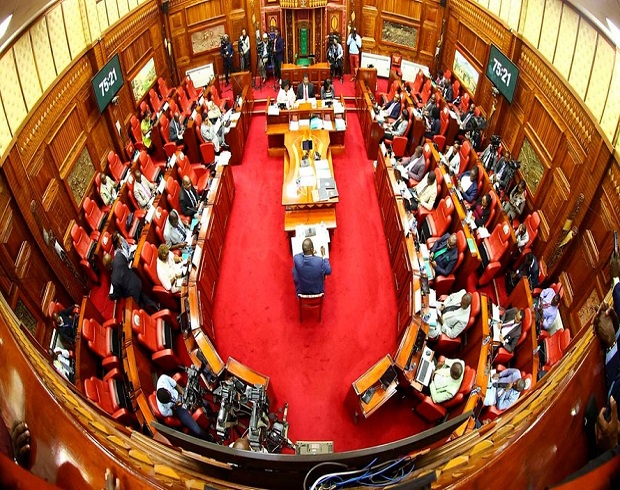
Founderitis

Governance At Your Doorstep

Last year I hastily drove home trying to get there before a 4 pm scheduled Zoom meeting with a client. I got to the entrance of the gated community in which I live with about 10 minutes to spare, only to find a car parked sideways blocking entrance and exit of vehicles. A sheepish guard pointed me to park at the curbside, which by now had about five other cars parked there.

As I was running late, I didn’t ask questions. I parked and hightailed it to my house, lugging my heavy laptop bag. I was determined to come back after the Zoom meeting to find out what was going on, as by this time I noticed that there was a stationary car on the inside entrance, followed by a mover’s truck filled with household goods.

I came back after an hour to find that the entire road leading up to our gate filled with parked cars and extremely angry residents. Parents who were inside couldn’t drive out to go and pick their children from school. It was a veritable hot mess. The short story was this. The tenants of house X were moving out and the management office had given instructions that they were not to be let out as there were outstanding service charge dues. According to the tenants, they had been dutifully paying service charge to their landlord who clearly had not been remitting the same to the management company. According to the frustrated mutterings of other residents – who were in some parts livid at this inconvenience and in some parts sympathetic – the landlord had fallen out with the management company, collectively owned by the house owners, from the inception and had refused to participate in the management of the community.

The belligerent chap allegedly owned a good six houses in the community, which is nothing to be sniffed at. This scenario, I have no doubt, is replicated in the hundreds of gated communities and apartment blocks that have now become conventional in our urban housing settings. Developers put up houses or apartments and transfer the master title to a management company which then sub leases the units to individual buyers. The developer then transfers ownership of the company to the house owners who are then left to look after the common areas, security, garbage collection and the ordinary humdrum of urban living.

But how do you make shareholders liable to pay the common area costs? How do you penalize recalcitrant home owners who don’t agree with a plan to tarmac the road, upgrade the gate, build ablution blocks for the guards or to use an outsourced garbage collection service? What about if shareholders are unhappy about how the management company is being run?

In the United States, gated communities and apartment living have been a common way of urban dwelling for many years. In many municipalities, local governments are very happy to yield up powers to what are called home owner associations (HOAs) as they take over functions that should ideally be undertaken by the municipalities such as building and maintaining internal roads and building and maintaining green spaces in previously undeveloped tracts of land. HOAs broadly create legally binding rules around architectural styles, pet size and numbers, home occupancy limits, home maintenance standards, noise complaint policies and a whole host of rules and regulations on what living in that common area entails.

Different states have developed laws to support the quasi-local governmental authority that the HOAs adopt, to the extent that levying fees and penalties for non-compliance is a fairly standard power. In some states, failure to pay those fees and penalties can lead the HOA to foreclose on a homeowner’s house just like a mortgage lender and sell the property to recover outstanding fees. More on that next week as these powers therefore raise a whole kettle of fish around governance on the boards of the HOAs.

Meanwhile, how did my neighborhood Mexican stand-off end? Police were called, then told not to come, then told to come and a visibly irritated officer showed up and told the tenants where they could go for couples therapy with the management company. At about 7 p.m., the gates were opened, the tenant moved her car from the entrance while their hungry and very angry movers drove the furniture laden truck out to the new house. Next week: how could all of this drama have been avoided?

[email protected]
Twitter: @carolmusyoka

Founderitis

The Bethlehem Businessman

In this Easter period of reflection, it struck me for how long human beings have been running governments and doing business. Take for example the Biblical story of Jesus’ birth. His parents lived in the village of Nazareth and as luck would have it the Roman government of the day, led by Caesar Augustus, demanded for a census to be held over all Roman occupied territory.

This was not about resource distribution to counties, constituencies and wards. It was quite likely a Roman government move to establish the scope of taxable revenues from colonized domains. Joseph, being the head of the home and a descendant of the house of King David, had to travel south with his very expectant wife to their native home in Bethlehem, “shags” as we would call it here. Bethlehem, according to Google maps, is a good 150.9 kilometres away via the Yitzhak Rabin Highway or Route 6 taking an expected one hour and 58 minutes in 2023. Well it took weeks in those days.

Arriving hot, dusty and exhausted beyond belief, Joseph looked for shelter. Now this is what I found interesting. There were inns in those days, as in places for travelers to sleep overnight. Which means that people used to crisscross the country for various reasons back in the day, be it trade, census or perhaps leisure? After all, Bethlehem is about 30 kilometres from the Dead Sea, a place that could likely have been a great tourist attraction.

But I digress. Even though Bethlehem was Joseph’s native home, it would appear that there were no relatives that could give him a place to sleep. Or maybe the relatives had relocated over the years to brighter lights and bigger cities. Whatever the case, the inn was full and the only shelter that the innkeeper had that could be safe for an expectant mother and deeply worried father was the animal pen next door. The innkeeper was all about finding simple solutions to complex problems. But the long term thinking he should have been having by this time was the need for expansion.

I give this story as last week someone asked me on Twitter when does a micro business start to think about governance structures. The answer to this question is the classic non-answer: it depends. Governance structures are usually put in place to ensure that stakeholder interests are equally monitored and protected. Stakeholders are many in a business and don’t necessarily rank equally in the need for monitoring and protection. They include shareholders, employees, suppliers, customers, the taxman and regulators. All these stakeholders have different demands on the organization and, commensurately, different levers that they can pull to get their demands met.

For a microbusiness, survival is the primary objective of the founder. The Bethlehem innkeeper, for instance, just needs to ensure he gets enough business to keep his doors open and feed his family. Revenues don’t feed families, profits (revenue minus costs) do. As business grows, he needs employees to clean the rooms, cook the food if he has a dining room and serve the guests. He has to pay suppliers of the food, the cleaning materials and whatever else is needed to keep the inn running smoothly. Caesar Augustus has his Kanjo representatives probably hounding the innkeeper for a business licence, a music license, a parking license for guest’s donkeys and then the Roman Revenue Authority officer also comes around every now and then to get income tax.

If he has borrowed from the local shylock to build more rooms, then the shylock is added to the growing list of stakeholders whose needs are to be monitored and protected. The innkeeper can manage all of this by himself, until he cannot. Eventually he will have to hire a manager and, as his business expands, managers.

As he gets older he has to take a step back from the business and appoint a general manager to run the business while he provides oversight. By this time, if the business is still surviving, it cannot be regarded as a microbusiness anymore. Growth and expansion should have taken it into a small or medium sized business. That is how a governance structures begin to set in as all the stakeholders, including the founder and his family want to ensure the business continues to survive beyond the founder. A board, whether advisory or statutory, would help provide the necessary governance oversight beyond the aging innkeeper’s capacity.

Have a restful Easter break.

[email protected]
Twitter: @carolmusyoka

Founderitis

The Chairman’s Dilemma

A recruiter asks a candidate, “Why did you leave your last job?” The applicant replied,

“It was something my boss said.” “What did your boss say?” asked the recruiter. “You’re fired.”

A seasoned chairman of a board recently shared his experience with me for educational purposes. I concluded the experience as a typical case of “Chairman’s Dilemma”. Let us call him Daudi. Daudi was appointed to the board of an organization in which a childhood friend of his, William, was a senior manager. Upon appointment, the CEO brought to his attention that William was about to be fired for non-performance. Daudi prevailed upon the CEO to give William a second chance and was put on a performance improvement plan thereafter. Five years later, William had relapsed to his default factory settings of non-performance. He was put through a disciplinary process and the conclusion was to terminate his contract. However the HR policies of the organization allowed for an appeal to be made to the chairman of the board where a senior manager had unsuccessfully gone through the disciplinary process.

William, not one to let a loose straw slip through his clutching fingers, made the appeal. Daudi was now put in a quintessential quandary. Intervening once again would put his credibility as an independent arbiter into question. Not intervening would put him under inordinate pressure from William’s family to look after their “son” and his “brother”. By this time, Daudi was quite well respected within the board and his tenure of chairmanship had been scandal free. After great consideration, it came down to a choice between his professional reputation versus his personal connections. The former carried the day. Daudi informed William that he was conflicted and could therefore not listen to the appeal. William was fired.

People often asked why board chairpersons get paid more than ordinary directors. The reasons are quite simple. Board chairs spend more time in the organization working with the CEO to meet stakeholders, preparing for board meetings and other board related general administrative tasks. Furthermore, board chairpersons exercise the emotional intelligence muscle far more often than ordinary directors, a muscle that is extremely load bearing with a high tensile strength required. One example can be seen during board meetings where an emotive point is consuming great debate and a decision needs to be reached.

A good chairperson is supposed to summarize the arguments for and against and try to achieve a consensus by distilling what the irreducible minimums are for the issue to either succeed or fail. But remember that the chairperson is a director too, and has an opinion on the matter. The chair can therefore take the (more responsible) role of an arbiter and build consensus to either pass the motion through or send it back to management to fix whatever issue that will make it passable by the board at the next meeting.

Or the chair can become a protagonist and try to push the issue and the debate in the direction that her opinion is aligned to.  This is a very slippery path to embark on as it will engender deep mistrust from directors for any future discussions that will take place on the board. The wily chairperson will have anticipated rabid debate on an issue beforehand, particularly since the chairperson should always meet with the CEO before every board meeting to go through the agenda and determine any potential landmines that may be buried therein.

Having spotted the landmine, the wily chairperson will have aligned key directors before the board meeting to the outcome he wishes to emerge. Who are the key directors you ask? The ones who can sway the opinion of the other directors. Another chairman shared with me the story of a committee chairperson who was unable to build consensus in her committee on a critical decision. Unhappy with the meeting deliberations, both the CEO and a committee member approached the board chairman to complain that the committee chairperson had tried to push through her own agenda and decision outcome but had failed. At the main board meeting, when the agenda got to reports from committees, the committee chairperson gave a summary of their meeting and then asked the board to discuss the contentious issue.

The wise chairman could see what the committee chairperson was trying to do. “This matter cannot be discussed by the board because it hasn’t been concluded at the committee,” interjected the board chairman. The committee chairperson tried to raise the issue again but the board chair was having none of that consensus building laziness being brought to his board table. The matter was re-dispatched for discussion at the committee where the committee chairperson withdrew the agenda item as she was unable to build necessary consensus around it.

A good board chairperson is less of a technical expert and more of a consummate diplomat, back room negotiator, consensus builder and landmine spotter all rolled up in one cool, calm cucumber. That’s why they get paid more!

[email protected]

Twitter: @carolmusyoka

Founderitis

When Oversight Becomes Undersight

A recruiter asked a candidate, “Why do you expect such a high salary when you have no experience in this field?”
The job applicant replied, “Well, the job is much harder when you don’t know what you’re doing.”

Many years ago, I found my name in the Kenya Gazzette having been appointed to the board of a government regulator. The parent act for this regulator required any board member to be vetted by Parliament before such appointment could be validated. In preparation for the exercise, I first checked the dictionary on what the definition of vetting was:

“Vetting is the process of investigating someone thoroughly, especially in order to ensure that they are suitable for a job requiring secrecy, loyalty, or trustworthiness”

So I channeled my second year of university energy vibes and got cracking on research. I researched the regulator. I read the parent act from cover to cover. I read up on decisions that the regulator had made, internalized them and played them out in my mind as if they were a Netflix court room drama.

I was the third in the vetting line at Continental House that morning, a building that housed many parliamentary offices. We were made to wait in a room filled with semi-occupied shelves of dust covered, unopened books. This was the Parliamentary Library I was told. It was as full of activity as the dense, overgrown bushes at City Park Cemetery. Eventually I was called into the vetting room. About sixteen Parliamentary Committee members were seated on a U-shaped table. I sat on an individual table at the top of the U.

The committee chairman welcomed me to the session as I shakily opened the tight seal of the water bottle that I was sure I was going to need to seek respite from. The protocol was that each member of the committee was going to ask me questions. Okay.

Question number one came from my left, a third time member of parliament (MP) who I had often seen on television standing on a podium next to a presidential candidate. “Why is the surname on your ID Musyoka, when your university certificates state another surname?” Hmmm. Okay, that was a pretty straightforward answer, I mean people get married somewhere along the journey of life and names get changed. He didn’t pay attention to my answer as he got a call on his mobile phone, leaned under the table and furtively began whispering. I directed my answer at the air above him. His neighbor took on the next question. “You sit on the board of Company X. Is this likely to provide a conflict of interest in your role as a board member of this regulator?”

Okay. Now the questions were getting more cerebral. “Company X is a company, like over a million companies registered in Kenya, that can appear in a matter before the regulator. If such an eventuality arises, I will declare my conflict and recuse myself from any discussion on the same.” The first MP emerged from under the table, business concluded. Second MP furrowed his brows, made as if to ask a follow up question, then yielded the floor. Third MP picked up from his colleague. “So how do we know you will recuse yourself? You also sit on the board of Company Y!” I took a sip of water, trying not to be distracted by the first MP who had received another call and whose mobile phone speaker volume was quite loud. Apparently a lorry of stones had been delivered to site and the lorry owner needed to be paid. He ducked under the table again.

I responded that I was a governance practitioner bound by professional ethical considerations. I. Would. Recuse. Myself. The fourth MP was had similar concerns to the first MP. Why did the Kenya Gazzette publish two surnames for me, yet my ID had one name and my university certificates had another name. “Honestly Sir, I cannot speak for the Government Printer,” I responded demurely. “You lawyers give us a hard time all the time and you cannot even print your names correctly,” he barked back. I bowed my head and took the beating like a good woman.

Twenty tortuous minutes later, the vetting was done. The remaining twelve MPs asked the same question in different iterations about what recusing looks like and my interchangeable last names. Not a single question was asked about the business of the regulator and my knowledge, if at all, of the same. The first MP had cement and ballast delivered on site and paid for via mpesa by the time the fifteenth MP was wrapping up. Anyway, two weeks later my name was tabled by the Committee in front of Parliament and I passed. I know the first MP, Bob The Builder, was rooting for me because I winced in sympathy each time he had to send an mpesa payment. Being an MP is a very hard job. And that is why they get paid millions to do it.

[email protected]
Twitter: @carolmusyoka

Founderitis

Slide Into My DMs Correctly

If you are under 30 years of age and wondering why no one is responding to your emails, texts or social media side bars, you may want to read this. If you are over 40 years of age, please turn over the page and read the next column. This is not for you.

A few Sundays ago, I was chilling out attending Bedtime Baptist when someone slid into my LinkedIn direct messaging. I don’t typically surf LinkedIn on Sundays as it tends to be very business centric. But Saint Curiousity was the choir master at Bedtime Baptist that morning so something made me click on the notification.

This is the verbatim message I found on the notification from Mwagodi Chacha (not his real name): “Kindly, consider for opportunity when or if available. Regards David.”

I was confused. The notification said Mwagodi Chacha, but the message was signed off by David. He was not in my network, but he was a connection once removed, meaning he was connected to someone in my immediate network. I typically don’t respond to strangers, but it was a Sunday and Saint “A Communication Intervention Is Needed” was the assistant choir master.

David or Mwagodi was asking for some kind of help. But I didn’t know what it was. So against my better judgement, I decided to engage him. I wrote back and asked him what it is or who was it that I should be considering and also what opportunities was he referring to? Also, was he David? Why did his profile call him Mwagodi Chacha then? Finally I advised him that when communicating to a total stranger he needed to be concise and clear in order to be taken seriously. To his credit, he responded fast:

“Okay my apologies. Management Consulting. Am David Mwagodi Chacha. Sorry for bothering you.”

He had taken my advice to heart about being concise. Too concise. I decided to advise David on this platform as there are many like him (again, I remind you that his real name is not being used here before the boy child protection brigade lands on me). I must also confess that anyone who starts a sentence with “am” instead of the grammatically correct “I am” tends to leave me gasping for air at the nitpicking lights.

David: I take it you’ve sipped from the “Shoot your best shot” cocktail glass. You probably topped it with a “You miss 100% of the shots you don’t take” rosemary garnish. But what they didn’t tell you is that you typically have one shot at making an impression. Communicating with a high level of impact is what gets the door opened and lets you into the room. People who you want to notice you, want to know who they are dealing with and why.

“Hello Carol, my name is David Mwagodi Chacha. I am reaching out to you because you are in the same high school as I was” or “because we are in the same industry”, or “because I saw you speak at the Marketing Society of Kenya Christmas Dinner.” Essentially David, establish the connection as to why I am a draw to you and where our connection lies. Otherwise I get the sense that you have sent two hundred of these messages and hoping one of them will land in an interested inbox. You can then continue thus, “I am a management consultant working at my own firm and I am looking to collaborate with you,” or “I work at XYZ firm and I am looking for employment opportunities as your firm is an innovative trailblazer in the same industry.” David, I need context on what it is that you do  and where you think I can help you exactly. A little flattery on being a trailblazer also helps to gently stroke a bored ego, but not too much that one can see through BS smoke.

Finally, a sign off that lets me know what your unique value add is might help me from tossing your message into the garbage can: “Carol, I know that my skill in  consumer research using quantitative methods is one that you could use to add value to your consumer goods industry engagements. Could we begin a conversation?” This would make me know that you have done some credible research on what it is my own firm does. No one wants to be just a number, even someone you are approaching for help. David keep it short, keep it specific and make me feel unique. Just like you would with a girl you want to ask out for a date. Wishing you the very best.

[email protected]

Twitter: @carolmusyoka

https://www.carolmusyoka.com/founderitis/

Equity For Bosses Too

Many many years ago, fifteen to be exact, I worked in the financial services industry. It was a job I loved tremendously until fate deigned it fit that I would be spat out quite unceremoniously. I took four months to just exhale and hit my control+alt+delete mental button to reboot my burnt out system. It was a fulfilling time of self-reflection, ruminating through the ten years of my career at the time. While commiserating with me, a number of friends took the view that my problems arose because I was a woman. I really struggled with this gender based bias conclusion as I sincerely had never experienced exclusion per se and chose not to view any issues I had had through a gendered lens.

One afternoon, as I sat reflecting under the shade of a tree, I had the proverbial Isaac Newton eureka moment. In my decade of working, I had served various bosses that were primarily male. The good bosses were excellent, ensuring that all my achievements were well rewarded with bonuses, career promotions or both simultaneously. The bad bosses, of which there were very few, kicked me the individual down, stomped on my prostrate form with their industrial boots, ran over my battled and bruised body with a ten ton truck and then gleefully reversed over my career dead body to make sure the job was done satisfactorily. My eureka moment was this: My good bosses often spoke of their wives in a positive light: some in unabashed admiration, some with a grudging respect and a few in mortal but loving fear of their long suffering partner. We knew the names of their wives even if we never met them.

The common thread amongst the bad bosses was that they either never ever mentioned their wives conversationally or when they did, it was in an indignant, battle weary and sometimes derogatory fashion. In reflective retrospection, I think in some shape or form I reminded my bad bosses of their wives. Our interactions would lead the boss to conflate my resistance to an issue with that of their unnamed or untamed significant other, causing me to suffer the consequence of a non-domestic situation that the boss was finally wholly in control of. That revelation stands true to this day in my observation of many leaders in the political and corporate space.

As we celebrate International Women’s Day this week, we take note of the theme “embracing equity”. I had to read up on what the term equity means in the workplace. Equality means that each individual or group of people is given the same resources or opportunities. Equality is therefore sought for age, race, tribe, gender or persons living with disability to be given access to the same opportunities in the workplace, for instance. Equity on the other hand acknowledges that everyone has different circumstances and thus the objective is allocate the same resources and opportunities that are required to arrive at an equal outcome.

Therefore equity requires organizations to provide tools and physical infrastructure that enables persons with disability to function optimally. Or it requires that lactating mothers who have returned to work get a private space within which they can express and store their breast milk for their suckling infants. It could mean that provision is made for recognition of mental health issues for employees suffering from work burn out and including this critical illness in the medical cover provided.

But those different circumstances in the definition of equity are not only for subordinate employees. My experience drew me to the conclusion that bosses also have different personal circumstances that come to bear in the way they lead at work. As an executive coach, we are trained to recognize that an individual has a multiplicity of personas. They are simultaneously parents, siblings, children, spouses and friends and all these personas are inextricably intertwined. In helping a coaching client reflect on a work related problem, we are required to encourage the client to reflect on where else that problem could be showing up in their non-working life and, in so doing, recognize behavioral patterns that could be impacting the professional human vis a vis the family human.

Self-awareness borne of coaching or self-led introspection makes a good leader aware of their foibles and biases. It allows them to step back from a situation and ask themselves why they are reacting in a certain way. It behooves organizations to consider that executive coaching is a critical tool in the journey of promoting a person to lead other humans or else they will be promoted to their level of incompetence and set up to fail. As we are exhorted to embrace equity this week, let us recognize that bosses, be they male or female, need equity too.

[email protected]

Twitter: @carolmusyoka

Robbing Your Own Bank

Armed with a toy gun and a jerrican of fuel, Sali Hafez broke into a Beirut bank to “steal” US$13,000 of her own savings because the bank had refused her to withdraw her own funds. While livestreaming this September 2022 event on Facebook, Sali together with other activists doused the branch with petrol and threatened to set the place alight if the staff did not give her the cash dollars. She succeeded in what may have looked like a fool’s errand, but in actual fact is a Lebanese tragedy of monumental proportions. Sali’s 23 year old sister was in a Beirut hospital being treated for cancer, and she needed to pay for her treatment. This was not the first bank hold up in the city and following an increase in the crime, the Lebanese banking industry shut down branches in October 2022 citing security concerns.

The banks suspended front office services, but back office operations continued. In the first week of February this year, Lebanese banks went on strike. According to an Associated Press report by Kareem Chehayeb on ABC News, the protest was against a court ruling that forced one of Lebanon’s largest banks to pay US dollar cash to two of its depositors whose savings had been trapped by the dollar scarcity. The banking lobby, Association of Banks in Lebanon, called the action an open ended strike saying that the ruling was detrimental to all depositors since the banks could not afford to pay out all depositors in the banking system in full.

Where did the Lebanese rain begin beating on its citizens? Following fifteen years of civil war that ended in 1990, successive Lebanese governments went on a spending binge fueled largely by generous donor aid from the Arab gulf states. US dollars also flowed freely into the country in the form of remittances due to Lebanon’s largest export, labor.  Riad Toufic Salameh was appointed as Governor of Lebanon’s Central Bank in April 1993 and continues to hold the role to date making him the longest serving central bank governor in the world. The former Merrill Lynch senior executive was credited for maintaining the stability of the Lebanese pound for the longest time. Until it all went pear shaped in 2019.

Geopolitics driven by the war in Syria and the rise of the Iran backed Hezbollah group meant that donor aid from the Gulf Arab states dried up. The country began to endure a budget deficit while, simultaneously, dollar remittances started to slow down. The commercial banks began to offer incredibly high interest rates for US dollars, driven by the Lebanese central bank’s financial engineering scheme. The scheme offered commercial banks huge returns for dollar deposits but, simultaneously, there was no corresponding monetary discipline. By 2016 the national debt was at 150% of national output and over a third of the country’s budget was being spent on debt servicing. Fiscal discipline was lacking, with politicians successfully pushing for public sector wage increases months before the 2018 elections, leading to enormous budget deficits. Added to this, money was being siphoned out of the country by the elite, with the central bank governor Riad Salameh at the top of the money heist. Salameh has been accused by various entities of running the largest Ponzi scheme, where the government borrowed incessantly leading to state bankruptcy and a collapse of the local currency. His personal assets offshore are allegedly worth nearly US$100 million tucked away in the United Kingdom, Germany and Belgium. This week Salameh was charged with money laundering, embezzlement and illicit enrichment.

So why was the court ruling directing the bank to pay its two depositors in foreign currency cash so ground breaking? Due to the biting foreign currency shortage, depositors were being forced to withdraw their foreign currency savings in local currency cash at steep discounts to the real exchange rate. Withdrawal at the bank rates would mean that depositors would lose up to 90% of the value of their foreign currency savings which is what had been happening. However, the court ruling precedent is dangerous as it essentially could lead to a total run on the banks which of course means a systemic collapse.

The World Bank has cited the Lebanese crisis as the worst financial crisis in modern times driven largely in part by the government’s reluctance to execute urgent economic reforms. It is a classic case study where official hubris meets greed, corruption and utter lack of discipline. Tie all of this up with a ribbon of political instability and you have the makings of total chaos. Could we ever descend to these levels? Surely not. We pray at the national altar for sagacious macroeconomic leadership.

[email protected]

Twitter: @carolmusyoka

 

Leave Your Ego at the Corporate Door

Many years ago, I used to work at the artist formerly known as Barclays Bank. One of my colleagues, who I’ll refer to as MK for now, was much loved for his razor sharp wit which kept us simultaneously entertained and well-grounded as he was fond of keeping our banker egos in check. One Friday afternoon, MK prodded our collective thinking. “Do you guys think that your customers pick your calls because they see your name on the screen?” With MK, these were typically not trick questions, so one colleague told him to just come out and say what he really meant. It was a Friday afternoon after all and there was serious nyama choma to be attended to on the table in front of us.

“It’s your business card that gets them to pick your calls. They are not talking to you, they are talking to Barclays Bank.” MK had really stirred up the hornet’s ego nest and most of us jumped down his throat with righteous and, quite frankly, misplaced indignation. “Hebu leave the Bank and see if they will pick your calls? They won’t,” MK concluded. Of course no one had the wherewithal to factually prove him wrong at that particular point. But his point stayed niggling in the back of my mind for a long time.

As relationship managers at the time, we had built strong relationships with our corporate customers ensuring that the Bank was top of mind when new financing business was envisaged in the client’s boardroom. The relationships continued even after I progressed upwards from a relationship manager to leading the corporate team. I would regularly accompany the relationship managers to meet with customers and keep that client engaged. Many large corporate clients required us to be their internal advocate when their borrowing needs required vigorous lobbying for approval with the local and international Barclays credit approval chain. Eventually I left the bank and about two years later I met with the CEO of one of the big corporate clients we had had. This was someone who I had personally engaged with on several occasions and who even sent personalized gifts to me at Christmas.

We met at the lobby of one of the leading hotels in the city, as there was a big function.. I said hello quite animatedly as I hadn’t seen the gentleman in quite a while. He looked me over, muttered something and breezed past in a major hurry to anywhere but close to me. It was hilarious. Actually it was not. But MK’s words rang so loudly in my ears it was deafening. It wasn’t me that the CEO had been engaging with all those years, it was the Bank. Unfortunately MK had passed on by this time (may his blessed soul continue to rest in peace) and I couldn’t ring him to let him crow with delight while gasping “I told you so” in between gales of laughter.

I was forced to remember this story when my team member came to me in frustration as emails, texts and calls she was trying to send to a certain organization remained completely unanswered. This was not the first time this was happening and she wanted to know what she was doing wrong. Our experience with another organization in the same industry was similar. Organization would engage and make a request. Request would be fulfilled and then there would be utter and complete silence. Only when someone in executive management was called would the flurry of responses finally come in.

At great risk of prodding a bull here, I reckoned to my colleague that there was some level of individual arrogance clothed by the illusion of institutional permanence. “Huh?” she asked. These individuals, in my view, suffered from an illusion that they would always be at the organization and could therefore treat external stakeholders in a certain way, i.e., simply ignoring them. Ignoring calls. Ignoring emails. Ignoring texts. After all, while yes the individual had made the request for an item and had received it, our utility had been extinguished. Just like my utility for the Johnny Walking CEO had extinguished.

The difference in this case, I told my colleague, was that these individuals forget that there is life outside the organization. Many corporate individuals conflate their work titles with their individual personas. From someone who has been, to use the Kenyan euphemism “chapwa’d character development,” let me be the first to tell my corporate colleagues: It is rough out in these non-corporate streets. Responding to communication means “I see you.” When you ignore multiple messages, it is a not-so-subtle way of saying “get lost”. And your social capital gets destroyed. Completely. Rebuilding it, well, good luck.

[email protected]

Twitter: @carolmusyoka

Sights and Sounds of Chennai Again

I recently went on a visit to Chennai, in India’s south eastern coastal state of Tamil Nadu. This is a city I have travelled to a number of times and I never cease to marvel at how the city of eleven and a half million people continues to keep its motorized traffic moving. Buses, private cars, thousands of tuktuks and motorcycles fill the streets where, as my travelling companion aptly summarized, lanes are simply a suggestion. In the five days of moving around, we never found a single motorcycle accident where sporadically helmeted riders of both genders zip around the vehicular obstacle course with some carrying entire families. For a population that is generally friendly and very helpful in personal interactions, there is a complete attitude change once they get on top of or behind the wheel of their chosen motorized options. An inexplicable aggression sets in, drivers and riders alike unapologetically claiming their space in the invisible lanes while miraculously managing to avoid colliding into each other.

We chose to use tuktuks to move around, as they are the easiest to find and the cheapest mode of transport. Tuktuk drivers and motorcyclists had their phones perched precariously above the steering bars, with no apparent fears of phone snatchers. It took a while for us to get comfortable using our phones in the tuktuks as we were Kenyan conditioned to keep such devices far from the reach of our own notorious phone snatchers. The penny dropped on the relative safety when we observed that women wore gold everywhere. And I mean everywhere. As gold is a cherished store of value in India, we observed that even female fruit vendors on the streets wore gold necklaces and earrings and were comfortably going about their business without any concerns about petty criminals relieving them of their possessions.

Having found myself in the city also known as Madras, I took advantage of one of India’s proudest offerings: medical facilities. The hospital I chose to go to is one of India’s leading private facilities where cutting edge medical technology such as robotic surgery has been pioneered. This is not a puff piece about the depth of my wallet. On the contrary,  it is the price of medical access that is mind boggling. To access best in class doctors and surgeons whose professional acronyms next to their names can fill a Tata truck, the consultation charge is a flat cost of INR 1,500 or KES 2,250. No matter which surgeon it is. No matter how long he or she has been in practice.

I chose to do an elective procedure under the hands of a specialist whose very appearance would likely have him arrested and thrown into sartorial jail by a Kenyan medical board. Inside his tight little office where the walls were lined with happy birthday banners and Christmas tinsel, he had a box of chocolates and toffees on the floor that he asked me to help myself to. He had a shock of long unruly hair whose uncombed loose curls bounded unencumbered down the nape of his neck. His shirt was open halfway down his chest, revealing a thick gold chain struggling for recognition between his greying chest hairs. But his bohemian, Croc-sandal-wearing appearance, belied a sharp mind and mastery of his subject matter while his warm, gentle eyes were the last thing I saw before drifting into anaesthetic slumber. I wanted him to be my family doctor for life.

Look, this is a business newspaper and the last thing I need is a rap on my knuckles from my editor about gushing over my doc crush. But it must be said that there is a reason why many Kenyans continue to flock to India for medical treatment. My procedure cost a quarter of what I would have paid for it in Kenya including theatre and specialist consultation charges.

The Kenyan medical fraternity have tried to throw a few obstacles in the path of those Kenyans seeking treatment in India, for instance the requirement to have a release letter from a Kenyan doctor as a prerequisite to getting the Indian medical visa. I can see why they would want to protect their own turf and unfettered feeding trough. Chinua Achebe proverbially stated, in his epic tome Things Fall Apart, “Eneke the bird says that since men have learned to shoot without missing, he has learned to fly without perching.” Kenyans will continue to (pun intended) flock to India in the droves, for as long as the price of best in class medical access remains within the reach of their cost weary pockets. Let me brace for the backlash impact sure to be received from my Kenyan medical friends!

[email protected]

Twitter: @carolmusyoka

Legislating Digital Disconnection

The road to hell is paved with good intentions. The Employment (Amendment) Bill 2021 is navigating a treacherous path to creating an employment hell in the workplace. Many years ago, at the turn of this century, I had a very hard working boss. The gentleman would get to work at about 6 a.m. in the morning as he lived way out in the sticks. By 6:05 a.m. he would get cracking on his desktop computer (laptops were reserved only for the cherished few who travelled outside the country) and furiously shoot out emails to his team. Having cleaned out his pending email inbox, he would then send a follow up email by 7:15 a.m.

He’d walk to the coffee dispenser, get himself a cup of the Kamiti Prison standard caffeine slop that the machine would spit out and proceed to sip it slowly, awaiting the little envelope icon that would appear at the top of his computer screen to signify a new email had come in. Of course nothing would come in as there was no one in the office. At 8 a.m. he would then send a second follow up email, prickly asking why there was no response. Suffice it to say that by the time we would get to the office we would find several messages from our boss ranging from polite “Where are we at with this?” to the more pointed “Why aren’t you responding to me?!”

I chuckle at this memory because if it was in today’s age, he would quite likely have been shooting us emails at all hours of God’s given 24 hours and expect a response to be forthcoming immediately. But a quiet word from the HR manager, followed by the stinging indictment of poor employee satisfaction survey results from his team would have reined in this behaviour. Hence the Employment Amendment Bill of 2021 is trying to legislate against rogue bosses who don’t have internal guard rails such as a respectful work-life balance culture. It starts off by shooting its intentions straight from the hip saying an employee has the right to disconnect from their employer.

The Bill requires yet another policy in the Byzantine world of employment policies to define when such disconnection is waived and how employers will engage with their employees outside working hours. The Bill’s author proposes that anyone with ten or more employees must put in place a policy to define what disconnection looks like. Simply put: circumstances under which an employer may contact an employee, how electronic devices will be used to relay information outside of work hours and when that right to disconnect may be waived. An employer should also define what kind of compensation will be given to employees who work outside official working hours.

This is a fairly prescriptive legislation. In this modern age of work, working under time pressures created by statutory or client deadlines is fairly common. Ask any suppliers of auditing, advertising, legal, accounting and a myriad of other white collar professional services. Or employees in the Ministry of Finance working under constant pressure to deliver on budget deadlines and other time critical government monetary disbursements.  It’s virtually impossible to envisage and document when such circumstances will arise.

What’s worse is that the Bill seeks to criminalize out of work communication by making the employer liable to a prison term of one year, a fine of Kes 500,000 or both.

Consequently, employers in the  suggested policy will simply include vague language like “An employer may communicate to an employee regarding any critical work that arises in the ordinary course of duty from time to time.” Contracts of employment may now perhaps include words like “Working hours are from 8 am to 5 pm and, in addition, may extend beyond that period from time to time depending on the nature of work assigned to the employee.” As a contract presupposes two willing parties, I highly doubt an employee is in a position to demand that such wording as “from time to time” be removed from the employment contract.

It is the Bill’s recommendation that if an employer contacts the employee, she shall not be obliged to respond and shall have the right to disconnect or may respond and be entitled to get compensation.  Contracts and policies notwithstanding, it is fallacious to expect that the employee who reports their employer for refusing them to disconnect from work, and the law takes its punitive imprisonment form, will survive for long in that work place or any future work places for that matter. There’s many ingenious ways to manage that employee out of work as clearly performance issues are now at play here.

The Bill is targeting white collar professionals, and unfortunately would appear to be fairly elitist as it fails to address the working conditions of thousands of domestic workers in our homes who work from dawn to evening, many of whom are grossly underpaid and massively overworked. That is truly where employment hell resides.

[email protected]

Twitter: @carolmusyoka

Apocalypse Governance

“A society grows great when old men plant trees in whose shade they shall never sit.” — Greek Proverb

A few weeks ago, my 11 year old daughter walked into my bedroom in a. distressed state, with tears streaming down her face and totally incoherent. After about ten minutes I had managed to calm her down to the point where between deep sucks of breath and long nose blowing episodes she was able to unpack her issue. It was a very simple issue. The world was coming to an end in 2050. The End.

She had been watching some climate change video on YouTube probably produced and directed by descendants of the authors of the apocalyptic, biblical book of Revelation. According to my own descendant, the rate at which global warming was occurring meant that Mother Earth would eventually be worn down by flooding, drought and every imaginable climatic disaster. She would be 39 years old by then and in her prime. Hopefully with a family that she hoped they would be standing together when the big wipe out came rather than her being at the mall sipping on an iced cappuccino while her kids were frolicking at some birthday party. Good people, this girl wept copious tears of sheer angst.

The Greta Thunberg penny finally dropped for me. In case you’ve been living under a rock for the last five or so years, Swedish born Greta was born in January 2003 and shot to global fame as a youthful climate activist. At the age of fifteen she started spending her Friday afternoons outside the Swedish Parliament protesting about climate change. Her efforts didn’t go without notice and she was invited to speak at the 2018 and 2019 UN Climate Action Conferences, the latter to which she travelled to the United States by yacht rather than leave a carbon footprint using air travel. Greta, who is now nineteen years old, has been nominated for the Nobel Peace Prize three times in the last four years and has won numerous global awards and recognition.

If you watch Greta talking she’s vocal about one thing: all the people in decision making power today, at government level globally, do not give darned care about what the world will look like in the next fifty years as they will be long dead. Together with millions of youth around the world, a “woke generation” has emerged. My daughter at eleven had the temerity to tell me that there were companies in the world and in Kenya that were adding to the global warming phenomena and she wanted nothing to do with them. Well that got me thinking. Fast. In the last few years, the new buzz theme in corporate governance has turned to an Environmental, Social and Governance focus (ESG).

Board directors are being forced to tackle these issues at a board level with an objective to create companies that operate responsibly with regards to environmental, social and governance issues. Prior to my daughter’s meltdown, I had regarded ESG issues as just another major parameter that I had to keep sight of in my governance journey. But when she said she’s now becoming conscious, “woke” actually, about what products we were using in the house and whether they were being manufactured in an environmentally responsible way I now became aware of what our emerging duties as directors is.

Our duty is to ensure that if the companies we oversee do not start paying attention to issues around climate change, their current youthful and future consumers will make that decision for them by simply walking away.

In a report published by UNICEF on 9th November 2022 in preparation for the Global COP 27 summit, almost half of young people in Africa said that they have reconsidered having children due to climate change. This was a result of a UNICEF U-Report poll of 243,512 worldwide respondents where 43% of the Sub-Saharan Africa poll participants said a range of climate shocks had impacted their access to food and water as well as their family’s income therefore making them reconsider their desire to start a family.

Whether you are a climate change believer or denier, the facts is this: every single business has a responsibility to the community in which it operates. If you don’t start doing something about it, your future consumers will make that decision for you. Stay woke!

[email protected]
Twitter: @carolmusyoka
www.carolmusyoka.com

Coca Cola Legacy

In 1886, an Atlanta pharmacist called John Pemberton invented a drink that still remains a global acclaimed refreshment: Coca Cola. It would appear that he was only good at creating rather than selling since it was only to be found initially at soda fountain machines in a few Atlanta drug stores. A more business savvy pharmacist called Asa Candler recognized the potential in the soft drink and bought the formula from Pemberton. Like the good businessman that he was, Candler established a sales force and undertook massive advertising. By 1910 Candler had overseen the creation of a franchised bottler universe with 370 bottlers enrolled by that time. By 1916, due to the drink’s great popularity, there were 153 imitation brands. This had led to the formula for the Coca Cola syrup, with a secret ingredient known as Formula 7X, to be stored in a vault at the Trust Company of Georgia.

The hawk eyed management at the Trust Company of Georgia smelt a winner stored deep within the bowels of the building’s vault. In 1919, Ernest Woodruff, the president of the Trust Company of Georgia announced to his board that the company was going to purchase the Coca Cola Company from the Candler family. The Candlers were given $15 million in cash and $10 million in preference stock earning 7% interest per annum. The rest as they say, is history. I pulled this story out of a Harvard Business School case study titled The Board of Directors at Coca Cola Company authored by Lorsch, Khurana and Sanchez. It makes for fascinating reading as it details the metamorphosis of the board from one that was tightly managed by Ernest and his son Robert, to one that is now made up of professionals and accomplished business leaders.

More importantly, the key takeaway for me was the fact that the Candler family moved out of active management of the company as early as 1919 and became monetary beneficiaries through their shareholding. As a founder, you start off your business with vigour, vision and vitality. You create a product or provide a service that your customers love and become accustomed to. You employ staff who deliver the same and, in some instances, do it even better than you. You build an organization that is a contributor to the economy and a cog in the community in which it operates. Then you find that your adult children are not interested in managing the business. You get shocked. You descend into an existential crisis. After all didn’t you work hard to ensure that you provided for your family through the dividends of the business which is an extension of your very person?

You struggle to imagine that your head of operations, who exhibits all the right leadership competencies to manage the business, will manage the business in the event you get knocked over by a bus or succumb to an illness. It should be your daughter or your son at the driver’s helm rather than an employee, you think.

Founder transition needs to be top of mind for any entrepreneur from the first day they start the business. Start by asking yourself if you are building a business that is attractive to external buyers or one that your management team can buy themselves. In a world where human aspirations are dynamically shifting, we have to be alive to the fact that we will be lucky if our children will even be interested in spending a single day in the business that has fed, clothed and educated them for most of their privileged lives. But there is neither a social contract that requires them to take over nor a likelihood that they will be the best managers of that business.

However there is nothing stopping founders from developing a mindset shift about how to reap in absentia from where they have sown. In the Candler family example, the family were bought out of the majority in the business, but remained as shareholders and had a seat on the board of the Coca Cola Company until the mid-eighties when the grandson of Asa Candler was finally elbowed out due to age. The new owners of the business in 1919 had grown the company into the global giant that it currently is and generations of the Candler family would appear to have continued to reap what Asa Candler sowed. That was Asa’s legacy to his family. What will yours be?

[email protected]

Twitter: @carolmusyoka

https://www.carolmusyoka.com/founderitis/

Courageous Conversations With Entrepreneurs

Gated communities provide their occupants with a comforting sense of security and safety in numbers. They can also be the cause of major angst resulting from locking human beings with varied tastes into the confined space of a pressure cooker. Add to that the cold and sterile wastelands of Whatsapp estate group chats and you have the makings of a social train smash. I live in one such gated community. There are dog owners and there are dog haters in not so equal measure in this community. House number X has a dog that chooses to make its presence known only during the magic hours of 10 pm through to about 2 a.m. and singularly drives the neighbor nuts in adjacent house number Y. But this is where it gets interesting. House number Y usually posts his annoyance on the estate Whatsapp group with a not so gentle “House Number X please get your dog to stop barking” at about 10 pm, followed by an exhausted “What the “%$^&” is wrong with your dog and its incessant barking?” at about 2 a.m.

For whatever reason, house number Y has never seen it fit to just go over to house number X wearing sack cloth and asking for release from whatever calamitous curse has been levied on him by that dastardly dog owner. Instead the Whatsapp messages just keep getting posted week after week with no evidence that there has been an attempt at one on one dialogue. The frustrated house number Y tenant is just speaking to himself. Every day and twice on Sunday.

Recently my work has had me helping medium sized family owned businesses set up advisory boards, which is a step below statutory boards whose directors adorn legally borne fiduciary duties. Observing the first conversations with newly appointed advisory board directors, what always strikes me is the amazement on the faces of the business founders. This amazement often emerges from the realization that there are individuals who have significant amount of work experience totally unrelated to the business in question, but which experience can add value in terms of seeing around dark corners that the entrepreneur has been totally blind to. Those initial conversations are often very rich as the entrepreneur gets asked questions about strategy, financial performance, operational risks that she had not even envisaged but have always been lurking below the surface, brand perception, sales assumptions and many other key business parameters. The only entity that ever asks some of these questions is the entrepreneur’s bankers and these questions are more motivated with “how will you repay our loan” rather than how can you grow your business sustainably while de-risking it responsibly.

For the entrepreneur, having talented individuals seated round a table with no other motivation than to see her succeed can be quite illuminating. Having gotten used to speaking to herself every day and twice on Sunday, it is refreshing to have considerable brain power to bounce ideas off of and to have people who can pull her off the edge of a cliff when she’s at the end of her tether.

One such entrepreneur told me that she appreciated her new advisory board as they provided much needed encouragement when she had started to get tired of the everyday hum drum of the business. Having grown the business to a certain level of stability, she needed a new challenge. The board had managed to point her to a new business opportunity that she had never thought of, while ensuring that she had the appropriate levels of senior management resources. The senior set of guard rails in the business would allow her to divert her attention to something different that would suck a lot of her intellectual capital and time bandwidth. That strategic focus on setting up a well-paid and highly experienced human capital side of the business is something she had not thought of doing before as she was used to having her hands on all parts of the business actively.

For entrepreneurs, it is not only lonely at the top but it can also be terrifying as their business is central to both their life and to their sheer survival. Courageous conversations are rare because there’s simply no one to talk to. Not even on a crisis tone deaf Whatsapp group. An advisory board is an effective way to getting much needed intellectual relief from the curse of daily business loneliness. Every day and twice on Sunday.

To gain more insights on how to set up an advisory board for your business, register for the Founderitis Program here: https://www.carolmusyoka.com/founderitis/

[email protected]

Twitter: @carolmusyoka

www.carolmusyoka.com


Are you suffering from FOUNDERITIS? We have the cure. Come learn with us this November!

Founderitis is a special one and a half days governance program designed for founders and owners of small to medium sized family businesses to help them unpack and appreciate the role played by an advisory board and equip them with the knowledge of how to set up an advisory board from scratch. The program incorporates exercises and real time feedback from the facilitator and peers to help the participants embed the learnings.

The highly interactive training offers the following:

  • Preparation for the formation of governance structures
  • Insights on recruitment and selection of advisory board members
  • Powerful networking opportunities and interaction with peers and founders of family-owned business
  • Experiential and discussion-based learning

Program Dates:

  • 7th & 8th November 2022

Venue:

  • Sarova Panafric

Price:

  • KES: 68,500/= plus VAT

Register Here:

https://www.carolmusyoka.com/founderitis/


Guiding The Entrepreneur To The Top of the Mountain

So an unintended but good outcome of the Covid 19 downtime was that I joined up with a group of like-minded suckers for pain who get together once a month in the name of hiking.  Over the last two years we have literally gone up frigid mountains and gone down into the hellish and scorched earth depths of dry valleys in the never ending search for adventure in the great outdoors. Our ruddy cheeks have savored the cold spray of freshwater waterfalls nestled deep in mountain forests, where getting to the glorious view requires slipping and sliding on treacherous muddy paths often jealously guarded by furious safari ants. Magical Kenya, most reassuringly, never disappoints. Consequently, more often than not many of the hikes begin with a quiet session on personal existentialism, with each of us asking ourselves what in heavens name got one out of bed four hours past the midnight witching hour to expose oneself to the brutal geographic and climatic elements.

I remembered this monthly self-flagellation in another conversation with a fairly successful entrepreneur. The man remarked that a running joke amongst many of his friends was that once revenue crosses the billion shilling mark, a good businessman had to start investing in mîgûnda (undeveloped properties) so as to keep his business risks diversified.  And this is why setting up a board, no matter how small is a critical growth path for a sustainable business. If you are in the habit of tabling your strategic initiatives in front of your board, a good set of directors will always ask the most basic question: Why? Why that area of business? Why that particular industry? Why purchase that specific piece of equipment? Why that geographical area for your next round of expansion? In the process of answering that question, an entrepreneur might start to second guess himself if the strategic initiative is incentivized by an emotional gut feel rather than a cool, calculated and research based move.

Many entrepreneurs will tell you that they started their businesses on gut feels, without the wind assistance or the annoying, straitjacketed doubts of a risk averse board of directors. The very thought of having someone question your motives when they have never been with you down in the entrepreneurial hell hole of Suguta valley makes their stomach churn. Our most recent hike was an attempt to hike to Mackinder Valley up in Mount Kenya. This is supposed to be a five to six hour hike and best started early in the morning so that you get to the viewpoint before the clouds roll in around 11 a.m. Having hiked over the last two years, some with almost catastrophic consequences, we have learnt to go with a minimum of two guides for difficult hikes. This allows us to split into groups if someone or some people need to abort the hike for whatever reason. About an hour to the target, with the rocky bluff in view, I personally couldn’t take the conditions any more. We were in a group of nine and two of us decided to throw in the towel. I had been badly afflicted by altitude sickness which apart from infusing my head with a pounding headache, had also infused my mind with an irrational anger. I had to get off the mountain immediately. There were two options, wait on the sidelines and let the majority of the group go ahead to the target point, or split the group, taking one guide and immediately begin descending which is what two of us did. `An entrepreneur’s board provides the same kind of quiet and guided assurance, helping him to scale new heights while pointing out potential pitfalls. It also provides a helping hand as the entrepreneur decides to descend the mountain after going through business difficulties, again providing a welcomed hand holding as he navigates angry creditors and, quite often, a deeply bruised ego.

A good board might be convinced by the entrepreneur to buy that mûgûnda but they will guide him to use his shareholder dividends from the business, rather than diverting operating cash flows that should be used for the company’s working capital needs. Sometimes entrepreneurs also suffer from altitude sickness and get high on their own supply of business success.  Getting a sensible board is a good helpful hand to help one descend to the zone where the business is manageable and the risks are often assessed and  quantified.

[email protected]

Twitter: @carolmusyoka

Website: www.carolmusyoka.com


An Alternative View is Critical

The Queen is dead, long live the King. Since September 8th this month, the entire world has been riveted to their screens watching British international media like BBC and Sky News reporting daily about the death of Queen Elizabeth II. Okay truth be told, the rest of the world moved on as the war in Ukraine heated up while back in this neck of the woods we geared up for the presidential inauguration. The British, most understandably, did not move on and their media reported incessantly on this major news item often times running out of new things to report so multiple “royal experts” would be brought on air to opine on the Queen’s record breaking seventy year monarchy or opine on the new King’s anticipated rule.

Except that in the former colonies social media erupted with an entirely different perspective of the Queen’s legacy. In India, South Africa, Kenya, Nigeria and Jamaica to name a few, pundits weighed in with an alternative view of the Queen’s legacy, some of it too offensive to repeat here. The foundation of the rancour was Britain’s colonial legacy of violence. Apparently Her Majesty’s soldiers undertook massive atrocities in the name of maintaining the British empire together with the pillage of local resources that, according to the social media commentators, form the basis of much of the royal wealth.

The Koh-i-Noor diamond, an egg sized diamond believed to be the largest diamond in the world is 105.6 carats and sits in the crown of the late Queen Mother. It is claimed by India. According to an article in the IFL Science online magazine, the diamond was presented to Queen Victoria at Buckingham Palace in 1850 by the British East India Company following their victory in the second Anglo- Sikh war when the Kingdom of Punjab was taken under British control. The 530.2 carat Cullinam 1 diamond, also known as the Great Star of Africa, is mounted on the Queen’s sceptre and was found in 1905 in South Africa. It was handed to the royal family by South Africa’s colonial authorities in 1905. In Kenya, there was much chatter about the raping and killing of thousands of natives in the period leading up to our independence in 1963. Social media in the former colonies was not about to white wash the ugly side of British rule and the Queen’s death triggered these unfortunate memories. I met a visiting British national two weeks ago and he was asking about what the mood was locally, as he had just landed from the United Kingdom where the country was deeply immersed  in mourning. I showed him the internet chatter, including the incendiary and highly controversial post by South African’s Julius Malema on what Queen Elizabeth’s death meant to them and the visitor realized what an echo chamber currently existed in the UK regarding the royal monarchy. I ended our conversation with the Commonwealth joke: What is Britain’s greatest export? Independence Days.

Echo chambers exist everywhere. Particularly on corporate boards. An echo chamber is defined as an environment in which a person encounters only beliefs or opinions that coincide with their own, so that their existing views are reinforced and alternative ideas are not considered. Due to the limited interaction that board members have with employees and customers, an ever present danger exists of only hearing the good news according to the gospel of the chief executive officer and senior management. Under the German two tier corporate governance framework, companies are required to have supervisory and management boards.

Supervisory boards are the apex body where the shareholder interests are represented while management boards are made up of senior executives. Under German law referred to as co-determination the supervisory boards are required to have employee representatives. Depending on the size of the company, this requirement is anywhere from one third to fifty percent of board members must be employee representatives. For instance in companies with more than 2,000 employees, half the board should be made up of employee representatives but the shareholders choose the chairman who has a casting vote in the event of a stalemate.

The parity introduced by having employee representatives on the apex corporate organ is meant to elevate employees as key stakeholders thereby reducing the “driving for shareholder value” effect of typical western styled boardrooms. There is significant debate on whether the net effect of such a board system generates better performance, something I will unpack further next week. But one thing is guaranteed for sure, no echo chamber can exist in such a co-determined board environment.

[email protected]

Twitter: @carolmusyoka

The Supreme Ugandan Shadow Director

One dark night, two men are walking home after a party and decide to take a shortcut through a cemetery. Right in the middle of the cemetery they are startled by a tap-tap-tapping noise coming from the misty shadows. Trembling with fear, they find an old man with a hammer and chisel, chipping away at one of the headstones.

“Walalala!” one says after catching his breath. “You scared us half to death. We thought you were a ghost! What are you doing, working here so late at night?”  “Those fools!” the old man grumbled. “They misspelled my name!”

Last month, our Ugandan brethren were caught up in a governance kerfuffle involving the highest office in the land. In early July 2022, the Board of Uganda Airlines appointed Ms. Jennifer Bamuturaki as the new Chief Executive Officer. Actually, that’s not true. According to an East African newspaper article published on July 7th that reported the appointment, what really happened was that on July 5th the chairperson of the airline’s Board received a letter from the Minister for Works and Transport, General Katumba Wamala. The letter informed the Board Chairperson that Ms. Bamuturaki, who up until minutes before the letter was received had been serving as interim CEO for more than a year, had been appointed as the substantive CEO.

The good General wasn’t trying to take one for the team. He shone a bright light into the misty governance shadows and stated that it really wasn’t his idea and that actually, the directive had come from the permanent occupant of Uganda’s State House back in April. The East African article doesn’t delve into why it took the Minister another three months to act on said directive, but we are not here to question the slow grinding wheels of bureaucratic execution. And neither was the Ugandan Parliament interested in that time lapse. What they were interested in was how in heaven’s name someone who didn’t apply for a job get it in the first place? Moreso since the globally renowned firm PwC had been appointed by the airline’s Board to spearhead the recruitment of the CEO and the process was still ongoing.

So on August 17th  2022, Ms. Bamuturaki appeared before the Parliamentary Committee on State Authorities and State Assets to answer questions about her appointment. The Committee found that she did not have the minimum academic qualifications required for the job as advertised by PwC, but found that her 15 years of experience surpassed the 10 years required on the advert. After flexing their legislative muscle and making all the requisite noises (Kenyan jurists might call it hot air and somewhat of a wild goose chase) required for their constituents to know that they were hard at work, that was it. The good lady continues to lead the airline and life moves on as it very well should.

What the State House occupant did was to direct the Board from the shadows. The interesting thing is, under company law anyone who provides direction from the shadows can be dragged out into the light to attract the same kind of liability as a substantive director in the event you-know-what hits the fan. They are called a shadow director. Section 2 of the Ugandan Companies Act defines it quite explicitly by stating that a director includes any person occupying the position of director by whatever name called and shall include a shadow director. The Kenyan Companies Act gives a little more illustration on what this shadow directorship looks like. While not expressly using the word “shadow director” section 3 provides that a director is any person who a) occupies the position of a director by whatever name the person is called and b) any person in accordance with whose directions or instructions the directors of a company are accustomed to act. Such advice excludes that coming from a professional capacity such as lawyers or auditors for example.

The good General who is the line Minister already set the trend for the Board in case of any trouble that may emerge ahead. He pointed his finger upstairs and said in the immortal words of Shaggy, the reggae singer, “It wasn’t me”. In the unlikely event the Board of the airlines is ever in the dock for corporate malfeasances due to the acts or omissions of the CEO, they too can sing in unison “It wasn’t us” while being left solo at the lights of presidential immunity.

[email protected]

Twitter: @carolmusyoka

ESG The New Buzzword

I hate acronyms. They are a very easy but lazy way of organizational communication in what this FPW is increasingly becoming. They are also VC, as only insiders understand them. After all IYKYK right? And yes, I just created my own acronym for “fast paced world” and  “very cliquish” which, to be honest is a faster but extremely insular way of communicating and foments the danger of leaving you, the reader, at the proverbial lights while I natter on incessantly. After all, if you know, you know, right?

Hence my wonderment at the world’s new buzzword ESG, which is being tossed about global conferences and board rooms over the last few years. ESG or environmental, social and governance concerns roll up into the concept of creating a sustainable organization which should ideally lead into a sustainable world. In summary, the world is done with your corporate social responsibility nonsense of handing over a dummy cheque to a school once a year while smiling at the cameras and never being seen again by that school. That game is as over as a Ghanian trying to win the 3000 meter steeplechase at the World Athletics Championships. The world now expects your organization to become a responsible citizen not just some of the time, but all the time. You are expected to take care of the physical environment in which your business operates in as well as the human beings who exist along your entire value chain whether you’re in the manufacturing or service industries. Over and above those environmental and social concerns, corrupt and ethical business practices as well as your board diversity make up a key focus of the governance aspects that are now being focused on. In simple words, the world expects you corporates to show up consistently even when the cameras are not rolling because you drive the quality of global life from the actions you take while doing business.

Enough of the preaching. I recently sat through a really interesting presentation by a senior management member of the Nairobi Securities Exchange (NSE) walking the audience through how the NSE has decided to join global regulators in holding companies to ESG account. Just in case you’re the only visitor in Jerusalem, in late November 2021, the NSE provided a framework for listed companies to begin reporting how they were delivering on their ESG metrics. Dubbed the ESG Disclosures Guidance Manual, listed companies now have a comprehensive way to report about how they are showing up at the profitability dinner table.

My favorite takeaway from that NSE presentation was the term ‘green washing’. Now greenwashing is not what happens when you accidentally leave a Safaricom marketing brochure in the back pocket of your jeans, which you throw into a washing machine as dirty blue but come out as clean green. According to Investopedia, greenwashing is the process of conveying a false impression or providing misleading information about how a company’s products are more environmentally sound. Greenwashing is considered an unsubstantiated claim to deceive consumers into believing that a company’s products are environmentally friendly.

The globally infamous example is the Volkswagen emissions scandal from back in 2015. The company was caught flat footed when it admitted that it had been cheating European and American regulators from 2006 to 2015 through fitting various vehicles with software that could detect when the car was undergoing an emissions test, alter its performance and thereby reduce the emissions level. It turns out that the a management decision was made to begin installing the software when the company discovered that a new diesel engine that had been developed at a great expense could not meet pollution standards in first world markets. This is where the governance aspect of ESG checks in because it became a business ethics conundrum: toss out years of development and investment in a new engine or just hide the issue via a software fix and pray no one ever finds out?

The problem with the new generation of consumers from Gen Z, and all other generational alphabets thereafter, is that they call out greenwashing faster than IEBC audits its voter register. And they tend vote with their feet and “cancel” businesses that don’t have good sustainability practices. You see it’s their world that we are doing business in and they are the ones who have to live and procreate in it when we old fogies die off in the next few decades. As board members and owners of companies, we have to be alive to the fact that most of our consumers are not our age, they are younger and they are woke. They will cancel us if we do not show evidence of trying to maintain a sustainable world. IYKYK!

[email protected]

Twitter: @carolmusyoka

Apologizing is Easier Than Permission Seeking

It is easier to ask for forgiveness than to ask for permission.  A friend of mine recently told me these wise words and I had to research the source of this adage. Apparently it was popularized by Grace Murray Hopper, a U.S. Navy Rear Admiral and pioneer computer scientist but has been in use for many years before including the 1903 novel titled “A Professional Rider” by Mrs Edward Kennard where she wrote, “Once married, it would be infinitely easier to ask her father’s forgiveness, than to beg his permission beforehand.” Anyone who plays a leadership role will quite likely find themselves at this crossroad often, particularly in times of crisis when decisiveness trumps procedural bureaucracy. Kamili Investment Group Ltd or KIG (not its real name) was your typical group of  fifteen friends turned investors who had come together to pool funds to invest. They religiously sent in their monthly contributions and hunted for an economic activity in which to place the funds so as to generate a return on their investment 

 As is usual in these ‘chama’ scenarios, only four of the shareholders were active in the day to day operations of the group, ensuring that the banking and reconciliations were happening and actively looking for investment opportunities. Consequently, they were the main signatories to the KIG bank accounts and the company representatives whenever talking to the principals of potential investee companies. Needless to say, a lucrative opportunity arose to invest in an insurance company whose founding shareholder wished to sell his stake. The four KIG principals began active negotiations and due diligence which culminated in the eventual purchase and takeover of the firm. The investment was a great source of pride for all the KIG shareholders as they now had graduated from an investment group into a holding company of an operating subsidiary.  

 The four principals, who had been the initial board of directors, expanded the board by adding another three shareholders and brought in a professional set of external auditors to help place their financial reporting at an aspirational world class level. A year later after the insurance company purchase, an audited set of accounts was tabled before the board for review and approval. A hawk eyed board director who was not one of the four principals noted an extraneous payment for professional services rendered. “What services are these?” he asked. An uncomfortable silence insidiously wrapped itself around the meeting room occupants. The answer was eventually teased out, albeit with great difficulty. The four principals had paid themselves a “success fee” for finding, negotiating and eventually delivering on the successful purchase of the insurance company investment.   

Their smug rationale was that they had put in the extra time, blood, sweat and tears to find and get that investment completed.  

 All hell, just like a sack of potatoes falling off a Marikiti bound mkokoteni, broke loose. It was three against four in the meeting room, with a hapless company secretary watching in gob smacked horror. The bone of contention for the three previously blissfully ignorant directors was that such a payment should have been brought not only before the board, but tabled at the annual general meeting so that the shareholders could be asked and give approval for such a payment. “But would you have agreed to paying us for all the work we did?” asked one of the unrepentant principals. The truth is that the four principals knew beyond a shadow of a doubt that their colleagues would never have agreed to them getting a bonus payment that was essentially coming out of the shareholder funds.   

Apologizing and pretending to be penitent was calculated to be the better strategy as they knew it would be an upstream swim for shareholders to try and claw back the payments already made. They were right. The problem was, however, that severe mistrust became the jam with which board meeting tea scones were consumed following that ugly exchange. It is indeed much easier to apologize than to seek permission. Thereafter it comes at an extremely high cost: Trust, or a lack thereof. 

 [email protected] 

Twitter: @carolmusyoka

Supermarket Governance

A man walked up to a beautiful woman at the supermarket and asked, “You know, I have lost my wife here in the supermarket. Can you talk to me for a couple of minutes?” 

The woman is intrigued and asks him, “Why?”

The man replies, “Because every time I start talking to a beautiful woman, my wife appears out of nowhere” 

 The supermarket business is a tough business. By the time Nakumatt was collapsing into a debt ridden heap, it owed about Kes 18 billion to suppliers. Hard working manufacturers, importers of goods and aggregators of fresh produce for whom delayed payments had been the bane of their cash starved existence. If the Nakumatt board of directors had been reading their board packs keenly, particularly the financial ratios, they should have noticed that the days payable ratio was growing at an alarming rate. The days payable ratio shows the amount of time that companies take to pay creditors and therefore demonstrates the rate at which a company is burning through cash. If the days payable are high, then creditors are not being paid quickly and, in fact, are actually financing the company as their debts are being used as an alternative to short term borrowing from a bank.  

 Conversely, the days receivable ratio shows the amount of time that companies take to receive payment from their debtors. In the Kenyans supermarket business these would typically be in the 3-5 day range as the bulk of shopping is done by cash or mobile money with a small percentage doing credit card purchases which take 3-5 days for the card companies to settle with the supermarket. Thus the spread between days payable and days receivable is a sweet spot for an efficiently run company: receive your sales in cash as quickly as possible and pay your creditors in the longest time that you can negotiate or dictate. This reduces a company’s need to borrow from a bank for working capital as it uses its supplier debt to finance the working capital cycle.  

 But wait a minute. Did Nakumatt even have a board in the first instance? Well they had sign boards for their more than 60 retail outlets, cheese boards for the Camembert and Brie de Meaux served at the owner’s quarterly celebratory lunch and diving boards for the owners to jump off into the depths of a plunging pool during luxurious summer holidays in the Greek Island of Mykonos. But certainly not a board of directors who should have provided independent oversight over the financial and operational performance of that supermarket behemoth.  

So it was with great pleasure when I read the June 2022 media announcement by French private sector financier Proparco on its conditional investment into the Naivas Supermarket business. Partnering with Mauritian conglomerate IBL Group and Germany’s DEG, they jointly acquired a 40% interest in Naivas. After waxing lyrical about the benefits of the investment, part of which would be used to pay out other institutional shareholders like the International Finance Corporation and a few other private equity funds, Proparco stated what opportunity lay ahead. “This transaction also offers Proparco the opportunity to provide targeted expertise to Naivas and its stakeholders on environmental, social and governance matters…as well as further developing the local eco-system involving suppliers of the Naivas store network.” 

 In the  Business Daily on June 27th 2022, an article titled “Proparco of France buys Kes 3.7 billion Naivas stake” stated that Naivas is set to close the financial year ending June 2022 with a gross turnover of $860 million (Kes 101 billion) and an ambition of raising it to $1billion(Kes 117 billion) in the next financial year. The same article quoted the IBL Group Chief Executive Arnaud Lagesse as saying, “With 84 outlets in 20 cities and towns across Kenya, it has put modern grocery within everyone’s reach. Naivas also contributes to the Kenyan economy, notably by employing over 8,000 people.” 

Naivas is not a piddling roadside kiosk. Not with an annual turnover approaching an eyewatering billion dollars and 8,000 employees in 20 towns across Kenya. That turnover is off the backs of hundreds of suppliers who in turn employ thousands of employees. Naivas, quite simply, is a substantive Kenyan economic cog. So yes Proparco, we look forward to what we hope will be obsessive governance starting with an effective board of directors and the commitment to uplifting a proudly Kenyan supplier ecosystem. This is because every time we Kenyans start getting attached to a local supermarket chain, disaster, like the missing wife in the anecdote above, appears from nowhere. Ask the Tuskys and Nakumatt owners. Proparco, you and your external shareholder consortium are riding a huge moral obligation stallion. Please do not let Naivas suppliers and employees down. Good luck! 

 [email protected] 

Twitter: @carolmusyoka 

The Chairperson That Jumped

When I’m not pounding on my laptop keys, feverishly trying to get 750 nitpicking words out to my very patient Business Daily editor every Thursday, I do get to spend some time doing governance work for different clients. Part of that work is evaluating the performance of boards of directors where we issue a questionnaire and it is filled by all the members of the board. The questionnaire is fairly comprehensive, covering all aspects of board work for instance board information and board processes, but then it can get really introspective by asking directors to rate the performance of their peers. Different aspects are interrogated here such as how the director prepares for board meetings, contributes during the meetings, interacts with her peers and management amongst other areas.

It’s not hard to know if a director is prepared for a board meeting because you will see whether they are asking questions whose answers are on page three of the board pack in red, bold font or who insist that management read the paper out loud, word for excruciating word, as if they were a kindergarten teacher providing a critical lesson in washing hands. On how the director interacts with her peers, as evaluators we are looking to see if the person engages her peers respectfully, listening keenly when required and not always hogging the airtime during meetings. Do her contributions generate a normal conversation or are they the Molotov cocktail that always start a fight amongst board members or against management? Well of course we don’t ask the question in such an incendiary manner, but the answers from evaluation participants who are honest will usually provide illuminating answers when truth has been chosen as the path to an evaluation Damascus.

As I’ve been doing these evaluations for the last ten years, I have met hundreds of directors who have enriched me with knowledge on how good and bad boards perform. Early in my governance journey, I took on an assignment of a board based in one of the East African Community countries. It was the first time that the board was doing the exercise, which had been instigated by a significant external stakeholder who needed to know that the organization was functioning optimally in order for that stakeholder’s continued critical support. In simple words: either you guys are a functioning governance organ or we should reconsider why the heck we are supporting you guys.

The exercise went fairly smoothly and all directors actively participated in the process, giving honest feedback about the board’s functioning as well as the performance of their peers. As a rule, I usually have a quick session with the board chairperson before I present the final report particularly where there are some sticky issues that have surfaced during the evaluation. As the client was not based in Kenya, the only time I had to meet with the chair person was literally thirty minutes before the meeting was due to start over breakfast at the hotel where the meeting was taking place. We went through the key areas of concern and then I left the chairperson to read the rest of the report quietly as I went to sit at a waiting area near the meeting room. Twenty minutes after the meeting started, I was called in to give my presentation. The chairperson gave an elaborate introduction of why the board evaluation had been required to be undertaken and then gave me the floor.

I presented the evaluation report and finished off by saying that the individual peer assessments would be sent to each director after the meeting. As soon as I finished, the chairperson said, “Well you have all seen the evaluation report. A number of you have issues with the way I lead the board and push for this organization to perform. I cannot lead where I am not appreciated so at the end of this meeting I will be resigning as chairperson.” Even the fruit flies buzzing over the raisin filled tea pastries came to a standstill as shock sucked the frigid air out of the room.

I had watched a leader undertake the “sepukku” which is an honor bound ritual suicide done by Japanese samurai warriors. The chairperson had chosen to fall on their sword, rather than continue to chair a board where some directors had raised issues with some of the leadership traits exhibited. Could the outcome have been different? Yes, if the chairperson decided to hang in there and undergo a self-imposed performance improvement plan. I have no doubt that there had probably been other issues simmering in the past, but my key take away from that episode was this: When it’s time to go as a leader, don’t wait to be pushed off the cliff. Just jump.

[email protected]

Twitter: @carolmusyoka

Twelve Years A Slave

My bank and I have a fairly tempestuous relationship. We get along very well, until we don’t. Then we fight, kiss and make up. This two-step polka dance started twelve years ago when I took on a facility that requires an annual review. Before that I had transacted with this bank for seven years which would bring the sum total of our relationship to nineteen years.  

 A few weeks ago, my truly long suffering but super-efficient relationship manager sent me a note asking me to re-apply for the facility. It must be age making me cantankerous because this year I chose to throw my toys out of the cot and just say enough is enough. The form is the same form that I have filled for the last 12 years. Asking me the exact same questions. Sadly, the only thing that has consistently changed over that time is that my waist line has gotten larger and my dwindling hair has gotten shorter in length none of which should bother the credit risk team assessing my credit worthiness. And the last time I checked, when I visited my bank every single person save for the polite guard at the door was seated in front of a computer. A device that allows its user to input and, guess what, store data! So over the past 12 years, someone has spent their valuable minutes typing in all my handwritten (and exactly the same) data into a computer so that it can spit out the information needed to determine whether my facility can be rolled over. Again. For another year. Twelve times. Now here is the clincher: this facility is secured by cash collateral. Worth 200% of the facility. As in, the bank is doubly secured. But we undertake this dog and pony show every year for the last 12 years and remember, we have a nineteen year relationship already. 

 Many working adults of my age extraction tend to have more than one banking relationship. So before you ask why I don’t just vote with my feet, here is the answer: it’s just too much admin. There are so many automated transactions linked to that account that moving to a more tech savvy bank would mean that I have to fill out thousands more forms to take me to the level I am currently at with this bank in question. It’s simply easier to just shut down this twelve-years-a-slave facility and tune in to Ji-Sort FM. I might just have do that. 

 In other completely unrelated news, on May 16th 2022 this newspaper published a piece titled “Nyeri iconic White Rhino Hotel goes under the hammer.” The White Rhino Hotel is an integral cog in Nyeri’s hospitality history and its demise followed the closure of The Outspan and Treetops, two other iconic hotels in Nyeri County. Nyeri, in the late 20th century, was a bustling agricultural and tourist town and a pit stop for those wanting to climb the challenging Mount Kenya. In the 21st Century the more vibrant Meru and Nanyuki towns have established themselves as economic hubs in the mountain region, attracting hospitality and agricultural investment from local Kenyans. I spoke to an established real estate agent familiar with the mountain region and he faulted Nyeri town’s economic unattractiveness to the way that prime commercial property was held in the hands of a chosen few “old moneyed” individuals. “You can’t believe it,” he told me, “but I spent two years looking for space for one of the biggest supermarket chains and not a single property owner was interested in leasing out land to us to put up a building.” I was taken aback. I hadn’t realized that up until very recently, none of the national supermarket chains were located in the county capital. The same real estate agent then drew my attention to the disorganized mish mash that is the burgeoning commercial centre of Kenol town off the Nairobi Nyeri highway. In his educated view, the fact that land ownership in that area was fragmented rather than concentrated in the hands of a few had led to the uncontrolled growth of the town that is attractively located at the elbow of two major mountain region arteries.  

What is crystal clear is this: the next Nyeri County governor has their work cut out for them. While he or she can’t do anything about the land ownership conundrum, a brand new dual carriageway is about to be completed. This will feed an inbound potential domestic tourist market and provide an outbound feed for a fast and efficient access to agricultural produce markets. It’s an opportunity to restore some shine to the slow burn that’s consuming Nyeri’s economic progress.  

 [email protected] 

Twitter: @carolmusyoka 

Cheap Is Very Expensive

Cheap is very expensive. At a large manufacturing firm located in Nairobi’s busy Industrial Area, Mary, a supply chain manager, found a cleaner crying quietly in the ladies bathroom. Mary was taken aback as the cleaner, Faith, was typically extremely cheerful with a warm countenance towards all the staff in the administration section. Upon gentle probing, she learnt that the Faith had not been paid a salary in the last three months and was now being asked to vacate her small room in Mukuru slum which she shared with her two younger siblings who were looking for work. Faith’s parents had died from AIDS in quick succession four years before and as the eldest child she had been left with the responsibility of taking care of her two younger sisters.

Mary quickly mobilized her colleagues on the administration floor into an impromptu harambee, and within an hour Kshs 30,000 was raised. The team was horrified that Faith had suffered for so long while maintaining a happy disposition throughout. Mary was tasked by the team to find out which other cleaners were affected and she came to discover that it was the entire cleaning crew made up of about fifty workers. The issue was immediately escalated to the procurement manager who then called the cleaning company. “How is it possible that we are paying you monthly for cleaning services and you are not paying your staff?” was the difficult question put to the operations manager at the cleaning company. Not surprisingly, the procurement manager could not get a coherent answer and a decision was quickly made to stop paying the cleaning company and pay the workers directly.

Who should bear the responsibility for Faith’s woes? This problem began at the point where the manufacturing company made a decision to outsource the cleaning services and request cleaning companies to submit tenders. Ensuring that the procurement objectives were met, the procurement team chose to go with the lowest cost provider but forgot one critical thing: setting a minimum standard for how the workers of that cleaning company should be treated. At a basic level, the standard should be that all workers should be paid the government set minimum wages. Following that, the same standard that the manufacturing company upholds for its employees in terms of ensuring adherence to labor regulations should be required for suppliers of outsourced workers. This would include statutory deductions for pension and medical cover via the National Social Security Fund and the National Hospital Insurance Fund and ensuring that those deductions are remitted.

Here’s the catch though: when the procurement team has to ensure that the outsourced company is paying workers well, remitting their statutory deductions, giving them their statutory leave days including maternity days amongst many other legal requirements then the procurement team essentially bears a burden of oversight over the welfare of those workers and becomes a pseudo-human resource team in and of themselves. Which negates the whole point of outsourcing these workers, right?

In the scenario above, the procurement team did take over that role when it began paying the workers directly because the cleaning company was not applying the monthly payments to remunerate their workers. Clearly the cleaning company had cash flow issues occasioned by either legitimate or fraudulent business problems. By going the cheap route, that is giving the award for cleaning services to the cheapest quotation, the solution ended up being expensive in that the procurement team became involved in handling staff welfare matters for the workers of the cleaning company. Further, since that was an unsustainable solution, the procurement team had to terminate the contract of the cleaning company.

Consequently, the fifty workers that had been assigned to the manufacturing company lost their jobs. Corporate social responsibility (CSR) is pivoting away from internally driven management choices to the more impactful and externally driven ethical standards being applied on the environmental, social and governance (ESG) impact of companies on their operational footprint. Treatment of employees whether directly employed or indirectly employed through outsourcing falls within the impact of social impact. For boards of companies that regularly outsource work to third party suppliers, this is a critical area of oversight. This is particularly important when those workers are undertaking risky jobs without the requisite safety equipment leading to accidents, some fatal. Because, well, choosing to outsource cheaply can end up being very expensive.

[email protected]

Twitter: @carolmusyoka

Bringing Strangers To Your Company

A young couple deeply in love is involved in a car crash, killing them instantly. They get to heaven and are greeted by Saint Peter who welcomes them into God’s Kingdom. “Wait,” says the man. “We were about to be married, but we died before the ceremony. Is it possible to get a marriage in heaven?”
Saint Peter tells them to wait and he’ll see what he can do. Days later, Saint Peter comes back. “Yoh! It’s been tough,” he said, “but I managed to arrange a ceremony.”
Fantastic,” says the couple, “but can we  also get a prenuptial agreement, just in case?” Saint Peter throws his hands up in the air in frustration and says, “It took me this long to find a pastor up here, do you have any idea how long it’ll take me to find a lawyer?” 

 In case you’ve missed my last couple of weekly columns, I have been focusing on the business equivalent of a prenuptial agreement which is referred to as the shareholder agreement. individuals who chose to do business together should seriously consider getting a good commercial lawyer to craft one. Please note the careful reference to “good commercial lawyer”. The lawyer who represented you and undertook the conveyancing process for that 50 by 100 plot in Kitengela does not automatically become a good commercial lawyer. You want to see evidence, from your proposed legal eagle, of work done in advising businesses in areas of mergers, acquisitions, debt financing, corporate restructuring, joint ventures etc. Such a lawyer will have experience in identifying potential pit falls in doing business and how parties should protect themselves when such pitfalls emerge.  

 One such pitfall is the sale of shares by one shareholder in the business. The shareholder agreement should cover in greater detail than the articles of association how shares should be transferred outside of death of a shareholder. Pre-emptive rights are a standard way of protecting existing shareholders from finding themselves sitting on the table with a Putin doppelganger. A pre-emptive right is the right of first refusal, meaning that if Tom – who owns the company with Mary and Jane – wishes to sell his shares, he has to offer his shares to the two ladies first before he can sell them to Juma. A pre-emptive clause should state that the offer for sale should be on a pro-rata basis, meaning that Mary and Jane are entitled to buy the shares that will maintain the same level of shareholding amongst themselves. So if Tom has 50% of the existing shares, Mary has 30% while Jane has 20%, then Tom’s 50 will be split in the same  30/20 way to the two remaining shareholders.  

 What this does is it protects Mary and Jane from any further dilution of their existing position while maintaining Mary’s superior position over Jane. Mary ends up with 60% while Jane ends up with 40% and Tom walks away into the sunset a very happy camper.  

 Of course, the shareholder agreement should have a defined methodology for determining the value of the shares in the event of a pre-emptive right exercise. This ensures a fight doesn’t break out when Tom chooses a valuation method that prices the shares out of reach for Mary and Jane since Juma, his proposed buyer, has deeper pockets. So let’s say that Mary and Jane cannot or will not buy Tom’s shares. The shareholder agreement will therefore provide for the entry of a third party buyer through an issuance of a notice to existing shareholders, where the pre-emptive right is not taken up. The notice should state who the buyer is, and that the buyer is required to sign a deed of adherence together with a non-compete clause. What the rapidly-depreciating-Russian-ruble does this mean?  Tom wishes to sell his shares to Juma and has entered into a share purchase agreement. Juma has to agree to be bound to the terms of the shareholder agreement that exists between Tom, Mary and Jane. And bound lock, stock and two barrels as Juma cannot cherry pick which terms of the shareholder agreement he wants and doesn’t want.  

 The shareholder agreement will state that the company cannot register Juma as a shareholder until he signs the deed of adherence, which may also provide that Juma will not enter undertake or invest in another  competing business to ensure he doesn’t use the information obtained as a shareholder to benefit a competitor business. That deed of adherence will then be considered as one document together with the existing shareholder agreement.  

 Doing business with other people is like a marriage. It starts off with a honeymoon stage, until the war begins. Be wise. Protect yourself and your investment and get a shareholder agreement in place. 

 [email protected] 

Twitter: @carolmusyoka 

The Drag Along Clause in the Prenup

Maria owned a successful dairy products company that had been doing business for the last twenty two years. Her children had been pushing her to let in other investors into the business so that they could reduce their dependence on debt capital. The company had taken loans to enable the rapid expansion that the business had undergone following customer demand for their niche products. Her cousins Tom and Philomena had taken an interest in the business and put in some money in return for a 10% stake each in the company. This money had enabled critical manufacturing machines to be imported and the company was now one of the top producers of lactose free dairy products whose demand was growing in double digits every quarter.

Maria took the opportunity that the external investment provided to transfer another 20% of the company’s shares divided equally amongst her four adult children. As a majority shareholder at 60%, she could still make controlling decisions and count on her children to back her up in the event of a shareholder dispute with Tom and Philomena, fondly referred to as Tomlena by her children. But her decisions were subject to the shareholder agreement that Tomlena had insisted upon before they transferred the cash for their 20% stake. The agreement had included shareholder reserved matters like how much of the profits could be distributed as dividend and when such payment could occur. There was also a requirement that shareholder approval was needed for any company borrowing to ensure that the company did not over extend itself.

But a key clause that her lawyers had strongly advised her to include was a drag along clause. As the business had started getting noticed by potential private equity investors, her lawyer advised that she should put in the clause that would protect her in the event that the minority shareholders decided to block an acquisition of a majority stake by a third party. ‘How would this work?’ she had asked the lawyer. ‘By putting in a drag along clause, you become attractive to a third party buyer as it provides an opportunity for said buyer to get 100% of the company, without painful negotiations with potentially emotional minorities,’ explained the lawyer. Maria would have to ensure that any third party buyer provided the same price, terms and conditions to the minorities that she was receiving.

Maria didn’t like the sound of that. Tomlena had provided capital to the business at a critical time and on very soft loan terms. They had taken a punt that the business strategy to invest in manufacture of niche products would work and that bet had paid off well. Her children had also strong emotional ties to the business as it had educated them and employed some of them. Her lawyer saw the anxiety on her face. ‘Another option could be a tag along clause,’ he suggested. The tag along clause would offer minority shareholders the option but not the obligation to sell to a third party buyer of the majority stake. If Maria managed to negotiate a good price including a deal that had a combination of cash and share swaps with the acquiring party, the minority shareholders could participate in the same deal if they wished to sell their shares. ‘I do have to warn you that many investors do not like these kind of clauses when they find them during due diligence,’ her lawyer cautioned. ‘Institutional buyers do not like to be forced on the negotiating table with parties who do not have controlling interests and are presumed to be weaker from a bargaining standpoint. This might potentially cause a delay or be a deal breaker in the event you do find a buyer.’

Maria was in a quandary. She knew she wanted to eventually sell the business as her children had convinced her to retire early and do a trip around the world. ‘Look, you don’t have to take the difficult road right now,’ the lawyer advised. ‘We can put in a pre-emptive rights clause that gives the existing shareholders the first right of refusal in the event you want to sell. They will have an equal right to purchase your shares proportionate to their shareholding. So if they are unable to buy your shares at the valued price, then you can sell them to the third party buyer. Investors who are willing to deal with minorities would like this as it doesn’t force them to a negotiating table with minorities from the start.’ Maria met separately with her children and with Tomlena. They were all in unanimous agreement that if she sold her shares for good value, they would want out of the business as well. The drag along clause won the day and was inserted into the shareholder agreement. Maria could now focus on building a bigger business and preparing it for an eventual outright sale.

[email protected]

Twitter: @carolmusyoka

Forming a Business Together? Sign a Prenup

A prenuptial agreement (prenup) is a contract made between two people before marrying that establishes rights to property and support in the event of divorce or death. Hollywood actor Tom Cruise, who infamously jumped on Oprah Winfrey’s couch in delirious joy while describing his love for his soon-to-be third wife Katie Holmes, signed a prenuptial agreement with the blushing bride before their marriage in 2006. Katie was to receive $3 million dollars for every year of marriage. One week past their five year anniversary, Katie filed for divorce and amicably walked away with $15 million. Meanwhile Tom Cruise’s second wife Nicole Kidman married country singer Keith Urban in the same year 2006. The Hollywood actress who is reportedly worth $250 million put in a clause in the prenup to protect herself from Urban’s apparent struggles with drug and alcohol. In the event of divorce, Urban would earn $600,000 for every year of marriage but only if he kept his drug addiction under control. According to Rolling Stone magazine, Urban checked himself into a rehabilitation centre months after their wedding and has remained sober since.

In 2017 when the Kenyan Companies Registry went digital and provided online registration for companies, a few lawyers were up in arms, chomping at the bit and frothing at the mouth in a rabid frenzy. The reason for their angst: ordinary wananchi could now register their own companies following clearly articulated steps. The simplified process gave access to anyone who had the patience to navigate an online system a way to submit documentation without the need to read the almost  3 kilogram tome that is the Kenyan Companies Act. Yet the need for a lawyer has never diminished in company related matters, as the formation of a company between two individuals still requires a prenuptial arrangement.

Just like the onset of any marriage, individuals who come together to do business are crazy in love with the idea of joining forces to start off a commercial venture that is anticipated to succeed.  The idea of creating mad profits together is the tantalizing outcome of the business consummation, just like children are the natural outcome of a marriage consummation. It is all peaches and cream between business (and marriage) partners, until it is not. A shareholder’s agreement is the business equivalent of a prenup. A marriage prenup is a post mortem arrangement, envisaging that the marriage will come to an end and providing clarity on how that institution will be buried in dignity with all parties walking away from the cemetery happy. The shareholder’s agreement on the other hand governs how parties will engage during the lifetime of the business. It can cover voting requirements for major decisions like borrowing, dividend distribution or big capital expenditure spend or even how board seats will be allocated according to shareholding. The shareholder’s agreement envisages that the business will remain a going concern and that if one party wishes to realize the value that the company has created by selling their shares, a methodology for selling all or part of that value is defined without killing the goose laying the golden egg as it were.

Clauses such as “first right of refusal” can be put in the shareholder’s agreement so that the original shareholders get a bite of the cherry first and protect them from being forced into a business marriage with a partner not of their choosing. Defining how such an exit will occur is absolutely critical because the last thing shareholders want is to destroy a business that has a wide number of stakeholders such as employees, customers and suppliers all in the name of separation. A key issue that always emerges at the point of voluntary separation is how to value the shareholding. The shareholder’s agreement should therefore provide a mechanism for what methodologies of valuation will be used thus ensuring that there is fairness to all sides. This is better done at the honeymoon stage of the business marriage rather than at the “nil-by-mouth sleeping in separate bedrooms” stage.

Furthermore, the agreement should envisage what would happen in the event the majority shareholder wishes to exit after being wooed by an attractive investor who is really not feeling the vibe of the minority shareholder. “Drag along”” clauses are a useful way of protecting the majority shareholder from a petulant minority shareholder while “tag along” clauses protect the minority shareholder from being left at the mitumba pricing lights. For more details on this, dial star “next Monday on the Nitpicker” hash.

[email protected]

Twitter: @carolmusyoka


Potato-gate and the meaning of sustainability

I’m a tree and sheep farmer. Now, remember I’m an urbanite undertaking farming as a hobby so of course I need to look a little bit chic if I’m going to the farm because, well, you’d have to be an urbanite female to understand what I’m talking about. So back in 2013 I went to one of Kenya’s favorite shoe chain stores and bought what were trendy gum boots. Not the horrific, industrial strength, Armageddon ready black kind, but a very lovely cheetah print pair. I bought a zebra print as well. This expensive double shoe indulgence was borne of frustration that whenever I liked something and went to get another pair, there would always be stock outs. Or it wouldn’t be there in my size. Fast forward to 2021. I went into that chain’s Yaya, Junction Mall and Cedar Mall Nanyuki branches on various occasions seeking one shoe or another. The type I wanted was either out of stock, or wasn’t available in my size.

I’m clearly a sucker for pain, but the truth is that this chain has good prices and good quality shoes when you eventually find them. I always ask the various store managers why this happens all the time. The constant response is that head office knows and there’s nothing the store manager can do about it. By the way, I have never seen the animal print gum boots ever again so my indulgence was totally vindicated. I remembered this story during last week’s scandal aptly termed by someone as “potato-gate”. KFC, the fried chicken franchise, ran out of chips. Chips! You could not have missed the great hullaballoo surrounding how a multi-national company ran out of chips because they had not received their regular imported supply from Egypt.

What does KFC and this shoe chain (also a multinational by the way), as well as many other companies have in common? A supply chain for their products. Whether you are producing restaurant food or shoes, the underlying product is manufactured with inputs which are either locally sourced, imported or a combination of both. Your supply chain manager works very closely with the sales team as they know the fastest moving items which then require to be stocked up in plenty, with advance raw material purchases made when potential disruptions are anticipated. Such potential disruptions may be caused by a shortage of shipping containers, local political upheaval that may cause logistical challenges or the one in a million chance that a massive tanker will get stuck in the middle of the Suez Canal and cause the greatest shipping industry chaos in recent history. If the products are a hundred percent locally manufactured, then getting the distribution team to monitor which stock keeping units (SKUs) need constant replacement is a basic, kindergarten level performance indicator for the distribution manager of a shoe retail chain.

The bigger issue here is what should the respective local boards (if they do exist) have been doing? Ensuring that these companies are running sustainable businesses. To the board sustainability should mean that not only do the company’s profits allow the business to exist in the longer term, but those profits should be generated responsibly. This would include ensuring that the suppliers of raw materials do not produce exploitatively such as the use of child labor, and are paid fairly for their product or that the environment of the communities in which the business operates is not degraded through emissions. It should also include ensuring that the firm’s own employees are working in a safe environment and are paid fairly. In KFC Kenya’s case unfortunately, the company has been left with a lot of egg and breadcrumbs on its face as a global supply chain crisis has exposed a local company policy of importing basic raw materials like potatoes, in an agriculturally driven economy.

Never waste a crisis is what some pundit said. A sustainable way to get out of this potato salad of a snafu will be to begin the conversations on how this raw material can potentially be grown in a country that has produced European Union standard horticultural crops for decades. If at all it has a local board, a constant nagging discussion in the board meeting should be: What are we doing to get into the hearts (other than in a cholesterol artery clogging way) and minds of the community we operate in, other than just taking their money? How are we leaving Kenya in a better place than when we found it when we entered this market? For the shoe manufacturer’s board, if it exists, please get to walking around your retail stores and try buying your own products. Let me know your (frustrating) experience when you’re done.

[email protected]

Twitter: @carolmusyoka

Do Customers Choose a Product or a Brand

I recently met a senior executive of a UK headquartered, global fast moving consumer good (FMCG) company whose experience reminded me why such companies will always lead in driving the emotive part of consumerism. The executive [let’s call him Joe for now] earned his career stripes as a young marketer in South Africa working for another global FMCG company. His most memorable initiative was going into the townships in Johannesburg to observe how consumers used products. The task involved going into actual homes of consumers and watching how they interacted with consumer products throughout the day. The FMCG company that Joe worked for at the time was trying to introduce a global recognized ketchup brand into the South African market but was finding that a locally produced one had greater brand recognition and, subsequently, a large market share.

So Joe gave a number of consumers some cash, which in many cases was equivalent to their annual income, and asked them to go into a supermarket and shop to their heart’s delight. His observations were illuminating. None of the consumers in the experiment went out of their way to try any new or more expensive brands even if they now had the financial freedom to do so. They all stuck to what they were familiar with and instead shopped almost a year’s worth of non-perishable goods. When asked why they didn’t “up-trade” the brand selection, their reaction was unanimous: “This is what I am used to so why try out something different?” Consequently, the outcome of the experiment was that the consumers were sticking to their usual brands of ketchup or tomato sauce. Yet, he also noticed that the same consumers were happy to buy a more expensive brand of margarine from another global FMCG company because that is what they and their parents had used for decades. In their eyes, that margarine was a trusted brand.

Joe and his team then concluded that the only way they could get consumers to try out their brand was if they could get free samples as domestic budgets did not permit customers to try out more expensive brands. They linked up with a popular fast food chain that had several branches in the townships. They gave the restaurant chain their own brand of ketchup to give to every customer who ordered chips in small branded sachets. The consumers were thus introduced to the brand through the fast food chain. Once consumers had taken a liking to the brand, the company later entered into a sale agreement with the fast food chain making sales at the business level and at the consumer level in the supermarket as the consumers had now had the opportunity to engage with the ketchup and appreciate both taste and quality of the brand.

So was it hard to get South Africans to accept global brands when there were many equally good locally produced alternatives, I asked. Joe then schooled me on the emotive part of marketing that his previous job had taught him. During the struggle against apartheid, several multinationals exited the South African market in protest against the policies of the ruling apartheid regime at the time. The result to some extent was positive to the consumer as it gave an opportunity for local manufacturers and financial institutions to step into the vacuum and provide the same goods and services thereby creating deep customer stickiness.

Joe as a marketer turned this view of “outsider brands” on its head by pushing the narrative that the brands had supported “The Struggle” by exiting the market in protest and should therefore be supported rather than ignored as they tried to reenter the post struggle market.

Sitting with Joe was highly educative for me who, as a trained lawyer and banker, only knows customers who shop for services because of a need rather than a want. Making a life career out of a deep understanding of what is top of mind during customer decision points was something I greatly admired in Joe. It also helped me understand that in non-consumer industries, getting to understand client emotions and aspirations is almost a basic foundation from which to build products and services, a foundation that is largely lacking. Back in my banking days over ten years ago, we hired a head of marketing out of an FMCG company and the first thing she taught us was how we sold our products in the most pathetic and non-communicative way. Instead of putting language like “come get a mortgage with us” in our marketing collateral with the fatal assumption that everyone knew what a mortgage was, she challenged and demonstrated that putting up a picture of a house and a hand holding a set of keys would be a better way to state “come get the keys to your house here”. Her point: We needed to tug at the heart, rather than speak to the mind, of our customers. So how are you converting your customer wants into cannot-do-without-my-product?

[email protected]

Twitter: @carolmusyoka


No Human Is Limited

In the early hours of Sunday October 31st 2021, a Covid era, muted version of the renowned Standard Chartered Nairobi Marathon was launched at the Carnivore grounds. My running colleague and I arrived at the starting point at about 05:40 hours navigating in the dark through a green t-shirted sea of humanity that was walking, cycling, wheelchair pushing or jogging to the starting point. The breaking dawn air was thick with a palpable community of sporting purpose and the Covid phantom could not suppress the general camaraderie that Kenyans share at large events where tribe, race and economic stature are completely irrelevant.

The event was well secured with resources from the police as well as a private security firm. All security parties had been given a brief that was well executed: no one could enter the general vicinity of the starting point without a wrist band that was only issued to verified, Covid-19 vaccinated participants.

As earlier mentioned, I was with a colleague who is an accomplished runner for pleasure, so he had signed up for the 21km half marathon. The way the marathon works is that the elite professional runners [read the serious guys who do this for a living and run a kilometre in the time it takes you to inhale one sip of your favourite double cappuccino) line up right at the front of the starting block and the amateur runners stand at the back. Once the starter’s gun went off, the 21km runners left and I distinctly recall standing with my mouth agape as I saw the wizened face of a little old lady, quite likely aged 74 to 76 years with beige colored headscarf loosely tied on top of her head heading off with the amateur runners. Later, as we post-mortemed our way through the event, my colleague told me the old lady blasted past him about 15 minutes into the 21km race and he never saw her again. Yoh!

And that is what made me put pen to paper about this event. There were so many epic Eliud Kipchoge inspired “No human is limited” moments that I came away from the function completely awed. Let me begin with the stars of the show, the elite 42km runners. It’s one thing watching those guys and girls on the television screen. It’s another seeing them on the opposite side of the road gliding past you in formation, sweat glinting off the faces set rigid with determination and backs ramrod straight. It is actually a marvel to observe as I recently started running about a year ago and getting past the chest burning, hips and knees caving, foot arches exploding physical conversation with yourself is a herculean task. As I had done a pathetic excuse of a pre-marathon training [read, I started and stopped but foolishly decided to do the marathon anyway] I was pretty much doubled up in poor posture, legs shuffling all over the tarmac but rabidly determined to jog my way without a single walking step on the 10km that I had signed up for.

About 3 kms into the race, the route looped back and I could see the 10km runners ahead of me now on the opposite side of the road. My second jaw dropping occasion was seeing the Stanchart Kenya CEO, Kariuki Ngari trail blazing his way with the amateur 10Km pack, not breaking a sweat. A few metres behind him was the Stanchart Kenya Board chairperson, Kellen Kariuki, running while comfortably chatting with another participant without losing a single breath at a time I was struggling to mentally formulate a basic ‘Why the hell am I doing this race?’ sentence!  It’s important to put this into context: Kellen was my senior at Citibank when I first started working in the banking industry and Kariuki was my senior at Barclays when I joined the institution back in 2003. There they were both ahead of me, not on the professional career track but on the Southern Bypass tarmac, running effortlessly and royally waving at me like the very Queen herself causing me to realign my mental mind maps on exactly what professional seniority meant.  I straightened my back one inch, determined to show them that we were together. I almost fell on my face doing it. But I can speak without fear of contradiction, that was a CEO and Board Chair leading from the front.

Last Sunday’s marathon was a true testimony to the resilience of the human spirit, and the great community of runners of all races, ages, fitness levels and genders who came together to push their mental and physical limits. The wheelchair participants who raced pushing the wheels, many of whom did not use gloves, were incredible in their tenacity. The whole event was a marvel to both watch and participate and a stark “Kipchogean” reminder of that no human is limited.

[email protected]

Twitter: @carolmusyoka

Insurance Nightmares Part 1

It was a warm Friday mid-morning as Tom and Mary packed their bags and patiently waited for the taxi that would take them to Wilson airport to catch a flight to the Masai Mara for their weekend getaway. Their trusted domestic manager Juma cheerily waved them goodbye after carefully placing their luggage in the back of the taxi. After a memorable weekend, Tom and Mary returned to Nairobi on Monday evening, finding the house in total darkness. “That’s strange,” Mary said as Juma would usually be in the house making dinner. Their car, which had been left parked in the little alcove next to the front door of the gated community town house, sat at an odd angle with the front door partly open. Tom approached the car carefully, brows furrowed in curiosity at what appeared to be strange circumstances. He gasped out “Oh my God,” before running to the front of the car in visible shock. The car had clearly been in an accident with massive damage to the front bonnet and bumper. Mary opened the door to the house, hoping to find Juma who was the only one who could explain what had happened. Juma was nowhere to be seen. With no Juma to explain and  no car to speak of, the couple hoped that the story would unravel in due course while praying feverishly that there were no injuries that accompanied the badly damaged vehicle.

Insurance is defined as  an arrangement by which a company or the state undertakes to provide a guarantee of compensation for specified loss, damage, illness, or death in return for payment of a specified premium. Insurance is one of the most maligned and misunderstood products that we have. It is like a visit to the dentist for a root canal procedure: It has to be done and you desperately wish you didn’t have to, but the consequences for not doing it are debilitating. But why is this product have such a poor penetration rate in Kenya? According the latest statistics from the Insurance Regulatory Authority’s 2019 annual report, the insurance penetration in Kenya declined from 2.43% in 2018 to 2.34% in 2019. The decline has been as steady as the numbers of physical letters you receive in the post office box (assuming you even have one) from a blink-and-you-miss-it high of 2.75% in 2015 to 2.71% in 2016 and 2.68% in 2017. It would take more than ten opinion pieces to try and unpack what’s going on in the Kenyan insurance industry, but it turns out that we are actually in the top three insurance markets in Africa.

The South Africans by far and away signed up to a different Whatsapp group and, perhaps due to their extremely developed and high value manufacturing and service industry, take up 69% of the written premium market share, followed by Morocco at 6.8%, with Kenya trailing on the podium at third place with 3.3% of Africa’s written premium but ahead of economic giant Nigeria who is fourth place at 2.4%.

What do these numbers potentially indicate? First off, Africans clearly don’t like insurance, don’t understand it and the sun rises and sets every day on our blessed continent without us natives seeing the need to take it up. Our declining penetration rates in Kenya alone is a worrying indication that something is not well understood or working from a customer perspective. And yet, here is the paradox, the same IRA report shows that service providers in that segment are increasing, for instance five insurance brokers, sixteen insurance investigators and 1,859 more insurance agents were registered in 2019. The growth in insurance investigator numbers I can understand as Kenyan insurance fraud is at James Bond Live and Let Die levels. But the higher growth of insurance agents juxtaposed to the declining penetration numbers indicates that either the industry as a whole has completely lost any impetus to innovate or, if such innovation is happening, it’s only visible to a burgeoning agent class.

Did Mary and Tom get a return on their comprehensive insurance investment once the dust settled and was Juma ever found? Come back here next week to find out how Mary plus a few million other unwilling insurance policy holders are gagged and hog tied to their insurance companies in indignant resignation which possibly explains why the rate continues to decline year on year.


Stand Out Professional Program _ October Edition _ Come Learn With Us!

Are you a young professional starting out your career or entrepreneurial journey and are wondering how to navigate your way around?

Join us this October in our premier workshop for The Stand Out Professional Program, a three module seminar that aims to equip and enhance the participants awareness on how to be effective and influential leaders in the current and future workforce.

The Program will help you to:

  • Improve your level of self-awareness
  • Communicate impactfully with peers and managers
  • Uncover your value proposition as a young professional or entrepreneur
  • Expand your potential to grow into impactful leadership roles relevant for the future workforce

Program Dates:

  • Modules 1 & 2: 1st October 2021- In-person
  • Module 3: 6th October 2021- Virtual
  • Finale: 13th October 2021- Virtual

Price:

USD 230 or KES: 25,000/= plus VAT 

Registration Form:

Contact Us:

For further details, please drop us an email at: [email protected] and get ready to be both enthused and educated!

Automated Parking, Automated Stress

A few weeks ago, I stopped by a local shopping centre on a Saturday morning to pick up an item from a specialist shop in the building. Now, I don’t particularly like shopping at this centre as it has very poor parking and has singlehandedly and detrimentally altered the traffic patterns in the area. So I wasn’t aware that there was a new virtual sherriff in town. Ten minutes after I had parked outside the building and was perusing the item I wanted to purchase in the shop, I received a text message on my mobile phone telling me “Dear Motorist, KB****Z parked at Ngong Road has not paid for parking. Dial *647# to pay Kes 200.00 within 15 minutes.” Look, I was not on Ngong road. I was however, within spitting distance of it. I was scared out of my random shopping wits and told the shop assistant that Big Brother was watching me. That very bewitched moment. She chuckled and said that it was quite normal to get the text messages. From who, I asked? How did they know my number, I asked? How in heaven’s name did they know where I was, I stammered? She had no idea. I dialed the given number, paid the amount demanded and skedaddled out of the shopping center.

Outside my vehicle, I found a fairly portly gentleman wearing a brightly illuminated waistcoat branded Kenya Revenue Authority (KRA). Turns out that he was the one who had generated the text message on his hand held device as KRA is assisting the Nairobi Metropolitan Services, who are managing the county that houses our glorious capital city, to collect parking revenues. What would happen if I didn’t respond to the text, I asked the tax collector. “Ahh Madam, si unajua lazima mtu atumie system za KRA,” he happily chirped back his response, reminding me that it was impossible to be an adult citizen in this country and not have to pass through the KRA tax collection system. In short, if I chose not to pay, he’d have shrugged his indifferent shoulders and the system would have automatically and very virtually “clamped” my car. The car would show up as having an outstanding parking payment due and this would accrue interest daily to an eye popping amount – I know this because the tax collector’s eyes popped out really large as he animatedly explained the consequences – and I would have to pay this at the point where I interacted with the system, whether it be for filing my annual returns, paying for an importation of a car, paying monthly rental income, yada yada yada. Folks, tax avoiders have been caught a good one!

The amazing part for me was that KRA had simply integrated its parking collection system to the National Transport and Safety Authority (NTSA) system which has details of all vehicle owners. So key in a vehicle registration number and voilá, the telephone number of the registered owner appears and a text message is automatically generated. Why did the message refer to Ngong Road, I asked the guy thereafter? Well, apparently their revenue system had turned the city into zones, so the shopping center where I was happened to be in that zone.

I recalled this experience as I perused my old articles and found one that I had written in September 2010 questioning the (in)efficiency of what was still the Nairobi City Council. Referring to the parking attendants, I said efficiency “…Would require removing all the yellow coated ticketing attendants from the streets and placing automated and efficient parking ticket meters on streets to reduce the bloated headcount.” Eleven years later we are there, albeit in an even more efficient manner as revenue collection is automated and linked to a floating guillotine over the driver’s neck in the name of KRA.

So the latest proposal coming from Nairobi Metropolitan Services (NMS) to reduce traffic in the city by levying a Kes 100/- per hour parking charge is one that will bring premium tears to city drivers. It will be a great revenue generator yes, but as the late American Defense Secretary Donald Rumsfeld was famous for saying, it is the unknown unknowns that should give us sleepless nights. Such a steep rate change will change inadvertently change already erratic Nairobi driver behaviour. How, is the million dollar question. But be warned, don’t ignore the text messages when they come. And if you’ve sold your vehicle to someone else, you want to make sure that their ownership is well registered, otherwise your virtual penalty account over at KRA will grow as large as your ignorant bliss.

[email protected]

Twitter: @carolmusyoka

How a Company Can Help You Deal With The End – Part Two

“Chaos, panic and disorder: My work here is done!” This is how I signed off last week’s column, as the iconic statement on the tombstone of all the moneyed men and women who create chaos by dying without a will and leaving a very untidy mess of an estate. Or who die with a will in place, but key stakeholders such as Side Dishes are left at the boulevard of broken dreams, holding nothing but a framed, smiling picture of the deceased.

I suggested that subject to appropriate tax advice, setting up companies to hold real estate assets might be a good way to skirt the topic of your death, but would ensure that your loved ones – spouses, spices and children of both – are taken care of since you would make them shareholders of the companies. By so doing, they would then be protected under the ambit of company law rather than the laws of succession. However, your own shares, as the founder would be subject to the law of succession as these would form part of your estate. So a reader wrote to me and asked if I could elaborate a bit more on how companies can help, well, sort out these manenos.

For a married couple, let’s call them Tom and Mary, the current tax regime allows for these interests to be protected in a tax efficient manner by transferring assets that are jointly owned into a company without payment of stamp duty. Stamp duty is applicable on land transfers in Kenya, with a rate of 4% of the value of the land for urban property and 2% for land in rural areas. However, there are exceptions to this rule where for example Tom and Mary are transferring the land that they jointly own to a family owned company. Of course the chaps over at Ardhi House, where the Lands Registry is housed, will want to see who the shareholders of the family company are. To prove that it is a “family” company, a marriage certificate would have to be produced to demonstrate Tom and Mary’s connection to each other. If there is a third unrelated shareholder in the company, as the annual returns of the company also have to be provided, then this would not qualify as a “family” company for stamp duty exemption purposes.

The definition of family extends beyond just spouses. It can include parents, children and siblings and for the latter to happen birth certificates have to be produced or, in the unfortunate event that a family member has died, then death certificates as well. In the case of a Side Dish, then the assumption I am making is that a new company is being formed to hold an asset being acquired during the tenure of the situation-ship so that in the event of the founder dying, then Side Dish’s shares are protected under company law. It would be difficult to get stamp duty exemption for an existing joint ownership with Side Dish when being transferred to a company, as there are no legal ties that bind to qualify as family. But the transfer can still happen, at a 2% – 4% stamp duty price.

If the land is singularly held by Tom, or by Mary, then very sensitive discussions would have to be held between spouses as to why transfer into a family company is necessary. Mary might be quite happy to have the property in her name and let her children, spouse and whoever else crawls out of the woodwork fight over the property in the event of her demise. But if she transferred the property to a company and made her spouse as well as her children shareholders, then in the event of her demise it would only be her share in the company that would be subjected to the law of succession as the rest of the family merrily continue on as shareholders. If her children are under the age of 18, then she could appoint her spouse to hold the children’s shares on behalf of her children and ensure that the correct proxy documents are executed and held in safe custody.

If the land is jointly held by Tom and Mary, then transitioning the ownership into a company should not be a landmine filled discussion as the intention for joint ownership has been there from the start. What mischief does all of this attempt to cure:  Families being left at the funeral home traffic lights.   Get talking to your lawyers and make sure you get some tax advice too.

[email protected]

Twitter: @carolmusyoka

How a Company Can Help You Deal With The End

Many years ago, a close cousin of mine challenged me to write my will. We were in our early thirties then and she was waxing lyrical about how one needed to be organized regardless of what age one was, as long as one had assets. “It never ceases to amaze me how even my own friends who are lawyers have not written their own wills!” she exclaimed. Anyway, her exhortations fell on deaf ears. I only got to write my will eight years after my father died, using the same set of estate planning questions that my late father had been given to use by his lawyers.

Answering those questions about what I owned, where it was located and how it was owned really made me reflect on how we organize our assets during our lifetime. Actually a whole existential self-conversation emerged, because I had never really thought about why I was purchasing what I had and what I intended to do with it, or rather what the poor sods who had to deal with my untidy mess of a death would do with my assets barring any post mortem instructions from me. To be honest, that self-conversation was not an easy one because I had to  look my immortality in the face and give it a name. Actually, two names: The End.

This is the difficulty many of us face, whether young or old. Dealing with The End. But when we don’t, and many of us fall in this category, the repercussions are devastating to our children, spouses, side dishes and their children as well as the whole African kit and caboodle of multi-silent familial existence. A neater way of putting your affairs in order in your lifetime – The Glorious Middle – without having to write a will that makes you deal with that unpleasant formaldehyde flavored pill called The End can be to hold your real estate assets in a company. Whether it is undeveloped land or built up residential and commercial properties, placing them in the name of a company then allows you to name your preferred beneficiaries as the shareholders in the company. Your own shares will be what will make up your estate and be left to all kith and kin who wish to make a claim on the same.

I hasten to add that you should get competent tax advice before going this route as there are tax implications when property is held in a legally incorporated vehicle. But the attributes of taking this option is that you can make your spouse and your children (who have attained the age of 18 years) shareholders while remaining the majority shareholder for purposes of control. In the event of your death, your shareholding then becomes a part of your estate and, in the event you have died intestate – without a will – then it will be divided up by those who are granted the letters of administration to your estate or, in the worst case where there is massive disagreement, be adjudicated and decided upon by a court of law. The important thing is that the remaining shareholders can still carry on with the business of the properties as it now becomes a matter of company law.

If you’re interested in providing judicial entertainment, you can also set up your Side Dish as a shareholder in a different company where you jointly own property. In the event of your death, take a park bench in heaven and watch the sparks fly as your spouse and children now make a claim on your shares and they all begin a new life as shareholders joined at your memorial hip. But the important thing is, you will at least have provided for Side Dish within the legal construct of company law which offers protections to minority shareholders in the event you decided to do Side Dish dirty and only offer them something like a 10% shareholding. It is also imperative that your articles of association – which govern how a company runs – are well designed and begin with the end in mind: total chaos prevailing in the event of founder’s incapacitation (we shall not use the word death)! How directors will be appointed, who can be a director etc. are all important aspects of company continuity past The End. Anyway, I believe the point is made: companies can be used for doing business and can also be used as an efficient, death defying vehicle to hold one’s assets in a perpetual, separate legal entity that can sue and be sued. They can also be used to help all those disorganized mortals who die and leave this on their tombstone: “Chaos, panic and disorder: my work here is done!”

[email protected]

Twitter: @carolmusyoka

Serikali Saidia Wanjiku

Last week a friend of mine posted on a group chat a problem she was grappling with. A fundi (repairman) who was doing some tasks at her house had missed two days of work because he had been looking for a specific bag that had been requested by his child’s school for students to use. The bag, costing Kshs 6,000/-, was only available at singular a shop that the school had issued directions to for the purchase. The fundi was therefore hunting high and low for where he could find the recommended bag by the school for a much lower cost despite the fact that he had a good old well-worn metal box  already in existence.

The issue that the fundi was grappling with was anti-competitive behavior perpetuated by the school. Kenya has a good set of laws to protect the consumer starting with the Competition Act whose objective is to promote and protect effective competition in markets as well as prevent misleading market conduct in Kenya. It does this through the Competition Authority of Kenya (CAK), which has undertaken a host of interventions in the market to protect consumers from abuse of buyer power and restrictive trade practices.

CAK regularly publishes an annual report of its activities and two school related interventions that occurred in 2016 are of interest. In the first case Nakuru parents, whose flamingo pink irritation was simmering to a boil, had had enough and, via the Nakuru Residents Association, complained to the CAK that schools in Nakuru were colluding with two uniform shops in the lakeside town. Now for those of you who are parents of children in primary or secondary school, you recognize how often your financially constrained back is against the wall annually when it’s time to buy uniform and text books at the beginning of each academic year. God bless CAK’s socks because they sprang into action, recognizing that this conduct amounted to allocation of customers which is prohibited under section 21 (3)(b) of the Competition Act. CAK undertook investigations and found that the practice was widespread throughout the country and issued public notices in the leading newspapers warning school heads and uniform shops against the behavior.

But a uniform retailer took an even bigger step the following year by writing to the CAK naming two leading uniform shops in our beloved Nairobi city that were colluding with schools to recommend to parents where to buy uniforms. To be honest, for the longest time I only ever purchased from the two named shops, lining up early in the morning like the typical last minute Kenyan waiting to be ushered into the hallowed ground of frenetic, mind numbing annual activity of uniform purchasing.

CAK in this case undertook investigations and engaged the Ministry of Education to develop a policy to deal with anti-competitive concerns about the procurement of uniforms.

However, while a ministry policy driven solution may work with public schools it doesn’t cover the ambit of private schools. So the next example demonstrates where the CAK went on a bare knuckled fight with an anti-competition transgressor in the private schools sector. In July 2018, the authority received a complaint about a private school alleging that the management of the school was making it mandatory for students to obtain laptops for e-learning (remember this was before COVID-19) and had essentially rolled up the costs of the laptop into the overall school fees without giving parents the option to source the laptops themselves.

The CAK issued a cease and desist order premised on the fact that the likely harm of the arrangement on the parents could be irreparable. The order was based on Section 37 of the Competition Act which allows the CAK to issue an interim relief upon belief that an undertaking is engaging or is proposing to engage in conduct that constitutes an infringement of the Act. CAK concluded that tying parents to purchase laptops from the school was not based on any commercial or technical justifications and ordered the school to allow parents to purchase laptops from alternative vendors and suppliers provided the laptops met the school’s specifications. The school was also ordered to unbundle the price of the laptops from the school fees so that parents who opted to get the school issued machines would have an idea of what the actual costs were.

To cut a long story short, on behalf of her fundi my friend has now registered a complaint against the school on the CAK website and I’m hoping to narrate a happy ending to this “serikali saidia” story once the outcome of that complaint emerges. If you are a long suffering parent tired of being forced to buy a singular item from a singular source, please visit www.cak.go.ke website and let your fingers do the talking for you!

[email protected]

Twitter: @carolmusyoka

Destroying Value One Step At A Time

A pastor wanted to rent an apartment for his family, but kept being denied by landlords because he had 8 children. People keep telling him to lie about how many children he had, but being a pastor, he couldn’t lie. One day, however, he decided that enough was enough. He told his wife to take the 7 younger children with her and go to the cemetery. He then took the oldest child to visit a new apartment. They went over the details of the lease with the potential landlord and right before the man signed the papers, the landlord asked him a last question: “Do you have any other kids?” “Oh yes,” answered the pastor. “I have seven others, but they’re at the cemetery with their mother.”

I have been cutting my hair at the same hair salon for the last twenty or so years. The barbers and the salon ownership may have changed over the years, but the same salon premises located in the same building remains upstanding to date. The building, located on a major street in a busy commercial district in our beloved city of Nairobi, was owned by an extremely enterprising lady owner who ensured that her commercial tenants never lacked power or running water by ensuring redundancies in place for those two key utilities. The building hummed successfully, with all floors rented out for the most part and parking was inevitably a fairly scarce commodity.

But alas! Like a good Shakespearean tale, this utopian state of existence has come to a screeching halt. Sometime in the last two years, the building ownership changed when the lady owner sold it to a buyer who had allegedly recently come into funds from winning a huge lawsuit against the government. For reasons best known to the buyer, the management of the building was allegedly handed over to the son.

I drive a pick-up. You can imagine my dismay when I drove up to the gate late in 2019, a gate that I’ve driven up to for the last twenty or so years, and was very politely informed by the guards that pick-up trucks were no longer permitted parking within the building premises. I would have to park outside. I asked why in total befuddlement. “Madam,” the stroppy guard responded – never give a Kenyan guard a little power that he never had before as it will be zealously applied – “hapa tumeambiwa watu wanahama sana. Na hawalipi kodi wanaodaiwa. Kwa hivyo pick-up haziruhuswi vile zinabeba vitu za watu wanaotoroka.” Right. So pick-up trucks were being used to carry office furniture for allegedly escaping tenants. Tenants who were allegedly not paying their rent. Consequently, all pick-up owners were blacklisted and labelled with the official “rent avoider escape mode” moniker. So the guard was not going to let me in. Period. My tenacity and righteous indignation eventually got me in, which is a story for another day but it left a horrific taste in my mouth and even more roiling anger experienced by the salon owner whose numerous clients had fallen victim to this inexplicable edict.

Last Friday, I went for my usual haircut. My car was one of two in a parking lot that used to heave on all sides with tens of parked cars. The previous weekend, my hair cut had to be abandoned midway as there was no water to wash heads, and there was no water because the external water pump was not working because electricity had gone and the fuel of the power generator had run out because the landlord did not see the need to have a back-up generator on standby. Tenants from the upper floors are not allowed to use the lifts over the weekends and if they have given notice to vacate, even from the top of the seven storeyed building, they are then not allowed to use the lift during weekdays.

The building is a pale shell of its existence two years ago. I have watched a singular landlord destroy client value inherited from the previous landlord. Goodwill destroyed. Relationships with decades-old tenants being destroyed. This is happening in a real estate environment where the supply of commercial office space by far outweighs the slowing demand, covid-19 notwithstanding. What is visibly apparent is that any business sense for the landlord family may have been buried in a cemetery years ago. Exhuming the same will require the prayers of a thousand pastors.

[email protected]

Twitter: @carolmusyoka

Communication 101 Keep It Simple Rule

In the Daily Nation of June 17th 2021, the Governor of Kakamega County put out a full page communiqué titled “The Revival of Mumias Sugar Company Limited”. It was a lot of reading. A lot. The only thing that kept me persistently going to the end of the two column publication was abject curiosity at where the mixed messaging that was jumping off the pages was going to land. Firstly we were taken through a fairly convoluted history of the shareholding of Mumias, followed by a historical reminder of the governing legislation in an act that was an undefined acronym – AFFA Act – finally ending with a victorious shout out to the receiver manger (sic) for fighting the good fight, almost finishing the race and, hopefully, keeping the faith! The final sentence was a shot across the MV Kakamega bow: “The County Government of Kakamega will full (sic) support all the efforts that will bring the factory back to operations immediately and shall ignore those that think that this is an opportunity to benefit themselves at the expense of the poor farmers and citizens of Kakamega.”

Let’s start at the beginning. The broad missive struggles with what was Mumias’ status as an incorporated entity by stating “In the year 2001, the company changed status from a public to a private company, through public listing…” Look, you can’t change from a public to a private company through a public listing. That by its very nature is oxymoronic. The writer’s noble intentions to inform emerge later in the sentence which continues “….bringing down the government shareholding to 20% and enabling the farmers and other entities to take a stake in the shareholding through Mumias Outgrowers Company and individually.”

Aha! So the writer was essentially trying to tell us that what used to be a “public” state corporation due to the fact that it was majority owned by the government at 71%, was reduced to being a non-“public” asset when that shareholding was reduced to 20%. And for the writer, the opposite of public is private of course. But then it went through a public listing, where the writer meant that the shares of the company previously owned by the government were put up for sale on the Nairobi Securities Exchange and the company was converted into a public company as its articles now permitted invitations to the public to subscribe for its shares and did not restrict the right of shareholders to transfer those shares. Following conversion into a public company, it then became a publicly listed company when it listed on the NSE.

The communiqué then gets really interesting when the Governor starts to attribute the “public-into-private-into-public” shenanigans as the bane of the company’s woes. It says and I quote: “Unfortunately, and for reasons that are now water under the bridge both Mumias Outgrowers Company and the farmers relinquished their shareholding through the stock exchange resulting into an ineffective shareholding and governance structure that had 71% of the shares held by individuals through the NSE, 20% by the national government and 9% by other private institutions. As a result of this poor governance structure the company rapidly slided (sic) into loss making and became unable to meet its obligations to the farmers and creditors.”

If I was asked to “woman-splain” what our gallant writer was venturing to posit, I would say that the original buyers of the shares at the public listing, being the farmers and the Outgrowers Company, control+alt+deleted their way out of the company and the resultant shareholders were “ineffective”, which “ineffectiveness” led to a poor governance structure. But wait, actually if you read that sentence the terms shareholding and governance structure are almost being used interchangeably because once the shareholding is defined, then that is what is explained as being the poor governance structure that led the company into loss making. Not poor management by its executives. Not questionable oversight by the board of the company that is supposed to be the apex institution guiding the organization.  Just plain old shareholders who held 71% of the company having bought the shares from the first buyers -key stakeholders themselves – who bailed out for reasons that flowed in a river over which the bridge to prosperity was seemingly missing.

I feel the county’s pain in the tragic trajectory that this public-private-public-now-under-receivership asset has taken. The full page advert is a shadow boxing stab in the dark at trying to elucidate the source of Mumias’ woes while telling everyone to stand down and let the receiver manager do their job. Invariably it leaves the reader feeling like the recipient of this message: “Sorry I just saw your text from last night, are you guys still at the restaurant?”

[email protected]

Twitter: @carolmusyoka


Corporatize The Family Business

I’ve had a lot of discussions recently with second generation family members who wish to “corporatize” the family business founded by their parents. Having been well educated and widely read and, in some cases, having worked for corporates themselves, they see the danger of not setting up organizational structures that will ensure the business remains sustainable for future generations. In almost all the cases the ageing parents are still active in the business and naturally wary of allowing “outsiders” into key decision making positions that may affect the trajectory of the tightly run organization.

But first things first. The verb corporatize means the process of converting a state organization into an independent commercial company. In many ways, family businesses are like state organizations. Funding comes from the government [founders] and decisions on who gets to run the organization are made by the government [founders] that can control the appointments of the executives and the flow of dividends back into their own coffers, if at all a dividend is declared. Second generation family members are like a privatization commission: Look, let’s sell this company to those who can bring in efficiencies and run this place much better than we can. Why? Because we are simply not interested in running this place anymore and are happy to sit back and receive the dividends off of someone else’s sweat  in some instances, or if we are interested, then we recognize that we don’t have all the answers and perhaps an outsider can help us find the answers [in the form of an independent board of directors] or deliver the solutions [in the form of an independent chief executive officer and senior management].

Last week I wrote about the concept of an advisory board, which is a non-binding and non-legal structure that allows a family to create the semblance of a corporate governance structure, while maintaining family independence. Advisory board members would be subject matter experts and deeply experienced in their areas of expertise, giving the family non-binding but valuable insights on issues such as strategy, risk assessment, internal controls, product and route to market innovation as well as financial performance. Since the advisory board members are not registered as statutory directors in the Companies Registry, they should not bear fiduciary nor legal responsibility for the company.

But how does one deal with a cantankerous founder who would want to remain as “chairman” even on the advisory board? Borrowing from the jurisdiction of the United States corporate governance jurisprudence, it may be useful to appoint a “Lead Director”. This position emerged following the early 21st Century corporate scandals such as Enron and Worldcom in the United States and was found to be an excellent bridge for independent directors where the fairly common role of chief executive officer and chairman were combined. The lead director acts as a liaison between the independent directors and the chair and where it works well, actually takes the lead in formulating the board agenda in collaboration with the chairperson and advises the chairperson on the amount, content and timeliness of information given to the board.

By ensuring a healthy communication flow, the lead director can help the chairperson get comfortable with the concept of receiving external insights and guide advisory board members on what their responsibilities are relating to the role. The family can ensure that the lead director’s letter of appointment clearly expresses his or her role and responsibilities to avoid blurred lines and the danger of overstepping their mandate not to mention pissing off an already wary founder chairperson! It is imperative that the lead director is not an old family friend, someone who may tread gingerly around the chairperson like a cat on a hot tin roof when critical issues need to be discussed or brought to the advisory board’s agenda. However the lead director should be a person of significant gravitas, senior enough to command the chairperson’s, as well as other family members respect as well as having the commensurate business experience as well as emotional intelligence to provide effective leadership, build consensus and facilitate discussions sagaciously.

And maybe, just maybe, the advisory board can gently begin to encourage the founder to relinquish day to day management of the business and move to a more non-executive chairperson role that allows him to have his nose in, but fingers out.

[email protected]

Twitter: @carolmusyoka

Advisory Boards That Work

Fresh out of business school, John answered a job advertisement for an accountant. At the interview with a middle aged man who ran a small business that he had started himself, the interviewer said, “I need someone with an accounting degree, but mainly, I’m looking for someone to do my worrying for me.” “Excuse me?” said John.”I worry about a lot of things,” the interviewer said. “But I don’t want to have to worry about money. Your job will be to take all the money worries off my back.” “I see,” John said. “And how much does the job pay?” “I’ll start you at five hundred thousand shillings a month.” “What? How can such a small business afford a sum like that?” John exclaimed. “That,” the interviewer said, “is your first worry.”

Family business owners are constantly worrying. Worrying about whether they have the right people working for or stealing from them. Worrying about the competition and whether they can afford pricing wars or cheaper alternatives to their products. Worrying about the economy and consumer purchasing power that will affect their customer’s ability to buy their goods and services. Worrying about the Byzantine tax regime that is bound to trip them up if their accountant falls asleep on the job and a more than eager tax authority official with a target to meet identifies the slip up. The last thing on many of their minds is setting up a board of directors made up of non-family members or non-shareholders.

For many business owners, keeping their financial performance and intellectual property confidential is a critical requirement for survival of the fittest in an often cut throat competitive environment. This of course potentially stifles bottom line growth and product innovation where the organization lacks external expertise and thought leadership on the trajectory that a business is taking. Maria identified this when she joined the confectionery manufacturing business that her parents had founded and nurtured for thirty years. She immediately embarked on creating an advisory board made up of herself, her parents and three external and independent resources that were subject matter experts in various fields. The benefit of the advisory board she says, is that it immediately brought a sense of professionalism into the way the business was run.

An agenda had to be created for the meetings, which led Maria and her parents to put some thought into what the objectives and what the best outcomes would be for each meeting. Maria wanted to eliminate the echo chamber that had arisen at the family leadership table as the breadth of creative thought and experience was limited to the family members’ existing capacity. She convinced her parents that they needed to bring in independent resources who had experience in formulating strategy, retail distribution and manufacturing.

Her father’s concern was that the advisory board members would tell him what to do and he had no business taking instructions from strangers. Maria was careful to design the agenda into key discussion areas that the business needed addressed around route to consumer and innovation as well as production efficiencies. She assured her father that the meetings would be structured as round table discussions where the company’s current products and processes would be tabled for a constructive discourse on where best to improve on the same. She also created an advisory board charter that clearly laid out the terms of reference for the members from number of meetings, length of tenure (in this case it was one year to get her father comfortable with the concept initially), areas of focus and responsibilities of members.

As the advisory board members were not registered as directors at the Companies Registry, they did not bear any fiduciary or legal responsibilities which put her father at ease in terms of the information that had to be shared with them and the fears he had that he would be beholden to their decisions. Maria then sought out experienced resources in the chosen fields and used the family’s well respected social capital to convince the resources to accept the role. She was astute enough to ensure that one of the resources was her close to her father’s age with an independent and richly experienced background, who helped to lead the discussions respectfully while skillfully occupying an imaginary chairperson role. The resultant probing and very challenging conversations yielded up an apparent need to move the family business into a more corporate and sustainable culture and Maria succeeded in convincing her parents to eventually transform the advisory board into a longer lasting company board of directors made up of family as well as independent directors.

An advisory board does not require to morph into a legal board of directors if a family business does not wish it to. However, it is an excellent way of putting nervous toes into the frigid waters of the unknown area of governance and testing the practice of knowledge sharing, comprehensive strategy formulation, risk management, financial control and setting up a business for sustainability in the long term.

[email protected]

Twitter: @carolmusyoka

Loans That Thrill

Last week a colleague attended a funeral of a loved in Murang’a, which is outside the Armaggedon battle field that our health authorities have defined as the “Disease Infested One Zone Area (DIOZA)”. But it was not angels of mercy that stood watch over the last frontier over at Del Monte/Blue Posts roadblock on the Thika Super Highway. Instead they found uniformed men who scoffed at the government issued permits that the funeral entourage were carrying allowing them to leave DIOZA and told them the only permits they recognized were those in the form of cash. It gets more interesting: since word had clearly spread that “Escape from DIOZA” permits can be bought on the spot, cars had formed a tail back more than a kilometre long awaiting their turn to pay their escape tax and be on their merry way to undertake whatever social or economic activity they were pursuing.

The speed with which new taxation measures are rolled out in Kenya, whether formal in the form of the controversial minimum tax or informal in the form of DIOZA escape tax, is awe inspiring. Last week, the Executive Board of the International Monetary Fund (IMF) approved a US$ 2.34 billion 3 year term facility that was provided to support the Government’s next phase of COVID-19 response as well as its plan to reduce debt vulnerabilities, safeguard resources to protect vulnerable groups as well as advance weaknesses in some state owned enterprises and strengthen transparency and accountability through the anti-corruption framework.

But the IMF facility caused so much angst on social media that I had to read it myself to see what it was all about. So I did. All 121 pages of the IMF Country Report number 21/72 which is eye watering economic jargon written by economists, interspersed with acronyms that could make a dormant ulcer bleed. Alright, I exaggerate a little. The paper looks like what would be in banking-speak a credit application paper where the bank spends a good amount of time analyzing the borrower’s financial health history as well as the borrower’s projections of the same for the 38 month term of the facility.

Further on in the paper the borrower, through the Cabinet Secretary, National Treasury and Planning together the Central Bank Governor, puts in a Letter of Intent that attaches an almost 30 page document that demonstrates what the borrower wants to achieve in terms of economic policy to ensure that the funds are well spent. One particular admission was of great interest. According to our borrower government, strengthening of  public investment management will be key to securing developmental objectives. The paper reveals that Kenya’s public investment plan includes some 4,000 projects, but many of these have been slow to execute resulting in about $10 billion of committed but undisbursed official development assistance much of it on concessional terms. That would be about four times the IMF facility that has been given to Kenya! The paper further admits that the government had undertaken a public expenditure review which identified 522 dormant projects and potential one-off expenditure savings of about 1.5% of Kenya’s GDP from cancelling at least a third of those dormant projects. Consequently, ineffective use of available project financing hampers service delivery, entails avoidable commitment fees on undisbursed funds, increases our reliance on expensive commercial financing and worsens our public debt vulnerability.

What does this mean in simple Wanjiku-speak: Some folks have been sleeping on the job! There are thousands of projects out here in sun kissed DIOZA and non-DIOZA regions that have concessionary funding which have either not been executed or been partly executed for reasons best known to those charged with the same. The result is that the government is forced to turn to commercial borrowing and its resultant costs to get some of these projects done. It beggars belief that there is no consequential action for non-performance or lack of delivery, but then one is reminded that what doesn’t get measured doesn’t get done.

The same exercise that was undertaken to review the public expenditure can be extended to review these projects and perhaps place them in the hands of able minded Kenyans who can get the job done with the right incentives put in place. While the paper is silent on what areas these projects are in, the mind boggling savings of 1.5% of GDP that emerges from cancelling a third of the 522 dormant projects should be enough to hire an effective team to deliver on the remaining projects. Simplistic much? Perhaps yes, but I know that there are at least a hundred good men and women who can be found to do this work exclusively and with the same zeal that the formal and informal tax collection system in this country is undertaken. Solutions to problems of our own making have to come from ourselves and can be done with the right incentives in place. For now, we contend with 2.34 billion reasons why we must gnash our teeth and adorn sackcloth for the next 3 years.

[email protected]

Twitter: @carolmusyoka

Nairobi Versus Kigali Is This Really an Issue

I recently had a chat with a friend of mine from Rwanda, who was in Nairobi for a work assignment. She had been vaccinated against Covid-19 a few days before her departure and this was after about three calls from the Rwandan government requesting her to go to the vaccination centre. As she is in the banking sector, they are categorized as essential workers hence the calls. Eventually, due to her impending trip to Kenya and constant encouragement from her friends, she went to get the shot. She was highly appreciative of the communication framework that her government had put in place which had listed, by name and telephone number, all the essential workers that needed to get the vaccination and literally hounded them to go and get the shot.

But this is where it gets interesting. She also told me that the Rwandan government went to refugee camps and vaccinated the refugees! It would appear that the thinking in that government is that the refugees represent a soft underbelly of potential large scale community transmission and if left forgotten or unattended to, could end up unravelling a focused attention to stop the rapid transmission of this killer disease amongst the country’s citizenry.

Last week there was an interesting debate on Twitter regarding the potential of Rwanda becoming an East African travel hub once the joint venture between Qatar Airlines and Rwandair begins to bear fruit. One person claimed that a large international NGO had packed up its bags and relocated to Kigali from Nairobi and this was the beginning of Nairobi’s death knell as a regional headquarter for many international organizations. Others spoke about Kigali’s clean, secure neighborhoods and well organized public transport system including the ubiquitous boda boda operators who have clear identification on their yellow visibility jackets plus riding helmets and can be traced to a man in the event of an accident or incident. The fact is Kigali is the cleanest, organized and most secure East African capital city. They have excellent, publicly available internet and, perhaps due to their low population size compared to their East African counterparts, a very effective community grassroots system that ensures the government is communicating to and receiving information from the simplest villager.

On the other hand, the proponents of the Nairobi-will-never-die brigade spoke to the large middle class and bigger economic base in Kenya, together with the diversity of residents and wide offerings in the retail, housing and hospitality industries. At the very minimum, the debate about Kigali taking over as East Africa’s regional economic and travel hub comes down to hardware and software.

The hardware consists of infrastructure in the form of world class commercial and residential properties to house the various offices and thousands of staff that would man the organizations. It would consist of the retail spaces and the retailers that would provide the comfortable trappings for the expatriate residents and the local middle class that would emerge as professionals working in these organizations. It would consist of the hospitality offerings in the form of hotel bed capacity at an international standard for the thousands of business visitors engaging with these organizations as well as a dynamic and diverse restaurant and entertainment scene. It would necessitate a strong private medical industry in the form of good hospitals and medical personnel that could accommodate medical emergencies that might occur in the short term. It would also consist of fast connectivity to multiple global international business hubs for the travelling residents and visitors. Finally, but not exhaustively or conclusively, the hardware would also consist of providing a safe and secure environment within which these organizations and their people can operate effectively within a manageable socio-political space.

On the software side, the people element should be examined. Finding talented, well-educated and diversely experienced local professionals who are in great supply, thus eliminating the need to backfill the staffing cadre with expensive expatriates would be a key consideration. It is one thing to set up an organization and it is a whole other kettle of fish to make it work effectively and cost efficiently through good people. The opening conversation in this piece spoke to the well-oiled machinery that the Rwandan government runs in a country with a population of about 13 million people or a quarter the size of Kenya’s population. I leave it to you to decide, particularly if you have ever visited Rwanda, as to whether the Nairobi versus Kigali regional hub debate is one worth losing sleep over!

[email protected]
Twitter: @carolmusyoka

Founderitis Syndrome

According to Wikipedia, Founder’s Syndrome (also founderitis) is the difficulty faced by organizations, and in particular young companies such as start-ups, where one or more founders maintain disproportionate power and influence following the effective initial establishment of the organization, leading to a wide range of problems.

In this region, we have hundreds of thousands of businesses that have been started by individuals who then go on to include spouses and grown children into the organizations. But the challenge is often a successful transition of business to the second generation, particularly where the founder doesn’t believe that the entity can succeed without their presence and institutional knowledge. There are many businesses that are buried in the cemetery of dead ventures that failed to implement basic governance structures that would ensure sustainability beyond the founder’s death or incapacitation. A quick and dirty route that is often used is to give shareholding to the spouse and children so that ownership in the business is established, but the structures for ensuring continuity such as job descriptions for role holders in the business as well as reporting structures are not put in place. In some cases, having spouses and multiple children in the business can lead to fudged reporting lines for employees with demands and counter-demands ordered that lead to angst and loyalty “fault lines” emerging as some employees interpret the pecking order of the children differently.

A founder, who envisages a legacy beyond just founderitis, can set a clean path to an organization that outlives them. Giving family members job titles, with clear job descriptions and reporting lines would be a good start, accompanied by an organogram that allows internal stakeholders to know on what side their performance bread is buttered on. Setting up an “executive committee” (Exco) of management members, who report to the founder CEO, allows for a corporatized environment if meeting times are set in a calendar with a standard agenda for operational performance reporting duly designed and followed. The Exco meetings should take place in the business premises and not at family dinners to clearly demarcate the informal home environment from the more professional organizational environment and also avoids the tag of a “kitchen cabinet” emerging from other senior non-family employees. The founder should then set up a board of directors which may or may not include family members, bringing in critical external insights on how the business is performing within the general economic environment as well as establishing controls and a solid risk assessment over the business.

If the business reporting at Exco level is robust, then information flowing up to the statutory board of directors should be easier to replicate and getting experienced directors who have exposure to other boards would be an excellent way to professionalize how the board processes are structured. A key risk that many family business owners are constantly wary of is exposing their institutional secrets to outsiders who may reveal the information or, in the worst case, set up competing businesses.

A way to mitigate against this risk is to ensure careful selection of external directors who do have a track record of sitting on other boards or who are not known to be serial entrepreneurs that jump at the opportunity of starting a new business time and again. Inserting a non-compete clause in the board appointment letter as well as non-disclosure confidentiality clause could also ensure that board appointees understand their duty of loyalty to the company. While the founder may chair the board, it would be prudent if an independent chairperson is groomed to take over to ensure that the board sets its own agenda rather than that solely of the founder, particularly in the area of oversight and risk management. A good board process should also be continuity of the board itself and here the role of a nominations committee would be useful in setting board director terms, recruitment and succession planning for independent directors.

In setting up a board made up largely of independent directors, the founder ensures that the longevity of the organization is maintained as good directors should ensure that the business has the right caliber of employees who can run the venture professionally as support to existing family members as well as ensure that succession planning for critical roles is put in place. Good directors will also ensure the establishment of a credible external audit process, and a viable internal audit resource if the size of the business permits so that control of the business is maintained and identified operational risks are continually mitigated. As treasonous as it may be to imagine the death of a founder, in light of all the big retail businesses that we have seen collapse in the Kenyan boulevard of broken dreams lately, it might be useful to start having these discussions at the next family lunch.

[email protected]

Twitter: @carolmusyoka

The Law is an Ass

“The law is an ass.” That opinion was expressed by Mr Bumble in Charles Dickens’ epic classic Oliver Twist, when he learned from Mr Brownlow that, under Victorian law, he was responsible for actions carried out by his wife. ‘If the law supposes that,’ said Mr Bumble, squeezing his hat emphatically in both hands, ‘the law is an ass – an idiot. If that’s the eye of the law, the law is a bachelor; and the worst I wish the law is that his eye may be opened by experience – by experience.’

Company law governs the way companies are run within a legal jurisdiction. At the heart of company law is the premise that shareholders who create a company choose the manner in which they want that company to be governed through the establishment of memorandum and articles of association. The memorandum of association defines the objectives for which the company is being formed, while the articles of association define the manner in which that company will be governed including amongst other things how directors will be elected, annual general meetings will be convened, rights of shareholders etc.

So for a certain very large and prestigious city hospital in Nairobi that has been in the media for all the wrong reasons lately, looking at its articles of association happens to be quite an illuminating exercise. By way of background, the hospital has seen more CEO changes in the last couple of years than the filters on its medical waste incinerators have been replaced. The last CEO who was asked to leave has sued the institution for wrongful dismissal citing the reason for his sacking as due to his questioning of some improper procurement practices driven by some board members. I looked at the articles of association of the institution, which were extensively amended at a special general meeting in July 2020.

In the old articles of association, a fairly laid back culture was legislated around conflict of interest of board members. A member of the board, or a company or firm in which he was a shareholder, director or partner was allowed to contract with the institution for a profit and that contract was not deemed to be voided due to the board member’s relationship with the institution. However the board member was expected to disclose that interest at a board meeting and not expected to vote where that interest was being discussed. However if that member did go ahead and vote, then the vote was not supposed to be counted. It gets even more interesting as that prohibition not to count the conflicted director’s vote could be “suspended or even relaxed” at a general meeting of the company.

The new articles of association seem to have attempted to fix that loophole by expressly forbidding any board member or any firm or company in which he is a shareholder, director or partner to contract with the institution going further to state that such contract shall be voided. This is where it gets interesting though, hence the use of my words “an attempted fix”. In the same breadth, subsection (b) of the curative clause goes ahead to state that no board member shall vote in any contract or arrangement which he is directly or indirectly associated with and his interest must be disclosed and declared by him at the board meeting at which that contract is determined. So on the one hand, the first clause states thou shalt not contract with this institution, while the second clause states well actually, in case you do have a contract then you cannot vote at a board meeting discussing that contract and you must also disclose your interest.

As an avid user of this hospital’s services, I can attest without fear of contradiction that their propensity to heal me of my ailments is far better than their propensity to cure their constitutive documents of board member conflicts of interest. In next week’s column, I’ll delve a little bit deeper into the other corrective attempts that this institution has made in its attempt to remedy itself of its corporate governance malaise. One really gets a sense that the writers of the document shared the Dickensian character’s view that the law is an ass.

[email protected]
Twitter: @carolmusyoka

Rogue Culture

Many years ago, I was a law student at University of Nairobi’s Parklands Law Campus. Situated about four kilometres north of Nairobi’s central business district, the humdrum state of the campus was removed from the cacophony of noise and sheer volume of students at its mother university home ground. But that did not prevent the culture of entitlement and attention seeking that defined the youthful exuberance of public university students. Meal times at the dining hall, particularly at lunch time were an extreme sport as students would gather at the metal grilled locked doors by 11:45 am demanding to be let in by vigorously shaking the grills and yelling at the weary kitchen staff to open the doors forthwith. That daily show was fondly referred to as the “Opening Ceremony” or “OC” for short. For those of us who didn’t have the testosterone charged limbs that were required to tear through the doors once opened, waiting to see what scraps were left once the student locusts had blazed through the lunch offering was invariably our destiny and often we had to walk across to a mabati kiosk on Wambugu Lane that served delicious hot meals on rickety wooden tables and benches. But that emperor’s meal was only possible when the customarily thin student pockets permitted.

In our second year of university, the school organized for a “bench marking” visit to the University of Dar es Salaam’s Law School. We arrived at the Namanga border post in the late afternoon and crossed the Kenyan side with no issues. However the Tanzanian officials found fault with some documentation and refused us entry meaning we had to sleep on the bus the whole night while the issue was being sorted. Many of those on the bus began exchanging words with the dour faced Tanzanians, words that were largely fueled by a suspicious liquid that would quite likely propel a jet engine if required which had been consumed in great quantities out of a large, plastic jerrican. A change of guard the next morning as well as reasonable interventions from our officials (and the fact that the loud mouths consequently blacked out into a merciful silence) eventually permitted us to enter Tanzania. We arrived in Dar es Salaam close to midnight, exhausted and starving and were shown to the students’ dormitories which had beds and mattresses with no beddings. Now we had been informed to carry our own sheets and blankets, but quite a few colleagues had skipped that part of the memo in their haste to pack their combustible liquid snacks. So they simply cut open the mattress covers at the top and slid their weary bodies into the space between the mattress foam and the cover and promptly went to sleep. First thing in the morning found the Kenyans at the university dining hall undertaking an “OC” much to the collective horror and utter indignation of the nonplussed Tanzanian university staff. To cut a long story short, the Tanzanians were only too pleased to see the back of the blue University of Nairobi bus when we departed a few days later.

This display of roguish deportment from my colleagues stayed with me for a long time. Of course most have gone on to become respectable and responsible members of the legal fraternity. But that inherent capacity for boorish behaviour continues to be exemplified in the way we Kenyans overlap in traffic causing massive gridlocks that beggar belief just because we view our personal entitlement to get there before everyone else as being our inalienable right. The same entitlement drives our political class to hold rallies that make a mockery of the public health initiatives to minimize crowds because it is their inalienable right to speak to the people on the ground no matter what the cost. We see it in some worker unions that demand to be paid a full salary even when the organization is suffering detrimentally from the effects of reduced revenue due to the debilitating effects of the Covid pandemic because it is the inalienable right of the workers to receive full pay no matter what the circumstances.

The source of our collective sense of entitlement invariably breeds a rogue culture where we throw our toys out of the cot when we do not get what we want. Sadly, we cannot legislate cultural norms as they can only develop from a shared national psyche and value system. In the meantime, perhaps we can all meet at the “OC” to get some inspiration!

[email protected]

Twitter: @carolmusyoka

The Cash Runway

Years ago when I worked in banking, one of my earliest critical lessons completely upended my understanding of cash as an asset. The treasurer of the bank was unhappy with the way that the retail team was monitoring the level of cash sitting in the bank’s network at the cashier tills, in the branch vaults and in the ATMs. The treasurer was rightly pointing at that by having physical cash in excess, the bank was holding a dead asset that could otherwise be appropriately sweated in overnight lending or in short term government securities. The excess cash holding was actually a liability from a revenue generating perspective. The discussion then led to a debate about which branches had high cash deposit and withdrawal customer trends and what kind of daily monitoring was ongoing that would ensure the bank was not leaving money on the table as it were.

As I sat in the parking lot at my daughter’s school last week, I watched one of the school’s handymen going about his business fixing a pipe coming out of the kitchen. I recalled a vicious debate on a parent’s WhatsApp group at the onset of the pandemic when some parents were angry at the school’s partial reduction of school fees as it moved towards providing an online platform for the continued education of its students. In those parents’ view, the school fees should have been significantly whittled down since the children were not physically present at the school premises. Discussions between parent representatives and the school had revealed that the school had fixed costs like salaries, loan repayments and building maintenance that continued to accrue even where the students were not present.

But a few belligerent parents were not convinced, partly I presume because they were already suffering reduced incomes themselves and were in survival mode just like many organizations were. The school by this time had made the painful decision, like many other businesses, to drastically reduce salaries of staff with the non-teaching staff like the maintenance guys and bus drivers having to take massive cuts as their labor was not required on a day to day basis. For many parents, the pandemic brought to fore the fact that their school fees payments was what kept the business of the school afloat, where that business went beyond just the teacher-child interaction in class and extended to all the non-teaching staff, the facilities, the buses and everything else within the school universe. The popular buzz word in many organizations at the beginning of the pandemic became “runway”: Do we have enough runway to keep this organization afloat for the unforeseeable future? In other words, does the organization have enough cash, and for how long could the monthly cash burn last with significantly reduced revenue?

What the pandemic did was lift up the skirts and reveal the spindly cash flow legs of many a business. The cash conversion cycle was tight, with revenues being gobbled up quickly in payment of suppliers and salaries, leaving little wiggle room for free cash to be set aside in reserves for a rainy day, or as in this case, a pandemic and its debilitating lock down measures. Years ago, a banking colleague humorously told us a story of a visit she made to a well-known advertising agency where she had a difficult discussion with the founder, telling him that he could not read an income statement and  know the difference between revenue and profit. The founder constantly took money out of the business to plough into personal pursuits and the organization was suffering from huge cash flow difficulties. Within a year of that discussion, the agency folded up and the founder went into his next business venture: politics.

Cash reserves for many businesses are an aspiration given rising costs, competition and thin profit margins.  Just like in the banking industry, idle cash is a liability and is best applied sweating it out either in finished goods or along the service value chain to generate more revenue. But as the Covid-19 pandemic has shown us, having cash reserves is a necessity particularly when it comes to the core of our businesses which is employee welfare. The social contract between employer and employee has been severely tested in the last year particularly as business owners face the diabolical conundrum of whether to lay off or slash wages of employees so as to ensure a longer business survival runway, or keep the employees with no pay reductions and pray that things will take a turn for the better in a very precarious and unforeseeable future. Top of our minds should be our look back reputation: what will employees and suppliers remember us for in years to come when they look back at the pandemic years?

[email protected]

Twitter: @carolmusyoka

Changing Systems Always Meets Resistance

In my early years as a relationship manager in banking, which was about two decades ago, our foreign owned bank had the great honor of introducing a new cash management system to a parastatal that had thousands of casual laborers. The problem that the parastatal was trying to resolve was one of paying the casual workers on a weekly basis which required tens of weary cashiers, millions of shillings in cash and a nightmare of a reconciliation system. Our solution was to outsource this to a security firm that we partnered with who would place the wages in a sealed envelope with a small gap that enabled the recipient to confirm the amount, cashiers who were independent of the organization and thus free from being compromised and an immediate reconciliation of the total wages paid vis a vis the payroll that we were being given. On paper it was a beautiful solution. However, on the ground things became very elephant very quickly!

The sun shone brightly on the morning of the first day of the new system roll out. The laborers lined up as usual in the yard outside a corrugated roofed building where the payroll was usually handed out. There were also random strangers milling about the yard whose presence we didn’t initially take notice of. Once the laborers who were first in line got over the shock of seeing new cashiers in the security company’s uniform handing them the easily verifiable pay envelopes against their national identification cards, they walked out of the building and quickly spread the word that there was a new payment system. Murmurings then spread throughout the yard, but we were blissfully unaware of what the undercurrents were. Within a couple of hours, the payments were done and the yard had thinned out to the random strangers who were the poisonous gangrene in the system that needed to be cut off, and it was not going to be an easy excision.

The parastatal had a slew of ghost workers on the payroll and the internally managed payment system provided the perfect opportunity to pay these “workers” whose dues were being collected by the random strangers that were working in cahoots with the previous internal cashiers. As the new cashiers required national identification cards against which they would release the wage packets to the worker listed on the payroll, we found that at the end of the day there were a few hundred wage packages that were not collected. And that is when the rain started to beat us. The following week, pay day arrived and the sun shone just as brightly. However a maelstrom was brewing and our bank was about to get into the eye of a horrible storm. As the laborers peacefully lined up and waited their turn, a few rabble rousers who had been turned away by the cashiers as they did not have the national identity cards to verify themselves started shouting that the new payment system was rigged. They then began claiming very loudly that the organization had been sold to “mzungus” who were there to make changes and fire the very casual workers that were being paid. Word quickly got to the managing director that a riot was about to ensue and he rushed over to the yard to meet angry workers, spittle flying from their mouths as they hurled verbal invectives at him. The new cashiers were petrified and cowered in their caged hall as some of the workers had started to try and pull apart the security wire mesh that separated them from the mob. To cut a long and sordid story short, the managing director literally broke open one of the boxes that had the wage packets and screamed at the cashiers to ensure that everyone was paid. By the time we got there having received a furious tongue lashing from the executive himself, it was absolute mayhem but our partner security company had held its ground and only paid those who were able to identify themselves appropriately. This was despite the managing director’s orders to just go ahead and pay whoever as he was well aware of the political implications of the “sold to mzungus” claim that the rabble rousers were fomenting which could have implications on his job.

When the dust settled that evening, the ghost worker numbers and the savings that the new ghost busting system had generated helped to calm the executive down. Once it was communicated very loudly that the outsourced payment system was there to stay, the trouble makers slunk away into a thieving oblivion and we all lived happily ever after. I came away from that painful experience much wiser to the fact that in an organizational change, the resisters to new ways of working shout the loudest and the longest while throwing sand in the eyes of the executive management and the board like pathetic school yard bullies. Having the wisdom to see through red herrings like worker strike threats and persistent system “outages” is vital, in tandem with the gumption to plough past the noise and see the changes through.

[email protected]

Twitter: @carolmusyoka

The Dangers of Cross Border Banking

Our neighbors in Uganda have recently provided some very interesting judicial pronouncements that have created clammy hands of fear into the Kenyan banking industry that lies eastward across the Victorian pond. In the most recent case, a Ugandan businessman borrowed a series of loans running in the tens of millions of US dollars from a Ugandan subsidiary of a Kenyan bank, part of the borrowing of which was lent by the Kenyan parent bank. It is fairly common throughout the world for local subsidiaries of banks to draw on the strength of the parent bank’s balance sheet simply because of lending limitations of the subsidiary in its jurisdiction. A bank has legal lending limits that are linked to its capital base therefore it may ask the parent to take on a loan that would breach the subsidiary’s statutory lending limits. Typically these loans would be in foreign currency and would be assessed at the parent bank’s credit committee level. The local subsidiary bank then becomes a collection agent for the principal and interest payments and remits the same to the parent bank.

This kind of lending is not only limited to the private sector. Governments also take on commercial loans from foreign banks in what are known as syndicated loans where a group of banks, some of which may have local presence, provide a loan to the government and appoint one bank as the collection bank. The collecting bank, acting as a collection agent, will receive the loan repayment from the government and then remit the same to the various lenders in the syndicate. Due to the significant size of the loans, more often than not the loans will be placed on the parent bank’s balance sheet as they have the financial liquidity to provide the funds as well as the capital strength to support loans of that size from a single borrower lending limit perspective. Back in the Ugandan case, the Ugandan businessman fell into deep trouble and couldn’t service his loans. After scrambling about unsuccessfully trying to find another lender who could take over the loans from the Kenyan subsidiary and the Kenyan parent banks, he and his lawyers came up with a brain wave of Donald Trump proportions: Sue the banks claiming that attempts at collecting the loan repayments were tainted with fraud and, wait for it, that the Kenyan parent of the bank was not licensed to conduct the business of a financial institution in Uganda by the regulator Bank of Uganda, and therefore the loan from the Kenyan parent was illegal from the onset. Moreover, the law suit also claimed that the Kenyan parent bank required explicit authority from the regulator to appoint its Ugandan subsidiary as an agent to collect the loan repayments.

A pretty bizarre argument given the fact that at the point where the loan was approved and disbursed, the Ugandan businessman quite likely smacked his lips in pure glee, popped a bottle of champagne and proceeded to withdraw the money with no qualms about the licensing capacity of the source of funds.

The judge presiding over the case took no prisoners in his 7th October 2020 judgement and issued a stupefying ruling that beggars belief. He ruled that indeed the Kenyan parent bank did not have the legal license to conduct business in Uganda and therefore the loan was invalidly issued, secondly he ruled that the Kenyan bank did not have authority from the regulator to appoint its Ugandan subsidiary as a collecting agent and then he ordered that all the properties that had been mortgaged as securities by the businessman be released back to him forthwith. Further, the judge ordered that all the monies that the bank had recovered from the borrower in the course of trying to enforce payment be reimbursed.

The judgement sent the Ugandan banking association into a tearful tizzy, with its Kenyan counterpart holding up tissues in support. It put into grave danger a whole series of loans that Kenyan and South African banks with Ugandan subsidiaries had provided, but also inadvertently called into question syndicated commercial loans that had been given to the Government of Uganda by local and foreign institutions. The Bank of Uganda (BoU) Governor issued a statement a week later on 14th October 2020, essentially taking the high court judge to school on what the definition of a foreign bank conducting business in the Ugandan jurisdiction was as per the relevant law, as well as what that same law defined as an agent bank, both of which the high court judge had misinterpreted. The Governor also explained what the BoU’s regulatory reach was as far as foreign banks that were undertaking lending or non-deposit taking activity in Uganda. In simple words: Judge, get a life!

Anyway, the Ugandan subsidiary and the Kenyan parent bank rushed to court  to get a stay of execution on the high court judge’s order pending appeal, which was mercifully given. In the stay of execution judgement dated 2nd November 2020, the judge gave a zinger of a parting shot: “Before I take leave of this matter, I was flabbergasted by one of the parties sending emissaries to me with financial proposals in order to influence my decision. This is disgusting to say the least.” Well, I leave it to you to guess who might be the party so unnamed.

[email protected]

Twitter: @carolmusyoka

Corona Success Stories

Last week I took a friend of mine furniture shopping on Mombasa Road. My uncle used to own a furniture manufacturing and retail store a few years ago and in 2014 he told me that at that time, there were about 40 furniture outlets on Mombasa Road, between Nyayo Stadium and City Cabanas alone! That Nairobi could develop a specialty retail furniture zone by default, rather than by county government design continues to be a strong testimony to the tenacious, entrepreneurial spirit that drives this third world economy. Anyway, back to our furniture shopping jaunt. We got to the first store on a cold, drizzling morning and were met with the ubiquitous thermo-gun and hand sanitizer. This particular store had hundreds of square feet of well laid out space, divided into multiple sections that tastefully displayed the furniture as it would appear in a living room or bed room to give customers a sense of what it would look like in their houses. Not the mish-mash of furniture pieces placed side by side on every walkable space in the store as we later found in some of the other stores. I got to talking to the sales girl and she said that they had been having brisk business since Covid-19 hit our shores. Turns out that many people, who are now spending more daylight hours at home, have seen the ratchet condition of their furnishings and have sought upgrades during this period.

We went to a total of seven furniture stores with varying degrees of seriousness in their product displays and in their customer service approach. The stores that were well appointed in terms of design and layout consistently had the same story: significant sales during Covid-19 times and, in one case, total stock outs of bedroom and living room furniture by July this year. Who’d have thought that furniture and plant sales (as my roadside plant sellers have told me) would have soared during a pandemic?

I was challenged to relate this story by my 17 year old daughter who often finds me scratching my head looking for a topic to write for this weekly column. In her view, the past several months have awakened her realization to the privilege that exists in society where a few have access to various non-essential items while the majority struggle to purchase essential goods and services. From her mid-adolescent lens, private schools today have all been equalized to the same level in that their key selling proposition is no longer the boundless options of extra-curricular activities that augmented their academic offerings. From my daughter’s perspective, as an exam candidate in her final year, her main need is access to teachers and a robust revision of past papers process and this need is essentially replicated across the exam candidate universe. “So what is the point of all those sport and arts facilities that some of the private schools have today?” she asked me. “Well, Covid-19 is not here to stay and these facilities offer various options for talented students who want to explore their gifts outside of academics,” I responded. But she had made a point, which was repeated to me by another friend who had decided to pull her child out of the remote learning process at a private school. This particular friend made the conscious decision that paying all that school fees money, albeit slightly discounted due to Covid-19, was not worth the diminished experience that her child was getting since the academic aspects were just average in offering compared to the opportunity lost for the extra-curricular activities that had attracted her to the school in the first place.

I’ve said this here before and I’ll say this again. The remote learning experience that many private schools have had to provide should give school owners the opportunity to consider creating two delivery models for academic learning. A well rounded academic and extra-curricular in-person experience at a higher cost as the school facilities will be utilized, as well as a remote learning experience for those that simply want access to good teachers and a sound academic ethos and track record. This in turn should create a good opportunity for providing access to good education for less privileged children in rural areas where the benefactors are willing to donate computers, electricity and wi-fi access. In this way, perhaps we can extend the benefits of our urban, corporate based, income earning privilege in a more sustainable manner.

[email protected]

Twitter: @carolmusyoka

I Have A Guy

Every working person in Kenya has to have “a guy”. A guy to do your plumbing, a guy to do electrical repairs in the house and a guy to sit in the pick-up delivering goods to your construction site so that folks don’t rob your materials en-route to site . A guy to go chase corrections on an overinflated bill at the water or electricity company. In summary, just “a guy”. So much so that at many social gatherings, where someone is busy giving their travails of an incessant run around at the passport application office, it is fairly ubiquitous for someone to chime in, “But I know a guy. He will sort you pap!” These ‘guys’ are the soldier ants running around making things happen as they oil the cogs of the informal but critical economy. I have a guy. His name is James and he is by far the best bodaboda delivery guy I have ever come across. I met James purely by accident as I ordered donuts from some place in Westlands, whose customer service rating was conversely related to the rating of their superb product. The chap who took my order was quite happy to state that “No, we don’t do deliveries in Kilimani, but we have a bodaboda guy called James who we work with and I can give you his number.”

Now, let me put this on the table right here, right now: I hate giving directions. This is primarily because many of us don’t know names of roads or well-known landmarks such as restaurants or schools. So whenever I am ordering something for delivery, I usually take a deep breath and draw on my extremely limited reserves of calm then brace myself for at least ten incessant minutes of “No, not that road, I’m talking about the one that starts at Department of Defence” for a destination that is at least five kilometres away from that landmark. Anyway, I digress. I called James. I started to give directions and he got it in like five seconds. Yes. Five seconds. Within ten minutes my office doorbell rang and he had me at “Habari yako?” My friends, James knows every inch of this missing-road-names and potholed-filled city and I have sent him out as far as Sonko’s shrinking fingers of influence can reach. Just give him a building or residential address and the general area it is located and he will pick up or deliver within minutes. I thought of James’ story when I watched a YouTube video about the herculean task required to acquire a license to be registered as a London Cab driver. There are about 20,000 of the iconic black London taxi cabs circulating in the city’s metropolitan area and the drivers, unlike their sissified GPS using uber nemesis drivers, navigate around the city’s labyrinthine streets using the maps stored in their brains. To get the license, drivers have to spend about 6 hours a day for anywhere from two to four years studying the whole map of London, names and locations of about 25,000 streets as well as all the key points of interest therein including shops, restaurants, churches, mosques, hotels you name it and the average drop-out rate for candidates of the test is about 30%. The entire body of information is contained in a framework known as “The Knowledge”. Consequently, scientific studies on London cab drivers has found that the part of their brains known as the hippocampus, which plays a major role in the human body in terms of learning and memory, is highly developed.

James, my bodaboda guy, has “The Knowledge” about Nairobi County seared into his blessed hippocampus. I’m sure there are many more like James out there, who give excellent service, charge extremely reasonably and do not require ten mind numbing minutes of spatially challenged awareness to determine location of delivery. This is a shout out and a glowing tribute to all the “guys” out there who are providing essential services in their quiet and effective way. May the force be with you!

[email protected]
Twitter: @carolmusyoka

UFAA Is Not Keeping My Mula

My mother is an avid bourse investor and ensured that she infected her offspring with the same bug. She became interested in the stock exchange after receiving advice from one of her former bosses in the bank where she worked until retirement. The gentleman held all his investments in liquid assets primarily consisting of equities, making it completely easy for his family to liquidate upon his untimely death. Each time a counter in which she is invested holds an AGM where a dividend is approved by shareholders, she marks her calendar so that she can go to the post office to pick up the dividend cheque shortly thereafter. She keeps track of all the AGMs and dividend announcements for the counters in which she is invested and even goes to the offices of shares registrars to follow up on cheques that haven’t been mailed in. In summary she is super-efficient. I am the total opposite.  At the end of last month, August 2020, I got a letter from a registrar that I had several unclaimed dividends. The letter, dated 10th July 2020, said that “the issuer is in the process of preparing to surrender your unclaimed dividends to the Unclaimed Financial Assets Authority (UFAA)  by 1st November 2020 in line with existing regulations. You are therefore requested to make efforts to claim your dividends as soon as reasonably possible. Should we not hear from you by 16th September 2020, we shall proceed to prepare the final reports for submission to UFAA”. Accompanying this letter was a request to send in a whole bunch of items to validate my true identity short of the menu for my Christmas Day lunch. In typical Kenyan style I decided to action said letter on 15th September, the day before the deadline. By this time, a few other letters had come from a different registrar also alerting me that I had unclaimed dividends on other counters. When it rains it pours.

The beauty is that accompanying my unclaimed dividend letters were forms to opt in to the mpesa option. You see the share registrars have opted not to waste this covid crisis and requested shareholders that due to the covid 19 pandemic and various Government of Kenya directives to minimize its spread, shareholders should opt in to claim outstanding and future dividends either via mpesa or through a bank transfer. I submitted all my documents and signed the mpesa opt in form with much flourish.

The registrars came through for me and within 24 to 48 hours of my submission I had the funds in my account. Carol Musyoka 1 – Unclaimed Financial Assets Authority – 0. I had to scratch my head as to how those dividends had been unclaimed in the first place and I figured out that they had probably been mailed via registered mail and since we go to the post office perhaps once a month, the two week registered mail notification had lapsed and been returned to sender without my ever knowing that I had a dividend cheque. Now if my mother knew this story she’d probably give me a tongue lashing on my pathetic investment management ethos as she is supposed to have trained me well. But I know I’m not alone in this hence the reason why the UFAA is holding billions of shillings in unclaimed dividends belonging to thousands of investors who, like me, do not keenly follow up dividend payments nor visit the post office regularly. There are also many shareholders who have passed away which brings in further complications as the dividends now form part of their estate.

There is a lot of work to be done to move individual non-corporate shareholders to the electronic bank transfers or mobile money dividend payment option which may take years to accomplish. The easy part is for new buyers of shares who should be required to automatically sign up for this option upon purchase. The harder part is for the legacy shareholders, some of whom still hold share certificates rather than electronic share accounts at the Central Depository and Settlement Corporation, who have to be individually contacted and nudged to move to the 21st century for those that are still alive today. The unintended winner in all of this administrative investing nightmare is the UFAA who will continue to hold the funds in trust for the blissfully ignorant masses.

[email protected]

Twitter: @carolmusyoka

Domestic Governance

The African Legal Network (ALN) regularly sends out well informed and educative legal updates, and recently sent one relating to a topical decision made by the Employment and Labor Relations Court. The ALN update highlighted the case of a lady we shall refer to as Catherine, who sued her employer for unlawful termination. The employer, who walks and talks amongst us had been paying Catherine the astonishing monthly sum of KES 3,000 from February 2015 until December 2016. It appears that in December 2016, Catherine realized that she was the victim of a gross injustice on the salary scale as the legal minimum wage for a house help at the time was Kes 10,107. She did what any reasonable and recently awakened individual would do: asked for a pay raise. Her employer, who walks and talks amongst us was not trying to be legally compliant and likely figured that unsuspecting Kenyans like Catherine were in greater supplier than there was demand. The employer unceremoniously terminated the employment.

But whatever had led Catherine to wake up to the fact that she was being exploited, clearly continued to guide her on that illuminating journey and she found her way to court to try and cure the grievance. The presiding judge, Nduma Nderi, remedied the injustice by holding that the termination of Catherine’s employment was without cause and that her employer did not follow fair procedure. Frankly speaking, by the time I was getting to the part about what the good judge’s decision was, I was still reeling from the eye watering amount of peanuts that Catherine’s employer purported to pay her in this day and age. But the judge was not finished with his dispensation of justice, which is where we need to wake up and pay attention. Justice Nderi held that an employer must give an employee, including a househelp, one month’s notice before terminating an employment contract, pay all applicable benefits and provide the employee with a certificate of service. I shared the legal update with a number of my friends and it was quite interesting that a number of them responded to me asking the exact same question: What happens if the employee leaves of their own volition, shouldn’t they also have the same requirement to give notice?

I would imagine that the answer is yes, since an employment contract is a two way agreement and the notice of termination aspects in most contracts is a requirement for all the contracting parties. So if your employee goes absent without a trace, they will have breached their requirement to give notice and should not be in a position to claim for this, especially since they have terminated the contract abruptly without so much as an “It’s been real working for you, but I have to go now.” But what this case brought to mind is that in as much as I write about corporate governance, there is a basic domestic governance that should prevail in all our homes where we have employed people to help us with the work around the house, the garden or to provide security. In Nderi’s judgement, he found that the employer who as I have said before, walks and talks amongst us, had failed to register the house help with the National Social Security Fund and the National Hospital Insurance Fund. He awarded Catherine a total of Kes 270,964 including interest from the time of judgement and ordered that she be issued with a certificate of service within 30 days.

We cannot sit in our air conditioned and carpeted offices – well maybe that has been replaced by our dining tables in these Covid-19 times – and work for organizations claiming that we are part of managing a compliant system when our domestic situations warrant divine intervention. We should expect, quite reasonably I must add, that the same rules that we demand of our own employers should be applied to our domestic staff. A clean and safe working environment, decent working hours, lawful remuneration and the legally required statutory contributions for pension and medical needs. It beggars belief that we can shout from the rooftops that our needs as employees are not being met, when we as domestic employers are treating our workers unfairly. Governance, just like charity, begins at home.

[email protected]
Twitter: @carolmusyoka

Business Management is Learnt Not Inherited

On a lazy Saturday afternoon in mid-2019, I pulled up to the gate of a commercial building in the Yaya area of Nairobi. I had an appointment with my barber, a twice monthly sacred event for those who partake in such indulgences. There were two guards at the closed gate who immediately began conferring with each other in a fairly agitated manner. I cocked my head to one side, wondering why the usual guard wasn’t walking out to undertake the vehicle security inspection as usual. After several interminable minutes, one guard walked to my car and said “Hii gari hairuhuswi kuingia, utaweka nje.” So there was the answer, my car was not allowed entry into a building that I had been driving to for the last seventeen years and I was being asked to park outside. With as much patience as I could muster, I politely asked why. The guard, nervously shifting from one foot to another, answered that pick-ups were no longer allowed to enter the building environs.

I then understood his nervousness when my barber, who had been purchasing something at the kiosk outside the gate began yelling at the guard that I was his long term customer and I should be allowed in. Turns out that the guard had been stopping anyone in a vehicle which looked like it could remotely carry cargo from parking in the building’s environs. As my barber let it rip, the owner of the salon pulled up behind me fortuitously, and also began explaining that I was a long term customer whose mode of transport, a pick-up, should not be discriminated against. Ok, she used far more colorful language but turns out that there was a back story behind this little snafu. Fifteen minutes later, several phone calls and an enraged salon owner, apoplectic barber and other rattled salon staff found me seated on the barber’s chair getting down to the business that had gotten me there in the first place.

Once he calmed down, my barber told me that the building had recently changed ownership hands. The new owner, a very wealthy entrepreneur, had ceded management of the building to his son. The previous owner had been very engaging with her tenants, ensuring that the building management ran very smoothly, so smoothly that the salon owner had even taken up extra space to put up a spa. The building had a high tenant occupation, particularly due to its proximity to the Yaya mall and it was always a challenge to get parking due to a high visitor frequency. However, the new owner’s son had come with a big stick. A very big stick that led to some tenants opting to leave and one such tenant had called in a truck, packed up their office furniture and slunk away into oblivion, causing the owner’s son to ban any vehicle that looked like it could carry furniture, including – in the guard’s definition – my pick-up. Fast forward to last Monday, when I went for my usual barber service at 2:00 pm and I was shocked to find the parking completely empty save for two cars, a parking that had the capacity for at least 50 cars. I asked what was happening, as this was fairly unusual. One salon employee said that people were now working from home and therefore the footfall in the building had significantly reduced. But on further interrogation, the employee admitted that the tenancy in the building had significantly whittled down in the time that the new ownership had taken over. The new owner’s son was not maintaining the building well, was rude to tenants and even had to be begged to fuel the generator whenever power went out, something I had witnessed for myself during one visit.

Covid-19 will hurt many businesses, especially commercial building occupancies as companies downsize due to reduced operations and the increasing attractiveness of employees working from home. As others have opined before me, this dark season will simply accelerate the death of businesses that were already struggling before, treating customers badly or not adopting newer technologies. Demonstratively, as in my story above, someone was handed a thriving commercial building at a time when the commercial building stock in Nairobi was at an all-time high and the oversupply was causing rental prices to drop. High handedness in treating his customers, the tenants, led a number to vote with their wallets at a time when his product has minimal uniqueness and significant competition in terms of the home work space. It is painful to watch this slow puncture of some businesses develop.

[email protected]

Twitter: @carolmusyoka

Does Age Really Matter

Robert Winship Woodruff was born in 1889 and at the age of 33 years became the CEO of the Coca Cola Company in 1923. According to a Harvard Business School (HBS) case study by Lorsch, Khurana and Sanchez titled the Board of Directors at The Coca Cola Company, it was Woodruff who began shaping the fledgling soft drink enterprise and its franchise system into what was to become the world’s most widely recognized brand.

Like any visionary entrepreneur, Woodruff set about his business as the new CEO with a ruthless focus on market share growth and standardization of the product. However, in order to undertake this gargantuan task, Woodruff needed to have full control of the board. On his board were representatives from the company’s main sugar suppliers as well as the company’s leading advertising agency. The HBS paper outlined Woodruff’s leadership style: “His board meetings were brief; he didn’t want to hear from anybody. They were there to serve his agenda. From Woodruff’s perspective, there was no one to sweet talk because all of the owners of large institutional chunks of Coca Cola stock were under Woodruff’s thumb. Woodruff not only controlled the board of Coca Cola, but in effect he really controlled the boards of the institutions that controlled the Coca Cola stock.”

In 1955, at the age of 66 years, Woodruff retired as CEO but created the powerful Finance Committee of the board which he chaired. As chairman, he controlled the budget of the company and held a veto over all decisions of the company’s CEOs. The chief financial officers of the company were required to report directly to him, rather than the CEO, and he would approve any expenses above $5,000. He eventually retired from the finance committee in 1981 and retired from the board in 1984 at the age of 95, when the company was in the safe pair of hands of Roberto Goizueta, who by this time was the chairman and CEO. One of Goizueta’s first tasks was to create a maximum retirement age of 71 for directors of the Coca Cola board, which he described to someone as looking very close to a geriatric ward. According to the HBS paper, Goizueta felt that “Directors over 71 had to retire not just to save embarrassment on Wall Street, but because of the very real threat of legal liability in the event the company’s directors were shown to be incapable of hearing and understanding the matters they were voting on.”

Now the truth is that modern medicine and lifestyle changes have ensured that a person at the age of 70 is still in a good mental and physical state to perform the rigours of board membership. This was considered in the revamped Companies Act 2015 where the age limit of 70 for directors of companies was removed. Previously, under the 1948 Companies Act, a director of a company who had reached the age of 70 was required to be approved at every subsequent annual general meeting to continue to serve on the board. The Capital Markets Authority in the same year 2015, issued the Code of Corporate Governance Practices for Issuers of Securities to the Public (the Code) which was quite a thorough update of governance laws for Kenya. In what was a clear example of the left hand not knowing what the right hand was doing, the Code maintained the age limit for directors of issuers, by recommending an age limit of 70 years for board members which limit had been removed in the Companies Act 2015. However, according to the Code, shareholders at an annual general meeting may vote to retain a board member who has attained the age of 70. The recommendation in the Code is more loosely worded than the old Companies Act which required re-election at every AGM by special notice, following attainment of 70 years. The loose wording of the Code can be interpreted to mean that once shareholders approve of the director’s continued service after the age of 70, he or she does not need to keep coming back every year for subsequent approval. And the director can serve and serve and serve, just like Woodruff, to the grand old age of 94.

But before you panic, there are checks and balances that boards of listed companies put in place to ensure this doesn’t happen. Defined terms for directors which provide for a set number of years ensures that the director’s capacity to serve again can be interrogated when that term ends. In addition, maximum number of terms is a standard board protocol. The difficult part though, is when said director is a key shareholder such that director terms of service do not apply to them. At that point, all Woodruff-esque bets are off!

[email protected]

Twitter: @carolmusyoka

Can Adults Ever Learn

On the cold, crisp morning of January 28th 1986, the space shuttle Challenger launched on a space mission from the Kennedy Space Center in Florida, USA blasting through the sky to get out of earth’s orbit. 73 short seconds later, the shuttle exploded in the air and crashed into the frigid waters of the Atlantic Ocean below, killing all occupants. On board the craft were seven crew members, two of whom had caused significant public interest in the flight, Christa McAuliffe, a high school teacher and Ronald McNair, one of the first African American astronauts to go to space. Three years of investigation by the National Aeronautical Space Agency (NASA) concluded that the accident was caused when rubbers seals on the solid rocket boosters shrunk in the pre-launch cold weather thereby allowing hot gases to escape which then ignited the external fuel tanks. Fun fact: Morton Thiokol, the manufacturers of the rubber seal, had categorically stated that they had never tested the seals in sub-zero temperatures and advised NASA engineers of the same warning that they could not validly attest to the efficacy of the seals in the prevailing temperatures on the launch date.

But many external factors played in the background of the final and fatal launch decision. NASA faced financial and political pressure as the US Congress had demonstrated reluctance to approve more funding in a citizen vote deficient space program. There were already existing tensions and communication problems between the engineers at NASA, their external contractors like Morton Thiekol and their higher ups within the NASA chain whose motives on the “go to launch” decision were based on pure institutional survival and commercial instincts. In essence it was a disaster waiting to happen. Seventeen years later, the institutional tensions had not been resolved, resulting in a second space shuttle, Columbia, disintegrating into pieces on its re-entry into earth’s atmosphere. A piece of foam the size of a suitcase had broken off the external tank of the shuttle 81 seconds after launch from the Kennedy Space Center and is suspected to have created a six to ten inch hole in the left wing of the shuttle. This hole allowed hot gases to enter the wing during Columbia’s re-entry causing an explosion and the shuttle’s destruction.

In the second shuttle disaster, foam breaking off had become a normalized risk during shuttle launches and NASA ground personnel were well aware of the damage that had occurred during the launch. The investigation into the accident determined that the Director of Mission Control was quoted as saying, “ You know there is nothing we can do about damage to the thermal protection system. If it has been damaged, it’s probably better not to know. I think the crew would rather not know. Don’t you think it would be better for them to have a happy, successful flight and die unexpectedly during entry than to stay on orbit, knowing that there was nothing to be done, until the air ran out?”

The current situation in many organizations and governments globally, that are grappling with what decisions to make during this pandemic, are very much like the situation in the NASA control room during the two shuttle disasters. Go ahead and relaunch business with all the attendant public health risks in the case of organizations or allow citizens to get seriously sick and die due to their ignorance in not taking precautions by masking up and staying home voluntarily in the case of governments.

The pandemic has brought to fore a diabolical and ethical decision making conundrum that will haunt all of us in many cases because institutional weaknesses that had been swept under the rug have now been laid bare. From poor public health infrastructure to deep seated institutionalized corruption that has made a mockery of government attempts at enforcement initiatives. From poorly devised supply chain systems that rely on external single sourcing to reliance on a specific, high yielding customer segmentation and singular delivery channels. Our past has caught up with us and our leadership skills over the next eighteen months will largely be premised on our ability to learn from these mistakes and ensure we have sufficient institutional trauma to both study and embed the lessons on what should never happen again.

[email protected]

Twitter: @carolmusyoka

Corona Times are Tough

Last week I attended an excellent webinar on personal finance management in the time of corona, hosted by one of the local banks. I was surprised to find a large attendance, with at least 1,200 attendees at its peak, which spoke to the relevance of the topic in the current environment. The key message that came through from many of the speakers was slow down your expenditure and measure your personal runway to ensure you don’t run out of space to keep yourself afloat. One speaker was very specific: if something doesn’t generate cash for you, and is not related to food or shelter, this is not the time to be thinking of buying it. Most late afternoons, I have now taken to walking for exercise down the beautiful paved footpaths of the recently expanded Ngong road. In the approximately three kilometer stretch between the Junction and Prestige Malls, there are tens of used car yards packed with luxury and mainstream cars awaiting new owners but what I often see are solitary security guards and, in a few cases, the odd hopeful salesman waiting to catch that elusive lucky break. At the risk of using a pathetically small statistical sample, my uneducated conclusion is that folks are already making decisions around unnecessary expenditure in the form of vehicular purchases.

The same Webinar speaker warned attendees against starting and investing their savings in businesses based on a whim without having done the requisite research and feasibility studies on the product or service so desired to be sold. Which led me to ponder over what the hundreds of thousands of Kenyans who have lost their jobs in the last three months must be doing, some trapped in the major cities of Nairobi and Mombasa without the chance to go to their upcountry homes to lay low and take economic cover. I have opined about the resilience of the Kenyan entrepreneur since we were first hit with the Covid-19 scare in March this year. On May 18th 2020, I noted information from the Kenyan Companies Registry that from an average of about 700 private company registrations of per week prior to Covid-19, registrations dipped to about 480 when the government announced the partial lockdown in March and were now ticking up to about 550 per week. Business names, which represent sole proprietorships, moved from an average of about 1,400 per week to a low of about 800 and is now ticking up to about 1,000 sole proprietorship registrations per week.

Progressively, in the week ending June 19th 2020, business names registered were 2,206, a slight increase from the 1,953 registered in the previous week. In that same period, there were 1,141 private companies registered, also a slight increase from the 1,027 registered in the previous week. As you can see, this is a notable increase from the May 2020 numbers I had reported In the same period in June 2019, there were 1,039 business names and 818 private companies registered with no Covid-19 in sight. Without interviewing the owners of the capital behind these registrations, one can only take an uneducated guess as to what is driving the significantly increased number of business registrations per week especially since we haven’t seen any external interventions in the form of angel investors suddenly floating into the Kenyan entrepreneurial space. There is clearly an upsurge of interest in opening businesses and, noting the absence of concrete evidence, it is likely that these are previously employed persons who are moving into the entrepreneurial space.

Other anecdotal evidence is found in the number of private car owners now selling fruits and vegetables from the boot of their cars on various roads in Nairobi’s suburbs. Either your traditional mama mboga got a vehicular upgrade in the last three months, or car owning citizens, who are working from home, have found a better way to spend their unsupervised office hours making an extra shilling or two. Whatever the case, the resilience of the Kenyan spirit has never been so evident. The challenge is now to ensure the continued commitment to the ease of doing business that our government has demonstrated, not only in the registration of businesses but in finding ways in which these fledgling entrepreneurs can create a marketplace devoid of baffling tax encumbrances and byzantine county administrative licences.

[email protected]
Twitter: @carolmusyoka

Time To Build Our Own Local Precedents

Last week I was speaking to someone who works for an international organization with headquarters in the United States. She recalled how her colleagues at HQ were oscillating between various stages of fear, angst and utter despondency at the ongoing George Floyd anti-racism protests that had resulted in looting and curfews in multiple American cities. Her American colleagues were shaken to the core and struggling to find answers to how the country’s society was seemingly unravelling fast. The lady chuckled, recalling how the during the Kenyan post-election tensions in 2017, her American colleagues were fairly reticent in their direction, guiding the Kenyan office to just work from home, but continue working. The social tensions in a far off remote corner of the globe were distant and incomprehensible. But now the same kind of tensions, laying to bare existential questions on the equality of citizenry and police brutality, pulled at the tenuous strings of the peaceful American societal fabric.

As a large consumer of American literature, movies and academic case studies, last week’s protests coupled with the never ending squabbles between the federal government and state governors on the appropriate response to the Covid-19 pandemic threw me for a loop. How could a country that has for decades lectured the rest of the world on human rights and democracy and upended various regimes in the Middle East fail to provide basic personal protective equipment to frontline health workers? How could a country, whose movies the whole world has consumed, including those that fictionally promised they would save the world in the event of an alien invasion or hurtling asteroid – cue Independence Day and Armageddon – be reduced to political grandstanding in the distribution of life saving ventilators to states that were led by Republic governors? I have so many questions.

In the academic space locally, we have for years drawn on many case studies of American companies that have brilliantly succeeded or spectacularly failed in business. The reason local academia has relied heavily on these American case studies, in my limited experience, is because there exists in America an abundance of academic writing skills as well as troves of published financial data, analyst reports produced after numerous detailed investor briefings and, most importantly, unbridled willingness on the part of current and former management to tell their side of the story. But for many of my East African corporate governance students consisting of directors in both the public and private sectors, the stories ring hollow to their seasoned ears. For years, consistent feedback has been that they want more local stories based on local circumstances as the directors are well aware that what happens in Western climes is based on an extremely different socio-economic and political context. Very few academic case studies exist for local companies and a handful have been written by American universities who’ve managed to crack open tightly sealed corporate lips. The challenge has largely been around the fact that our closely knit society whether in Kenya, Tanzania, Uganda or Rwanda ensures that it is difficult to get data from existing management that may indict former management or vice versa. Further, there isn’t the same amount of corporate information symmetry as exists in developed markets for unlisted companies. I once used a local case study in class, based on data collected anecdotally and from the media and was embarrassed to find one participant avoid the class altogether as he was related to the shareholders and couldn’t bear to listen to the class dissect the decisions and internal politics that were causing the company to decline.

The upshot of this is that recent events in the American socio-political milieu, as well as the global disruption of supply chains will lead local consumers to become more discerning of, and demanding for local content and products. The benefits of this era will definitely be a deeper sense of Afrocentricity and looking for local solutions to local problems and needs. Watching developed nations struggle with managing this public health crisis and the resultant recessive economic impact is a stark wake up call for Africans to realize that not all answers come from the West. And for those of us in local academia, now more than ever is the time to establish a body of local case studies particularly of companies that will have successfully or unsuccessfully navigated this period. Our problems are our own to solve.

[email protected]
Twitter: @carolmusyoka

The Resilient Kenya Spirit

An aspiring monk asked to enter a temple and attach himself to a guru. “Very well,” said the guru, “but all students here observe the vow of silence. You will be allowed to speak only once in every twelve years. After the first twelve years, the student said, “The bed is too hard.” After another twelve years, he said, “The food is not good.” Twelve years later, after thirty-six years of hard work and meditation, he said, “I quit.” “Good,” snapped his guru, “all you’ve been doing is complain.”

I think that I can conjecture, with some certainty, that we are fed up of bad news. It is all that we have been regaled with since the dastardly Covid-19 insinuated itself into our blissfully ignorant lives. If the weekday traffic in Nairobi at 4 pm – which is now the new rush hour – is anything to go by, it would appear that folks are slowly resuming going about their lives even before the government has sent official indications that we should stop staying at home. I picked up some information from the Kenyan Companies Registry on how private companies and sole proprietorships have been undertaking new registrations in the last two months. You would imagine that the average aspiring entrepreneur would be battening down the hatches and preparing to go undercover for the economic storm that is lashing its way globally. From an average of about 700 registrations of per week prior to Covid-19, registrations dipped to about 480 when the government announced the partial lockdown in March and are now ticking up to about 550 per week. Business names, which represent sole proprietorships, moved from an average of about 1,400 per week to a low of about 800 and is now ticking up to about 1,000 sole proprietorship registrations per week.

As any good accountant will tell you, the numbers never lie. This is a snapshot of what has happened in the last two months, but the implications are good in terms of indicating the mind sets of Kenyans who wish to plough through the negative environment and still make investments into a receding economy. This is not to say that existing businesses are not taking a beating, particularly in the tourism, hospitality and personal grooming industries. But our African spirit is one that is long accustomed to being assailed by a variety of diseases and natural calamities, building an inevitable thick skin of resilience that sees us shrug off yet another set of national problems, like water off a duck’s back.

I write this as I’m watching the previous Liberian President Ellen Johnson-Sirleaf being interviewed by Christian Amanpour on CNN. She speaks about how malaria has caused far more deaths on the continent than Covid-19 has and that African governments are still struggling to deal with this endemic disease with no end in sight. At the time of writing this piece, the flooding in Kenya over the last two weeks has caused 237 deaths compared to 42 deaths since the first case was announced on the 12th of March, 2020 which is 8 long weeks ago.

According to a research paper authored by Francis W. Wambalaba, PhD, Barbara Son, PhD, and Anyang’ Nyong’o, PhD, the annual cancer incidence in Kenya is about 28,000 new cases with an annual mortality of 22,000 cases or 78.5% mortality rate. Subsequently, cancer is the third leading cause of death in Kenya, after infectious diseases and cardiovascular diseases. If we are to apply the same weekly death rate, it could translate into 423 deaths per week, compared to the current 0.2% average weekly death rate of Covid-19 in Kenya today.

Look, I am no scientist nor statistician, but judging by the conversations I am reading on social media, the Kenyan psyche has already done this mortality math. Go out and look for sustenance, bearing in mind the risks of Covid-19, malaria, flooding or death from the boredom of watching the non-stop political bickering on the groaning national stage.

We will have to move from the thinking that this is a pandemic to adjusting to the reality that this situation will be endemic in the short to medium term. The much hackneyed “new normal”. We can’t complain forever. The bullish folks registering new businesses every week have a healthy outlook for the future. I think I’m going to join them!

[email protected]
Twitter: @carolmusyoka

Take Digital Learning to Schools in Remote Areas

I’ve promised myself not to mention the “C” word in this opinion piece as you the reader are probably as sick and tired of being sick and tired about reading about that pandemic’s insidious takeover of the world as we know it. If ever there was a time when every single business owner or leader was forcibly required to be creative it is now. From how to get the production of your goods continuing in a highly disrupted supply chain, to how to deliver your services in a safe environment for both staff and clients, to how to keep your non-essential staff engaged as they sit at home twiddling their thumbs worrying about if and when that redundancy letter comes through from HR.

We are having to be more creative in finding things to do that will bring in income, not just currently, but even in the future when we get to the other side of the “C” word. The good news is that if we crack this challenge we can deliver services beyond just Nairobi to geographical jurisdictions that we had never thought about. The winners (because if our print media is to be believed, there are always winners and losers) are the internet service providers globally, as this innovation will be taking place in multiple industries and multiple places. Software developers will also win big, as the demand for previously physically delivered services is bound to surge particularly for those in the educational space. Courier companies are also likely to get increasing demand as documents have to be sent from person to person, which documents previously would have been signed in a co-working space as well as goods being delivered, as many companies reduce their own delivery capacity to cut costs.

I wrote last week that I had decided to flee to my deserted office to escape a barrage of academic questions from my children, since they were knee deep in remote learning. But this past week required me to work from home and I sat next to my 9 year old as she had a music class on Zoom, the online meeting platform. First she shooed me away as my shoulder was visible in the screen. So I gingerly relocated to a metre away and had to literally sit on my hands as the teacher played a video which allegedly had music, but which the students, at least my daughter and myself, who sat in the peanut gallery, couldn’t hear. So I asked her to type in the chat room that she couldn’t hear the music, only to find that five other students were chatting about having the same problem. Meanwhile the teacher was swaying to the inaudible sounds, eyes closed, in complete bliss. I couldn’t stand it anymore and pushed my daughter aside, waving furiously at the teacher to wake up and read the chats (imagine hands in the air typing on an invisible keyboard as a sign that teacher needs to check the chat bar). The other children whose eyes were open as they weren’t in the same auditory bliss as the teacher, started laughing, but the teacher couldn’t hear because a) she had muted all the students and b) her eyes were still closed. My daughter, absolutely mortified and horrified simultaneously, pushed me away, grabbed the computer and told me never to darken her class door again. So that was how I was fired from my oversight role, quite unceremoniously I might add, with no indications on whether I would ever be allowed to sit in on a class again. Anyway my man of the match was the kid who, given the last five minutes of the class to speak, shouted out “Miss, are we going to have an online class party on closing day?” Bless his social distanced heart.

When we get to the other side of this “C” word, one thing for sure is that we will all collectively appreciate the fact that with the right infrastructure for power, computers and printers, it is possible to get all the children in Kenya to have access to quality education. This does not necessarily require government intervention, rather, private sector initiatives that are always looking for ways to increase impactful corporate social responsibility. Working closely with an academic institution that can provide teaching resources, corporates can adopt a school in a remote area, provide solar power capability as well as a large screen for the lessons, few computers for downloading teaching materials, printing paper for answer sheets, and a couple of scanning machines to scan the worksheets back to the urban teacher. It may sound simplistic on paper, but as a parent who’s had to go through this for the last few weeks, it is a deeply impactful challenge worth cracking.

[email protected]
Twitter: @carolmusyoka

Navigating Covid-19 in Real Time

We are living through very difficult times of a Covid-19 pandemic. I run a small consultancy with employees and all I can think about is how we can keep the business running and pay salaries when it is manifestly clear that business is going to grind slowly to a halt as the economy takes a beating. I have seen many friends and acquaintances on social media posting about their own office and business closures already, with only 9 identified Covid-19 patients as at the time of writing this. Many have already experienced cancellations from clients and significantly reduced sales. A large media group just announced massive job redundancies, which must have already been under serious consideration before this pandemic hit and could be unrelated to it

I loved history when I was in school. Reading how the world has been shaped over centuries through war, industrial revolutions, religion, human rights as well as shifts in demographics and populace has always been fascinating. The beauty about reading books is that one is comfortably seated and distantly attached to such events, having nothing but the luxury of applying intellectual analysis on the cause and the subsequent effect of these events. The last one week has left me despondent because we are all smack in the middle of a global event that will have massive ramifications on every single worldwide citizen. There is no luxury of detachedly watching it from the sidelines, rather, we are having to make decisions that will have an impact on lives. From whether or not to attend a critical social function, how employees should work remotely if possible, how clients can be serviced virtually, how non Covid-19 related illnesses can be treated without hospital visits and so on, we are having to make multiple decisions simultaneously and pray that these are the right ones.

Over and above all of that is having to battle with the differences of opinion on how serious this is. One person I spoke to last week was extremely relaxed about this, after all, they opined, it’s just like a very serious bout of influenza and can be treated as such. No need to panic, they said, there are more serious things to worry about like HIV and insane bodaboda drivers. Another person I spoke to has taken the completely opposite view, this is Armageddon and we all need to build wartime bunkers, hunker down and hibernate until this storm blows over. My greatest challenge personally last week was having to deal with my two daughters who now have to home school. As the school closure was sudden, I had no idea that I would need computer equipment for all of them. We have one laptop for use domestically, but being in different classes and schools, each of them were now required to check in to class virtually, and there the fight started. The younger one was adamant that she cannot use an iPad to log into zoom as the icons of the other students that were attending the class were too small and she needed to see their faces. Turns out that the first ten minutes of the virtual class consisted of giddying screams of happiness at seeing friends online and shouts of hi! She then required me to help her with her school work. She’s nine years old. I could navigate through the music and English papers, but anyone who knows me well will tell you that mathematics has never ever been my friend. When it came to the mathematics papers, “ask your older sister,” was my mind boggled response at the end of the day. I fled to the office the following day, having told all my employees to work from home in the interest of health safety. I couldn’t bear for my older daughter to bring her physics papers with their electrodes, neutrons and what-you-may-confoundedly-call-it. Being alone in the office is practicing responsible social distance, is it not?

I am open to be judged for my utter and complete realization that I have delegated academic learning to teachers as they are far better placed to lead this noble educational cause. I am not ashamed to admit there are things I can do, like impart morals and social values, and things I cannot do like patiently answer questions. If we survive this, I know that the lessons I am taking out from this epochal period is that teachers are the most unrecognized heroes on God’s green earth. We will come out of this stronger as mankind, with new ways of working and educating that might end up reducing the costs of service delivery. If anything, the future history books will tell us that were it not for the third industrial revolution called technology, we would have crashed and burned through this pandemic.

[email protected]
Twitter: @carolmusyoka

Rwanda’s Investor Focused Company Laws

Two weeks ago, I had the pleasure of making another visit to the beautiful Rwandan capital, Kigali for a client governance training assignment. On arrival at the airport, we were required to line up at the immigration hall for an interview by white coated, mask wearing Ministry of health officials. When it was my turn, I found a tall gentleman – and that’s where my description of him ends as all I could see were his eyes – who held a tablet and introduced himself as a representative from the Ministry of Health. He then undertook a very polite interview, asking questions about my health and whether I had been to China recently as he feverishly tapped my responses into the tablet. He informed me that there was a camera behind him recording my temperature, but I couldn’t see it. But this is Rwanda and I didn’t doubt him for a minute. 6 short questions later and I was on my merry way to join the immigration queue. For once there was no requirement to show the yellow fever certificate.

I was accompanied on the trip by a colleague who was visiting the country for the first time. She marveled at the fact that there were paved pedestrian sidewalks everywhere but, more importantly, only human beings used the same as the bodabodas were mashed up in the sluggish evening traffic with us contrary to what we are used to here in the beloved +254. Our driver interjected at this point, saying that if a bodaboda driver dared to drive on the sidewalk he would get heavily penalized. He pointed out something we had not observed. Each bodaboda driver and passenger helmet was stamped with a unique identifying number, which had to be printed on the driver’s jacket and bike as well. The bodaboda had a GPS locator on it as well for easy traceability, so that if the bodaboda driver did something to a passenger and took off, one would only have to call the cooperative (they all have to be members of a cooperative) and just by keying in the time and location of the incident, the driver could be identified.

The strict approach to law and order in Rwanda is also reflected in their new 2018 Law Governing Companies, which is designed to protect shareholders and imposes a fairly high standard of duty for company Directors. It is noteworthy that the law is written in English, French and Kinyarwanda for ease of reference by all citizens. The duties towards making sound business decisions is well articulated in the solvency related Article 148, which requires Directors not to enter into a transaction that has an unreasonable risk of causing the company to fail the solvency test. It goes further to require Directors not to agree to the company incurring obligations unless they have reasonable grounds to believe that the company has the capacity to perform those obligations.

In simple language, it is now law that the government does not expect Directors to be doing business which they know has significant risk of tanking the company.

The law gets even better when it comes to the potential of briefcase tenderpreneurs trying to do business in that jurisdiction. Article 297 of the Rwandan Companies law provides that amongst others, a Director or manager of a company who is found with books of accounts with no entry posted in it, accounts that are written in a language that is not prescribed by law or incomplete books of accounts that do not show profit or loss is liable to imprisonment upon conviction for a term of between six months to two years and a fine of between RWF 200,000 to 3 million (Kshs 21,000 – 315,000). Oh, and by the way, the same article makes a Director of a company that is in commercial recovery who omits to declare that the company is in commercial recovery and there are terms existing for settlement of claims under the same law equally liable. Mercifully, the Rwandan judge has the discretion to give only one of the jail or fine penalties.

Rwandans have never been here to play. They take both their citizen health and business matters very seriously, over and above the cleanliness and social order that is glaringly apparent in Kigali’s streets. Clearly we don’t have to look far to get inspiration in this our beloved +254.

[email protected]
Twitter: @carolmusyoka

Company Secretaries as the Conscience of the Board

I have worked with numerous Boards over the last decade in my corporate governance consultancy and have come to deeply appreciate the role of the company secretary. The assumption of a “secretarial” role, which would infer simply taking minutes and ordering yet another confounded double cappuccino with soy milk and half a teaspoon of sugar for fussy Directors is a far cry from what this indispensable office bearer is responsible for. The company secretary is responsible for the efficient administration of a company, particularly with regard to ensuring compliance with statutory and regulatory requirements as well as ensuring that decisions of the Board of Directors are implemented.
A few years ago, after undertaking a Board evaluation where the role of the company secretary was being assessed by Directors, a visibly disturbed chief executive pulled me aside after I had submitted the results. “You mean there are so many things that the company secretary is supposed to be doing and yet ours probably does only a third of them?” Well, I thought to myself, this was not the time to throw the clearly underutilized resource under the bus. “It depends on what your terms of reference are. If you don’t define these clearly from the beginning then you will simply get what you ask and pay for,” I responded. The company in question was using an outsourced company secretarial service and management were not exposed to the various value additions that they could demand from their provider. But value additions aside, there are some basic requirements that a good company secretary should have. Firstly, the company secretary not only takes the minutes, but ensures that any matters arising out of the meeting are tabulated into an action tracking log. The company secretary should work with management during the subsequent quarter to ensure that these items are followed through for execution so that by the time the next meeting rolls up, the action log is populated with the outcomes making for a smooth and faster session when it comes to reviewing the action items. I have attended Board meetings where at the point where minutes are being confirmed, the chairman asks Directors to read through them and see if there are any matters arising. What follows is a chief executing bumbling through the ones he can remember doing and fobbing off the ones that he clean forgot to execute. Meanwhile, since there is no action log on record, the matters arising from past meetings quite often fall through the cracks, only to be remembered when a crisis unfolds.
Secondly, a good company secretary keeps the Board informed of any regulatory changes that have occurred or expected to occur. An even better company secretary ensures that Directors get the requisite training on the regulatory changes particularly where they are great significance and impact to the company and the Directors in their personal capacities. A few years ago, the Capital Markets Authority (CMA) was undertaking a review of the corporate governance code and had several stakeholder forums where it invited company secretaries as well as Directors of listed companies. The changes that the CMA was proposing were far reaching and the cost of governance was going to significantly increase with the introduction of legal audits, governance audits and independently facilitated Board evaluations. As a Director in some listed companies, the company secretaries in most of the Boards I sat on immediately alerted Directors that there was going to be a major change in the regulatory framework that not only had cost implications, but also required far more Director engagement in the undertaking of their fiduciary obligations. However, on one Board, the company secretary, who I had seen present at the stakeholder forums, remained completely mum. I politely asked, at the any other business point of the meeting, if the company secretary was going to inform the Board of the impending changes. A shrug of the shoulders and some mumbling about doing that later was the lackadaisical response. There was never any mention of it again by the time I left the Board a few months later.
A good company secretary can make a Board achieve its oversight objectives as long as they consider themselves the conscience of the Board. They play a delicate role in ensuring that the Board’s engagements with management are well informed, with the right amount of information flowing for appropriate decision making while not appearing to be a whistle blower when operational information is mischievously withheld. A less than stellar company secretary will only do what is required at a minimum: filing statutory returns, taking minutes and ensuring that Directors get ocean facing rooms at the annual coastal Board retreat. Which secretary do you have?

[email protected]

Twitter: @carolmusyoka

Culture Dictates Culture

When the white man first landed on the shores of the East African coastline in the sunset years of the 19th century, he seemingly came to look for trade opportunities as well as to convert the native heathens into Bible thumping Christian converts. Well, in the famous words of Jomo Kenyatta, when the missionaries arrived, the Africans had the land and the missionaries had the Bible. They taught us how to pray with our eyes closed. When we opened them, they had the land and we had the Bible. Somewhere along the way, the native heathen was also made aware of how backward their culture and traditions were so that converting into Christianity required the shedding off of a number of these traditions. Some, of course, were barbaric such as female circumcision. But there is a very thin line between what is viewed as culturally backward and what is personal opinion driven in large part by one’s individual historical narrative and value system.


I write this because of the recent cases in court relating to high school students and their right to keep their natural, God given hair in a preferred state. Let’s take a step back. At the point of creation, whether by evolution or by a supreme deity, the human being was allocated a head of hair ostensibly to protect the scalp from weather elements. The human being of African extraction was given a very curly, very tough and very wiry version for whatever reason that supreme deity or nature saw fit. Ours is not to question, ours is to execute. And execute we have, by keeping the hair extremely short for men or extremely chemicalized, heat straightened to the point of flame grilling or simply short for women who can’t deal with either the chemicals or the heat. This is because in high school we were socialized that the African curly, tough and wiry type of hair must be tamed for good order to prevail otherwise there would be chaos and anarchy followed by sheer despondency if the African native was allowed to let their hair take its natural curly, touch and wiry direction of onwards, upwards and outwards.


So I stood and clapped when I saw the ruling allowing the schoolgirl with dreadlocks to keep her hair. My joy was not because of the rationale given which was it was her religious right, but because – for the love of God and country – it is the most natural way to maintain our very curly, very tough and very wiry locks.


We are skirting on a dangerous ledge here. Our workplaces are filling up with a younger generation that were not necessarily exposed to the value system that demonized dreadlocks due to an association with Mau Mau fighters and all things rebellious. This generation does not understand why keeping their hair in its most natural form would be offensive to anyone who subscribes to being an authentic African. If you look at pictures of Masai morans you will see dreadlocked young men, with neat locks tinged in the deep ochre colors that have come to signify the Maa culture. Because that was how they kept their hair in its most natural state. The same attitude that demonizes a natural, African hair culture is the same that will demonize cultural changes in the work place and refuse to embrace diversity in its purest form. It is the same attitude that will make students believe that their African identity is one that should be dictated by a historical narrative and not by what they interpret as their own narrative in an ever evolving cultural dynamic. It is also the same attitude that demonizes a girl’s right to cover her head for religious reasons where such religion is deemed to be unacceptable in certain areas. It is said by some that to colonize people’s minds you must first demonize their culture and then their traditions.


We are still being colonized here when the fact is that our African hair is ungovernable. It can be tamed for purposes of the good order so ordained by our colonial historical narrative. African men keep their hair closely cropped to govern it. African women have harder hair governance choices to make. It would be impossible not to link those difficult choices with the need for diversity in schools and workplaces. Diversity fosters strong and tolerant communities. Diversity fosters boundless creativity.


[email protected]


Twitter: @carolmusyoka

Facts versus Emotion Where Interest Rates Are Discussed

A fact is a piece of data subject to objective, independent and sometimes scientific verification. For example, the geographical coordinates for the house of Kenya’s Parliament are 1°17′24″S 36°49′12″E. That is a fact. The Banking Amendment Act (2016), better known as the interest rate capping law, that Parliament passed has been fairly ineffective. That is a feeling, my feeling to be precise. Furthermore, what characterized its drafting, accelerated legislative approval and subsequent conversion into law in August 2016 was largely based on feelings.

Last month, the Central Bank Governor, Dr. Patrick Njoroge, appeared before the Finance, Planning and Trade Committee of Parliament where the subject of the proposed repeal of the interest rates capping law came up. The feedback from members of the Committee was as expected. Beginning with the originator of the law, Mr. Jude Njomo, the media quoted him as saying, “We know banks are not lending to SMEs because that is what they promised to do when we were enacting the law. They are now working as cartels on that promise as they did with high interest rates.” (Feelings!)

Mr Njomo breathlessly continued according to the same media reports – words in parentheses are mine for emphasis: “According to our Constitution, Central Bank Governor and Treasury have no power or mandate to amend laws. (Major Fact!) That is the prerogative of parliamentarians and therefore, the rest who are speaking (on the repeal), are just making noises that will change nothing.” (Major Feelings!)

The intersection between facts and feelings makes the difference between a good piece of legislation that is informed by and designed with credible data at hand and a bad one that is informed by and designed with peurile emotional reaction. Treating feelings as facts, which underpin the creation of legislation that has a far reaching macro-economic impact, is fraught with danger. In March 2018, the Central Bank of Kenya (CBK) launched a report titled “The Impact of Interest Rate Capping on the Kenyan Economy”. The 37-page draft report is a must read for anyone interested in the back story of how the banks have been enjoying a fairly good performance run and is replete with tables and graphs demonstrating data over the last five years on bank interest rate spreads, return on assets and return on equity with a comparison to other countries’ experiences. (A whole bunch of facts!)

The first part of the report does a good job of laying the groundwork to demonstrate that indeed the banks did need to have a courageous conversation with an accountability partner about the relatively generous returns they were enjoying compared to their African and global peers. The second part of the report goes into more detailed facts about the actual impact of interest rate controls in multiple jurisdictions and then provides empirical evidence from a number of surveys done in Kenya on the tightening credit standards in banks and subsequent shrinking of credit extension to borrowers.

Of great concern however, is that in playing its role as a creator of legislation, Parliament has inadvertently usurped the role of CBK as the body charged with formulation and implementation of monetary policy in Kenya. The interest rate capping law directed that the Central Bank Rate (CBR) be the index against which deposits and loans are priced. The CBR is a monetary policy tool used to increase or decrease demand in the economy; a lower rate means it wants to stimulate the economy by lowering prices while a higher rate means it wants reduced lending through higher prices, perhaps due to high inflation and an overheating economy. Monetary policy tools help to drive demand but do not drive supply which is what the interest capping law is trying to achieve dually.
By tying CBR to the lending and deposit rates, Parliament has tied CBK into a veritable knot. If it raises the CBR so that the pricing can get to a level that allows banks to price for the credit risk appropriately, it impacts on the overall monetary policy by raising prices upwards. If it lowers the CBR to jumpstart the economy through signaling lower rates it simply tightens the credit market even further as banks are even more constrained to provide the appropriate cover for the credit risk.
The moral of this story is that while legislative drafting for any economic matters may be motivated by feelings, they must be informed by reams of fact. After all, fact and feelings are like oil and water; they don’t mix too well.
[email protected]

Twitter: @carolmusyoka

CMA throws down the gauntlet

The 1969 Wild West movie Butch Cassidy and the Sundance Kid, provides classic entertainment as two endearing villains (and one inevitable female lover sidekick) perform numerous robberies, evade the rigorous arm of the law and eventually expire in an ignominious Bolivian conclusion. On Wednesday last week, the Capital Markets Authority published a press release of significant import to the East African corporate governance landscape. “The Board of the Capital Markets Authority (CMA) has taken administrative action against the NBK Board members and former senior managers who served at the bank as at December 31st 2015 for the alleged misrepresentation of financial statements and embezzlement of funds at NBK. The Authority has also recommended to the Office of the Director of Public Prosecutions, the prosecution of some of the senior managers and further criminal investigations of additional individuals.”

A number of erstwhile senior executives was named and shamed, including the former Managing Director, former Chief Finance Officer, former Chief Credit Officer, former head of Treasury, former Director of Corporate and Institutional Banking and one former Relationship Manager in Business Banking. Pretty much half of the bank’s C-Suite was fingered in the financial scandal. The CMA action came as a result of whistle blower information which led the regulator to conduct an inquiry into the affairs of the Bank that led to the commencement of the published enforcement proceedings.

The Capital Markets Authority Code of Corporate Governance Practices for Issuers of Securities to the Public 2015 is a mouthful of a name for a regulatory framework that guides listed companies and issuers of financial instruments to the public. The code mentions the word “whistleblower” three times, addressing it through guidelines and recommendations to boards to ensure that they put into place whistleblowing mechanisms and policies and disclose the same on the company website. In the course of my corporate governance work, I do note that many directors pay fleeting attention to this critical aspect of board supervision. Well the CMA cottoned onto the lackadaisical approach to whistleblowing procedures by boards of regulated companies and put its own whistleblowing mechanism in place.

Last week’s press release finished off on that very note: “Appreciating the critical role which can be played by whistleblowers in drawing attention to areas of irregular, illegal or unethical conduct, the Authority will continue to explore appropriate measures to encourage persons aware of such matters to make reports. The Authority continues to maintain an anonymous whistleblower portal, easily accessible through its website through which tip-offs and reports can be made.”

The NBK scenario is a quintessential case of multiple regulatory intervention. The bank is under the heavy regulation and supervision of the Central Bank of Kenya and was in breach of its statutory total capital to total risk weighted assets ratio by December 2015 when it posted a ratio of 14% against the statutory requirement of 14.5%. The banking supervision unit was clearly paying attention by this time as their own investigations then yielded criminal proceedings against the Chief Financial Officer, Chris Kisire and the acting Chief Financial Officer Wycliff Kivunira which were reported in the Daily Nation’s May 25th 2017 edition. The two were charged with abuse of office for fraudulent procurement practices at the bank.

By dint of this action, the CMA has provided additional support to the CBK’s banking supervision unit by investigating management’s financial malfeasance and poor board oversight over the financial statements. It also should give significant pause for reflection for directors of banks that are also listed on the Nairobi Securities Exchange (NSE) as to the multiple jurisdictional ambit that the companies they sit on endure.

The notable lesson here for directors of companies listed on the NSE, as well as those that issue financial instruments that require to be licenced by the CMA is this: If you don’t provide an independent whistle blowing system that should ideally feed into the audit committee, the regulator is already happily doing that job for you. Independent whistle blowing providers are readily available to provide this critical service. Consequently, board members have to be ready to deal with the outcomes of what might come out of this process; friendly management might end up being Butch Cassidy and the Sundance Kid(s) in disguise.

Next week I will focus on the retributions that have been made on the NBK management and directors and why this should make any sitting director of a listed company think about taking their CEO for a long, long lunch to have a courageous conversation.

[email protected]

Twitter: @carolmusyoka