Chasing The True Numbers

[vc_row][vc_column width=”2/3″][vc_column_text]Last week I started reflecting about the key issues that were driving the current turmoil in the banking sector, and concluded that both the regulator’s banking supervision unit as well as the guilty bank boards were culpable. Today, I want to take a closer look at the financials of one of those banks, Chase Bank, as much was written last week regarding the disputed audited financials that gave rise to the run it experienced that led to its closure.

I began by pulling up what they published on their website as the audited financials for the year 2014. I then looked at what was published in black and white, tucked into the back end, classified section of the Standard Newspaper on Wednesday, April 6th 2016. I will refer to these as the gospel truth accounts. This was a good six days after a full set of color financials had been printed in the Nation newspaper on March 31st 2016, which was the last date that a regulated financial institution in Kenya could publish their full year audited accounts. A few items clearly stood out as having been restated in the 2014 audited accounts. What do I mean? The 2014 audited accounts that were published in 2015 did not have a qualified opinion (I will refer to these as the chameleon accounts). However, when the gospel truth 2015 accounts were published on April 6th 2016, a few items in the 2014 numbers had been restated, which begs the question: what caused the chameleonic changes? Let’s begin at the top. In the published 2014 chameleon accounts, customer loans had been booked at Kes 53.8 billion. In the gospel truth accounts, customer loans for the same 2014 financial year were now reflected as Kes 64.4 billion, a difference of Kes 10.6 billion. Evidently in the 2015 audit, the auditors decided to treat certain assets differently, and found Kes 10.6 billion worth of new loans in the 2014 financial year, which had previously not been picked up in the 2014 audit that had been passed. But a balance sheet doesn’t just change dramatically; the movements on one line have to balance with movements on another. So I dug a little deeper and found the offending items. In the 2014 chameleon accounts, “other assets” were booked at Kes 11.9 billion. This is where the Islamic financing assets were said to have been parked. In a sudden change of heart (likely caused by missing documentation to convince the auditors that the other assets were indeed booked appropriately as Islamic financing products) the 2014 numbers restated “other assets” as Kes 3.4 billion, suddenly yielding up Kes 8.5 billion as the corresponding surprise entry in loans into the gospel truth accounts.

But that means that I needed to find Kes 2.1 billion in order to balance the figure of Kes 10.6 billion in new loans that appeared in gospel truth accounts. The only other significant movement that I found was that 2014 chameleon accounts showed that cash held at the Central Bank was Kes 7, 105, 986 by December 31st 2014. The gospel truth accounts reflected a different position of Kes 4, 953,180 by the same December 31st 2014, a difference of Kes 2.1 billion. Now that is a remarkably curious finding to which I have no answer. How does the same auditor convert funds that are reflected as held at the Central Bank in one year into customer loans the following year?

I bundled on some roller skates and slid into the profit and loss statement, as this was becoming an interesting ride. The 2014 chameleon accounts reflect a total staff cost figure of Kes 1.9 billion while gospel truth accounts restate this amount to Kes 1.7 billion a difference of Kes 200 million. The auditor, come the 2015 review, clearly did not accept some staff costs. What did the auditor discover that was different? I guessed that the answer was sitting in the other operating expenses line as it had moved by a similar Kes 200 million, from Kes 2.3 billion in chameleon accounts to Kes 2.5 billion in gospel truth accounts. Someone had tried to park Kes 200 million worth of expenses as staff costs, and while the auditor bought that story in 2014, he clearly wisened up in the 2015 audit process and restated the 2014 numbers accordingly.

That was just a cursory view on the 2014 numbers, as much attention has been paid to the 2015 full year numbers without looking at the significant restatements of key areas of the 2014 results. This restatement was a key contributor then to the growth of two numbers: the gross non-performing loan (NPL) numbers in 2015 as well as insider loans to directors, shareholders and associates. Gross NPLs moved from Kes 3.1 billion in 2014 to Kes 11.3 billion in 2015, an increase of Kes 8.2 billion and a figure quite close to the movement in the other assets line stated above. Insider loans grew from Kes 1.3 billion to Kes 10.5 billion in 2015, an increase of Kes 9.2 billion. This would mean that includes Kes 8.2 billion of “other assets” plus an extra Kes 1 billion that has emerged as new loans. Insiders had a few busy years clearly! The challenge for the receiver or for any new investor were the bank to be sold, will be to realise the securities held against these insider loans, assuming of course, first that the insiders do not have the capacity to repay these surprise loan entries and secondly that the true realizable value of the securities is reflected. If the insiders do have the capacity to repay, then that’s another story. Public focus has largely been on the insider loans, but the rubber will meet the road when proper due diligence is undertaken on the existing loan book, a large part of which sits as un-amortizing over drafts. Therein lies the true challenge in establishing capacity to repay.

[email protected]
Twitter: @carolmusyoka[/vc_column_text][/vc_column][vc_column width=”1/3″][/vc_column][/vc_row]


Banking Crisis in Kenya

[vc_row][vc_column width=”2/3″][vc_column_text]The Kenyan banking sector is in turmoil with vicious rumours swirling about the health of many banks and discerning where the truth is sandwiched between various shades of grey is remarkably difficult. It would be remiss to discuss a few banks without looking at the whole industry to begin with, and the macroeconomic environment that they are operating in that has led to the current state of dire illness in some banks. Mariana is a businesswoman. Since 2011, she has been running a small security guarding company, providing guards to small businesses. In 2014, she was encouraged to grow her business using the preferential supplier incentives that the government was providing for women and youth. She bid and successfully won a tender to supply guarding services for a government ministry that had multiple installations that required security. All of a sudden she had to recruit two hundred new guards and purchase uniforms and boots for them. She approached her bank and showed them the government contract against which they provided an overdraft facility for her, using her retired parent’s house as security. In the beginning, the cash was good, Mariana was paid on time and she was able to pay salaries and slowly start reducing the overdraft. But in 2015, her invoices to the Ministry started taking three to four months to be paid, and she increasingly turned to the ballooning overdraft facility to pay her guards’ monthly salaries. Within 3 months she had reached her limit on the facility and the bank was reluctant to increase it. She was desperately in trouble: hundreds of salaries to pay, an overdraft facility to reduce and her parents’ house in jeopardy. Mariana is not alone. This story is replicated hundreds of times at both national and county government level. Small business owners who have provided goods and services to national and county governments but experienced the sharp cash crunch that occurred in 2014 and 2015 which meant that their payments were significantly delayed. Some of these businesses had been responsible, cash was received and ploughed back into the business’s working capital cycle to pay for the goods and purchase more. Some of these businesses were irresponsible, and buoyed by the huge payments in their accounts for the first time in their lives, diverted some cash into non income generating assets like cars and land. Whatever the case, many businesses had used commercial bank loans to fund the sudden expansion caused by a large buyer of their goods and services. The slowdown in government spending has hit these businesses hard, and invariably impacted their ability to repay their loans. This is very apparent in the growth of the non-performing loan book amongst the banks as well as the reduced profitability of most of the banks judging from the 2015 end year financials.

Now let’s take a step back and look at the role of the regulator. That the government had slowed down its spending has not been a secret. The role of a banking regulator is to constantly monitor the financial and operational health of the banks under its watch. Basic economics: a slow down in money supply will cause the economy to contract and for businesses to start exhibiting financial stress. A basic prudent requirement therefore is for a central bank to require their licensees to undertake stress testing of their loan books for a number of reasons, key of which is to determine if the banks are making adequate provisions for the deteriorating loans as well as to establish how much of their loan book is exposed to the key economic metric that is causing the stress, in this case reduced government spending. In so doing, the regulator quickly establishes exactly what percentage of the banking industry’s assets are likely to be of a diminishing quality, what impact that will have on the respective banks’ balance sheets and whether discussions regarding additional capital injection need to be had with bank managements.

Do we have rogue banks? The recent events point to the fact that we do. The existential crisis that is emerging is that the regulator’s banking supervision unit is not on top of its oversight game. But it’s not only the regulator on the spot here. The audit committees of some of these banks have clearly not been holding their internal auditors to account. The internal auditors, who, together with the credit risk teams, are supposed to be regularly reviewing the credit quality of their loan books and have a duty to raise the flag on non-performing loans, or insider loans that do not have the appropriate documentation and requisite securities against which banks have recourse in the event of default. Some clever institutions know exactly how to manipulate the bank system so as not to reflect the poor servicing of bad loans at month end. They also know how to suppress non-performing loans by keeping them as overdrafts whose deteriorating quality is difficult to discern, as there are no monthly amortization repayments that would indicate non-serviceability. Section 769 of the new Companies Act 2015 requires shareholders of quoted companies to appoint members of the audit committee. The mischief that this is supposed to cure is to ensure that the shareholders take ownership of who is providing appropriate governance over the books of the company. Shareholders must ensure that the audit committee members are not only financially literate individuals, but, in the case of quoted banks, at least one should have some commercial banking operational experience and therefore know how to identify where dead bodies are being buried. The Central Bank prudential guidelines require bank audit committees to be chaired by independent non-executive directors. What is becoming crystal clear is that the oversight capacity of these audit committees is seriously wanting as there seems to be a lack of knowledge on how internal systems can be manipulated to hide bad loans. Nobody is blameless in this crisis at both regulator and board director level.
[email protected]
Twitter: @carolmusyoka[/vc_column_text][/vc_column][vc_column width=”1/3″][/vc_column][/vc_row]

Banking scandals are not unique to Kenya

[vc_row][vc_column width=”2/3″][vc_column_text]In October 2010, I wrote a piece in this newspaper about a lady called Cecilia Ibru, the disgraced former CEO of Oceanic Bank in Nigeria. Prior to August 2009, Mrs. Ibru had been the Chief Executive Officer and Managing Director at Nigeria’s Oceanic Bank International Plc since 1997. Cecilia Ibru, at sixty three years of age, was regarded as the First Lady of banking in Nigeria since she was the first female leader to raise her bank’s equity to N25bn, (approx $203m in 2010), the first female to head the 5th largest bank and the 9th largest company quoted on the Nigerian Stock Exchange and in the year 2000, the first female CEO to post over N1bn profit ($8m in 2010 value terms) in a financial statement.
Her sterling career came to a less than illustrious end in August 2009, when the Nigerian Central Bank Governor Lamido Sanusi fired the CEOs of five of the country’s largest banks, including Mrs Ibru, for massive irregularities in corporate governance and lending. On the 7th of October 2010, a Federal High Court in Lagos sentenced Mrs Ibru to 18 months imprisonment without an option of fine for abuse of office and mismanagement of depositors’ funds. Mrs Ibru was also ordered to forfeit assets worth N191 billion ($1.5bn) comprising of 94 prime properties across the world including the United States of America, Dubai and Nigeria to the Assets Management Corporation of Nigeria.
It’s useful to put context to what was going on in the Nigerian banking sector at the time. In 2005 the Central Bank of Nigeria initiated one of the most ambitious regulatory policies to date: an increase in the capital base of banks from 2 billion Naira (about US$ 12.5 million at the time) to 25 billion Naira (US$156 million) in order to improve their competitiveness in the international market. This led to a consolidation in the banking sector from roughly over 80 banks to just 24 banks. The global financial crisis of 2008 impacted the Nigerian economy hard, as international investors pulled out of the stock exchange to plug in gaps resulting from losses in other developed markets. By pulling out of the markets, local investors in the Nigerian stock market were left holding shares that had significantly lost value due to the fire sale activities of international investors, a fact that exposed the vulnerability of how those local investors bought the shares in the first place: through shaky, unsecured loans from a few unscrupulous banks. Nigeria subsequently suffered from a financial crisis of its own. Governor Lamido Sanusi, in a February 2010 speech at the Convocation Ceremony of the University of Kano, gave a bare knuckled synopsis of what went wrong: “The huge surge in capital availability occurred during the time when corporate governance standards at banks were extremely weak. In fact, failure in corporate governance at banks was indeed a principal factor contributing to the financial crisis. Consolidation created bigger banks but failed to overcome the fundamental weaknesses in corporate governance in many of these banks. It was well known in the industry that since consolidation, some banks were engaging in unethical and potentially fraudulent business practices and the scope and depth of these activities were documented in recent CBN examinations.
Governance malpractice within banks, unchecked at consolidation, became a way of life in large parts of the sector, enriching a few at the expense of many depositors and investors. Corporate governance in many banks failed because boards ignored these practices for reasons including being misled by executive management, participating themselves in obtaining un-secured loans at the expense of depositors and not having the qualifications to enforce good governance on bank management. In addition, the audit process at all banks appeared not to have taken fully into account the rapid deterioration of the economy and hence of the need for aggressive provisioning against risk assets.
As banks grew in size and complexity, bank boards often did not fulfil their function and were lulled into a sense of well-being by the apparent year-over- year growth in assets and profits. In hindsight, boards and executive management in some major banks were not equipped to run their institutions. The bank chairman/CEO often had an overbearing influence on the board, and some boards lacked independence; directors often failed to make meaningful contributions to safeguard the growth and development of the bank and had weak ethical standards; the board committees were also often ineffective or dormant.
CEOs set up Special Purpose Vehicles to lend money to themselves for stock price manipulation or the purchase of estates all over the world. One bank borrowed money and purchased private jets which we later discovered were registered in the name of the CEO’s son. 30% of the share capital of Intercontinental bank was purchased with customer deposits. Afribank used depositors’ funds to purchase 80% of its IPO. It paid N25 per share when the shares were trading at N11 on the NSE and these shares later collapsed to under N3. The CEO of Oceanic bank controlled over 35% of the bank through SPVs borrowing customer deposits. The collapse of the capital market wiped out these customer deposits amounting to hundreds of billions of naira. The Central Bank had a process of capital verification at the beginning of consolidation to avoid bubble capital. For some unexplained reason, this process was stopped. As a result, we have now discovered that in many cases consolidation was a sham and the banks never raised the capital they claimed they did.”
Subsequent Central Bank of Nigeria Governors, following Sanusi’s tough stance, have done a lot to restore the confidence in the banking sector. It is both noteworthy and admirable that Sanusi took a view of full disclosure of massive fraud in the industry rather than endorse the cover up tendencies of his predecessors thereby receiving international acclaim for his willingness to drag Nigeria’s financial industry through the mud in order to restore sanity, stability and much needed confidence.

[email protected]
Twitter: @carolmusyoka[/vc_column_text][/vc_column][vc_column width=”1/3″][/vc_column][/vc_row]

That used to be a bank over there

[vc_row][vc_column width=”2/3″][vc_column_text]A woman visits a fortuneteller who tells her, “Prepare yourself to be a widow. Your husband will die a violent and horrible death this year.”

Visibly shaken, the woman takes a few deep breaths, steadies her voice and asks, “Will I be acquitted?”

In the last couple of weeks, I’ve been focusing my column on disruption and its effect on society. This is for no other reason than I have been assailed with data, real and anecdotal, on the same. So it is with great interest that I continue to write about the death of banking, as we know it. This is not because I am a sadistic fortuneteller, but because of the fact that banks are caught between heavy financial regulation on the one side and nimble fintech innovation, bereft of legacy issues plus clunky physical infrastructure on the other. Charity (not her real name) is a specialist, providing specialized advice to a wide range of clients since 2013. Her clients pay her using cash or Mpesa. Due to the runaway success of her product, she began to consider expanding her business. Coincidentally, KopoKopo approached her early 2015 to advance her funds based on her Mpesa payment receipts. A little about KopoKopo first: This fintech acts as an intermediary to help streamline payment collection for businesses using the Mpesa platform. It works for SMEs that have got multiple sales points as it consolidates the payments and gives a platform to enable the business to bank their collections. It provides data analytics to help the business owner identify sale trends, peaks and troughs and average transaction sizes. It also provides the client a web based, secure interface that permits not only the monitoring of customer payment collections, but enables payments to suppliers using EFT or Mpesa as well. To quote Charity: “In mid 2014, KopoKopo launched “Grow Cash Advance” for their clients. When I clicked on it, it said I qualified for an advance of a certain amount. They had prequalified me based on my till turnover. Several clicks later and I had my first advance. You choose the amount you want and what percentage of till inflows then can take to pay themselves back – up to a maximum of 50% of inflows, which matches the highest amount you are eligible for. A commission is worked into the total amount payable.” By this time, Charity had my rapt attention as I mulled over the intelligent use of data analytics to anticipate and pre qualify client needs. She continued. “Terms and conditions are just one click and then a day later you receive the advance in your till and can then transfer the funds to your main bank account. No other requirements. This year, they introduced a new requirement for a board resolution and ID copies of the company directors.” Alright then, Know Your Customer documentation check as well as legal appropriateness for borrowing done. Tick! She went on. “Once you have drawn down you can choose to repay the loan from the balance in your till or repay faster by upping the percentage they retain from 50% all the way to 99%. Once you pay back, they refresh your new limit based on the turnover in your repayment period. And so on and so forth.” Charity has accessed Kshs 5 million since the product started, an amount she says that her bank “scoffed at” following her request. Charity’s needs have been met, without her ever asking. Someone (or something) analyzed her turnover and predicted her needs for borrowing and her capacity to repay, for a business that had been in existence for two years!

Which is why I was tickled pink when I received my weekly article that I subscribe to from the McKinsey & Company website. The article, dated February 2016, is titled “The Future of Bank Risk Management” and articulates 5 future proof initiatives for banks to build the essential components of a high performing risk function in the year 2025. I won’t highlight all of them, just the first two that say: “1. Digitize core processes. By 2025, the risk function will have minimized manual interventions. Modeling, simplification, standardization and automation will take their place, reducing non-financial risk and lowering operating expenses. To that end, the function should push to digitize core risk processes such as credit application and underwriting by approaching business lines with suggestions rather than waiting for the businesses to come to them.” Cough, cough. Charity’s example above is dated 2015. Not 2025. Just in case you missed it. The second McKinsey future proof initiative states thus: “2. Experiment with advanced analytics and machine learning. Risk functions should experiment more with analytics, and particularly machine learning to enhance the accuracy of their predictive models.” Again, Charity’s example above refers. Data analytics helped to provide the pre-qualification for her loan. In 2015, not 2025. Remember I did start by saying that banks do have legacy systems and clunky infrastructure. As do their advisers. If banks wait until 2025 to do this, they will be dead in the water and cremated in the kiln.

At the danger of repeating what I wrote last week, banking compliance is horrendously expensive. And the Basel 3 rules only seek to tighten capital and liquidity based ratios following the basket case of bank balance sheet inadequacies that surfaced after the global financial crisis of 2008. Granted that the implementation of Basel 3 has been pushed 3 times from 2013, to 2018 to 2019, it only gives rise to fintechs to increase their scope of lending beyond just small businesses to medium and large corporates. The cost and administration of borrowing will significantly grow globally in line with the increased capital and liquidity requirements that will accrue for banks once Basel 3 is implemented. Can banking truly survive this regulatory and fintech onslaught? Fintechs may be the black widow that kill it.

[email protected]
Twitter: @carolmusyoka[/vc_column_text][/vc_column][vc_column width=”1/3″][/vc_column][/vc_row]
Banks are the new slaves of technology

[vc_row][vc_column width=”2/3″][vc_column_text]$300 billion. Let me translate that into Kenya Shillings. Roughly, Kshs 30 trillion. Now let me put that into perspective. The Kenyan Government budget for the current financial year 2015/2016 is Kshs 2.1 trillion. So about 15 times that number. What is this $300 billion I’m going on and on about? That is the size of penalties that had been levied since 2010 to global financial institutions by June 2015 as reported by the Financial Times. These included fines, settlements and provisions for various levels of misconduct some of which is related to the global financial crisis of 2008. The culprits read like a who’s who on the red carpet to punitive pain: Bank of America, JP Morgan Chase, Standard Chartered, Citigroup, Barclays, Deutsche Bank, HSBC, BNP Paribas and on and on.

And the natural reaction for all these institutions is to tighten controls, seal loopholes, grow the compliance function and generally create enough bottlenecks internally to ensure regulatory compliance. The winners: audit and compliance teams who rule the roost over every single non-compliant new customer onboarding and new product approval process. The losers: the concept of the big, global monstrosity bank that straddles continents like a financial ash cloud. Compliance is expensive. Non-compliance is astronomically expensive. So it was with great interest that I listened to a talk by a renowned futurist called Neil Jacobson last week.

Neil paints a bleak future for the traditional global bank citing six reasons why there is a perfect storm in the global financial industry. First off, there is trust crisis. Even with pedigree board members, highly experienced (and paid) executives in management as well as world class operating systems and processes, many banks clearly can’t get the back end right. The chase for profit trumped controls many times. Secondly he cites the security and regulatory firestorm. I don’t need to harp on it as the number is clear: $300 billion and counting. Regulators are licking their chomps at the highly lucrative knuckle rapping that they have been undertaking. If nothing else, it’s a back alley way to raising more taxes. Thirdly is a technology tsunami. You don’t have to throw a stone very far today before it lands on a code writer, developing one app or the other as there are so many financial technology companies (fintechs) willing to throw money to anyone who comes up with the best app to help provide access to credit or money transfer. The classic thing is this: with the Internet, it doesn’t matter if that developer is sitting in a bedsitter in Kayole or a one bedroom flat in Silicon Valley. The one with the best solution wins. Visit iHub on Ngong road and see what I’m talking about. Facebook, as a matter of fact, is already running app competitions in Kenya. The demonetization of transactions such as matatu fare, paying for food at a restaurant, receiving payment for supplying milk or vegetables is very quickly democratizing the role of money movement beyond the traditional banking space. And banks are too clunky and too heavily regulated to make the quick changes that fintechs are able to exploit. Which brings me to the fourth reason for the perfect storm: an explosion of new, different and rude competitors who are not members of the “old boys club” (which requires academic and professional pedigree) and are alternative thinkers. At this point Neil introduced the audience to the acronym GAFA -which acronym derisively originates from French media – that stands for Google, Apple, Facebook and Amazon. None of which, with the exception of Apple, existed twenty five years ago and together virtually own the technology space. Three of these powerhouses got together in November 2015 under the auspices of “Financial Innovation Now”. Together with Intuit and PayPal, the other three giants Amazon, Apple and Google put together the coalition to act as a lobby that would help policy makers in Washington D.C. to understand the role of financial innovation in creating a modern financial system that is more secure, accessible and affordable. This is where it gets interesting as they twist the knife into the back of traditional banks, “Financial Innovation Now wants policymakers to understand how new technologies can help solve today’s policy challenges.” In other words, we need lawmakers not to be bottlenecks as we help sort out critical voter issues like access to financial tools and services as well as helping voters to save money and lower costs. Win-win for everyone, except the banks.

Once lawmakers start to understand the benefits of low cost, secure financial solutions that do not require deposit taking mechanisms, it is likely that they will apply a much lower prism of regulatory restrictions that are currently straitjacketing the financial industry. You don’t have to go far: look at the Mpesa functionality and the strict segregation of Mpesa funds from Safaricom deposits which was the regulatory compromise for accepting the service in the first place. Neil’s fifth reason for the financial perfect storm is that pressure from customers, staff, regulators and all stakeholders is growing. And his final reason was the ultimate challenge for all businesses beyond the financial industry: Customers are changing. A study presented at Europe’s Finovate 2015 showed that 30% of today’s workforce is made up of millenials, 85% of who want banking to be disrupted. Have you seen those young people whose eyes are constantly glued to their devices and would rather starve than not have data bundles? The solution is hand held and your solution had better dovetail into their solution.

Closer home, the impact may be less harsh. For now. But our homegrown financial institutions are morphing into regional powerhouses and it won’t be long before a few float to the top of the pan-African heap. The successful ones will be the ones that grow their customer base on the back of technological innovation rather than bricks and mortar. To quote Larry Page, one of the founders of Google: Companies fail because they miss the future.

[email protected]
Twitter: @carolmusyoka[/vc_column_text][/vc_column][vc_column width=”1/3″][/vc_column][/vc_row]

Dump your gadgets for your own sanity

[vc_row][vc_column width=”2/3″][vc_column_text]”This ‘telephone’ has too many shortcomings to be seriously considered as a means of communication. The device is inherently of no value to us.” Western Union internal memo, 1876.

I recently stumbled upon an interesting info graphic titled Future Work Skills 2020 published by the Institute For The Future. The Institute predicts six drivers or disruptive shifts that will reshape the workplace landscape. The six drivers are extreme longevity, rise of smart machines and systems, a globally connected world, a computational world, super structured organizations and, finally, new media ecology. The last three drivers are of keen interest. A computational world foresees that massive increase in sensors and processing power makes the world a programmable system. Super structured organizations assume that social technologies will drive new forms of production and value creation. New media ecology predicts that new communication tools will require new media literacies beyond text. The info graphic then aligns each of the drivers into key skills that will be needed in the future work force. Those last three drivers of interest morph into one key skill: Cognitive Load Management.

Why should this interest anyone today? In this highly connected world full of multiple distractions from various media such as smart phones, computers and digital television, it is becoming increasingly difficult to spend an hour concentrating on your work without a distracting beep from an incoming Whatsapp message, intrusive ping from an incoming email, or blinking light on your smart phone screen indicating a Facebook, Instagram or Twitter update. All these incoming distractions are like proverbial onions. You click on it only to discover another layer of data or action that needs to be peeled. You click on that data or take on that action and it reveals yet another layer of data or action that requires attention. An hour or two later and you’ve been sucked into a vortex of activity that had nothing to do with what you had been attending to before you succumbed to that seductive distraction. And your desk is still piled high with work. These distractions simply help to create a cognitive overload for the desk situated professional.

In cognitive psychology, cognitive load refers to the total amount of mental effort being used in the working memory. A colleague recently shared with me how his South African based client decided to deal with what was equivalent to an organizational cognitive overload. The organization, a financial intermediary, declared Wednesday as a no –Internet day. The email servers automatically send a standard auto-reply message that politely encourages the sender to pick up the phone and call the person they are trying to email. The message is subtle: Email is a lazy way to communicate, and going back to good old fashioned human interaction once in a while may remind one of why they are a member of a flesh and blood race. During that Wednesday, Internet is blocked for the entire organization for the entire day so there is no possibility of surfing the Internet while pretending to be busy at work. [Obviously the exception is the customer call center] The result is that employee productivity shot through the roof on Wednesdays and it is now a permanent fixture in the organizational calendar. The future world predicts that the world around us will be more interconnected leading to a higher demand for real time customer driven solutions. Our electronic gadgets at home such as fridges will be connected to our vegetable and grocery suppliers for automatic restocking, our transportation solutions be they private or public will be connected to our phones for real time traffic updates and preferred route advice, and so on. Our world will be impossible without the Internet. Our world will be driven by data. Our world as we know it, will be easier to navigate but harder to remain present and fully immersed in the moment as there will be multiple incoming data salvos in the daily battle for limited brain space. It will be as difficult to shut down office Internet as it will be to shut down an oxygen machine on a life support patient in the ICU. And therefore cognitive load management has been identified as a key skill for the 2020 workforce. Sounds easy? Have you ever seen a slow moving vehicle in front of you on a road that has minimal traffic? I now take bets with anyone who is in the car with me that if we overtake the vehicle, we will find it being driven by a middle aged male driver actively talking on a hand held mobile device. I’ve concluded, in a most non-judgmental and non-feminist manner, that middle-aged men cannot drive and hold a phone simultaneously. It is, quite simply, a cognitive train smash. Middle aged male readers, try not to get your knickers in a twist on this anecdotal finding, rather you should ask yourselves your relevance in the next 20 years in the work place. And this is for no other reason that the extreme longevity driver described above will keep workers in the work place longer and the possibility of multiple generations struggling to build cohesiveness in the same workplace will be a notable challenge. Add the fact that the generations in school today are for the most part computer savvy by the time they are ten years old and will have adapted to cognitive load management like a duck takes to water. When Western Union predicted the shortcomings of the telephone as a means to communicate in 1876, they could never, ever have predicted what that instrument would evolve into a century and a half later. It makes me start to ask: what disruptive technologies are we dismissing with a snort of ignorant derision today? Perhaps the local taxi drivers fighting Uber might be better placed to answer that.

Twitter: @carolmusyoka
[email protected][/vc_column_text][/vc_column][vc_column width=”1/3″][/vc_column][/vc_row]

Driving on borrowed funds

[vc_row][vc_column width=”2/3″][vc_column_text]Mutua stops John in BuruBuru and asks for the quickest way to Westlands.
John asks, “Are you on foot or in the car?”
Mutua says, “In the car.”
John says, “That’s the quickest way.”

In case you missed it, there is an obscenely symbiotic relationship between the growth of credit supply in Kenya and the now ubiquitous traffic jams that are spreading beyond this cities of Nairobi and Mombasa. Rather than rehash what I have written before, I pulled out some data from the Economic Survey 2015 that was put together by the Kenya National Bureau of Statistics so as to get a verified position of my thesis. First let me give credit where it’s due. The 2015 Economic Survey, all 334 pages, is a treasure trove of statistical information on all aspects of the Kenyan economy. It is a very useful tool for looking at historical information about education, health, banking, government and many other sectors as well being able to extrapolate trends if you’re so inclined. Well, the data on vehicle importation was eye-popping to say the least. In the last four years, the annual importation of motor vehicles has grown from Kshs 62.8 billion in 2011 to Kshs 101.7 billion in 2014, a 62% growth in value terms. I know what you’re thinking, as you roll your eyes at this number: it must be the confounded boda bodas that are driving this growth.

Actually it’s not. In 2011, there were 140,215 motorcycle registrations, which was actually the highest in the last four years. By 2014, there were 111,124 motorcycle registrations or a 20% drop. Conversely, lorries and trucks grew from 5,247 in 2011 to 10,681 in 2014, a growth of 103%. Now, I find that quite interesting. What are these lorries hauling? Is this growth in any way related to long distance transportation of goods across East Africa or is it related to the SGR construction where countless Chinese trucks criss cross Mombasa Road moving building materials? I did note that many of them did not bear Kenyan registration plates when I last drove past an SGR construction site so my point might actually be moot (since the KNBS numbers describe actual vehicle registrations) and the growth in truck importations could directly be linked to long distance transportation or phenomenal growth in the building construction industry. But I digress, as I wanted to demonstrate vehicular traffic of the jaw-dropping fame that has now consumed us as a country. In the same period, saloon car registrations grew from 11,026 in 2011 to 15,902 in 2014. That sounds low doesn’t it? 44% growth in 4 years? Well you just wait for the kicker. Registration of station wagons grew from 31,199 to 53,542 or 71% growth in the same four-year period! These are your Proboxes, Toyota Wishes, Nissan Wingroads, Subaru Imprezas, and all manner of station wagons that, together with saloon cars, have transformed our roads into the collective sludge of traffic non-movement. What is financing this phenomenal growth in vehicular traffic? The Kenyan banking industry is.

So I pulled up a fairly decent report issued quarterly by the Central Bank of Kenya. The report, titled “Developments in the Kenyan Banking Sector” provides information on sectoral distribution of loans in the banking industry. Using the quarter one 2012 and quarter one 2015 reports, the not-so-surprising revelation is that lending to the personal/household sector (which is where unsecured consumer lending is recorded) is the single largest borrowing segment in the entire Kenyan banking industry. Let me say that again: loans to individual Kenyans are higher than loans to any other singular sector of the economy. (If I handed in this piece on time, my copy editor would have been able to insert an illustrative table, but time doesn’t allow for this insertion, unfortunately). By December 2011, the banking industry had lent out 318.8 billion to the retail sector, which was 27% of the Kshs 1.1 trillion gross loans and advances. Four years later, the banking industry had lent out 518.2 billion to the same retail sector out of the Kshs 1.97 trillion gross loans and advances. So even as the growth in loans and advances has almost doubled in four years, lending to the personal sector has steadily maintained its rate at just a quarter of total bank lending. The bulk of these loans are personal, unsecured loans that are taken to purchase motor vehicles.
I called up an old friend, who heads up the Risk Department in a Tier One bank here in Kenya. He confirmed my numbers that personal consumer lending at his bank makes up about 55% of the total bank loan book. He dropped another bombshell as a parting shot. He had just returned from a credit conference in South Africa where a consultant had made a presentation on the state of credit in many African economies. In South Africa particularly, the rate of borrowing in most households was at 75%. In Kenya, the research had it at 68%. While the banking industry (and to a lesser but noteworthy extent, the Savings and Credit Cooperative Society industry) have democratized access to credit in this country, a key unintended consequence has been to democratize access to vehicle ownership for Kenyans. What we see on our roads daily will not go away. And for those whose hopes had risen with the increase of excise duty on the smaller capacity vehicles as was done in the last budget, you need to peg your hopes down a notch. Increased taxation will not stop vehicle buyers from purchasing cars; it will only increase the size of loans being requested by consumers. For as long as the banking industry is willing to continue growing its personal unsecured lending segment, there will be more cars on our roads that can only mean even more mind numbing traffic and idiotic over lappers. It might actually be faster to walk to Westlands from BuruBuru than to drive in the next five years!

[email protected]
Twitter: @carolmusyoka[/vc_column_text][/vc_column][vc_column width=”1/3″][/vc_column][/vc_row]

Board Directors Do Not Have X-Ray Vision

[vc_row][vc_column width=”2/3″][vc_column_text]Have you visited ABC Place on Waiyaki Way? If you happen to be driving there you first arrive at a poorly designed ticketing booth, maneuvering your car to an impossible angle that will enable the driver’s window to align with the knob you need to press in order for a parking ticket to emerge. Having just missed scraping the ticketing booth with the front bumper, you lurch forward and find polite but firm security guards who do a car search. These astute and fairly discerning gentlemen request you to open your door, open all the passenger doors, throw a bleary eye into the glove compartment and subject the boot of your car to a physical search. Once done, they will cheerily wave you off. Wait. If you have a handbag, or any other bag in your car, they will not subject it to an internal search since handbags in cars purportedly do not present clear and present danger. So the other day I take a taxi to ABC Place and as we are approaching the vehicular entrance via the deceleration lane, the taxi driver politely asks if I can disembark before he drives in. Why, I ask? He says that if he drives me inside he will have to pay for parking even for the 2 minutes it would take for me to haul myself out. Being of reasonable extraction, I obliged him and stepped out and watched him fishtail out of there in relief. I walked in as if to enter and those usually polite-because-I’m-in-a-car security guards stopped short of baring their teeth at me. I was informed in no uncertain terms that pedestrians have their own entrance, round the back towards the parking exit. I tottered all the way back towards said entrance and had to go through a turnstile, handbag search and security black magic wand over my body. I learnt a valuable lesson that day. Security threats via individuals are to be found more from pedestrians with handbags than occupants of motor vehicles.

Why do I narrate this long and unnecessary soliloquy? Boards of Directors are often managed in a similar manner. I have avoided commenting on the Imperial Bank saga largely because it is difficult to fathom and erroneous to paint a broad brush of culpability on the entire board of directors. It is always an enormous reputational risk that individuals assume when agreeing to join any governance board as they are lending their name to the purported governance mechanisms that the organization subscribes to. To the outsider, a board denotes oversight and accountability and a safe pair of hands that stakeholders have entrusted to protect the organization from unfettered management excesses. But the directors as a collective are in exactly the same position as the security guards at ABC Place. They open doors and check the boot and glove compartment, seeing as much as is physically possible with the naked eye.

The pedestrian body search is done at board committee meetings. Greater detail is discussed and more time is spent with management in understanding the scope of financial and operational issues that the organization encounters. But it is critical to note that the operating system of any institution, just like the engine of a car, can be compromised and it would take a forensic investigation or Oketch your car mechanic to open it up and figure out why that catalytic converter light keeps coming on when your driving at 87 km/h. The management of any organization is the actual owner of the business while shareholders are just owners of capital. The management can deliver or destroy value. Management can aim to execute with integrity but still have a few bad apples that sing from a fraudulent hymn sheet against which tight internal controls and compliance should ideally act as a gatekeeper.

Board directors see what the owners (read management) of the car want them to see. A clean boot, an empty glove compartment and a sparkling interior. The engine may be compromised but the car is running smoothly, or so they think. No smoking gun, no grenades. As a director, you only see what management wants you to see. You can ask questions – very hard questions- but if a (manipulated) system generates legitimate reports that are used to guide board oversight then raking directors over hot coals for poor oversight is placing them in a difficult position. Directors spend less than 3 days a quarter providing oversight on a company’s operations. They do not have access to any of the operating systems, nor should they have. They do not have signing powers over any of the bank accounts, nor should they have. But they do carry a heavy responsibility to ask the right questions and demand audits or deeper external investigation where they get a sense that something is not right.

Now if those that are charged with undertaking those external audits are themselves compromised, then the board’s goose is collectively cooked. I have had the pleasure to professionally engage with audit firms during various board assignments. The role of the auditor is to review the processes with which the financial accounts have been generated, to test the assumptions being made by management as well as to interrogate the inputs into the system and the outputs therefrom. If that system has been compromised at the highest level, you’d need the x-ray vision that our security guards are purported to have to assess handbags in cars. A lot of responsibility is placed on audit firms to be all seeing and all knowing. Collectively heaping blame on auditors whose mandate cannot cover running end-to-end tests of all transactions passed is a flawed abrogation of duty. Whose duty is it then? Is it the board, which only comes in four times a year to provide oversight? Is it the shareholders, who have delegated oversight authority to the board and only come together during the annual general meeting? Or is it management who, in actual truth, are the true owners of the business?

[email protected]
Twitter: @carolmusyoka[/vc_column_text][/vc_column][vc_column width=”1/3″][/vc_column][/vc_row]

Bankers are business people too

[vc_row][vc_column width=”2/3″][vc_column_text]A distraught investor called his financial advisor. “Is my money really all gone?”
He wailed. “No, no,” the advisor answered calmly. “It’s just with somebody else!”
I need to disabuse some readers of the notion that banks are charitable institutions. The amount of energy spent chanting dirges about how “banks are out to fleece us” or the more recent, “banks want to finish Kenyans with interest rates” is energy better spent understanding that a bank is a business like the neighborhood kiosk, providing a service of convenience. The less than palatable solution to the purveyors of negative energy is this: put your spare cash under your mattress and go borrow your financial needs from the knee-cap breaking shylock two streets down the road from your house. Enough said: if you’re mildly irritated at my incendiary introduction, let’s keep rocking and rolling as I explain why you need to get over yourself.

The months of September and October 2015 were difficult ones for the Government of Kenya. Cash flows got mismanaged as more money was being paid out than was being received and they had to come to the domestic market to borrow funds to meet their obligations. Bank treasurers as well as savvy institutional investors smelt blood in the water. They had already done a quick back of the envelope calculation on the use of the proceeds from the now infamous Eurobond and figured out that the government had come up short when there were multiple domestic as well as international obligations to be paid. These things really don’t require a rocket scientist, after all, housewives have been calculating and balancing kitchen budgets for years. Word soon spread that the government needed money, and banks as well as institutional investors were happy to step up to the plate. But remember that banks place your deposits in two places: in loans to businesses and individuals or in loans to government via treasury bills and bonds.

Two things will always happen when the government suddenly becomes exceedingly thirsty for cash and dips its beak into the private sector. Firstly, the arbitrage sharks that are always looking for an opportunity will strike. If an individual or corporate with a good credit history at their bank can borrow at 12% as was the case with some, then they will borrow and take the money to the government via the T-bill auction that was giving rates above 22%. That 10% spread is easy money. So easy that the bank’s initial reaction will be to raise interest rates to reduce the arbitrage opportunities that it is providing to some of its clients. Which then leads to the next question, why should the bank be the only one allowed to make money from government borrowing? Well, the fact is, everyone who was flush with cash and spotted the opportunity jumped into the high interest rate bandwagon. Large depositors demanded that the banks give them double digit interest rates or they would withdraw their funds and open CDS accounts at the Central Bank themselves in order to buy government paper. I know an individual who got 19% on his large deposit at a multinational bank in September this year. Now if you recall, I did say that banks fund their loans from customer deposits. When a large number of deposits start to re-price, the obvious impact will largely be on the future loan book that will be funded from the re-priced deposits. There is also an impact on the existing loan book because a bank is constantly trying to manage the profitable bridge between interest received (from loans) and interest paid (on deposits). The net interest income will obviously be impacted from the re-priced deposits. And banks are accountable to shareholders you know, the owners of the business who are demanding a return on their heavily regulated capital.

A final point to the business of banking: contrary to popular belief, it is not all champagne and roses when banks have to consider raising interest rates. The credit risk director will typically sit through that Assets and Liabilities Committee -ALCO meeting (assuming he’s invited) with a furrowed brow and a sinking feeling in the pit of his stomach. Why, you ask? The credit director knows very well about the elasticity of the borrower’s pockets. There is only so much stretching a borrower can do before he decides to throw in the towel and default on a bank loan that is causing more grief and sleepless nights than a private developer’s illegal boundary walls coming down. A borrower has typically submitted cash flow projections to his banks demonstrating that he can comfortably make the principal plus interest repayments over the lifetime of the loan. A minor rate increase will cause some level of digestive discomfort. A major rate increase will cause cardiac level discomfort. Which is why banks ask individual borrowers for their pay-slips and information about other borrowings so that they can tell what the “debt service coverage ratio” is for the individual borrower. How much of her disposable income is going towards servicing loans? The rule of thumb is that it should not be beyond 30% of one’s net income which allows one to pay rent, buy food and basically live decently rather than skating on the edge of financial despair. The same applies for business loans, as there is an ideal leverage ratio for businesses that are in the manufacturing or in the service industries (manufacturing businesses are permitted higher leverage ratios due to their propensity to use loans for purchasing capital equipment).

Therefore it’s not an easy ALCO decision to raise interest rates as the bank will be balancing a need to maintain the net interest spread while managing the increased risk of borrower default. Since the escalated government borrowing had cooled down in November, the banks last week could thus start to yield to the Central Bank Governor’s exhortations to stop loan interest rate increases. Total relief in sight for distraught borrowers!

[email protected]
Twitter: @carolmusyoka[/vc_column_text][/vc_column][vc_column width=”1/3″][/vc_column][/vc_row]

Devolution, piracy and banking meet in Mombasa

[vc_row][vc_column width=”2/3″][vc_column_text]I spent the better part of last week down in Mombasa and arrived at three conclusions: firstly, devolution works. Secondly, banking, as we know it in Kenya will have to change or it will die. Thirdly, the ghosts of the Indian Ocean piracy rackets roam freely in Mombasa’s environs.

My visit to Mombasa was primarily to see the market and the distribution of a particular fast moving consumer good (FMCG) that I will hereafter refer to as product X. Since devolution shifted a hitherto unknown sum of money to the coastal counties, there was more money in circulation, as county governments became direct buyers of goods and services within counties. Of course the providers of those goods and services then have more cash with which to hire employees or buy supplies both of which activities means that funds are moving further down the food chain. Employees, for example, now have cash with which to pay rent, buy food and clothing items as well as not-so- discretionary items like airtime. Suppliers of biros, wheelbarrows or condom dispensers to the county governments have to purchase them from a wholesaler, or perhaps a supermarket and more funds go into the system. You catch my drift, I’m sure. Anyway, movement of product X (and many other FMCGs) has grown in the last two years since devolution occurred simply because there’s more cash in circulation. Now how that cash gets into circulation is another story, whether it is through a legitimate procurement or inflated “tenderpreneurship”. The upside is that Nairobi’s position as a primary market becomes increasingly diluted and greater revenue diversification occurs for the manufacturer. In short, it is not only members of county assemblies (MCAs) that have benefitted from devolution funds. Legitimate private businesses have found 46 wider markets within which to focus on. Devolution, from a business perspective, must stay. It is also noteworthy that the movement of product X has moved deeper into the coastal interior following the tourism downturn. As many of the hotels have been closed and the staff laid off, there has been an urban to rural migration that has led to demand for “urban” goods deeper in the coast interior. Distributors have therefore had to reconfigure their distribution routes to follow the market demand.

Which leads me to my second conclusion: the ever growing disruption of banking as we know it. Tracking the coastal distribution of this product in the last 8 weeks, the team found that cash payments had moved from 75% in the beginning of September 2015 to 37% by the beginning of November. Conversely, mobile payments on the Mpesa and Equitel platforms have moved from 17% to 54% in the same 8-week period. The reason? The core distributor had chosen to absorb the mobile payment charges as these were found to be eating into the razor thin margins of the downstream retailers, hence their resistance to using the Mpesa and Equitel payment platforms. If you have ever paid someone using your mobile phone and they tell you the now ubiquitous peculiar Kenyan lingo “na utume ya kutoa” you will know what I am talking about. During the same period, payments using the banking system remained flat at 8%. In short, retail business in the economy has been and will continue to be quick on the uptake for mobile payments as its incredibly safer due to zero cash handling and leaves an electronic trail that can be used to build an indelible, legitimate cash flow history for future borrowing needs. The obvious evolution will be for the absorption of the mobile payments cost further and further up the value chain, ending up at the manufacturer. With these costs absorbed as distribution costs, mobile payment systems will become the primary methodology for movement of money in the FMCG space and the winners will be the banks sitting on the Mpesa float accounts, currently numbering not less than ten as well as Equity Bank.

Finally, to my third conclusion: Driving through Nyali, specifically Links Road that has morphed into the commercial superhighway of a formerly quiet, upmarket neighborhood, one is shocked by the concrete jungle that has emerged. An architectural travesty has arisen, with tall, dull colored buildings juxtaposed with short, squat faceless structures that have numerous “For Sale/To Rent” signs hanging forlornly on their shiny fences. Anecdotal evidence points to proceeds of Somali piracy being used to put up the buildings. It is a clear case of “if you build they are not guaranteed to come.” There are even more empty apartment blocks in Shanzu, standing tall amongst the many boarded up beach hotels and curio shops that have called it quits during Kenya’s devastating tourism downturn.

Real estate continues to provide the fastest way to launder large cash based criminal proceeds. Buying land, then the building materials and labor costs are all cash intensive initiatives that gladly suck liquidity out of the hiding place at the bottom of the criminal’s mattress. Buying finished buildings is even faster. But the music stopped playing on the piracy routes, almost exactly at the same time as the terrorist attacks stepped up in Kenya leading to the economic downturn at the coast. It’s important to note that I am not saying all the buildings that have come up were funded via illegal proceeds, but those that were just added to the grief of the legitimately funded buildings: No tenants.
Which gets me thinking about why the same is not happening in Nairobi. Why does the commercial and residential building stock continue to grow? Outside of insurance type corporates flush with liquidity, and Chinese contractors importing cheap borrowed funds from their banks, who or what is fuelling additional building stock using cash rather than borrowing? It bears noting that overpriced wheelbarrows, biros and hospital gates continue to gain traction and if our the music ever stops playing in the corruption concert, the specter of empty buildings standing forlornly in Nairobi’s mid to upmarket addresses will undoubtedly follow.

[email protected]
Twitter @carolmusyoka[/vc_column_text][/vc_column][vc_column width=”1/3″][/vc_column][/vc_row]

Wine and chocolate from the Tax man

[vc_row][vc_column width=”2/3″][vc_column_text]The New York Times online edition ran this breaking news story on Tuesday September 15th this year: “De Blasio to require computer science in New York City schools.” The article explains further, “To ensure that every child can learn the skills required to work in New York City’s fast-growing technology sector, Mayor Bill de Blasio will announce on Wednesday that within 10 years all of the city’s public schools will be required to offer computer science to all students…the goal is for all students, even those in elementary schools and those in the poorest neighborhoods, to have some exposure to computer science, whether building robots or learning to use basic programming languages. Noting that tech jobs in New York City grew 57 per cent from 2007 to 2014, Gabrielle Fialkoff, the director of the city’s Office of Strategic Partnerships, said, “I think there is acknowledgment that we need our students better prepared for these jobs and to address equity and diversity within the sector, as well.”

Bill de Blasio was sworn in as Mayor of New York City on January 1st 2014. It’s still early to comment on the efficacy of his tenure, but it is noteworthy that his goal is to have an educational curriculum that makes his citizenry relevant in the not so distant future, when he will likely already have left office. At the risk of sounding condescending to you dear reader, this is what forward planning looks like. It requires complete selflessness in the sense that you are making policies that will benefit future generations and that have zero positive impact on today’s bottom line. If you ask any employer what a key resource for delivery of their organization’s strategic goals is, they will tell you that it is competent and skilled human capital. And that human capital doesn’t buy skill from aisle 7 at the local supermarket. The academic curriculum in our secondary and tertiary institutions is critical for businesses today and it is imperative that they are regularly reviewed for relevance in a rapidly changing technological backdrop. Let me park this aside briefly.

So I went to visit Moraa at her furniture factory last week. Yes, I did say pax romana on any more entrepreneur-in-Kenya horror stories in last Monday’s column, but I have uncrossed my fingers just this one time after the mind blowing visit. For those of you reading this for the first time, Moraa is one of several insanely committed entrepreneurs whose courage to do business in Kenya, employ citizens and develop a supply chain that generates value as well as impacts more lives is nothing short of admirable. She, and many others like her, try to do legitimate business in Kenya but have had great difficult getting government support in opening new markets or creating an enabling environment for goods to be distributed within the region despite all the chest thumping around “ease of doing business” reforms.
Anway, Moraa has imported state of the art furniture cutting and printing machines in order to make a high quality Kenyan product. I stood in awe as I watched one laser machine print out a beautiful cartoon motif on the back end of a wooden bed resulting in a high definition, permanent image that did not drip or bleed past the edges. She had several other cutting machines that remained unmanned, and when I asked I was told that there was a severe shortage of skilled wood artisans since many polytechnics had converted into universities. On her last jaunt to one of the former polytechnics [I will not say which one, as I’ve realized government agencies take umbrage whenever I talk about them here and are always quick to send me a point of correction. However it is extremely refreshing to see that a) they read the papers b) they are sensitive to public perception of their services and c) they actually do care!] She found that they had some of the latest and very expensive machines that were simply lying idle in the workshop. Having been purchased, there were no trained personnel one to teach the students on how to use the equipment! As entrepreneurs always turn a challenge into an opportunity, Moraa’s next goal is to see how she can create a technical institute to train wood artisans, as she needs some for her own factory and envisages that the growth opportunities in the industry will continue to drive demand for this skilled resource.

Back to the curriculum discussion: How often do our public universities meet with industry and determine whether the output in the name of graduating students meet the needs of employers today? I recently saw an advertisement in the newspaper calling for public participation in the much-needed review of the 8-4-4 curriculum which is a wonderful initiative. My two cents worth from my well worn armchair: Have a two year course run in form 3 and 4 that teaches students how to run a business and ensure that it is project based rather than theoretical. It will assist a) those students who don’t necessarily want to pursue university studies and b) will ensure that those students who eventually end up working in government get a good sense of what it takes to be an entrepreneur which should guide their future policy making of today’s current buzz word: “ease of doing business”. Of course all this is futuristic, like Bill de Blasio’s dreams of a tech driven culture in the New York City post 2030.

On a happier note, staff from Kenya Revenue Authority visited Moraa last week. They came bearing gifts; a bottle of wine and a beautifully wrapped box of chocolates as part of their customer care week thanking tax compliant businesses. When she managed to scrape her jaw off the floor in shock at the friendly and very engaging visit, she shared the incredulous story. My jaw, not surprisingly, is still on the floor. When government works, it works well! Nice touch KRA!

[email protected]
Twitter: @carolmusyoka[/vc_column_text][/vc_column][vc_column width=”1/3″][/vc_column][/vc_row]
Right of Reply from SMEs

[vc_row][vc_column width=”2/3″][vc_column_text]Last week I wrote the true story of Moraa, an enterprising furniture manufacturer that just wanted her government to help her grow her business locally as well as find new export markets. What I didn’t expect was that I would be opening the floodgates to responses from other readers who suffer from a similar angst as Moraa. For instance JGM penned:

“I have made a lot of noise from way back about these investor conferences which we spend a lot of money to hold yet we do not do the same for our own local investors. We do not invite them to county meetings to discuss how to grow together. Instead you have all manner of government agencies harassing them. You wonder what the definition of an investor is. Like hawkers, they don’t have to be arrested and their merchandise confiscated. Just charge them the levy they were supposed to pay and tell them to leave unauthorized space. But recognize they put up their own little money hoping to get a return. That is an investor. In fact the average hawker is one of the most intelligent forms of an investor, as he has to factor in a risk most other businesses don’t: deliberate government crackdown! If these county guys would call us we have roundtables and meetings and agree on a common agenda, we would gladly pay them more levies for them to deliver service.”

JGM does have a point. Hawkers are investors. They may be at the bottom of the food chain, but they are business people trying to make an honest living. It would be far more innovative to treat them as potential growth enterprises than to beat them down daily and view them as the nuisance they are perceived to be. KM is a young man who I once employed and he left as he was bitten by the entrepreneurial bug. At less than 30 years old, he and a friend set up a microcredit agency about five years ago. He exemplifies the face of the Kenyan hustler as he writes: “Carol, I’m so happy you wrote this morning’s article. The SME is struggling to get access; we are harassed by KRA at each and every turn. Literally Nairobi County camps at either of my two branches and there is always a new licence or ‘fee’ I have not paid! Maybe we should create a lobby for SME’s? I have several horror stories.” But clearly not enough horror stories to make him want to close shop because he is passionate about his business. For now he’s all about maintaining his entrepreneurial sanity.

Meanwhile, back at the Murang’a County ranch, KG sent me this missive: “Dear Carol, I am involved in the small-scale production of juice in Murang’a County with all intentions of scaling up. My frustrations can be summed up as follows:
I have been having the runaround with KEBS for the last four months and not because my product failed but just trying to get the certificate after paying Kshs 5800/=. KRA would want me to pay excise duty on the juice but they have 17 requirements for me to fulfill before they grant me a licence. Some are reasonable and straightforward but let me highlight a few of what I consider ridiculous (maybe they need to put on sneakers and see the work we are doing)
• Valid security bond for the protection of excise duty
NEMA certification
• Letter from the county government showing the factory is in a designated industrial zone.
• Licence fee of Kshs 50,000 for me to pay taxes!
My business is an SME for heavens sake! In view of the above what am I to do? Operate under the radar thus stifling my growth? Or do I remain small?
Kindly share some of this issues with the wider public and perhaps some sense may start prevailing.”

As Jeff Koinange aptly puts it, “You can’t make this stuff up!” Good people: these are real Kenyans who have ideas and capital and are willing to pay taxes if that will enable them to grow their businesses, employ more people as well as create a supply chain that grows with them and strengthens the economy. Please note that not a single one of them has requested for money in the now ubiquitous ‘naomba serikali’ fashion. MW writing from the heart of Nairobi’s hustler district sent in his two cents: “Hi Carol! Thanks for hitting the nail on the head on how to grow this economy in today’s Business Daily! I am a small offset printer on Kirinyaga road and I often wonder what those who run this country think about us small business people. It is obvious that these businesses employ the majority of Kenyans. If you cross beyond Moi Avenue the population increases in quanta and so do the daily transactions, albeit in small denominations! The government needs to do little things like making life bearable for the Jua Kali Mechanics by building them sheds, provide water, toilets, and perhaps organize them into co-operatives that could buy modern tools so that their work can graduate to industrial standards. My point is these top shots have no idea what Kenya is all about. They just think about foreign investors! If we are having problems investing in our own country how will foreigners fare?” I wanted to give MW a hi-five as he summarized every SME owner’s frustrations: if the locals cannot succeed in doing business at home, what makes the government think that a foreigner will fare better?
To their credit, two different chaps from the Export Processing Zone sent me lengthy emails to disabuse me of the notion that they are unhelpful. Both were eager to meet with Moraa and provide some assistance. I linked up Moraa with them promptly. Kenyans just want a hassle free local business environment through which they will build their enterprise on the back of their own capital and sweat. Government can do it.

[email protected]
Twitter: @carolmusyoka[/vc_column_text][/vc_column][vc_column width=”1/3″][/vc_column][/vc_row]

SMEs need less talk and more walk

[vc_row][vc_column width=”2/3″][vc_column_text]Achieng’s Uncle was visiting when she asked, ”Uncle, I’ve been a good girl, will you give me a thousand bob?” He looked at her fondly and said “I think you would be more successful if you asked for a hundred bob.” Achieng answered, ”Look Uncle, give me a hundred bob or give me a thousand bob, but don’t tell me how to run my business.”

The Ministry of Industrialization and Enterprise Development (MOIED) recently launched its strategic plan for transformation. I sat down in anticipation, ready to find a document that would be the road map to guide Kenya’s achievement of middle-income country status. At fourteen pages long, the document is short and crisp and spends a considerable amount of space defining the ten industries that demonstrate great potential. These have been identified as agro-processing, fisheries, textiles and apparel, leather, construction materials and services, oil, gas and mining services, Information Technology, tourism, wholesale and retail and finally small and medium enterprises. Then the document skids into two pages that quite aptly describe the challenges facing those industries backed by quantitative economic data. By this time my excitement was building up to a frenetic crescendo, the solution had to be coming round the corner by the time I got to page 13 of the 14-page document. I turned the page and slid down my seat, slack jawed and drained. There was nothing. Unless you count a 5-point strategy that uses language such as develop, create, launch and drive but does not put a single timeline or work plan around those pledges. I kid you not, if someone opens up that document in the year 2050 they would quite easily place it in the public domain and pass it off as a fresh document, since there are absolutely no time commitments or demonstrable goal driven action plans attaching. Fine, there is ONE time bound goal: “To drive ease of doing business reforms and reach top 50 by 2020”. I’m still grappling with top 50 of which beauty parade we are trying to achieve and what the “ease of doing business reforms” actually consists of. Let me latch on to that one for now.

I’ll give you the true story of an amazing female entrepreneur who is blazing the trail in her chosen industry of furniture manufacturing. Let’s call her Moraa for today, as she has been trying to meet with the Cabinet Secretary at MOIED for the last five months with no success and I don’t want to ruin her chances for that hallowed meeting when it eventually happens. Moraa started off her business about five years ago manufacturing quality furniture. She survived the first year, and the second, and the third and is now a proud employer of 28 Kenyans. Feeling that she should expand her horizons and mitigate market concentration risk, she travelled to Uganda last year and found a retailer willing to purchase her quality products. That’s where the fun and games began. ‘Carol, there is not a single place where one can get information about how to export one’s goods in Kenya,’ she told me. ‘But how did you figure it out?’ was my surprised response.

Moraa’s treacherous self taught journey to becoming an exporter was one that demonstrated tenacity, grit and a typical entrepreneurial strength of character that defines anyone doing business in Kenya.
Her first port of call was the Export Promotion Council. “Are you exporting tea? No? What about coffee? No? What about curios? No? Aii, we can’t help you!” Moraa stood there, gob smacked at the sheer lack of interest in assisting her with a basic checklist of what a Kenyan businessperson who wants to export non-tea, non-coffee and non-curio related products needs. Using her networks she discovered that she needs an export duty exemption certificate so that her goods could freely pass through the Kenyan border point of Malaba for their initial entry into Uganda, a member of the East African Community. After a few false starts she ended up standing in line at the Kenya Revenue Authority’s (KRA) imposing banking hall and paid the paltry sum of Kes 300/-. ‘Carol, it’s 300 bob per container, can you believe it? And it doesn’t matter whether it’s a 20 foot or 40 foot container!’

Moraa’s disappointment with our government is that they are bending over backwards to make life easy for foreign investors to open up shop in Kenya, but not doing enough to ensure ease of doing business for the very SME’s that form the 10th engine of economic growth in the MOIED strategic plan. She showed me a screenshot from the Invest in Kenya web page and mused how a foreign investor who was willing to start up with Kshs 200 million could get a 10 year tax holiday in the Export Processing Zone scheme. ‘I’m based here in Kenya, and KRA tells me that if I want to get a 5 year tax holiday I must put in start up capital of Kshs 250 million. How? I’m an SME!’

If you want to know where to fish, listen to the sound of the river. That is an old Irish proverb that is often used to educate business leaders on how to understand the markets in which they operate and get an emotional connection to their customers. The hard working folks over at MOIED need to put on a pair of sneakers and walk the length and breadth of Nairobi’s Industrial Area, knocking on doors and looking into the battle weary eyes of business owners today. They might discover that far from the new fangled ideas that have been cleverly written into the strategic plan, part of the answer to Kenya’s economic growth is in facilitation, education and ease of doing business in its purest form: opening new market frontiers and having a single point of information on how to do business for Moraa and her entrepreneurial kith. The entrepreneurs will do the rest: run their businesses and grow our economy.

[email protected]
Twitter: @carolmusyoka[/vc_column_text][/vc_column][vc_column width=”1/3″][/vc_column][/vc_row]

A different kind of hiring strategy

[vc_row][vc_column width=”2/3″][vc_column_text]There is nothing more daunting to a weekly columnist than a deadline hanging over one’s head and a dearth of excuses as all reasonable explanations have been utilized in the past. So I am just going to dive into an article I stumbled on The Huffington Post UK that demonstrates potential disruption in future hiring strategies. Penned by Lucy Sherriff, the article is titled “Ernst & Young Removes Degree Classification From Entry Criteria As There’s No Evidence University Equals Success”. It goes without saying that anyone reading that will sit up and pay attention as Ernst & Young (E&Y) is one of the Big Four global accounting firms and, according to the article, the fifth largest recruiter of graduates in the United Kingdom.

What has E&Y figured out that the rest of us haven’t? According to the article,
Maggie Stilwell, EY’s managing partner for talent, said the company would use online assessments to judge the potential of applicants. “Academic qualifications will still be taken into account and indeed remain an important consideration when assessing candidates as a whole, but will no longer act as a barrier to getting a foot in the door,” she said.
“Our own internal research of over 400 graduates found that screening students based on academic performance alone was too blunt an approach to recruitment.
“It found no evidence to conclude that previous success in higher education correlated with future success in subsequent professional qualifications undertaken.”

In addition to the quickly forgotten aviation college scandal, our back street forgers continue to churn out Nobel Prize winning copies of degrees that are bandied about loosely by job applicants. Delinquent university students brazenly get their dissertations and assignments written for a fee by academic hustlers arriving at a degree that is part figment of imagination, part luck and a whole lot of balderdash that will only be uncovered after the same delinquent student is mistakenly hired. Frankly speaking I have always wondered what it is that a university degree adds to a potential hire for a non-professional job. By professional I mean lawyer, doctor, engineer, architect, accountant and the like. In my former banking life, I worked with colleagues that were chemical engineers, doctors, civil engineers, computer scientists, art majors, political scientists amongst several other varieties of non-banking related degrees. You see, there is no such thing as a Bachelor of Banking degree. You just had to be numerate, literate and fortunate to land a degree in what was and still is perceived as a lucrative industry. It is only in the last 15 years when a degree became a minimum entry requirement into many of the banks. In Barclays particularly, I worked with many colleagues who had joined the bank straight after their A-levels. They were smart, experienced and highly professional individuals who had learnt everything about banking in exactly the same way that I, with my university degree, had learnt. By asking questions, by being given tasks, by making (horrendous and expensive) mistakes and by being sent for in-house training. Most importantly, they had one thing that I didn’t: institutional memory and good instincts that came from years of experience. No university can teach you that. It was also a great source of tension whenever a retrenchment rolled by, as they were the easiest to target once the “mimimum qualification is a degree” rule was applied.

The upshot of these ruminations is: not every job needs a degree. It just needs a numerate, literate and, in the fast paced and rapidly changing work environment that rules today, consummate user of technology. One who is not afraid to ask questions or posture about his university pedigree. One who has tons of good attitude and an aptitude to learn and one, I daresay, who scored a C+ and below in her secondary school exams. Why you ask? That student will spend her future proving that four years of studying cannot be crammed into eight weeks of exams the result of which are supposed to define the rest of her non-academic life. If you have any doubts pop into the public university nearest to you and sit in on one of the classes. Once you get tired of counting classes of more than 200 students that have one lecturer who is supposed to mark all their assignments and exam scripts, you will start to realize that perhaps that university degree isn’t the quality guarantee that you had in mind.

In other completely unrelated news, I watched with horror a news item a few weeks ago where traders in a market in Kitengela were having run-ins with locals. The bone of contention was the usual nonsensical tribal rhetoric of “you are not from here therefore you don’t deserve to be doing business here.” I’ve quipped my thoughts in rabid discussions about the “bubble” that is the Kitengela, Isinya and wider Kajiado County land frenzy. The number of family disputes that have already arisen from forged land titles by errant sons or land sales in exchange for motor vehicles that end up on stones as cars cannot fuel or service themselves are legendary. Kajiado County is (forgive me this newly found euphemism) a hotbed of bubbling land issues that are sure to surface during Kenya’s predictable election cycle. I sincerely hope that I am proved wrong, but Kajiado County will be in 2017 what the North Rift was in 2007 and Likoni in 1997. The number of “outsiders” who have legitimately bought land in the buying boom over the last eight years are bound to be the fly in the ointment of a rapidly declining local population who still need grazing pasture and who are painfully bearing the losses of squandered windfalls. I am reliably informed that other than land that is proximate to the main road, excitement has cooled for property in the hinterlands of Kitengela and Kisaju. Idle land, coupled with flat broke former landowners and some incendiary politicians: A recipe for a perfect political storm.

[email protected]
Twitter: @carolmusyoka[/vc_column_text][/vc_column][vc_column width=”1/3″][/vc_column][/vc_row]

The ticks and fleas of Kenya’s economy

[vc_row][vc_column width=”2/3″][vc_column_text]Have you ever been to the Masai Mara to watch the annual wildebeest migration? It is an awesome sight to behold. My best part is watching as a large herd of wildebeests gets to the point where they have to cross the Mara river, which is teeming with crocodiles. A patina of pregnant expectation fills the air as the wildebeest mill around the steep embankments, mulling the treacherous but inevitable crossing. The crocodiles lick their chomps in readiness. But what is interesting to observe is that it takes a long time before the lone nut, the valiant self appointed leader of the wildebeest takes the suicidal leap into the waters. The few seconds when the first hooves sail in the air is all it takes for the other animals mucking about on the sides to mobilize themselves into a frenzied march of followers. The river then becomes a battlefield filled with thousands of animals cleaving the riverbed for traction and trampling on crocodiles as they cross en mass to the promised land on the other side.

I would be remiss if I failed to talk about the ongoing teacher’s strike which is much like watching wildebeests at the Mara River crossing. The teacher’s union and its members are the lone nuts, the valiant, self appointed leaders of Kenya’s public work force who have decided to take the first jump. They have entered into an unpleasant face off with the government, akin to entering a gunfight armed with a toothpick. The President fired the cannonball last week: “Can’t pay, won’t pay” but the teachers have stayed put. The government’s point remains extremely valid that there’s not enough money to go round. The government recognizes that if it gives in to the teachers, then the other public officers will also want to jump behind them: doctors, nurses, police, civil servants all following the courageous fight demonstrated by the teachers on how to cross the river to the promised land.

But what should worry us more was the headline in last Wednesday’s Daily Nation: “Former councillors demand Kshs 18 billion”. These chaps want to be paid a one off gratuity that comes to Kshs 18 billion and a monthly pension of Kshs 30,000 per ex-councillor which comes to about Kshs 4 billion annually. Listening to the sycophantic soundbytes on radio for support of the councillor’s proposals from two senators who previously held cabinet positions in the Kibaki administration, I realized that our collective sanity as a country fell off the precipice of normalcy when we signed the new constitution. Somehow the new constitution seems to have us all in a catatonic state of hypnosis where we cannot connect the dots between what goes into the government coffers and taxes collected from blood, sweat and tears of production. The same state of hypnosis allows us to view government revenue as a line item of self-entitlement; one that is fair game for all of us to take a swipe at given whatever opportunity presents itself.

But let’s step back to the idyllic wildebeest scene at the Mara River. Wildebeest, like many wild animals, are often crawling with ticks and fleas. The problem with these parasites is that they survive by sucking blood from their very unwilling hosts. The ticks and fleas today are in the form of retired legislators and God knows which other retired constituency who are watching the unfolding teachers drama with relish. The timing of the councilors absurd request for remuneration is suspect and is in complete and utter disregard of the capacity of the government to pay existing public officers.

The teachers have every right to demand for their salary increase. It’s nothing short of appalling to see what a teacher who changes the lives of students earns in a month and compare it to the Kshs 1.3 million monthly remuneration of senators and MPs whose impact on us is, well, let me plead the fifth on my views. A monumental battle has emerged and the battlefield has innocent children as its pawns.

But a crisis should never be wasted. In order to make a fire, you must burn wood. This is a good opportunity for the government to force dialogue on the wastage of resources at both central and county level. The Kshs 100,000 wheelbarrows, Kshs 2 million facebook pages, Kshs 7 million hospital gates, numerous MCA tourism jaunts you name it, we’ve got it. The Kenyan public needs to become angry. Frothing-at-the-mouth-like-a-rabid-dog kind of angry. We need to start connecting the dots between what the government raises in revenue in taxes and what is being embezzled and wasted in the form of high salaries and endemic corruption.

The children twiddling their thumbs at home and the national exam candidates who are currently rudderless in their final countdown to exams will force these conversations to happen at mwananchi level. The dialogue needs to focus on the need for austerity, on the need to bring our collective madness and parasitic greed for government resources to a screeching halt. Sadly this fire of austerity that needs to be created will use our children as the wood to burn itself.

So dear Government of Kenya: Don’t waste this crisis. Ride this crisis tiger. Let it buck and sway as it tries to throw you off. Let the public get angry with you, send out your mouthpieces to start throwing views on the need for austerity and flip that script rapidly to turn the anger on the source of high recurrent expenditure. Wheedle the public to come out of their houses and into the streets to demanding for the end of high salaries to fat cat legislators and an end to the endemic corruption at central and county government level. Let the public wail and gnash their teeth each time parasites like former councilors emerge, demanding to eat from the perceived bottomless feeding trough. Stoke the conversations about ending the power of legislators to define their own salaries. An angry public will support you.

[email protected]

Twitter: @carolmusyoka[/vc_column_text][/vc_column][vc_column width=”1/3″][/vc_column][/vc_row]
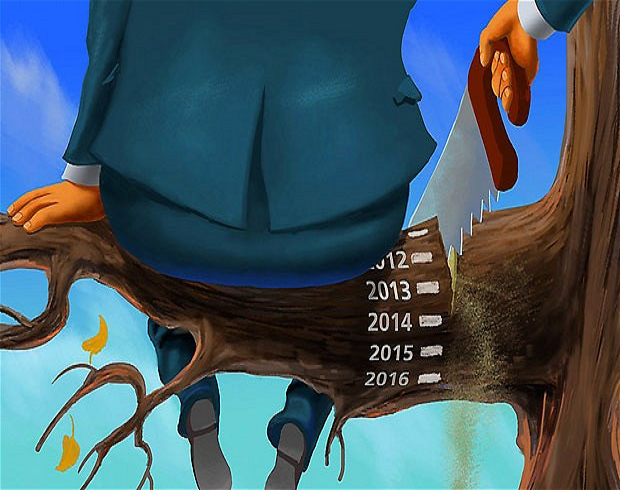
How American trains opened up their economy

[vc_row][vc_column width=”2/3″][vc_column_text]A large two engined train was crossing America. After they had gone some distance one of the engines broke down. “No problem,” the engineer thought, and carried on at half power. Farther on down the line, the second engine broke down, and the train slowed to a dead stop. The engineer announced:
“Ladies and gentlemen, I have some good news and some bad news. The bad news is that both engines have failed, and we will be stuck here for some time. The good news is that you decided to take the train and not fly.”

I spent a lovely summer in the village of Pewaukee, Wisconsin in the United States, which has a population of 8,236. It is part of the bigger city of Pewaukee that itself has a total population of 13,195 as at the last census in 2010. Tucked away in a corn and soya bean growing topography in central Wisconsin, the nearest large city is Milwaukee which lies about 17 miles East and Chicago which is a fast ninety minute drive to the south. The central focal point of the village is Lake Pewaukee which is about the size of our own Lake Elementaita and is surrounded by million dollar homes. The lake therefore attracts residents to its shores during the weekend and the local authorities have ensured a well maintained pier exists for the public to walk along, bring their chairs and sit, swim and generally enjoy free safe and secure access to a public asset. There are also clean public toilets and changing facilities and I once found a man in a waterproof overalls waist deep in the water cleaning out the waterfront area near the pier. Pewaukee is fairly safe and front doors are often left unlocked and the local police’s idea of excitement is catching a wayward driver doing 35 miles per hour in a 25 mile per hour zone. Enough said. The serenity is, however, often interrupted by the ear splitting warning horn of cargo trains that often traverse through the village as the railways tracks are part of the wider interstate web of railway track that opened up the United States to progress, new population settlements and vibrant trade in the 19th century.

On one lazy, languorous afternoon we sat by the lake and watched a cargo train trundle past. It took all of five minutes. But five minutes is 300 seconds of a long, rumbling iron snake carrying containers arranged in a double stack on wagons. So we did some quick back of a grease stained serviette calculations. Having lost count after about 30 wagons (the relentless heat and humidity does wear one down when conducting a mind numbing activity like counting train wagons) we figured that the train was easily carrying 200 containers. Assuming that a Kenyan truck on the nail biting treacherous Mombasa to Nairobi journey carries one 40-foot container, this particular train we were observing could easily eliminate 200 trucks from the road, just like that. It goes without saying that 200 trucks off Mombasa road would also mean far less damage to the road and, heaven be praised, less traffic on that critical East African artery. But surely I’m exhibiting bouts of insane fantasy so let me get back to reality.

The railroad system in the United States can be traced to the dawn of the 19th century and was primarily built to haul cargo and later, as more railway lines were built on the back of a rapidly developing financial system in Wall Street that provided funding options, passenger trains emerged. The railroad system thus opened up significant trade opportunities for manufacturers of goods as they could find and reach new markets in a cost effective manner. Towns soon started popping up along the railway routes as the trains needed skilled craftsmen to repair the steam locomotives which developed difficulties along the journey. It is also noteworthy that by the mid 19th Century, over 80% of farms in the Corn Belt (from Ohio to Iowa states) were within eight kilometres of a railway. Access to markets had led to the creation of many large scale farming communities.

Like any industry, the railways in the United States have gone through great highs and spectacular lows. Competition from trucks did affect the railway in the mid 20th century particularly with the rapidly developing interstate highway system. However deregulation of much of the industry in the early seventies removed the stumbling blocks that had made it economically unviable thus making the American freight railway system one of the best in the world.

Which brings me to our Chinese driven standard gauge (SGR) railway that is currently under expedited construction. I did a little research and was pleased to see that actually I wasn’t exhibiting bouts of insane fantasy. A typical freight train on Kenya’s SGR, once complete, will consist of 54 double stack flat wagons and measure 880 metres long. 54 double stack wagons converts to 108 containers. Poof! 108 trucks gone just like that off our roads, assuming of course that the wagon is carrying two 40 foot containers rather than 20 foot ones.

It bears some reflection as to what role the SGR can play in the reversal of the importation pressures placed on the shilling. Since our oil will have its own pipeline to take it to the port when it is eventually extracted, our higher capacity trains should not return to the Mombasa port empty. As American history shows, the railroads were a core component of the growth of the economic powerhouse as they were used to crisscross raw material and finished goods to domestic markets. What impact will having the faster delivery mechanism called SGR have on future production of agricultural and finished product in Kenya? I want to believe that this is being given careful consideration within the facilitative roles of Ministries of Agriculture as well as Industrialization. Otherwise both these engines of facilitation will have catastrophically failed.

[email protected]

Twitter: @carolmusyoka [/vc_column_text][/vc_column][vc_column width=”1/3″][/vc_column][/vc_row]

Early birds catch the government worms

[vc_row][vc_column width=”2/3″][vc_column_text]Juma was retired and had started a second career. However, he just couldn’t seem to get to work on time. Every day he was at least 30 minutes late. However, he was a good and clever worker, so the owner was in a quandary about how to deal with it. Finally, he called Juma into the office for a talk.
‘Juma, I have to tell you, I like your work ethic, you do a top class job, but your being late so often is quite a worry.’
‘Yes, I realize that, sir, and I am working on it.’ replied Juma.
‘I’m pleased to hear that,” said the owner. “It’s odd though, you’re coming in late when I know you retired from the Army. What did they say if you came in late there?’ Juma replied, ‘They said, Good morning, General!’

Sometime in 2006, I had the good fortune to attend a Rwanda Investment Conference organized by the Rwandan Government to showcase and set the scene for foreign investment in the country. My colleague and I arrived at the venue at about 8:15 a.m. having been warned to get there early as the doors would be closed once President Kagame entered the conference centre for the opening ceremony at 9 a.m. We patiently lined up through the security checks and I was pleasantly surprised to find the entire cabinet as well as their permanent secretaries had taken their seats on the front rows. My colleague, who had done business in Rwanda before, said that this was the opportunity to meet the Ministers and set up any meetings that one required. Conference attendees mixed freely with the Ministers and lots of business cards were exchanged and meetings set up as I watched. At 8:58 a.m. President Kagame strode in onto the podium and, on cue, the Rwandan national anthem began to play. At 9:00 a.m. on the dot, President Kagame sat down and the function began. For a time Nazi like me, it took every ounce of self-control not to stand up and give the man a hi five.

A year later found me in Jinja, Uganda where construction for the Bujagali Hydroelectric Power Station was being commissioned. The project was a joint venture between the Investment Promotion Services, a division of the Aga Khan Fund for Economic Development and an American energy company Sithe Global Power. The government of Uganda is a minority shareholder in the venture as well. Due to it being a critical pillar of Uganda’s infrastructure, President Museveni would be the guest of honor. His Highness the Aga Khan was also present due to the size and the importance of the project. Now if anyone has been around a function with His Highness the Aga Khan you will know that he is accorded protocols equal to a head of state so you can imagine the level of security at the venue. My colleague John and I arrived at the venue at least an hour earlier than the slated official start time of 10 a.m. to ensure we got good seats. John had a whole bunch of magazines in the back seat of his car as we left Kampala. “You need to have plenty of reading material at a presidential function in Uganda,” was his response to my quizzical expression. I shortly got to see why.

As soon as we got to Bujagali, our mobile phones stopped working due to the signal jamming devices that are used at any Ugandan presidential function. His Highness the Aga Khan was already on site and meeting guests in a separate holding tent that had been set aside for him. At 10 a.m. guests were still milling about and I asked John why we weren’t being asked to take our seats. He chuckled and handed me a couple of magazines. “Brace yourself,” were John’s ominous words. President Museveni arrived at the venue at 2 p.m. or exactly four hours late, with absolutely no apologies for keeping any of the guests waiting including His Highness. As soon as the national anthem was sung, he sat down and promptly closed his eyes in a peaceful repose. They only flew open when he was called to make his speech about 45 minutes later.

We were hot, hungry and extremely frazzled by the time we left the venue. The President had demonstrated, quite succinctly, what he thought of foreign investors on his home soil. On Thursday last week I was having lunch with some colleagues at a popular Westlands restaurant frequented by leading business executives and government officials. It was the last day of the Pre-Global Entrepreneurship Summit events at the Kenyatta International Conference Centre (KICC). Some of my colleagues had attended the opening ceremony earlier in the week and noted with disappointment that none of the Cabinet Secretaries had remained behind after the President left shortly after opening the event. The disappointment stemmed from the fact that the quality of exhibitions and panel discussions were so high that they warranted a level of engagement from senior government officials if they were indeed committed to showcasing the Kenyan entrepreneurial talent that had an enviable global spotlight. Present at the restaurant was a Cabinet Secretary who was in the printed agenda as being the lead government official for the closing ceremony that was slated for 3 p.m. The Cabinet Secretary comfortably sat sipping a glass of wine even as I left the restaurant at 3:15 p.m. It can’t be said that the official flag on the Cabinet Secretary’s flag would magically transform into wings and fly the government official to KICC at least 5 kilometres away.

But the conference participants at KICC could afford to wait for a leisurely lunch to end. After all they had nothing but time to wait. For wine to be sipped. At this time of global attention on Kenya’s biggest showcase events. Mentally, I doffed my hat to the Cabinet Secretary as I left the restaurant, “Good afternoon, General.”

[email protected]
Twitter: @carolmusyoka[/vc_column_text][/vc_column][vc_column width=”1/3″][/vc_column][/vc_row]
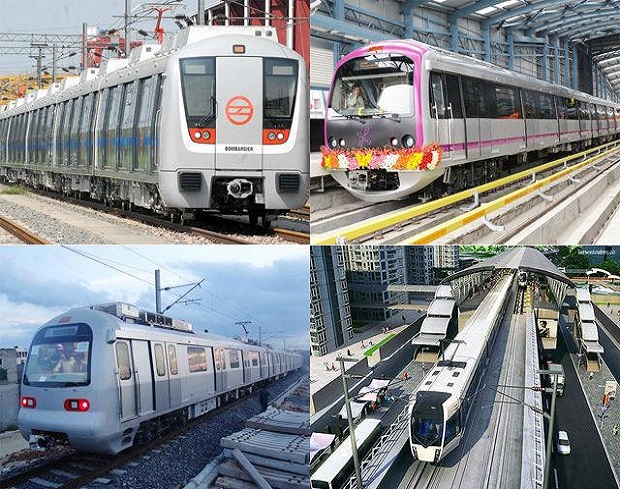
Banks and Corruption make for strange bedfellows

[vc_row][vc_column width=”2/3″][vc_column_text]On April 13th this year, I opined quite loudly about the role being played by the banking sector in Kenya’s institutionalized corruption culture. In case you missed it, my observations were as follows:

“Picture this scene: Mr X has been banking at Bank Y for the last 10 years. His account turnover is about an average of Kshs 250,000 on a monthly basis. The account suddenly begins receiving deposits and withdrawals ranging from Kshs 20 to 100 million, which moves his average monthly turnover to about Kshs 50 million. The Anti Money Laundering officer, usually a skinny, bespectacled recent university graduate, flags these movements to his boss the Compliance Manager. The Compliance Manager flags it to his boss, the Risk Director. The Risk Director walks over to the Retail Director and shows him the transactions as he’s a smart chap who doesn’t want to put anything in writing, just yet. The Retail Director, who is royally chuffed that his liability targets are constantly met since his team’s successful senior civil servant recruitment drive last year, rubbishes the report and dares the Risk Director to take it higher, “Weeeh, even the Managing Director knows we have these accounts, can’t you see how they are helping our deposits to grow?”

Well, in my typical smug armchair analyst fashion, I have been unequivocally vindicated. Far be it for me to say I told you so, but the Sunday Nation on July 5th reported some interesting court findings. An article titled “Suspended city official deposited Sh 1 bn in two years” written by Andrew Teyie caught my eye. In it tells the story of an extremely industrious public servant who allegedly deposited close to a billion shillings in nine accounts spread in five local banks within two years. This information is sourced from documents tabled in court by his accusers, the Ethics and Anti-Corruption Commission (EACC). First off, I have to doff my hat to the industrious public servant for mitigating concentration risk by opening accounts at five different banks. Baba attended risk assessment 101 and passed with flying colors. It is never advisable to put your eggs in one basket, spreading them to three is wise and to five is brilliant. It also helps to reduce the risk that in case one of the five banks cottons on to what you are up to and reports you, there are four other banks to keep fooling.

According to the court documents, industrious public servant had declared his income at Shs 831,840 (although it doesn’t quite say to whom the declaration was made) yet deposits were being made on at least twice weekly ranging from Sh 1 million to Shs 13 million. Yet the banks are required to have established Anti-Money Laundering (AML) processes to capture abnormal transactions. An abnormal transaction would be anything that goes against the norm for the type of activity a customer has been registered as undertaking. So for example a salaried customer would be expected to have a one major credit into the account, followed by a slew of debits as he withdraws his salary in dribs and drabs over the course of the month. If the salaried customer has multiple credits, especially those that significantly exceed his stated salary, this would typically raise a flag.

A way around this, for the experienced money launderers, is to open a hotel, restaurant or casino. All these businesses deal with cash such that an inordinately high number of deposits would hardly raise anything other than a bored eyebrow over at the compliance team in the bank who never quite get off their cushy behinds and go look at the actual customer turnover within these joints.

Now it is highly likely that an enthusiastic compliance officer raised the flag, drew compliance manager’s attention who drew risk director’s attention who cast a baleful glance at retail director before heroically blowing the whistle to the Central Bank team who then ran pell-mell in the direction of Integrity Centre with the file in hand to knock the sky and our expectations open with the news of this chap’s accounts. Somehow I don’t think you believe that, which is quite funny because neither do I. Truth of the matter is that industrious public servant is one of the small fish that can be pan fried in the rather tepid fight against corruption and he laid himself wide open by not covering his standard gauge tracks when banking his proceeds. He relied, quite safely, on his banks that did not report the suspicious transactions to the regulator. He also unwittingly relied on a regulator that was snored quietly on the sidelines as these AML breaches happened, and continue to happen, on their watch.

A couple of paradoxes that arise from this case are noteworthy. First off, that the Kenya Revenue Authority appeared and decided swoop in for the tax evasion kill is nothing short of comedic. How do you tax corruption proceeds of a public servant? A public servant in many cases is only taking what are public funds hence it beggars belief that one can tax what one has already collected as tax and has been misappropriated by public officials. Is that not taxing the tax that’s been taxed? The second paradox is the sand that is being thrown in the public’s eyes. Industrious public servant is a tiny little goldfish in an enormous fish tank. The EACC has demonstrated publicly that they can get historical data on the banking activities of public servants. So why isn’t the Central Bank’s supervision unit being used to assiduously partner with EACC to hunt down these nefarious characters? EACC knows where all the corruption proceeds are. Our Central Bank knows (or can exercise a tiny bit of supervision to find) where all the corruption proceeds are. You and I are foolish pawns who lap up the piddling little stories of corruption arrests. Meanwhile the big fish don’t do their banking in Kenya: it’s too pedestrian.

[email protected]
Twitter: @carolmusyoka[/vc_column_text][/vc_column][vc_column width=”1/3″][/vc_column][/vc_row]

Board Training

Through her past executive and non-executive board positions, Carol brings a wealth of corporate governance theory and practice received over the last ten years. She is able to design distinctive corporate governance trainings for boards as well as undertake board evaluations as an independent evaluator.

Carol currently sits on the boards of East African Breweries Limited and British American Tobacco Ltd both of which are Nairobi Stock Exchange listed companies. She also chairs the board of the Business Registration Services, a newly formed semi-autonomous government agency that oversees the registration of companies, partnerships and insolvencies in Kenya. She has previously served on, and retired from, the boards of the NSE listed BOC Gases and Trans-Century Ltd., Enablis East Africa (sponsored by the Canadian International Development Agency), Institute of Economic Affairs, SOS Children’s Villages, Opportunity Kenya, WEDCO and the African Legal Support Facility of the African Development Bank. She has also been an executive director at both Barclays Bank Kenya and K-Rep Bank.

You can read more about her satisfied clients in our testimonials.

Greek Crisis Explained

Once upon a time, there lived a government that ruled a country called Kulahappy. Kulahappy’s government had no problem spending money, actually lots of it. You see, in the government’s mind, the people had to be taken care of and it instituted a fairly generous public pension and healthcare system. The public pension system was open to all working citizens of the country and productive citizens were allowed to take early retirement and jump into the merry pension bandwagon. The people were very happy, especially since the government of Kulahappy was not in the habit of taxing them very much. Everything was humming along very well until a global financial crisis occurred.

Suddenly Kulahappy and other countries had difficulties borrowing money in the international markets as everyone turned off the lending taps while trying to assess who was a good or bad credit. Kulahappy’s government then decided to let out a secret that it had been hiding for several years: they had a massive budget deficit and were spending way faster than they were able to collect in taxes. It was so large that they couldn’t possibly fund it by issuing more government bonds in the domestic market. They needed external help. But international private lenders had had enough of Kulahappy’s antics and were struggling to sell off the existing government bonds faster than you could say Athens. With no takers, Kulahappy had to turn to the Union of neighboring countries with its hat in hand and ask for help.

The Union rapped Kulahappy’s delinquent knuckles very hard and said they would only lend if Kulahappy started taxing its citizens more and cut down on its public spending. What? Kulahappy was being asked to act like a grown up and it didn’t like this one bit. Its back was against a wall and, with its piddling options, started making pension and healthcare cuts while slowly trying to increase the tax brackets. The Union released the funds, 107 billion units of relief, which was the biggest debt-restructuring program in the history of the world and life went on. But the citizens were not a happy lot at all. Pension cuts led to social unrest while the underlying economic factors of production were not improving, in fact the economy contracted by 25% over the next four years. Youth unemployment began to rise, there were more poor people on the streets and before you could say Tsipras is your daddy, the government was thrown out and a new one was voted in.

The new government was made up bad boys. These boys were so tough that they told the Union exactly where it could go and stuff its face with German sausage. You see, the new boys had managed to convince the electorate that the Union-inspired austerity measures were bringing the Kulahappyians to their non-taxpaying knees and that the Union was the cause of all their problems. The new government told the Union that, quite frankly, it wanted a 50% debt write off and it wanted any discussions about budget cuts thrown into the pit latrine of history. Did I mention that the debt that was being requested to be written off was the biggest emergency loan given to a country in the history of mankind? These boys were gamblers par excellence, taking a bet that it would be suicidal for other Union members to try and force a Kulahappy exit. In their rose tinted glasses view, they were all joined at the hip for better or for worse, in richness and in poverty and only a communal seppuku ceremony would separate all parties concerned. The disgraced Kulahappyians and their thoroughly annoyed Union cousins lived unhappily ever after.

The Greeks are having a tad bit of “kula happy” fever. They have the European Union members over a barrel as everyone probably wants them out but the legal process for exiting the monetary union was not put in place as it was never envisaged that a free-wheeling, sun kissed, tax avoiding member would fall into the kind of trouble that Greece has done. The Greeks are better suited as African Union members since we can totally relate to their habits of runaway spending and tough talking governments.

But their mastery of political doublespeak is what should make them card carrying members of Africa’s political elite. Prime Minister Tsipras and his team have some serious gumption to stand in front of its lenders, the International Monetary Fund and flip them a proverbial finger by saying they have to go to the people and get their mandate as to whether to implement the austerity program. Tsipras has put the monkey on the back of his austerity weary citizens: “Say no to the austerity, so that we can bring the lenders back to the negotiating table on the basis that the people have spoken. Say yes, and we’re up the creek without a paddle. Chaos panic and disorder will become our mainstay and, by the way, I’m out of here because I can’t see a way out of the quandary this government is in.”

Good people, we need to keep a careful watch over what’s going on in Greece. We can’t shrug our shoulders every time the media highlights yet another profligate abuse of financial discretion by the Senate or the National Assembly. Each and every penny of government spending comes from us, at least that which is not funded by borrowing. If ever the music stops, and the government is unable to finance its budget deficit externally for whatever reason (political turmoil, default of existing debt etc.) the trickle down effect of a government that stops spending are too frightening to dream about. The economic contagion of a broke government inevitably leads to social unrest in an already fragmented country. But I guess no one wants to hear doomsday news like that. Neither did the Greeks five years ago.

[email protected]

Twitter: @carolmusyoka

Confluence of Political and Economic Risks

I recently dined with a European diplomat who asked the ubiquitous question that foreign residents in this country like to do: “What do you think will happen at the next Kenyan elections?” Before I tell you what I answered, I have to state categorically and most unequivocally that I am neither a political analyst nor commentator. I do, however, occasionally comment on the confluence of politics and economics as often happens invariably. That confluence is particularly necessary in the banking industry, where I spent many happy years, when analyzing credit risk of a customer for a term loan of not less than five years.

Within the duration of that loan such a customer is bound to cross the Kenyan election cycle. Depending on the nature of the customer’s business, the company is likely to have difficulties in loan repayments due to cash flow constraints occasioned by poor sales, deplorable debt collections or, heaven forbid, destruction of the company premises therefore impacting on the ability to produce the goods and services that are being procured. My answer to the diplomat saw him imperceptibly swallow and he leaned forward in interest.

“There will be bloodshed in 2017 as the historical patterns demonstrate it.”

“What do you mean?” he whispered.

“In banking, we look at historical behavior as a strong barometer of what future behavior is likely to portend. To understand our history of political violence, you have to start in 1992 when the first multi party elections were held,” I began. “In that year, you had an incumbent who was running against a very strong and credible opposition. That was when Kenya endured the first of several bloody episodes of tribal clashes.” I went on. “In 1997, the same incumbent was running for his second and last term as president. He had the benefit of the state machinery behind him, as well as a fragmented opposition. This time, the political waters were muddied in the coast region, where the pre-election clashes were largely centered. The coastal tourism economy very nearly collapsed and the hotel industry underwent massive bankruptcies.”

“Well what do you make of the peaceful election in December 2002?” the diplomat asked. “Doesn’t that destroy the pattern of electoral violence?”

“Actually, therein lies the pattern,” I responded. “Every time an incumbent is stepping down, there has been a peaceful transition in Kenya. It happened in 2002 and in 2013. But whenever there’s been an incumbent fighting to maintain the status quo, there has been bloodshed; ergo 1992, 1997 and 2007. The 2017 elections are a status quo event. The pattern will be the same.” My lunch partner mulled over this for a few minutes and promptly changed the subject.

In 2008, a few banks took advantage of the politically instigated clashes in the beginning months of the year to blame the growth in non-performing loans. Some of this was not entirely true and was a slick way of reporting previously suppressed bad loans. But you’d think that the regulator would have cottoned on to the games being played. It didn’t. It is not difficult to see why, when you look at the kind of pedestrian analysis the banking supervision department at the Central Bank of Kenya (CBK) undertakes. In the recently released 2014 Bank Supervision Annual Report, the Central Bank dedicates the monumental amount of three sentences to analyze the 2014 asset quality of the entire banking industry. I will pick two of the three sentences as an illustration:

“ The lag effects of high interest regime in 2012/2013 and subdued economic activities witnessed in the period ended December 2014 impacted negatively on the quality of loans and advances. As a result, non performing loans (NPLs) increased by 32.4% to Kshs 108.3 billion in December 2014 from Kshs 81.8 billion in December 2013.”

When your non-performing asset book increases by a third, it requires a fair amount of explaining beyond the vanilla high interest rates and subdued economic activities reasoning. There should be a fairly robust amount of granularity around the specific industries driving the poor performance of loans. It is an open secret that the central government endured inordinate cash flow challenges in 2014 that impacted key suppliers of services, particularly in the construction industry. This would invariably have a knock on effect to the suppliers of construction companies such as cement, cable and ballast for example. But this is what should be of concern as we hurtle towards an election cycle in the next two years. The retail loan book across the banking industry is the single largest loan segment with 3.6 million accounts grossing Kshs 516 billion and accounting for 26.6% of total loans in the market. This is ahead of trade at Kshs 375 billion (19.3% of total loans) and manufacturing at Kshs 237 billion or 12.2% of total loans. Retail loans, codified by the CBK as personal/household loans, are consumer loans and in this market represent the largely salary check off loans that pepper many banks’ unsecured loan offers. It’s highly likely that the bulk of these loans are used to purchase consumer items such as cars, furniture and electronics rather than investment in income generating activities. A political event such as post election violence, followed by an economic downturn caused by reduction in productive capacity of Kenyan companies will lead to retrenchments. You can also never underestimate the capacity of cheeky borrowers to take advantage of politically volatile environments to stop repaying loans due to destruction of work places and such like sob stories. I saw it happen in 2008.

A notable risk therefore sits in the banking industry come 2017: any delays in government payments (partly occasioned by tax collection difficulties on the part of Kenya Revenue Authority) together with probable election related violence will negatively impact bank loan books. Don’t be surprised if you find difficulty getting an answer on your loan application that year. Your bank is just not that into you in an election year.

[email protected]

Twitter: @carolmusyoka

Angel Investors as Key Drivers of Entrepreneurship

An angel appears at a board meeting and tells the chairman that in return for his unselfish and exemplary behavior, the Lord will reward him with his choice of infinite wealth, wisdom, or beauty. Without hesitating, the chairman selects infinite wisdom.
“Done!” says the angel, and disappears in a cloud of smoke and a bolt of lightning.
Now, all heads turn toward the chairman, who sits surrounded by a faint halo of light.
One of the directors whispers, “Say something.” The chairman sighs and says, “I should have taken the money.”

Earlier this month I attended the G-20 Global Partnership for Financial Inclusion, which held a workshop on Financing Entrepreneurship Innovative Solutions in Izmir, Turkey. Turkey currently holds the G20 Presidency and therefore its government played a pivotal role in the organization of the successful of the workshop. One of the panelists was a well-known Turkish entrepreneur, angel investor and author, Baybars Altuntaş, who impressed the audience with his vocalization of tax incentives that the Turkish Government provides to angel investors. I pulled Baybars to the side during a coffee break and asked for more details. Once a person has registered as an angel investor, he is allowed to net off up to 75% of his investment in the start up company against his income tax payable in the year. In other words, a tax holiday of up to 75% of your investment! Baybars added that angel investors tend to get together and pool their funds to reduce the risks as the success rate for their investments was only typically 10%. “Why would one invest money in start ups if only 1 in 10 initiatives succeed?” I quizzed. Baybars smiled the smug smile of the wealthy and responded, “Because the returns from that 10% will make you more money than the losses on the 90%!” I walked away, scratching my head and realizing why my risk aversion would leave me a pauper for the rest of my life.

Angel investment is the provision of financial capital to newly established or growing companies which have novel business models or technologies with high potential for growth and profit but are unable to find eligible financing resources to realize their investments.

Recognizing the inherent benefits that angel investors would provide through entrepreneurial seed capital support as well as stimulating economic growth through job and value creation, the Turkish parliament passed the “Regulation on Angel Investment” law in June 2012 and the Treasury promulgated the enabling legislation in February 2013. The rationale behind the law is to promote the financing of small enterprises and entrepreneurs by providing tax incentives to angel investors. According to a PwC Turkey Asset Management Bulletin, in order to benefit from the tax reliefs provided in the law business angels first have to obtain a license from the Treasury. The business angel cannot directly or indirectly be a controlling shareholder of the qualifying company that it wishes to invest in, neither can the qualifying company belong to his relatives. A qualifying company should, amongst other criteria, be a registered company in accordance to Turkish company law with a maximum of 50 employees and net assets of not more than TRY 10 million (Kshs 354 million). If the business angels participate in qualifying companies whose projects are related to research, development and innovations then the applicable tax incentive is 100% instead of 75%. This is where it gets interesting. In order to get 100% tax relief those activities have to have been supported in the last five years by the Scientific and Technological Research Council of Turkey, Small and Medium Enterprises Development Organization and the Ministry of Science, Industry and Technology. The tax reliefs are applicable until the 31st of December 2017 making it a 5-year program, but the Cabinet can authorize the extension of the date by another five years. Shares acquired by the angel investor have to be held for at least two years and the minimum investment is TRY 20,000 (approximately Kes 700,000) and a maximum of TRY 1,000,000 (Kes 35 million) annually.

So let’s bring this concept home. Imagine if the Kenyan government picked four key economic areas that they wanted to drive with the help of the private sector. Let’s say agriculture, health, technology and education. Then the government wakes up to the fact that they can’t be all things to all people, and that they need to leave the business of business to the best people suited to do it: business people. They then assume that it’s far better to allow a business person to take a risk on an entrepreneur as the business person has a) a much better nose for sniffing out and recognizing good opportunities, b) years of experience in making and losing money therefore an appreciation for and recognition of risk, c) business experience the kind of which they don’t teach in business school leading to mentorship and d) his very own money which defines his skin in the game. The same Kenyan government would then ensure that the business angels’ interests are aligned to the strategic objectives of the relevant ministries for the four key areas. Rather than allocate funds in totality to the Women and Youth Funds, re-route a portion of those funds to backstop a tax incentive program for Kenyan business angels. The benefits hardly merit articulation due to their sheer obviousness. The Government will distribute the risk of repayment from their annual budget allocations to the Women and Youth funds by providing an alternative mechanism for reaching those same stakeholders in a credible, efficient manner that provides the extra flavor of mentorship as well as stronger linkages between the existing business community, women and the youth. Finally, it allows for a wider tax bracket to be formed since, by requiring investees to be formalized legal entities, the investee companies enter into the taxation realm. It shouldn’t take a little wisdom from heaven to permit business angel investing to become a government driven entrepreneurship initiative.

[email protected]

Twitter: @carolmusyoka

Sights and Sounds of Turkey

A work related trip to Turkey recently got me to make my maiden voyage on Turkish Airlines. The narrow bodied 737-800, with a passenger capacity of anywhere between 151 to 189 passengers depending on its configuration, was packed to the rafters and every single seat was occupied for the six hour flight to Istanbul. The flight left bang on time at 10:25 a.m. filled with a motley group of passengers. Somewhere in the middle sat a group of female Kenyan traders, with the ubiquitous well worn scarf wrapped around seasoned shoulders. At the back of the plane was a group of young Kenyan males, quite obviously going for a sports related trip given the loud, raucous laughter filled with competitive promise that occasionally punctuated the air.

As a card-carrying member of the Kenya Airways (KQ) fan club, I couldn’t help but compare the service on the two airlines. KQ beats them on food hands down despite a Turkish-steward-dressed-in-chef-uniform perambulating about and offering more promise than fact during the flight. However, I have to admit that individual passenger screens providing at least 40 choices in each of the three genres of drama, comedy and action made for an unbeatable in-flight entertainment service.


Image from http://ichef.bbci.co.uk

The Turkish Government owns 49.12% of Turkish Airlines while the rest is free floating on the Istanbul Stock Exchange. With about 277 planes ranging from Airbus, Boeing and Embraer, the profit-making airline is the fourth largest carrier in the world flying to 218 international destinations. It has faced challenges like most airlines and posted losses in 1987 and 1988 due to high payments on its new Airbus A310s. It also suffered in the global aviation crisis following the Gulf War in the nineties and didn’t break even until 1994. The airline also underwent some stress during the SARS outbreak that forced it to suspend flights to several Asian destinations. However in the last three years 2012, 2013 and 2014 the airline turned over $8.2 bn, $9.8 bn and $11 bn respectively yielding a net profit after tax of $657m, $357m and $845m during the same period. It enjoys relatively good profits and very healthy and positive cash flows.

But it’s not difficult to see why. Turkish Airlines is a key partner in the Turkish government’s tourism initiatives, which started when the new government in 1983 chose the airline to be its primary ambassador and committed to maintaining a modern fleet with high security. Data from the Turkish government shows an average growth rate of above 5% in tourism per year with 36.84 million visitors in 2014. Turkey happens to be the sixth most popular tourist destination in the United Nations World Tourism Organization’s ranking. It relies on its cultural and historical heritage along with sea tourism. It has also been helped recently by the depreciation of its local currency – the lira- against the US dollar and Euro which has therefore made it an attractive destination for visitors from those regions.

We landed in Istanbul in the early evening and as I was travelling to Izmir, the third largest city in Turkey, I had to go through immigration. Long lines awaited me with about 22 counters reserved for non-Turks and another 8 reserved for Turkish passport holders. I must admit I let out a quiet snort of derision as I gleefully stood in the same tortuous line with British, American and EU passport holders. No privileged access here. We were all in it to win it.


Image from http://www.trazeetravel.com

Istanbul’s Ataturk airport is actually not visitor friendly and it’s quite a schlep to the domestic terminal with poor signage and mostly non-English speaking airport staff. I barely had time to grab something to eat before I heard the last boarding call for my flight to Izmir. As it was a domestic flight I was expecting it to be an Embraer or another Boeing 737 at least. However the transfer bus pulled up in front of a Boeing 777 -300 ER with a passenger capacity of 349. The reason for the use of the wide-bodied equipment quickly became apparent. The 42-minute flight was packed to gunwales to Izmir, a town 331 kilometres south west of Istanbul that sits along the coastline of the Aegean sea. Izmir has a rich history with at least 4000 years of urban civilization and is proximate to the ancient city of Ephesus- remember John the apostle’s letter to the Ephesians? Most of the passengers were tourists, many who were of oriental extraction.

There is newness to Izmir, certainly not the crowded old city feeling that I recall from my Istanbul trip 15 years ago. The streets are wide, 3 lane highways on a each side and my cab driver drove like he was possessed with and conceived by Lucifer’s spawn. Having had a seamless check in process into the hotel and feeling slightly peckish, I took the lift to the 8th floor sky bar and was immediately taken by the wide vista of twinkling lights on the hillsides of Izmir. Immediately below me was a city square, it was 10 pm on a Saturday night and there were many people walking, rollerblading and cycling on a sea fronting promenade, the centre of which is the Republic Square. It looked safe, appealing and attractive as it was brightly lit and secure. On the other side of the square, was a police car parked seemingly carelessly on the road, insouciance oozing out of every screw holding its authority together. Its red and blue lights flashed brilliantly to mark its territory. Republic Square was safe for its users.


Image from http://www.trazeetravel.com

The Turkish government uses the national airline as a fundamental tool of tourism, which is a key economic driver. Security is present and very visible to residents and visitors of Turkish cities. It is apparent even to the untrained eye that the government plays a key and supportive role in the way business is done in the country. More on Turkish government support of Turkish business next week.

[email protected]
Twitter: @carolmusyoka

Kenya Airways needs another shot in the arm

What do Britam, Kenya Tourism Federation, Independent Electoral and Boundaries Commission, Strathmore Business School, MTN Business Kenya, Kenya Commercial Bank and British American Tobacco Kenya Limited all have in common? Absolutely nothing. Except that senior executives from these organizations were present in Kigali last month, more precisely on May 26th for various business reasons that were not only mutually exclusive, but it is quite likely that many of these executives never crossed each other’s paths. But they crossed my path. The serendipitous points of confluence were the Kigali airport and at the Serena Kigali where many of us were staying. Most of the executives had come in using the Pride of Africa, Kenya Airways, which is the lifeblood of business travel in the East, Central and Southern Africa region. A tiny fraction had used Rwandair, the national carrier for that beautiful nation state nestled in the bosom of the East African Community.

There is massive trading of goods and services occurring across the five East African Community members. Pivotal to that business is the travel that the business owners and their managers have to undertake to make that business happen or monitor its performance. Pivotal to that travel is Kenya Airways like the critical aorta in the East African cardiovascular system. It hit me, after saying hello so many times, that I was starting to think I was at a diluted version of the Kenyan Company of the Year Awards. Kenyans are doing business aggressively in the region and any problems facing Kenya Airways are problems that will have far reaching impact on business in the region. Board meetings will be missed, conferences will be delayed, workshops will be remiss without key trainers, performance appraisals postponed just if the airline had one daily hiccup.

So it was with the deepest regret that I told my workshop organizers in April that they had to book me on Rwandair for the May workshop that took me to Kigali. I am proudly Kenyan and fiercely loyal to Kenya Airways, so much so that I take deep umbrage whenever the airline is trashed in any gathering. The golden handcuffs called frequent flyer miles also don’t allow much in the form of adulterous predilections with competitors. You are penalized heavily via ego bruising downgrades by the Flying Blue program, of which Kenya Airways is a member, for not maintaining a rigorous flight schedule annually. I was in the tiny fraction that flew the competition simply because the anecdotal evidence of missed and delayed regional flights by our national pride were starting to take their toll on the brand’s promise of reliability. I ended up being vindicated for my decision as my colleague who chose to fly the airline did indeed have his morning flight to Kigali cancelled. It is also noteworthy that Kenya Airways is the only decently reliable airline flying to Tanzania and Uganda respectively directly from Nairobi. It therefore has a captive market well sewn up in this region.

The airline has monumental goodwill and plays an undeniably enormous role in flying the country’s flag high. As one of only four African national carriers that are of global significance (the other three being South African Airways, Ethiopian Airways and Egypt Air) Kenya Airways’ financial problems are Kenya’s problems. They merit scrutiny and concern in equal measure, if for no other reason than we cannot, as a proud nation, permit this symbol of nationalism to fly into headwinds as my media colleagues like to infer.

In November 2012, I raised an eyebrow in this column regarding the motive for the rights issue that Kenya Airways had undertaken 6 months earlier:

“The timing of the rights issue in April this year was ostensibly to raise the equity for the airline and improve its debt to equity ratios for the further leveraging the airline needs to undertake to grow its fleet for its future expansion. However, looking at the airlines’ statement in changes in equity, if the rights issue had not happened when it did, Kshs 6.2 billion would have been wiped out from the equity arising from the operating losses as well as losses from the cash flow hedges that have caught the airline on the wrong side of the very necessary derivative bet for a few years now.”

Looking at the Half Year 2014 results released by the airline, the total comprehensive loss of Kes 13.2 bn pretty much almost halved their equity to the position of Kes 15 bn from a starting position of Kes 28.2 bn at the beginning of the financial year in April 2014. Cash was down to Kes 4.5 bn at half year as well from Kes 11.2bn at the beginning of the period. The airline is burning through cash at a high rate driven by high loan and interest repayments and basic operational expenses like salaries while grappling with labor relations that are a key cause of the delayed flights across the region.

The recently announced Treasury cash bailout of Kes 4.2 billion will be swallowed within the airline’s operational bowels without the pleasure of a satisfactory burp. That will also be putting an Elastoplast over a gaping wound that needs the kind of suturing provided by a massive capital injection that will be very apparent when they release their full year results for the period ending March 2015. Some feverish calls will have to be made or are probably being made to the key shareholders GoK and KLM to pony up certainly much more than the Kes 4.2 bn that has been put in Treasury budget estimates.

If GoK can consider injecting capital into a moribund, badly mismanaged train smash of a sugar miller like Mumias, it goes without saying that an injection into the national carrier is not only inevitable, but it is imperative. If it doesn’t happen the unimaginable impact will extend beyond Kenya Airways stakeholders: It will impact how business is done in the East African region as a whole.

[email protected]
Twitter: @carolmusyoka

Non-Reforms of the Parastatal Kind

Dear Parastatal Politician Director:

Congratulations on the appointment! Your name transcended what must have been several iterations of the best and professional list of qualified candidates for the rigorous task of board director or chairperson. Let me remind you (or perhaps inform you for the first time) about the journey that preceded the gazetting of your name a few weeks ago.

On 23rd July 2013, President Uhuru Kenyatta appointed the Presidential Task Force on Parastatal Reforms (PTPR). The news was met with giddy excitement from right thinking Kenyans as it demonstrated the President’s commitment to actually instilling a new way of driving public sector performance through credible and qualified appointments on the oversight boards of directors. Even better was the composition of the Task Force: Eleven accomplished individuals from both the public and private sector whose experience and professional pedigree were unquestionable.

The team didn’t sleep, I tell you. By October 2013, The Report of The Presidential Task Force on Parastatal Reforms was ready. The team looked east, west, north and south across the global for best practice in government owned entities (GOE’s). And they summarized it into the report. You need to wrap your fingers around this 229-page report before you rock up bright eyed and bushy tailed at your new boardroom. Problem is, you’ve probably already rocked up. But it’s never to late to learn as the late Kimani Maruge, Kenya’s oldest Standard One pupil, would have told you. The report is easily available on the internet because I highly doubt that the Managing Director of your parastatal distributed it to you at your induction. Yes induction, a process that you were supposed to undergo, right?

But the PTPRs knew then that you probably wouldn’t undergo it. In fact, if you turn to page 56 of the 229 page document (and I congratulate you most profusely if you got this far) you will find the following quote: “The Committee identified a number of issues and challenges with the current framework for recruitment, selection, appointment and induction of boards of GOEs. These include:
• absence of a clear framework for recruitment, selection, appointment and induction of boards of GOEs;
• lack of uniformity in the application of appointment procedures, not least in respect of GOEs;
• inadequate induction processes for board members;
• lack of proper skills mix and bloated boards;
• shortcomings in the process of appointment of CEOs;
• lack of understanding of role of boards by board of directors;
• fusing of the Chief Executive and Board Secretary roles.”

Hey wait a minute, let’s take a step back. Did the PTPRs actually imagine that there has historically been a lack of proper skills mix in parastatal boards? I want to believe that following your appointment this has now been corrected, right?

This was their finding: “Achieving the right mix of talent, skills and experience on boards is critical for businesses. In addition, good corporate governance calls for a proper skills mix in the board for boards to effectively carry out their duties as the minds and wheel of GOEs. An organization that recruits from the widest pool of talent ensures a diversity of experience and perspective in the boardroom that broadens discussion. Diverse views promote debate and challenge group mentality; they are more likely to encourage consideration of alternatives, take into account more risks, and develop contingency plans. The lack of a proper framework for recruitment of boards has led to lack of the necessary mix of skills and talent in boards of GOEs.”

But listen. Things are not too bad. You were picked because you have a role to play on your board. Your political background, your experience as well as your very apparent skills will bring in critical perspectives that will broaden discussion. After all you were picked BY the President himself who had conclusively and exhaustively read the Taskforce’s report. If you read nothing else in that report, please I beg you, read that same page 56, a section titled “Lack of Understanding of the Role of Boards by Board Members.”

In case the Managing Director of your parastatal fails to send you for training, or in the event he does and you fail to attend the same, you need to understand this critical fact articulated in that section: “Directors of GOEs just like their counterparts in private companies are required to discharge their legal duties faithfully. These duties are grouped into two categories, namely duty of care, skill and diligence and fiduciary. One of the legal duties of a board of directors is to act in good faith. This connotes several requirements, including the duty to act honestly and in the best interests of the GOE, to not appropriate the company’s opportunities or receive secret profits and to endeavour to fulfil the purpose for which the GOE was established. They must act in the best interests of the GOE. It is this critical role of boards to act in good faith and act in the best interest of the GOE so as to drive forward its strategy that some board members tend not to fully understand and/or practice.”
Yes, the Taskforce is talking about the other guys on the board. Not you. You have happily taken on your role because you will always act in good faith. Right? In case you need a summary of why you were chosen out of 40 million Kenyans to be on the board, the report captures it beautifully: “In conducting this exercise, the PTPRs was exhorted by H.E. The President to always ask: (a) where does Wanjiku stand in this detailed framework? (b) Is the public sector working for her at all? (c) Is she getting value for her precious investment?” This the Taskforce kept uppermost in their mind.

You must remember that you are there for Wanjiku. In every single board deliberation you must keep this front and centre of your mind. Wanjiku is not your pocket. Wanjiku is not your bank account. Wanjiku is Kenya.

[email protected]
Twitter: @carolmusyoka

Sights and Sounds of Poland

A few weeks ago, I was the guest of the Government of Poland at the European Economic Congress held in the southeastern Polish industrial city of Katowice. I arrived on a cold and blustery spring mid morning into Warsaw’s Chopin International Airport. Surprise number one: the world-renowned composer and piano virtuoso Francois Frédéric François Chopin was actually born in 1810 as Fryderyk Franciszek Chopin in Warsaw and became a musical child prodigy before moving to Paris at the age of 18. Poland, his country of birth never forgot him and has awarded him the national honor of naming its gateway into the country after him. (Eleven years after receiving the Nobel Peace Prize in 2004, there is no visible memorial that Wangari Maathai originated in Kenya. None whatsoever)

City of Katowice
City of Katowice
Image from https://upload.wikimedia.org

I must say that I was ecstatic when I bumped into a former work colleague who had undertaken his university studies in Poland and was also part of the entourage. It meant that I had a familiar guide who, I erroneously thought, would help me navigate 100% polish speaking territory. Surprise number two: I didn’t need a Kenyan polish speaking guide to move around. All the signs in the airport were in both Polish and English. Now, in this part of the sun kissed African world, mention Poland and it immediately conjures up images of a grey, undisputed card carrying member of the former Soviet driven Eastern bloc. But Poland’s long and tortuous road to becoming a jewel in Europe’s crown began over 40 years ago. And it is this journey that convinced me that many African countries have hope for economic transformation within a single generation.

In the 1970s, Edward Gierek, the First Secretary of the Polish United Workers’ Party racked up an unsustainable debt to the West. Coupled with an unproductive and centrally planned economy, the country was unable to handle the debt payments leading into an economic crisis. Basic goods started disappearing from store shelves. As one fairly young speaker at the Congress stated when he heard an African contributor lamenting about poor economic policies in his country, “In Poland in the eighties, if one found people standing in a line, one would join the queue and only find out what was being sold at the end of the queue. We have now transformed into the 6th largest GDP in the European Union. You can do it as Africans too!” The African contributor slunk back into his seat quietly.

Anyway, back to Poland’s interesting history. By the 1980s, the economic crisis had grown spurring multiple protests. An independent trade union known as Solidarność (or Solidarity in English) became the main force behind the protests with many workers as well as intellectuals joining it. At its height the trade union had well over 10 million members. In the face of social opposition and a deepening economic crisis, the troubled communists began the famous Round Table Talks that resulted in the first democratic elections in the Eastern Bloc taking place in 1989 in Poland.

Warsaw at night
Image from http://viahansadmc.com

If you are a purveyor of conspiracy theories, you would greatly enjoy a book by Gordon Thomas called “Gideon’s Spies: The Secret History of the Mossad.” In the fairly well written book, the writer reveals a number of Mossad operations and discoveries, a key one of which is who ordered the miraculously bungled assassination attempt of Pope John Paul II, himself of Polish descent. According to Thomas, Mehmet Ali Ağca – the Turkish assassin who shot the Pope in May 1981 – was actually recruited and funded by the Soviet Union, as the Pope’s influential office was thought to spur the influence and efficacy of the Solidarity movement on the world stage.

But I digress. In the 1990s, a free market replaced the centrally planned economy, privatization of state entities was embarked upon and the Warsaw Stock Exchange was launched. Surprise number three: While Poland joined the European Union in 2004, it still remains outside of the monetary union and operates its own currency, the Zloty, meaning that the cost of living is much lower than other countries in the Eurozone and they are therefore able to place themselves as an attractive destination due to competitive labor costs.

Consequently, Poland enjoys the benefits of European Union such as access to a single market with no trade (or physical) barriers as well as access to EU funding. Poland has a population similar to Kenya’s at 38.5 million people, 60% who live in cities and 50% who are under the age of 38. 16 million are professionally active and the government ensured that English is now a mandatory subject in primary and high school leading to a population that attracts world class companies looking to set up strategic businesses such as IBM, LG, Procter & Gamble, Siemens and Samsung Electronics to name a few. It’s ability to attract the highest level of foreign direct investment in Central Europe as well as its large and rapidly developing domestic market meant that it was the only EU country that did not experience a single quarter of GDP decline at the height of the 2008 global financial crisis.


Image from https://i.gocollette.com

The Poles were quick to admit that while they were slow to the “doing business with Africa” party, they were in it to win it particularly in the agri-business field. At the Congress, every nook and cranny was filled with cafés giving out specialized coffee drinks. The Polish are enormous coffee drinkers and one Café owner had expressed interest to a Kenyan colleague in sourcing good coffee beans. Patryk, my Polish handler, noted with some humor that he had never seen so many black Polish speakers gathered in one room. Clearly the Polish policy of granting university scholarships in the eighties and nineties was reaping rewards. The Poles want to do business in Africa but, as one of the Kenyan panelists advised them, they need to get high-level Polish government dignitaries to be the face of this agenda. Africa is ready.

[email protected]

Twitter: @carolmusyoka

South Africa The Economic Giant But Social Dwarf

He hurriedly walked away from his stalkers as they quickly circled him, their eyes gleaming with their malevolent intent. The first stalker beat him over the head with a wrench while the three other stalkers frothed at the mouth in gruesome anticipation and unleashed long knives from their pockets. In an instant, he lay amongst plastic papers, rotting food and the rest of Alexandra’s vomit, bleeding from a 2 cm gash to his chest. One of the knives had penetrated his heart. In less than an hour he was dead. The newspaper photographers who captured the entire episode rushed him to hospital ensuring that he didn’t die nameless, as his cellphone was found intact in his pocket. At 7 a.m. on the 19th of April 2015, Emmanuel Sithole from Mozambique became the personification of the ongoing “Makwerekwere” pogrom in South Africa.

The mortified and indignant noises from across the continent have been loud and predictable. The Nigerians, who have had an ongoing diplomatic lover’s tiff with the South Africans over the last two years, were the first to give strong reactions. They summoned the South African High Commissioner to the Ministry of Foreign Affairs and let rip their sentiments, no doubt sending warning shots against anything happening to their nationals on the ground. I’ve been trying to connect the dots. Foreigners + hard work = Hate. I just don’t get it. I’m struggling with how hard work can generate hatred and despair. So I tried to bring it home to my own local context. In the late part of the 19th century, a number of ships docked into a fledgling seaside port that had been used for centuries by Arabs. The ships carried British nationals, keen to make a better life for themselves in new lands, as their ancestors had done in the United States centuries before.

They came, they saw and they conquered, pushing native Africans out of their homelands and taking over productive land. The natives were used for cheap labor and prevented from growing cash crops that would provide them with financial freedom. Through the work of the hands of the natives (input), the colonialists were able to produce cash crops (output) using a valuable and scarce resource called land that never belonged to them in the first place. On the sidelines were the Indians, the first group who came to provide skilled labor (input) to produce a railway line that would carry goods into the hinterland and export goods (output) to new markets. The Indian traders, who recognized opportunity when it slapped them in the face, followed the Indians laborers. The Indian traders planted roots in Kenya, bringing in capital and goods to supply (input) against which they sold and made a profit (output). The later generations of the Indian traders undertook vertical integration and used their capital (input) to establish factories to manufacture goods for the Kenyan consumers
(output). The Indians cannot be placed in the same category as the British colonialists from an input and output perspective. One came, took the land and the labor and carted off the output, while the other came, brought his own capital plus sweat and invested the output back in the country.

Hard work and sweat are intangible factors of production. A standing shop, a nice car and a nice house are the very tangible results of successful production. One needs to have the intellectual capacity of connecting the dots to see these results. In a country like ours where blood has been spilt countless times for land, a tangible factor of production, our propensity to fight has historically stemmed from land ownership and perceptions around historical injustices over that ownership.

But as Kenyans we recognize hard work. We recognize the kiosk owner, the Jua Kali furniture fundi who employs three or four artisans to help, we recognize the woman selling roast maize on the side of the road, we recognize the shop owner at a gleaming new mall and the entrepreneur manufacturing soap in industrial area. We recognize them all. The capital to begin their businesses didn’t fall off the Kisumu express train to financial freedom, it came from funds scrimped and saved over a period of time. We don’t have a sense of entitlement over what all these business owners have simply because the narrative of the political class has never been about taking output from sweat that’s not yours. (It goes without saying that the narrative of the political class has largely been about taking land however). And why is that? Is it because much of the political class is in business too? Or is it that the business constituency funds much of the political class?

Entitlement is the key differentiator here. The effect of South Africa’s long walk to freedom was to create a large number of citizens who felt entitled to enjoy the fruits of the struggle that were now constitutionally guaranteed. That has been interpreted by some to mean that hard work (intangible input) translates into good life (tangible output) that should be mine as I’m entitled to anything built in South Africa within the same community that I live in. After all, we have all been thriving in the catacombs of despair and cyclical poverty and I can’t understand why you rose up to be economically better than me.

But I, the ignorant native, cannot connect the dots between hard work and output. I cannot connect the dots between the foreign owned businesses that bring consumer goods to my neighborhood and my uplifted standard of living. I want them gone. And when they’re gone, I’ll struggle to find a place to buy those goods and services because I won’t start a business myself. And I will have to go to a more expensive provider. And then I’ll have less disposable income. And I’ll be poorer. And I’ll be angrier but still feel entitled. So I will turn to the next soft target. Who could that possibly be?

[email protected]
Twitter: @carolmusyoka

Our Banks Are Laundering Corruption Proceeds

A man walked into a Swiss bank and whispered to the manager “I want to open a bank account with 2 million dollars.” The Swiss manager answered, “You can say it louder, after all, in our bank poverty is not a crime.”

As the sun set on the month of March 2015, there was cause for much reflection by the various civil servants who found themselves on the “List of Shame” that read like a who’s who in Kenya’s enterprising and highly lucrative public service. I can only imagine how many folks in the civil service girdled their loins in preparation for battle as they poured over the list with bleary eyes that were bloodshot with the previous night’s spiritual indulgence, fervent in the hope that their names didn’t appear.

Well, there were no public gasps of shock or righteous indignation; Kenyans have truly become immune to lists of shame. As a Nigerian friend recently told me, it only makes news in Nigeria when a public official has stolen over $100 million – Kshs 91 billion . Anything beneath that is deemed verily normal. However, there seemed be a lot of skepticism as to what the definition of “stepping aside” truly meant and whether it would conform to the Kenyan precedent of lying low like an envelope for three to four months followed by a quiet slinking back into office under the cover of media darkness.

Good people, we are talking about hundreds, nay, billions of shillings that have been corruptly acquired. This is not an amount that can fit into your Little Red suit pocket, or tied into the corner knot of Mama Mboga’s khanga. These funds have to be moving within and around the Kenyan banking sector. Yes, the banking sector that has remained grossly silent and unapologetically mum about the billions in liability windfalls that have dropped miraculously from the sky. Picture this scene: Mr X has been banking at Bank Y for the last 10 years. His account turnover is about an average of Kshs 250,000 on a monthly basis. The account suddenly begins receiving deposits and withdrawals ranging from Kshs 20 to 100 million, which moves his average monthly turnover to about Kshs 50 million. The Anti Money Laundering officer, usually a skinny, bespectacled recent university graduate, flags these movements to his boss the Compliance Manager. The Compliance Manager flags it to his boss, the Risk Director. The Risk Director walks over to the Retail Director and shows him the transactions as he’s a smart chap who doesn’t want to put anything in writing, just yet. The Retail Director, who is royally chuffed that his liability targets are constantly met since his team’s successful senior civil servant recruitment drive last year, rubbishes the report and dares the Risk Director to take it higher, “Weeeh, even the Managing Director knows we have these accounts, can’t you see how they are helping our deposits to grow?” The Retail Director has been considering opening a branch for High Net Worth Individuals on the 10th floor of a new building in Westlands with a dedicated high speed lift from the basement, primarily to enable senior civil servants come and go easily without being noticed.

This scene is quite likely replicated across some of Kenya’s banks today that have “flexible” anti-money laundering (AML) rules and ill defined Know Your Customer (KYC) policies. Because if you Know Your Customer as per the Central Bank of Kenya guidelines, you should know your customer’s source of funds and be in a position to flag suspicious inordinate account activity on a real time basis; technically. The Central Bank inspectors who come round every so often, should also be able to pick up on this activity since they have access to the exception reports on account turnovers; technically. But does this happen? Let’s take a look at how developed markets penalize offending banks. In July 2013, Europe’s largest bank HSBC was accused of failing to monitor more than $670 billion in wire transfers and more than $9.4 billion in purchases of US dollars from HSBC Mexico, American prosecutors said. The bank was criminally charged with failing to maintain an effective anti-money laundering program, failing to conduct due diligence amongst other charges. Bloomberg Business reported that court filings by the US government indicated that lack of proper controls allowed the Sinaloa drug cartel in Mexico and the Norte del Valle cartel in Colombia to move more than $881 million through HSBC’s American unit from 2006 to 2010. HSBC was fined over $1.8 billion in penalties as a result.

Along more familiar bank territory, Standard Chartered agreed to pay $300 million to New York’s top banking regulator for failing to improve its money laundering controls, reported the BBC in August 2014. The Bank was also banned from accepting new dollar clearing accounts without the state’s approval. The penalty arose from a clear lack of learning as the bank had its AML problems identified in 2012 which had still not been fixed by 2014. The 2012 problems had led to the bank being penalized $340 million for allegedly hiding $250 billion worth of transactions with the highly sanctioned country of Iran. The banking regulator required that an independent monitor be installed at the bank and the monitor discovered that Standard Chartered had failed to detect a large number of potentially high-risk transactions.

At the risk of sounding judgmental, it’s quite likely that the banks in Kenya operating under international jurisdictions are applying their KYC and AML screws very tightly on what are termed as Politically Exposed Persons (PEPs) for no other reason than to avoid international notoriety of “chicken-gate” proportions. Actually, the corruption proceeds are more likely to be found in some of our local banks, mingling merrily amongst the hard earned proceeds of sweat generating wananchi.

Poor senior civil servants don’t exist in Kenya. They bank alongside the wealthy, productive citizens of this beloved country. Our banking industry knows them quite well.

[email protected]
Twitter: @carolmusyoka

Outsourcing the Government

The National Assembly today voted unanimously for the bill to outsource the oversight and representative role of parliament to a leading international audit firm CWP. The same bill also outsources the role of government ministries to Dineshco, a Business Processing Outsourcing company in Madras, India. The extraordinary bill was the brainchild of the Member of Parliament for a previously unheard of constituency in Kwale county, long known to have harboured desires for secession anyway. “Since Pwani cannot leave Kenya, the next best thing is for the government to leave us, and for us parliamentarians to leave ourselves,” said the diminutive and often vituperative MP.

The quotation above sounds like a ridiculous headline story in a freakish nightmare movie. But is it preposterous to think of outsourcing as the solution to the chasmic corruption in the executive and the cataclysmic rent seeking in the institution that is supposed to keep the executive in check, namely parliament? Think about it for a River Road minute. We find a company that is willing to run our government ministries and ensure that efficient service delivery is procured for the ultimate customer: the mwananchi. We pay the company a percentage of the national budget. The company then delivers proficient services in health, education, tourism, environment etc. procuring supplies from the least cost provider and leveraging on economies of scale just from ordering in bulk across the ministries. We throw out the Cabinet Secretaries, Principal Secretaries and the entire civil service. We will have a President who will be the head of the country in as much as the non-executive chairman of a private sector corporate is the ceremonial head of the institution.
The President is actively encouraged to visit schools and hospitals and take appropriate kissing baby pictures for the media.

We then turn our attention to parliament. We throw them all out. We hire an audit firm to provide monitoring and oversight over the company running the executive. We keep 47 senators who will represent the counties and meet the audit firm once a quarter to receive a report on what the company running the executive is doing. We allow the senators to ask questions relating to services that are being provided to their counties. The senators never meet the company. They only engage through the auditors. We actively encourage the senators to visit schools and hospitals in their counties and take appropriate kissing baby pictures for the media.

Kenya has now hardwired corruption both in its institutions and in its collective DNA. We have to reboot. But we have to outsource management of our institutions away while we reboot. The idea of outsourcing everything, while extreme, has been undertaken in smaller measures elsewhere that are worthy of mention.

The Financial Times, in its March 23rd 2015 edition ran a story headlined: UK government outsourcing raises questions over pay. It turns out that the coalition government in the UK has outsourced GBP 88 billion worth of contracts to the private sector. The FT also reports that more than 2,800 top-grade engineers – who service military equipment including aircraft at the Defence Ministry’s Defence Support Group – are expected to lose the right to their civil service terms on April 1st 2015 after the agency was sold for GBP 140M to the outsourcing company, Babcock. The FT article also cites the example of the Lincolnshire Police Force where the G4S security company manages a number of back office functions. G4S staff now supports police officers in the logistics and administration surrounding arrests, which frees up more expensive police resources to remain in front line roles.

A November 2014 article in The Economist also sheds some light on government outsourcing. Titled Government outsourcing: Nobody said it was easy, the article mentions that the two big private-prison firms in the United States, Corrections Corporation of America and GEO Group, have delighted shareholders with an average annualized return since 2004 of 18.5%. The main cause is America’s bloated justice system, which locks up more people than in other rich countries. An American online magazine published by GOVERNING, ran an interesting article on the pros and cons of privatizing government functions in December 2010.

An interesting excerpt is as follows: “This past March, for example, New Jersey Gov. Chris Christie created the state Privatization Task Force to review privatization opportunities within state government and identify barriers. In its research, the task force not only identified estimated annual savings from privatization totaling more than $210 million, but also found several examples of successful efforts in other states. As former mayor of Philadelphia, Pennsylvania Gov. Ed Rendell saved $275 million by privatizing 49 city services. Chicago has privatized more than 40 city services. Since 2005, it has generated more than $3 billion in upfront payments from private-sector leases of city assets. “Sterile philosophical debates about ‘public versus private’ are often detached from the day-to-day world of public management,” the New Jersey Privatization Task Force reported. “Over the last several decades, in governments at all levels throughout the world, the public sector’s role has increasingly evolved from direct service provider to that of an indirect provider or broker of services; governments are relying far more on networks of public, private and nonprofit organizations to deliver services.”
The report took careful note of another key factor: The states most successful in privatization created a permanent, centralized entity to manage and oversee the operation, from project analysis and vendor selection to contracting and procurement. For governments that forgo due diligence, choose ill-equipped contractors and fail to monitor progress, however, outsourcing deals can turn into costly disasters.”

All these stories are of course ringed by spectacular failures as in any industry. But they demonstrate a willingness to look externally for solutions when no internal ones are forthcoming or viable. We are collectively sick as a nation, perhaps it’s time to give others a chance to cure us from the corruption malaise that bedevils us.

[email protected]
Twitter: @carolmusyoka

Building a brand based on a cause

Last week, I joined thousands of runners, walkers, joggers and sightseers on the second edition of the First Lady’s Half Marathon that is a key brand pillar for her flagship Beyond Zero campaign. The starting point for the race was at Uhuru Highway opposite the Nakumatt Mega store, but since roads were closed, the closest we could get dropped off was at the Madaraka/Nairobi West roundabout. The road was filled with pedestrians dressed in the bright violet shade of the race T-shirt, and an instant camaraderie was struck with anyone wearing the same uniform. As soon as the gunshot to start the 10 km race went off, Uhuru Highway west bound was filled with thousands of people, and the pitch black tarmac quickly morphed into a beautiful sea of purple as middle class Kenya flowed onto the route. There were no tribal or social groupings, just joyful noise as sections of the crowd broke into songs and cheers to maintain a slow jogging momentum.

But not everyone was wearing the official violet race T-shirt. Zipping in between the runners were young men and ladies in bright crimson T-shirts emblazoned “Sonko Rescue Team”, many of them on roller blades. A few women wore long, black buibuis, and I saw one whose face was completely covered save for her eyes that shone with determination to complete the course in thirty degree centigrade temperatures. There were beauty queens too, Miss Turkana County and a couple of other counties were also represented, the title holders proudly adorning their distinctive winners sashes on top of their racing gear. It was also an opportunity for many to use the services of the pay-as-you-go Ekotoilet facilities at the north and south ends of Uhuru Park and long lines had snaked their way around the buildings by the time we were getting there. It was also quite interesting to observe the participants who stopped at the viewpoint outside Maji House on Community Hill to take pictures of themselves with the ubiquitous KICC in the background. Weaving past the participants were female riders clad in leather from head to toe astride sexy motorbikes branded IMG, the organizers of the event. Their duty became apparent when a girl collapsed somewhere near Riara University with no ambulance in sight. A walkie-talkie was rapidly unleashed from its leather bound confines and a St. John’s Ambulance was there in no time at all. All in all, it was an entertaining, musical and very colorful experience that I thoroughly enjoyed.

Two years ago, the First Lady’s marathon did not exist. The Beyond Zero campaign was founded in January 2014 to partner with the government in reducing maternal and child mortality. The aim is to provide mobile clinics in all 47 counties with a view to helping reduce Kenya’s current maternal mortality rate of 488 deaths per 100,000 live births to 147 by this year. What I observed last Sunday was that if you give middle class Kenyans a cause that they believe in, they can and will actually get off their backsides and fill the streets with passion and fervor to run, walk or rollerblade in its name.

The Beyond Zero campaign is a classic textbook example of how to build a brand. According to a recent article in Forbes magazine, there are 5 critical steps to building a brand but I want to focus on just two. First, you the brand owner have to build a brand you are passionate about. Right from the starting block of her husband’s swearing-in as President, the First Lady has presented a strong, visible maternal image that has brought a softness and humanity to State House without appearing contrived or choreographed. Her passion over women and children’s issues is aligned to the strategic objectives of her office: HIV control, as well as promotion of maternal, new born and child health in Kenya. These strategic objectives happen to cut across all regions and tribes and immediately stir up affinity and sympathy amongst Kenyans.

The second brand building exercise is that you have to be your brand’s biggest advocate. Watching the First Lady train and then execute the 21 km, followed by the full 42 km in London last year captured the hearts of many by showing vulnerability and a willingness to endure physical pain and discomfort for a cause she believes in. It wasn’t a gimmick and it wasn’t for the cameras. For many Kenyans whose idea of exercise is mouthing off curses at matatus, Kanjo officers and traffic overlappers in that order, this was a truckload of inspiration: If a middle-aged mother of three can get up and run a marathon, so can I.

In the 2014 first edition, the marathon registered 11, 000 official participants. This year, there were over 17, 000 registered participants and about 4-6,000 unregistered participants who showed up anyway to run for the cause. The organizers got a taste of the peculiar Kenyan habit of last minute action. Registration for the race began in September 2014 and by March 2nd 2015, six days before the race, only 4,000 people had registered in the 17 registration centres, which translated to less than a person a day on average. In the last five days before the race, 13,000 showed up to register in true native fashion. 148 corporate teams also graced the occasion and the pool of collections for the campaign since inception now stands at about Kshs 200 million with an objective of raising Kshs 600 million in total.

The First Lady’s marathon is a contemporary example of strategy in action. It demonstrates that it is possible to build a brand based on a cause that touches every day life, a cause that knows no social class or tribe. It also demonstrates that you can get Kenyans to run walk or limp for your cause if you yourself are willing to make the sacrifice, physical or otherwise, for the same. I doff my hat to the First Lady and her strategy team.

[email protected]
Twitter: @carolmusyoka

The City of Nairobi as a Financial Hub

‘Our ultimate aim is to create a vibrant and globally competitive financial sector that will promote high level of savings to finance Kenya’s overall investment needs. That will not happen without extensive reforms. Let me highlight some of the most important. First, we will establish a Nairobi International Financial Centre. Our model is the City of London. Once complete, it will consolidate Kenya’s position as our region’s hub, while also supplying the world-class financial services that East Africa’s rapidly growing oil and minerals sector needs.’

The above mentioned quote is extracted from a presentation made by Manoah Esipisu, the Secretary of Communication and State House Spokesperson on February 3rd 2014 at the Bloomberg Africa Forum. So I decided to dig up a little information on why the City of London stands tall and worthy of emulation in Esipisu’s educated eyes. First of all, the Greater London administrative area is made up of 32 boroughs. There are two cities within the 32 boroughs, namely the City of London and the City of Westminster. The City of London is the trading and financial nucleus of Greater London. Colloquially known as the Square Mile due to its geographical acreage of 1.12 square miles, it houses the London Stock Exchange, the Bank of England and Lloyd’s of London. Over 500 banks have offices in the City while a number of the world’s largest law firms are headquartered there and, consequently, the Square Mile accounted for 2.4% of United Kingdom’s GDP in 2009.

As at the last census in 2011, the City has a population of about 7,000 residents, but over 300,000 commute there daily to work, mainly in the financial services sector. Administratively, the City of London Corporation headed by the Lord Mayor governs the City. According to Wikipedia, the 2001 census showed the City as a unique district amongst 376 districts surveyed in England and Wales. The City had the highest number of one-person households, people with qualifications at degree level or higher and the highest indications of overcrowding. It recorded the lowest proportion of households with cars or vans, people who travel to work by car, married couple households and the lowest average household size: just 1.58 people. It also ranked highest within the Greater London area for the percentage of people with no religion and people who are employed. The City has its own police force with slightly over 800 police officers separate from the Metropolitan Police Service covering the remainder of Greater London.
My conclusions: to live in the City of London you have to be paid a ton of money to do a lot of work and have a total lack of discretionary time for matrimonial, social or religious matters! Oh, and that thing called traffic? What traffic? The public transport works quite well thank you! Well enough to get 300,000 in and out of the City environs daily.

So I look at Esipisu’s speech again, especially with regard to the aim of becoming a key financial centre for East Africa’s oil and minerals sector. A friend of mine providing consulting services in the rapidly expanding local Oil and Gas sector told me that there are at least over thirty foreign oil exploration related companies in Kenya closely followed behind by their attendant service providers in aviation, drilling equipment, security and what have you. They are located all over Nairobi as there doesn’t seem to have been foresight at central government level to create a bespoke business district for this critical source of foreign direct investment. Neither have there been any efforts on the immigration side to fast track work permits for the hundreds of specialized professionals that are flying into Kenya to work in the exploration fields. They arrive at JKIA and it takes 3 hours to get from the airport to their hotel rooms because the green city in the sun is actually the gridlocked city in the smog. The average Joe doesn’t want to drive if he can take clean, reliable and decent public transport. But for as long as the city’s transport policy is written by an individual who has a driver waiting for him at his designated parking spot under a cool parking shed, we will struggle to achieve the dream of becoming a financial centre. If goods and services cannot move or be provided freely in Nairobi then providers and consumers of capital, which is a key tenet of a global financial centre, will not come to deliver Esipisu’s dream.

If the Governor’s solution to the endemic traffic jam is to tell Nairobi natives to wake up earlier to get to work, then we’re sunk. Nairobi is not made up office working minions imprisoned on swivel chairs. It’s made up of entrepreneurs who traverse the length and breadth of the metropolitan area buying and selling goods and services. It’s made up of professionals moving from place to place to deliver their professional services as well as their customers coming to them for the same. It’s made up of citizens seeking medical, banking, insurance, education and a whole host of government services between 8 am and 5 pm. Nairobi natives cannot be trusted with the heavy responsibility of choosing the lesser evil between an ex-CEO of a grossly mismanaged corporate versus a stone thrower or, God help us, a bejeweled, money splashing hustler if 2017 rumors are to be believed. In my own view, a college of voters who constitute business owners should elect Nairobi County’s administrative leader. A staggered system of votes, based on number of employees can be designed so that those with more skin in the game have more say. A business owner with 10 employees or less would have one vote, one with 20 employees two votes etcetera.
Only then can we start seeing business minded individuals drive the social and economic agenda of this critical county and lay the groundwork that would help make some of Esipisu’s dreams of a regional financial centre valid.

[email protected]
Twitter: @carolmusyoka

Young Entrepreneurs That Walk The Talk

Entrepreneurship is the last refuge of the trouble making individual. ~ Natalie Clifford Barney

Ted* came to work in my team as an intern in early 2007. Back in those days, working in a financial institution such as Barclays was the alpha and omega of a professional career. He was a stroppy 22 year old, with hair that was at least 3 inches too long and shirts whose cuffs that were at least 3 inches too short of the wrist line. He was a breath of fresh air in an environment of monumental performance pressure underpinned by a staid, insipid office culture. About a month before the first anniversary of his employment, as he had successfully transitioned into a full time job, he came to talk to me about taking a few months off to tour the United States.

“What?” was my incredulous reply. “Yeah, I want to just go around the States, maybe I’ll go to Mexico as well. I just want to figure stuff out,” he said nonchalantly. “But what about your career, I mean, you’ll have this inexplicable black hole in your CV which can’t be addressed with the words ‘backpacked through the United States for the sake of it’ as a line item,” I whined. It didn’t matter. Ted left for the United States, and threw in a couple of months backpacking through Europe as well. When he got back, he decided to start up a business doing websites for companies, as he was now crystal clear that he never wanted to work for anyone again.

Last week, I spent a morning in the offices of Kevin*, a twenty six year old entrepreneur whose business it is to collect electronic data from the online community, make sense of it and then help businesses make strategic decisions by distilling the information into language that decision makers can understand. Kevin has travelled around the world in the last two years providing insights at global conferences as a leading voice on African social media tactics and tips.

For two straight hours I sat with Kevin and two of his team members, getting completely blown away by the quality of data that they are able to collate using people’s Instagram, Facebook and Twitter feeds as sources of what would look like rubbish data to the untrained eye, but is actually valuable information on the experience of products and services by Kenyan consumers. Kevin only has one permanent employee in his office. The rest of his team work on contract from wherever in Kenya that they can link up to a fast internet connection. His clients are multinationals and top tier local corporates who are now starting to understand the benefits of getting unsolicited real time customer experiences to improve on their product offerings.

In a classic serendipitous twist, Kevin’s landlord is Ted, who has now become the consummate entrepreneur. At twenty nine years old, Ted now has 26 employees providing web design, branding and social media marketing solutions to multinational and local organizations in the banking, FMCG and not for profit sectors. I walked through Ted’s offices, where young fellows with 5 inches of Afro, cuff less shirts, loud blaring music and a completely relaxed, colorful environment created extraordinary client solutions on large Mac computers. It turns out that Kevin needed space to set up his business, and Ted gave him a corner desk and unfettered access. “It’s all about how we work together, Kevin thinks differently and thinks big, as a result he has helped us on some of our work and we’ve done some projects together,” Ted told me later. In his playbook, having different people share his rented office space provides opportunity for getting different perspectives on how to do business. Paul is another twenty something entrepreneur sharing Ted’s space. “We liked his vibe and he liked ours so we gave him space as well,” Ted says of Paul. There is a refreshing openness in the way Ted operates with his sub-tenants and a strong culture of leverage from synergistic relationships within the workspace. His big break in providing customized Facebook pages for clients came through a famous Kenyan musician who had come to see his previous music industry production tenant. Ted and his team were trying out their new product and offered it to the musician who had nothing to lose. The marketing manager of a large FMCG multinational saw the page, loved it and commissioned Ted’s company to do one for them. The rest as they say is history as their highly visible work sold itself off its virtual platform.

There are many Ted’s and Kevin’s in Kenya. They have chosen to buck the trend that our education system has tried to force down our collective throats which trend says that cramming, passing exams, going to university and looking for a job is the ultimate route to Canaan. These young men, and the people that they work with are making a big difference in the way that their corporate clients are doing business and understanding a client demographic that is both fluid and fickle. They are providing a service on their own terms, not constrained by the astoundingly boring confines of office environments that stifle creativity.

For every Chicken-gate, Angloleasing-gate and Maize-gate tenderpreneur we have in Kenya, there are at least ten thousand young people who want to make an honest living doing what they are madly passionate about. They fight a system that has conditioned our society into thinking it’s all about passing a standard eight sieve into a smaller form four sieve into an even smaller university sieve that spits out graduates expecting to be absorbed into a small workforce. The chaff that remains at the top of the sieves is browbeaten into defeatism and a self-fulfilling prophecy of doom. I’m glad that Ted bucked the trend and walked out of employment despite my pathetic exhortations against his mad ideas. 26 employees are happier for it.

*Not their real names
[email protected]
Twitter: @carolmusyoka

JKIA As The Engine For Kenya’s Economic Growth

Last week a work trip led me to pass through my favorite airport Schiphol in the Netherlands. Coming in on the final descent into Amsterdam, I noted there were at least 4 other flights in the skies above us, leaving a tell tale trail of white jet stream in their wake and I marveled at the remarkable skills of the Dutch air traffic controllers in keeping all these planes safely in their own paths. About 5 kilometres to the west of our descending plane was another plane that was moving at the same speed and altitude as we were. The similarity of movement was certified when the landing gear for our plane was released in perfect synchronicity with the neighbouring plane. That’s when I realized that both planes would be landing at exactly the same time albeit on different runways. I didn’t see the plane again as we descended into heavy fog that clung to the ground rendering visibility next to zero and I assumed that the plane landed without incident.

I became very curious about the size of Schiphol airport thereafter if two planes could land simultaneously and never meet again. It took at least 10 minutes for the plane to trundle along the interconnected network of taxiways to the terminal. Often, the vehicular traffic on the Amsterdam highways ran under the taxiways, confirming the fact that the airport expansion was a continuous evolution in a neighborhood where land was a scarce resource. It bears noting that Amsterdam’s Schiphol is the 14th busiest airport in the world and the 4th busiest in Europe.

But the airport is specifically and strategically operated to connect Netherlands with all the important economic, political and cultural cities in the world. This goal has been a financial success as Schiphol’s aviation operations contribute €26 billion (Kshs 2.7 trillion) to the Dutch GDP, with 500 companies located at the airport employing 65,000 people. The airport is connected to 323 direct destinations, resulting in 52.6 million passengers and 1.5 million tonnes of cargo annually. There are 425,565 take-offs and landings – collectively called air movements annually. This translates to 1,166 daily air movements. Total real estate on the terminal side is 650,000 m2 with 5 runways all of which are on 6,886 acres. On the revenue side, the airport generated €1.4 billion (Kshs 145 billion) in 2013 with a net profit of €227m (Kshs 23.6 billion).

It’s not difficult to see how the operating company – Schiphol Group – manages to generate good revenues through the execution of their business strategy. The business is run as a combination of four main operations: Aviation, Consumer Products & Services, Real Estate and Alliances & Participations. The Aviation business area operates at Amsterdam Airport Schiphol and provides services and facilities to airlines, passengers and handling agents. It generates 57% of the total revenue for the group.
The Consumer Products & Services business area develops and manages the range of products and services available at Amsterdam Airport Schiphol, the key objective of which is to ensure that passengers enjoy a carefree and
comfortable journey. The business area grants concessions for retail and catering outlets, services and entertainment facilities, and operates retail outlets and car parks. It also creates advertising possibilities at Amsterdam Airport Schiphol. This generates 25% of total revenues. Real Estate develops, manages, operates and invests in property at and around Schiphol and other airports and generates 10% of total revenues. From the property under management, 33% are used as offices while 44% are used as industrial units. Alliances & Participations, which generates 8% of total revenues, consists of Schiphol Group’s interests in the regional airports in the Netherlands and its interests in airports abroad.

If you ever have the pleasure of flying into Schiphol airport, you will attest to the fact that it is the gateway to Dutch culture and plays an extremely prominent role in promoting the country as a tourist destination. Apart from the fact that the shops, restaurants, lounges and rest areas are of the highest quality with very friendly and professional staff, the visual layout of the airport is a constant reminder that there is more that lies to the country outside the confines of the terminal buildings. The success of the customer experience at Schiphol means that there are several repeat customers. 67% of the total passenger throughput in Schiphol are from outside the Netherlands.
What does this all mean? Airports can be big business. Kenya’s geographical location in right in the middle of the continent continues to undoubtedly place us, and Kenya Airways in particular, as the principal hub for intra Africa travel. Which is why the success of our national airline is symbiotically related to the success of Nairobi’s Jomo Kenyatta International Airport (JKIA). However, our airport lets us down. But then again, it’s not like we have jaw dropping or awe inspiring stories from the other competing airports such as Ethiopia’s Bole and Johannesburg’s Oliver Tambo. The two have relatively newer facilities, but the (sad, bad and sometimes mad) attitude of their employees and the general perception of being a weary traveller’s pit stop is completely lacking. It is also noteworthy that not a single African airport appears in the top 50 list of busiest airports in the world. Yet, if you look at any global map, Africa sits plum in the centre and should naturally be the centre of global aviation paths. But then pigs would fly and other supernatural stories. It also bears noting that Schiphol Group’s shareholders are: State of the Netherlands 69.8%, Municipality of Amsterdam 20.0%, Aérports de Paris 8.0% and the Municipality of Rotterdam 2.2%. A Central and two Municipal governments own one of the most successful airport businesses in the world.

Politics can be set aside to provide a world class institution, run on world class business principles and delivering a world class experience. With the right management and incentives, JKIA can and should be a key driver of our economic growth engine.

Death and Taxes

“In this world, nothing can be said to be certain except death and taxes.” Benjamin Franklin

Sometime in 1996, I took a road trip to Kampala driving northwest through Eldoret and crossing into the beautiful, lush countryside of Uganda via the Malaba border town. It was a relatively uneventful trip except the shock of driving past a small town that looked deserted save for a large cemetery to the side of the highway with several stark white crosses marking the graves of the former town occupants. I didn’t put much thought into it until several days after reaching Kampala and a discussion came up on the dinner table with our Ugandan hosts about the vagaries of AIDS on the population. One of the Ugandans then reminded us about that town, saying that the its population had been decimated by the disease and it remained a stark reminder to Ugandans about the clear and present danger of HIV. Now this was almost twenty years ago, when the social stigma associated with HIV and driven by ignorance and fear was at its highest and, in retrospect, was the likely cause for any surviving residents to move out and desert the town.

I haven’t driven to Kampala since then and I am curious to know what has changed over the last two decades, but I do know that I always remember that scene whenever I am on the Nyeri highway. If one looks at the smallholder farms that straddle both sides of the road past Makuyu and all the way to Karatina, there are always one or two gravestones set aside in the compounds marking the final resting place of loved relatives. In many cases, banana trees or maize surround the gravesides and I often wonder what will happen to the productive capacity of the land, once more people are buried on the small farms thereby shrinking the land available for food production. By the way, if you are the queasy type, I strongly suggest you stop reading this right now and turn the page forthwith.

But that is not even the looming danger. The proximity of these farms to the main highway means that in the event that the road is expanded into a dual carriageway, the movement of those graves is inevitable. Furthermore, since focus is now turning to counties as the engine of economic growth, a lot of the farming activity happening adjacent to large traffic arteries will face pressure for conversion into commercial use as rental housing and shopping centres. I have come to realize that the African native does not like to address the unpleasant issue of burial grounds. The same African native also does not want to think three generations ahead of him, which generations will have a weak, lukewarm or virtually non-existent affinity to his memory. Our loved ones bury us. They talk about us to their own loved ones with much affection tinged with happy memories of eventful interactions. If we are lucky, we might even have our own interactions with the loved ones of our loved ones or, simply put, our grandchildren. However, it is through the grace of the most high that we will live long enough to see our great grand children and by that time they will quite likely be relieved at our departure from our earthly domain. Assuming that we do not get to see our great grandchildren, whatever burial spot our remains will be will have no bearing on those who are living. If the ubiquitous “private developer” comes calling, our great grand children will sell. However, if they are clean of heart and clear of conscience, they may not sell but will curse us to eternal damnation for depriving them of the opportunity to unlock the value on a piece of productive land. Then their children will sell.

Quite simply, our burial traditions will inevitably clash with the growing size of the population and the inevitable expansion of urban centres. We need to address the sensitive and awkward issue of land use in Kenya. But we won’t. Why? Because the native African neither plans for his death nor plans for any generations past the ones he can see immediately in front of him. The patriarchs of three families I know got together and bought a piece of land for their burial and those of their wives. To ensure posterity, they gave that property to a church, which has built a place of worship for the public thereon. I would like to assume that the burial ground, which has now become a holy place, will eventually be populated by church ministers and remain well tended for tens if not hundreds of years – assuming that the Christian faith as we know it survives the foibles of time. That should be the logical thought process for those of us natives who do not want to be buried in a public cemetery but want to be in a place that has linkages to a place we call home.

Kenyans are very good at coming together to do things. The harambee spirit is as encoded in our collective DNA as is electing bad politicians in every election cycle. Contributing an acre as a village, as a clan or as a family or buying land as a group of friends to bury members and their spouses is one way to start changing the mindset and releasing future generations from the burdens of having to knock over our graves as they sell to private developer Singh. Either that, or we begin to have the very uncomfortable conversation about the quite obvious economic merits of cremation.

[email protected]
Twitter: @carolmusyoka

The Iron Snake slithers into Kenya

Tom decided to visit his sister who was living in France. He assumed that most French would speak English but found that many people spoke only their own language and this included the ticket inspector on the train. He punched Tom’s ticket, then chatted cordially for a bit, making several expansive gestures. Tom simply nodded from time to time to show him that he was interested. When he had gone, an American tourist, also on the train, leaned forward and asked if Tom spoke French.
‘No’, Tom admitted.
‘Then that explains”, she said, “why you didn’t bat an eyelid when he told you that you were on the wrong train.”

A few weeks ago, I had the occasion to drive east on Mombasa road, on my way to Kibwezi town. Growing up as a child, the journey to our annual Mombasa vacation was one filled with giddy excitement as my late father put his faithful Peugeot 504 to the speed test. We would drive for stretches without seeing another car or truck noting dry savannah landscapes teeming with baobab and acacia trees for miles straddling both sides of the road. In those days there were very few urban centres on that stretch. From the relatively sleepy truck stop of Salama to the placid, uninspiring settlements of Sultan Hamud, Emali and Makindu one would only get relatively excited at Mtito Andei as it marked the halfway point of the five hour road trip. That was then. Today these are all bustling roadside stops, whose growth has been driven largely in part by the vibrant trucking industry that hauls tons of local and East African cargo from the port of Mombasa into the hinterland.

What used to be a two hour trip to Kibwezi, which lies 200 kilometres east of Nairobi, is now a hair raising four hour journey largely consisting of dodging heavy trucks driven by foul mouthed imbeciles who brazenly lean out of their cab window and tell you to get off the climbing lane. “Hamuoni kwamba hii lorry imebeba mizigo?” was shouted at us at least twice, when the only other option was to move to the lane of oncoming, hurtling trucks whose visibly smoking brakes hissed louder than a rattlesnake on heat. But hope springs eternal in the standard gauge railway (SGR) construction.

The previously sleepy municipality of Emali is now a key construction base for the SGR project. I saw what looked like two different factories being built with large storage silos for sand, ballast and other construction material. Trucks without any visible registration plates crisscrossed the highway, raising red plumes of dust in the distance from where they seemed to be collecting sand to be taken to the factories. White banners with Chinese lettering would be the first sign that one was approaching a construction zone and there were many points between Emali and Kibwezi where the construction team had laid the foundation for the concrete columns that will carry the 21st century iron snake.

So I asked around when I got to my Kibwezi destination about the impact the SGR construction was having, if any on the population. I met an old acquaintance who I had not seen in years, who has now moved permanently to Mtito Andei. He is supplying sand, ballast and one other thing that’s slipped my mind to the construction sites. His move was occasioned by the fact that he needed to be next to the business as the demand was very high. “Mtito has exploded since the SGR started,” he mused. “Land is now going for a million shillings an acre from less than 500,000 a year ago.” What was fuelling this growth I asked? “People who have been paid compensation for their land lost to the SGR are flush with cash, and the Chinese tell us that it will take one and a half hours by rail from Mtito to Nairobi once the passenger train starts running. So now people are seeing how they can commute from there.” He went further to add that a lot of previously idle young men now had found jobs on the construction sites, even from the Kibwezi area, and prosperity was driving a consumptive economy in the area. Were local farmers benefitting, I asked, since the Chinese must eat something at some point? ‘Actually no,’ said my acquaintance, ‘All their food comes from Nairobi as it is specialized things like pork and Chinese vegetables like bok choy.’ Are there any potential pork farmers in Makueni County listening?

I gather there is a whole economic revitalization occurring under our very noses along the SGR’s construction path that was probably last seen at the turn of the 20th Century. A few critical towns like Mtito Andei and Emali are likely to become bustling urban centres upon completion of the railway as the local citizenry seek ways to apply their new labor skills. The opposite is however true for busy truck pit stops like Salama that may have vehicular and human traffic reduce if the true impact of the project is felt. The SGR train, once commissioned, is slated to carry double stacked containers with a haulage capacity of 4,000 tonnes. Let me put that into perspective for Kenyan road users. With an axle load limit of 48 tonnes, one SGR train trip has the capacity to take out 83 trucks from the roads. Just like that. If successful, this project should greatly reduce the truck traffic on the east-west regional artery that traverses through Kenya. Banks that finance trucking companies should be stress testing their transport portfolios by now, with a view to reducing exposures over time. The benefits of infrastructure development are unfolding before our eyes in terms of job opportunities as well as growth of ancillary industries that make up the raw material supply chain for the project. I fervently pray that this project is completed successfully and prove that we’re on the right train to an economic Canaan.

[email protected]
Twitter: @carolmusyoka

The Art of War by KNUT

“It is only one who is thoroughly acquainted with the evils of war that can thoroughly understand the profitable way of carrying it on.” Sun Tzu -The Art of War

We have been treated to the theatre of the absurd in the last two weeks with the lead actors being Kenya National Union of Teachers (KNUT) and their seasonal nemesis Kenya Union of Post Primary Education Teachers (KUPPET). They chose to take the government head on and there is no worse enemy to take on than one that has time, energy and resources. Watching the various arms of the government close ranks around the increased remuneration issue was like watching the beautiful execution of a team sport. So I picked some quotes from the classic war treatise The Art of War by Sun Tzu, to try and make sense of the histrionics.

1. Convince your enemy that he will gain very little by attacking you; this will diminish his enthusiasm

As a parent and as a taxpayer, I watched the television-based shenanigans of the striking teachers and their union leaders with part shock, part dismay and a whole lot of disapprobation. Apart from the fact that much of the televised gyrations, rolling about on the tarmac and brandishing of twigs with tightly clenched fists was clearly for the sake of the news hungry reporters, it was sad to imagine that the people doing this are the primary role models and guides for our children. Years ago, I went to Kenya High School where the legendary Mrs Wanjohi was the toughest headmistress known to modern man. A withering gaze from a peeved Mrs. Wanjohi could stop a bull elephant in its tracks let alone a disobedient student or floundering teacher. I can guarantee one thing, you wouldn’t find any teacher under Mrs. Wanjohi’s administration amongst the rabble rousing, sabre rattling teachers with grossly misspelt banners that paraded the streets in mocking defiance of calls to return to work. Our teachers back then set the tone and the values based environment within which we matured from gangly, pimple faced, prepubescent girls into mature young ladies ready to tackle a big, bad world. (Having said that my mathematics teacher tore me into shreds every single day of the four tortuous years that she taught me, almost leading me to believe that I would never amount to anything more than a hair-brained reprobate. It appears she was quite evidently wrong!) From flying spittle accompanied by verbal diarrhea, the union leaders held their heads very high and talked tough at their daily press briefings, always looking from side to side to ensure that there were the requisite nodding heads from the accompanying officials. The press briefing would always end with the ubiquitous “Solidarity Forever” anthem, sang badly out of tune accompanied by swinging arms and pumped chests. Despite all this, the enemy – read government – remained largely unconvinced.

2. He will win whose army is animated by the spirit throughout all its ranks – Sun Tzu

Word soon had it that KNUT and KUPPET were keeping the strike coals burning because they were only interested in raising the amount of union dues collected. It didn’t help when the government put their Kes 9.3 billion offer for allowances on the table and it was rejected with KNUT arguing that it was an increase in basic salaries that was being demanded, not in allowances. You see, union dues can only be deducted from a member’s basic salary not their allowances. Accepting the government’s offer for increased allowances would mean that all that flying spittle was for naught. So the presenters on the Nation FM’s morning show called the chairman of KNUT, Mudzo Nzili to have a “chat” about the strike. You could not have heard a dinosaur dance above the bellowing and spirited defense that Nzili put up, at one point asking the presenters what their interest in KNUT financial matters was. Mr. Nzili, I’ll tell you what the public’s interest is: When you make demands for pay raises that amount to 80% of Kenya’s national budget, we will all sit up and pay attention as we pay the taxes that make up that budget. And what’s your interest? Assuming about 270,000 teachers in Kenya where the lowest earns Kes 16,692 and the highest Kes 144,928, I’m going to work with an average salary of Kes 35,910 which is the middle range salary. If I multiply that average salary by 270,000 I get a figure of Kes 9.695 billion. As union dues are 2% of basic salary, we are talking about Kes 193.9 million possibly being collected by unions every month or Kes 2.3 bn per annum. And I am really lowballing my averages here. When pressed about where these dues were going Mr. Nzili became colorful in his language. In between barely suppressed expletives I heard a vague mention of training for teachers, staff salaries for 60 odd KNUT employees and an annual delegates conference. The public sympathy tide started to shift away from what were starting to become horrific money demands and the ranks began to unravel. But the ruling by the industrial court last Wednesday provided the exit that was required for the unions to save face. As Sun Tzu aptly said: build your opponent a golden bridge to retreat across.

But what we watched last week was actually a situation of our own making. We natives have sat back and watched MPs increase their own salaries and kept quiet. We have watched MCAs trundle around the world, flushing our money down the toilet and we have kept quiet. We have watched Goldenberg, Anglo Leasing, Maizegate, Chickengate and who knows how many other unopened gates yet we have kept quiet. How do we expect teachers to sit back and keep quiet when it’s their turn to fight? It’s a race to the “our share of the taxpayer cake” bottom, and we are hurtling at a deathly speed. Ask the Greeks, they’ve been here before.

[email protected]
Twitter: @carolmusyoka

Sights and Sounds of Nigeria Part II

“The clock did not invent man,” are the opening and apologetic words of my Nigerian host as the function began 45 minutes late, which I was later informed was rather early for Lagos functions. I was giving the keynote speech at an annual client workshop and book launch for a firm of Lagos advocates and had sat at the edge of the high table to enable easy access to the podium. I wonder how we are starting the function when all the other seats at the high table remained unoccupied. It turns out that I had made the ultimate faux pas (I learnt much later as I read a hilarious 1960s book titled “How to be a Nigerian” by Peter Enahoro) that required me to be ‘called’ to the high table. The workshop started with the Master of Ceremony announcing the Chairman of the function, who was then called to the high table with much flourish and accompanying applause. I sat there like the proverbial deer caught in the headlights as seven other names of senior dignitaries were called to the high table with my name cited last but I already preempted my journey to the high table by sitting there –albeit sheepishly – in the first place.

My host’s eight-year-old son came up to me at the end of the function and innocently asked, “Are you a phonics instructor?” I looked quizzically at his mother as I didn’t understand the question. In between loud guffaws, she bemusedly explained that my accent was refreshing and my elocution clear, two features of his English phonics instructor in school whose role was to get her Nigerian students to articulate themselves as phonetically clear as possible. God bless his cotton socks, I must say I was rather chuffed for the rest of the day.

As I started off saying last week, I was in Nigeria last month for 3 days and had the good fortune to have a local guide, Oti. On the second day, Oti took me to a market and as we drove, he kept me informed of the local vibe from politics to religion. It was the week of the presidential primaries from the two largest parties, PDP that had the incumbent Goodluck Johnson running unopposed and the opposition party APC. Leke, my waiter at breakfast had already expressed his preference for Major General Buhari, who was running against Atiku Abubakar.

“I will vote for Buhari because even if he has stolen money, he has kept his money here in Naija and I can benefit from employment of his companies. That Abubakar is corrupt – he takes his money to Dubai and South Africa.” Leke’s resigned acceptance that corruption money should stay at home rather than abroad is atypical of our African submission to this problem. Oti agrees with Leke’s views as we sit idly stuck in stationary traffic. It can take up to two hours to move 5 kilometres in this city and quite often, drivers fall asleep waiting behind the wheel as the cloying heat and humidity together with the hum of multiple vehicle engines lull one to a mind numbing stupor. “Buhari is in his seventies,” Oti muses, “but he is still an attractive candidate because he is known to be anti-corruption. Can you believe that he took a loan to buy his farm?!” This last question is said with much shock from someone who thinks all former civil servants are stinking rich from the benefits of their jobs. Apparently it is Buhari’s fourth attempt at the presidency, but the ne’er-do-gooders want him to fail so that corruption thrives.

We get to the market and a moneychanger walks up to us. Oti feels we can trust him and we begin our negotiations right outside one of the fabric stalls. I’m trying to change $300 into Naira and fall into the classic trap of being distracted by loud passersby and the quick-fingered moneychanger gave us only $180 Naira equivalent. The moneychanger and the loud passersby vanished into the numerous stalls in the market. Oti was mortified, he couldn’t believe we had been conned. “Nkt, 419-oh!” Said the bemused owner of the stall in front of which we had been transacting. I was annoyed with myself as all my instincts had been against changing money outside of the numerous forex bureaus that we had passed between the hotel and the market. Oti, on the other hand, was sure that they had used black magic as we had both been intensely counting the naira as the moneychanger swiftly made the exchange. I chalked it to experience and shrugged my shoulders, resigned to my fate. Oti, meanwhile, bristled in righteous indignation and lamented for an hour thereafter about how such folks gave Nigerians a bad name. He wanted us to go to the local police station, but the thought of spending 3 hours writing statements on a crime that wouldn’t be resolved in the blistering heat and humidity was not my idea of a day well spent.

I try not to focus too much on how Oti drives with one foot on the accelerator, the other on the brake and his left hand on the horn. But I get the sense that one requires spiritual guidance to deal with the notorious Lagos traffic as I left the southern suburbs of Ikoyi at 10:30 p.m. later that night and it took us one hour and 15 minutes to get to the northern suburb of Ikeja, a journey of 18 kms of 3 lane – sometimes 4 lane – highways that were bumper to bumper at that late hour.

On my departure I meet a classic hustler willing to push my trolley for a fee. I tell him that where I’m from women didn’t give money to men, that in fact the reverse was true. The hustler is full of African wisdom, “M’am some fingers are taller than others.” I shake my head in wonderment. These Nigerians are quite the lyricists!

[email protected]
Twitter: @carolmusyoka

Sights and Sounds of Nigeria

It was with great joy that I am happy to pronounce the completion of 21 days of self quarantine which enables me to publish this piece without the requisite eyebrow raising episodes that I endured whenever I dared to say: “I’m going to Lagos for a workshop” last month. I was actually quite disappointed that fellow Kenyans lay on the same judgmental status on Ebola-free-status-Nigeria-as-declared-by-the-World-Health-Organization as the British and American do with travel-advisories-against-bomb-ridden-Kenya but that was a 2014 bee in my bonnet. It’s a new year now.

I flew our national carrier and as much as friends take the mickey out of me for my constant and lavish praise on Kenya Airways, it begs taking note of the fact that there are probably only 4 large airlines worth international salt on a continent of 53 countries and KQ is one of them. In a country like ours that has very few things to be proud of lately, KQ’s pride of place amongst international airlines is one I brag about incessantly. The Boeing 737-800 flight was flown by an all female crew superbly led by Captain Ruth Karauri, a petite and fairly young pilot whose captain role excited several male passengers that formed a long line of fawning fans behind me as my request for the obligatory “Young, female pilot because KQ rocks!” selfie at the end of the journey was happily fulfilled.
It was my second visit to the sun kissed Lagos, a city that I absolutely love for its insatiable spirit of entrepreneurism, boundless enthusiasm and the palpable zest for life that clings on in the choking exhaust fumes and dust polluted air.

Over dinner, my hosts were quick to bring me up to speed on the local vibe. My host’s wife chuckled as she told me about the typical Nigeria’s view of Ebola, “Ebola is not my portion” is the standard response of the God fearing Nigerian, “I rebuke it!” She tells me that spirituality is very high in Nigerian culture; God will protect the Nigerian from all that is evil, which is why their churches are big business. “The ordinary Nigerian’s life has become so debased that all they think about is how God can protect them from insecurity, poverty and terrorist attacks,” she adds. I blink my eyes in surprise. She’s talking about the ordinary Kenyan’s life and doesn’t know it. “Corruption mscheeeeew,” she spits the words out as if they taste like the bitter vegetables that make up the delicious Egusi soup we are consuming, “It is everywhere. From the police on the roads to the staff at the airport, to civil servants in the government.” I smiled as I recalled arriving at the airport and walking towards the car that had come to pick me up. The guard by the kerb gave me a sunny smile worth a million Naira as he pointed out what was quite obvious to me as my ride, “Hallo ma’m how was your trip?” That question asked with a suggestive lilt at the end that presupposed a tip for asking about my wellbeing. “Welcome to Nah-jeria” was the last thing I heard before hurriedly slamming the door on his expectant face. I didn’t have the naira to thank him for the sunny welcome but I appreciated his concern anyway.

Oti, my local and very knowledgeable guide for the duration of my stay, took over the narration of the Lagos vibe the next day as he drove me to the market. I had tucked the Business Day newspaper under my arm as I finished breakfast so that I could discuss the day’s headlines with him. “Legislators spend 682.7 billion Naira (approximately Kshs 341 billion) to pass 104 bills since 2011. A woeful scorecard says the newspaper at a time when the parties were going into primaries in preparation for February 2015 general election. The analysis, it cost 5.73 billion (Kshs 2.8 billion) per bill in this legislature i.e. the running costs of the production for the legislature.” Oti doesn’t think the current government, nor the legislators will come back. He says that there is widespread belief that the government will be voted out, assuming that there is no rigging. The corruption and insecurity are too much, Oti says. I admire his burning African optimism for change. The back page of the newspaper has a commentary by Mazi Sam Ohuabunwa titled “How many more must be killed before we declare a state of emergency over Nigeria?” Mazi’s beef: Some legislators wanted the state of emergency in 3 northern states to be lifted when insurgents have ruled for the last 18 months. He believes the country is in a civil war. How can you declare an emergency over a state and leave all the governors and political structures intact he asks and cites President Kenyatta firing of ole Lenku’s and Kimaiyo as an example for Goodluck to follow. I choked over my fried plantains as I read that last part. Kenya is now cited by a Nigerian commentator as a beacon for “how to manage insecurity”. Right.

It is rather uncanny how our fortunes as Kenyans are inextricably linked to those of our Nigerian brothers. We both have an almost sullen resignation about the cards that life has dealt us with regards to the twin monsters of corruption and insecurity. We both suffer from questionable legislators that purport to fulfill the mandate that they tricked from us with our unsuspecting votes and we both turn to spiritual seed planters to nourish our grief stricken souls as well as fill us with their opiate of hope in a rapidly deteriorating life. But we both wake up every morning determined to see the day through and hope against hope that each new government will make a difference. We both deserve the Nobel Hope Prize if there’s ever one.

More next week about the sights and sounds of Nigeria including my 419-oh experience!

[email protected]
Twitter: @carolmusyoka

The Colleague that’s left a legacy

Eleven and a half years ago, I lay flat on my back in rapidly growing terror as my obstetrician revealed to me every expectant mother’s worst nightmare: “The fetus is in distress, and we have to do an emergency caesarean section surgery.” Being my first pregnancy, it was my first time in my life that I was in hospital for any procedure and my terror level went from moderately high to stratospheric levels. I must have started hyperventilating because the obstetrician, who had at least 30 years of experience under his senior belt, shouted at me: “Ah stop it, don’t be a baby,” in a very terse manner as the nurses started preparing to wheel me into the theater. I’ve never forgotten his words till this day, largely because he had been the most genteel, soft spoken and caring pre-natal provider up until that moment in the labor ward. My brain has thankfully shut down any memories thereafter because I was catatonic with fear rather than consoled by the fact that this was a very experienced surgeon who in whose hands my life as well as my unborn child would be in.

That experience led me to understand the term “bedside manner” from a medical perspective. You may have the top notch surgeon or specialist treating you, but if they do not have the capacity to calm you down and build your confidence from their professional demeanor as you lie on your hospital bed, then you might as well be treated by Dr. Google. Needless to say, I moved to another practitioner thereafter, and after five surgeries, I now always ask him whether he is going to use Dr. O, as the anesthesiologist. You see, your anesthesiologist is the last person you see before you go into the land of the unknown, and his bedside manner is absolutely critical in your mental state as you say goodbye – temporarily – to the world as you know it. Dr. O has the best bedside manner on this earth: he cracks jokes, has twinkling eyes above his masked face which are the last thing I see and he genuinely displays an interest in me as a patient, rather than as another body lying on the surgical table. There’s a point to this rambling medical history soliloquy. Going for surgery has to be the most traumatic experience for any individual, short of driving in Nairobi’s traffic at peak time on a rainy day. In my professional working life over the last sixteen years, I have met only 3 people who are the equivalent of Dr. O in the workplace.

These three (surprisingly all are female) have provided for me a steadying and extremely calming buffer when there is a state of total flux and chaos. They have the perfect bedside manner for the chaos that some workplaces present. Last Tuesday, one of the three buffers was called by a Higher Power to execute her role in a far more glorious office. JC, as I will refer to her here, was fiercely private and assiduously guarded the fact that she was terminally ill. When I was told that she had transitioned, I was in total shock. How? I had worked with her on an assignment where she had been running around making sure that all the logistics were going smoothly. “She was going through chemotherapy at that time, actually,” was the response. What? But she was always the first in the room before training started and the last in the room when participants left, were my unspoken thoughts. “She never wanted anyone to know that she was sick, coming to work helped keep her mind off her medical condition,” I was told. For those who follow the television show “Scandal” or “The Fixer” on M-Net, JC was Olivia Pope: everything was “handled” and it was “handled” with speed, efficiency with only one set of instructions given. JC was the fixer.
She never raised her voice, but she had a way of tilting her head ever so slightly when something didn’t meet her approval and only those who knew her well would realize that she disagreed with what was being discussed. Small in stature but big in spirit, JC would quietly go about her business preferring to melt into the background rather than bluster her presence.

As a result, I knew that even if things were falling apart in the background of an event, no one would ever know. She would silently crack her whip with the service providers letting her down in the background while displaying a calm demeanor to anyone who looked, never letting on that things were thick. I have spent the last 24 hours since I heard the news racking my brain as to whether I ever told her how much I enjoyed working with her. I know I did not tell her that things were not the same when she was absent from an event that she was supposed to be part of two weeks ago, and that her absence was louder than a million church bells chiming at noon. I wish I had sent her a text message to say as much, but I didn’t. My last communication with her was exactly two weeks before she transitioned. Her words: “Keep me in your prayers please” as she headed out to India for treatment. The outpouring of grief, shock and sadness from people who’ve known her has been phenomenal. She clearly was not in the background as much as I thought. She was invisible, yet visible, quiet yet loud. At 34 years, JC left a legacy that will endure and a bedside manner that cannot be replaced.

Heaven is a richer place for having JC there, and I have no doubt that she is “handling” any crisis that may arise up there. My lesson from all this: Appreciate a colleague today who is doing a phenomenal job, it may be the last thing they ever hear from you.

[email protected]
Twitter: @carolmusyoka

Building an effective HR model for your company

Sam walks into his boss’s office and says “Sir, I’ll be straight with you, I know the economy isn’t great, but I have over three companies chasing after me, and I would like to respectfully ask for a raise.”
After a few minutes of haggling the boss finally agrees to a 5% raise, and Sam happily gets up to leave. “By the way,” asks the boss, “Which three companies are after you?” “The electric company, water company, and phone company!”

I have always found human resource practice a fascinating aspect of organizational management. To the inexperienced eye, HR is that department at the corner of the building that deals with salaries and disciplinary matters. But it’s much more than that and many organizations often get it wrong much to their painful regret. A good HR department will actively segregate compensation and benefits from talent acquisition and management, organizational design, learning and development, employee relations as well as diversity and workforce planning. These are specialist areas that a good CEO should ensure are effectively represented within his or her HR department. A key strategic and specialist area is that of workforce planning. The CEO through the office of the HR manager has the tripartite role of forecasting employee needs, identifying potential sources of employee supply and, finally, balancing demand and supply throughout the organization’s lifetime.

Thus it was with great fascination that I happened to have 3 separate conversations last week that generated an interesting conclusion: HR management is a key strategic objective of any CEO regardless of business size. The first conversation was with a business owner of an extremely large distributorship of fast moving consumer goods. After enduring a long and painful cycle of hiring and firing sales representatives, she came to the conclusion that the fundamental mistake she was making was in hiring university graduates for that role. As the goods required to be transported by lorry, a sales representative was required to primarily be in the lorry at all times since the goods were simultaneously sold and delivered. The business owner eventually realized that university graduates would find a lorry as their main office demeaning and would quickly quit the job after a few sales cycles. She has now found her optimal balance: up skilling lorry drivers with sales and negotiation skills. Since she landed on this model her attrition rate has reduced, her lorry drivers are better motivated as their job descriptions have an enlarged scope and her staff costs have reduced since some graduate level jobs have been eliminated.

The second conversation was with a business owner of a security company with over 5000 employees.
Due to the large unemployment rate, it was inevitable that university graduates would show up at their doorstep seeking any job including those of security guards. The business owner, over time, has found his optimal staffing model. The firm now employs staff over the age of 28 years with a maximum educational level of a diploma. The firm has arrived at this model after realizing that university graduates (who having “tarmacked” for a while will take any job they find) are naturally ambitious and will ditch the security guard job at the first chance. They also observed that employees aged between 21 and 27 years were prone to theft and bribery more often than not as they had not settled down to family responsibilities. The firm has found that women are best suited at middle management, as they tend to be highly focused and productive. The reason for their higher productivity levels, the CEO mused, was that women know that they have limited time to get their work done as they want to leave at 5 p.m. sharp to go home and take care of their children. “We have never had an incident of complicity in theft cases where a woman was involved,” was his final observation. Age, gender and educational level were clearly defined parameters for the success of this security firm.

My third conversation was with the director of a customer-facing department for one of Kenya’s leading corporates. At the department’s inception, they adopted a model of only hiring university graduates with upper second class degrees. “The model backfired on us,” she humorously recalled, “as the graduates wanted to be promoted every two years and were very picky.” Apparently if there were no promotions occurring, the number of disgruntled employees would rise. But she made a startling observation: students who had received a “C” grade at the KCSE level, followed by a diploma were the best employees in her department. These students, who were marked for life by the Kenya National Examinations Council, were determined to shed off that image of being average students and would invariably work twice as hard as the “A” grade graduate students. Now this was an interesting observation from a large employer. The “A” grade graduates had also been marked for life by KNEC as being the best. That mark led to a sense of entitlement for deserving the best in the workplace thus making them very difficult to work with. Diploma level, with a large emphasis on average students has now become the parameter for success for this customer-facing department.

It wasn’t difficult to draw my conclusions after these three random conversations. Once you have defined your optimal human resource model, you are halfway on the route to the success of your organization. Balancing the demand for employees and the supply of the best-suited people to fill those roles is not an easy task by any definition, nor should it be left to a HR manager to decide. Monitoring productivity and attrition rates of staff should be a key deliverable of the HR function that is actively overseen by a CEO as a strategic tool for driving the organization. As a CEO, if you have the wrong backsides warming employee seats in your organization, you only have yourself to blame if your front door spins faster than a helicopter’s rotors.

[email protected]
Twitter: @carolmusyoka

Sights and Sounds of Juba

Last week a work assignment took me on my virgin trip to Juba in South Sudan. The trip got off to a less than stellar start when we ran into headwinds at the boarding gate at Jomo Kenyatta International Airport (JKIA). Two of my colleagues had forgotten to carry their yellow fever certificates and were asked to stand aside while “Juba” was consulted. My prayerful third colleague and I, who had both happened to travel to Nigeria in May this year, were told we were lucky. “If you have been to Nigeria in the last sixty days the Juba authorities will not allow you into the country,” was the professionally polite statement from the ground staff. Alright, so this could not have been informed to our travel agent at the point where the ticket was being issued? Memo to self and to anyone else: do not plan for any trips to Juba and Lagos within the same quarter. My colleague’s prayers were answered and “Juba” responded with “Yes, they may proceed without yellow fever certificates.”

When one lands at Juba, one can be forgiven for thinking you are at a United Nations airfield. Numerous World Food Program planes and helicopters are parked at the airport and there’s a heavy presence of United Nations Mission In South Sudan (UNMISS) uniformed personnel. Upon deplaning, a masked attendant in a white coat pointed us to a tent before which is a plastic water tank with some filmy water to be used to wash one’s hands. With dripping hands we were then guided into a tent with gloved, masked attendants taking temperatures with guns as Red Cross staff from Japan monitored them intensely. Ebola readiness is very apparent and the form that we had filled on the plane was quickly marked with our temperatures. That form was the only medical item that generated any interest from the airport officials. It seems the yellow fever urgency at JKIA was a storm in a teacup. Ebola had taken its place. We finally entered into a low-slung building that had seen more war than peace and maintained an ambient internal temperature of at least 35 degrees Celsius in its poorly ventilated confines. An attractive, brand new terminal building lies in its last stages of completion adjacent to the old terminal. The silence around the incomplete building signifies that there has been a pause in its construction.

We stood in line to get visas. It would take at least 3 pages to write what the process of obtaining a business visa at Juba International Airport entails. Suffice it to say that we watched the Kenya Airways plane that had brought us get cleaned, refueled, boarded by outbound passengers and take off into the azure South Sudanese skies before we finally received our passports back. We pushed our way through heaving masses of people awaiting luggage that is belched out of a scanner fed from a conveyor straight from the airside tarmac. It’s impossible to differentiate between arriving passengers and the hoi polloi.

John, our driver, meets us in a mercifully cool Toyota Land Cruiser, a car that is as common in Juba as a Mercedes in Frankfurt or a Probox in Eastleigh. Juba, he points out, is an ode to East African unity. Somalis own most of the petrol stations while a great number of hotels are owned by Eritreans. Most of the food is imported from Uganda while most of the skilled labor in the banking, hotel and construction industries is Kenyan. As we drive through Juba town we see a lot of hotels under construction, I stopped counting at 10. Kenya’s UAP Insurance is putting up what looks like the tallest building in the city while CFC Stanbic, Equity, Co-operative and KCB Banks take their pride of place in the city’s financial directory.

The main line of business for many of the banks is trade finance and foreign currency trades. Due to a weak judicial system, lending is generally not widespread due to the risk of unenforceable judgment debts and realization of securities. As a result, the businesses in South Sudan do not benefit from the opportunity of working capital and capital expenditure facilities that can generate rapid economic growth and employment.

We drive across the Nile on a steel reinforced bridge that allows single file access each way. The banks of the river teem with old mango trees that seem to grow wild. We drive out for at least 35 kilometres and note that there is almost no agricultural activity on what are very clearly fertile lands adjacent to a perennial fresh water source in the Nile. That Juba can become fully self-sustaining in food production is apparent to the untrained eye.

With oil proceeds at an unhealthy 98% of total government revenues, President Salva Kiir cannot be comfortable about the country’s exposure to the oil extraction industry. Income tax rates are low, with the highest tax band at 20% and very little actual tax collection. Robustness is also required around the power sector as there is minimal power production from the national electricity provider South Sudan Electricity Company which takes 468 days to install a meter at a client site, according to the World Bank Group publication “Doing Business in South Sudan.” Even if the electric meter is installed, there remains the issue of receiving electricity and therefore the bulk of homes and businesses in Juba run on diesel generators, which make any manufacturing process very expensive to run.

It is obvious that once the LAPSSET corridors open, a lot of opportunities will arise for even more trade between the two countries. But, even more importantly, skilled labor is very scarce and it would do well for the Government of South Sudan to enter into labor agreements with its neighbors to import professionals with the sole view of up-skilling its own citizenry for future posterity. Teachers and medical personnel would be a great start.

[email protected]
Twitter @carolmusyoka

Now that’s a story!

I recently attended a personal development course and my one key takeaway from the course was this: There is what happened and then there is the story one creates around what happened. I will illustrate by example. Your boss walks into the office and finds you standing at the photocopy machine talking to 3 colleagues. He glances at you briefly and keeps on walking to his office. That is what happened. When you narrate the story to your spouse that evening you say that your boss walked into the office that morning, found you at the photocopying machine talking and made a mental note to himself that you do nothing better with your time than stand around the office gossiping with your colleagues. That is a story you have created.

This was an a-ha moment for me as I started to see very many stories that I had woven in my day-to-day floundering across the tortuous path that is life. A story is your creation. It is your interpretation of an event that has occurred and may be completely different from someone else who witnessed or participated in the same event. The key is to be able to differentiate what your perception is from what is simple fact and to appreciate that your past experiences may help to create a biased lens through which you define events around you. Enough said. I’m happy to report that I can now see very many stories that need to be unwound or completely deleted from my inventive misinterpretation of events.

Story 1:
A man walks into Jomo Kenyatta International Airport some days ago and manages to bluster his way past the ticketing agent and onto an aeroplane without properly identifying himself. The flight is unable to depart as there has been a serious security breach. That is what happened. However, as I saw it, a conceited, supercilious, bumptious and highfalutin legislator fervently subscribes to the former and highly disgraced deputy chief justice’s school of thought of “You should know people”. He then forced an entire planeload of innocent and law-abiding passengers to deplane in order for him to be ejected from the flight with dignity. That is a story I have created. I apologize profusely to the man who does not know that I even exist for being presumptuous, drawing condemnatory conclusions and thus being judgmental.

Story 2: I have undertaken multiple projects in the last six months that require different kinds of artisans. As a result the “F” section of my contact list on my phone is full of Fundi Tiles, Fundi Rangi, and every imaginable artisan required where a building repair project is underway. I have probably met over ten fundis multiple times to buy raw materials or receive a quote. Without exception, every single fundi I have met is always on time. Bang on time. In fact, many appear even ten minutes before the appointed hour. And every single one of them does not own a car. They come to the meeting venue using a matatu. That is what has consistently happened. However, as I have slowly come to conclude, many of the meetings I have with people who drive themselves (or are driven) to the venue will typically find me as the first to arrive. The other person or people are very often late. Ten minutes late, fifteen minutes late. Some, God bless them, even thirty minutes late with breathless text messages (no one usually has the temerity to call and say they are running late even though it’s cheaper to call and make that 10 second wheezing statement than to text). The story I have now woven in my tardiness hating brain is that their time is more important than mine. That the fact that they drive a car has elevated them to a level of such self-importance that arriving on time is deemed to be a sign of desperation, hunger even. The story I have woven is that punctuality is conversely related to ownership of wheels. That fundis, in their unflinching desire to put food on their own tables, value the concept of time and presenting themselves as if they value their customer’s time more than their own. That’s a story I have created. I therefore apologize to all the friends and colleagues who have kept me waiting for them with no apologies preceding their dilatory habits. Your time is more important than mine.

Story 3: A few weeks ago, a mobile telephone company that has the biggest money transfer service together with a commercial bank that has the fastest growing and largest customer base were both summoned before a parliamentary committee. That’s what happened. However, every large corporate institution that does business in this country and others that might have been thinking about doing business in this country felt a collective shudder of horror. A country as developed as Kenya, with strong regulatory institutions and a functioning judicial system, now has a legislature that is so morally bankrupt as to poke its unwanted nose in matters that do not concern it under the mistaken notion of representing “the people’s” interests. The story I have created for myself is that the parliamentary committee in question has the capacity to singlehandedly change the business landscape in Kenya and make us a very unattractive destination for both local and international capital. I apologize profusely for purporting to think that such parliamentary committees are made up of individuals bored out of their skulls with nothing better to do than to harvest where they have not sown and opine on matters that are far beyond any comprehensive capability that they could collectively muster. I have created a story based on my very biased view of those honorable members of parliament whose unquestionable contribution to Kenya’s economic wellbeing and growth has undoubtedly been the best in Africa. For that I am truly sorry.

Here’s to a life filled with acceptance of facts rather than fictions of my fertile imagination.

[email protected]
Twitter: @carolmusyoka

Sights and sounds of Tanzania

A few days ago I had the good fortune of having a work assignment in Dar es Salaam. We deplaned from our national carrier Kenya Airways, which had departed 3 minutes earlier than scheduled making for an impressive on time arrival contrary to its much-maligned reputation. Waiting for us, just past the air bridge, we found three plastic gloved ladies standing next to an Ebola screening poster. Lo and behold, they were not waving a magic temperature wand like their Kigali counterparts despite the starkly present ebola visual aid reminders. The polite ladies were only interested in seeing our pale and well-worn yellow fever certificates. It was as if the certificates would magically illustrate whatever tortuous journey each passenger had endured in the last three months. As we descended into the bowels of the immigration hall, we found two long wooden counters with little cubbyholes in which immigration forms sat askew. A sign very clearly indicated: ” Tanzanians and residents don’t need to fill out these forms”. Righto, the rest of us non-entities blithely filled ours out and stood in line. Because Tanzania is a member of the Coalition of the Unwilling, there was no separate line for East African Community residents, but I’m tired of singing this song. I frankly think that in the immigration hall at Jomo Kenyatta International Airport we should put a sign that says EAC and COMESA citizens EXCEPT Tanzanians. Oh I forget that Tanzania is not a member of COMESA. Anyway I got to a grim faced immigration official who didn’t even crack a smile at my killer of a charming grin. “Vipi kaka?” I try the local lingo. He mumbles something in response and thrusts the blue immigration form back at me ……”Tia sahihi” (Append your signature). At least he’s speaking Swahili to me.

As I exit the arrivals terminal I see a brand spanking new building named “VIP Terminal 2”. Joshua, my taxi driver, says I should have used it since I have a diplomatic passport. I look confused. It turns out that he mistook my powder blue colored East African passport for a diplomatic one. I quickly set his disabused notions right. But the surprises don’t end there. Driving out of the airport, I see a huge construction project in the airport vicinity. I ask Joshua what it is.
“Nkt…..tunajenga terminal 3 na barabara hatuna. Mwenye kuturoga akafa. Kama angekuwa hai tungeenda kumuomba msamaha.” (We are building terminal 3 yet we don’t have roads. Whoever has bewitched us has died. If he were alive we would have gone to beg him for forgiveness) I almost fell out of the taxi laughing. I loved Joshua’s righteous indignation as it made him a true East African citizen. What I particularly found interesting was that the Tanzanian government, which ran the national carrier Air Tanzania aground, would have the temerity to build another terminal with no national carrier to provide the requisite passenger flows. Anger at the misplaced priorities of our national governments can galvanize the East African citizenry into a Coalition of the Indignant.

We got on the highway headed to the Dar CBD. Within minutes Joshua quickly got off the road as a Nissan pathfinder with the letters “MP” emblazoned on the sides and a loud siren whooshed by. I’m just about to get peeved that Tanzanian members of parliament drive cars with sirens, when I see 3 Four Wheelers following in quick succession following. Turns out that it was a military honcho who was being given way. I exclaim utter Kenyan shock, why should we move off the road for a military honcho? Joshua response: we have respect here for military folks, but if a citizen wants to get to airport fast he or she just needs to call the police and pay 200,000 TZ shillings (Kes 11,000) to get a police motorcycle escort. Pardon? Joshua said he had done it several times when he had guests who were running late and needed to get to the Dar airport despite the legendary Dar traffic jams. There is a reason why we are the East African Community that goes beyond common borders and common colonial histories. Our cultures are not dissimilar and, sadly, white elephant infrastructure projects, pompous officials with a need to declare their nuisance presence on the roads and an inability to adequately prepare for with a medical crisis like Ebola are par for the course amongst the East African Community members.
Having said that, it bears noting that the rate of economic growth in this part of the world is exciting to external investors. A number of the people that I was on the flight with from Nairobi ended up staying at the same hotel as I. The Serena group of hotels has successfully taken a plum place as the hotel of choice for the East African business traveller and I never cease to marvel at the number of Kenyans I always find at any of the Serena properties in Kampala, Kigali and Dar. The Dar Serena was full this particular week, with all kinds of business people from various countries around the world and I found a number of Kenyan businessmen closing opportunities in the retail and energy sectors. There were also a number of training activities happening at the hotel driven by Kenyan organizations. Much as the Tanzanians are anecdotally wary of the Kenyan capitalist onslaught, it is apparent to the uneducated eye that removing trade and labor barriers is the last mile for an already burgeoning cross border relationship. After all, we are already joined at the hip in our mutual distrust of Serikali!

[email protected]
Twitter: @carolmusyoka

Inside a Kibera Jail cell is not christmas

The French have a wonderful saying that goes something like “Plus ça change, plus c’est la meme chose.” You may have figured it out by now if your high school French has been dusted off the long forgotten brain shelves. On May 27th last year, I published, in this very column, a 1000 word soliloquy addressed to Inspector General Kimaiyo and Chief Justice Mutunga. Knowing full well that not a day passes without someone bestowing a curse or a blessing on either of the gentlemen, I did not expect a response from them. Keeping in true form, they didn’t disappoint. I started off by narrating a less than exemplary experience that I endured as a guest of the state at Makadara law court cells. I then finished off by making a suggestion, as a good citizen should, that perhaps the court’s time could be far better used attending to drunk and disorderly louts, witchcraft cases and matters more grave such as robbery and murder rather than wasting time over minor traffic offences where the victim is simply a Kenyan who doesn’t want to pay a bribe. That was before the 50 kilometre per hour speed enforcement Christmas-comes-early gift that was awarded to Kenyan traffic police. The more things change, the more they stay the same as the French have aptly taught us.

On Friday, September 26th 2014, a very close relative of mine was driving down Waiyaki Way struggling with a numbed right foot that was engorged with sluggish blood from trying to maintain a 50 km/h speed on a sloping highway with trucks whizzing past at breakneck speeds. She was pulled over just before Brookside Drive and accused of doing the Lewis Hamilton Formula One record-breaking speed of 62 km/h in a 50 km/h zone. There were several drivers who had also been pulled over for speeding and who formed a forlorn line on the side awaiting to be told of their fate at the ad hoc “Huduma Centre” that had been installed by the Kenya Traffic Police. She was quite surprised to find that a car that had overtaken her about a kilometer before, doing at least 100 km/h was not amongst the cars pulled over, and promptly asked the policemen why that was the case. “Ah, dada pole sana, hiyo ni bahati yako mbaya.” So law enforcement clearly operates on the basis of good and bad luck rather than uniform application, right? The policemen, to their credit, were polite and professional and even pointed out an mpesa agent who could give traffic offenders the cash bail (Kshs 10,000) that was required to get a temporary freedom to the following Monday, where the cases would be heard at Kibera law courts.

A quiet word on the side was however whispered to the effect that the problem could vanish faster than sugar dissolves in tea if the right kind of impetus was provided. Well, Close Relative was having none of that and appeared for her court case promptly at 8 a.m. last Monday. And there, the illusion that is Mutunga’s “I have a dream” vision promptly dissolved. Being from good breeding, Close Relative arrived at 7:45 a.m. The court doors did not open until 9:05 a.m. and the magistrate promptly began his business at 10:20 a.m. As he was gliding on efficiency roller skates that morning, he opted to start with the day’s cases first, to rid the court of the lawyers and witnesses who had by this time filled the court causing it to almost burst at its cement seams. Following this were the mentions for the “mahabusus” who didn’t have the benefit of being out on bail. The traffic cases were dealt with at around 1 p.m. and Close Relative was literally swaying on her feet to stay alert for her name to be called out. Only two people were called out with traffic offenses from Waiyaki Way that day, which led Close Relative to safely assume that the other long line of traffic offenders that she found at the “Brookside Drive Huduma Centre” on the Friday of the offense, had miraculously had their cases vanish…like the sugar in the tea thing I spoke about. Long story short, she was charged Kshs 20,000 and thrown promptly inside the Kibera law courts cells as her friend on the outside worked out the system to pay her fine for her release. (Kenyans please note: NEVER go alone for a traffic court date. You need someone to pay your fine for you as you stew in sheer terror behind bars with the general prison population back there)

My conclusions: 1. Once the system chews you up and spits a terrified you out, it is geared to ensure that the next time you are caught you will do everything in your power (including having a big fight with your conscience) to ensure you never go back there again. Read into that what you will. 2. Every single time a government functionary wakes up and declares a deeply buried law will now be enforced, the Kenyan police dance a jig and break out the champagne. Exhumed laws make trawling the Kenyan streets looking for victims all that more interesting and only widens the scope for “shaking down” new prey.
The solution is simple: Allow someone to pay their fine on the spot once they are caught with a traffic offense that has the option of a fine. It would reduce the workload of the hard working magistrates, increase revenue collection at the roadside Huduma Centres and release Kenyans to go and undertake economic activities that will maintain our status as a middle-income country. Oh, but I forget, that would be too efficient wouldn’t it? Dear Kimaiyo and Mutunga, as you ignore me a second time my prayer for you is that you NEVER have to be a guest of the state, albeit temporarily. It would make your chocolate colored skin yearn to crawl back to its lofty perch.

Postscript: If you would like to join the petition to the Chief Justice to allow for on the spot payment of fines please like the Facebook page “Petition For Direct Payment of Traffic Fines.”

[email protected]
Twitter: @carolmusyoka

The Labours of the Labour Party

“Last time we had spin doctors desperately igniting applause for a flailing leader was at the Tory conference days before Iain Duncan Smith was dumped. Oh dear. It is a measure of how pea-soupy, how hum-drum and adolescent Ed Miliband’s speech was yesterday that three of his claque stood at the side of the hall and tried to get the crowd clapping…Within five minutes it was apparent the speech was fast going phutt. Mr. Miliband, having again opted for a memorized performance, was uncertain of his words. Gaps appeared between sentences. The rhetorical energy was so faint, it could have done with a snort of smelling salts.”
Quentin Letts, Daily Mail on September 24, 2014.

Last week I was in London and my trip coincided with the annual Labor Party conference in Manchester on Tuesday 23rd September, where the Labor Party leader, Ed Miliband, made a less than spectacular memorized speech that was ripped to shreds by mainstream media. Firstly, I have to get this off my chest: there were no attacks on the “tribe” of the media commentators. Political leaders are not immune to the invariable scathing criticism from the media without their sycophantic followers necessarily “catching feelings” to use Kenyan parlance. Phew, that was a relief. Now to my observations: the hard working and tax paying resident of the United Kingdom pays a lot of attention to the seemingly nonsensical rhetoric of the political class. Why? This is because the ruling party will have an enormous impact on the quality of life of the average resident simply because tax revenue is a big driver of the government’s budget and different political parties have varying views on which sections of the economy to tax and which economic policies to enforce.

A good example comes out of Ed Miliband’s speech on the direction he expects his government to take in the event of his win in the 2015 general election. Quoting James Chapman in the Daily Mail: “The Labor leader said that if elected he would seek to fashion an interventionist state based on something he called ‘the principle of together’. He said he would tax tobacco companies, owners of valuable properties and hedge funds to raise £2.5 billion (Kshs 342 billion) to pay for 20,000 more nurses, 8,000 more GPs (doctors), 5,000 more care workers and 3,000 midwives. A ‘mansion tax’ would be introduced on more than 100,000 homes worth more than £2million (Kshs 290 million). Developers will no longer be allowed to ‘sit on land’, which will be released for house building and ‘cruel and vindictive’ cuts to housing benefits will be reversed.” Miliband is purported to have used the word ‘together’ 47 times.

As I sat with some old friends having some spiritual nourishment of the liquid kind at a pub in Leicester square last week, a beggar of Caucasian extraction stopped at our table (we were seated on the pavement) and asked us for some coins. I reached into my purse and removed a few coins that I had much to my friend Patricia’s disgust. ‘Don’t give him anything, he is entitled to council housing and food which are financed by my taxes,’ she said. Patricia, who works for one of the big four audit firms was rightfully pained. She pays 40% of her salary in taxes, which are partly used in the welfare system that the United Kingdom provides for its citizens. By the end of the evening, a total of nine beggars had passed by our table, each with a more soppy story than the last, but by which time I had become inured to the pathetic, dirty faces after Patricia had walked me through the fairly generous welfare system that has led to generations of families living on the “dole” which celebrates indolent lifestyles. With annual welfare payments of up to £60,000 per year (Kshs 8.7 million per annum or Kshs 725,000 per month) some of these folks live in council flats in central London where apartments in neighboring buildings are charging £1,500 per month in rent. Some of the “cruel and vindictive housing cuts” that Miliband is referring to happened when the government realized that the welfare recipients living in apartments in central London enjoyed a lavish lifestyle financed by the state. The cuts therefore introduced a “market rate” where the council housing rent was given a market value and deducted from the total benefits received by the recipient. The aim then was to push the residents out of central London to a place more affordable where they could use less of their welfare money on housing. Eventually, the council housing should be converted into real estate that is generating true market value returns.

The trick that many of the welfare recipients have cottoned on to is to have many children, as one’s benefits are increased consequent to the number of dependents one has. For a true capitalist like me, it is nothing short of abhorrent that there would be someone waiting for me to work my backside off every day and pay my taxes so that they could live off of my sweat. But I digress. One key point that 3rd world countries should note in Miliband’s speech is the need for more health care workers. Over 60% of the National Health Service is now staffed by nursing immigrants from Malawi, Kenya, Uganda, Phillipines and India to name a few countries. It has caused a significant drain on the medical resources of some of these countries and is a cause for worry as local governments cannot compete with the salary scales offered in the United Kingdom nor the promise of residency and potential citizenship after a few years of good service.

So we are all in Miliband’s bus ‘together’. The good news is that polls show Miliband’s approval rating is at minus 23 per cent 12 months ahead of an election. Perhaps there is hope for all mansion owners, tobacco companies and owners of undeveloped land then!

[email protected]
Twitter: @carolmusyoka

Making the most of bad interview questions

A friend of mine recently sent me a brilliantly written article by Forbes columnist Liz Ryan titled ‘Smart answers to stupid interview questions’. The writer takes pot shots at the inanity of the job interview process, particularly around the buffet selection of ‘stupid questions’ that have taken pride of place at every interview table. She summarizes them into three classically stupid questions: (1) What is your greatest weakness? (2) With all the talented candidates why should we hire you? and (3) Where do you see yourself in five years? You have to read the article yourself to find out what she really thinks should be the true answer to those questions. However, I smiled as I read the piece as she may as well have been talking about an interview in the cool climes of an Uppherhill office as she was talking about one on Wall Street.

Firstly, having sat in on countless interviews from the most junior entry level employees to potential CEOs I can say with utmost certainty that the most favorite answer to the first question about what is your greatest weakness is“Impatience”. Invariably, the successful candidate who said “impatience” during her interview cannot answer your email in a week let alone a day. She is impatient with slow people around her but never turns the lens on herself when output is required to be delivered within reasonable time frames. She is impatient when work is not delivered to her on time by subordinates and often does the job herself because she believes in the mantra that “if you want a good job done, you have to do it yourself.” Be very careful of the candidate that answers impatience as a weakness. It’s a much easier and less wicked vice to admit to having than other vices like “I love backstabbing my colleagues by talking smack about them to the boss at any given opportunity.” Or the team building classic: “I love hearing good ideas and taking credit for them when the boss asks whose idea it was.” I’d love to see the candidate who admits: “I hate taking orders from anyone and that’s generally a weakness I struggle with, but I am seeing a counselor about it. Does the company medical policy cover psychological counseling by the way?” Folks: no one is ever going to admit their greatest weakness to you unless you are either (a) their priest or (b) their soon-to-be-ex-lover.

The second question relating to why should the company hire you over and above the other candidates provides a moral and cultural quandary to many candidates. You are asking the candidate to brag and to show up the other candidates making them pale in comparison to yourself. In many cultures, bragging about your achievements at the expense of making your peers look inconsequential is frowned upon and viewed as conduct unbecoming. Your resumé should speak for itself and, failing that, the interviewers should use their powers of comprehension and deduction to arrive at which of the candidates is the best amongst those before them (which they actually do end up doing anyway!). However, one can also argue that this question gives the candidate the opportunity to sell himself, demonstrating self-belief and confidence that are basic requirements and the staple for every single job description in this world, right? Wrong! This is not the annual Baringo goat auction. The candidates do not need to say why they are great for the interview panelists to determine if they are suitable for the job. Furthermore, the candidate doesn’t even know who the other candidates are anyway, otherwise it would end up being a slugfest: “If you guys are thinking of hiring that Susan lady who walked out of here, you must be totally nuts. She couldn’t organize a party in a brewery even if the instructions were stapled to her forehead.” Therefore how then will the candidate be able to give an honest answer as to whether they are the best candidate for the job when, chances are, there is another candidate who they know is undoubtedly better than them. This question, if anything, is asking the candidate to lie. Just like question one about greatest weaknesses.

The final “stupid” question asks: “Where do you see yourself in five years?” Look, I get it. We want to see if the candidate has (a) ambition to grow herself and (b) a medium to long-term outlook on her chances of sticking with the organization. Once again, we are asking our candidates to lie. Truth be told, no one knows where they will be in five years, let alone tomorrow. We wake up every morning thankful to our chosen deities for giving us the chance to live another day. We pray (for the spiritually inclined) and hope (for the non-spiritually inclined) that we will be alive in five years. Then we pray or hope that we will be financially freed from the shackles of this very employment we are groveling for so that we can follow our true passion be it sailing, growing exotic bonsai trees or painting serene landscapes. Because, as you all very well know, we work so that we can live, and if we didn’t have to live, we wouldn’t have to work. There are of course one or two frenzied exceptions who live to work, but obviously those are the ones following their true passion and who don’t see what they do as work. They are few and far between and a complete fresh of breath air to be around. Their joie de vivre is heady and intoxicating making us wish that we too could be doing what we truly love doing which is likely not in someone else’s organization. How many good candidates have we lost because they didn’t want to lie about their weaknesses, their perceived talents or their location in the future? One thing’s for sure: a 30-minute interview is the worst beauty contest ever.

[email protected]
Twitter @carolmusyoka

Is money to rain from the mashinani heavens?

I’m not an economist. But I do know one thing: you cannot remove blood from a stone. Once upon a time there lived a King who ruled over a large kingdom and efficiently taxed his subjects. Every six months, each household had to give a pregnant goat to the village administrator. Once the goat had given birth, the administrator would keep one of the kids as his reward and pass the mother goat and the remaining kids to the King. But some of the village administrators started getting unhappy with their rewards. “Why can’t we keep all the kids and pass the mother goat to the King?” they asked. The King heard about the murmuring amongst some of the administrators and called them to a conference in his palace. “Some of you are unhappy with the reward system of keeping one kid and passing the rest to me. I need all the kids as I use them to feed my soldiers who defend this great kingdom from our enemies. I need the mother goats as I use them to breed with my prize male goats to reproduce even more goats which go into the national coffers. Our kingdom is wealthy and the envy of all the other kingdoms on this continent. If there is a drought, I can feed my people with my goats. Do not try to change the order of things,” he said. But the village administrators, who had now all been convinced of the benefits, stuck to their guns. “The people have sent us here to tell you that we should get two kids each. The people know that we will share the benefits of these kids with them. The people are behind us 100%,” said the self appointed leader of the village administrators. “Alright then,” boomed the King, ”It shall be so. From today henceforth, you shall keep all the kids and send the mother goat to me. But from today henceforth, all households are now required to give me two pregnant goats. Be gone from my presence and good luck explaining to your villagers why your request has ended up doubling their taxes.”

Like I said, I’m no economist. But it doesn’t take an economist to see the end result of this “pesa mashinani” red herring that is being placed before us in the form of a referendum. The wags behind the push claim that the central government should send even more money to the counties for ultimate distribution in development projects. The central government has a finite source of funds, the bulk of which are derived from taxing you, the Kenyan citizen. You are taxed on your salary via pay as you earn, on the goods and services you purchase via value added tax, on the equipment and cars you import via import duty, on the profits you make as you do business via income tax and the list goes on. The government also has an almost infinite use for those revenues: salaries have to be paid, domestic and foreign debt must be repaid, roads, ports and bridges have to be built…you’re getting my drift. If more funds are sent to the counties, the central government’s expenditure will not necessarily reduce, as the factors driving expenditure remain constant. A 2013 Ministry of Devolution and Planning report titled: A Comprehensive Review of Public Spending states that since 2008, growth in (central) government consumption surpassed growth in private consumption. In 2007, private consumption expanded by 7.3 percent and government consumption by 4.4 per cent. However from 2009 to 2011 the average growth in private consumption was 2 per cent compared with an average growth rate of 4.3 percent for government consumption.

Brothers and sisters of this our beloved country: the central Kenyan government is a behemoth. A voracious behemoth that is now consuming even more than the private sector if its own reports are to be believed. If more money is sent to the counties (who, with the exception of one or two, have quite brazenly demonstrated their inability to absorb their allocations or spend funds on development activities) then the central government will have no choice but to do one thing: tax us more. Yes, more blood must be squeezed from our unyielding stones because the erudite and well-educated politicians have convinced us natives that our best solution is to have more money for them to spend at the county level. And as the table below shows, we rank average in the league table of tax collection as a percentage of GDP globally, but from an African perspective, we are not doing too badly. We fare the best in the East African Community but pale in comparison to Zimbabwe (shock of shocks it is the number one country globally!), Lesotho and Swaziland. The common theme, though, with Lesotho and Swaziland (which can both comfortably fit in Rift Valley County’s pocket) is that they lack natural resources and therefore must extract as much as possible from the taxable populace. Zimbabwe, without donor budgetary support and improbable access to global debts, has to aggressively ensure that the local revenue stones bleed. On the other extreme is the United Arab Emirates that has generated enough income from its oil resources as to reduce the tax burden on its citizens to almost nil. So all you pesa mashinani stalwarts, please get on your collective knees and pray as follows: Dear Deity of choice, please make Kenya’s oil resources start producing instantly and ensure our government manages the forthcoming revenues expeditiously. If you, Deity of choice, do not like this prayer petition and fail to grant it then please make the Kenyan natives’ stones start bleeding. Profusely. Amen.

Country Tax Collected as a Percentage of GDP
Zimbabwe 49.3%
Lesotho 42.9%
Swaziland 39.8%
United Kingdom 39.0%
South Africa 26.9%
United States 26.9%
Kenya 18.4%
Egypt 15.8%
Rwanda 14.1%
Uganda 12.6%
Tanzania 12.0%
Nigeria 6.1%
United Arab Emirates 1.4 %
Source: Index of Economic Freedom, Heritage Foundation

[email protected]
Twitter: @carolmusyoka

Bubble? What Bubble?


Last Tuesday, my friend Wallace Kantai penned a very interesting column in this newspaper titled “Why Kenya’s real estate scene is a bubble waiting to burst.” I read it online as I like to see reader comments, some of which are interesting, others amusing while others demonstrate that there one or two readers who are suffering from bats in their belfry. Spewing out bile, abuses and hate on a writer of a quotidian subject like real estate is inarguably odd. I should know as I have received death threats in the past when I write my own opinions about Kenya’s real estate. They walk amongst us.

Anyway back to Wallace’s piece. One of the online commentators made a very good point: regional instability drives local housing demand. For as long as there is regional instability in places such as Somalia and South Sudan, there will always be a demand for housing in Kenya from their moneyed elite that does business in those countries but channels the profits elsewhere. Another commentator hit the nail on the head: proceeds from corruption are being channeled to real estate. How very true, after all real estate as an asset class has lowest barriers to entry. All you need is an off-the-briefcase-lawyer’s-shelf-company that has a ton of cash to buy a house. No questions asked and, until very recently, no tax implications such as capital gains tax. Park your corruption proceeds in a block of residential flats, a commercial building or a hotel then sit back and wait for the value of the property to rise.

As long as there is regional instability and deep seated corruption in Kenya, our real estate scene will only go in one direction: up! If you look at housing bubbles in other markets such as the United States and Europe, the primary driver for the rise and subsequent fall in housing prices is one thing only: access to credit. This access to credit is provided on both the demand side (buyers of property) and the supply side (developers of property). In China for example, the property market which has in the past been described as “red hot” has seen a big decline as developers are faced with huge housing stocks, large debt and a slowdown of demand. The result is that developers start to slash the prices of their housing stock as their bankers start to pile pressure for loan repayments. CNBC.com reports that according to a survey by China Real Estate Index System (CREIS), 45 of the 100 cities experienced month-on-month property price declines in April, up from 37 cities in March. The obvious result is that buyers then stay away from the market as they await the prices to flatten out so that their investments don’t start off at a negative from the beginning. Interestingly enough, the Chinese mortgage market requires a significant amount of down payment from potential borrowers, which makes the debt portion of the average Chinese homeowner’s property relatively low. Thus credit does not play a significant role in the take up of housing stock in China, as it did in the USA with the 100% and above financing that was given even to illiterate, non-income earning borrowers in the run up to the 2008 financial crisis. CNBC.com reports that with rental yields as low as 1-2% due to the oversupply of housing stock compared with mortgage rates in the 6-7% range, the motivation to rent a house rather than buy one is, financially, a foregone conclusion.
Let’s look at the rental yield argument for a minute. You buy an apartment in Kilimani for Kshs 15 million, pay 4% stamp duty at Kshs 600,000/- and legal fees at say 2%, which would be Kshs 300,000/-. Your total upfront cost is thus Kshs 15.9 million. You choose to rent it out since you already live in another house and just needed a place to park a loose 16 metre (in Kenyan parlance) since the bank was only giving interest of about 8% p.a. and the bank manager was already asking questions as to how that figure multiplied by ten had just “landed” into your bank account last month. You will probably get about Kshs 75,000 per month in rent, which translates to Kshs 900,000 as your annual rental income. If you divide that by the cost of the house at Kshs 15.9 million, your gross rental yield comes to 5.66%. I say gross, because I haven’t netted off any taxes or maintenance costs that you may be paying on the apartment. Today mortgage rates in Kenya are anywhere between 11% (assuming you are an A+ customer at the bank that’s allegedly giving this rate) and 19% (which is the rate that the ordinary mwananchi is getting). The regular Kenyan can afford to pay 5.66% on the value of a property to a Landlord rather than 19% to a bank. It’s useful to note that the rule of thumb in real estate investing is that you should be at least earning 10% per annum in rental yields. Thus a Kilimani apartment that has a total cost of Kshs 15.9 million should be generating an annual rental income of Kshs 1.5 million per annum or Kshs 125,000 per month. If this is not your yield, then your acquisition, from a real estate investment perspective, is under water. But wait; shouldn’t we factor in the capital appreciation on the apartment? That’s what I would do, and given that the property is appreciating on an annual basis at about 12% or Kshs 1,908,000 then if I add that amount to my annual rental income of Kshs 900,000, I’m getting a return on my property of about 17% p.a. Not bad, but still below what it costs to borrow at 19%. So our property market today is geared towards rewarding the cash buyer and penalizing the mortgage borrower. Question is, are there enough cash buyers in the market? Ask Somalia, South Sudan and Kenya’s tenderpreneurs.

[email protected]
Twitter: @carolmusyoka

Strangers in your own home

Patriotism is defined as the act of vigorously supporting ones country and is prepared to defend it against enemies or detractors. Quite similarly, loyalty is defined as a strong feeling of support or allegiance. The two actions evoke a lot of emotion and passion particularly about the country, person, organization or item that is the subject matter.

Many years ago, while I was still a minion busting the banking grind, we went to visit the executive team at Airtel’s predecessor, Celtel who had indicated that they wanted to undertake an enormous capex project that required millions of dollars. As we drove to their offices, the key relationship manager asked us to remove our business cards so that he could see them. We obliged him. He took one look at the cards and muttered an expletive under his breath. with raised eyebrows, my senior asked him what the problem was. “You can’t give your cards when we get to the Celtel offices,” he answered. “The Celtel executives are very sensitive about working with people who use their services and all your cards show Safaricom numbers.” With raised eyebrows, we swallowed the snide retorts that were on the tip of our tongues and feigned having forgotten our business cards in the office when the meeting introductions took place at Celtel.

I have also been reliably informed that if you are going to do business in Kigali with the government of Rwanda, don’t try and rock up on the first Kenya Airways morning flight, bright eyed and bushy tailed, ready for business. They don’t appreciate that. If you want to do business with them, then fly RwandAir and pay the “loyalty tax” that is levied on suppliers by many businesses worldwide. The evidence may be anecdotal but is very true. Business loyalty demands business loyalty

I write this because I have a veritable bee in my bonnet. Landing at JKIA at about 9:30 p.m. a few days ago, I found the usual, absolute total chaos at the immigration hall after passing through a makeshift Ebola processing barrier where a tiny plastic pen was appended to my forehead and I was given a clean bill of health. Now, frequent travellers will know that the worst times to land at JKIA are between 5:30 and 7:30 in the morning and between 8 and 10 at night as this is when several Kenya Airways flights as well as other international airlines are landing. Our immigration department has attempted (please note the deliberate use of the word attempted) to reward Kenyans with their citizenship by creating about four dedicated counters for passport processing. East African Community and Comesa get about two more counters and then the rest of the world get another four counters or so. It is noteworthy that most of the rest-of-the-world citizens are given visas at the counter and thus their processes can take at least 10 minutes. I have travelled widely in the last ten years and nowhere am I made to feel like a gnat in a bottle than in American airports like Chicago, Miami, New York or Heathrow , Johannesburg and Dubai. Why you ask? Because you are NOT allowed to even THINK about standing in the queue that says citizens only (which of course moves faster than every other queue) and you will stand in a snake of a line that would make Moses and his Red Sea crossing look like a kindergarten game. Typical wait times on these airport immigration queues are anything from one and a half to two hours. The common thread in all these airports: you cannot and will not be invited to join the citizens only queue until ALL the citizens have been processed. How do they do this? They employ floorwalkers whose job it is to monitor the counters and ensure that all immigration counters are being utilized effectively, with priority to citizens.

So you can imagine my anger when I landed a few days ago and found at least 30 Americans standing on the “Kenyans Only” queue. The Americans needed visas and therefore tied up the ENTIRE queue of Kenyans waiting behind them as they were being served. When I got to the immigration official an hour later I just let it rip. How in heaven’s name could they allow this to happen? The immigration official shrugged her shoulders and said “Ongea na wakubwa, wao ndio watasema vile tutafanya.” So I should talk to Immigration seniors to ask them to tell their officers at JKIA inbound immigration to respect the very BIG signs above them that clearly state Kenyan citizens only? Nonsense!

I had no words. I still have no words. As a Kenyan I am used to being treated nothing less than an unwelcome cockroach when I visit other countries and watch them glorify their own citizens by giving them an express pass without giving a rat’s toenail about the long lines of hungry, tired passengers that wait their turn to be given a smidgeon of attention. So I expect the same when I come home. I expect that someone will be standing at the front of the queues ensuring that Kenyan citizens get their just rewards for holding those navy blue passports emblazoned with our national coat of arms. I expect that I will sashay past those hungry, tired passengers who have come from countries that will give them royal treatment when they return home.

I am a proud Kenyan. I want others to pay a loyalty tax by standing in queues for hours as they make us do when we go to their country. But no, instead I get my fellow countrymen manning immigration counters and celebrating the foreigners as if they were their paymasters.

Dear next-head-of-the-Department-of-Immigration: Please remember you are Kenyan. Please celebrate your Kenyan-ness at the expense of other visitors. Please enforce the citizens only immigration counters at JKIA and make visitors remember that we, Kenyan Citizens, own this country. Yours truly, a Kenyan patriot.

[email protected]
Twitter: @carolmusyoka

Sights and Sounds of Kigali

Last Thursday afternoon I walked gingerly through Jomo Kenyatta International Airport (JKIA) always on the lookout for anyone coughing or looking like they had the sweats. I was en route to Kigali on my favorite, proudly Kenyan airline that had picked Gate 4 as the departure gate which is quite a schlep across the building if one favors a quick shot of cappuccino at the Java located at Gate 14. But the long walk gave me time to observe the airport through the narrow lens of the Ebola paranoia that has beset the media, the country and the world.

Departing passengers mixed freely with transiting passengers and there were no signs of overkill that I have observed in Hong Kong and China where people walk openly with face masks adorned due to some perceived disease they fear receiving or spreading (which I believe is post-SARS paranoia). I still hadn’t seen any sign of medical staff or a port health team in the entire time that I had walked across the expanse of the airport from Gate 14 to Gate 4. (On an entirely different note, if you ever have to take a flight from Gate 3 and below pray to your chosen deity for help as those gates are in the very bowels of the airport where no light ever penetrates and the few remaining ceiling boards look like they were used as dartboards by very bored airport staff.) All in all, a pretty relaxed atmosphere throughout the airport.

We landed in Kigali a few minutes to six p.m. local time. I had noted that one of our female ministers was on the flight with us so I expected to find Kenyan embassy staff waiting for her at the bottom of the plane. Alas, it was not so. Together with her bodyguard they got on the bus like everyone else to be transported to the main terminal. I have to admit, I was rather chuffed at this equalization of passengers. My smugness was short lived because waiting at the terminal was a tall, swarthy Rwandese man with officialdom stamped all over his grim face. I didn’t look back. I figured that was the Cabinet Secretary’s welcoming committee. I promptly forgot about her as I traipsed down the stairs to the immigration hall. At the bottom of the stairs stood two medical staff who were politely pointing to the side where forms were stacked on various tables for incoming passengers to fill. The form was a basic one pager that asked everything short of which my political party of choice was back at home. The medics were firm, but polite. You would not get past them without the form. I had failed to write the telephone number of the Serena Hotel where I would be staying. “Madame, you must write the telephone number,” the lady dressed in white scrubs said to me. I shrugged my shoulders and responded that not only didn’t I have the telephone number, but there couldn’t be that many Serena Hotels in Kigali that they would have a problem finding me if need be. She told me to stand straight and pointed a plastic temperature-reading gun at me. “Ahh, madam you’re fine!” She declared. I almost slumped to the ground in relief.

I got to the immigration desk. The immigration officer reached out for my passport in a gloved hand. I raised my eyebrow in suspicion and a gentleman who was standing next to the immigration officer noted my concern. “Madam we are just taking precautions,” he said. I chuckled, telling both of them how I was very impressed with the very apparent Ebola checks. “But you’re coming from Kenya, even there they are tough!” The immigration officer said. “Umm, why do you think so?” I asked. “I saw it myself on Citizen TV news,” he responded. It wasn’t lost on me that local Rwandans thousands of kilometers away were watching our television station. The gentleman who was standing on the side clearly differed and shook his head gently. “I was in Kenya last week to check on the steps you are taking to screen passengers from Ebola countries because our government wants to be sure that passengers in planes coming from Kenya have already been screened.” He stopped abruptly, as if he had said too much. “But you are still screening passengers,” I said. He smiled. “We only gave Kenya a 50% pass mark, that is why we are still screening your passengers.”

I particularly love visiting the city of Kigali, which is clean, orderly and extremely safe. Driving through the numbered streets on our way to the hotel, Francois the driver pointed out a slum that was precariously perched on the slopes of a hill. “Serikali itatoa hizo nyumba na ihamishe watu pande ingine,” he explained the government’s initiatives to move people away from the slums out of town so that the land would be used for better buildings. Francois, like many Swahili speaking Rwandans, was born out of the country and returned to Rwanda to help build his country. He hastily pulled to the side of the road when two motorcycle outriders with the words Military Police emblazoned on their backs zoomed past, followed by several four wheel drive cars at high speeds that left our car rocking in their wake. Our cabinet secretary had arrived in Kigali in the style to which she was accustomed. A fleeting thought went through my mind: was she subjected to the plastic temperature gun in the quiet confines on the VIP receiving room? I wouldn’t have been surprised. Rwanda’s tight controls over external threats be they rebels from Eastern DRC or an unseen enemy in the name of Ebola is illustrative of what an African government that takes care of its citizens can do. Sending their medics to test the Kenyan Ebola controls at JKIA was a good example that Kenya is not viewed as that all knowing omnipresent big brother that we tend to believe we are!

[email protected]
Twitter: @carolmusyoka


Sights and Sounds of Botswana

Earlier this month, I had the pleasure of travelling to Botswana. We took off on KQ710, departing ten minutes earlier than scheduled on a spacious and well-appointed Embraer 190 that was about half filled with passengers.

I grabbed an empty seat on the emergency aisle door quite chuffed that there was no one next to me. My joy was short lived when a portly, six-foot tall gentleman came and plonked himself heavily by my side. He greeted me politely and I resumed my reading. As the plane was just about to take off he held his hands in front of him and slowly curled his fingers into a tightly held fist. If I didn’t know better it looked like he was holding an imaginary flight console. As the plane gathered speed on the runway he closed his eyes tightly and leaned back in his chair all the while clenching his fists and pulling back on the imaginary joystick. The fellow in the next aisle who was clearly of poor breeding openly gawked at the unfolding drama, wide eyed and shocked at what was clearly a (hulk of a) man fighting his fear of flying. I tried not to look at Hulk from the corner of my eye but couldn’t avoid hearing the suppressed howl that escaped his dry lips as the plane shuddered its way into the air. As the plane clambered towards its optimal cruising altitude he slumped into his chair and mercifully passed out.

As the plane started its descent into Gaborone, I looked out of the window to see a very dry sun-scorched earth filled with different hues of brown, red and beige while peppered with sporadic bursts of scrubs and bushes. The proximity to the Kalahari desert, which occupies at least 70% of the country, was apparent even from the air. We landed at Sir Seretse Khama International Airport, an institution roughly the size of Kisumu’s international airport with no duty free shops and only one coffee shop serving the entire airport’s thirsty population.

Thabo my taxi driver happily pointed out the sights and sounds of Gaborone as we drive to my hotel. “People don’t sleep hungry in Botswana,” he tells me, “The government takes care of you. You know, the Botswana Pula is stronger than the South African rand, eh?” This last question is stated with the authority and pride of one who sees only South African goods in the supermarket shelves. “We import everything from South Africa, even milk! But our money is stronger than theirs!”

An interesting history contrives the foundation of the country of Botswana. Sandwiched between Angola and Zambia to the north, Zimbabwe to the East, Namibia to the West and South Africa in the south, the largely desert filled area of Bechuanaland remained largely ignored by the colonial powers during the sunset years of the 19th century. In 1895, three chiefs of the area known as Bechuanaland, sailed to Britain to ask the British to make their area a protectorate. Khama II, Sebele I and Bathoen I were concerned about the growing influence of the Portuguese, the Germans in the north and southwest and Cecil Rhodes’ annexation of Zimbabwe to the northeast. The Batswana proudly claim that it is this act of joint collaboration between the ruling chiefs that set the scene for the relative political stability, unified identity and distaste for infighting of the Batswana people to this very day.

By the time of Botswana’s independence in 1966, it was one of the poorest nations in Sub-Saharan Africa. There was only 12 kilometres of tarmac in a country the size of France, twenty two university graduates, two secondary schools with eighty secondary school graduates and no university.

Botswana’s fortunes turned in 1967 with the discovery of diamonds. One Mutswana said as he related their history to me, “Botswana would never have been granted independence if those diamonds were discovered before independence.” His eyes danced with mirth but his tone was deadly serious. Copper and nickel were also discovered which propelled the country from a cattle rearing economy to a modern one. A disciplined culture of saving and investment that was first put in place by the first president Sir Seretse Khama and embedded by his successor, Sir Ketumile Masire ensured that the country enjoyed the world’s highest rate of per capita income growth, a good 7.7% per annum between 1965 and the year 2000. While Botswana is Africa’s 13th largest economy, its low population of about 2 million puts it at the top of the African GDP per capita league table at $ 9,398 compared to Kenya’s $977.

60% of the government’s revenues are from diamond mining which also makes up 70% of the country’s exports. As they expect diamond revenues to fall by the year 2022, the government is now turning its focus to the country’s enormous coal deposits, estimated at 202 billion tonnes.

But a drive through the wide two lane carriageways that crisscross the city demonstrate Botswana’s weak underbelly: an almost unhealthy reliance on the South African economy. There are many shopping malls in the very South African style of one storey strip malls with the ubiquitous South African retail outlets of Woolworths, Mr. Price, Pick and Pay or Choppies supermarkets, Ocean Basket sea food restaurant etc. The supermarket shelves are lined with South African goods including milk, maize flour, vegetables and fruits which make their food prices (and invariably inflation indexes) inextricably linked to South African fortunes. A large amount of their electricity is also imported from South Africa’s Eskom.

I can’t help but reflect on the political dangers posed by such a heavy reliance on another country’s economy. Other than the fact that the Pula is pegged to the South African Rand, it is apparent to the uneducated eye that any economic upheaval endured by its relatively stable southerly neighbor can lead to social upheaval in Botswana. It is not difficult to see how an interfering neighbor can opt to make a play for the strong mineral resources of its relatively weaker neighbor by tightening the value chain that keeps the population well fed and homes and businesses well lit. For the first time in my adult life I know start to understand the Tanzanian reluctance for many things Kenyan. It can lead to an uglier can of worms being opened up in future: political domination.

[email protected]
Twitter:@carolmusyoka

Dice it or slice it, it’s still lipstick on a pig.

Once upon a time, there lived a pig. Everyone told the pig how ugly it was. The pig went on a diet and lost ten kilos, but everyone still saw it for what it was: a pig. It hired the sharpest professionals to undertake reams and reams of research and spin scientific sounding data about how it was the best animal alive, but everyone still saw it for what it was: a pig. It finally walked into a shop and bought lipstick, which it promptly smeared on its pouty lips. But everyone could only see what it was: a pig. And so the pig lived unhappily ever after.

I have been writing this weekly opinion piece since March 2009, which would make it slightly over five years of a punishing weekly process of about 5 hours of staring into space wishing for a topic to emerge out of thin air followed by 3-4 hours of pounding furiously at my laptop to produce 1000 sensible words. I refrain from putting my credentials at the end of these opinion pieces simply because I don’t think one or two sentences can cover my (short) lifetime of experiences. But I feel for the sake of some readers, I should explain my background. Before I started writing I was, believe it or not, a real life banker. In the ten or so years that I worked in the industry I played various roles but ended up as an executive director of not one but two banks. In the course of those roles I had direct responsibility over what we called the P&L and the Balance Sheet, meaning that I led teams that grew revenue (and, therefore, profit or loss) from the skillful management of assets and liabilities (on the balance sheet).

Pricing of those assets (or loans in regular-speak) and liabilities (deposits) was determined by myself but with the strong guidance of the Assets and Liabilities Committee or ALCO which committee is a regulatory requirement for any financial institution licensed by the Central Bank of Kenya. One of the core objectives for ALCO in any bank is to set the bank base rate as this is what will guide the pricing of all retail and corporate loans. The ALCO also gives guidance on what pricing on deposits should be based on the current cost of money in the market. I have therefore made pricing decisions on loans and on deposits. I undertook this role with my sleeves rolled up and heels tucked neatly under my table as I made money for my employer. On the corporate side we had bespoke pricing for the multinational and top tier local corporates, which meant that each client had their own unique pricing based on their historical, current and projected financial performance, quality of securities and past borrowing history. On the retail side, perhaps only the high net worth individuals would have differentiated pricing again based on their projected cash flows and quality of securities. The rest of the “watus” were managed in bulk for many reasons, one of them being primarily the cost of assessing past borrowing history, monitoring and differentiating individual credits would be herculean.

Not that it can’t be done, it’s just too much administration in a market that is not used to differentiation on a retail mass-market basis. And thus an unholy alliance formed within the banking sector for the retail mass-market customer segment. If the big Tier 1 banks that were the price-setters were not willing to differentiate on price, then the Tier 2 and Tier 3 banks would happily play in the same space, after all, it was more money for everyone. Furthermore, the large spreads being enjoyed above base rate in the retail mass-market allowed for historical operating inefficiencies to be catered for. However, there are banks that have managed to streamline their operations through automation and centralization but continue to ride the high interest rate gravy train. It’s too good to get off!

Why have I quibbled so much about bank pricing, which I already hemmed and hawed about three weeks ago? This is because my sentiments on the new Kenya Banks Reference Rate (KBRR), which come from actual practice rather than theoretical posturing about macroeconomic gobbledygook, have received some criticism as being the rambling justifications of an armchair analyst. I have warmed many armchairs, I most certainly admit, but they are the armchairs of retirement from active employment in a thriving and exciting banking industry.

So I say it again: John, who has borrowed 7 times in the last ten years and has faithfully repaid all his loans on time should borrow at say KBRR +2% whereas Julius who is a first time borrower should borrow at say KBRR +6% and Mary who has borrowed 5 times but defaulted on at least one of the loans should borrow at say KBRR +8%. The different margins reflect the credit risk for the perceived class of credit rating that each borrower represents and can easily be inputted into a credit scoring model. In theory, the KBRR should reflect, amongst others, the operating, funding, capital and market risk costs. In practice however, not all banks have the same costs in all the named parameters and it is therefore difficult to avoid loading other costs into the lending margin above which banks price their loans.

Banks are like any other enterprise that uses shareholder’s capital to generate profit. They also have every right to set their own pricing for their products and can differentiate and thereby reduce the pricing of loans for individuals if they want. It just needs one brave bank to do that. Just like an insurance customer sees a lowered premium year on year as a “no claims bonus”, the retail mass market customer John, who borrows regularly and repays faithfully, should desire for his cost of borrowing to come down. John is not interested in his bank’s Base Rate versus KBRR. That’s just lipstick on a pig.

[email protected]

Twitter: @carolmusyoka

Sights and sounds of Kampala

I landed at Uganda’s Entebbe Airport at 8 p.m. last Sunday expecting to find a country winding down a restful weekend. However, the 38 kilometres from Entebbe to Kampala are peppered with little shopping centers from Baita to Kajansi, filled with the ubiquitous African styled one storey shop heaving with plastic utensils, plantains, sufurias, tomatoes and toys hanging on the wide open doors. There were several barber shops still open for brisk business as the clock inched to 9 p.m. The cloying, heavy smell of mchomo (local parlance for nyama choma) filled the air as we drove past most of the townships emanating from bars that were bursting at the seams with patrons. I marveled at the bustling nocturnal social life and Frank the driver clicked in exasperation “Ugandans like to booze, they can booze until they drop then they wake up tomorrow to continue.” The way he said it with such disgust and finality it brooked no response. We drove at a stately speed of 80 km per hour, every now and then being overtaken by drivers who seem to have the devil himself hanging onto their exhaust pipes as they weaved in and out of oncoming traffic at breathless speeds. There’s clearly no regard for flashing headlights from infuriated drivers, they seem to take it in their strides.

The single lane traffic started to thicken as the twinkling lights of Kampala sparkled a few kilometres ahead of us. I ask Frank where we are, he responds “Lufin.” “Pardon?” “Lufin, Madam.” ‘What kind of name is that? “ I ask quizzically. “It’s that thing that you put on houses, there is a factory around here that makes it, so this area is called after the factory.” I gather that Frank isn’t much of a tour guide so I slip back into my silent observations as I then notice the big red sign stating “Roofing Ltd” on top of a factory building on the side of the road.

We shortly found ourselves at a junction of four roads snaking away from a central roundabout called Kibuye atop of which sat a menacing truck of police who are apparently stationed there 24 hours. The surrounding area reminds one of Eastleigh, numerous traders fill the roadsides selling their wares on top of plastic covered stands lit by lanterns. The time is a few minutes past nine but it could have been high noon for all the shoppers that flitted in between the makeshift stores, a stone’s throw away from the gleaming edifice of the Nakumatt Katwe building, which is appropriately closed for business. I look up and see a building with a half finished name blinking in red “Xing Xing Furnit—“ and turn to ask Frank about the presence of Chinese in Kampala. “We don’t call them Chinese, here we call them investors,” was his terse response. Frank, it was turning out, was not much of a talker.

The next morning, The Daily Monitor, one of Uganda’s leading circulation newspapers, published a letter to the editor that reflected self-deprecating criticism that was quite refreshing. Titled “Stop Blaming China” the writer, an African male, posits: ” I’m surprised that many Ugandans especially on social media are blaming China for executing two Ugandans convicted of drug trafficking. Uganda has also outlawed homosexuality and other crimes. Why then should we assume that it is only our laws that should work and those of the Chinese against drug carriers should be selectively applied in favor of Ugandans?”

This was not my first trip to Kampala, but it was one that I viewed with a different set of lenses. I saw a lot of similarity to Kenya in terms of a robust SME sector that turns the necessary cogs of the economy, but I also saw the same afflictions striding the newspapers like a runaway horse: Tribal clashes in Hoima leave villagers dead. Or the more typical “corruption at NSSF”. The best one was the raging debate on how parliamentarians were uneducated, sleepy, individuals who added zero value to the life of the average Ugandan. One could switch to the news channel of either East African country and find the same news items bombarding the airwaves. Our problems, I summarized, were not uniquely Kenyan. My new lenses helped me draw the conclusion that Kenyan solutions, if ever found, therefore, would be as gladly embraced across the border as our financial (KCB, CBA, NIC, Equity etc) and retail (Uchumi and Nakumatt) institutions have been.

Having concluded my business on Wednesday, I left my hotel at 4 p.m. to catch an 8 p.m. flight. Kampala traffic is, in many ways, almost worse than Nairobi’s traffic but this time it is compounded by the insane boda boda cyclists who rule the roost in the middle of the central business district. Only the bodaboda driver has a helmet, while his exposed passengers hang on for dear life with the certainty of doom etched on their ashen faces. The boda bodas zip in between cars, buses and lorries, unashamedly scraping the sides of vehicles in their irrational quest to use the path of least resistance.

We arrive at the lush and magnificently green Entebbe town, where the shores of Lake Victoria gently lap at the manicured landscapes atypical to the area. Entebbe has transformed over the last few years into a resort town, with a growing population of hotels catering to business and conference tourism. A spanking new Lake Victoria Mall beckons to shoppers with the large signs of Nakumatt and KFC signaling Entebbe’s entry into retail relevance. Large billboards emblazoned with Fang Fang Hotel and Fang Fang Restaurant are a stark reminder of the new eastern investor infiltration of untapped markets.

From a bustling SME sector, tribal issues and unsuitable parliamentary representatives, the Kenyan in me felt like I could totally relate to my Ugandan brothers and sisters. I left Uganda feeling much like a Liverpool FC fan: “You will never walk alone!”

[email protected]
Twitter: @carolmusyoka

Yet another Benchmark Lending Rate

A father who is very concerned about his son’s bad grades in math decides to register him at a catholic school. After his first term there, the son brings home his report card: He is getting “A”s in math. The father is, of course, pleased, but wants to know: “Why are your math grades suddenly so good?” “You know”, the son explains, “when I walked into the classroom the first day, and I saw that guy on the wall nailed to a plus sign, I knew one thing: This place means business!”

The Central Bank of Kenya (CBK) last week set the first pricing of the Kenya Banks’ Reference Rate (KBRR) placing it at 9.13%. The media followed with the usual tantalizing lead-in headlines: “Loan pricing set to come down in Kenya” and “Cheaper loans for Kenyans”. Our roads started to shudder in collective trepidation at the mere thought that more cars would trudge a traffic laden path, as cheaper loans mean more Kenyans would flock to roadside dealerships to buy the ultimate sign of prosperity – a reconditioned car. Last week’s announcement of (yet another) government attempt to bring down the cost of borrowing was met with the typical enthusiasm that cheap credit starved Kenyans reserve for any sign of relief.

The Central Bank began flogging this non-starter of a rate setting horse back in June 2006 when they launched the Central Bank Rate (CBR) at the rate of 9.75%. One of the objectives for the CBR was to create a transparent mechanism for commercial banks to set a base rate for their commercial loans. An independent body – the Monetary Policy Committee of the CBK – would set a rate that was reflective of the Kenya shilling rather than the profit motivated banks that were never quite transparent in how they arrived at the amorphous base rate. But commercial banks ignored it and continued to set their own base rates. After all there was neither an implicit nor explicit consequence for not using the rate. The CBR has garnered more success in reducing volatility of short-term interest rates particularly in the interbank lending rate space.

According to CBK data, commercial bank average lending rates moved from a high of 18.13% in January 2013 to 16.99% in December 2013. However, your average retail borrower does not enjoy these rates since about 60% of commercial bank lending in value terms sits in the large and medium corporate space and these borrowers are able to negotiate personalized rates for their corporate loan books. These ‘personalized’ rates are based primarily on their borrowing and repayment history, strength of their balance sheet, income statements and cash flows, majority shareholding ownership, as well as ability to make loan repayments in the future. In essence it is a specific internal credit rating that will guide the pricing for these corporate entities and will ensure that their perceived risk premium is uniquely priced. The rest of the “watus ” borrow at bank base rates plus a standard premium. That standard premium does not in any way differentiate between a new borrower or one who is borrowing his fifth or sixth unsecured loan and who has faithfully repaid his loan, or perhaps even prepaid some of his loans, in good time.

The role of the Credit Reference Bureaus (CRB) thus becomes critical in ensuring that such differentiation lowers the price of loans to the good consumer. However, the CRBs were initially set up to allow for information flow regarding bad bank customers who didn’t repay their loans, wrote bouncing cheques or failed to fund their accounts on time leading to debit balances due to overdrawn accounts. The Treasury Cabinet Secretary Henry Rotich apparently gazetted rules earlier this year requiring the sharing of positive information by the banks to CRBs. It’s about time. The bigger and more effective step is to require the banks to use credit rating history on individuals and institutions to arrive at the risk premium above which the banks will price customer loans. Setting a new base rate for banks to price loans is like putting lipstick on a pig. It remains a pig nonetheless. Fact: 12+9 is also equal to 20+1. The difference in the above equations is the same and that’s the lipstick on the pig.

What the government and the samosa-munching “Taskforce To Reduce Interest Rates” brigade need to do is to get Kenyan commercial banks to price on differentiation. The banks should be able to demonstrate to the CBK banking supervision chaps that retail customer A’s loan pricing is benchmark rate + risk premium where that risk premium is calculated as that appertaining to a specific credit rating.

But perhaps that’s just too much admin. Differentiation of customers means that the bank can’t benefit from the upside of standard pricing that captures the good borrowers and the bad. The standard pricing enables the bank to hide its inefficiency in controlling bad loans by having a blanket rate that will ensure good loans cover and bring in the profitability that the bad loans are dragging down. The retail loans are managed on a portfolio basis rather than on an individualized basis allowing for the bad apples to be covered by the sweat and blood of the good ones.

By driving a differentiated pricing agenda, the Central Bank will ensure not only actual lowered credit pricing for consumers including better uptake on mortgages, but it will also drive a more disciplined approach to bank account management by the Kenyan banking consumer wishing to build a positive credit rating for their future borrowing. Creating yet another benchmark rate is playing with numbers. No matter how low you set the give-it-whatever-name-you-want benchmark rate, the premium above it is what will determine if the true cost of credit is coming down. Currently the CBK has no control over that. Driving a differentiation agenda is the nail on the proverbial cross that we need.

[email protected]
Twitter: @carolmusyoka

Hail to the Hustler

Tony (not his real name) picked me up from Strathmore Business School last Friday, for my airport transfer to JKIA. Standing at about 5’5’’ with not more than 60 kgs under his belt, it would be difficult to pick him out in a crowd. Traffic was sluggish that afternoon as we snaked a carbon monoxide filled path down Mombasa road and a conversation naturally filled the void between driver and passenger. “I’m looking for a good driver, do you know any?” Tony asked, piquing my curiosity. I had noticed by this time, that he was not quite the ordinary cab driver. “Why?” I responded with a question of my own. “I’m having great difficulty with these young guys I have, they don’t respect my cars and drive like thugs even when they have a client on board.” I smiled to myself; Tony was referring to the “young guys” as if he were sixty years old. Turns out that Tony has 3 saloon taxis and one van and employed drivers for each vehicle. He is a Strathmore University graduate in hospitality and management. “So how did you end up doing this business then?” I probed. “Actually this was a business plan from a project in second year, and I just put it into play,” he responded. Now I was really curious and what followed was a fascinating conversation that completely restored my faith in the millennial generation.

“But how did you get the capital to start the business? How old are you? Where do you get the cars from?” my questions followed in AK47 staccato gunfire mode with no rationale to the order of questioning. “I’m 22 years old……” I cut him off before he went further, ‘What?!” Tony chuckled mutedly at my disconcertion. “My mother died when I was young, and I was brought up by my older brother. I got a scholarship to Strathmore University but I was always keen to do the “hustle”, so I started designing posters and brochures when I was in school to make extra money as my brother couldn’t finance all my needs.” Ahead of us, a car swerved dangerously into our path and I bit back an expletive at the interruption as Tony deftly maneuvered out of harms way. He continued without missing a beat. He taught himself design programs online and when he had made enough savings, went ahead to purchase an online airline ticketing system for about $500 so that he could offer air-ticketing services to his clients. He linked up with an accredited travel agency that would provide him with the legitimate back end system that would allow tickets to be issued and payments made to the airline. “I signed up for an airline booking course that lasted for about a month, so that I could learn how to work the system.”

Within no time, Tony had a regular list of clients within and outside of the university that gave him business. But he noticed that most of his clients would ask him for airport transfers and he would link them up with the cab drivers around Madaraka who he trusted. He then realized that he could provide horizontal integration for his air ticketing business by providing the airport transfers himself and therefore decided to buy his first taxi based on the business plan he had done in second year. He bought the van when his clients started requiring short-term tours around Kenya. He learnt very quickly that it was cheaper to order second hand cars online and pay using the Japanese agents’ offices in Nairobi. It saves him at least Kshs 200,000 per car. “So have you approached the Youth Fund so that you can expand your business?” I asked. Tony snorted in derision, the first time I saw any sign of disillusionment since we first started conversing. “Those guys are not serious, they want to give me Kshs 50,000 and then say I must be in a group. Group? What’s that? Fifty K , what’s that?” I had heard about the difficulties of getting loans from the Uwezo (Youth) Fund, but had no idea just how unfriendly the loan terms were to enterprising youth that already had existing businesses that needed that critical capital to push them to their optimal tipping point for growth. Tony is a self-proclaimed “hustler”. He has employed three people and has the potential to employ more if his business grows.

He is young, educated and extremely tenacious. Having lost one of his vehicles last year in the Westgate siege building collapse, he was extremely despondent when the insurance company refused to pay saying that it was an act of terrorism for which his comprehensive cover did not provide protection. “But, I was alive, and that was important. I walked out of Westgate alive and saw people die around me. How can I let the loss of a car kill me? That’s what I had to tell myself in order to push on.” But the insurance company eventually reimbursed him when a key competitor placed a full-page ad welcoming claims from clients who had lost property in the siege. Shrugging his shoulders, Tony was quite circumspect, “Competition is good, my insurance paid because of the competition’s advertisement. Can you believe it?”

As today’s CORD rally takes place, attempting to push Kenyans against a virtual wall of political brinkmanship, millenials like Tony continue to forge ahead, pushing their noses to the ground and working hard. Tony has taken hard business knocks, but pulls himself up with pride of place and a refreshing “hustler” mentality. If one in ten Kenyan youth had his attitude, sheer grit and determination to succeed despite of all the nonsensical political sabre rattling that terrorizes our collective Kenyan mettle daily, we will deliver what the Eurobond investors see in us: a service driven, non-resource based economy that manages to separate the political flavor of the day from the engine that drives it: Kenya’s entrepreneurs. Hail to the Hustlers!

[email protected]
Twitter: @carolmusyoka

Eurobond – A Journey of Kenyan discovery

The self-centered woman knelt in the confessional. “Bless me, Father, for I have sinned.”
“What is it, child?”
“Father, I have committed the sin of vanity. Twice a day I gaze at myself in the mirror and tell myself that I am the most beautiful woman who ever walked the face of the earth.”
The priest turned, took a good look at the woman and said, “My dear, I have good news. That isn’t a sin – it’s only a mistake.”

Kenyans are extremely vain. We bash each other in political rallies and on social media platforms strumming up the guitar strings of tribal hatred. We dismiss our verbal intellectual engagements with each other with such summary barbs as “your name says it all”. We yell. We scream. We thump our chests with the fighting spirit of our tribal kinsmen. We mope about in our houses at the thought that our country is going back to the brink of chaos. We are extremely vain. Vain at the thought that we have come to the end-of-our-world-as-we-know-it, once again, at the behest of politicians on both sides of the divide and their pathetic, puerile war mongering. Our vanity stems from the thought that the self-centred, round-the-clock guarded, filthy-stinking-rich political elite will drive us over a bloody cliff.

Well, the investors in Kenya’s debut Eurobond just gave us a reality check. They just told us: “Well that’s a mistake, it’s never going to happen and here is $8.8 billion proof that we’re putting our money where our mouth is!” What in heaven’s name is going on with international investors? Have they gone mad? Did they not read the 139-page Republic of Kenya Eurobond Prospectus? A prospectus for any publicly traded debt or equity issue must clearly articulate the risks faced by the issuing entity. The Eurobond prospectus takes a no-holds-barred approach and tells investors what we Kenyans already know. We are two cents short of a third world basket case with identified risks such as a significant unrecorded economy, unreliability of our statistical information, corruption and money laundering, untested legal reforms that can adversely effect the Kenyan economy, internal security issues, political instability from the ICC, shilling depreciation risk….you get my drift (and if you don’t, grab yourself a copy of the prospectus).

A seasoned Kenyan banker will tell you that nothing gives an international lender more sleepless nights than what is called cross border risk, that is, that the government of a foreign currency borrower will put in place restrictive policies on the convertability of local currency to foreign currency or the transferability of that foreign currency to a jurisdiction outside the home country. (In case of any doubt, ask the Zimbabweans). Sure, of course you will say that this is Government of Kenya borrowing themselves and they will always ensure that the foreign currency is available to repay the debts. However as a net generator of local currency, the Government has to purchase that foreign currency in the open market. If it can’t then the risk of government debt default becomes clear and present as happened in Russia in 1998, Argentina in 2001 and Greece in 2012. There’s not enough space to write what happened in each of those cases but the upshot is the same: those governments simply ran out of money to pay their international debt obligations.

The impact on such default is immediate in the international markets with regards to the country’s credit rating. The Fitch rating (where Fitch are one of those chaps who put a ton of data into a computer that generates a risk rating algorithm whose outcome is bible truth to investors) for Kenyan sovereign international debt is B+. The Kenyan rating is higher than that of Greece at plain B and Argentina at CC. Which explains why it was imperative that the Anglo Leasing payments be made as non-payment of a Kenyan sovereign payment obligation would definitely drive the credit rating, which in turn drives the pricing and placement of the debt in the international market. But why would the international investors want to buy Kenyan paper on the day after one of the most vicious attacks on Kenyan citizens made headline news globally? Why would they want to buy Kenyan paper when there are several other emerging market economies with higher credit ratings and therefore less perceived credit default risk? Because these savvy investors have seen it all. From wars in the Middle East to sluggish economies in the west. From octogenarian dictators in teetering Zimbabwe to who-the-heck-is-in-charge of the profligate government of Greece. But as my favorite investment banker told me last week, it comes down to one thing: Kenya is one of the highest performing non-resource economies on the continent. We are not (yet) producing oil, gold, diamonds or copper but continue to grow at a 4% GDP rate and blaze the trail in telecoms and banking penetration. The investors see a steely resolve in the Kenyan economy, a resolve to continue at growing despite ICC tribulations. They see a necessary pressure valve called loud, unfettered political rhetoric combined with a vibrant national assembly both of which help to release pent up political frustrations rather than going the South Sudan way of the gun. The investors see an economy that has, since 1992, consistently had five-year knocks and positive rebounds in line with the multi-party electoral cycle. The investors see a well-educated populace that does not need to import talent for management of key economic sectors. The investors see a commitment to infrastructure roll out that continues to make Kenya the country of choice for establishing a regional presence. We don’t see it. All we see is noise, death, destruction and a bleak future. Well we’ve just witnessed $.8.8 billion reasons why perhaps it seems brighter from the outside. The Eurobond investors have told us what is we are too blind to see. Kenya rocks! Congratulations are due to Henry Rotich and his Treasury team for an excellent outcome.

[email protected]
Twitter: @carolmusyoka

Perspectives of a regulator

A man went to his bank manager and said: ‘I’d like to start a small business. How do I go about it?’ 
’Simple,’ said the bank manager. ‘Buy a big one and wait.’

Last week I had the good fortune to attend a workshop arranged by the Capital Markets Authority. Other than the free coffee and samosas, the primary purpose of the workshop was to engage stakeholders (read Chairman and CEOs of listed companies) and receive their feedback on the Draft Corporate Governance Code of Practice for listed companies. Most listed companies were represented by their compliance, legal or company secretarial teams. A few directors and even fewer chairmen made an appearance. Let me say this off the bat: The Chairperson, Catherine Musikali and her steering committee have done an excellent job of researching and putting together a draft code that encompasses global best practice as well as local circumstances that have driven the improvement process for the capital markets regulatory regime.

The workshop got interesting when participants were asked to give their feedback on the proposals. Two particular requirements generated significant excitement. The first requirement was that executive directors of listed companies be given fixed term contracts not exceeding five years. The explanation from the CMA team when this was tabled is that companies need to be injected every now and then with fresh ideas and innovation. The fatal assumption being made by the CMA steering committee is that company boards lack the impetus to kick out a non-performing, non-imaginative or geriatric CEO and need help from the regulator in the form of term limits in order to make that happen.

However, this requirement to set term limits (which CMA hastened to add does not mean that said term cannot be renewed) is in contradiction of the same document which sets fiduciary duties of directors (Section 1.3.) and evaluation of the CEO (Section 1.8).
Section 1.3 and its Recommendation 1.3.1 thereunder clearly states that the board of directors have a raft of fiduciary duties to observe one of which is to act in the best interests of the company and, further, to at all times exercise independent judgment. If a CEO is not performing it is as clear as mud that I as a director need to exercise my independent judgement and replace him or her as it is in the best interests of the company. After all, I will be dragged through the coals by very unsatisfied shareholders at the AGM baying for my blood for the poor performance by the company. The second contradiction arises from section 1.8 which requires evaluation of members of the board. Recommendation 1.8.1 specifically provides that the board should evaluate the role of the Chairperson, the CEO and the Company Secretary on an annual basis. If the board has formed the practice of evaluating the performance of the CEO, it would take a highly imaginative and spineless group of directors to fail to recommend the removal of a CEO whose performance has declined over a period of time. As the same code requires that boards undertake succession of a CEO, the period of annual evaluation would be the best time for board members to assess the need to replace an aging CEO, or the need to get fresh ideas from someone else as the company is being wiped on the dusty floor of irrelevance by the competition.
We don’t need term limits for executives as the travails of nature and aggressive (majority) shareholders in turn will take care of the executive’s tenure.

The second requirement that generated some discussion was the term limit on independent directors. The Draft Code in Recommendation 1.4.2 sets a limit of nine years for an individual to sit on the board as an independent director. After nine years, the individual is not precluded from serving on the board; rather they have to be designated as a non-executive director. I have to commend the Steering Committee as they have anticipated board mischief by clearly defining that it is not only a continuous term of nine years that counts, but also a cumulative term of nine years in the event that there have been intervals in the service of the member. I have to say that I fully agree with this recommendation. Having served as an independent director on a few boards, I can honestly say that the longer I serve on a board the more I get attuned with the challenges that management faces in driving the business agenda of the company. Time takes its southerly toll not only on my waistline, but also on my ability to take a tough stand on yet another sob story of why something cannot be done due to the vagaries of the business environment. I will more than likely accept that sob story because I have been on the board long enough to have seen the institution weather similar storms, rather than take a decision in the best interests of the company which may be to sell a non-performing asset or to sweat the balance sheet more despite the politico-economic environment. I will have grown fond of a team leader whose life I have come to know as we munch cookies during tea break at the company’s annual director’s retreat and whose unit needs to be jettisoned off to the competition as it is no longer a strategic fit with the company. However the challenge would typically be that there would be no room on the non-executive director’s bench as boards have specific number limits for directors and the majority shareholder would have placed their representatives on those seats.

The requirement to specifically replace independent directors is a healthy and hygienic way of churning turnover on the independent director’s bench. There is a very thin line between alignment of shareholder interests and alignment of company interests and nine years is a good time to ensure the lines get renewed just when they are beginning to fade.

[email protected]
Twitter: @carolmusyoka

It’s never that serious

The CFO of a company asked his CEO, “What happens if we invest in developing our people and then they leave the company?”
The CEO answered, “What happens if we don’t, and they stay?”

I was recently asked to speak at a conference for women in leadership that was extremely well attended. The speakers (of both genders) at the conference were luminaries in their respective fields who brought incredible insights on work place challenges and best paths to navigate for a career woman. I would have loved to have an opportunity to attend such a conference when I was still in employment. I write this because there were a significant number of no-shows, women who had signed up and paid to attend but had “last minute” work related issues that prevented them from investing in themselves.

As a number of them were from one particularly large company, I asked a former employee of that company as to whether this was a corporate culture to sign up for training and then give it a miss. Her answer was as insightful as it was worrying. “The problem with women in senior positions is that they treat their jobs the way they treat their families: life cannot go on without their involvement in every aspect and the family/job will collapse in their absence.” Well, I stopped dead in my tracks. I had never thought about it from that perspective. I asked her to go on. “You see Carol, you will never find men missing out on training. They know that the training will personally help their professional growth and they vigorously take up company sponsored training to improve their skills which can be used at their next job. For men, it’s all about what’s in it for me.” Now, I write this with much trepidation. The last time I tried to opine about the problem that women put themselves squarely in, I was labeled a sell-out to the female gender. But cowards never die, so here goes: “It’s never that serious.”

What is never that serious, you ask? Your job; It’s never that serious! It can, and will, go on without you. A few months ago, I was training some senior executives of a multinational and this very issue came up: how indispensable are staff members. One fellow, who was getting quite agitated with the tangent that the discussion was taking, volunteered a recent experience. The previous week, a colleague had passed away on a Friday. The news was received with the usual shock and sorrow and the team began planning for how they could support the family. When they came to the office on Monday, the colleague’s desk had been cleared, much to their surprise. But that was not the only surprise in store as by 11 a.m. there was another gentleman sitting in their colleague’s seat…working! As the fellow regaled us with the story, expecting the requisite sympathetic clucks of the listening crowd, he was rather surprised by the lukewarm reaction. “Buddy,” one of the other senior executives began, “this is not our company and life has to go on. Did you expect the company to stop?” This was a peer-to-peer checking mechanism in play coming to the same conclusion: It’s never that serious!

Your ‘permanent and pensionable’ employment contract is in practicality a rolling thirty-day contract that starts on the beginning of the month and ends on the date you receive your salary. The contract is then rolled over for another thirty days ad infinitum. The contract ceases to exist at the point where you part ways with your employer, which is increasingly becoming less than the 30 plus years of the baby boomer generation. Within those thirty days, the company might decide to invest in you by sending you for a training program. Your company doesn’t do that as part of its Corporate Social Responsibility goals of educating members of society that lack access to quality education. It does that with the primary goal of adding value to a resource (you) with the aim of extracting a return on that investment sometime in the future via an appropriate application of those very skills that you have been trained in. But here is the secret: those skills you are being trained in can be applied in another organization.

Companies shrink and expand depending on their strategic intent, their life cycle in the industry or the outlook of future financial performance. Tucked within that shrinkage and expansion lie our jobs that are never indispensable contrary to many a self-important thought. We give our best performance –or so we think until we undertake the periodic performance review – at our jobs and are appropriately remunerated for it monthly. Our companies invest in training us to enable a better performance of our jobs that will invariably lead to a better performance on the company’s bottom line.

By training you, the company is pouring a little bit of fertilizer on the cabbage patch of your personal growth. Your colleagues who do not have the same opportunity will either have to self-finance the purchase of that knowledge or just make do without it. You have a distinct knowledge advantage over your colleagues when you are sent for training. That knowledge will not be required to be put in a package and passed on to your colleague at the annual staff Christmas party. It is yours to do with as you please, to apply in whatever future jobs you may hold, now and forever amen.

Missing out on a training opportunity is a crime to oneself. Missing out on a training opportunity because of not being able to tear oneself from the work desk is an even bigger crime. If no one else can do your job for the two or three days that you should be investing in yourself, you are either the best chimney sweeper south of the Equator or very poor at delegating to your subordinates. It’s never that serious.

[email protected]

Twitter: @carolmusyoka

The evolution of a campus thug

On Monday, January 13th 2014, I took my young and still wet-behind-the-ears cousin to register as a student at the University of Nairobi’s main campus. I had been appointed by the clan to be the responsible family member since I was the most recent graduate of the veritable institution (where recent is a relative term). Having arrived from the lush Nanyuki plains the day before with a 20 kg wheeled suitcase, my cousin had no idea what was in store for her.

Early that morning, I drove as close as reasonably possible to the pedestrian gate opposite the Jewish synagogue and pointed, “Go past that gate, you should find the registration desks there.” She looked at me like I was out of my mind, “Aren’t you coming with me?” I gave her a baleful eye, “[insert ladylike expletive here ] NO WAY! You’re an adult now and this is not high school. No one is taken to university by their relatives.” Look, of course there are people who take their relatives to university on the first day. But it’s because THEY DON’T KNOW UNIVERSITY OF NAIROBI! My parents certainly didn’t take me to register as the bright eyed, bushy tailed fresher that I was. They knew. They had been victims of wanton riots many a time as my late father’s office was proximate to the university and he dodged a rock or two many times in his professional life. Anyway, back to Cousin. So I dropped her off and high tailed it out of there, with explicit instructions that she was to call me when done with registration so that we could go home and collect her suitcase and then bring it to her hostel. By this time, I was actually quite impressed with the progress that the university had made since the 18 years I had left. Cousin had been given a pack with information about where to register, which hostel she was in, which medical processes she should undertake and the process of getting a pre-paid meal card. Maybe you didn’t read what I said: She-had-a-pack-of-information! There was even information on how students were to go online in order to register for their hostels. What? In 1992 an indifferent registration clerk would point with their lips in that stretched ubiquitous Kenyan way as to where one needed to go to hassle for a room.
Needless to say, Cousin called me at 4 p.m. sounding totally exhausted. I picked her up from what was supposed to be her hostel. She was flushed, flustered and flabbergasted in that order. Having been tossed about like a grenade in an Irish pub the whole day, she had only partially completed her registration. She had schlepped across to the hostels to secure a room as a rumor swept the Great Court that rooms were running out despite the fact that some students had online confirmations of room allocations. Getting to the room in Hall 8, she came to discover that her room was secure. But there were neither beds nor beddings in the dust and grime filled room. She clambered into my car exhausted and could hardly speak.
“The registration process is horrible,” she sobbed, “everyone crowds around the table, pushing and fighting as people try to get attended to and no one wants to follow the queue.” I gave her an empathetic pat on the shoulder. “The watchman is the only one who seems to know where people should go. There are no signs to tell anyone where to go or what to do.” Hmmm, I thought. The more things change the more they stay the same. This sounded like my experience in 1992 when I first joined the university. To cut a long story short, Cousin had left her friends at the Great Court still struggling to register as two of them did not have a hostel. She didn’t know where they were going to sleep as they had come with their luggage and without their relatives. Two of her other friends went off with Nairobi relatives to spend the night. Following a disastrous first day, her registration process took the whole of Tuesday to complete, but the hostel still didn’t have beddings. She ended up getting a bed and mattress on Thursday, a good three days after she first went to register. The University of Nairobi essentially mistreated the new students as they have consistently done over the last twenty years. The students were treated with indignity, had to fend for themselves for the first three days and basically fight just to get recognized as the students in what used to be Kenya’s number one institution of higher learning. A majority of these students had never been to Nairobi before. They were cold, hungry and left to use their animal instincts to get registered.

Watching Cousin’s humiliating entry into the real world of public university, the penny finally dropped on why public university students riot. They have been socialized from the minute they enter the university to think and act like caged animals. From the indignity of shoving and jostling for attention at the registration desks to the missing beddings in the hostels, the university demonstrates that it’s a man-eat-man culture when you step into their not-so-hallowed grounds. A number of lecturers appear in class only if they are so inclined with no consistency check by the university authorities on the quality of education they are imparting. Books in the library are virtually non-existent. Security in the hostels is comedic as the rooms are regularly hired out by the janitors or students themselves to secretaries, clerks and criminal elements looking for proximity to the CBD. It’s a jungle in there and the powder keg that is the students’ psyche does not require much to ignite. It is pointless to keep blaming the students for their rioting tendencies for as long as their hosting institution inducts them like wild animals and does nothing overtly possible to maintain hygienic standards for their living conditions. After all, when in Rome, do as the Romans do.

[email protected]
Twiiter @carolmusyoka

A good story to tell at the county

If you have had the good fortune to recently travel to the Rainbow Nation that South Africa is, you would be hard pressed to find any overt vestiges of the apartheid policy that reigned supreme 20 years ago. The first batch of “born frees” (citizens who were born post 1994 when Mandela became the first black president of an apartheid free country) voted for the first time this month in the general election, unburdened by the historical baggage of a politically and socially oppressive apartheid environment. They were voting based on black leaders who had been in power and driven the political economic and social agenda of their country throughout their lifetime. They had no immediate point of reference of life before black rule other than the rambling musings of their parents. The born frees have a self-driven economic lifestyle based on the elasticity of their wallets. But how much financial independence does the average black South African really have?

An opinion piece titled “The Illusion of Good Stories to Tell” by Prince Mashele, an author, in the May 18th 2014 edition of the South African Sunday Independent provides some illuminating insights. He traces the wealth of South Africa starting with the discovery of diamonds in 1867 and gold in 1886 and how the “Randlords” – white mine owners who organized themselves into a powerful cartel – constructed a social hierarchy that remains intact in mining today. Mashele writes that the Randlords decided that a white man would be at the top of the social hierarchy and that a black man must permanently supply cheap labor in the service of the white man. Subsequently, as the English and the Afrikaners did suffer their own internecine conflicts, they united in 1910 toalllow all whites to exploit black labor. The English largely owned the mines and the Afrikaners owned the large farms with economic benefit going primarily to the white people at the expense of cheap labor provided by the blacks. By excluding the blacks from access to good education, Mashele points out, the white men ensured perpetuity in the economic benefit arrangement. But Mashele then challenges the myth that “self rule” has brought prosperity to the blacks. “Since there are now a few BEE millionaires, who made money from minority stakes in white-owned companies, the ANC is misled to see “ a good story” that does not exist. The truth is that Cyril Ramaphosa’s rise to the millionaire’s paradise has done nothing to alter Cecil John Rhode’s logic – that in the mines, black men must work underground untrained and underpaid. It would indeed be hard to find evidence of the contribution of Ramaphosa’s new millionaire status to economic growth in South Africa…..The ANC’s illusion of history is also generated by the palpability of the black middle class, largely a post-1994 phenomenon. It is true that, in the main, members of the black middle class do not work for white men; they work for the state and its extensions. This is what makes black bureaucrats feel they are part of the good story to tell”. The truth story to tell, though, is that bureaucrats do not produce wealth. They, as Walter Rodney points out, “squander the wealth created by the peasants and workers by purchasing cars, whisky and perfume.”

I read and juxtaposed Mashele’s powerful opinion piece to the context of devolution in Kenya’s counties. County citizens are now “empowered” and “self governing” on theoretical constitutional paper. Devolution was marketed as the antithesis to the central government’s historical inefficiency at bringing development to all corners of our sun kissed country. However, a ruling elite has now been replicated 47 times into the devolved counties made up of Governors, their cabal of rent seeking MCA’s and the attendant tenderpreneur purveyors within the county supply chain. Institutionalized corruption over the last thirty years of Kenya’s independence has created an elite of extremely wealthy civil servants who pump their newfound wealth largely into real estate and construction (the story is anecdotally told that the Kenya Revenue Authority’s objective to map out all large rental units will never take off as their own staffers as well as colleagues within the government are the primary landlords in Nairobi).
County citizens wait with bated breath for the development that they were promised, for the big manufacturing companies and service industries that would come to provide employment to the hundreds of unemployed youth that roam the dusty, unpaved streets of upcountry towns. They wait for the tarmacked roads, for the piped water, the electrification of candle lit homes, for the route-to-market for their agricultural produce. After all, the governor is one of them, a son of the soil who knows where the shoe pinches most and how to ease the suffering. There will be county millionaires for sure. They will strut the streets in their genuine leather shoes and two cut single-breasted suits purchased at the air-conditioned Emirates Mall in Dubai. They will do nothing to create employment through value adding industries. How can they? Their offices consist of a briefcase and a wireless printer in the backseats of their cars. The bureaucrats in the red carpeted County Governor’s offices will amass wealth on the back of “taxing” the new found revenue collection from county citizens in the form of licences, cess, rates and fees.
A good story will be told. There will be some roads, health centres and cattle dips built. But at inflated costs that will create wealthy individuals and a relatively unaffected citizenry five years after casting a hopeful ballot. A whole new generation of Kenyans is being created to aspire to public office. That public servants are the face of Kenya’s wealth distribution and real economic benefits is the rapidly unraveling cultural narrative that the next generation of young Kenyans is being unconsciously fed. I hope that this culture will be reversed before it becomes deeply entrenched. But then again, hope is not a strategy.

[email protected]
Twitter: @carolmusyoka

Sights and sounds of Lagos

“The problem with Nigeria is corruption. You see that Civic Centre we drove past? You saw all those boats floating next to it? They belong to so-and-so and he works for the government. Can you believe he built that building with his “salary”? The last sentence was virtually spat out in disgust by Adebayo, the driver who was acquainting me with the sights and sounds of Lagos last week. Adebayo had been driving in Lagos for several years and had no illusions as to what destiny held in store for him. In his view, Nigeria was a giant that had been ruined to a large extent by the multi headed hydra of corruption. “You see now most Nigerians want to work for the government. Why?” He started answering the question even before I had opened my mouth. “Because it pays to work in the government. They make money those people. They buy boats and houses. How many houses can you eat? Eh?” I started to respond, but thought twice as it was clearly a rhetorical question. “Eh? Madame Caro these government officials are not good people.” He shrugged his shoulders in despair and resolute acceptance. And he never uttered another word until we reached our destination.

I had landed in Nigeria three days before, excited at the prospect of visiting Africa’s largest economy for the first time ever. Multitudes of swinging palm trees and plantain laden banana trees dotted the landscape below the airplane as we came in to land at Murtala Mohamed International Airport in Lagos. They say that first impressions are hard to change and nowhere more so than taxiing to the terminal from the runway. A skeletal frame of an old airplane lay forlornly on a grassy knoll by the side of the runway, its rusted nose, missing cockpit and weather worn fuselage reminding me of a half eaten tilapia. The terminal building looked exactly like its 1978 vintage, with terrazzo flooring and peeling wooden cubicles for the immigration officials. My bags sputtered out of one of the only two luggage carousels in the arrivals hall, the conveyor belt creaking like it was about to come to a shuddering halt at any minute. It was hard to believe that the same belts would carry washing machines and all manner of electrical appliances purchased by well-heeled Nigerians in London which is only a 5-hour flight away from Lagos and the shopping destination of choice. But that would be the beginning of many paradoxes that exist in the beautiful country.

Speeding through the mainland towards Ikoyi Island, we passed hundreds of yellow Volkswagen Kombis or “danfos” ferrying millions of passengers across a city that has close to sixteen million bus trips made daily in the city. The Kombis were all unified in looks by their peeling paint and rusting bodies caked with dust and grime. They were driven with surprising respect and a semblance of order, at least that is what it seemed like to this matatu-jaded eye. The odd red Tata buses would ply across the mainland as well, in a bus transit system run by the City government. The first paradox was the sight of a slum built in one of the lagoons that traversed the vast city. Mabati walled structures that appeared to be floating in the water congregated into a water-based community on stilts that were not too far off from the massive 10,000 feet plus edifices that the Nigerian elite have built in the name of residences. The steady hum of a generator would become consistent background noise at the residential building I was staying at, as regular electricity supply is negligible. An estimated 60 million Nigerians own power generators – compared to an estimated 6 million connected to the national grid – and spend approximately $13.3 billion (Kshs 1.1 trillion) to fuel them annually. The paradox here is that there are more Nigerians using self-generated power than those using the official source, which in and of itself is hardly reliable in the first place. Yet in all of this is a city and country bubbling with a latent energy, highly entrepreneurial spirit and warm friendly people that have propelled the country to become the leading economy in the continent. It is not difficult to see why. Despite the obvious anger and frustration at the seemingly endless corruption within rank and file government luminaries, the Nigerians appear to forge ahead and drive their own growth regardless of the insurmountable challenges thrown in their paths and the minimal infrastructural support provided to various sectors of the economy by the federal government. The almost doubling of the Nigerian GDP last month, catapulted the country to the top of the African heap on the back of updated information on the telecoms, SMEs, banking and film making industries as key contributors to the Nigerian economy.

As we drove through the Lagos streets, I wanted to console Adebayo that Nigerians did not walk alone, but he seemed inconsolable. Kenya has also created a generation of citizens who aspire to work for the (central and county) government for no other reason than it is a sure-fire way to get rich. This counterintuitive aspiration has been fuelled by years of corruption that has become institutionalized and is almost a bragging right of every administration since 1978. But we can and we must ignore the civil service elite as a source of inspiration for economic empowerment. We can and we must grow our own productive units whether in small and medium retail trade, in film, in music, in transport, agriculture and livestock production amongst others. The Nigerian economy has demonstrated that you can drive your own growth outside of oil revenues and in spite of lackluster government intervention: African solutions to African problems, some say. Nigeria provides a beacon of hope that economies can be fuelled by nothing but the sheer force of a self-driven population.

[email protected]
Twitter: @carolmusyoka

Boards gone rogue

“Is that your final decision, Mr. CEO?” the Chairman of the Board asked as he leaned back in his seat and crossed his legs. The CEO looked around the room. Before him sat a board of directors that had completely lost sight of their oversight role. At the last board meeting, they had requested for management to buy each director an iPad. The CEO had refused citing both lack of budget and non-existence of an iPad policy for non-executive directors. In today’s meeting, they had spoken about amending the delegation of authority for the day-to-day management of the institution. The CEO had reminded them that such amendment could not take place without the knowledge of the majority shareholder. Words were exchanged, with the directors alluding to insubordination on the part of the CEO. As he looked round the room, he could not see a single sign of support from any of the board members. They were united in their stand that more administrative power should be put in the hands of the board, through the office of the Chairman. The board had, minutes earlier, resolved that the signing mandates for all purchases in the organization were to be given to the Chairman and the resolution was defined to start retroactively by a month. The CEO realized, with a cold shudder, that his board had gone completely rogue.

“Yes, it is Mr. Chairman,” responded the CEO. “What you are asking me to do is not only illegal, but is also impossible to implement. I will not agree to implement this resolution to give signing mandates for all purchases to you, Mr. Chairman.” “Then I will have to ask you to step out of the room, Mr. CEO, as the board deliberates this issue.” The CEO stood up quickly, gathering his board papers in an untidy pile. He started to speak, as if to make a last minute appeal to the last vestiges of sanity that might exist on the Board. But the stony glares that he received from the directors around the room made him still his tongue. He walked out of the room, with his back ramrod straight and head held high. He was on the right side of the ethical battle lines that had been drawn and he would be damned before he let them think that they had defeated him. The meeting ended without any update given to the CEO, but the very next day he received a letter suspending him from office for alleged “insubordination, disobedience and related acts of misconduct as well as refusal to execute resolutions of the board of commissioners, failure to “acknowledge or recognise” the board at a public event and alleged disrespectful behaviour towards the board members”.
This Nollywood drama is not a fiction of imagination. It is a dramatized version of a true story of a parastatal board in Namibia. The CEO subsequently fought a disciplinary hearing held to verify the reasons for the suspension. In what took almost a year to resolve, his stand on integrity finally earned him a vindication. The issue was highly publicized in the Namibian media for no other reason than the very salacious headline that it produced: “CEO suspended for refusing to buy board members iPads.”

The line minister eventually fired the board and took over their role as the disciplinary process over the suspended CEO took place, chaired by an independent lawyer. The line minister later quoted a figure of approximately US$300,000 as the cost of the whole debacle, citing board sitting allowances during the hearings, legal fees paid on behalf of the beleaguered CEO as well as fees for the independent chairperson for the hearing. A key finding of the independent chairperson, after recommending the reinstatement of the CEO, was that communication between the board and the CEO had irretrievably broken down – a situation that could well have been rectified through the appointment of a mediator. “In my opinion, relying on the evidence presented at the enquiry, all the issues formulated in the six charges broadly described as ‘gross insubordination’ could have been resolved by the Board and the executive officer, preferably with the assistance of a third party,” said the independent chair of the enquiry.
It is incomprehensible that a Board would collectively decide to usurp the role of the CEO by taking on management duties simply because the CEO has refused to breach company policy and budget. It is even more inconceivable that this would occur in the 21st century, in the year 2012 to be precise. It makes our own sordid parastatal scandals look like child’s play. One point is crystal clear: the most basic requirement of communication was clearly absent between the Board and the CEO. But given the less than noble intentions of the directors, it is inconceivable that any level of communication would have resolved this issue, nor would a third party mediator have helped the situation. Was this board doomed to fail from its inception? Was the CEO the stumbling block to what looked like an initial attempt to slowly start fleecing the organization? The CEO could have agreed to the board’s ridiculous demands, and set the organization on a course of ridiculously numerous director demands that might have led to the collapse of the parastatal. After all, a fish rots from the head.
The Namibians were lucky. They had a CEO of a parastatal who had the gumption to stand up on the right side of ethical leadership. They had a line minister who was ready to fight the good fight to get rid of the board and face the political fall out that was bound to follow. Scandals are still rocking the Namibian parastatal landscape, but a great precedent has been set with this particular case that has helped to generate widespread conversations on what good governance at parastatal level should look like.

[email protected]
Twitter: @carolmusyoka

CBK Sorts out Governance, Finally

Once upon a time, an organization was formed with a CEO and a Board. Part of the mandate of the board, as clearly articulated in the formative documents, was that the board would constantly review the performance of the CEO in discharging his CEO duties and in ensuring that the organization achieved its objectives. Well, the CEO undertook his role judiciously. The Chair of the board, however, had great difficulty ensuring that an agenda item of reviewing the CEO’s performance appeared in the Board’s last quarterly meeting. Why? Primarily because the Chairman and the CEO were the same person as stipulated in the formative documents of the organization. As a result, the formative documents created a governance weakness of significant proportions. The CEO could never be questioned or held to account. He could make difficult issues disappear off a meeting’s agenda. He was, in simple terms, a demi-god.

The Central Bank of Kenya, created by Cap 491 of the Laws of Kenya, is that organization. Section 10 of the Act provides for management of the organization through a Board whose duties are well established through subsections (a) through to (g). Thus the Board is responsible under S. 10 (d) for keeping under constant review the performance of the Governor in discharging the responsibility of that office while S. 10 (e) for keeping under constant review the performance of the Governor in ensuring that the Bank achieves its objectives. Let’s call a spade a spade. The Kenya Shilling debacle of 2011 where the currency hit an all time low of 107 to the dollar should have been the current Governor’s career waterloo. At that point, an independent Chairman would have initiated a difficult conversation at board level along the lines of “Prof: What the heck do you think you are playing here, monopoly?” and a visibly agitated group of non-executive directors would have been bobbing their heads in vigorous agreement making clucking sounds of disaffection. As we all know, that never happened and I’d give a month’s salary to be a fly on the wall during the Central Bank board meetings that year and listen to what kind of challenge the five non-executive directors and the Treasury Permanent Secretary at the time gave their Chairman about his “performance in discharging the responsibilities of his other office of Governor” especially when the entire banking industry was up in arms about the reckless statements and irrational actions being made and taken by the irreverent Professor.

Needless to say, the draft Central Bank of Kenya Bill 2014 has now attempted to correct this corporate governance failure. It provides for separation of roles between the Chairperson of the Central Bank of Kenya Board and the Governor. Quite interestingly, the drafters of the Bill have made a notable oversight in that they provide for two appointing authorities for the Chairperson. After the usual convoluted process of interviews and shortlisting of candidates, Section 35 (9) provides that the President shall nominate a chairperson and submit that name to the National Assembly for approval. But skimming further down the Bill, Section 38 (2) provides that the Chairperson of the Board shall be elected from amongst the non-executive directors for a non-renewable period of two years on a rotational basis.

So is the Chairperson to be a Presidential appointee or to be elected by the Non-Executive Directors themselves? The disparity becomes even more glaring as Section 33 (5) provides for presidential intervention again in the event of the death of the Chairperson while in office, wherein the President shall appoint another person.

Confusion aside, the Bill now provides for a formal process of evaluation of the Governor’s performance driven primarily by the Chairperson of the Board. Section 43 (2) (g) provides that the Chairperson shall formally initiate and oversee the annual performance evaluation of the Governor and Board members. It is noteworthy that the Central Bank, which requires banks under its supervision to perform their own annual Board self-evaluations, is practicing what it is preaching by requiring the same of its own board.

The composition of the Central Bank Board requires some review. Under the current Central Bank Act, the Board consists of the Governor, the Deputy Governor, the Principal Secretary Treasury and 5 non-executive directors. Thus, as currently constituted, it has 5 independent directors. The Central Bank Prudential Guidelines require that Financial Institutions should have not less than three fifths of their directors as non-executive and at least one third of the directors should be qualified independent directors. The draft Bill matches this requirement by allowing for a Chairperson, a Governor, two Deputy Governors, the Principal Secretary in the Treasury and five non-executive directors. Counting the Chairman, seven out of ten board members are non-executive directors. It is also notable that at least six members of the board or two thirds, if well appointed, will be independent directors.

Will all of this corporate governance drive some level of transparency and accountability in the country’s bastion of monetary policy? The composition of the Board as envisaged by the Bill speaks to this. But recent events at a Government owned bank where the proposed Managing Director seems to have passed the Central Bank’s Fit and Proper test yet he allegedly has loans in default with the very institution he is supposed to be heading has left a lot of egg on the faces of both the Treasury Cabinet Secretary and the Central Bank Governor. The draft Central Bank Bill does require that proposed directors to the Bank’s Board should be fit and proper, but as recent events have shown us fit and proper is a matter of interpretation despite being clearly defined. Knowing full well that the Treasury Cabinet Secretary will choose the non-executive directors, his recently botched handling of the above mentioned Managing Director recruitment doesn’t engender confidence in his selection criteria. Neither, for that matter, does the subsequent validation process by the National Assembly provide hope that any selection mistakes will be corrected.

[email protected]
Twitter: @carolmusyoka

Lamido Sanusi travails

He is described by Wikipedia as a career banker, ranking Fulani nobleman and a respected Islamic scholar. An offshoot publication of the Financial Times, The Banker has awarded him with the Central Bank Governor of the year and Central Bank Governor of Africa in 2011. TIME magazine also listed him in its TIMES 100 list of most influential people of 2011.

Welcome to the illustrious world of Lamido Sanusi, the immediate former Central Bank Governor of Nigeria. Appointed by the late President Yar’Adua in June 2009, he is credited with bringing much needed sanity into the spiraling recklessness of many local Nigerian banks. Within two months of his appointment, he had dismissed eight CEOs of Nigerian banks and initiated prosecutions against 16 high ranking banking officials for charges related to fraud, lending to fake companies, giving loans to companies that they had a personal interest in and conspiring with stockbrokers to boost share prices. Having taken a leading position in placing Nigeria as a frontier market for foreign investors looking for high returns in a relatively calculated risk environment, he was also at the forefront of balancing the stability of the Naira against the valuable oil export revenue and a voracious import appetite of a growing consumptive economy.

He was therefore well within his mandate when he wrote to President Goodluck Jonathan sometime in December 2013, expressing concern that $20 billion in oil revenues had not been remitted by the state oil company to the government between January 2012 and July 2013. The letter, which was allegedly leaked to former President Obasanjo, provided much needed ammunition in the growing warfare against Goodluck’s bid for a second term next year. Goodluck proceeded to suspend his Central Bank Governor who had a few months left to the expiry of his term in mid 2014 citing that Sanusi’s tenure had been characterized by various acts of financial recklessness that were inconsistent with the administration’s vision of a Central Bank propelled by the core values of focused economic management. Go tell it to the birds; the financial markets read it for what it was, a high level nipping in the bud.

Goodluck could have waited out the four or so remaining months of Sanusi’s tenure, especially since Sanusi had publicly stated in 2013 that he had no intention of seeking a second term following its expiry in 2014. However, Sanusi’s credibility, stature and recognition at a national and international level would make any further “revelations” or “concerns” by the Central Bank Governor fatal wounds to his re-election campaign. Of course, the fact that the President suspended the Governor without consulting the Senate whose full approval is required before removal of a Central Bank Governor fell right in with the Big Man Syndrome sweeping many African states lately.

Whether the Nigerian senate will assert its authority is anyone’s guess. But a world-renowned central banker has had his wings clipped unnecessarily for political expediency. It sounds straight out of a – pick an African country of your choice – political playbook. Back at this ranch, our executive is running a supremacy war with a board over at the East African Portland Cement, the latter which has rejected attempts by the Government – read President – to appoint a new chairman who will take care of the Government’s interests. The judiciary is also engaged in a chest thumping war of edicts against the senate in the jaw dropping episode that is the now-he’s-governor-now-he’s-not Wambora saga. In the court of public opinion, anyone who watched Wambora on television when he appeared to defend himself against the five counts that gave rise to the impeachment proceedings would be hard pressed to support the man. He had absolutely no apologies to make when he brazenly displayed ignorance of the globally recognized management maxim “The buck stops here”. Everyone around him made mistakes and he was a saint. In fact Embu residents would regress into cavemen and bush hunters if he was removed from office as he was the solution to their woes from his lofty perch as “Governor-who-doesn’t-get-his-hands-dirty-but-knows-what-the-panacea-needed-is. “

To the remaining governors who watched the unfolding wing clipping with clenched teeth and gastrointestinal cramping, the next step was to come out fighting. They knew that those meddling senators would come for them next. It didn’t matter that Wambora’s removal was as a result of substantive findings of gross incompetence and abuse of office. They would fight about the procedure of removing him rather than the substance of the charges against him. In so doing, they have sent a very strong message to us voters: eating, mediocrity and incompetence in that order of importance are what they celebrate and execute in their governorships. A virtually unheard of Kenyan citizen called Martin Wambora has, through his sheer managerial incompetence, managed to create a constitutional crisis pitting the legislative arm of government against the judicial arm in the cross fire of ignored court orders, and pitted the legislative arm of the government against the executive arm in the fight for supremacy of senate (legislative) versus governors (executive).

In all of this, I’d like to believe that the ultimate manager of this business called Kenya is watching hawk eyed at the unfolding mess in his front yard. The elephants are fighting each other tooth and nail and the grass – read citizens – is getting trampled on and completely forgotten about. The citizens have children to feed, clothe, house and educate. These priorities are running the clear and present danger of being completely forgotten about if the elephants are not reined in soon. Come 2017, the voter will cast his lot with either a promise of a rosy future or the memory of a depressed past. Following broken promises in 2002, 2007 and now 2013 it doesn’t look like hanging one’s political reelection hat on any promise will make sense. Having said that, it bears witnessing that at least our manager doesn’t have to account for 20 missing billions of oil revenue dollars. Yet.

[email protected]
Twitter: @carolmusyoka

Business Etiquette

The Master of the house was comfortably installed in an armchair in the library, reading a newspaper. Suddenly, John, his butler ripped the door open and shouted, “Sir, the Thames is flooding the streets! “The Master looked up calmly from the newspaper and said, “John, please. I have already told you before, if you do have something important to tell me, first knock on the door, then enter and inform me, in a quiet and civilized manner, about the issue. Now please, do so.” John apologized and closed the door behind him. Three seconds later, the Master heard a knock on the door. “Yes?” John partially entered the room and with a gesture one would make when welcoming and ushering in somebody and, with water flowing over his shoes, he announced, “Sir, the Thames.”

I spent the last two weeks with a select group of management trainees who were taken through various lessons around the nature of the business. A key component of the first session was interpersonal skills as well as social and business etiquette that is required of someone working on in a professional organization. It dawned on me that many of us – myself included – learnt these skills on the fly, as we groped about climbing our respective career ladders. We either had the presence of mind to be self-aware and watched what people around us were doing, or we were called out after performing a social faux pas that left us cringing in embarrassment once pointed out. I envied the young team before me as they had the amazing, and rare, opportunity to get critical insights before entering the formal workplace.

I have thus decided to highlight my top four picks of social and business gaffes that are regularly perpetuated.

1. The Dangling Toothpick :
You go to lunch, which is never complete without a good, self-enabled dental exploration of your choppers, more often in full view of your fellow diners. To begin with, covering your mouth with your free hand while your other hand is deep at work is usually the polite thing to do. Thereafter dispose of the offending instrument using a serviette and do not use that time to take a good long look at what the outcomes of your dental exercise have yielded. But, and a big but at that, please leave the toothpick behind. Inserting it into your mouth and walking out while twirling it around with your tongue is absolutely manner less, horrifying to watch and smacks of that person who wants to show off that he ate a lunch that warranted teeth picking as a final exercise, that is to say, he ate copious amounts of meat. Years ago, I met a team of sales representatives that were selling bank products in the institution that I worked for. They were coming for an afternoon training session and three of the young men strolled in with the ubiquitous dangling toothpick. As representatives of the institution that we worked in, it was a perfect example of brand non-compliance as they looked tacky and extremely unprofessional both terms of which I brought to their shocked attention. Needless to say I am sure they muttered profanities under their breath when I was done explaining myself.
2. The Unrepentant Suit Label:
Look, I get it. I know you’re excited to be wearing your first Hubo Goss or Jojo Ahmani suit or whatever Chinese imitation suit your first paycheck has gotten you. (In many instances, men who’ve been working for over five years also perpetuate this styling gaffe) However you need to bear in mind that the label that is on the suit jacket’s sleeve is to be removed upon purchase of the suit. It is not, nor should it be, an outward acclamation of who the designer of your suit is. If it were then you should leave the labels of your socks and shirts on as well, so that we give you the appropriate recognition you seek of your styling prowess. Leaving the label on screams out, “Look everyone, I have a new suit bought from a shop and not from sunshine boutique.” Get over it. If the suit fits right, you’ll be recognized as the well dressed individual you are.
3. Tear your eyes away from your screen when talking:
You are a human being, not a stone wall. If I am talking to you, I would like to see your eyes, which signals to me that we are communicating up a two way street. Looking at your computer screen and grunting “uh-huh” as I talk sends me the signal that I am disturbing you and you really can’t be bothered to pay attention to what I am saying. The same applies to looking at a text message or email that has just pinged its entry into your phone as I’m talking. That said, if in a meeting you choose to surreptitiously check out your latest message and you burst out laughing or let out a loud exclamation of disgust then be prepared to explain what the interruption is all about otherwise just excuse yourself and pretend you’re going on a bathroom break if you need to check your messages.
4. Shower Power:
The grave assumption being made here is that one takes a shower on a daily basis before coming to work. The graver assumption made by the clean professional is that her body odour beast will be tamed throughout the course of a frenetic workday. It cannot. That’s why anti-perspirant was manufactured to tame that beast. Anti-perspirant should never be mistaken for, nor substituted with perfume or cologne. They serve completely different purposes. The former prevents your colleagues from being assaulted with the aftermath of a day in the perspiring life of a human being. The latter, if applied well, maintains a pleasantly scented environment when you walk past or sit near your colleagues.

Good manners, just like common sense, are not so common to everyone. Have an informed week.

[email protected]
Twitter: @carolmusyoka

Embarassing Bank Chairmen

Imagine that the chairman of your bank is arrested on “drug supply investigations”. Following the arrest, revelations emerge that the chairman, who also happens to be a church minister, quit as a councilor in one town two years ago after “inappropriate but not illegal material” (read into that what you will) was found on his computer. It may sound incredible – or not – but this is what Co-Operative Bank in the United Kingdom endured in the summer of 2013.

In a pun-filled article on the BBC’s online news portal headlined: “How did Flowers bloom at Co-op Bank”, it was revealed that Reverend Paul Flowers, the chairman of the Co-Operative Bank and vice chairman of the Co-operative group was caught on camera trying to buy cocaine and crystal meth from the front of a car in Leeds. The bigger question posed both by the article and the public in general was how the financial regulators ever allowed Flowers to chair the bank in the first place. “To state the bloomin’ obvious”, the article continues, “regulators at the defunct Financial Services Authority (FSA) and its successor body, the Prudential Regulation Authority, have a few questions to answer, about why they gave the thumbs up to Mr. Flowers. “

Flowers was a political animal in the co-operative movement and had pulled himself up by the bootstraps through rank and file to a senior position which helped him get the appointment to the movement’s flagship investment, the Co-operative bank. He had absolutely no banking experience as he chaired the board of a bank with £50 bn of assets (Kshs 7 trillion), £36 bn of customer deposits (Kshs 5 trillion) and 4.7 million customers. The same BBC article notes that his appointment as chairman came more than two years after the worst British (and global) banking crisis in 2008 which caused the regulator – the FSA – to pledge that they would take extra care to make sure that those appointed to chair banks had the appropriate skills and knowledge. But apparently Flowers did have an FSA interview when he became chairman in 2010 and he admitted to the FSA that he did not have the applicable experience in the financial services industry. However the FSA felt that Co-op Bank would compensate for this shortcoming by appointing two deputy chairmen who were also senior independent directors, which the bank did. The FSA apparently believed that Flowers’ political skills would be useful in managing the large and unwieldy 22-member Co-op Bank board.

And really that is where the gravity of the matter lies. Board members are recruited primarily for the skills that they bring to the table, which skills should bring diversity and widespread knowledge to the complex oversight and monitoring that a bank board is required to undertake. Co-op Bank satisfied itself (and the FSA) that it had sufficient independent directors with the requisite financial knowledge to provide the balance required on a board managing a significant amount of financial assets and liabilities. The fact that Flowers was not a financial wizard gave the media and the public enough ammunition to put the bank to task as to its choice of chairman. But as anyone who has chaired a board will tell you, managing internal and external stakeholders as well as the various interests represented on a board is a skill that requires political acumen and an unlimited amount of emotional intelligence.
The bigger governance issue that the scandal brought out was how a small group of powerful co-op movement political activists were allowed to control the commercial aspects of the movement. While the group publicly stated that it was looking to review this governance hiccup, it will be much easier said than done.

The scandal only exacerbated the bank’s problems following revelations earlier in the year that the bank required a £1.5 billion (Kshs 210 bn) capital injection following a merger with Britannia Building Society in 2009. Following the merger, Co-op Bank had to absorb losses on commercial property loans made by Britannia as well as write off an expensive IT project at the bank, both of which led to Co-op seeking a rescue agreement with creditors. The rescue by the bank’s creditors saw 70% of the bank’s equity move to its bondholders and an overhaul of management.

Several investigations have subsequently been launched into the operations of the bank including senior management members, and Flowers himself, appearing before a Treasury select committee in November 2013. The chairman of the Treasury Committee, Andrew Tyrie said that the regulator’s decision to put a “financial illiterate” in charge of its board was a “negligent decision, a very poor decision”. But the problems within the bank were more deep-seated than poor choice of a chairman. It had a moribund IT system and an IT system – described by the Telegraph newspaper – as one that could barely run a corner shop let alone a bank with nearly £50 bn of assets.

Flowers’ mistake was in getting caught with his pants down (figuratively of course). You cannot be a high profile executive of a high profile bank and expect that your nefarious predilections will not bring you into serious disrepute if ever exposed. Key lesson for Flowers: the higher your profile, the deeper the grave where your secrets have to be buried. Key lesson for the Co-operative movement in the UK: You can’t mix politics with business as the two are diametrically opposed. The bank’s board was quite likely populated with the co-operative movements’ senior membership rather than qualified and well-rounded individuals who brought knowledge diversity on the table, hence the need for Flowers’ skills in controlling the rabble that was likely to be a typical board meeting. The Co-op Bank debacle provides interesting food for thought for many of our own board dynamics in East Africa.

[email protected]
Twitter: @carolmusyoka

Actions Speak Louder Than Words Mr. Governor

“The world can only be grasped by action, not by contemplation. The hand is the cutting edge of man.”
― Jacob Bronowski

Twitter is an interesting social medium. Its unfolding role as a communication tool for central and county government leadership in Kenya has been fascinating to observe over the last twelve months. Two governors in particular: the Nairobi County Governor and the Machakos County Governor have been active twitter comunicators. The Nairobi Governor has used the medium to often inform what meetings he is about to have or has just come out of, or what new fangled plans the county administration is planning to undertake. The Machakos Governor on the other hand, often uses the medium to inform of the actual changes he has effected in the county which is then followed by all manner of comments on why Commentator X or Commentator Y needs to move to Machakos County in the very near future.

Last week was no different. The Machakos Governor, who honed his skills as an effervescent media content provider in his days as Government spokesman, released several pictures of the 120 patrol vehicles, CCTV cameras and a Machakos County Call Centre. A picture is worth a thousand words. And a media expert such as the Machakos Governor knows how to leverage on that. No shaking hands with some random folks who mean nothing to his constituents, just action at work. 10-nil was the public relations score.

The problem with good PR though, is that this action will have to be followed up with more action. The call centre will have to be manned 24-7. The second hand patrol vehicles will have to be serviced regularly, fuelled and, most importantly, driven by actual law enforcers. The CCTV cameras will have to work 24-7 and manned by human beings who can get in touch with law enforcers that have, you guessed it, a well serviced and fuelled patrol car to get to the scene of crime quickly. Hopefully the Machakos Governor has figured all of this out and has put plans in place. But what he is quite deliberately doing is generating interest from Nairobians as to how Machakos County can be a viable option to live in and commute to the ghastly crime riddled and traffic filled capital city. If successful, this will quite obviously lead to demand for housing as people want to live there. This then drives developers to start building housing units, the land values begin to appreciate which generates more revenue in terms of rates to the county since most of the surrounding land in the county is under agricultural use. Residents bring in businesses which want to supply goods to potential buyers, which means more revenues from business licenses. Since well educated professionals are most likely the target of the expanding modernization in the county, local corporates will quite likely consider setting up base in the county as its proximity to Nairobi and availability of talent is a clear attractive factor. The economic growth potential therefore becomes exponential IF the Machakos county government delivers on its pictorial promises.

If you have driven down Mombasa road to the Machakos town turn off, you will have noticed the daily cleaning crew that keep the roadsides clear of garbage and overgrown bush. You will also have noticed the beautiful flowerbeds that have been planted on the roadside as well as the street lights, quite rudimentary but effective, that have been installed and snake an illuminating path between the Mombasa road turnoff and Machakos town. You can actually spot the difference between pre-devolution and post devolution Machakos County.

The low hanging fruit is clearly being harvested in terms of cleaning up and presenting a welcoming front. The immediate challenge is working with central government resources such as the Lands ministry in facilitating faster land transactions and the Roads ministry in construction of feeder roads to what is largely an agricultural and rural locale. Electricity and running water are unquestionable imperatives for the success of the Machakos metropolis. To his credit, we have not had the displeasure of seeing the Machakos Governor preening about in political party shenanigans nor in council of Governors machinations. Perhaps in our limited lifetime we will watch the birth of a functioning city under our very noses.

In other completely unrelated news, the Nairobi County Government last year published a highly transparent Finance Bill 2013 with very clearly articulated fees for numerous activities that go on within the county. It now costs Kes 200 to sell aquatic fish that is 6-10 cm long, Kes 300 if it’s 11-15 cm long and Kes 500 if its longer than 16 cm. I want to see that City Inspectorate agent who tries to first catch and then measure the slippery fish at the pet shop over in Sarit Centre. The finance bill also describes some prices with regards to sale of plants but it is unclear whether these are the prices relating to sale of plants at the City County nursery or licence fees per plant at a private nursery. Anyway the prices as follows: Kes 500 for a plant in a container of 45 cm diameter, Kes 300 if the container is 15 cm in diameter and Kes 200 if the container is 10 cm in diameter. No guesses for what private nurseries will do forthwith: remove all plants from round containers and encourage the City Inspectorate chaps to go and check each and every one of the plants in the nursery. I jest though. What I seriously request is that the Nairobi County government gets to work. Enough of the kissing babies pictures and plans for eventual purchase of fire engine trucks. Put some rubber on the road and show us what the whole “Singapore dream” rhetoric was all about. You’ve increased the rates and the business licenses so give us some (not lip) service. After all, the hand is the cutting edge of man.

[email protected]
Twitter: @carolmusyoka

County Taxpayers Need To Get Real

This week, I had purposed to unpack the NSSF Act 2013. Then my favorite tax guru sent me some information on the same to help me break it down. I got a headache by the time I got to the calculations and collapsed into a veritably confused heap. I tossed that idea out of the window immediately. So I switched to my current favorite subject: “devil-ution ”. On 4th August 2010, Kenyans voted 66.9% in favor of the new constitution that created a devolved system of government. We did this. It wasn’t shoved down our throats by the existing government nor was it a roadside declaration by the then President. We exercised our democratic rights to do this to ourselves. What we failed to pay attention to was that it was going to require a lot of money. The naysayers at the time told us as much. But we ignored them. The devil is always in the detail, and the devil-ution chicken has come home to roost.

Now county citizens are up in arms at the new taxation measures that county governments are undertaking in order to finance their operations. The sad and hopeless fact is that the primary revenue source for any government is taxation. Many people do not seem to realize this. Perhaps a history of taxation is relevant here. The website e-file.com has a rich history of taxation and reveals that the earliest known tax was implemented in Mesopotamia over 4500 years ago, where people paid taxes throughout the year in the form of livestock, which was the preferred currency at the time.
There were also very many unusual taxes incurred by ancient governments with the aim of raising revenue.

For instance during the 1st century AD, Roman emperor Vaspasian placed a tax on urine. Buyers of the urine paid the tax. The urine from public urinals was sold as an essential ingredient for several chemical processes e.g. it was used in tanning and also by launderers as a source of ammonia to clean and whiten woolen togas etc. Therefore, those who obtained valuable urine from collectors were charged a tax. Centuries later, King Henry I allowed knights to opt out of their duties fight in wars by paying a tax called “scutage”. At first the tax was not high, but then King John came to power and raised it to a rate of 300%. Some claim that the excessive tax rate was one of the things that contributed to the creation of the Magna Carta, which limited the king’s power. In 1660, England placed a tax on fireplaces. The tax led to people covering their fireplaces with bricks to conceal them and avoid paying the tax. It was repealed in 1689.
In 1696, England implemented a window tax, taxing houses based on the number of windows they had. That led to many houses having very few windows in order to avoid paying the tax. Eventually this became a health problem and ultimately led to the tax’s repeal in 1851. In the 1700’s, England placed a tax on bricks. Builders soon realized that they could use bigger bricks (and thus fewer bricks) to pay less tax. Soon after, the government caught on and placed a larger tax on bigger bricks. Brick taxes were finally repealed in 1850.
There are numerous other examples of strange taxes that were created around the world, but the important outcome of these taxes were the avoidance mechanisms that citizens would put in place to mitigate the expense. What county citizens need to shift focus to is how their valuable tax shillings are spent. We can’t avoid the taxes as certainly as we can’t avoid death. But we can and should hold our tax collectors to account for how they spend our money. Installing clean toilets, running water, security and lights in the fresh produce markets would be a good place to start. You can’t be taxed and yet expect to roll over and play dead if you cannot see where your tax shillings are being spent. You should then spend your limited energy on street protests not against the tax (as that will most certainly fall on very deaf, cash starved and battle hardened ears) but on the appropriate use of that money. The conversation then changes to one of accountability from the county government and acceptance of the decision you made on August 4th 2010.

It will be disingenuous of us to expect functioning health facilities, roads, garbage collection and other services provided by the county governments if we are not willing to pay for them. That it will take a tax on our chickens is another story, but if that is the most likely wider source for bringing us into the taxation bracket then so be it. We need to remember that county governments are not businesses that can opt to manufacture goods or provide mobile telephony in order to generate the revenue that will help develop the county. We seriously need to stop lambasting the county governments at every turn when they are trying to keep afloat. What we need to do is hold them to account and keep that pressure up relentlessly: you want to tax my chicken? Then help me find a good market for it. You want to tax my lorry delivering produce to a market? Then provide a good parking and secure facilities to offload and store my goods efficiently. You want to tax my boda-boda? Then maintain the roads on which I operate to reduce the cost of servicing my machine and provide a dedicated and secure parking zone where I can operate from. Change the conversation; rise up in protest about the use of the funds and not the source of the funds. We will then start to see less devil-ution rhetoric and more “let’s kick these ****** out of office and get people who can deliver what we pay for” conversations.

[email protected]
Twitter: @carolmusyoka

The Political Premise for a Monetary Union

What do Brian Cowen, Jose Socrates, George Papandreou and Silvio Berlusconi have in common? Before you ask, this is not one of those “what did the Irishman, the Portuguese, the Greek and the Italian do at a bar” kind of joke. In actual fact, the four gentlemen -of exactly those European extractions- all resigned as Prime Ministers between January and November 2011. The reasons for resigning were for the most part economic: government austerity measures that were leading to social unrest due to the unfolding Euro crisis following the global financial crisis of 2008. Yes, my dear aspiring presidential candidate from an East African state: you need to read this and weep. The Eurozone crisis left many political corpses in its wake and all because they were having to pay the political price for economic excesses undertaken by both public and private sectors in the common monetary union of the Euro.

If you can tear your eyes off your political ambitions for a minute, let me explain why. By the summer of 2008, a few months before the global financial crisis emerged, private bank lending in the core countries of Germany, France, Netherlands and Belgium to non-core Eurozone countries (Greece, Ireland, Italy, Portugal and Spain) had reached a peak of almost US$ 2.5 trillion. This was propelled by the low interest rate regime driven in large part by the stable economies of the core countries and the elimination of currency risk by having a unified currency. The access to international capital by the non-core countries (which by the way, did not have the same economically productive capacity of the core countries) fuelled private sector borrowing which was channeled to a large extent to the real estate sector rather than higher employment generating or revenue productive areas of their economies. Furthermore, public sector wage bills ballooned as there was now a point of comparison for wages in view of the fact that there was a common unit of currency measure, notwithstanding the fact that factors of economic production in the non-core countries such as manufacturing and the resultant exports were not growing at the same level as those of the core countries.

Following the global financial crisis in 2008 which originated in the United States and shook international capital markets across the globe, the European banks began to tighten credit which had by then become a very scarce resource and began to pull out of their positions in the non-core countries. Tightening credit hit most aspect of the European economies resulting in a recession which led to job cuts and reduced public and private sector spending. Meanwhile fiscal deficits in some of the Eurozone countries meant that governments had to introduce austerity measures to tame their runaway expenditure driven by huge public sector wage bills (something Kenyans can totally relate to as we witness the runaway expenditure related to salaries at both national and county levels). Some of the austerity measures introduced in Greece for example, were freezes in public sector hiring and reduction of salaries, reduction in social security payments, tax hikes and pension reforms.

The effect was felt immediately by citizens who engaged in violent protests and suicides in some extreme cases as the effect of a shrinking economy began to be felt at an individual level. In both France and Spain, the retirement age was raised to 67 to mitigate the effect of the public sector hiring freeze. In a nutshell, with Euro-citizens feeling the pinch in their pockets (except for the Germans who pretty much financed much of the bailout that followed) they voted with their stomachs and kicked out the governments that had started to put in the austerity measures.

The fact is that there can be no successful monetary union if there is no political union first. And many Euro-skeptics argue this very point that the political union should have come first. This would have enabled a unified position taken on economic matters such as a bigger push on manufacturing and agriculture in Rwanda and Burundi as key sources of revenue to balance out the future oil revenues from Uganda, Tanzania and Kenya’s recent oil finds. This for instance would drive a balanced revenue generating objective across the five members rather than one member being the key producer which generates strong capital inflows and the other four sitting back and being key spenders on the back of low interest rates and high foreign currency reserves generated by one member. It would also drive a unified fiscal objective that would enable a controlled expenditure plan.

But pushing for a monetary union without a political union is akin to a couple that marries without consummation of the marriage ever taking place: there is certainly no intention to have a productive outcome of that union. And lest we forget, it was our differing political ideologies that saw the initial East African Community fall apart in the first place. We can achieve the East African Community objectives without having to merge politically and monetarily by simply opening our borders and allowing free movement of labor and goods. After all, that is what we want isn’t it: Bigger markets for our goods and services and more opportunities for our citizens to get employment beyond our physical borders, right?

I worry whether the current 11th Parliament has the technical or even emotional capacity to challenge the government on the merits of this cockamamie plan to merge our currencies. The recent passing of some laws makes me doubt this view in its entirety. I then hope trust and pray that this will be put to a referendum and hope that the citizens of Kenya, at the very least, will see past the smoke and mirrors of this ill advised initiative. And perhaps, ten years later we will truly see the outcomes of the current Euro crisis and be in a better position to question our government of the day as to why they think they can beat the Europeans at this game.

Common Currency in East Africa a dream

Site meeting in Kampala in the morning, lunch in Nairobi and sundowner drinks in Dar es Salaam caps a busy East African day at work. That is the synopsis of a television advert currently on Kenyan television stations promoting the use of a helicopter service that can get you hopping around the region easily. Businesses are taking the East African Community opportunities very seriously. But the East African governments want us to take this to a whole new level by introducing a common currency in the next ten years. Let me begin by saying, I am not an economist by any stretch of the imagination. Neither am I a soothsayer nor wizard for that matter. I only ask the following questions as a concerned East African citizen that can ill afford to take a helicopter ride around the 5 capitals of the community.

Our governments will have us believe that a common currency is an imperative outcome of the push to creating regional economic and (God help us) political integration that will help us citizens achieve our wildest success at the altar of capitalism and free market economics. The common currency – let’s call it the East African Shilling (EASh) for now- will reduce the cost of business as it will eliminate trade barriers in the form of currency exchange losses incurred by cross border transactions within the region. The common currency will ease the burden of travelling across borders, as we will not have to go to our favorite forex bureaus and seek the elusive Kenyan, Tanzanian or Ugandan Shillings or Rwandese or Burundian Francs. The EASh will further stimulate the movement of capital, goods and people and enable price transparency, as there will be one unified unit of measure for goods. That’s the official story and they’re sticking to it. What we are not being told is why not? Why haven’t other regions come up with a single currency?

A single currency has to be issued and monitored by a regional central bank. That regional central bank will be charged with setting the monetary policy, issuing bank notes, setting interest rates and keeping inflation low. Monetary policy is the process by which the central bank controls the supply of money often using interest rates to promote economic growth and stability. For instance, if there is widespread unemployment, the central bank can drop interest rates, (and in Kenya for example, reduce the Cash Reserve Ratio which banks are supposed to maintain at the CBK) with a view to encouraging banks to lend to the private sector. More loans to businesses means more working capital which increases production and creates a need for more employees. More loans to individuals means more money to burn buying goods, which means retail outlets increase business, employ more people…..you’re catching the drift by now. The only problem is that this leads to an economic boom, which in turn leads to inflation as goods become more expensive due to higher demand than supply. Higher inflation leads to an economic bust, a recession is sure to follow with its attendant job cuts and market depression and the whole cycle starts again of trying to jump start the economy.

So the question here is, will our East African Central Bank be able to manage the monetary policy for 5 economies that have varied rates of economic growth and varied sources that generate gross domestic product? I hazard a guess that all the EAC economies are net importers and therefore constantly suffer from current account deficits. These deficits can only be reduced if we export more, meaning we have to produce more in country. If one, or two or three of us increase our domestic consumption of things imported, we immediately begin to put a strain on our EASh as we drive demand for limited foreign currency to purchase the imports. The other two countries that are living within their means begin to see their currency devaluing with no immediate short-term option to increase value through increased exports. The East African Central Bank (which by this time is scrambling about trying to buy dollars to maintain an IMF driven floor limit of 3 months’ import cover) will raise interest rates to tame the inflationary spending of the one, two or three rogue spenders while hurting the other two countries who were minding their own business living within their means. As a result, businesses in these two innocent countries start to suffer as higher interest rates means lower access to credit which means lower production, lower employment…..you catch my drift by now.

One country sneezes and the rest of us will catch the plague. That’s what a unified currency does. There is no way of knowing whether Tanzania’s fiscal policy of raising domestic taxes will be successful to enable it to meet its expenditure budget. If it is unable to raise enough domestic taxes it will have to borrow from financial markets by issuing treasury (or God help us Eurobonds) or bills. If Kenya, Tanzania and Uganda for example are consistently unable to balance their budgets and have to seek external borrowing, there will consistently be pressure on the EASh as the three governments have to find the foreign currency to make the borrowing repayments. And may God help the unsuspecting East African citizens who haven’t been exposed to the Kenyan government’s attempts at funding a wickedly expensive devolved government and the vapid attempts to raise funds through weakly drafted taxation and social security laws. A weak EASh can only strengthen on the back of increased domestic production of goods and services as well as extreme fiscal discipline on the part of not one, not two, not three, not four but FIVE countries.

But as I said, I am no economist. I am but a simple citizen of an East African Community member whose government has promised her nirvana when she enters the haloed grounds of a common monetary union. I’d better get my flu shots updated and get a face mask prepared for the massive cold I am going to suffer when I start to share wallets with my four neighboring countries.

[email protected]
Twitter: @carolmusyoka

The Rambling Thoughts of an MP

I fought the good fight. I finished the race. I kept the faith. I became a Member of the Kenyan Parliament as a result. It has been a rollercoaster ride in the last eight months. We have passed so many bills that have affected the lives of Kenyans. Fine, some might argue that none of the bills have positively affected the ordinary mwananchi, but people must understand that it’s not what your country can do for you, but what you can do for your country. (I read that somewhere, while I was studying for my English competency test, and it sounded good) Wananchi must realize that they have to contribute to the country’s bottom line through VAT and through 6% of their input at their employer’s organization.

I mean let’s face it. The National Social Security Fund (NSSF) is a wonderful way of setting aside one’s savings for the future. It may not have a CEO right now, (or any CEO who can stay beyond a year of service) and it may not necessarily send members annual individual statements showing how their individual portfolio has grown, but that doesn’t matter. It is a national institution that needs the mwananchi’s support. The money raised by the NSSF is a great source of funds when the government needs to borrow money on the domestic market to fund government expenditure which includes my very good salary. The board of the NSSF makes sure that member contributions are invested well which will ensure that the mwananchi lives a very prosperous life once he retires. My fellow parliamentarians and I know what’s best for Kenyans and people should just let us do our job. The performance of the NSSF should not worry people. Ever. It is here to stay, just like the Ngong Hills and the Masai Mara, right?

Talking about staying power, these media folks need to understand that things don’t always stay the same. They are shouting from the rooftops about how the Kenya Information and Communications (Amendment) Bill will gag media freedom. What do they know about freedom? Was the media fighting in the bush for Kenya’s independence? No! All they know is how to publish scandals that never were and trash the performance of our sacred serikali. They must be stopped at all costs and made to report good things that lift the spirits of Kenyans. Kenyans want to read the proper truth of what a good job the executive and parliament are doing to uplift their lives. The performance of the executive and parliament should not worry people. These institutions are here to stay just like the Ngong Hills and Masai Mara, right?

But you know what? I really love my job. I spend a lot of time in parliament debating matters of national importance and I am constantly reminded how much I am personally contributing to the economic growth of this great country. Last week, I personally contributed to the debate about the renaming of Moi Sports Stadium Kasarani. I mean, how in the name of all that is heavenly, can anyone think of changing that veritable landmark’s name? Ati the new sponsor will improve the facilities? That stadium is in tiptop condition and doesn’t need anyone’s money. If they insist on getting an outsider to put their name on the stadium then they should be made to pay er……ummmm….Kshs 1 billion for it! Yes 1 billion sounds about right, since some of those funds can be used to pay for the supply of catering services which my wife provides and computer equipment which my brother does very well. The debate about the naming of the stadium was definitely meant to improve the economic growth of individuals in Kenya and was a worthwhile use of parliamentary time. That stadium and all the contracts that go with improving it are here to stay like the Ngong Hills and the Masai Mara, right?

I also spent a long time with the party whip being convinced on how to vote for the NGO Bill. To be honest, I never get to read all these confounded bills; we are usually spoon fed what position to take on a bill, as it is quite tedious breaking down the impact assessment of these bills on the ordinary mwananchi. You see, many of us have hardly passed mathematics let alone English, so trying to understand clause by clause of all these numerous bills is positively exhausting. So we just ask our whip to tell us what to do because he is quite an educated and bright fellow. If he really wants us to do something urgently, he motivates us in ways that are, well, quite imaginative I must say. Which is why I totally love my job, as the more controversial the proposed bill, the more imaginative the motivation.

It has been a great last eight months in the eleventh parliament of Kenya. During my induction I was informed that the role of a member of the august house during parliamentary sessions was to talk very loudly and then sleep very soundly. We were reminded the basic tenets of arithmetic that 1+1=11 and 9+9=99. We were advised to always take a narrow view of anything the media said as the whole world was out to get us. It was an excellent session that prepared me for what I have experienced. I am the guardian of the mwananchi’s intellect and the protector of the mwananchi’s wallet. I am here to stay like the Ngong Hills and the Masai Mara, right?

[email protected]
Twitter: @carolmusyoka

The Law of Unintended Consequences

The law of unintended consequences, often cited but rarely defined, is that actions of people always have effects that are unanticipated or unintended. A good example is found in businesses that have undergone a period of rapid expansion with the resultant increase in revenues followed by a plateau or decline in sales due to unforeseen circumstances such as the entry of a competitor. A typical knee jerk reaction for many businesses is to cut costs, with labor being the softest target. A series of retrenchments within businesses leads to lowering of staff morale and the unintended consequence is that good staff then start to leave as they are uncertain of the organization’s future. As good staff start to leave, management provides incentives such as higher pay to retain talent and the vicious cycle of increased costs begins to play out again.

But that example is rather obvious, though oft repeated by organizations. A less apparent illustration of unintended consequences occurred in a year ago, on 4th December 2012 at the most unlikely of places – the King Edward VII hospital in London where the Duchess of Cambridge had been admitted with severe morning sickness in the early stages of her pregnancy. Two Australian DJ’s from 2Day FM in Sydney, Mel Greig and Michael Christian, called the hospital purporting to be Prince Charles and Queen Elizabeth inquiring about the Duchess’ health.

Jacintha Saldhana , the nurse who received the 5:30 a.m. call as the hospital’s switchboard operator was not on duty, mistakenly believed the DJs to be genuine and put the call through to another nurse who went ahead to give personal details of the Duchess’s condition to the pranksters. 3 days later, Jacintha – a mother of two teenage children- was found dead in the hospital’s nursing quarters in an apparent suicide. The pre-meditated prank had allegedly been cleared with 2Day FM’s lawyers before airing. While the intended consequences had been to entertain and titillate the station’s listeners, the unintended consequences resulted in the suicide of one of the prank’s victims. Following the tragic outcome, a media backlash ensued both in the United Kingdom and in Australia resulting in threats and actual boycotts of business by advertisers on the radio station. This is ideally where this tragic story should come to an end. But it doesn’t.

Following the suicide debacle, Christian moved to work at another radio station owned by the same parent company Southern Cross Media, this time in the city of Melbourne. In June 2013, six months after the tragedy, he was named the “top jock” by his employer in an internal competition to find the “best in the land”. According to his employer’s website, it was a reward for his role in the company’s community of seasoned and emerging talent.

“From the start I felt like I had something to prove to myself,” Christian said. “That regardless of all that’s happened in the past few months I’m still at the top of my game. So it felt good to see my name at the top of the final leader-board.”
The Independent newspaper in the UK reported that Stephen Conroy, Australian communications minister, criticized the award. He said: “There was some very serious consequences of what was a prank and to be seen to be rewarding people so soon after such an event, I think is just in bad taste.”
So you would think that it couldn’t get worse than this from a public relations perspective, right? Wrong! Southern Cross Media is clearly not a learning organization and this was apparent later in the year when the Chairman of the company made a less than appropriate statement regarding the suicide debacle. At the annual shareholders meeting in October 2013, the Chairman Max Moore-Wilton was answering a shareholder’s question as to whether there was a cultural problem within the organization following the UK incident and two others incidents also involving other DJs who promoted outrageous commentaries live on air. The chairman’s response was “In each particular case we thoroughly investigated them and it comes generally within the context of some of these incidents where a whole series of events come together and in the immortal words of somebody who I forget, S-H-I-T happens.”
I guess it helped that he spelt out the words rather than said the actual profanity in the interest of minding his language. The unapologetic chairman was quite obviously pilloried in the media thereafter, especially since he claimed that the use of such language was “common every day parlance” in Australia. “If you don’t like it, or the media don’t like it, well that’s fine,” was his response to the Australian Associated Press.
As stated at the beginning of this piece, the law of unintended consequences is that actions of people always have effects that are unanticipated or unintended. In the case of an Australian media company, what started off as a prank call that was approved by the legal team ended up with a series of public relations gaffes that put the company under the harsh media glare in both Australia and the UK. The company was also put under investigation by the communications regulator in Australia on whether the radio station had breached its broadcasting licence immediately after the suicide tragedy. The regulator’s preliminary findings, which Southern Media has appealed, were that indeed there was a breach of the law. The award of “Top Jock” to one of the DJs demonstrated that the company was quite happy to let bygones be bygones despite the public backlash that the DJ’s activity had generated. The chairman of the company was also put on the spotlight by shareholders and revealed, in very flowery response, the casual view with which he (and/or the company) took some very serious events. The unintended consequences of two Australian DJs were to tragically impact an Indian nurse in London and an Australian company all the way to the top of its corporate food chain.

[email protected]
Twitter: @carolmusyoka

The Dangers of Group Think

The CEO leaned back in his chair and crossed his legs. The meeting was going supremely well. The board of directors had been convinced to acquire a smaller company in a neighboring country that provided the same kind of services as his company. It would enable his company to penetrate the neighboring market much easier by providing access to an existing distributor and client base. The CEO smiled to himself. He had anticipated that it would be difficult to convince the directors who had shown a historical aversion to cross border acquisitions so he had quietly engaged the three usual vocal directors before the meeting and got their buy-in in advance. “Alright then,” the chairlady concluded, “shall we pass a resolution for the CEO to conclude negotiations with Technoco?” Around the room, most of the directors were nodding their heads, eager to bring the meeting to an end as it was late in the afternoon and traffic was already thickening outside. Mary, one of the newer directors on the board, was however fidgeting in her seat and frowning. She had previously worked in that neighbouring country before moving back to Kenya and knew the difficulties faced by Kenyan companies that had tried to penetrate that market. She was also aware of the neighboring government’s policies on labor laws, which created a difficult operating environment. She wanted to speak out about her experience and knowledge, but the mood in the room was buoyant and optimistic about the acquisition with at least three of the directors being quite vociferous in their support of the transaction. The chairlady, who was usually quite intuitive, immediately noticed Mary’s discomfort. “Mary, you look like you have something to say.”

Mary looked around the room, feeling quite uncomfortable with several pairs of eyes staring at her, some of which looked remarkably impatient. “Actually Madame Chair, “ Mary ventured, “I honestly don’t think this is such a good idea. My experience in that neighboring country tells me to exercise some level of caution before making an investment of this magnitude.” The CEO muttered something under his breath, which Mary guessed was less than polite. He leaned forward in his chair, putting his elbows on the table. Mary had come to recognize that move. It meant that he was going to explain something very difficult to someone very ignorant. She braced herself for the condescending explanation that was sure to follow. Around her, the other directors were nodding vigorously at every sentence the CEO said. After all, he had driven the company to 1000% growth in Kenya over the last five years through the careful and systematic execution of the company’s strategic plan. Every new initiative that the board had approved for execution had been successful and the directors were starting to believe that they were not only onto a good thing here, but that their CEO was a visionary who could do no wrong. Mary knew that this board suffered from the dangerous affliction of group think, a phenomenon that often occurs when the desire for group consensus overrides people’s common sense desire to present alternatives, critique a position or express an unpopular opinion. Typically the desire for group cohesion effectively drives out good decision-making and problem solving.

She was at a psychological crossroad. She could either buck the trend and carry on with her point until someone finally listened or she could keep quiet and go with the flow, thereby avoiding a long and windy discussion that would most likely end up with the CEO winning anyway. She looked at the chairlady for guidance, hoping to see a small sign that would encourage her to carry on with her alternative view.

The chairlady stared at her blankly in a deliberate attempt to remain neutral. Mary looked around the room and found a subtle shift in attitudes towards her. There was almost a sense of you-versus-us and an understated urgency to bring the matter to a quick conclusion. “Fine, Madame Chair, I’m sure the transaction will make sense to the company’s overall objectives and we should go ahead and do it,” she caved in.

The concept of group think works well for boards and management teams that believe in consensus building and cohesion, But it is a fatal flaw for an organization that is making critical decisions that need to be analyzed through a comprehensive and rigorous decision making lens. Consensus should be built once all the pros and cons of a decision have been extensively discussed. It is prudent to always appoint a team member to play the role of devil’s advocate for no other reason than to poke holes at any decision being made and essentially make a case for why that decision will fail. The end result of intervention by the devil’s advocate is that a comprehensive review is undertaken of the topic at hand and in some cases an outside expert can also be brought to provide an independent view from that of the project sponsor. The review should end up with clear mitigating steps for implementation in case of the project’s failure. Only then should consensus be built on how the project should be executed and what exit plan should be put in place if the project runs into difficulty.

Two years later, Mary sat at an emergency board meeting that had been called to discuss the Technoco acquisition. Workers had gone on strike and the government of that country supported the workers union obtuse requests. If the company caved in to the demands, costs would escalate and the company would collapse as they would not be able to raise prices in tandem with the rising costs. She looked around the room as directors animatedly discussed the situation, interrogating the CEO as to why he had allowed this situation to arise. No one remembered her quiet, attempted intervention of two years before. She would remind them of her previous advice and, going forward, assert herself regardless of the popular opinion.

[email protected]
Twitter: @carolmusyoka

Employee Self Appraisal

It’s about that time of the year when performance appraisals for the full year 2013 are about to be done. You probably have reams of spreadsheets full of excel data running macros showing your actual performance versus what you think your boss’s data will reveal. Well here’s something you need to know, there’s three sides to every performance appraisal: Your side, your boss’s side and the truth. So here are some few hints on what you should put in your self-appraisal and the most likely response from your boss:

Managerial skills:

Employee self appraisal: I exceed expectations as I rarely have to use formal disciplinary action on my subordinates.
Boss’s response: You are below expectations as your subordinate turnover is higher than the organization’s average. Actually, they don’t wait to be disciplined, they simply leave.
Employee self-appraisal: I exceed expectations as I delegate effectively to my staff.
Boss’s response: You are below expectations as you micromanage many of your staff’s activities. As a result, they get frustrated and they leave.
Employee self-appraisal: I exceed expectations as I have an open door policy for my staff.
Boss’s response: You are below expectations. An open door is what I always find when your team walks out of the office.

Communication skills:

Employee self-appraisal: I exceed expectations as I have excellent written and verbal communication skills
Boss’s response: Are you kidding? I’m still trying to rewrite your last three status reports and we all fell asleep at your last presentation.
Employee self-appraisal: I exceed expectations as I use resources when unsure of proper spelling, punctuation or grammar.
Boss’s response: I suggest you stop using a Chinese dictionary as a resource for your English emails.

Planning and analytical capability:

Employee self-appraisal: I exceed expectations as I have demonstrated first class planning and analytical skills that exemplify my detail-oriented nature.
Boss’s response: I can’t say this enough, you frequently draw wrong conclusions from hastily gathered data and send everyone down the garden path to nowhere as a result.
Employee self-appraisal: I exceed expectations as I was directly responsible for analyzing the root cause of four production failures this quarter and designing a process to ensure that those failures do not recur.
Boss’s response: You were directly responsible for the four production failures as you “forgot” to order for the production materials in good time despite being aware of the customer’s order. You designed a process to prevent recurrence after I yelled at you for two hours straight. That process was simply a cut and paste job of what the production manual states and what you should have applied at the first instance.

Customer service:

Employee self-appraisal: I exceed expectations as I am graceful and tactful under pressure from customers at all times.
Boss’s response: Incredible! Your last customer interaction ended up with someone lying flat on their back on the ground. It took every ounce of goodwill and networking to ensure the story didn’t end up on social and print media. I swore I would never……forget it. You are way below expectations on this one.
Employee self-appraisal: I exceed expectations as I solve customer problems with speed and accuracy.
Boss’s response: You are consistently below expectations on this. A snail’s pace is not the definition of speed.

Initiative:

Employee self-appraisal: I exceed expectations as I do not shy away from taking risks.
Boss’s response: I agree. Entirely. You do not shy away from risks; in fact you embrace them wholeheartedly. Risk and trouble seem to follow you everywhere you go.
Employee self-appraisal: I exceed expectations as I quickly make decisions to solve customer complaints.
Boss’s response: Again, I agree entirely. You made a decision to solve a customer problem very quickly. Someone ended up flat on their back on the ground. I swore I would never….forget it. There is no doubt that you do not fear making decisions.

Conclusions:
Employee self-appraisal: I am a self-motivated, well rounded individual who motivates his team to perform to their best and who consistently delivers on targets. I therefore rate myself a 1 which is equivalent to an Outstanding rating in the company’s performance ranking system. I realize that we may have had our differences of opinion every now and then but we have constantly engaged in two-way communication, which has generated a net positive working relationship between us. You have been a great inspiration and mentor to me and I dedicate this rating to you.

Boss’s response: You are a back-stabbing, uninspiring turncoat who drives his team members to near suicidal temperaments. You have consistently missed your targets for no other reason than failing to ensure the supply chain for production is followed meticulously. You are a stain on this organization and have only been allowed to survive because of your ties to an influential director. I am quite likely to get fired for putting this in writing but I’ve honestly reached a point in my career where it is much easier to write the truth than to swallow its unpalatable contents anymore. You should not be allowed to breed neither should you be allowed to lead anything more than a picket line at a kindergarten strike. You are indeed outstanding. You are an outstanding liar. I wish you nothing but the best wishes for your future endeavours if they are outside this organization.

[email protected]
Twitter: @carolmusyoka

Gravy Train Runs The Danger Of Shuddering To A Halt

A few years ago some scientists decided to do an experiment. Inside a cage, they hung a banana on a string, placed a set of stairs under it and placed five monkeys inside. One of the monkeys started to climb the stairs toward the banana. As soon as it touched the stairs the experimenters sprayed all the other monkeys with cold water. When another monkey made an attempt to get the banana they again sprayed the other monkeys with cold water. Consequently, the monkeys prevented any of their group from going after the banana.
The scientists took one of the original monkeys out of the cage and introduced a new one who, upon spotting the banana, went after it. To its surprise all of the other monkeys attacked it. After another attempt and attack the new monkey learned that if it tried to climb the stairs and get the banana it would be assaulted and so it stopped going after the banana. Next the experimenters removed another of the original five monkeys and replaced it with another new one. The second new monkey went to the stairs and predictably it was attacked. The first new monkey took part in this punishment with enthusiasm! Every time the newest monkey took to the stairs it was attacked by the other monkeys. Most of the monkeys that were beating it had no idea why they were not permitted to climb the stairs or why they were participating in the beating of the newest monkey. After all the original monkeys were replaced none of the remaining monkeys had ever been sprayed with cold water. Nevertheless, no monkey ever approached the stairs to try for the banana. Why not? Because as far as they knew: “That’s the way it’s always been done around here.”
Some might remember the slew of ridiculous, sycophantic advertisements that were placed by state corporations and agencies in April and May this year congratulating the newly elected president and deputy president of the Republic of Kenya. Quite frankly speaking, I highly doubt that the targets of those pledges of loyalty cut out the adverts and filed them for posterity in a blue folder next to their bedside lamp. The prime beneficiary of those pathetic attempts at maintaining relevance in a changing administration were the newspaper advertising departments that quite likely surpassed their budgets for those two months. Enough said. I thought that we would not likely see misuse of funds for relevance advertising until the next general elections. I was wrong. On Wednesday, October 16, 2013 the Kenya Industrial Estates Ltd (KIE) placed a full-page advertisement in the Daily Nation that left more questions than answers as to what message was being communicated. First off, let’s take a roll call. How many under the age of 40 have ever heard of KIE? That’s right, I didn’t think it would be more than twenty of you. But our extremely hardworking Parliamentary Investment Committee, who require a packed agenda in order to maintain a busy calendar (and not to collect sitting allowances) trawled through the government parastatal roster and dug KIE out of a fox hole in order to question management’s performance.
Whatever the PIC’s findings were, it warranted a full-page advertisement of a response to what the media published about said findings. Chinua Achebe, in his epic chronicle Things Fall Apart quoted an Ibo proverb: “A toad does not jump in the daylight for nothing.” Shortly before this advertisement was placed, the media had reported widely about the recommendations of the Task Force on Parastatal Reform that was appointed by the President in August 2013 with a six week mandate to, amongst other terms of reference, review the draft policy on state and county corporations, review the inventory of state corporations and classify them by function and scope of operation in terms of regional coverage as well as consider and recommend general institutional arrangement for all state corporations.
The terms of reference in their entirety must have sent a shiver down the spine of most parastatals, especially those that have operated below the radar for the last 20 years and have typically been used to reward cronyism, exert ministerial fiefdoms and perpetuate parochial tribal and political interests. Suddenly the parastatal reform process would shed light on the existential rationale of moribund, money guzzling, non-revenue generating institutions. The gravy train runs the danger of shuddering to an unimaginable halt. Which is why, perhaps, the role of the PIC becomes quite critical at unearthing the hidden items in the fox holes every now and then, and shaking off years of dust and grime to determine what’s hiding under there.
The opening story in this column is actually called “monkey see, monkey do.” The congratulatory messages sent to the President and Deputy President earlier this year were a classic example of the way things are done around here. Access to State House is deemed- quite bizarrely- to be via print media. What the KIE advert has done is to likely begin a trend of existential rationale amongst parastatals fearing “annihilation” if the recommendations of the task force are implemented. The role of KIE is to finance micro, small and medium enterprises in Kenya, a very noble role which is also replicated by the Women’s Fund, Youth Fund, Uwezo Fund. To its credit though, the KIE does differentiate itself in that it provides serviced workspaces through construction of industrial estates in fast growing business centres. Perhaps I am not in the target market of this veritable institution and I therefore have limited access to its sphere of influence. I would however recommend to all such parastatals to spend their advertising revenue on letting Kenyans know how and where to access their services rather than spending money on messages that are aimed at being plastered as wallpaper on the offices of the powers-that-be. We all recognize that once that report is presented to the President it will become survival of the fittest. Good luck to all of you!
[email protected]
Twitter: @carolmusyoka

The Eastern Colonialists

“When the missionaries came to Africa they had the Bible and we had the land. They said, ‘Let us pray.’ We closed our eyes. When we opened them we had the Bible and they had the land.” Bishop Desmond Tutu

Last week, I had the pleasure of listening to Daniel Silke, a leading South African futurist talking about global trends in the next 40 years. I arrived at my own worrying conclusion by the end of the talk: the African future is trending towards a second wave of colonization. Our colonial masters will not be pale faced, bible wielding strangers riding on an iron snake. They will be of oriental extraction and will have been welcomed by us natives with wide open and loving arms, drunk with romantic illusions of mutually beneficial interactions.

Let me share some of the facts that Silke illustrated to set the context first. From not a single kilometer of highway in 1988, China now has a world-class network of 41,000 kilometres, second only to the United States. The equivalent of Britain’s current electricity output is being added to the capacity of China’s grid every two years. China today exports more in a single day than it exported in the whole of 1978. China’s middle class is expected to be a little of 1.4 billion by the year 2035, which is about 22 years away. The infrastructure driven growth economy in China has led to China consuming 53.2% of total global cement consumption, as well as 47.7% and 46.9% of global iron ore and coal consumption respectively.

But as the infrastructure continues to be built and factories continue to churn out cheap, mass-produced goods, the growing middle class will become a burgeoning consumer class that will need to eat, sleep and be clothed. There is no shortage of housing in China as the infamous “ghost cities” have shown. Tons of cement have been poured into holes in the ground dug out of previously uninhabitable spaces to produce brand new cities, some of which – like Tianducheng – have replicated Paris complete with a replica of the Eiffel Tower and the Champs Elysees. Tianducheng, which is supposed to be a luxury real estate development housing 10,000 people is located in Hangzhou and remains largely uninhabited to date. The Australian journalist Adrian Brown visited one of the biggest ghost cities Ordos, and wrote this in a blog:

“Arriving in the city, I am struck by the similarity with North Korea’s capital, Pyongyang. Wide, empty boulevards. Grandiose architecture with confused themes. And an eerie shortage of people. At times you have to pinch yourself and say, “Yes, it’s real.”

Brown reports that vast new cities of apartments and shops are being built across China at a rate of ten a year, but they remain almost completely uninhabited ghost towns.

It’s all part of the government’s efforts to keep the economy booming. 64 million apartments are said to be empty across the country. But the Chinese government will probably argue that with current birth rates of about 2054 babies an hour (compare that to 450 babies born per hour in the US) the cities will get filled – eventually.

But what should cause Africa to worry? The growing Chinese middle class and newly born population have no housing problem in the short term but will definitely need to be fed. China currently consumes 37.2% of the total world’s eggs, 15.6% of the world’s chickens and 9.6% of cattle – for now. What will their consumption be in the next 20 years? The fact is that a significant number of the world’s population will be living in cities in the next 20 years. The next frontier of war will not be ideology (capitalism vs communism) or religion (fundamentalist Islam vs the rest of the world) but a fight for scarce resources such as water and arable land for food production. Africa is not far behind in that urbanization trend. By 2015 it is expected that 500 million Africans will live in urban centres and by 2025, 45% of Africans will live be urbanized. Africa’s towns will grow and demand for urban space will mean that adjacent traditional food basket areas will be converted into housing as we are already seeing in Kiambu and Thika here in Kenya. 50 million hectares of arable land in Africa – which is twice the size of the United Kingdom land mass – has been acquired in Africa for external food production by a number of countries including China, Qatar, Libya and Kuwait. China has only 9% of the world’s arable land feeding 22% of the world’s population. China also has only 6% of the world’s water resources at a time when projections show that by 2025, 36 countries and 1.4 billion people will face freshwater scarcity.

What is the point of throwing out all these seemingly irrelevant numbers? We natives are getting so excited about discovering coal, oil and natural gas, so much that we are foam at the mouth at the thought of what money we can make along the mineral extraction chain. But that’s the problem with us natives, we get distracted by our infatuation with our turn to eat, and may future generations be damned if we eat them out of existence.

Our worry as Africans should not be the obvious minerals that we stare in the face. It should be what we have of in plenty, but fail to recognize as the true ultimate prize: land and water. The Turkana aquifer discovery that reportedly holds 250 billion cubic meters of water or 70 years supply at current consumption rates received muted press attention a few months ago is but one of many pots of gold at the end of the Chinese rainbow. They will come and take our land and our water and give us roads and bridges in exchange while we close our eyes in supplications of gratitude. But who can eat or drink a road? A newly colonized native like me I guess.

[email protected]
Twitter: @carolmusyoka

304 Billion Reasons To Lose Your Expense Receipts

Dear Mr. Nameless Government Official,

I have 304 billion reasons to write to you today. My friends told me to calm down, that I was making a mountain out of a molehill, getting my knickers in a twist and creating a storm in a teacup. My friends clearly got an A+ in English grammar drama. But I can’t calm down. Not as a long-suffering, taxpaying Kenyan I can’t. You see, Mr. Edward Ouko the Auditor General, sensationally announced last week that there was Kes 304 billion that could not be accounted for out of the 2011/12 Kes 920 billion government expenditure.

I couldn’t blame him for his sense of drama. I mean, it’s only 33% of the total government expenditure right? It is only 9 billion short of Kes 313 billion of income tax collected by Kenya Revenue Authority in the same financial year, right? In other words, the equivalent of 97% of the entire income tax that was collected from tax compliant individuals and organizations in FY 2011/12 has allegedly gone up in smoke. Poof!

Poor chaps over at Kenya Revenue Authority; they hit the tarmac every morning, knocking on doors of companies and undertaking tax audits to ensure that what is Caesar’s is given unto Njiraine. Then some forgetful Joes in government ministries forget to submit their imprest reconciliations, others forget to ask for authorization before spending money, others misallocate their expenditure and others just simply forget themselves. Whatever the case, these absentminded Joes in government very efficiently manage to misappropriate 97% of what the hard working chaps at KRA have collected in income tax. Wow! Talk about singing from the same hymn sheet.

So my dear Nameless Government Official, this is my take of the status quo. You are all one big Government of Kenya family beginning with forgetful Joe and ending with the hardworking KRA chaps. Family forgives family. The KRA chaps essentially have to take one for the team as it would appear that the forgetful Joes over at the ministries fritter all of KRA’s hard work away. In the spirit of sharing, I would like to humbly request that all the innocent, tax compliant individuals and organizations also be given leeway to forget as well. Let’s put a number to this forgetfulness. 304 billion. I will explain. The tax regime allows individuals and organizations to deduct business related expenses against revenue generated in order to arrive at taxable income. If, in the spirit of shared forgetfulness, these individuals and organizations misplace the expense receipts or are unable to allocate the source of such expenditure, they will be standing shoulder to shoulder in inefficiency with the forgetful Joes. They will also save the KRA chaps the trouble of knocking on thousands of office doors to audit or collect tax.

Instead, what these individuals and organizations will do is to sweetly request the KRA chaps to apply their efforts to auditing and collecting the missing funds over at their brothers in the ministries. All Kes 304 billion of it. What are the benefits, you ask? Firstly, the KRA chaps don’t have to spend long, hot and dusty days knocking on thousands of tax compliant doors. They will just criss cross Harambee Avenue and Community Hill which is a smaller area of jurisdiction to do their work. Benefit: less energy used, less wear and tear on leather shoes.

Secondly, less paper will be generated in this beautiful environmentally friendly country of Kenya. Individuals and organizations will not require to print reams of paper for receipts and expenditure reports to justify why they should offset that expenditure against the income that they generated. Benefit: less printer toner used, less wear and tear on the wily brains of accountants. Thirdly, corporates operating within the tax jurisdiction of Kenya will see a significant reduction in their operating expenses under the line “professional services”. This is the line that is charged when expensive tax consultants have to be used to advise on efficient ways to avoid tax such as transfer pricing or use of tax havens for registration of holding companies. These corporates would rather their hard earned funds find refuge in a safer jurisdiction than be frittered away by forgetful Joes who received government allocations that were sourced from income tax. With less expenses generated by the corporates, and no tax paid due to our forgetfulness theory, we will receive higher salaries, better benefits and more mandazis during our tea breaks. We might even achieve the lifestyle of our erstwhile members of parliament. Benefit: inconceivable, these are dreams of my forefathers.

I see your obvious consternation. Don’t fret. Kenyans will not stop paying taxes. Why should they? They receive great service from their government. Their police are the best paid in the world and provide unrivalled protection over the 40 million citizens. Their hospitals are the best equipped with world-class facilities, limitless drugs and phenomenally motivated doctors and nurses. Let’s not even talk about the deliriously happy teachers. Kenyans love that their hard-earned tax shillings are put to efficient use and are accounted for down to the last cent. Kenyans love that they now pay more to get by in their daily lives because the VAT bracket was widened. Kenyans know that even those VAT funds will be put to excellent use and nary a shilling will ever be “lost”.

No, Mr. Nameless Government Official: Kenyans will roll over and play dead. They will pretend that the Auditor General was suffering from a trifling spot of something and must have been delusional with dengue fever when he made his sensational claims. They will accept that your colleagues over at the named ministries are not inefficient. They are just forgetful, 306 billion kilowatts of forgetfulness. My friends have told me not to complain. Kes 304 billion can possibly shut down an economy like ours if it goes missing. It’s not missing though, you say. It’s just misplaced. In someone else’s pocket.

Yours faithfully,
A Forgetful Citizen.

[email protected]
Twitter: @carolmusyoka

Why Can’t We Plug The Leaks That Allow Money To Filter Out?

A journalist friend of mine recently drew my attention to presentations made at a conference hosted by the Financial Transparency Coalition held last week in Dar-es-Salaam, Tanzania. Mr. Zitto Kabwe, a member of parliament in Tanzania’s parliament and the chairman of the Parliamentary Public Accounts Committee, made a key presentation highlighting the role of parliaments in curbing illicit money transfers. His presentation, as any good presentation is meant to do, initially started with startling numbers that would capture one’s attention. Quoting an African Development Bank report, between 1980 and 2009 African economies lost between $597 billion and $1.4 trillion in resource transfers out of the continent. He proceeded to highlight that $597 billion left Africa illicitly in the form of bribes, kickbacks, theft, tax evasion and avoidance while only $80 billion flowed into Africa in the form of foreign direct investment and aid.

The thrust of Mr. Kabwe’s presentation was that multinationals are creating value in Africa but extracting that value through nefarious schemes such as transfer pricing and use of tax havens, particularly Mauritius, to move profits out of the source countries. Mr. Kabwe also draws attention to the fact that of the top 10 taxpayers in Tanzania, 7 use tax havens, begging the question: what then could be the problem if they are still making it to the top 10 list of tax payers? He also cited in his presentation that the three largest mobile companies are all listed in tax havens and names Airtel as being registered in the tax haven of Holland (I wasn’t aware Holland was a tax haven), Tigo registered in the tax haven of Luxembourg and leaves a question mark next to the name of Vodacom, perhaps suggesting he couldn’t find where this multinational was incorporated.

It would have been great if the honorable MP had taken time to note that it is the parent companies that are registered overseas and that the local companies, which are subsidiaries, are very likely to be locally incorporated which is why they are paying taxes locally to the point where they feature as top tax payers. But that is not the point of today’s piece. One cannot sensationalize the fact that multinationals are coming into your African country, making money, using all manner of tax avoidance schemes to get money out of the country and then state in the same breath that African countries have sent out billions in the form of kickbacks, bribes and theft from government coffers.

Multinational companies are organizations that have shareholders who have invested their capital with a view to getting a maximum return therefrom. They are not charitable organizations that are looking to give away money to whoever crosses their path. They are responsible institutions that are keen to employ locals, improve the lives of the communities and (hopefully) preserve the environments in which they operate. Knowing full well that a lot of government funds find their way into very deep unofficial pockets rather than used in the development of infrastructure, health and education as they are supposed be, it is not in any company’s interest to throw money over an unaccountable cliff. Especially where that money will simply be invested in personal assets of government officials in the very jurisdictions that these companies are registered anyway. Come to think of it, perhaps these multinational culprits are doing our African economies a favor by taking the money to other jurisdictions that will use the funds to improve the lot of their citizens by providing good infrastructure, health and education. At least someone gets to benefit, right?

Mr. Kabwe’s sense of drama doesn’t end with the numbers. His presentation makes a tongue in cheek allegation that even the government of Tanzania is guilty of tax avoidance and cites a Tanzanian government owned company “Tangold” as having been registered in the tax haven of Mauritius in 2006. I did a quick google search of Tangold and only came up with a high quality pastry company in Australia with that name. I did a further google search of Tanzanian gold mining companies and came up with a whole list of companies, none of which claimed to have any ties to the government of Tanzania. This company, which the government registered in Mauritius, is so below the radar that even the internet can’t find it. I did come away with the knowledge that curious allegations of sinister public and private sector motives are not only aggressively done by Kenyan MPs. They have soul brothers across the border.

Look, as long as our African governments continue to be massively inefficient in their management of public expenditure and increasingly corrupt in the use of tax payer revenue, well meaning companies will continue to find all manner of legal accounting loopholes to avoid financing personal accounts of corrupt officials. Our African members of parliament and people representatives are better suited to asking themselves what in heaven’s name is wrong with our governments. Why can’t we plug the leaks that allow money to filter out of our economies into personal overseas accounts? Or is our collective native Negro DNA utterly and completely incapable of resisting the urge to dip our fingers into the cookie jar? Perhaps anthropologists will find the solution to this quandary as it certainly has beaten everyone else. In Kenya, we dare not even say that it has become institutionalized over the years since independence if the less than 3-year-old judiciary shenanigans are anything to go by. This thing called corruption is characterized as a genome in our biological make up. We can’t get rid of it any easier than we can bleach our skins white. I say let the money stay offshore, at least we know $597 billion of it is put to some good use.

[email protected]
Twitter: @carolmusyoka

Switching Bank Accounts Made Easier

“If bankers can count, how come they have eight windows and only two tellers?” Anonymous

The Independent Commission on Banking was established in the United Kingdom in June 2010 following the global financial crisis of 2007. Its mandate was to consider structural and non-structural reforms to the UK banking sector to promote financial stability and competition. The Commission, chaired by Sir John Vickers, produced a series of recommendations in September 2011, which recommendations have formed the basis of some legislation introduced by the government thereafter.

One of the key recommendations was aimed at improving the competitive landscape of British banking by making it easier for customers to switch banks. The Commission found that people only changed banks on average once every 26 years. What makes it difficult for you to move your current account facilities at your current banking provider? You probably have on average about five standing orders or direct debits on your account paying school fees installments, car loans, rent, life insurance policies, DSTV subscriptions, your phone bill and many other regular payments in the daily grind of life. The very idea of filling out forms to move all these payments to another banking provider is mind numbing at best and positively horrifying at worst. The nightmare that the forms will not be acted upon on time, payments missed, Credit Reference Bureau notified and all the nasty correspondence that will follow essentially keeps many of us “trapped” by our current banking providers.

Back in the UK, Sir John Vicker’s commission realized that by making switching bank accounts easier, the competitive landscape of banks would change as banks would have to improve their customer service due to the ease of customer attrition. Essentially bank accounts would have the same kind of portability that the mobile phone industry enjoys in number portability. According to an August 2013 online BBC article titled “Bank account switching service to launch in September,” only about 2 million people or 2.5% of the UK’s total banked switched accounts. The UK banking sector is controlled by four banks, which in total have 75% of all current accounts. Lloyds Banking group has a 28% market share, followed by Barclays at 14%, Royal Bank of Scotland at 13% and HSBC at 12%.

The UK government is keen to see a greater diversity in the concentration of current accounts but apparently has not publicly indicated what targets it has set. The BBC article seems to suggest that the government is keen to see people move away from the big banks and into smaller financial institutions to stimulate the competitive landscape.

The switching system is relatively simple according to the BBC article. Account holders contact their new bank who will do all of the switching for them. A website simplerworld.co.uk allows account holders to select a new provider from a list of banks that are participating in the switching system. The new provider arranges for all direct debits and standing orders to be redirected to the new account. Salary payments from employers will also be redirected. The “Switch in a Week” guarantee was launched on September 16th 2013.

Two banks are already offering incentives to new account holders to switch. First Direct offers £125 (Kshs 17,500) to new joiners while Halifax offers £100 (Kshs 14000).

It is noteworthy that First Direct is offering a financial incentive to joiners when it has consistently topped the list of best banks for customer service in the UK. According to a Daily Telegraph article dated 21st August 2013, the consumer website Moneysavingexpert.com asked 8,000 people to help rank banks’ customer service. First Direct scored 93% of respondents scored First Direct’s customer service as “great” while all the big four banks described above rated below 50% on the “great” score. Pundits are in a ‘wait and see’ mode as to whether current account holders will make mass movements to other providers based on the one week switching guarantee.

Over on this side of the pond, our industry would similarly only move to a switching mechanism were it enforced or required by Central Bank and definitely not of their own volition. The fact is that we all initially choose a provider based on some emotional or practical reason to begin with. Either our employer banked there and it was faster to get our salary payment at the end of the month or the bank’s sales and marketing pitch played to our emotions when we were looking for a place to open an account. Or the plain and simple truth: the bank we have our account in is the one that gave us an unsecured loan, overdraft or mortgage and we are joint at the hip till (our) death do we part. Whatever the reason, the vast majority of us are trapped. It is simply too much of an effort to move and our ratings are probably close to the UK numbers of one move per 26 years!

Our numbers are also remarkably similar to the UK in terms of market share. According to the Central Bank of Kenya 2012 Annual Banking Supervision Report, there were a total of 15.8 million banking accounts in Kenya. Four banks held 74% of these accounts namely Equity Bank with 7 million, Co-Operative Bank with 2.3 million, KCB with 1.2 million and Barclays with 1.1 million.

It is therefore interesting that deposit accounts are concentrated with four banks in a market that has 43 banks. Especially noteworthy is that the shift in market share has only occurred in the last ten years. The question to ponder though is whether a switching rule would be a game changer to the Kenyan banking industry’s market share dynamics. Customers themselves and their levels of satisfaction in the chosen high concentration banks can only answer this question. Sadly, we do not have independent, credible and published customer satisfaction data that would reveal this critical information. The Central Bank of Kenya will hopefully take such a crucial initiative some time this century.

[email protected]
Twitter: @carolmusyoka

Tornado VAT Act 2013 part 2

A bus load of politicians were driving down a country road one afternoon, when all of a sudden, the bus ran off the road and crashed into a tree in an old farmer’s field. Seeing what happened, the old farmer went over to investigate. He then proceeded to dig a hole and bury the politicians. A few days later, the local sheriff came out, saw the crashed bus, and asked the old farmer, “Were they all dead?” The old farmer replied, “Well, some of them said they weren’t, but you know how them politicians lie.”

Last week, I started a brief lesson for the 349 members of parliament who were out of office when Tornado VATA hit Kenya, leaving behind catastrophic destruction of the ordinary mwananchi’s cash flow in its wake. Just in case you missed it, Tornado VATA was the VAT Act 2013 that blew through parliament completely unnoticed by its most honorable occupants a few weeks ago. So to my dear parliamentarians, here is another thing you missed while you were away. You significantly hurt the Kenyan farmer and consequently hurt the ordinary mwananchi as you snoozed during the passing of the Act.

I’ll start with the basics. A farmer rears animals that are converted into food -fresh meat- or that produce milk or eggs for example. In order for those animals to create the end product, the farmer has to feed the animals with animal feed especially where he is into commercial production. That animal feed usually consists of about 80% of his production costs. Let me make it a little simpler. That chicken drumstick, T-bone steak or pork sausage that you are going to eat in the parliamentary restaurant today originally came from an animal and not from a supermarket. There are various costs that are borne by the producer of the meat you are about to eat which you need to know about. One of those costs is VAT which is discussed in terms of output and input VAT to those who are in the production of goods and services.

There are three kinds of VAT outputs. Remember that an output is what you charge your customer for purchasing your goods. (ermm when I say “You” I mean the person selling the goods and not you Mr. MP, as you clearly do not sell anything other than your dashing good looks and incontrovertible charm both of which certainly do not attract VAT).

Firstly, your goods can have a 16% VAT output, which is simply 16% charged over and above what the price of the goods is. Secondly, your goods can have a zero rating VAT output, which means that your goods attract a zero rate of VAT. However, zero rating allows for you the seller to claim back from KRA whatever VAT you have paid in the raw materials or input used to produce your goods, known as input VAT. KRA, in its undeniable generosity, allows you to make this claim and then spends the rest of your uncertain life assuring you that you will be paid the refund claim. In the meantime, your buyers get to enjoy your zero rated goods without paying for the 16% input cost which you endured when you purchased the raw materials because you are an honest business man who won’t pass that cost through to your customers and you await your KRA refund fervently. Thirdly, your goods can be VAT exempt. This means that you do not charge VAT for your goods (Amen to that!), but neither can you claim the input VAT that you paid for the raw materials that you purchased to make your VAT exempt goods (Ouch!). Of course, the result is that you include that input VAT into your total cost of production. Tornado VATA shifted a whole bunch of items from zero rated status to exempt status such as medicaments, fertilizers and sanitary towels, so guess where the input VAT costs for the manufacture of those items will go? To the shelf price of those items.
Let me take a break from all the technical gobbledygook before I lose you entirely. The chicken that you will have for lunch today will cost more to buy simply because the price of the animal feeds that were used during the chicken’s ill fated and very short life have increased therefore making for a more expensive production process. The animal feeds costs have gone up because the main raw material in the feeds which comes from millers is now being charged 16% VAT, which was previously not the case as the millers products were zero rated. The cherry on top of that cake is the fact that animal feeds, which were previously zero-rated now attract 16% VAT. So there’s a double whammy for the farmer: The raw material cost of the feed has gone up, as has the final product – the animal feed- gone up as it now attracts 16% VAT.

And since the farmer’s output is unprocessed meat and unprocessed milk – both of which are VAT exempt – the farmer cannot claim the input VAT that she has paid on the raw materials such as the animal feeds which make up about 80% of her costs. So she has to pass through the incremental costs to her buyers. The result, more expensive unprocessed meat and unprocessed milk. The more expensive unprocessed milk is purchased by the dairy producer who processes it and – drum roll please – sells it to us as processed milk with the new added tag of 16% VAT.

Look, I know your eyes are glazing over at this number 16 that I keep thrusting before you. Snap out of it. Life got very expensive while you were away Mr. MP, and you can never ever deny that you were not aware it would happen. I know what kept you busy though: 16 more cars in your garage; 16 more fuel allowance requisitions to submit and 16 more committee sittings to attend to. What’s that? I’m talking lies? I’m not the politician, you are!

[email protected]
Twitter: @carolmusyoka

Mr. MP: While you were asleep, life got very expensive

A businessman on his deathbed called his friend and said, “John, I want you to promise me that when I die, you will have my remains cremated.” John responded, “And what do you want me to do with your ashes?” The businessman said, “Just put them in an envelope and mail them to the Kenya Revenue Authority. Include a note that says, “Now, you have everything.”

Last week a renowned tax guru from Deloitte provided a stream of critical but very informative tidbits on the VAT Act 2013 on Twitter. I engaged this virtual source further and by the end of our discourse, I was certain that the 349 members of parliament were fast asleep when the VAT bill sailed through parliament some weeks ago. Actually, no, they weren’t asleep. They were simply not there. Only because no one in their right mind would have allowed that bill to sail through all its readings without raising a right royal ruckus unless they were incentivized to look the other way, which of course never happens in Kenyan parliaments. So – and I take in a deep breath as I say this – here’s one interesting item you folks over in the national assembly missed while you were away.

According to the tax lessons from the guru, VAT is now payable on sales of commercial buildings. Yeah, I know you don’t really care do you? Business people do, though. They buy commercial buildings or commercial space within buildings for business use. Before the tornado that is the VAT Act 2013 (VATA) made landfall, a purchaser of a property would contend with paying 4% of the property’s value as stamp duty and not less than 1% of the property’s value in legal fees. So total cash outflow would be not less than 105% of the property’s sale price for such a transaction. Tornado VATA touched down and the total cash outflow now required for such a transaction is not less than 121%. Here’s a basic example. John wants to buy a floor in a recently completed commercial property development. The sale price is given as Kshs 10 million. He has to fork out 4% stamp duty – Kshs 400,000 – and legal fees of about Kshs 100,000 bringing his total extraneous costs to Kshs 500,000. Following Tornado VATA, he now has to add Kshs 1.6 million (16% VAT) to the cost of the purchase bringing his total extraneous costs to the not so trifling amount of Kshs 2.1 million

But wait a minute. VAT paid is recoverable right? Of course Mr. MP, glad to see you’re awake. By paying the Kshs 1.6 million VAT, John pays what is termed as input tax and can recover it. KRA allows John to net off what he has paid in input tax against the VAT that he charges his customers, called output tax. You see John is a businessman and sells goods that require him to charge 16% VAT. He promptly remits this tax to KRA by the 20th of every following month. The net off system allows him to deduct whatever input tax he has already paid to KRA. So technically speaking, if he sells goods worth Kshs 10 million and raises output tax of Kshs 1.6 million he can net off the amount against the input tax he paid when buying the property and essentially get his money back simply from the cash his business is generating daily. (Oh and by the way, he now has only 3 months within which to make that input tax claim)

But Mr. MP, I said IF he sells goods worth Kshs 10 million. The assumption here is that he is a prosperous trader whose goods are flying off his shelves and whose customers pay him in cash on the spot. Not all businesses operate on that cash flow model. Goods and services are often sold on credit and your typical SME entrepreneur will not be making sales that can offset the 16% VAT that he has just paid on the purchase of a commercial property. So John will have to wait to generate enough sales to offset the VAT and hopefully recover that much needed cash that his business is now starved of. And Mr. MP here’s something you can take to the bank: no financier will provide financing to pay VAT. Ahh, I forgot, you’re already at the bank screaming blue murder now that you have discovered that they are levying 10% excise duty on your transactions right? Well, join the queue boss, we’re already ahead of you.

The American Revolution in the 18th century, which eventually led to America’s independence, was started for a number of reasons. A key driver was the clarion call by some activists for “no taxation without representation.” The British who had colonized America were levying all manner of taxes on the colony but there were no American representatives in the British parliament to essentially ensure that their taxes were being used efficiently for their benefit. This clarion call forms the basis of many a democratic tenet. You as the people’s representative are supposed to ensure that the taxes endured by the populace you represent are fairly levied and efficiently utilized to pay for car grants, salaries, sitting allowances – oh sorry that’s yours alone. The taxes should be used to pay teachers, doctors, nurses, infrastructure development, healthcare and all the other goodies that the government is supposed to provide to the rest of us citizens. The taxes are certainly going to hurt, but that’s what you are there for: to ensure that they don’t unreasonably hurt business or raise the general cost of living to the detriment of the people who exercised their democratic right to elect you.

I haven’t even touched on the impact of the other items that were removed from the previous zero rating into the 16% standard rating. I’ll tell you what though: I guess we can send you our ashes once we burn ourselves to death from paying all our taxes.

[email protected]
Twitter: @carolmusyoka

Customers Hire Your Product to do a job

Customers hire your product to do a job. That is the summary of an excellent Harvard Business Review article titled Marketing Malpractice by Clayton Christensen, Scott Cook and Taddy Hall. The article turns usual marketing and product innovation assumptions on their head by asking why after 30,000 new consumer products hit store shelves each year, 90% of them fail. Manufacturers and service providers go to great expense to undertake customer research on tastes, preferences and trends and yet they still don’t get it right if the product failure rates are anything to go by. The fact is that most customers purchase a product or service to get a job done, which job might not be that apparent in some instances to the creators of the product. Take this example that the writers found: a fast food restaurant wanted to improve milk shake sales. A researcher watched customers buying shakes, noting that rushed customers purchased 40% of the milkshakes early in the morning and carried them out to their cars. Interviews revealed that most customers bought shakes to do a similar job: to make their morning commute more interesting, stave off hunger pangs until lunchtime and give them something that they could consume cleanly with one hand as they were driving. Understanding this job inspired several product improvement ideas. One such idea was moving the milk shake dispensing machine to the front of the counter and sell customers a prepaid swipe card so that they could dispense the milkshakes themselves and avoid the slow drive through lane.

Thus, by observing and interviewing people as they are using products, you can identify the jobs they want to get done. Procter and Gamble, the manufacturers of globally recognized brands such as Ariel, Gillette, Oral B and Vicks have internalized customer observation as a key driver for product development. P&G executives are actively required to visit supermarkets and homes whenever they travel in order to observe customer preferences and utilization of domestic products at their point of use. It is only by actively being in the consumer’s world can the company continue to drive innovation and a close connection to understanding what job their products are hired to do.

Another great example of consumer observation inspired innovation was the founder of Sony, Akio Morita. Morita was known for not believing in consumer research and asserted that Sony shouldn’t ask people what they want because they don’t know what they want – quite similar to Apple’s Steve Jobs ethos. Having observed what people were trying to get done in their lives, he then tried to see whether Sony’s electronics miniaturization technology could help them do these things better, easier and cheaper. Thus instead of trying to augment the traditional tape player into one with more features or a cheaper version, Sony developed the portable tape player, the Walkman, to allow people to carry and listen to their music everywhere they went. The Walkman was designed and launched as a fashionable device because Morita predicated the rise of a “headphone culture.” Said Morita at the February 1979 launch: “This is the product that will satisfy those young people who want to listen to music all day. They’ll take it everywhere with them, and they won’t care about record functions. If we put a playback-only headphone stereo like this on the market, it’ll be a hit.”

Closer home, the augmentation of the Mpesa product with Mshwari serves as a classic example of a product that customers hire to get a job done. When Safaricom launched the Mpesa money transfer service it had multiple purposes. Firstly to enable movement of money across the country at a far lower cost with greater convenience than the existing money transfer services at the time. However as the product continued to gain rapid acceptance, it became apparent that subscribers were not only using the service for moving money across, but were also using it as a repository of funds. And, get this, they were happy for those funds to sit idle in their mpesa accounts without generating any return in the form of interest. Which would then typically generate an internal corporate question: what are our customers hiring our mpesa product to do? Transfer money or keep money in a 24-hour access, cheap and extremely safe environment?

That mpesa had morphed into a “bank” of sorts was quite likely an unintended consequence of a product that was created to serve a completely different purpose. Thus partnering with a bank to create the banking service that subscribers were seeking was a natural progression that quite obviously arose after observing consumer behavior. Having said that, the mshwari loan product that was initially marketed as a way to help the small scale entrepreneur to borrow for business growth has found greater use from the mobile phone subscriber who needs a short term loan to sort an emergency requiring small amounts of cash that they currently do not have in their physical wallets. Hence the product advertising that pushed mshwari as an entrepreneur’s answer to sources of debt may need to be enhanced as the product serves more than that purpose. As the HBR Marketing Malpractice article states, a good purpose brand can be sustained by linking your product to the job it serves through advertising. The writers assert that savvy ads can even help consumers identify needs that they were not consciously aware of before. The example given is that of Unilver’s Asian operations which designed a microwavable soup tailored to the job of helping office workers to boost their energy and productivity in the late afternoon. Called Soupy Snax, the product generated mediocre results. However when Unilever renamed it Soupy Snax – 4:00 and created ads showing lethargic workers perking up after using the product, ad viewers remarked, “That’s what happens to me at 4:00!” Soupy Snax sales apparently soared thereafter.

Observe your customers as they use your products rather than assuming your product serves their needs. You might be surprised at the results.

[email protected]
Twitter @carolmusyoka

County Budget Deficit Villains

“Public officials in dire straits” was the headline in The Times newspaper of South Africa last Wednesday, August 14th 2013. As I read the story that followed I went through alternating bursts of manic laughter and picking my shocked jaw off the floor. The article highlights a report presented by the province of Gauteng’s Department of Finance to the province’s Finance Portfolio Committee the day before. Gauteng Province is the home to South Africa’s financial and administrative capitals Johannesburg and Pretoria so no prizes for guessing the importance of the province on the overall South African economy. The report states that most of the province’s officials are belabouring under the following conditions a) drowning in debt with garnishee orders (orders to attach property of an individual) averaging six per employee b) suffering from high levels of stress and depression c) employees have a high mortality rate and d) employees are often absent from work on Mondays and Tuesdays on unscheduled sick leave.

The province pays these employees R 42 billion (Kshs 369 billion) a year in salaries to its nearly 182,000 employees. Scientific research presented showed that the most vulnerable were employees in lower salary levels who were also generally less qualified, more vulnerable to HIV/AIDs and more likely to be conspicuous consumers living far beyond their economic means. But the problems don’t end there. The Auditor General Terence Nombembe also released a report on the same day (clearly Tuesday August 13th was release-a-gobsmacking-report-day in South Africa) stating that most of the country’s 278 municipalities battle to function with officials that can’t do their jobs. So the auditor general made the traffic stopping discovery that chief financial officers, municipal managers and supply chain mangers are in short supply. The consequence of these vacancies is that 71% of the entities audited were dependent on consultants to assist with financial reporting, which of course comes at a cost. Outsourced services, the report found, cost more than R 378 million (Kshs 3.3 billion) in 2011/12. Nombembe found that many officials realised that they did not have what it takes to produce financial statements required of local government, but only acted close to deadlines by calling in consulting firms. Now hold onto your seats, this ride gets even rougher. Only 17 municipalities (6%) obtained clean audits last year, which apparently has been the trend over the last three years.

First off, I made a promise to myself that I will no longer make any commentaries about our county governments. I broke it within a week. I made another promise. I can’t seem to keep it either. So I have thrown two promises in the dustbin where they’ve been joined by any sense of credibility that the counties of Mombasa,Vihiga, Siaya, Kisumu, Meru, Nakuru and their 17 other budget deficit county cousins ever had. You’ve got to give it to these guys though; it takes serious gumption to send in a budget with a deficit the first time that you ever have to do so. Then the counties get surprised when the budget is thrown back in their egg painted faces for not being balanced. It takes even more gumption to promptly retort, as the Vihiga governor Moses Akaranga reportedly did, that he will generate new revenue by opening up a county television and radio station. Right. We now have a Rupert Murdoch wannabe governing the unwitting residents of Vihiga. After all, television and radio stations have been defined in the Warren Buffet lexicon of moneymaking ventures as the quickest win in the quest for low hanging profits. Who knows what the chaps in Siaya or Nakuru have up their sleeves, perhaps it will be canned tilapia in brine or bottled water from the untapped aquifers of the Eburru escarpment.

It has been reported that the government is pondering over the fact that devolution has had little or no impact on the high public sector wage and is considering an audit to weed out ghost workers. Let me throw in a little crumb of a clue here. There are no financial officers in 23 out of 47 counties. There are ghosts there, as no finance professional who purports to hold an accounting degree from a credible institution could possibly append their John Hancock to a deficit laced county budget on its maiden submission. And the ghost of mediocrity stalks the floor of those 23 county assemblies infecting those assembly representatives with delusions of grandeur and hopelessly misplaced priorities.

Sadly, in the insidious race to the bottom that many of our county governments have girded their loincloths for, the South African archetypes are bound to snake their way north to our own devolved governments. Poor financial planning, demotivated work forces and recurring audit failures are bound to follow. Far be it for me to prescribe a solution, for it will most certainly fall on vaporized ears. But we elected them. An unseen wicked hand did not impose them upon us. They are as much a reflection of us as the municipalities in South Africa are a reflection of that society.

We have propelled the it’s-our-turn-to-eat mentality to dizzying heights and it has morphed into the DNA strands that course through the veins of our evolving society. We will rely heavily on the few heroes and heroines that will emerge from the Commission on Revenue Allocation, the Controller of Budget, the Salaries and Remuneration Commission as well as all the other unsung heroes (or villains depending on what side of the budget deficit you’re standing on) who will try and give guidance or keep in check the excesses of the novice counties.

But the silver lining in this cloud is that perhaps there is scope for private sector growth here. Can I hear an Amen from the accounting professionals who are bound to be hired as consultants in the very near future to help county governments undertake financial planning soon?

[email protected]
Twitter: @carolmusyoka

Leadership Lessons from the JKIA Fire

A little bird was flying south for the winter. It was so cold that the bird froze and fell to the ground in a large field. While it was lying there, a cow came by and dropped some dung on it. As the frozen bird lay there in the pile of cow dung, it began to realize how warm it was. The dung was actually thawing him out! He lay there all warm and happy, and soon began to sing for joy. A passing cat heard the bird singing and came to investigate. Following the sound, the cat discovered the bird under the pile of cow dung, and promptly dug him out. Then he ate him! Management Lessons: 1) Not everyone who drops dung on you is your enemy. 2) Not everyone who gets you out of dung is your friend. 3) And when you’re in deep dung, keep your mouth shut!

The Jubilee coalition government has had a fair amount of management tests thrown at it over the last four months of its young administration. There have been tests in labor relations generated by strikes and potential strikes from teachers and government medical staff. There have been tests in disaster preparedness and business continuity plans in the Jomo Kenyatta International Airport (JKIA) fire last week. There have been tests in remuneration packages and benefits thrown in by members of parliament and governors. There have been tests in resource mobilization with the extensive debate over the VAT bill and what falls within the ambit of increased cost of living versus critical revenue generation for a government heaving under the burden of a horrendous recurrent expenditure budget. This has definitely been a classic case study of management 101 at its very best.

Of course we are all watching and waiting to see what the results of these tests will be. We are vested parties and interested stakeholders as the Jubilee coalition is managing the business of Kenya, of which we are all shareholders. Whatever decisions they make will definitely impact some or all shareholders positively or negatively. However what is interesting to observe from shareholders (read Kenyans on social media) was the reaction to the President’s visit to the scene of the fire early Wednesday morning. There were two extreme views on this action with one side waxing lyrical about the folly of such a visit as it would only interfere with the recovery operations and the other side saying that it was necessary to show support to the recovery teams. I read one post on Facebook which captured my sentiments completely: “Poor Uhuru, damned if he does and damned if he doesn’t.”

Folks, Uhuru is the CEO of Business Kenya. As any other CEO would do, he turned up at the scene of a massive disaster that would have ramifications on several aspects of the economy. As we are a month into one of the largest tourism attractions – the wildebeest migration – the airport is the focal point for the arrival and departure of a critical resource of foreign currency in this country: tourists. The airport is also the primary focal point for a second critical foreign exchange earner which is horticulture. Tons of flowers and vegetables which had to be shipped out could not move as airport operations ground to a halt. As flowers and vegetables are time sensitive, the whole value chain also ground to a halt as harvesting at the flower and vegetable farms has had to be reduced and in some instances terminated to prevent spoilage of produce as it awaits shipment at the cargo terminal. As one of three key regional hubs in Africa (Addis and Johannesburg being the other two) intra-African travel for traders and businessmen was unceremoniously brought to a standstill putting thousands if not millions of dollars at risk beyond the borders of just Kenya as they could not travel to or from their destinations which required transit through Kenya.

The President’s visit to the scene of a national and regional disaster is what any shareholder would expect their CEO to do. A CEO is supposed to take charge, get completely immersed in the details of the disaster and lead from the front in finding ways in which the business must continue. His presence gives assurance to customers (in this case passengers and exporters of all extractions) that the business is taking the disaster extremely seriously and it is receiving attention from the highest office. That his cabinet secretaries for transport and interior followed in quick succession with active participation in the business continuity process demonstrated the seniority levels being accorded to getting the disaster contained.

This was not a public relations exercise that social media analysts were inferring was in the making. This was management at work. That is how businesses are run. Dung drops, nay, rains from a hellish event and management are supposed to clean it up. In this case, coordinating the dung clean up will take a herculean effort of both people and ego management as well as rising above the very typical finger pointing that is going to result once the smoldering fires have subsided. It is because of this very likely scenario of internal bickering that a CEO has to stamp his authority and establish a presence that demands expeditious solutions rather than it-wasn’t-me-it-was-you time wasting discussions.

The government through @interiorKE, the Kenya Airports Authority through @kenyaairports and Kenya Airways through @kenyaairways have done an excellent job on Twitter in keeping the public informed of what’s going on in restoring normal services through the vital travel artery that is JKIA. Fact is they are all in deep dung. However, it’s our turn to keep our mouths shut and let them work!

[email protected]
Twitter: @carolmusyoka

Do you have what it takes to perch on the NSSF helm?

You have to give it to the National Social Security Fund (NSSF); they keep their communications department extremely busy. All the time! If it’s not some scandal related to procurement (yawn!), it is the board having issues with the line ministry (double yawn!) or some proposal to raise minimum contributions (triple yawn and double take!). So last week, NSSF took pride of place in the headlines with the news that Tom Odongo was sacked as the managing trustee. According to the media reports he was apparently the sixth chief executive in five years. Right! Perhaps the next job advertisement for the role of managing trustee should read as follows:
Exciting opportunity to lead a volatile institution that is crying out for stable leadership and which dabbles in real estate with mixed results now and then. The role has a 5-year contract term, but due to the fluid nature of the organization, a month can be a lifetime around here so no guarantees for completion of a term are provided.
Specific duties are as follows:
1. Strategic Planning: Take a pen and paper and design how the billions of shillings raised money from worker remittances can be used to make even more money for everyone through clever investments that generate tenders. Ensure that the board of trustees are aligned to the strategic plan otherwise the unhappy ones will let out little snippets of (mis)information to parliamentarians and the media in equal measure.

2. Resource Development: Take another pen and paper and design a process to develop higher resource mobilization from the innocent workers and their useless non-remitting employers. Engage the PR department to begin a media campaign putting the fear of God into any employer who does not register their workers. It is imperative that the process of registration is as painful as possible in keeping with our legendary institutional inefficiency. An excellent method would be to provide online registration capability while still requiring documents to be physically submitted into only one location in Nairobi thereby defeating the purpose of having an online process; a surefire winner for the most ineffective process prize at the Company of the Year Awards 2013.
3. Staff Management: Motivate NSSF employees to be the best at whatever it is they do. Even if they do nothing.

4. Build, Build, Build: You see, the NSSF raises billions of shillings that are scorching the lining of the institution’s bank accounts. The banks have therefore complained that our funds are too hot to handle and need to be redeployed into other areas of the economy. The board of trustees have keenly followed this advice and approved all manner of pie in the sky initiatives to build cities in Mavoko, skyscrapers in Nairobi and whatever else requires a tender, sorry, evidence of effective fund utilization. A core component of your role therefore will be to be a builder. We love builders here as they make us money proud.
5. Establish Reforms: We operate in a changing environment and have attended enough leadership courses to know that we are expected to establish reforms that you will be expected to spearhead. However, if you wish to maintain the status quo, we will not hold it against you.
Qualifications and Experience:
The ideal candidate should have a diploma, bachelors or master’s degree in the art of sweet talk. The candidate needs to demonstrate the ability to effectively design strategic plans using a pen and a paper. The candidate should have at least ten years experience managing a complex organization that deals with the government, the Central Organization of Trade Unions and numerous other faceless stakeholders all at the same time. Ability to make each stakeholder feel as if they are the most important entity since the invention of monarchies will be essential.
In addition, the candidate should be a strong team player who should be willing to take one for the team when the board is hauled before whichever parliamentary committee is interested in poking its nose around our business. The candidate should be able to work with maximum supervision as we don’t believe in giving you enough rope to hang yourself with alone. The candidate should demonstrate competencies in word processing (with a pen and paper is quite sufficient for us by the way), managing databases (of a variety of suppliers and building contractors) spreadsheets (we’re not sure what those are but we are just cut and pasting an old application we found in a drawer) and presentation programs (Death by power point strongly encouraged as it makes the meetings longer and allows us to get bigger sitting allowances). It goes without saying that the candidate should have excellent interpersonal, facilitation, negotiating and influencing skills, as all good builders do.
Salary
The job attracts a salary that is commensurate with experience and qualifications plus unquantifiable benefits. You can draw whatever conclusions you want from that.
The National Social Security Fund is an equal opportunity employer offering employment without regard to race, color, religion, sex, age, or physical handicap. (At least that’s what we are on paper). If you are interested in applying for this job please send your CV, cover letter and professional references to: [email protected] and please mark on the subject line: “Lamb to the Slaughter ” “Managing Trustee Application”.
We strongly discourage you from dropping off documents at the NSSF reception as we are highly doubt that insiders will ever allow any job applications past the door.
For more information, please google the word NSSF in your internet browser. We urge you not to be discouraged when you see the results and forge ahead with your application. It will be the ride of your life!

[email protected]
Twitter: @carolmusyoka

Family Loan Pools

A student comes back to the dorm and finds his roommate near tears. “What’s the matter pal?” he asked.
His roommate says, “I wrote home for my parents to send money so that I could buy a laptop.”
“So I guess they said no?” the student asked.
“No, they sent me the laptop,” the roommate moaned.

A friend recently drew my attention to an interesting article posted online on Reuters last week titled “A loan pool to help clients help family float school bills”. The article, authored by Jennifer Hoyt Cummings reports about a growing trend where families pool funds together which funds are used to loan money to family members going to university. Cummings writes that under a loan pool, a family sets up a trust and bequests an initial sum into it. They then establish rules for how family members qualify for the loans, how long they have to pay them back and what happens if they default.
The family appoints one or more trustees who review the applications to determine who should get the loan. Later in life, those who benefited from the loan pool can contribute. The context under which this article was drawn to my attention was via the question: Can this work in Kenya?
To begin with, we have a well-entrenched culture of coming together to assist family and friends with hospital bills, higher education fees and funeral expenses. It is not entirely alien to us to often get together in the form of savings and credit co-operatives (SACCOS) within our respective professional fields to pool funds and lend to ourselves when in need. It is also fairly common to group together as friends and/or family and form chamas (on the smaller informal scale) or investment companies (on the more formal scale) to pool funds to invest in property as well as public or private equities. So concepts of coming together for financial purposes are pretty much part of the Kenyan DNA.
But whether we undertake these tasks with reasonable success is where the rubber meets the road. Over the last 3 years I have had occasion to work with several investment groups and chamas that are looking to venture out of the analysis paralysis morass that permeates a large number of them. Quite often I have found that a number of these groups for lack of innovation, energy or sheer determination have failed to make any investments despite years of contribution. More often than not, a number of them default to lending to each other at a premium rate, but lower than the commercial banking rate so that the contributed funds do not remain idle. Very few succeed with this strategy as there is always the presumption by some borrowers that “these are my friends, I can delay repayments….or I can simply default and there’s not much they can do.” Quite a number of the chamas that I have met who adopt this strategy rarely succeed or remain united. The question I always pose is: Are you an investment group or a SACCO? If you are the former, you came together to pool funds and invest in diversified sectors of the economy to generate a return from capital appreciation as well as income resulting from that capital which is deployed. If you are the latter, then you came together to lend, pray that your money is repaid, and continue that mode of prayer for the rest of the chama’s shaky existence.
With that in mind, setting up a loan pool amongst family members would be extremely beneficial on two counts. Firstly, it can be an excellent way to stop salivating for a parent to die and distribute their estate to their children. A parent would liquidate his assets during his lifetime, set up a trust and specifically legislate that the beneficiaries would be family members who apply for the funds to further their education. Trustees could be family members and trusted friends or advisers who have been given clear parameters for loan qualifications. The obvious reward is that the person setting up the trust would know that his funds will not be squandered on the “good life” and will be used (if well managed) for future generations of his or her bloodline. Secondly, family members could initially pool a certain amount of initial funds. Any child needing financial assistance for higher education would apply formally, making a good case for why they should receive the loan and committing to concluding their college degree. This commitment would now be not only to their parents, but also to the wider family network bringing greater responsibility to bear on the loan applicant. Loan repayment can be set to be undertaken either by the applicant’s parents or by the applicant themselves upon completion of their education.
The benefits are obvious: generations of children get educated which is one of the greatest gifts we can give. The dangers are equally obvious: if the system is abused through deliberate loan defaults, the wider family unit can unravel and a bitter family feud ensues. Absolutely critical for success is a clear charter or trust deed that spells out the purpose for which the funds are being set aside, namely: “family member ONLY college education” as well as the parameters for loan qualifications, including: “degree or diploma from a Commission for Higher Education recognized institution ONLY”. Strong deterrents against defaults not occasioned by force majeure (such as job loss or illness) should be put in place to ensure that family members do not take the facility for granted. Consequences for loan default would need to be painful and rely on social peer pressure. Cummings’ article suggests a very simple solution in one particular family’s pool. The trustee would send a quarterly update to all family members detailing the status of the loans. The shame factor would ensure compliance to the loan terms. So yes, I do believe the concept of loan pools would quite easily be adopted in Kenya.
[email protected]
Twitter: @carolmusyoka

Diary of a Governor

Phew! It has been three months since I was sworn in as President, sorry, Governor of my county. To say that it has been a walk in the park would be to tell an outright lie. It has been hell. Hell on earth. I have looked the devil in the eye more times than I care to remember in the last 90 days and he often makes me ask myself why the heck I chose to run for this office. Oh, I remember. It’s because I am the President, sorry, Governor of MY county. The problem is that there are too many buffoons out there who are seized of matters that should not be of their concern regarding MY office. In fact, writing this diary is very cathartic and it helps me to say what I really would like to say to everyone but I am constrained from doing as it may be career limiting. These are my top five irritants so far:

1. It’s Evolution not Devolution!
The new constitution envisages that power will now emanate from the bowels of this beautiful country and not from the wolfish, self-centered, self-absorbed, horrendously bureaucratic central government. A new system of county governments is required to evolve with immediate effect. The dictionary defines to evolve as: “To develop gradually, from a simple to a more complex form.” Yes, this is my role, to gradually develop MY government from a simple paper pusher to a more complex, well-defined centre of power that drives the entire economic engine of MY County. (I’m getting giddy with excitement as I write this, let me pause and take a sip of something strong.) Maybe I should rename the County Headquarters as “Evolution Centre”. Hmmm, that has a nice ring to it.
2. It’s the wrapping not trappings!
Look. I am the President, sorry, Governor of my county. I don’t know what all the brouhaha is about regarding my request to fly the flag on my car or to have a diplomatic passport or to have a Governor’s mansion. The media and all those civil society meddlers say that I am getting carried away with the trappings of power. Puh-leeze! Since when did you see a gift that was not wrapped? I am a gift to the people of this county, as I will apply my God given intellect to improving their welfare! A four wheel drive car, a mansion to entertain potential investors and other VIPs, a diplomatic passport to visit all ends of this earth and a flag to signify the importance of the person overlapping traffic and parking wherever I want is simply the wrapping around the magnificent gift of the Governor. Ala!
3. I can fidget with my budget!
I went to school, so I can read. And I have read Section 174 of the constitution which clearly states that amongst the objects of the devolution of government are subsection (g) to ensure equitable sharing of national and local resources throughout Kenya. How better can I ensure that our share of the national cake is shared equitably than through my county budget? If I want to set an entertainment budget of Kshs 53 million, I can! After all, it will be shared with the local hotels, bars and entertainment spots thus ensuring that the employees of those institutions continue to get gainful employment from my patronage of their services. Allocating millions to the acquisition of cars for county executives will ensure that the local petrol station owners and local tyre dealers will see greater sales which add to the bottom line, and continue employing local people who will essentially be getting a share of the county resources. Right? If the media that keeps complaining can’t see that then they need to get stronger eyeglasses or move to my county and open petrol stations. As for the meddling Controller of Budget, she needs to understand the Constitution’s S. 174 (d) which clearly states that one of the objects of devolution is to recognize the right of communities to manage their own affairs. I am perfectly capable of managing my own affairs without someone breathing down my neck.

4. Hire or face the fire
Seriously, these Transitional Authority chaps have got to be kidding me. How in heaven’s name am I supposed to “absorb” employees of the central government who will lose their jobs when functions are devolved to the counties? I am not a sponge! I owe so many favors to so many people who worked on and financed my campaign that I need to find jobs for their innumerable relatives. My county offices need accountants, clerks, secretaries, administrators etcetera etcetera and I already know who is going to get what. The last thing I need is to be told that my wage bill is to high to sustain so cuts are needed on my entertainment or fuel allowance. I need to get these people in quickly to the offices so that I can tell those Transitional Authority chaps, with as straight a face as I can muster, that sorry: my house is full.
5. Kusema na Ku-tender
I have only 4 years and 9 months to get cracking on this job. I’ve managed to keep my senator happy with the promise of a few tenders to supply office stationery for his wife’s business. If I keep him happy, then he will keep fighting for a bigger say in the affairs of county budgetary allocations. The bigger the county allocation we get, the more room there is for purchasing goods and services. Then I will really be kingpin around these sides as businessmen trip over themselves to become key suppliers, which is why I need a large mansion and entertainment budget to entertain these “investors”. Actually come to think of it, building a mansion has quite a number of tenders associated with it, right? Which is what my campaign promise was all about, “Kusema na Ku-tender, sorry, Kutenda!

[email protected]
Twitter: @carolmusyoka

Are Business Leaders Psychopaths?

A September 2011 article in Time magazine by Maia Szalavitz titled “One in twenty five business leaders may be psycopaths” makes for interesting reading.
The findings are a result of research by psychologist and executive coach Paul Babiak who studied 203 American corporate professionals that had been chosen by their companies to participate in a management training program. He evaluated their psychopathic traits using a version of the standard psychopathy checklist developed by Robert Hare, an expert in psychopathy at the University of British Columbia in Canada.
Psychopaths, who are characterized by being completely amoral and concerned only with their own power and selfish pleasures, may be overrepresented in the business environment because it plays to their strengths. Where greed is considered good and profitmaking is the most important value, psychopaths can thrive. They also tend to be charming and manipulative — and in corporate America, that easily passes for leadership. But, as the U.K.’s Guardian reported:
“The survey suggests psychopaths are actually poor managerial performers but are adept at climbing the corporate ladder because they can cover up their weaknesses by subtly charming superiors and subordinates. This makes it almost impossible to distinguish between a genuinely talented team leader and a psychopath, Babiak said.”
In fact, it can be hard spot the psychopath in any crowd (according to Robert Hare, psychopaths make up 1% of the general population). They’re not all ruthless serial killers; rather, psychopaths who grow up in happy, loving homes might end up channeling their energies in a less violent way — say, by becoming a CEO. The interesting conclusion of Babiak’s research is that 3% of managers are psychopaths versus 1% of the general population. But do we have the ability to discern whether psychopaths can be found within our own general population? A psychopath is defined as a person suffering from chronic mental disorder with abnormal or violent social behavior. In the book Snakes in Suits: When Psychopaths Go To Work, Babiak who co-authors the book with Robert Hare takes a thorough look at how psychopaths operate effectively in the work place. They state:
“Several abilities – skills, actually – make it difficult to see psychopaths for who they are. First, they are motivated to, and have a talent for, ‘reading people’ and for sizing them up quickly. They identify a person’s likes and dislikes, motives, needs, weak spots, and vulnerabilities… Second, many psychopaths come across as having excellent oral communication skills. In many cases, these skills are more apparent than real because of their readiness to jump right into a conversation without the social inhibitions that hamper most people… Third, they are masters of impression management; their insight into the psyche of others combined with a superficial – but convincing – verbal fluency allows them to change their situation skillfully as it suits the situation and their game plan.”
Thus, while we are conditioned to think of psychopaths in a criminal setting performing vile acts and engaging groups or cults even to perform viler acts, the fact is that psychopaths are seemingly normal, well heeled individuals who are charismatic, charming, and adept at manipulating one-on-one interactions. In an organization, one’s ability to advance is determined in large measure by a person’s ability to favorably impress his or her direct manager. Unfortunately, certain of these psychopathic qualities – in particular charm, charisma, grandiosity (which can be mistaken for vision or confidence) and the ability to “perform” convincingly in one-on-one settings – are also qualities that can help one get ahead in the business world according to Forbe Magazine’s Victor Lipman.
Conversely, however not all psychopaths in the work place are charmers. The book Snakes in Suits goes ahead to explain:
“Some do not have enough social or communication skill or education to interact successfully with others, relying instead on threats, coercion, intimidation, and violence to dominate others and to get what they want. Typically, such individuals are manifestly aggressive and rather nasty, and unlikely to charm victims into submission, relying on their bullying approach instead. This book (Snakes in Suits) is less about them than about those who are willing to use their ‘deadly charm’ to con and manipulate others.”
Firstly, this book should be made mandatory reading by all Human Resource managers in the world. What it brings to fore is that people managers should have a heightened awareness of the ability for employees to create a façade of good work place behavior that is completely at odds with what their respective subordinates are experiencing. The findings in the book also lead one to conclude that a well-established system of internal succession planning is an excellent way of observing the behavior of identified talent over a period of time. After all you can fool some people some of the time, but it becomes increasingly difficult to fool all the people all of the time.
The challenge then for any organization recruiting senior management is what to do when hiring an outsider for a role, where there is very little opportunity to observe their leadership style and ethos. Remember your average psychopath is extremely manipulative and will probably charm the socks off the interviewing panel and will have a long list of accomplishments typed up in boldface on his résumé. A comprehensive reference checking process which includes both social and professional contacts will be critical in identifying the behavioral traits of a potential senior hire. One headhunter that I know undertakes a very rigorous reference checking process that probes the social side of the individual from peers within and without the workplace. As a result, that headhunter has uncovered an incredible amount of damaging information about potential hires that would never surface in an interview, formal reference check or well-written résumé. This is not to say that all business leaders are psychopaths, on the contrary, this is to serve as a notice to you that they-the psychopaths- walk amongst us. The question is: do you have an effective system of identifying them?
[email protected]
Twitter: @carolmusyoka

Office Meeting Culture

Last week I wrote about different office cultures and their ability to become entrenched to the detriment of the organization’s health. One common cultural aspect within organizations is a meetings-for-the-sake-of-meetings habit. There are “small” meetings (which is never really the case as the only thing small about them are the size of mandazis served with the tea) or “serious” meetings (where the most serious item of discussion is the fact that revenue is declining, costs are going up and therefore the training, tea and team building budgets are going to be slashed in that order).

So you strut around the office, feeling very important that you spend your day in three face-to-face meetings, two telephone conference calls and one Skype videoconference meeting. You are needed by absolutely everyone, you are a key part of the office network and collaborative system and essentially you are required by all to do absolutely……..nothing! You cannot seriously believe deep within yourself that you are working, can you? Surely what can you be contributing by the time the third meeting rolls by and your cognitive capacity is so low that it can’t be jumpstarted by an espresso shot, secret nip of vodka or whatever your choice of poison is? At which point you start becoming fidgety and irritable and constantly glance at your blackberry expecting it to morph into an F-5 fighter jet that will whisk you out of your misery into the stratospheric oblivion of office email.

So take a step back and ponder thus: Either I am the most important person to exist since Thomas Edison invented the light bulb or I am a total halfwit dunce who exists to make other people look important. Once the answer has lit up a bulb in your rapidly diminishing grey matter, put your hand on your heart and promise to ask the next meeting convener a set of three questions. Please note that you can ask the three questions as strictly posed or as you honestly interpret it. Here we go.

Question 1 as strictly posed: Who will participate in the meeting? Question 1 as you honestly interpret it: Which cretins need to spend time with you in your miserable existence as a person-important-enough-to-convene-meetings? Question 2 as strictly posed: What purpose will all the meeting attendees have achieved when the meeting is over? Question 2 as you honestly interpret it: Who needs to know that you are clever, important and that you rule their lives? Question 3 as strictly posed: What do you want to happen after the meeting that will be helped by having the meeting? Question 3 as you honestly interpret it: How do you want to be remembered as a clever, important person who rules the lives of his colleagues?

Now you must be prepared to take serious flak for asking the three questions in whatever format (strictly posed or honestly interpreted) primarily because the meeting convener has never really had to think about the answers to those questions. You see, in the rat race that is called the white collar professional life, one is bombarded by so many demands on one’s mental faculties via email, work deadlines, work updates, stakeholder reports blah, blah, blah that one can rarely differentiate what really needs to be done from what seems to need to be done. Meetings give great comfort to procrastinators who do not want to make critical decisions that have far reaching consequences. Meetings allow the convener to cover their backsides as a hard-hitting decision can be said to be consensual. Meetings also give great comfort to procrastinators who can’t make easy decisions with little or no consequences. They simply give the procrastinator the legitimacy to delay a decision until the “meeting to discuss” is held. Meetings are a procrastinator’s nirvana.

Look, don’t get me wrong. There are good meetings being held out there. These are categorized into three types: information sharing which last not more than 15 minutes, provide an update on an event happening within the organization and are held while standing, brainstorming which are typically free format and aimed at resolving a stated problem or creating a concept and, finally consultation meetings which provide status reporting and present new information. The latter meetings start with an agenda and any pre-reading required circulated in a meeting pack beforehand. The attendees come to the meeting having read the pack and ready to make a decision based on their understanding of the issue and leave with concrete actions, owners for those actions and timelines for resolution agreed upon by the action owners. There is both accountability and consequences for non-completion of actions.

You can take control of your time and start to ensure that meetings are categorically defined upfront and their motives adhered to. You can ask the meeting convener the three career limiting questions posed above and be prepared to receive a career limiting response. Or, to keep sane in an increasingly insane office world you can do the following top ten tips on how-to-keep-sane-at-a-boring-office-meeting and hope against hope that you will survive your office meeting culture.

1. Give a broad wink to someone else at the table.
2. In time, wink at everyone.
3. Sometimes shake your head just a little, as if to indicate that the speaker is slightly crazy and everybody knows it.
4. Complain loudly that your neighbour won’t stop touching you.
5. Demand that the boss make your neighbor stop doing it.
6. Bring a hand puppet, preferably an animal.
7. Bring a small mountain of computer printouts to the meeting. If possible, include some old-fashioned accordion-fold paper for dramatic effect.
8. Every time the speaker makes a point, pretend to check it in one of the printouts.
9. Pretend to find substantiating evidence in the computer printout.
10. Nod vigorously, and say “uh-huh, uh-huh!
[email protected]
Twitter: @carolmusyoka

Culture Trumps strategy

“Culture eats strategy for breakfast.” Those wise words ring very true for many organizations today and were quoted by the famous management thought leader Peter Drucker. Across industries you have many organizations that do manufacture exactly the same products or sell exactly the same services. The key difference between the industry leaders and the laggards is usually one: organizational culture. Most cultural aspects and differentiators are tangible and can be gleaned from signs and symbols such as how people dress, use of first names when addressing seniors or whether there are separate facilities for seniors and juniors such as bathrooms, cafeterias and parking. Whatever the case, if an organizational culture does not reflect the foundations of strong values which rest on the core of a strong purpose, then even the sexiest corporate strategy will fail to launch on the basis of incongruence. The management tries to pull in one strategic direction but fails to recognize that the organizational culture does not allow it to pull itself out of the morass that keeps it stuck in the quagmire of reality. A 2011 study titled “Why Culture is Key” by a leading consulting company Booz and Company concluded, “Culture matters, enormously. Studies have shown again and again that there may be no more critical source of business success or failure than a company’s culture – it trumps strategy and leadership. That isn’t to say strategy doesn’t matter, but rather that the particular strategy a company employs will succeed only if it is supported by the appropriate cultural attributes.”

Herewith are a few examples of (very typical) organizational culture.

Exhibit One: “Are you lonely? Don’t like working on your own? Hate making decisions? Then call a meeting. You can see people, draw flowcharts, feel important and impress your colleagues……all on company time! Meetings: the practical alternative to work. “ While I saw this on a poster that was making fun of an office meeting culture, it rings especially true in many organizations where people have meetings for the sake of meeting. It eats up valuable work time, expends useless energy where one is not required to be at the meeting and often times leaves meeting attendees feeling frustrated and angry where discussions centre around the same thing over and over again with no tangible conclusions. But the motive behind calling a meeting can often be an excuse to wield power: the power to summon, to dominate and to control a “subject’s” time. I recently met a group of executives one of whom gave the horrific example of a meeting called by her boss. The boss, who was in a glass enclosed office, decided to dial into the meeting via Skype as he was too busy to leave his desk which was 10 meters away from the conference room where the meeting was taking place. The effect was immediate: meeting attendees felt demeaned that their time was clearly not as important as that of their boss and were outraged that the company’s value of respect for others was being violated by a senior executive. Meetings are a necessary management tool to deliver organizational goals but the danger that they can derail employees away from the quite obvious goal of getting things done should never be forgotten.

Exhibit Two: “That’s the way things are done around here.” You’ve probably heard someone in the organization, yourself included, say this when asked why a certain process or policy exists in the company. You are just too lazy to find out why it exists and how it may be a stumbling block for the development of a better product or faster service delivery. A good example of the dinosaur approach was experienced by Stephen Elop, who took over as CEO of Nokia – the mobile company giant in decline- in September 2010. One of Elop’s challenges was to change old habits among employees. In a talk to employees, he asked a question that many were probably too afraid to answer truthfully give how Nokia was struggling to combat new entrants Apple and android powered phones into mobile telephony. When Elop asked how many people amongst the employees used an iPhone or Android device, a few hands went up. Elop’s response was, “That upsets me, not because some of you are using iPhones, but because only a small number of people are using iPhones. I’d rather people have the intellectual curiousity to understand what we are up against.” In other words what Elop found was a very inward looking culture existing at Nokia, one born of hubris that the company would always be successful and didn’t need to worry about other players hitting them from left field. Which is exactly what happened. The danger of this culture is that an industry leader such as Nokia can quickly turn into an industry laggard that starts to adopt copycat tactics rather than innovation to stay afloat.

Exhibit Three: “Rules are for dummies and subordinates, in that order.” Charles Revson , the founder of the Revlon beauty products empire, was a typical highhanded boss. He worried that employees were not coming to work on time, although he himself rarely appeared in the office before 12 noon. One day he walked into the new Revlon headquarters and asked the receptionist for the sign in sheet, which absolutely every employee had to sign upon entry. The receptionist who was new responded, “I’m sorry sir you can’t do that.” Charles said, “Yes I can.” The receptionist replied, “I’m sorry you can’t. I have strict instructions that no one is to remove the list, you will have to put it back.” They went back and forth, with the receptionist remaining firm but polite. Finally Charles said, “Do you know who I am?” to which the reply was, “No sir I don’t.” “Well when you pick up your final paycheck this afternoon, tell ‘em to tell ya.” Well, that story sums up that culture quite well: Do as I say and not as I do. Capisce?

[email protected]
Twitter: @carolmusyoka

How Businesses Communicate

A married couple had an enormous argument and didn’t speak to each other for hours. The husband had an important meeting the next morning and wrote a note to his wife saying: “wake me up tomorrow morning at 6 o’clock.” The next morning he woke up with a start as he saw the suns rays spilling into the room from behind drawn curtains. Looking at his watch, he realized it was 9 a.m. Turning to his wife angrily, he found her side of the bed empty, with a piece of paper on the pillow saying: “Wake up it’s 6 o’clock.”

The English dictionary defines communication as “the imparting or exchanging of information or news.” Sounds quite simple on paper really, until we get to the part where businesses are supposed to communicate with their customers, or where service providers are supposed to communicate with key users of their services to whom they owe a duty of care. While participating in an animated discussion last week about our favorite and not-so-favorite national carrier
Kenya Airways, a regular traveller mentioned that she had completely shifted all her international travel to other airlines. Her reason for this – having formerly been a diehard Kenya Airways customer- was due to poor treatment around lost luggage firstly, and communication secondly. She then proceeded to give an example of a trip from the United States on British Airways, where she was transiting through Heathrow. A hurricane on the east coast of the United States led to flight delays and she arrived at Heathrow with only minutes to spare between changing planes to the Nairobi bound aircraft. She knew, instinctively, that her luggage would very likely not make the tight transfer window that the delayed flight had occasioned.

Arriving at Nairobi’s JKIA she was still optimistic as, with human nature, hope tends to spring eternal. Standing anxiously at the luggage carousel, she saw a British Airways staffer pasting some papers on the rubber mats of the conveyor. Plastered in large sized font was a list of passengers whose bags had been left behind at Heathrow, and informing them to go to the airport counter for further details. The lady traveller was blown away and not by the whistling wind blustering through the gaping hole in the wall where baggage was occasionally regurgitated. She was quite simply amazed that the airline had the presence of mind to alert (cranky, tired and often irritable) passengers before they stood there stupidly awaiting luggage that would never emerge. The airline, in this case, managed her expectations early and reduced the pain of missing luggage by telling her in advance at the highest pain point: the luggage carousel (where one always holds one’s breath without realizing it as they wait and only exhales when one’s bag is spotted, dizzy with relief from oxygen depletion) and assuring her that they knew where it was and when it was expected to be delivered (on the next flight from Heathrow 24 hours later).

No, British Airways is not operating on Oracle version 2030, or SAP version 2020. They are using a system that all airlines use: passengers on aircraft + luggage-in-the-hold = complete flight. Passenger-on-aircraft minus luggage-still-traipsing-about-the-dungeons-of-Heathrow = disaster in waiting at destination. The solution is as simple as it is intuitive really: “the imparting of information or news” also known as communication. I know who else could learn a thing or two about this definition, it would be the dastardly road contractors that purport to dig up roads in our beautiful city, create deviations that defy any Rhino Charge course designer and then mysteriously change the entry and exit points of said deviations every single day at the toss of a coin.

Look, first and foremost put up a few information boards, minimize the writing so as not be distractive to drivers, and show us your view of what the roads will look like when you are done re-arranging the furniture. After all, with humans hope springs eternal. You must have those pictures otherwise how in heaven’s name and on what basis did you win the contract to build? Try and make the pictures in colour, only because it creates a strong visual statement for us when we are crawling in the dust laden traffic jams, clutching at straws of hope that someday, sometime this torture will come to a magnificent end. You see, imparting knowledge or information does not have to be either verbal or written as a picture is worth a thousand words. Place the pictures at a few of the pain points on the venerable journey to hell. Imagine yourself to be Moses, leading the Israelites to the land of milk and honey and using visual imagery to paint a vision that despite 40 years of wandering in the desert, the Promised Land will be found.

Finally, at the bottom of the information boards put an estimated time of completion. I’ll be generous: put the decade rather than the year or the month as it is quite apparent that you will never meet your deadline while a decade gives you at least 10 years of bull crap to play with. By following these few steps you will have completely managed our expectations by painting a vision and equating it to the journey to the Promised Land forty years hereafter.

Communication: verbal, written or painted is critical for the quiet enjoyment of goods, services or infrastructure as it were. Speaking of quiet enjoyment, two deaf men were in a coffee shop discussing their wives. One signs to the other, “Boy was my wife mad at me last night! She went on and on and wouldn’t stop! The other man replied in sign language, “When my wife goes off on me I just don’t listen.” The first man looked at the second quizzically, “How do you do that?” The second man signed back, “It’s easy, I just turn off the light.”

[email protected]
Twitter: @carolmusyoka

Independent Directors

Lucy P. Marcus is an avid blogger and tweets regularly about leadership and corporate governance. In one of her recent blogs, she raised the question of the length of board director tenure. Terming it “You’ve got to know when to go”, Lucy undertakes a simple but critical self evaluation exercise for board directors to determine when to hang up the proverbial boots. She posits that there is a thin line between length of time served on a board and independence of a director. So you join a board as an independent director – meaning that you are neither currently employed by the company nor its subsidiaries or affiliates nor have been recently employed, you are not providing any goods or services or a major customer of the company and that you are not affiliated to a major shareholder through blood, marriage or direct appointment to the board.

As an independent director, your role is to safeguard the interests of the minority shareholders amongst other things and to bring to all board deliberations an external perspective that is for the greater good of the company and not influenced in any way by the motivations of the majority shareholder(s). It bears noting, however, that the longer you stay on a board, the more attuned you become to the views of those around you and your independent dance steps slowly began to fall in line with the very people whose perspective you are supposed to keep in check and aligned to the greater good. Let’s call a spade a spade: no one likes a constant dissenter on his team. It’s quite fine, welcome even, at the beginning, as it is viewed to bring freshness and alternative thinking to regular discourses. However in the long term, where such dissent can become harmful to the board’s harmonious relationship, it can be viewed as destructive as a canker sore is to a singer or a bunion is to an athlete. So the independent director has to find the rightful balance on where to provide the right amount of nonalignment to critical company decisions as well as where to apply the appropriate amount of vigorous inquiry on issues of risk, integrity and governance.

But the question remains, for how long can one remain suitably independent, non-aligned and detached from the whims and agendas of the majority shareholder? Lucy Marcus’ blog cites two examples of independent directors, James D. Robinson at the Coca-Cola board who joined in 1975 (38 years) and Douglas G. Houser at the Nike Board, who joined in 1970 (43 years). First off, any director who has served on a board for more than ten years deserves to be appointed to chair the celebratory Silver, Gold and Diamond Jubilee committees of the respective companies. Their value in picking out themes and pointing out the perfect historical pictures to put in the ubiquitous celebratory journal is undoubtedly indispensable. Secondly, your professional and technical abilities aside, you cannot conceivably remain independent after 10 years, let alone 30 plus years! Referring to Robinson and Houser, Lucy states “ questioning their length of service is not a reflection on their abilities as board members, but rather stating the obvious: It is impossible to remain independent and to serve for that long.”

The human being is a social animal. We learn that to live in harmony, it is imperative that we set some rules of engagement and respect the same vigorously. Company boards are social venues. While they may have a very professional agenda, that agenda is only as successful as the social contracts that exist within the board.

It goes without saying that dysfunctional boards are made up of individuals whose social contracts have expired, exploded or disintegrated. You don’t have to look very far in the Kenyan case. The 2012 abominable board showdowns at the National Hospital Insurance Fund, East African Portland Cement and CMC will be burnt in our collective memory for eons. It therefore takes an inordinate amount of social skills and emotional intelligence to remain appropriately detached and non-aligned as a director while still maintaining a good relationship with the rest of the board. There is no doubt whatsoever, that strong director “independence” will lead to differences of opinion on what is the “greater good” of the company with the majority shareholder(s) and/or their representatives. It is difficult to determine what the optimal differences of opinion should be: too much and the fabric of the board starts to unravel and too few would mean that there is very little challenge being made to the status quo. Staying on a board for more than ten years as an independent director would imply that you have found a way to embed your social contract. You are not a very loud maverick; neither do you caucus quietly with dissenters on the board. You are a safe pair of hands that can be relied on to steady the board in terms of turmoil. You are the poster child of stability and institutional memory and everyone turns to you for sagely snippets of wisdom when a crossroads is reached. Well that’s just great. You are a cornerstone of the organization. But you are no longer independent. You are the favorite uncle, the much-cherished grandparent. You are, quite simply, an adopted relative. Relative-relation-blood-marriage-give-it-a-name. You are one of them.

The UK Corporate Governance Code’s guideline on the tenure of independent directors sets out nine years as best practice. The Kenyan Capital Markets Authority’s Corporate Governance Guidelines published in 2002 are explicit on the definition of an independent director but are silent on what the tenure should be. It is therefore left to individual companies to set out their own director limits. Which brings me to the frog riddle: Five frogs are sitting on a log. Four decide to jump off. How many are left? Five. Because deciding is different than doing. As a 10+ years independent director, don’t just decide about whether it’s time to quit. Just do it.

[email protected]
Twitter: @carolmusyoka

Joint Venture for Kimaiyo and Mutunga

Dear Inspector General Kimaiyo and Chief Justice Mutunga:

This is an open business proposal to both of you from an infrequent user of your services. The reason for my infrequence is that I try, at all times, to be a law abiding citizen failure to which I would have to be a guest of the state in the swanky accommodation that your offices provide. You see, I was once a guest at the impeccably furnished, luxurious and well appointed jail cells of Makadara law courts and the unforgettable experience led me to believe that collaboration between the two of you would lead to consistent revenue generation, significant profit and streamlined cash flows without getting law abiding citizens such as myself partaking of your accommodation.

I had committed what, in my view, was a minor traffic infraction. As I have written here before, way before you were appointed to your good offices, the traffic offence occurred at the Jomo Kenyatta International Airport parking when an overzealous traffic officer accused me of obstruction as I had parked a vehicle not in between the two lines that marked the parking, rather on top of one line meaning that it occupied the space of two vehicles thereby causing an “obstruction’. The offence was committed at night, with no lights in the parking lot that enabled me to see the parking lines of the only available parking slot at that busy hour. Woe betide the driver of a vehicle who does not keep a look out for faint parking markers on the tarmac of the JKIA parking lots as the hawk eyed traffic policemen who have infrared night vision goggles sewn into their corneas will remind them of their misdemeanors. I paid a cash bail of Kshs 5,000 which was in a variety of notes and coins following a very harried and impromptu harambee by the mortified occupants of the offending motor vehicle that I was driving. The money was carefully wrapped in a yellowing page torn off an old note pad and bound together with a rubber band at some little office in the upper levels of the arrivals terminal.

When I eventually attended my court case (Republic vs. Carol Musyoka sometime in 2006 in case you decide to look for the file at Makadara Law Courts) I pleaded guilty to the offence through gritted teeth, as advised by legal counsel in order for the ignominious experience to come to a rapid conclusion. But it didn’t end there. I had to be thrown into the luxurious presidential suite at the Makadara cells while my spouse began the harrowing task of executing a speedy release which meant “facilitating” the court clerk to release the file, going upstairs to the cashier and “facilitating” the payment of the fine – the amount of Kshs 5,000 that was exactly the same as the cash bail– and then he had to wait to be refunded my cash bail. The cash bail was given to him in, you guessed it, the wrapped up, rubber band bound yellowing page bundle that had been deposited at JKIA. Thereafter I checked out of my very crowded mixed gender suite quite reluctantly, two hours after I had pleaded guilty through gritted teeth, into the warm sunshine and clean air of the Makadara suburb.

With that background in mind, herewith is the business proposal. Revenue: Convert all traffic cash bails into instant fines. That’s really not rocket science; it’s a matter of semantics seeing as the amounts are exactly the same. It moves from being revenue of the Judiciary (traffic fine) to revenue of the police force (cash bail converted into fine). And before the Judiciary gives the sob story that all traffic fines collections have to be remitted to the state, this would be a good time to say that the annual police budget from the government can take these funds into account and the budget be reduced to the extent of the anticipated collections for each financial year. Now to the profits I hinted at. The number of traffic offences at the law courts take up valuable court time that could be better applied towards listening to more substantive legal cases. Listening to more cases means faster dispensation of justice. Faster dispensation of justice means more people will go to court to seek justice in civil cases leading to higher court fees and wider legal jurisprudence in civil matters….you catch my drift. The profit extends to the mwananchi too. Here’s why. Assuming that I was paid the exact amount that a Kenyan member of parliament (who remains the best benchmark for the hardest working laborer in Kenya) is paid which is Kshs 532,000 a month, my daily labour rate would be Kshs 26,600 assuming 20 working days a month. This translates into Kshs 3,325 in an eight-hour working day. Seeing as I spent a good five hours at Makadara Law Courts, the sum total cost of my time was Kshs 16,625 which time and money could have been applied in a more productive sector of the economy. Now imagine that amount replicated hundredfold to account for all the traffic offenders having court cases that day. Insane, I know!

Finally, with regards to streamlining cash flows, it is really quite simple. Get the police officers to carry moneybags padlocked to their waists every morning as they leave their police station base. Ensure that the bags are empty going out and at a minimum, midway full when the police return at the end of their shift. You see with all the crazy traffic in our cities these days and even crazier drivers on national highways, there are bound to be at least 20 offenders on every policeman’s shift generating a minimum of Kshs 100,000 in Republic-vs-Carol- Musyoka-type traffic offences. That’s cash that can be used to fuel patrol vehicles, buy office stationery and pay salaries at each police station. You are most welcome to discuss these items at your next lunch meeting together.

[email protected]
Twitter: @carolmusyoka

Inventions that shook the world

Some of the world’s most notable inventions have been either accidental or created by inventors who have no history or knowledge of that industry. Here are a few illustrative examples.

Potato Crisps: In 1853, George Crum, a chef at an American restaurant, invented potato crisps as he was trying to make a plate of fried potatoes for a customer. The customer sent back his plate of potatoes many times and kept asking for them to be more fried and thinner. Crum lost his temper, sliced the potatoes ridiculously thin and fried them until they were as hard as a rock. To the chef’s surprise, the customer loved them and wanted more!

Penicillin: In 1928, Alexander Fleming was halfway through an experiment with bacteria and decided to go on vacation leaving a dirty petri dish in his laboratory sink. When he returned, he found that bacteria had grown all over the plate except in an area where mold had formed. That discovery led to penicillin.

Saccharin: Constantin Fahlberg, a scientist at John Hopkins University accidentally discovered the artificial sweetener in 1879. After spending the day studying coal tar derivatives, Fahlberg left his laboratory and went to dinner. Something he ate tasted particularly sweet, which he traced to a chemical compound that he had spilled on his hand earlier in the day. It also turned out to be calorie free. Being a cut-throat entrepreneur, he sliced his co-scientist and the University when he secretly patented the breakthrough discovery Saccharin.

Viagra: In 1992 scientists at the pharmaceutical giant Pfizer were working on a drug to treat angina, a coronary heart disease. While testing residents of a Welsh village, the drug had little success against the disease. However the men taking part in the study refused to give up their medicine at the end of the test period. The result was the drug Viagra that was marketed for an altogether different purpose.

Fireworks: During the Chinese Sung dynasty (960-1279) an unknown cook accidentally mixed together charcoal, sulfur and saltpeter which were common kitchen items 2000 years ago. When the mixture was compressed in a bamboo tube, it exploded. Legend doesn’t say whether the cook survived, but I assume he must since the recipe was used several times thereafter.

What do many of the above inventors have in common? Outstanding curiosity followed by remarkable success. And like serial entrepreneurs will attest, if you at first fail, try, try and try again. Tom Peters, the renowned American management guru reminds us that we should punish mediocre success and reward spectacular failure. If we dare, that is. But we dare not in most cases because we have cost-income ratios to manage, headcount limitations and a resounding aversion to spending time “experimenting” on “new fangled ideas” without tangible results.

An apt quote from the book ‘Funky Business Forever’ by Nordstrom and Ridderstrale captures the spirit of many businesses today. “The ‘surplus society’ has a surplus of similar companies employing similar people, with similar educational backgrounds, coming up with similar ideas, producing similar things, with similar prices and similar quality.”

Think about your industry today. Does your organization look exceedingly like that of your competitor? Would you refer to your competitor’s office as the same forest with different monkeys? Are people in the organization afraid to say “I don’t know” because that would be seen as a sign of weakness rather than an invitation to explore, test or scrutinize existing products or policies? Is your organization guilty of regularly raiding the competition to get new hires and periodically losing current employees to the competition? Which ethic, by the way, in and of itself creates the most insane and unhealthy doses of in breeding and tunnel based industry vision.

We draw great comfort from aligning ourselves to the industry we are in. We benchmark ourselves against our peers, happy to have gained acceptance as new entrants into a field of established performers. We sit at the table of men and sip from the cup of perceived prosperity. We become comfortable when our profit margins are maintained above or within the industry average and we do not want to rock the boat and take a different tack in providing customer driven solutions that may hurt our bottom line even if in the short term.

The financial services industry sits well within this school of thought. What was the last earth-shattering product you heard produced by the insurance industry? With 42 banks in the Kenyan market, not more than five have created absolutely new products that have DRAMATICALLY changed the lives of their customers. Which stock broking firm has stood head and shoulders above its peers as the market leader in customer service (forget the numerous industry award ceremonies which are nothing other than over inflated and underwhelming obtuse PR methods- now watch my name disappear from several invitation lists).

M-Pesa and its world acclaimed innovative success was created by a mobile phone company with not a banking cell in its DNA. László Bíró created the ballpoint pen a Hungarian journalist in 1931 with no history of working in the fountain pen industry. Does the DNA of our financial services industries lend itself to trailblazing innovation or to the unimaginative, boring, staid conveyor belt generation of products and services that the majority of the players expose us to? Is there extraordinary gumption that allows for product experimentation, spectacular crashes and institutionalized curiosity?

The Viagra of the financial industry can be found. That accidental experiment that fails to cure one problem but monumentally transforms a completely un-serviced customer need. But it requires brave executives, braver shareholders and most certainly, an internal non-traditional innovator whose voice must be allowed to be heard.

[email protected]
Twitter:@carolmusyoka

Doc, Why do you have your knickers in a twist?

Doctors have their knickers in a twist. The bee in their bonnet, apparently, is that a non-medical professional has been appointed to head the health ministry docket. Frankly speaking, I think it is much ado about nothing, a storm in a teacup really. The reason for using all the English idioms is to protect myself using a discourse of constructive semantics when I next go on my doctor’s visit and get challenged on today’s opinion. In other words, I’m covering my backside for the following attack: There is absolutely nothing wrong with a commercial banker heading the Ministry of Health. Capisce? Let me give you doctors some tidbits about organizations.

Number one: did you know that not a single university in this country (and most likely the world) offers a degree in banking? Yet the world is full of bankers. I worked in the banking industry for ten years and met people with a varied range of degrees from chemical engineering and actuarial science to agricultural economists and dental science. You will note, of course, that there were no rocket scientists. Why? Because banking is NOT rocket science. I [as well as those before and after me] learnt my banking on the job, almost like an articled apprenticeship. You picked the field you wanted to grow in [or you got thrown into the field through no choice of yours] be it operations, sales, credit and risk management, finance, or treasury and you learnt on the job. Years of doing the same job with ever growing scope of responsibility churns out seasoned bankers. The more senior you grew in the organization, the less your technical skills mattered as much as your leadership skills and ability to grasp the key components of across the banking sphere that would enable you to steer the ship to a profitable harbor, maintain regulatory compliance and motivate employees to deliver.

Number two: There are some CEOs of banks who have never even been to university but have steered their organizations through stable profit growth.

Number three: There have been CEOs of hospitals who have never been doctors but got the job done. There have also been CEOs of hospitals who were doctors and just simply didn’t get the job done.

Number four: The medicine [pun fully intended] for an organization that is guzzling money on the intake and churning out poor service, minimal drug distribution and massive corruption is a good dose of management. Not a clinical diagnosis of physical symptoms but an intellectual intervention that will staunch the massive bleeding of cash and drugs. The technical stuff, well, that’s what the Director of Medical Services and all those other civil servants within the Ministry are supposed to do. After all neither the captain of an airplane nor a ship can fix the vessel if the electronics or engine go kaput!

Number five: The great thing about putting in someone who doesn’t know the first thing about the first thing is that he will always say, “I don’t know, please tell me more about this.” In the process he will a) learn more b) interrogate why something has always been done in a certain way and c) go out of his way to learn more so that the “I don’t knows” become far less and the “Why don’t we do it this way” become more. It is also instructive that some organizations have seen the benefit of bringing in people from entirely different industries into management as they dilute the in-breeding culture that hiring from competition can create in terms of a complete cookie-cutter conventional way of thinking across a certain industry. One of my best hires when I was a banker was someone from the Fast Moving Consumer Goods (FMCG) industry. He didn’t have to be told that head office was a zone for checking into once a month and his time was better spent out in the trenches at branches motivating staff, meeting customers and solving problems at the distribution point. It was instinctual for him as that is what FMCG is all about, being on the ground, ensuring your distribution channels are performing swimmingly and minimizing time spent from production [of services such as transactions and loans] to consumption by bank customers.

Number six: The health ministry, like any organization, has a mandate to its customers, the citizens of Kenya. That mandate is to deliver health services within a certain policy framework. It is that policy framework that we must pay close attention to as well as to the persons who both draft it as well as execute it. Are they professionals? Do they know what they are talking about? Can they execute? Can they provide effective monitoring and evaluation? It’s very likely that the answer to all those questions is a resounding yes. They however do not need a doctor to make sure that they are doing their job well. They need a great orchestrator, a formidable choirmaster who can get all the voices to sing in different harmonies but generate a beautiful tune.

Number seven: Finally, health management, like banking is not rocket science. It is about input of management skills to manage financial and human resources that in turn generate an output of great service delivery to the health customers. Whether you’ve managed an airline, a manufacturing business or a not-for-profit organization you are fit and able to steer both people and finances to create a result. If in doubt, refer to point number one.

Execution is the art of getting things done. We need to turn our focus on keeping our government accountable for the effective use of our hard earned tax shillings. The fact that established managers with unassailable track records should give us great comfort that the right people are on the job. Their leadership skills will certainly be put to the test. I wish them well.

[email protected]
Twitter: @carolmusyoka

Facebook privacy for Employees

“A new report found that Facebook has created more than 450,000 jobs. Unfortunately, photos posted on Facebook have ended 550,000 jobs.” –Jimmy Fallon

“A new Facebook app is coming out that will remind users exactly what they were doing a year ago from that day. Nine times out of 10, the answer will be ‘wasting your time on Facebook.'” –Conan O’Brien

Jimmy Fallon and Conan O’Brien are two very popular late night TV hosts on American television and are great sources of comedic one-liners about most things American. I found their quips quite apt when I recently found a post that someone had shared on Facebook last week:
“My friend has just sent me a text: A few hours ago, she attended a third interview with her “dream” employer. She is competing against two other people for a very lucrative senior management job and today she was meeting several members of the Board including the CEO of the company who has flown in from head office. Instead of the predictable ‘define your values’ question, she was asked to log on to her Facebook page and take the panelists through her Facebook page so they could see how she handled the Kenyan election process. I am yet to get the full story but my friend is traumatized…”

The above post raises quite a number of issues with regards to the elements of privacy and human rights. Privacy from the sense that does an employer have the right to walk into your private dwelling and see how you live in order to assess your suitability for the job? Human rights from the sense that does an employer have the right to curtail your rights for freedom of expression? Let’s begin with the privacy question: does an employer have the right to ask you to open your Facebook account and view your posts? Is that not akin to asking you to open the door to your bedroom and sifting through your wardrobe? If you store your clothes in your wardrobe, that remains private. Your social media accounts are private but only to some extent. Remember whatever you post will become publicly available for other people to see, either through a friend on Facebook sharing your post with others or a follower on Twitter re-tweeting to their own followers. Once your post has entered the public domain it is a free for all and you become accountable for its contents. Hence an employer may not (and should not) have unfettered access to your social media account, but clearly has unfettered access to whatever you publicly post if they are your friend or follower on Facebook or Twitter. The difference is really the same. Your bad posts are akin to you airing your dirty linen in public. Your employer can find them whether by asking you to open your account at an interview (unwarranted, gross invasion of privacy and very lazy in my opinion) or by doing a quiet search before the interview (a necessary part of the due diligence process of determining the mental state of a candidate who might present themselves well at an interview but be positively certifiable in real life!) I’m curious as to who the bright but lazy spark at the interview panel was who made the suggestion that they should ask candidates to open their Facebook accounts as part of the interview process. Clearly they chose to ignore or avoid talking to internal legal counsel regarding a very sensitive matter relating to privacy which is entrenched in Section 31 (.c) and (d) of the Kenyan Constitution, stating thus: Every person has the right to privacy, which includes the right not to have: c) information relating to their family or private affairs unnecessarily required or revealed and d) the privacy of their communications infringed.
With regards to the second element, freedom of expression is a fundamental human right enshrined in Section 33 of the Kenyan constitution thus: 33 (1) Every person has the right to freedom of expression which includes (a) freedom to seek, receive or impart information or ideas. So whatever I post on social media is well within my rights to freedom of expression. However-and I repeat- however, Section 33 (2) of the same constitution clarifies that the right to express myself does not extend to propaganda for war, incitement to violence, hate speech or advocacy of hatred that constitutes ethnic incitement, vilification of others or incitement to cause harm. The constitution gives you the right to express yourself, but within certain limits which your employer should also reflect.
What is the mischief that the Interview Panelists were trying to cure? The possibility that they were hiring someone who might harbor strong tribal or racial sentiments for or against existing employees, which would likely destabilize employee relations within the organization in the long term. So while the interview panel was motivated by good intentions – the “What” – those intentions were executed in a crass, unprofessional and extremely invasive manner – the “How” – shortly thereafter.

There are many ways to determine an individual’s “fit” into an organization, from psychometric testing to closely monitored interactions via embedding candidates in the work place and creating mock crisis situations. Unfortunately, some organizations are too lazy to go the extra mile to determine individual’s suitability especially at senior level by interrogating the non-technical, softer issues of the candidate outside of the interview room. Regarding the above example of a Facebook invasion, it may have been motivated by the current post-election state of the country and the viciousness with which some people have taken to social media to vent out their frustration. But current situation notwithstanding, it should not lead organizations to take short cuts or destroy their institutional brand by being viewed as subscribers of things illegal. Doing a self-commissioned search on a candidate’s posts is a fairly easy process and will prevent embarrassing episodes of shock and discovery for both the candidate and the panelists while in the interview room.

[email protected]
Twitter: @carolmusyoka

CEO interview on talent

Last week we reflected on the challenges that organizations are experiencing in attracting and retaining talent. The Nit Picker had the momentous occasion to interview a CEO of a mid-sized company in the service industry with about eight hundred staff, 75% of who are below thirty years of age. The following are excerpts of the interview.

NP: “Thank you Mr. CEO for taking time out of your busy schedule to share your experiences about attracting and retaining Generation Y human capital.”
CEO: Grunting loudly he blew his nose loudly into a sodden handkerchief. “Yah. Before you begin, what is all this Generation Y maneno I keep hearing about?”
NP: “Gen Y – those born from 1979 to present – is one of the largest demographics entering the workforce. It is estimated that this generation will make up approximately 46% of the workforce by 2014, so attracting and retaining them is critical to organizational success.”
CEO: “And in your opinion piece last week you called us old guys ‘Funny Daddies’ ”
NP: “ Actually it’s ‘Fuddy-Duddies’ ”
CEO: “Same difference!”
NP: “Alright. Gen Y now make up the bulk of your non-management cadre and will be entering the management track imminently. Some of them are already heading some of your departments. What is your company doing to ensure you keep the talented ones within the company?”
CEO: “Frankly speaking, I don’t see why they should be treated any differently from all the staff, after all when I started working in my youth I don’t remember there being any different policies or treatment for us. In fact, the issue I have with these young people of today is that they have no loyalty to their employers. They come and go as they please, some of them even resign even when they have no other job that they are moving to. Who in their right mind does that?”
NP: “Mr. CEO that is exactly what the problem is. Gen Y is a whole different kettle of fish and many organizations are finding that if they don’t change their human resource strategies they will spend a lot of valuable time and money hiring and training new people to replace exiting staff. They also find that the attrition rates for staff go beyond the healthy 5% per annum standard and that the creative, innovative and talented individuals that contribute to the organizations’ competitive strength are amongst those leaving the organizations.”
CEO’s eyes flashed animatedly and he leaned forward in his seat: “Nit Picker, let me tell you, hard work never killed anyone. People need to understand that if you come to work everyday and deliver what your performance contract requires of you, you will be paid a salary and, if the company does well, you will even get a good bonus that can help you buy a plot somewhere and build a home in the future. Just do what you are told and you will be rewarded.”
NP: “Gen Y does not like those words ‘do as you are told’ Mr. CEO. This generation is made up of very independent thinkers who want answers to their questions, who want to be communicated to in simple language and who want their leaders to speak TO them and not AT them. For example, how often do you talk to your staff to tell them what the company’s strategy is, how do you demonstrate the ‘bigger picture’ and how each individual’s performance contributes to that bigger picture?”
CEO: “How can I reveal our strategy to them? They will talk to the competition about it! The other day, one fellow came to me and said ‘Mr. CEO, do you know the competition are planning to lower pricing on a certain product?’ The only way he could have known that is if someone from the competition had revealed that information to him. They can’t be trusted.”
NP: “Your staff still call you ‘Mister?’
CEO: “Of course they do, I don’t believe in this first name nonsense. Were they there when I was being born? My age demands a certain amount of respect and I really detest first name familiarity.
The CEO stood up and began pacing back and forth. “Can you believe that last year’s Employee Survey feedback suggested that we convert one of the meeting rooms to a game room with a television and darts board where they can have their coffee and snacks during working hours?”
NP: “I think they want a place to relax and recharge their batteries without having to leave the office building. Don’t you think that it helps to keep the creative juices flowing?”
CEO: “That is nonsense. We are paying Kshs 80/- per square foot to the landlord. Using valuable office space to provide a sitting room is a complete waste of money. That space can be better used to put more desks for a bigger sales force. In fact, why didn’t I think of that before?” He reached for his phone and barked a few orders to his secretary. “If they want to charge their batteries as you call it they should drink Lucozade, or that other stuff I see being advertised ‘Red cow’, or is it ‘blue bull’?
NP: “Red Bull.”
CEO: “Same difference!” He looked at his watch, signaling a desire to end the interview less than ten minutes after it had started.
NP: “So is it safe to conclude that, in your view, Gen Y is like any other member of your workforce and you do not have nor need a differentiated human resource strategy to attract and retain them?”
CEO: “These ‘Gen Y’ as you call them are kawaida employees. They want to change the way work is done in offices and things are not done that way. They have to learn how to operate in a serious working environment just like everyone else.”
NP: “Mr. CEO, if you don’t change your views regarding Gen Y soon then, in the legendary words of the Apollo 13 crew: ‘Houston, we have a problem’. ”

[email protected] Twitter:@carolmusyoka

Corporate restructuring – CFO

Corporate Restructuring – A Chief Financial Officer’s diary

January : I can’t believe I worked throughout the entire Christmas season so that we could close the 2010 financial accounts on time. The rest of the entire sodding management executive committee (ExCo) went on leave, leaving me to take on the roles of acting CEO, acting Human Resources Director, acting Operations Director and anything else that that was up for grabs. At least our 2010 numbers were 50% up at PBT level due to a good sales year and tight controls on variable costs including delaying the ExCo fringe benefit roll out that was supposed to kick in last year. I didn’t make too many friends as a result.

March: The words I-TOLD-YOU-SO are running around my mind like the ticker tape at the Nairobi Stock Exchange. Our worst-case scenario as positioned during our strategy meeting last August has come to pass. The competition dropped their rates and based on our scenario planning our income will take at least a 40% hit if the product prices are slashed in Q1 and 30% if the prices are slashed in Q2. It’s time to slash and burn through the fat that I’ve watched us put on over the last few “golden” years.

April: Those chaps in sales are nothing but a bunch of knuckleheads. End of March customer numbers are down by 10% but their ExCo reporting shows 5% since they are delaying to close dormant customer accounts. The CEO seems to have bought that story hook, line and sinker. At this point the CEO will buy anything, I’ve never seen a man whose head is deeper in the sand than any ostrich I know. I work on a revised annual forecast that shows my worst-case scenario numbers being achieved. I also begin working on a recovery plan that requires a culling of the head count. I play really good squash this month as my mind is on overdrive. There’s something delightful about smashing a ball hard against a wall that somehow gets my creative juices flowing.

May: The Ostrich can’t seem to make up his mind about what needs to be done to ensure our profits don’t take a dip this year. The answer is really in two words: CUT COSTS. I know a good Enterprise Resource Planning system that we can take on which cuts down our inefficiencies by half thus reducing our back office headcount needs. I table this to the Ostrich. He actually looked like he was going to be sick. I now know why ostriches don’t fly.

June: The Ostrich is obsessed with some inane price war, which in my view, we simply can’t win. Why won’t he see that the answer is really in two words: CUT COSTS. The Chairman of the Board pulls me aside for a quiet word. I’m the frontrunner in the succession planning for the CEO. He asks me to keep this quiet, as they don’t want the Ostrich to know that they are looking for a possible replacement. My squash game is getting better this month. I found that if I imagine the ball is the Ostrich’s head, I’m able to hit it better.

July: My analysts generated the numbers I needed to convince the Human Resources Director – HRD – that our headcount was generating a lag on the company’s performance. I showed her that Revenue per Employee has reduced by 20% when the truth of the matter is that it has reduced only by 10% and I was using the Revised Annual Forecast numbers rather than actual June 2011 numbers. If I don’t pad up the numbers no one will listen to me. I use the HRD to help push my agenda, as Ostrich has some inexplicable confidence in anything she says. I came up with the brainwave of the sale and leaseback of our office building to the pension fund to finance the major retrenchment we need to get our numbers on track for the five-year strategic plan. The Ostrich mumbles something about Board approval and I notice him wiping his limp, sweaty palms on his trousers.

August: The Ostrich is a lily-livered milksop. I had carefully walked him through the presentation that I would make to the Board on how we should reduce headcount by at least three hundred staff or 30% of total employees. The Board was livid with Milksop and myself for letting things come to this point and I didn’t even hear a whimper of support for the retrenchment plan from him. I had the foresight to produce a presentation I did three years ago where I had predicted that if we carried on our excessive hiring policy it would eventually hurt our bottom line. Some people call it covering your backside. I call it insurance. Milksop was not even paying attention by this time and had bolted out of the boardroom holding his hand to his mouth. I caught the Chairman giving Don Corleone (he-who-represents-principal-shareholder-and-must-be-worshipped) a strange look. I smile inwardly and buy a new squash racquet as a treat to myself.

September: Milksop doesn’t know how to handle drama and takes off on a mysterious business trip as retrenchment letters are handed out. He appoints me as acting CEO. As if anyone else can act in that position anyway. I steal into his office when his personal assistant steps out for lunch and try his seat on for size. Hmm, with a few adjustments I can get used to this office.

December: I’m the only ExCo member at work this month. Again. The Chairman and Don Corleone have told me that my ability to predict trends, cut costs and make tough decisions made me the obvious successor early in the year. Though he doesn’t know it, next month Milksop will be asked to take on another role within the larger group, what we refer to as putting out to pasture. Dice it or slice it, a pretty good year for me!

[email protected] Twitter: @carolmusyoka

Swanglish in offices

Following a parental intervention on too much holiday television, my 8 year-old daughter told me “Mummy, OMG you need to chillax.” Why are we spending all that money on school fees if she’s going to reduce her sentences to acronyms? “That’s how everyone talks nowadays,” was her tongue-in-cheek response to my stern, no-nonsense, dagger eyed reaction.

I have made it my personal life long objective that I shall not unleash her into the professional world when the time comes thinking that conversations are conducted primarily by reducing each sentence into 140 characters of the mobile texting kind. You can therefore imagine my response when I received an email from a young lady seeking a job that said

“ I av bn lukin 4 u 4 sum tym. I av bn wndrn y u din’t rply to ma mails whch I sent but its ok. Thx and av nice day.”

No, contrary to what you must be thinking, this was not a text message it was an email message. I trashed it. Then I removed it from the trash because it was bothering me. I had to give feedback otherwise the poor lady would go through life wondering why no one was taking her seriously. I called her and gave her verbal feedback. There is mobile texting language and there is email language. Furthermore even as far as mobile texting language is concerned, it’s quite tedious, irritating and downright exasperating to try and figure out what someone is trying to say when removing vowels from words in order to get in 140 characters or “wht sum1 is tryg 2 sy whn rmvng vwls 4m wrds n orda 2 gt 140 chrctrs” – get my point?

I fully understand that languages are dynamic. They are neither stifled by nor stuck in a time bubble of inertia. They morph themselves into tools of communication for the present time that reflects the ebb and flow of cultural and environmental changes. Thus the “Swanglish” that Kenyans profess to speak which is actually a butchered, corrupted and bastardized attempt to speak Swahili has morphed itself into a local “pidgin” dialect called Sheng. I get it. I am a “barbie”. I can deal with that compartmentalization. But I am also a professional and I know that when dealing with customers and clients of an organization, the basic premise is that I will be treated professionally and spoken to in the official language, which happens to be English or Kiswahili sanifu. Not Swanglish, not Sheng, not SMS-speak. Just good old plain English or Kiswahili. So for a customer service representative of my credit card issuer to call me and say

“Unafaa kumalizana na sisi Ma-Customer Service juu kesho morgen tuna-change ma-systems” [You need to finalize with us in Customer Service since tomorrow morning there will be a system change] left me nothing short of gob smacked.

The issuer is –well – a global brand. Not a local ma-brand. And the brand promise is world-class service delivery. Not wasee wataji-sort. [people will sort themselves out] So I asked the “jamaa” [guy] if the call was being recorded. He didn’t bat an eyelid – or so it seemed on the other end of a very shocked telephone line – and said “labda!” [maybe!]. I said in the driest and thoroughly clipped tone possible, “Could you please speak to me in English?” The poor chap thought I was out of my mind. I could hear his thoughts whirring through his mind, doesn’t she know I am speaking English? “Madame, what seems to be the problem?” Ahh! Progress. The fellow was a quick study. Maybe I could turn this situation around. “I’m not sure if you know me, but I have personally never met you and I don’t understand why you are speaking to me in Sheng. You should avoid doing that as it is not professional,” I said. His response: “Sawa, nita-try!” Train smash! I gave up. I told him what he could do with his ma-systems. And when I was done telling him I asked him to have his supervisor call me. Believe it or not, the supervisor did call me. The rest of the story is neither here nor there. What’s important is that the supervisor did express shock, horror and dismay at his employee’s language of choice, fully agreeing with me [By this time I was so rabid with anger and frothing at the mouth that disagreeing with me would have been ill advised I realized later] that it was unprofessional.

Why am I making such a big fuss? Because even if language is dynamic, it should be reflective of the environment within which it is spoken. The office or professional environment is NOT the place for Sheng to be spoken to external stakeholders such as customers or suppliers. Wikipedia defines pidgin language as a simplified language that develops as a means of communication between two or more groups that do not have a language in common. A pidgin is not the native language of any speech community, but is instead learned as a second language. A pidgin may be built from words, sounds, or body language from multiple other languages and cultures. Pidgins usually have low prestige with respect to other languages. I salute Wikipedia. Sheng, in my humble view, is a pidgin language. It is a third language in Kenya after Swahili and English. Call me old fashioned or call me square but as long as I seek service from organizations that purport to operate in a professional manner, please speak to me in the pure English or the pure Swahili that I learnt in school. And if you are going to write me an email, please write your words in full or, quite simply, do not write at all.

Glossary
Barbie [pronounced baah-bi] a girl from the English speaking side of the tracks
OMG – Oh My God
Chill Out – Relax
Chillax – Chill out and please relax

[email protected] Twitter:@carolmusyoka